
浙商银行

Search documents
银行股逆势上涨,中信银行涨超3%
Ge Long Hui· 2026-02-02 03:57
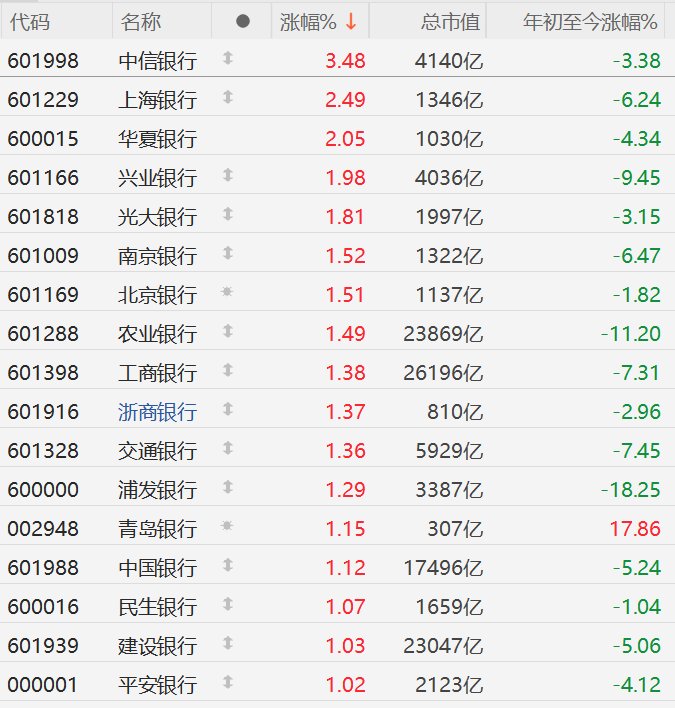
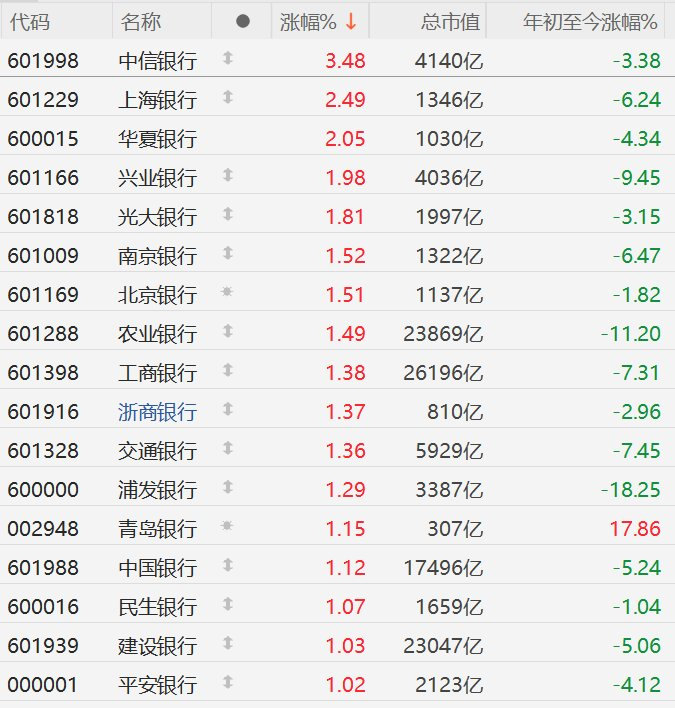
Core Viewpoint - The A-share market's banking sector experienced a counter-trend increase, with several banks showing significant gains despite overall market conditions [1]. Group 1: Stock Performance - CITIC Bank saw an increase of 3.48%, with a total market capitalization of 414 billion [2] - Shanghai Bank increased by 2.49%, with a market cap of 134.6 billion [2] - Huaxia Bank rose by 2.05%, with a market cap of 103 billion [2] - Other banks such as Industrial Bank, Everbright Bank, and Nanjing Bank also reported gains exceeding 1% [1][2] - Agricultural Bank, Industrial and Commercial Bank, and China Merchants Bank had market caps of 2386.9 billion, 2619.6 billion, and 2304.7 billion respectively, with slight increases [2] Group 2: Year-to-Date Performance - Year-to-date performance shows that most banks have negative returns, with CITIC Bank down 3.38% and Shanghai Bank down 6.24% [2] - Notably, Qingdao Bank has a positive year-to-date return of 17.86%, indicating strong performance relative to its peers [2] - Other banks like Agricultural Bank and Industrial Bank have year-to-date declines of 11.20% and 7.31% respectively [2]





A股银行股逆势上涨,中信银行涨超3%
Ge Long Hui A P P· 2026-02-02 03:54
Core Viewpoint - The A-share market has seen a rise in bank stocks, with several banks experiencing significant gains despite overall market trends [1] Group 1: Stock Performance - CITIC Bank increased by 3.48%, with a total market capitalization of 414 billion [2] - Shanghai Bank rose by 2.49%, with a market cap of 134.6 billion [2] - Huaxia Bank saw a gain of 2.05%, with a market value of 103 billion [2] - Industrial Bank increased by 1.98%, with a market cap of 403.6 billion [2] - Everbright Bank rose by 1.81%, with a total market capitalization of 199.7 billion [2] - Nanjing Bank increased by 1.52%, with a market cap of 132.2 billion [2] - Beijing Bank saw a rise of 1.51%, with a market value of 113.7 billion [2] - Agricultural Bank increased by 1.49%, with a market cap of 23,869 billion [2] - Industrial and Commercial Bank rose by 1.38%, with a market value of 26,196 billion [2] - Zhejiang Bank increased by 1.37%, with a market cap of 81 billion [2] - Bank of Communications rose by 1.36%, with a market value of 592.9 billion [2] - Shanghai Pudong Development Bank increased by 1.29%, with a market cap of 338.7 billion [2] - Qingdao Bank saw a rise of 1.15%, with a market value of 30.7 billion [2] - Bank of China increased by 1.12%, with a market cap of 17,496 billion [2] - Minsheng Bank rose by 1.07%, with a market value of 165.9 billion [2] - China Construction Bank increased by 1.03%, with a market cap of 23,047 billion [2] - Ping An Bank rose by 1.02%, with a market value of 212.3 billion [2] Group 2: Year-to-Date Performance - CITIC Bank has a year-to-date decline of 3.38% [2] - Shanghai Bank has decreased by 6.24% year-to-date [2] - Huaxia Bank has a year-to-date decline of 4.34% [2] - Industrial Bank has decreased by 9.45% year-to-date [2] - Everbright Bank has a year-to-date decline of 3.15% [2] - Nanjing Bank has decreased by 6.47% year-to-date [2] - Beijing Bank has a year-to-date decline of 1.82% [2] - Agricultural Bank has decreased by 11.20% year-to-date [2] - Industrial and Commercial Bank has a year-to-date decline of 7.31% [2] - Zhejiang Bank has decreased by 2.96% year-to-date [2] - Bank of Communications has a year-to-date decline of 7.45% [2] - Shanghai Pudong Development Bank has decreased by 18.25% year-to-date [2] - Qingdao Bank has increased by 17.86% year-to-date [2] - Bank of China has a year-to-date decline of 5.24% [2] - Minsheng Bank has decreased by 1.04% year-to-date [2] - China Construction Bank has a year-to-date decline of 5.06% [2] - Ping An Bank has decreased by 4.12% year-to-date [2]
信用债市场周观察:关注CRMW一级发行定价机会
Orient Securities· 2026-02-02 03:43
Report Industry Investment Rating - Not mentioned in the provided content Core Viewpoints of the Report - In the second half of 2025, CRMW products were issued intensively in conjunction with private enterprise science and technology innovation bonds, with obvious cost - reduction and credit - enhancement effects. Currently, there is little room for participation in the secondary market. It is recommended to focus on the pricing opportunities during the primary issuance of new products. The "underlying bond + CRMW" combination under the strong guarantee of large - scale national and joint - stock banks has valuation advantages, and institutions with stable liability ends such as proprietary trading can hold them until maturity [5]. - When classified by creation entities, special attention should be paid to CRMW created by joint - stock banks [5]. Summary According to Relevant Catalogs 1. Credit Bond Weekly Viewpoint: Focus on the Pricing Opportunities of CRMW Primary Issuance - CRMW is an important credit - enhancement product. In 2025, over a hundred CRMW were created by various institutions, a slight reduction from 2024. Nearly 40% of the protected underlying bonds were science and technology innovation bonds, and the protected issuers were mostly technology - based private enterprises. Commercial banks are the mainstream creation institutions, while securities companies have rarely participated since 2024, and guarantee companies such as Zhongyu Guarantee and Zhongzhai Zengxin have been active [9]. - It is difficult to participate in the secondary market of CRMW. The focus should be on the primary issuance, especially the CRMW created by joint - stock banks. The average maturity of recently issued underlying bonds is about 2 years, and the maturity considering the exercise right is generally no more than 3 years, which meets the preferences of mainstream institutions [15]. - By creation entity types: - State - owned banks: Since 2024, the frequency of state - owned banks creating CRMW has declined. The credit spread of the "CRMW + underlying bond" investment portfolio created by state - owned banks is generally low, with most spreads around 40bp since Q4 2025, and there is no excess return compared to mainstream urban investment/industrial bonds [15][17]. - Joint - stock banks: Banks such as China Zheshang Bank have created a relatively large number of CRMW. The credit spread of the "CRMW + underlying bond" investment portfolio is around 70bp, and the absolute return can exceed 2.4%, which is very attractive in a low - return environment. The higher return mainly comes from the higher coupon rate of the protected underlying bonds, and there is sufficient safety margin under the strong guarantee of CRMW [25]. - City commercial banks: Banks such as Dongguan Bank and Qingdao Bank are the main creation institutions. The returns of their "CRMW + underlying bond" portfolios are more differentiated, and the recent returns are mainly in the range of 2.1% - 2.2%, with limited attractiveness [25]. - Rural commercial banks: Only Shanghai Rural Commercial Bank participates, and the overall return of the portfolio is not high due to the strong credit quality of the credit - enhancement subject [25]. - Guarantee companies: Zhongyu Guarantee and Zhongzhai Zengxin have created a small number of CRMW in the past two years. The returns are scattered, and the "underlying bond + CRMW" portfolio has a slightly higher return due to weak liquidity, which is suitable for institutions with stable liability ends and high - risk preferences to hold until maturity [23][26]. - Secondary market opportunities are mainly concentrated in the "underlying bond + CRMW" portfolio with a maturity of less than 1 year. The primary market is the main way to participate, while the secondary market has weak liquidity. The short - term portfolio with a maturity of less than 1 year and a return of over 2.1% created by state - owned banks and strong joint - stock banks has cost - effectiveness [28]. 2. Credit Bond Weekly Review: The Enthusiasm for Medium - Term Bond Mining Continues 2.1 Negative Information Monitoring - There were no bond defaults, overdue payments, downgrades of issuer or bond ratings, or overseas rating downgrades during the week from January 26 to February 1, 2026. However, there were significant negative events for companies such as Sunshine City Group, Country Garden Real Estate Group, and Rongqiao Group [31][33]. 2.2 Primary Issuance: Net Financing Remains High, and Financing Costs Fluctuate Narrowly - The new issuance scale of credit bonds remained high, the maturity volume decreased, and the net financing remained high. From January 26 to February 1, 2026, the primary issuance of credit bonds was 307.4 billion yuan, a slight decrease from the previous period. The total repayment was 151.7 billion yuan, a 19% decrease from the previous period, and the net financing was 155.7 billion yuan [34]. - The number and scale of cancelled or postponed bond issuances remained at a low level. The financing costs of medium - and high - grade bonds fluctuated slightly. The average coupon rates of AAA and AA+ grades were 2.12% and 2.24% respectively, with a month - on - month increase of 9bp and a decrease of 7bp [35]. 2.3 Secondary Trading: Valuations Fluctuated Slightly, and 3 - year Bonds Outperformed Relatively - The valuations of credit bonds of various grades and maturities were mostly flat compared to the previous period, except for a 3bp decline in the 3 - year medium - and low - grade bonds. The risk - free interest rate fluctuated slightly, and the credit spreads were mostly flat. The term spreads of 3Y - 1Y and 5Y - 1Y of various grades almost all narrowed, with an average of about 2bp, and the AA - grade 3Y - 1Y narrowed by up to 4bp. The AA - AAA grade spread of the 3 - year bond narrowed by 4bp [37][40]. - The credit spreads of urban investment bonds in various provinces narrowed slightly, with an average narrowing of about 2bp, and the spreads in Heilongjiang and Yunnan narrowed the most. The credit spreads of industrial bonds fluctuated within ±1bp, significantly underperforming urban investment bonds, and the real estate sector widened by 3bp [42][43]. - The weekly turnover rate decreased by 0.18 percentage points to 1.85%. The issuers of the top - ten turnover bonds were mostly central and state - owned enterprises. The issuers of credit bonds with a discount of more than 10% in trading were mainly related to Country Garden, Vanke, and AVIC Industry Finance [45]. - The distribution of urban investment bonds with the largest narrowing or widening of spreads was scattered. Among industrial bonds, the top five issuers with widening spreads were mostly real - estate companies, including Times Holdings, Rongqiao, Yuzhou Hongtu, and Greenland [47][48].
黄金失守5000美元,白银重挫16%!小摩发出警告
Ge Long Hui· 2026-01-30 10:25
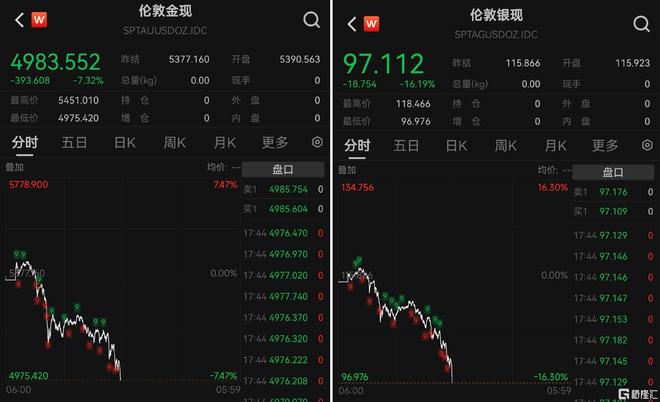
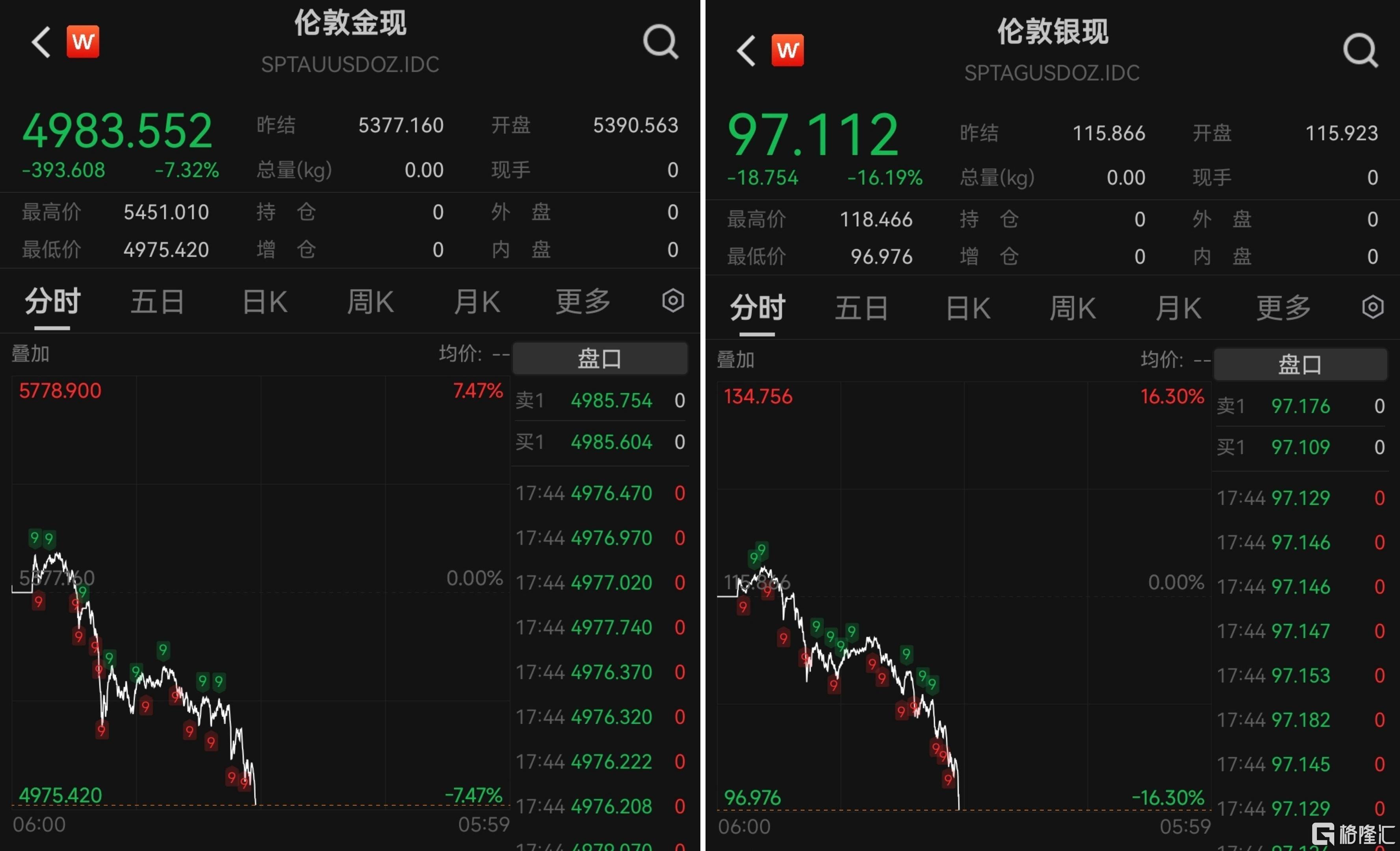
30日下午,现货黄金、白银再次加速下跌。 截至发稿,现货黄金跌超7%,跌破5000美元/盎司,日内重挫近400美元。 现货白银跌超16%,报97.112美元/盎司,日内重挫超18美元。 有投资者表示,"现在金价低,想加仓来拉低均价,结果浙商银行积存金一直买不进去。系统显示,当 前交易流量激增,请稍后重试。"工商银行积存金页面也一度显示"当前交易流量激增,请稍后重试"。 与此同时,工行、建行今日相继发布公告,对个人黄金积存业务的相关规则进行调整。 工商银行宣布,自2月7日起,将对如意金积存业务进行限额管理;建设银行宣布,个人黄金积存业务定 期积存起点金额将上调至1500元。 | W | | | 伦敦金现 | | | | | < W | | | 伦敦银现 | | | 0 | | --- | --- | --- | --- | --- | --- | --- | --- | --- | --- | --- | --- | --- | --- | --- | | | | | SPTAUUSDOZ IDC | | | | | | | | SPTAGUSDOZ.IDC | | | | | 4983.552 | | 非環 ...

黄金跌破5000美元关口,白银重挫16%!小摩发出警告
Sou Hu Cai Jing· 2026-01-30 10:10
Group 1 - Spot gold and silver prices experienced significant declines, with gold dropping over 7% to below $5000 per ounce and silver falling over 16% to $97.112 per ounce, marking a daily loss of nearly $400 for gold and over $18 for silver [1][4] - The decline in precious metals has sparked discussions on social media, with some investors viewing the price drop as a buying opportunity, leading to increased demand for gold accumulation services from banks, which resulted in system outages due to high transaction volumes [4] - Major banks, including Industrial and Commercial Bank of China (ICBC) and China Construction Bank (CCB), announced adjustments to their personal gold accumulation business rules, with ICBC implementing limit management and CCB raising the minimum accumulation amount to 1500 yuan [7] Group 2 - UBS analysts suggest that while gold prices may face short-term pressure, the long-term outlook remains optimistic due to concerns over the independence of the Federal Reserve, escalating geopolitical tensions, and broader political uncertainties supporting precious metal prices [7] - JPMorgan's global market strategist forecasts that gold prices could rise to between $8000 and $8500 in the coming years, driven by retail investors increasingly relying on gold as a hedge against stock market declines [7] - However, there are warnings about the current overbought positions of commodity trading advisors (CTAs) and momentum traders in gold and silver, indicating potential risks of profit-taking or mean reversion in the short term [7]
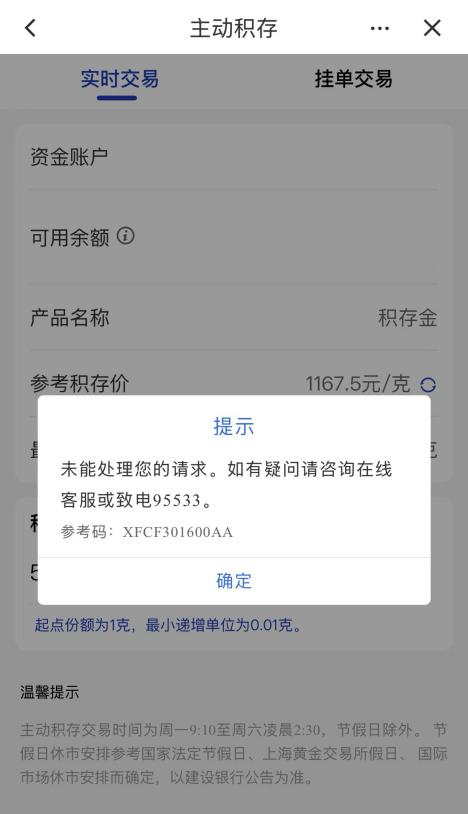
根本买不进去!金价回调,积存金业务火爆,有银行系统一度崩溃
Zhong Guo Zheng Quan Bao· 2026-01-30 09:10
Core Viewpoint - The recent surge in gold prices has led to increased demand for gold accumulation products, causing significant strain on banking systems and prompting banks to adjust their policies to manage risks associated with market volatility [2][6]. Group 1: Market Dynamics - Gold prices have risen from 1150 CNY/gram to 1170 CNY/gram, leading to a rush among investors to purchase gold accumulation products [1]. - Many investors are attempting to capitalize on the price drop, viewing it as an opportunity to lower their average purchase price [2][5]. - The trading volume for gold accumulation products has surged, resulting in system overloads at various banks, including China Construction Bank and Industrial and Commercial Bank of China [2][5]. Group 2: Bank Responses - China Construction Bank announced an increase in the minimum investment amount for gold accumulation products to 1500 CNY, effective February 2, to manage risks associated with market fluctuations [6][8]. - Other banks, such as China Merchants Bank and Ningbo Bank, have also adjusted their policies regarding gold investment, reflecting a cautious approach in light of recent price volatility [6][9]. - Banks are advising customers to enhance their risk awareness and manage their investments prudently, considering their financial situation and risk tolerance [8][9].


股份制银行板块1月30日跌0.53%,华夏银行领跌,主力资金净流出6.65亿元
Zheng Xing Xing Ye Ri Bao· 2026-01-30 08:54
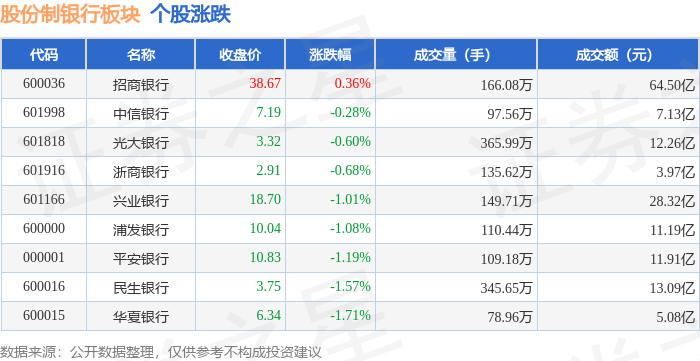
Group 1 - The banking sector experienced a decline of 0.53% on January 30, with Huaxia Bank leading the drop [1] - The Shanghai Composite Index closed at 4117.95, down 0.96%, while the Shenzhen Component Index closed at 14205.89, down 0.66% [1] - Major banks such as China Merchants Bank and CITIC Bank showed mixed performance, with China Merchants Bank slightly up by 0.36% and CITIC Bank down by 0.28% [1] Group 2 - The banking sector saw a net outflow of 665 million yuan from institutional investors, while retail investors contributed a net inflow of 564 million yuan [1] - Specific banks like Huaxia Bank and Minsheng Bank faced significant net outflows from institutional investors, with Huaxia Bank seeing a net outflow of 67 million yuan [1] - Retail investors showed a preference for certain banks, with significant net inflows into banks like Ping An Bank and Zhejiang Commercial Bank [1]



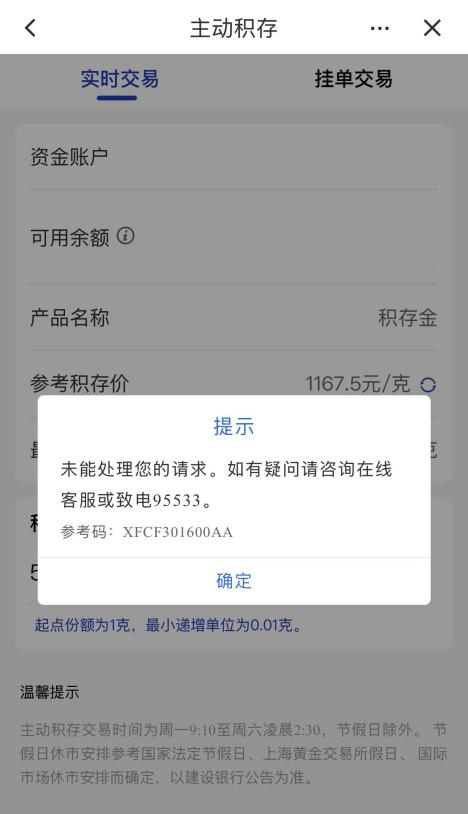
“根本买不进去”!金价回调,积存金业务火爆,有银行系统一度崩溃
Zhong Guo Zheng Quan Bao· 2026-01-30 08:53
Core Viewpoint - The surge in gold prices has led to increased demand for gold accumulation products, causing banking systems to experience overload and transaction failures [1][3][6]. Group 1: Market Dynamics - Gold prices have risen from 1150 CNY/gram to 1170 CNY/gram, prompting investors to seek opportunities to buy [1]. - Many investors are attempting to capitalize on the recent price drop, viewing it as a chance to increase their holdings in gold accumulation products [3][6]. Group 2: Banking System Response - Construction Bank reported that transaction failures were due to high traffic on their system, advising customers to refresh or retry later [3]. - Other banks, including Zhejiang Commercial Bank and Industrial and Commercial Bank of China, also faced similar issues with transaction overload [6]. Group 3: Adjustments in Banking Policies - Construction Bank announced an increase in the minimum amount for personal gold accumulation business to 1500 CNY, effective February 2 [7]. - Other banks, such as Ningbo Bank and China Merchants Bank, have also adjusted their gold product offerings and minimum investment amounts in response to market volatility [9][10].

【行业分析】中国绿色信贷行业政策汇总、发展现状及投资前景预测报告——智研咨询发布
Sou Hu Cai Jing· 2026-01-30 05:41
Core Viewpoint - Under the national "dual carbon" strategy, listed banks in China are integrating Environmental, Social, and Governance (ESG) concepts into their development strategies, promoting a green financial system to facilitate the low-carbon transition of the economy and society [2] Group 1: Green Credit Overview - Green credit is a financial service provided by institutions to support environmental protection, energy conservation, emission reduction, and renewable energy industries, optimizing resource allocation and mitigating environmental risks [5] - The green credit policy was jointly proposed by the Ministry of Environmental Protection, the People's Bank of China, and the China Banking Regulatory Commission on July 30, 2007, to curb the blind expansion of high-energy-consuming and high-polluting industries [3][5] Group 2: Development History of Green Credit - The green credit sector in China has evolved from a policy-driven approach to a more standardized and institutionalized financial tool, progressing through the stages of emergence, exploration, and growth [7] - The issuance of the "Guiding Opinions on Building a Green Financial System" in 2016 marked a significant step in the development of green finance, with the sector now entering a mature phase [7] Group 3: Green Credit Policies - Since the 2016 issuance of the "Guiding Opinions on Building a Green Financial System," various local governments have introduced specific green credit policies to refine development directions and promote best practices [9] - In February 2025, the National Financial Supervision Administration and the People's Bank of China issued a plan to enhance the quality of green finance, encouraging banks to explore various green financing methods [11] Group 4: Green Credit Industry Chain - The upstream of the green credit industry chain includes product innovation, project assessment and certification, and project development and operation [12] - The midstream involves financial institutions providing funding and services for green projects, while the downstream encompasses applications in clean energy, environmental protection, green transportation, and more [12] Group 5: Green Building Development - By the end of 2024, the cumulative area of green buildings in urban areas reached 13.54 billion square meters, with new green building area in 2024 accounting for 97.9% of all new construction [14] - The growing emphasis on green buildings is expected to create substantial financing demand, providing a stable asset market for green credit [14] Group 6: Market Data - The balance of green loans in both domestic and foreign currencies increased from 7.1 trillion yuan in 2017 to 36.6 trillion yuan in 2024, with a compound annual growth rate of 26.4% [2] - As of the end of Q3 2025, the balance of green loans reached 43.51 trillion yuan, representing a 17.5% increase from the beginning of the year and accounting for 43.9% of the total loan increment during the same period [2]
上调门槛、下调利率!银行黄金业务密集变阵
Guo Ji Jin Rong Bao· 2026-01-29 15:41
1月29日早间,黄金价格再度刷新历史高点,现货黄金首次突破5500美元/盎司关口。 近两年间,银行积存金的起存金额也随着金价"水涨船高",普遍从最初的500元至600元上升至千元以 上。 1月28日,浙商银行发布公告,上调该行财富金积存产品每月累计定投起点金额(包括按月、按周、按 日定投),由1200元上调至1300元(每月按20个定投日、4个定投周计算),且按月定投每期不得低于 1300元,按周定投每期不得低于325元,按日定投每期不得低于65元。更早的1月15日,宁波银行也曾发 布公告上调黄金积存金的起购金额,由1000元调整为1200元。 除了不断上调的起存金额,银行积存金的风险门槛也在不断加码。 1月26日,农业银行发布公告称,为落实监管要求,进一步保护金融消费者权益,将自1月30日起对个人 客户参与存金通黄金积存交易增加风险承受能力测评准入。而据此前报道,1月12日,工商银行已开始 上调个人客户积存金业务风险测评等级准入要求,建行等多家机构更是早已将该项业务投资准入的风险 等级升至R3及以上。 《国际金融报》记者注意到,与金价一同上涨的还有银行积存金业务的起存金额和风险门槛。另外,宁 波银行于近日下 ...