OPPO

Search documents
手机厂商与面板巨头加深捆绑
2 1 Shi Ji Jing Ji Bao Dao· 2025-09-22 04:47
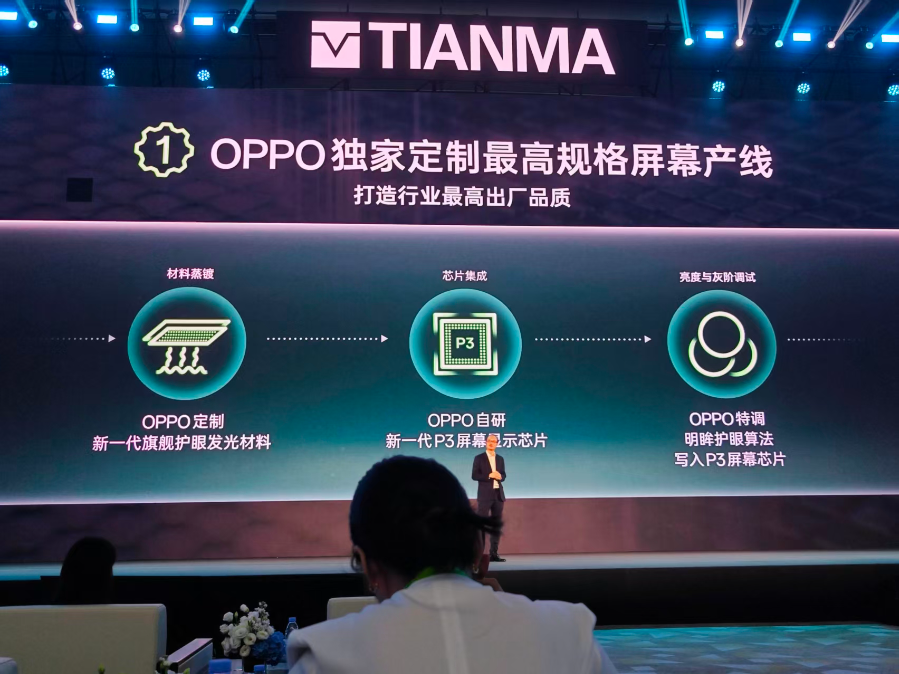
Core Viewpoint - The smartphone industry is witnessing a shift from a traditional "buyer-supplier" relationship to a collaborative model where manufacturers engage deeply in the definition, development, and production of display technologies, reshaping the competitive landscape of the display panel industry [2][4][8]. Group 1: New Collaboration Paradigm - Smartphone manufacturers are no longer passive purchasers but are becoming strategic partners with panel manufacturers, engaging in joint research and deep customization [2][4]. - OPPO has invested over 1 billion in establishing its own "display science production line," allowing it to control the entire process from design to production [4][5]. - The collaboration between Xiaomi and TCL Huaxing has evolved into a long-term partnership, creating an "innovation display joint laboratory" to streamline technology development and production [5][8]. Group 2: Industry Dynamics - The traditional supply chain structure is being transformed from a linear model to a networked "industry alliance," enhancing the bargaining power of smartphone manufacturers [8][9]. - Chinese panel manufacturers are expected to capture over 70% of the global smartphone panel market by 2025, providing manufacturers with more options and stronger negotiation capabilities [8][10]. - The shift to deep collaboration is accelerating technological iteration and redefining market competition rules, moving the focus from macro parameters to underlying technologies [10][11]. Group 3: Technological Advancements - The competition in the smartphone market is increasingly centered around display technology, with companies like OPPO and Tianma developing advanced features such as precise light control at ultra-low brightness [10][11]. - The joint development model allows manufacturers to align market needs with technological paths early in the research phase, significantly reducing the time from lab to market [10][11]. - The relationship between Apple and Samsung exemplifies a unique "co-opetition," where stringent standards and large orders from Apple drive Samsung to innovate continuously [6][10].


手机厂商与面板巨头加深捆绑
21世纪经济报道· 2025-09-22 04:41
Core Viewpoint - The article discusses the evolving relationship between smartphone manufacturers and panel suppliers, highlighting a shift from a traditional procurement model to a collaborative co-creation model, which enhances competitive advantages in the smartphone market [2][10]. Group 1: New Collaboration Paradigm - Smartphone manufacturers are no longer passive "purchasers" but are deeply involved in defining, developing, and producing display technologies, forming strategic partnerships with panel giants [2][5]. - This shift from "procurement" to "co-creation" is a natural outcome of the smartphone industry's transition from product-level competition to supply chain-level competition, accelerating technology iteration and reshaping the global display panel industry's power dynamics [2][10]. Group 2: Case Studies of Collaboration - OPPO has invested over 1 billion in establishing its own "display science production line" and has customized a dedicated production line with Tianma, allowing it to control the entire process from design to production [5][11]. - Xiaomi and TCL Huaxing have established an "Innovation Display Joint Laboratory," creating a complete closed loop from technology research to mass production, which enhances their collaborative growth [6][10]. - The relationship between Apple and Samsung is characterized by a unique "co-opetition," where Apple drives Samsung's technological innovation through stringent standards and large orders, influencing industry technology trends [7][10]. Group 3: Industry Impact and Market Dynamics - The deepening collaboration between smartphone manufacturers and panel suppliers is fundamentally reshaping the supply chain's power structure and the speed of technology iteration [9][10]. - The rise of Chinese panel manufacturers like BOE and TCL Huaxing is changing the competitive landscape, with predictions that their market share in the global smartphone panel market will exceed 70% by 2025 [10]. - The traditional linear supply chain is evolving into a networked "industry alliance," where smartphone manufacturers provide precise market demands and panel manufacturers contribute their expertise in materials and processes [10][11]. Group 4: Future Considerations - The deep customization and joint development require significant upfront investment, raising questions about whether these costs will be passed on to consumers, potentially increasing flagship smartphone prices [12]. - The trend towards exclusive custom screens may reduce their universality, leading to higher repair costs for consumers, prompting ongoing observation of whether the industry will continue down a path of deeper customization or establish new, higher industry standards [12].

市场销量实现快速增长 中国品牌手机日益走俏拉美市场
Ren Min Ri Bao· 2025-09-22 02:04
Core Insights - Chinese smartphone brands are increasingly popular in the Latin American market, with significant growth in sales and market share [1][2][3][4][5][6]. Market Performance - Overall smartphone sales in Latin America are projected to grow by approximately 2% in Q2 2025, reaching 34.3 million units [1]. - In Brazil, Motorola holds about 24% of the smartphone market share, while Xiaomi and Realme account for 17% and 6%, respectively [2]. - In Mexico, Chinese brands have captured around 43% of the smartphone market share, a significant increase from nearly zero in 2019 [3]. - In Peru, Xiaomi and Honor led smartphone imports with 890,000 and 830,000 units, reflecting quarter-on-quarter growth of 11.2% and 25.7% [3]. Consumer Preferences - Over 60% of Brazilian respondents prefer Chinese smartphones, with 67% believing China has a technological innovation advantage [2]. - In Ecuador, most of the 3.2 million smartphones imported in 2024 were Chinese brands, favored for their performance and value [4]. Innovation and Localization Strategy - Chinese smartphone brands are focusing on localization strategies, adapting products to meet local consumer preferences, which has helped build a loyal customer base [5][6]. - The introduction of AI features and high-quality designs in smartphones has positioned Chinese brands as leaders in innovation [6]. - Companies are increasingly investing in local production and supply chains in Latin America, enhancing manufacturing capabilities [7][8]. Industry Collaboration - Chinese smartphone manufacturers are establishing local production lines and partnerships in Latin America, contributing to job creation and technological skill development [7][8]. - Collaborative efforts in the smartphone industry are expected to improve understanding of local consumer needs and enhance regional industrialization [8].

巴菲特清仓比亚迪,期间股价上涨 38 倍;苹果折叠屏手机细节曝光;雷军年度演讲定档 9 月 25 日 | 极客早知道
Sou Hu Cai Jing· 2025-09-22 01:00
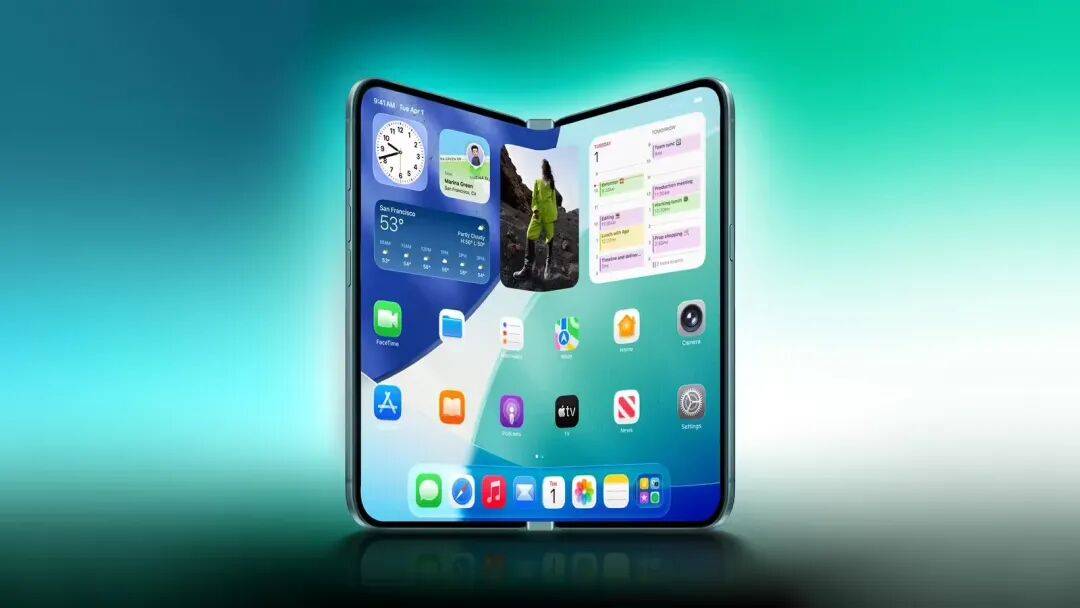
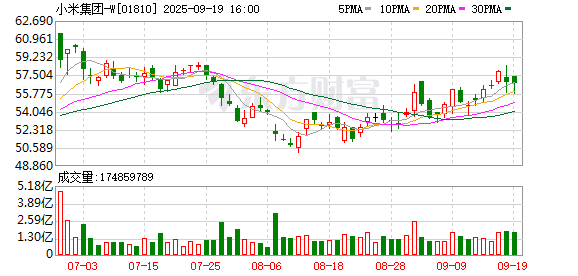
Group 1: Berkshire Hathaway and BYD - Warren Buffett's Berkshire Hathaway has completely exited its profitable stake in Chinese electric vehicle manufacturer BYD after 17 years, during which the stock price increased over 38 times [1][3] - Berkshire began reducing its holdings in BYD in August 2022, having initially purchased 225 million shares for $230 million (approximately 1.637 billion RMB) in 2008. By the second quarter of 2022, the value of these shares had risen by 41% to $9 billion [1][2] - By June 2022, Berkshire had sold nearly 76% of its BYD shares, reducing its ownership to just below 5% of BYD's issued shares [2] Group 2: Tesla and Shareholder Voting - Elon Musk is urging Tesla shareholders to participate in the upcoming annual meeting, emphasizing that the voting outcomes could significantly impact both the company and the world [4] - Tesla is at a "critical turning point," and shareholders will soon receive voting instructions to support the board's recommendations on various proposals [4] Group 3: Meta and Smart Glasses - Meta CEO Mark Zuckerberg announced the launch of Meta Ray-Ban Display, the company's latest smart glasses featuring display capabilities, although they are not true augmented reality (AR) devices [5] - Meta is reportedly developing another smart glasses model with screens in both lenses, expected to launch in 2027, which will be significantly more expensive [5] Group 4: iPhone Developments - Rumors about the upcoming foldable iPhone suggest it will resemble two iPhone Airs placed side by side, featuring a titanium alloy body [7][8] - The foldable iPhone is anticipated to be released in the fall of next year, potentially alongside the iPhone 18 series [8] Group 5: OpenMind and AI Robotics - OpenMind has launched the world's first "AI-native" open-source robot system, OM1 Beta, designed to unify various robotic platforms and support multiple hardware environments [9] - The system emphasizes hardware neutrality and integrates advanced navigation and environmental understanding capabilities [9] Group 6: Xiaomi and Annual Speech - Xiaomi's CEO Lei Jun announced an annual speech scheduled for September 25, focusing on the Xiaomi玄戒 chip and the stories behind Xiaomi's automotive ventures [11] Group 7: JD.com and Liu Qiangdong's Salary - Liu Qiangdong's ten-year salary plan, which stipulated a nominal annual salary of 1 yuan, has expired, allowing for potential renegotiation of his compensation [12][13]


中国品牌手机日益走俏拉美市场(国际视点)
Ren Min Ri Bao· 2025-09-21 22:41
Core Insights - The Latin American smartphone market is projected to see a 2% increase in overall sales by Q2 2025, reaching 34.3 million units, with Chinese brands gaining significant market share [1] - Xiaomi, Motorola, Honor, and Transsion are among the top five smartphone brands in the region, with Xiaomi achieving a record sales increase of 8% to 6.7 million units [1] Market Growth - Brazil is the largest smartphone market in Latin America, with Motorola capturing 24% of the market share, followed by Xiaomi at 17% and Realme at 6% [2] - Over 60% of Brazilian respondents prefer Chinese smartphones, with 67% believing China has a technological innovation advantage [2] Brand Performance - In Mexico, Chinese smartphone brands hold approximately 43% market share, with significant growth from near-zero in 2019 [3] - Honor launched the Honor 400 series in Peru, achieving notable import figures of 890,000 units for Xiaomi and 830,000 units for Honor, reflecting growth rates of 11.2% and 25.7% respectively [3] Consumer Preferences - Ecuador's smartphone imports in 2024 are expected to exceed 3.2 million units, predominantly from Chinese brands, which are favored for their performance and design [4] - In Venezuela, Transsion and Xiaomi have rapidly increased their market share, accounting for 50.6% of smartphone sales [4] Innovation and Localization Strategy - Chinese smartphone brands are successful in Latin America due to their localization strategies, adapting products to meet local preferences and expanding their loyal customer base [5] - The focus on technology democratization and high cost-performance ratio has been a key factor in the success of Chinese brands [5] Competitive Landscape - The competitive landscape in Latin America is expected to evolve, requiring brands to adopt diversified and personalized operational models to enhance brand trust and achieve scalable growth [6][7] Local Production and Collaboration - Increasing numbers of Chinese smartphone manufacturers are establishing local production lines in Latin America, enhancing local manufacturing capabilities and supply chains [8] - Collaborations with local companies are seen as strategic moves to better understand consumer needs and improve product offerings [9]
2025年第二季度销量排名前五的智能手机品牌中 中国品牌占据四席 中国品牌手机日益走俏拉美市场(国际视点)
Ren Min Ri Bao· 2025-09-21 22:21
Market Growth - The overall smartphone sales in the Latin American region are projected to grow by approximately 2% in Q2 2025, reaching 34.3 million units [2] - Xiaomi's smartphone sales increased by 8%, achieving a record of 6.7 million units in the same period [2] - In Brazil, Motorola accounted for about 24% of the smartphone market share, while Xiaomi and Realme held 17% and 6% respectively [3] Brand Performance - Chinese smartphone brands dominate the top five positions in the Latin American market, with Xiaomi, Motorola, Honor, and Transsion leading [2] - In Mexico, Chinese brands hold approximately 43% of the smartphone market share, a significant increase from nearly zero in 2019 [4] - In Peru, Xiaomi and Honor were the top two imported smartphone brands, with imports of 890,000 and 830,000 units respectively, showing quarter-on-quarter growth of 11.2% and 25.7% [4] Consumer Preferences - Over 60% of Brazilian respondents prefer Chinese smartphones, with 67% believing that China has a technological innovation advantage [3] - Consumers in Ecuador prioritize cost-effectiveness, speed, storage, camera quality, and screen design, favoring Chinese brands for their competitive advantages [5] Innovation and Localization Strategy - Chinese smartphone brands are successful in Latin America due to their focus on localization strategies, adapting product features and marketing to local preferences [6] - The introduction of advanced technologies such as artificial intelligence and foldable screens by Chinese brands is attracting consumers [6] - Industry experts emphasize the need for diversified and personalized operational models to maintain long-term competitiveness in the market [7] Local Production and Collaboration - Chinese smartphone manufacturers are increasingly establishing local production lines or collaborating with local companies in Latin America [9] - The establishment of local manufacturing capabilities is seen as a strategic long-term decision to better understand consumer needs and enhance supply chain efficiency [9] - Strengthening the smartphone industry chain cooperation between China and Latin America is expected to improve local manufacturing capabilities and contribute to regional industrialization [9]
全球手机品牌销量十强深度评测:2025年消费市场格局与选购指南
Sou Hu Cai Jing· 2025-09-21 18:17
Global Sales Landscape - The global smartphone sales landscape for Q2 2025 shows a "2+8" structure, with Samsung and Apple leading at 19% and 16% market shares respectively, while Chinese brands occupy eight positions, collectively surpassing 58% market share, an increase of 12 percentage points from 2023 [1][2] - Samsung's advantage is driven by the Galaxy A and S series, with the Galaxy A16 5G achieving over 8 million units shipped in a single quarter in India and Southeast Asia, and the Galaxy S25 Ultra capturing 23% of the high-end market [1] - Apple's iPhone 16 series, particularly the Pro Max version, dominates the high-end market with a 68% share in the over $1000 segment [1] Differentiated Growth of Chinese Brands - Xiaomi's "smartphone × AIoT" strategy has led to a 30% annual growth in markets like India and Latin America [2] - Transsion's TECNO Camon 30 has achieved over 55% market share in Africa, leveraging its 64MP night photography capabilities [2] - Huawei's Mate 70 series, featuring the Kirin 9020 chip and satellite communication, has significantly increased its market share in the high-end segment in China [2] High-End Market Competition - In the high-end market (over $800), Apple holds a 62% market share, but faces increasing competition from Huawei and Samsung [4] - The iPhone 16 Pro Max features the A18 chip with a 40% GPU performance improvement, while Samsung's Galaxy S25 Ultra boasts a peak brightness of 2600 nits and advanced camera capabilities [4] - Huawei's Mate 70 Pro+ has seen its market share in the 6000 yuan and above segment rise from 12% to 28% post-launch, directly challenging Apple's position [4] Mid-Range Market Dynamics - The mid-range segment (priced $400-$799) is highly competitive, with Xiaomi, vivo, and OPPO vying for market share [5] - Xiaomi 15 Ultra features advanced cooling technology and gaming performance, while vivo X100s Pro excels in low-light photography [5] - OPPO Reno12 Pro focuses on lightweight design and fast charging capabilities [5] Entry-Level Market Transformation - The entry-level market (under $200) is experiencing a transformation driven by 5G and AI technologies [8] - The Redmi 14C 4G has achieved significant sales in Latin America, while the realme C65 5G has gained popularity for its dual 5G support and efficient power consumption [8] - AI technology is enhancing user experience, with devices like the Infinix HOT 40 Pro offering advanced features tailored to local languages [8] Future Trends and Consumer Choices - The foldable smartphone market is evolving from novelty to practicality, with devices like the Samsung Z Fold7 and Huawei Mate X6 offering enhanced usability [9] - AI smartphones are entering a competitive phase, with Google's Pixel 9 series and Apple's A18 chip providing advanced AI functionalities [9] - Consumers are advised to focus on their specific needs, such as gaming performance, photography capabilities, or business requirements, rather than solely on technical specifications [10]


iPhone17来了!华强北最新实探
Zhong Guo Ji Jin Bao· 2025-09-21 14:40
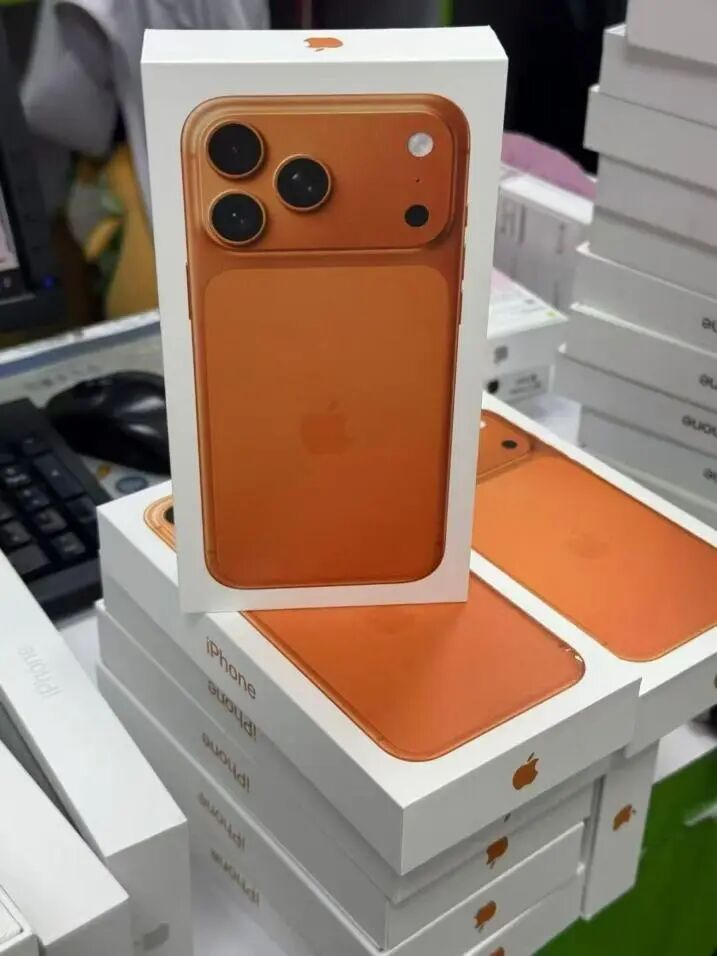
iPhone 17系列被外界视为自2017年iPhone X以来最大的一次革新,自9月19日正式发售后,不仅迅速引爆市场抢购热潮,更出现许久未见的"新旧机型齐涨 价"现象。 与此同时,国产手机厂商罕见集体点赞苹果新机,小米、OPPO等更迅速调整产品策略正面迎战。随着消费电子"金九"旺季来袭,iPhone 17系列又能否点 燃新一轮换机潮? 火爆开售,新机引发涨价潮 "橙色256G的iPhone 17 Pro Max有现货吗?多少钱?"面对《中国基金报》记者的问价,在深圳华强北远望数码商城档口的商家小恋(化名)赶忙说有现 货,并拿起柜台上的计算器,悄悄按下几个数字向记者示意——11000元。 这时是9月20日下午4点左右,而翌日,记者再度前往同一档口,向小恋询价同色同型号的手机时,价格已涨至11350元。"发售第一天也差不多这个价,目 前价格就是实时变动的,所以我们随时都会更新新的价目表。"小恋告诉记者。 | 新款苹果17 | | 精英超讯 | | 全系列报价 q.20 | | --- | --- | --- | --- | --- | | 注意:所有机器请在拆封之前在官网登询好激活日期,未激活的情况下先验证好 ...