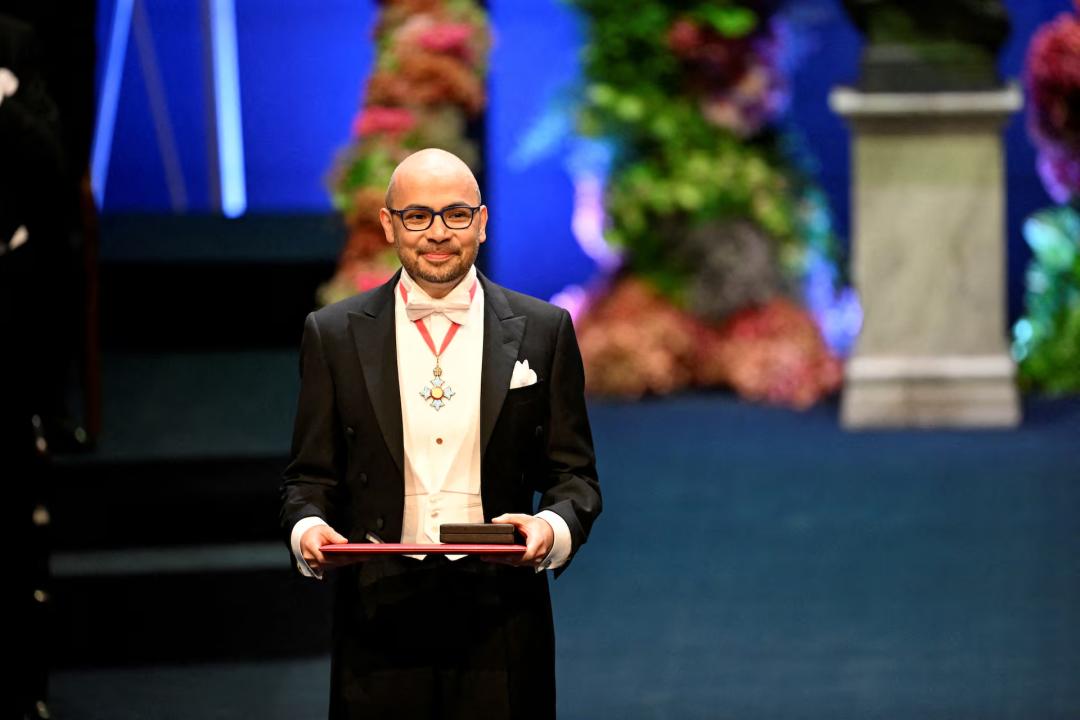
DeepMind

Search documents
AI公司,怎么越来越像NBA了
3 6 Ke· 2025-11-24 08:08
Core Insights - Silicon Valley is experiencing a "talent explosion," with a shift in focus from hardware competition to a race for top talent in AI [1][2] - AI labs are increasingly resembling "star teams" in sports, where top talent commands salaries comparable to professional athletes, with some earning billions [2][3] - The scarcity of breakthrough human intelligence has become the primary bottleneck in AI development, overshadowing hardware capabilities [3][4] Talent Market Dynamics - The talent cost has become a "ceiling," leading AI giants to adopt a "star player" model, where top researchers can earn tens of millions to billions [2][5] - AI employment agreements are characterized by short-term and high liquidity, contrasting with traditional tech companies' stable employment culture [6][7] - The high turnover and fluidity in talent agreements create a "free agent market," where top researchers can be poached at any time [6][7] Strategic Implications - The extreme scarcity of top talent has created a "value bubble," making talent costs a significant competitive barrier in the AI industry [4][5] - Companies are now focused on assembling "trios" of complementary experts to drive breakthroughs, similar to forming a championship sports team [9][10] - The strategic goal has shifted from merely recruiting talent to building a sustainable competitive advantage through unique data and application distribution networks [11][12] Long-term Competitive Strategy - The ultimate battle in AI will be over data flywheels and distribution rights, rather than just talent acquisition [11][12] - Companies must establish a robust data ecosystem to ensure long-term sustainability, as relying solely on high salaries for talent is a temporary solution [14][15] - The ability to integrate AI capabilities deeply into core business processes will determine the long-term success and market dominance of AI firms [13][14]
X @Demis Hassabis
Demis Hassabis· 2025-11-24 00:27
😀sometimes I had to sit on two pillows to be able to reach the other side of the chess board 🤣Dripped Out Technology Brothers (@TechBroDrip):Demis Hassabis (co-founder and CEO of DeepMind) https://t.co/BUQ24VPpaP ...
Generalist发现具身智能的Scaling Law,还让模型能同时思考与行动
3 6 Ke· 2025-11-21 01:52
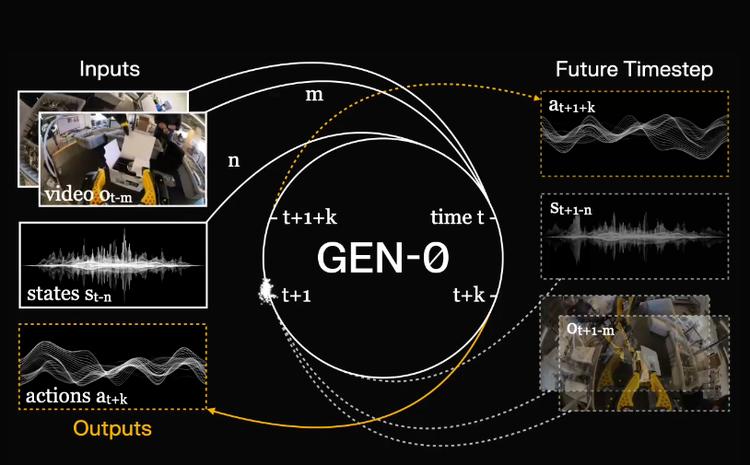
Core Insights - Generalist, a company founded by Pete Florence, has released a new embodied foundation model called GEN-0, which can scale predictably with the growth of physical interaction data [1][4] - The company aims to create universal robots, focusing initially on the dexterity of robots [4][5] Company Overview - Generalist was co-founded by Pete Florence, Andrew Barry, and Andy Zeng, with a team that includes experts from OpenAI, Waymo, and Boston Dynamics [4] - Early investors include Spark Capital, NVIDIA, and Bezos Expeditions, although the investment amounts remain undisclosed [3] Model Features - GEN-0 is based on high-fidelity raw physical interaction data and employs a multi-modal training approach [5] - A key feature of GEN-0 is "Harmonic Reasoning," allowing the model to think and act simultaneously, which is crucial for real-world applications [6][7] Scaling and Performance - The model exhibits a "phase transition" point in its intelligence capacity, indicating that larger models are necessary to absorb complex sensory-motor data [8][10] - Models with 1 billion parameters struggle to absorb diverse data, while those with 6 billion parameters show strong multi-task capabilities [10][11] - Models with over 7 billion parameters can internalize large-scale pre-training data and quickly adapt to downstream tasks [12] Scaling Law - GEN-0 demonstrates a clear Scaling Law, where increased pre-training data and computational resources lead to predictable improvements in downstream performance [15] - The company has developed a predictive formula to determine the optimal data allocation for specific tasks [15][16] Data Quality and Diversity - The training dataset for GEN-0 consists of 270,000 hours of real-world manipulation trajectories collected from diverse environments, significantly larger than existing datasets [16][18] - The quality and diversity of data are more critical than sheer volume, allowing for the creation of models with different characteristics [18] Industry Context - The field of embodied intelligence is still in its early stages, with various companies exploring foundational models [19] - Despite the presence of numerous top-tier companies, the technology landscape remains fragmented, and commercial applications are limited [19][20] Future Prospects - The advancements in Scaling Law and model capabilities suggest a promising future for the commercialization of embodied intelligence [20] - Chinese entrepreneurs have a competitive advantage in this field due to a mature hardware supply chain and rich data sources [21]

Periodic Labs:ChatGPT 创始成员打造的 AI 物理学家,让 Agent 在现实实验中学习
海外独角兽· 2025-11-19 12:05
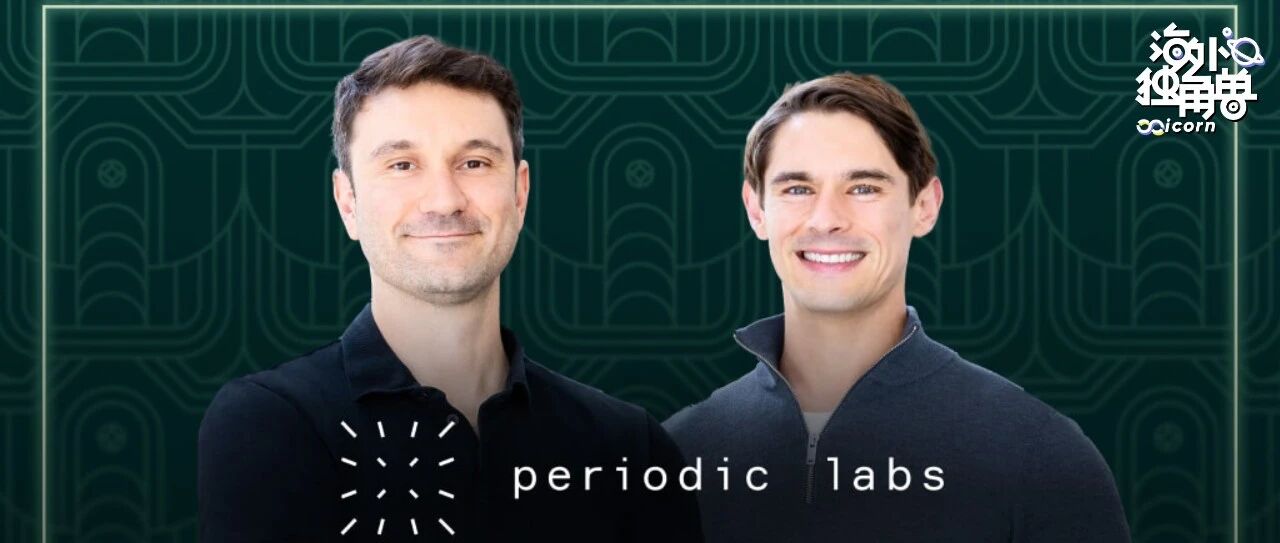
Core Insights - Periodic Labs aims to create an "AI physicist" capable of autonomously designing and executing real-world experiments, focusing on high-temperature superconductors and magnetic materials [4][12][13] - The company emphasizes the integration of large language models (LLMs), simulations, and high-throughput experiments to generate high-quality experimental data [3][4] - Periodic Labs completed a $300 million seed funding round in September 2025, with a pre-funding valuation reaching up to $1.5 billion, marking it as one of the largest investments in the scientific AI sector [29][30] Group 1: Company Overview - Periodic Labs is a cutting-edge AI research laboratory focused on accelerating research and development in physics and chemistry [4] - The company believes that the combination of experiments, simulations, and LLMs is crucial for scientific advancement [4][10] - The goal is to discover materials that could revolutionize human understanding of the universe, such as superconductors that operate at 200 Kelvin [4][12] Group 2: Technology and Methodology - The core approach involves integrating LLMs, simulations, and real experiments to allow AI agents to learn from experimental iterations [3][10] - Periodic Labs is building a laboratory for powder synthesis, where robots can mix and heat powders to discover new superconductors and magnets [8][10] - The company aims to replace traditional scoring methods with physics-driven reward functions to enhance the learning process of AI agents [3][4] Group 3: Development Roadmap - The focus on high-temperature superconductivity is driven by its philosophical and technical significance, as breakthroughs in this area could reshape our understanding of quantum effects [12][13] - Periodic Labs plans to achieve a complete cycle from theory to experiment in at least one domain to progress towards scientific superintelligence [13] - The company recognizes the need for autonomous synthesis and characterization as essential steps in their research journey [13][14] Group 4: Market Position and Competition - Periodic Labs identifies three main industry pain points: data quality issues, automation of simulations, and over-reliance on retrieval methods [31][32] - The company’s strategy aligns with Radical AI, which also seeks to build AI-driven laboratories to connect hypotheses with real-world experiments [37][38] - Major players like DeepMind and Microsoft are also entering the AI materials discovery space, indicating a competitive landscape [37][41] Group 5: Team and Expertise - The founding team includes Liam Fedus and Ekin Dogus Cubuk, both with extensive backgrounds in AI and materials science [16][19][20] - The team comprises scientists with diverse backgrounds in machine learning, physics, and chemistry, fostering interdisciplinary collaboration [21][23] - Periodic Labs emphasizes the importance of curiosity, mission-driven work, and practical problem-solving in its hiring process [29]
谷歌DeepMind将在新加坡新设研究实验室,推进亚太地区AI发展
Jing Ji Guan Cha Wang· 2025-11-19 05:50
Core Insights - Google DeepMind announced the establishment of a new research lab in Singapore to advance artificial intelligence development in the Asia-Pacific region [1] - The new lab will collaborate with governments, businesses, communities, and academic institutions in the region to meet local demands [1] - The initiative aims to enhance the global user experience by better serving cloud customers with the latest technologies and products [1]

刚刚,PyTorch之父光速入职TML,离职Meta刚过一天,投身500亿估值独角兽
3 6 Ke· 2025-11-19 02:26
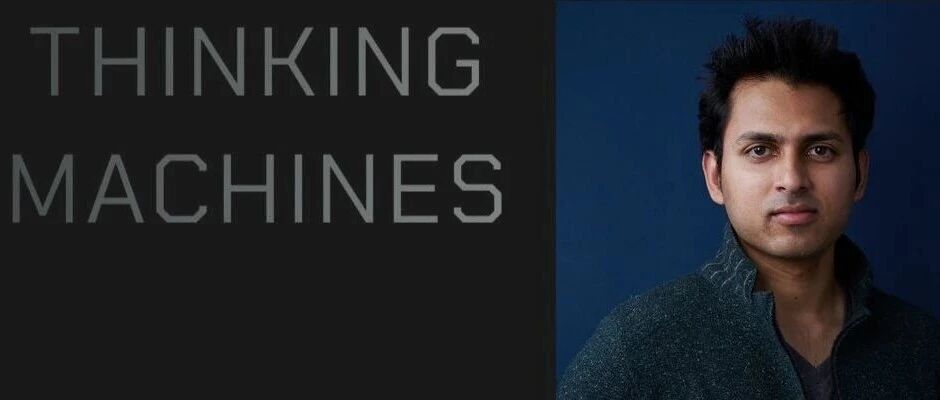
与此同时,这位 PyTorch 之父也更新了自己的个人介绍,正式官宣加入 TML,并表示正在这家估值已达 500 亿美元的创业公司「创造新东 西(Building new things)」 。 刚刚,才离开 Meta 不久的 Soumith Chintala 发布了一条推文,盛赞 Thinking Machines Lab(以下简称 TML)的人很了不起(incredible)。 其领英页面上目前更新的头衔仅仅是「技术人员」,所以我们目前还无从得知这个「新东西」会是什么。 根据Chintala 离职 Meta 前的推文,他是在 11 月 17 日才正式离职。如今才刚过去一天(考虑到时区),这种无缝衔接的节奏,似乎印证了 他此前所说的「不想再搞 PyTorch」的愿望确实非常迫切 。 推文一发布,翁荔(Lilian Weng)等多位 TML 研究者/工作人员就留言表示了欢迎。 也有人第一时间用扎克伯格的苦瓜脸制作了迷因图: 总之,恭喜恭喜! | Zach Mueller @ @TheZachMueller . 3h | Wow. Congrats! | | --- | --- | | 17 | | | ahme ...


刚刚,PyTorch之父光速入职TML!离职Meta刚过一天,投身500亿估值独角兽
机器之心· 2025-11-19 02:09
Core Viewpoint - Soumith Chintala, the creator of PyTorch, has joined Thinking Machines Lab (TML), a startup valued at $50 billion, indicating a shift towards new ventures and innovation in AI [2][4]. Group 1: Chintala's Transition - Chintala officially left Meta on November 17 and joined TML shortly after, reflecting his desire to move beyond PyTorch and explore new opportunities [4]. - His LinkedIn profile currently lists him as a "Technician," leaving the specifics of his new projects at TML unclear [3]. - Chintala expressed a strong wish to avoid being tied to a single project for decades, as he mentioned in his farewell letter [10]. Group 2: Career Background - Chintala's career has been marked by significant challenges, including being rejected by 12 universities and facing multiple job rejections, including three from DeepMind [12]. - He eventually joined FAIR, where he led the development of PyTorch, which now holds over 90% usage in the AI field and supports training at an unprecedented scale [12][14]. - His departure from Meta to TML signifies a bold career move, showcasing his evolution from a struggling engineer to a leading figure in AI [14]. Group 3: Future of PyTorch - Concerns about PyTorch's future have arisen following Chintala's departure; however, he has ensured that the team is resilient and capable of decision-making without his direct involvement [16]. - Chintala stated that the project no longer relies on him, emphasizing its strength and the foundational role it plays in redefining intelligence [16][17]. - He believes that AI is most effective when it is accessible and open-source, hinting at his future aspirations at TML [17].
X @Ansem
Ansem 🧸💸· 2025-11-19 01:41
RT trade.xyz (@tradexyz)In 1997, the world watched as Garry Kasparov challenged Deep Blue.In 2016, Lee Sedol faced off against AlphaGo.Tomorrow, trade against the leading frontier models - @grok @OpenAI @AnthropicAI @GeminiApp @deepseek_aiSign up: https://t.co/BbloOkoLZ4 https://t.co/Sls0PY4gSH ...
61岁贝佐斯创业物理AI!亲任CEO,首轮获投62亿美元融资
具身智能之心· 2025-11-19 00:34
贝佐斯亲身下场物理AI了,亲自担任CEO的那种。 纽约时报消息,这名前世界首富创立了一家新公司并亲自担任联席CEO。 而且资金实力雄厚,包括贝佐斯本人出资在内,该公司已获得62亿美元资金。 编辑丨 量子位 点击下方 卡片 ,关注" 具身智能之心 "公众号 >> 点击进入→ 具身 智能之心 技术交流群 更多干货,欢迎加入国内首个具身智能全栈学习社区: 具身智能之心知识星球(戳我) ,这里包含所有你想要的! 这也是贝佐斯卸任亚马逊CEO之后,首次担任正式的运营职务。 贝佐斯入局物理AI 去年,贝佐斯投资了具身大牛 Sergey Levine 创立的顶尖AI机器人公司Physical Intelligence,现在他又亲自下场创立了 Project Prometheus ,进军物理AI。 有贝佐斯的下场,这个公司一创立就资金雄厚,获得了62亿美元,约合人民币440亿。 员工规模也达到了上百人,其中包括从OpenAI、DeepMind等顶级人工智能公司挖来的研究人员。 Project Prometheus的研究项目包括将人工智能应用于机器人、药物设计和科学发现等物理任务,明确将重点放在计算机、汽车、航空航天 等高科技 ...
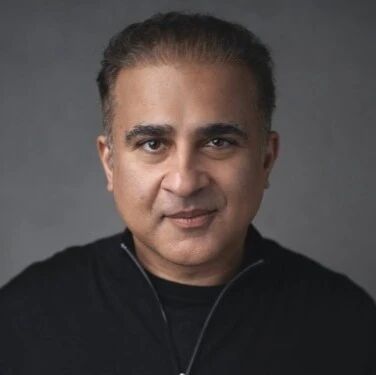
烧掉700亿,他为谷歌赢得诺奖,却将ChatGPT拱手让人
3 6 Ke· 2025-11-19 00:02
Core Insights - Demis Hassabis, CEO of Google DeepMind, has been a pivotal figure in Google's AI strategy, winning a Nobel Prize but causing Alphabet to miss commercial opportunities in AI [1][3][10] - OpenAI launched ChatGPT, leveraging the Transformer architecture, which significantly impacted Google's search business [5][10] Group 1: Leadership and Achievements - Hassabis has led DeepMind for 11 years since its acquisition by Google, earning millions and a Nobel Prize for the AlphaFold project, yet the financial returns for Alphabet have been slow [3][4] - Despite the accolades, AlphaFold has not become a significant revenue source for Alphabet, raising investor concerns about Google's leadership in AI [4][45] Group 2: Strategic Decisions - In 2019, Hassabis rejected a collaboration proposal from OpenAI, opting for DeepMind to pursue its goals independently, which led to OpenAI's earlier success with ChatGPT [4][5] - Google released the Transformer paper without commercializing it, allowing competitors to capitalize on the technology [4][5] Group 3: Vision and Future Plans - Hassabis aims to solve significant scientific challenges, viewing projects like AlphaFold as long-term endeavors rather than immediate revenue generators [7][21] - He is focused on developing Isomorphic Labs to utilize AI for drug discovery, with plans to push AI-designed drugs into clinical trials by the end of 2025 [18][25] Group 4: Company Culture and Philosophy - Hassabis emphasizes a scientific approach over commercial interests, often avoiding discussions about profits and focusing on the broader implications of AI for humanity [11][40] - His leadership style has led to a perception among some investors that DeepMind's projects lack immediate commercial viability, likening the company to a "star-studded team" that fails to win championships [13][46]