
云端服务

Search documents
花旗:Alphabet第四财季业绩胜预期,维持“买入”评级
Jin Rong Jie· 2026-02-05 07:13
Core Insights - Alphabet's Q4 performance exceeded expectations, driven by growth in search and cloud services revenue [1] Financial Performance - Total revenue reached $114 billion, representing a 17% year-over-year increase after excluding currency effects, surpassing market expectations by approximately 2% [1] - Operating profit was $36 billion with a profit margin of 31.6%, slightly below market expectations by about 2.5% due to increased losses in other business segments, potentially related to Waymo expenditures [1] - Earnings per share were $2.82, exceeding the market forecast of $2.63 [1] Future Outlook - Alphabet anticipates capital expenditures for 2026 to be in the range of $175 billion to $185 billion, higher than the previous estimate of $129 billion [1] - Citi maintains a "buy" rating on the stock with a target price of $350 [1]
怡亚通:AI算力与出海业务正形成强大的“赋能-反哺”闭环
Zheng Quan Ri Bao Wang· 2026-01-23 12:11
Core Viewpoint - The company, Yiatong (002183), is leveraging AI computing power to create a strong "empowerment-feedback" loop that enhances its overseas business operations [1] Group 1: AI Computing Power and Overseas Business - The AI computing power business provides comprehensive support for overseas enterprises, including domestic AI industrial control machines, computing center construction, and cloud services [1] - This support aims to improve the intelligence level of products and the efficiency of research and development for clients such as new energy vehicles and smart hardware manufacturers [1] Group 2: Accumulated Experience and Market Adaptation - Through serving clients in the new energy vehicle sector, the company has gained valuable global implementation experience, local compliance knowledge, and a network of end customers [1] - The firsthand information and customer relationships acquired in these "battlefields" will directly feed back into the company's computing power business, guiding the development of products and solutions that better meet overseas market demands [1] Group 3: New Sales Channels - The company's efforts in the overseas market are expected to open new sales channels for domestic computing hardware [1]

出行观丨欧盟正在打一场保护主义下的产业升级算盘
Guan Cha Zhe Wang· 2026-01-22 01:47
Core Viewpoint - The European Commission has introduced a comprehensive cybersecurity legislative proposal, deemed the "strictest ever," mandating EU member states to remove Huawei and ZTE from their mobile networks within three years of the law's enactment, indicating a shift from recommendations to mandatory actions in telecommunications security [1][4]. Group 1: Legislative Impact - The new proposal extends beyond telecommunications, potentially restricting companies from 18 sensitive sectors, including connected vehicles, power and water supply systems, cloud computing, medical devices, drones, aerospace, and semiconductors, if a country is deemed a cybersecurity threat [4]. - Huawei has responded to the proposal, arguing that it violates fundamental legal principles of fairness and non-discrimination by targeting non-EU suppliers based on country of origin rather than factual evidence and technical standards [4]. Group 2: Industry Implications - The legislative changes could significantly impact the automotive sector, particularly in the context of smart connected vehicles, as the freedom of choice in technology solutions may be replaced by security reviews, potentially barring Chinese companies from participating in critical components [5][7]. - The proposal could lead to systemic marginalization of Chinese technology standards in Europe, affecting the supply chain structure and increasing costs for European manufacturers who may have to opt for less mature and more expensive alternatives [7][11]. Group 3: Economic Considerations - The estimated cost of fully excluding Chinese equipment from 5G construction in Europe could reach approximately €550 billion (about ¥4.48 trillion), with the overall cost of transforming the telecommunications network projected at €2 trillion (about ¥16 trillion) [14][16]. - The financial burden of these changes may ultimately be passed on to consumers, raising product prices and complicating the market landscape for European companies [14][19]. Group 4: Strategic Objectives - The EU's move appears to be a strategic choice aimed at reshaping its technological landscape and reducing dependency on Chinese technology, pushing for local development of software and algorithms [11][13]. - This approach may lead to increased R&D costs for multinational companies, as they will need to maintain dual technology stacks to comply with different regulatory environments, further complicating the market dynamics [14][18].

靠出口智能对讲设备年入3亿,睿云联拿什么突破成长“瓶颈”?
Zhi Tong Cai Jing· 2026-01-19 12:50
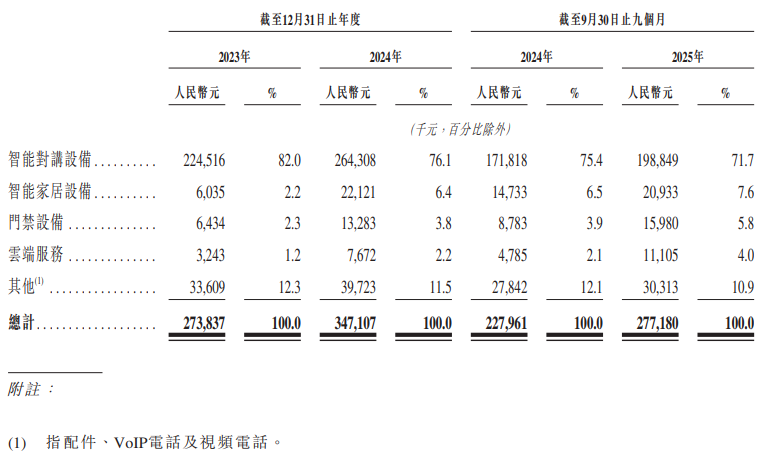
Core Viewpoint - The smart intercom system market is experiencing explosive growth, driven by the rapid development of new information technologies and the increasing demand for smart community management and emergency response solutions. The global intercom market is projected to grow from $1.68 billion in 2020 to $2.71 billion by 2024, with a compound annual growth rate (CAGR) of 12.7% [1]. Industry Growth - The global intercom market is expected to reach $3.93 billion by 2029, indicating a strong upward trend in demand for smart intercom solutions [1]. - The market is characterized by a significant unmet demand, as many existing buildings still rely on outdated intercom systems that require upgrades or replacements [3]. Company Performance - Xiamen Ruiyun Lianxin Technology Co., Ltd. (Ruiyun Lian) has submitted a listing application to the Hong Kong Stock Exchange, reflecting its growing market influence. By September 2025, the company expects to have sold nearly 2 million smart community solutions globally [1]. - Ruiyun Lian's revenue for 2024 is projected to increase by 26.8% to RMB 347 million, with a further 21.6% growth expected in the first nine months of 2025, reaching RMB 277 million [2]. - The company's net profit for the first nine months of 2025 is expected to be RMB 44.57 million, a nearly 60% year-on-year increase [2]. Revenue Structure - The majority of Ruiyun Lian's revenue comes from smart intercom devices, accounting for 82% in 2023, but this percentage is gradually declining [3]. - Revenue contributions from smart home devices, access control devices, and cloud services are increasing, with smart home devices rising from 2.2% in 2023 to 7.6% in the first nine months of 2025 [4]. Profitability - Ruiyun Lian's overall gross margin has shown slight fluctuations, with rates of 49.9% in 2023, 52.1% in 2024, and 50.7% in the first nine months of 2025 [5]. - The gross margin for smart intercom devices has remained stable around 53%, while the margins for smart home devices and access control devices have improved significantly [6]. Market Position - Ruiyun Lian leads in shipment volumes in North America and Europe for smart intercom products, but ranks second in revenue in North America and third in Europe, suggesting a competitive pricing strategy [8]. - The company plans to expand its product range and focus on promising sectors such as elderly care, aiming to develop innovative solutions that can disrupt traditional market models [10]. Future Outlook - The intercom industry is at a pivotal point, with trends indicating a shift towards integration with smart home systems and the exploration of new market opportunities in emerging regions like the Middle East and Southeast Asia [8][10]. - Ruiyun Lian's upcoming IPO in Hong Kong is expected to enhance its growth prospects, but it will also subject the company to greater scrutiny regarding its growth sustainability and market potential [11].
新股前瞻|靠出口智能对讲设备年入3亿,睿云联拿什么突破成长“瓶颈”?
智通财经网· 2026-01-19 12:39
Core Viewpoint - The smart intercom system market is experiencing explosive growth, driven by advancements in 5G, IoT, and big data, with a projected increase from $1.68 billion in 2020 to $2.71 billion by 2024, reflecting a compound annual growth rate (CAGR) of 12.7% [1]. Industry Growth - The global intercom market is expected to reach $3.93 billion by 2029, indicating a strong demand for smart community solutions that align with global elder care policies [1]. - The market is characterized by a significant demand for smart intercom systems, particularly in new residential and existing community upgrades [1][3]. Company Performance - Xiamen Ruiyun Lianxin Technology Co., Ltd. (Ruiyun Lian) has submitted a listing application to the Hong Kong Stock Exchange, indicating its growth trajectory [1]. - Ruiyun Lian's revenue is projected to increase by 26.8% to RMB 347 million in 2024, with a further 21.6% growth to RMB 277 million in the first nine months of 2025 [2]. - The company's net profit for the first nine months of 2025 is reported at RMB 44.57 million, a nearly 60% year-on-year increase [2]. Revenue Structure - The majority of Ruiyun Lian's revenue comes from smart intercom devices, accounting for 82% in 2023, though this percentage is gradually declining [3][4]. - Revenue contributions from smart home devices, access control devices, and cloud services are increasing, with smart home devices rising from 2.2% in 2023 to 7.6% in the first nine months of 2025 [4]. Profitability - Ruiyun Lian's overall gross margin has shown slight fluctuations, with a gross margin of 49.9% in 2023, increasing to 52.1% in 2024, and slightly decreasing to 50.7% in the first nine months of 2025 [5][6]. - The gross margin for smart intercom devices remains stable around 53%, while the margins for smart home and access control devices have shown improvement [6][7]. Market Position - Ruiyun Lian leads in intercom product shipments in North America and Europe, but ranks second in revenue in North America and third in Europe, suggesting a competitive pricing strategy [8][10]. - The company is exploring new product lines, including fall detection radar and companion robots, to enhance its market offerings [10]. Future Outlook - The intercom industry is at a pivotal point, with trends indicating a shift towards integrated smart home solutions and expanded connectivity within smart communities [8]. - Ruiyun Lian plans to focus on emerging markets with low penetration rates, particularly in the Middle East and Southeast Asia, to enhance brand recognition and market entry [10][11].
北美欧洲“智能对讲一哥”冲刺港股IPO,睿云联创全球覆盖110国、毛利率超50%
Sou Hu Cai Jing· 2026-01-19 08:37
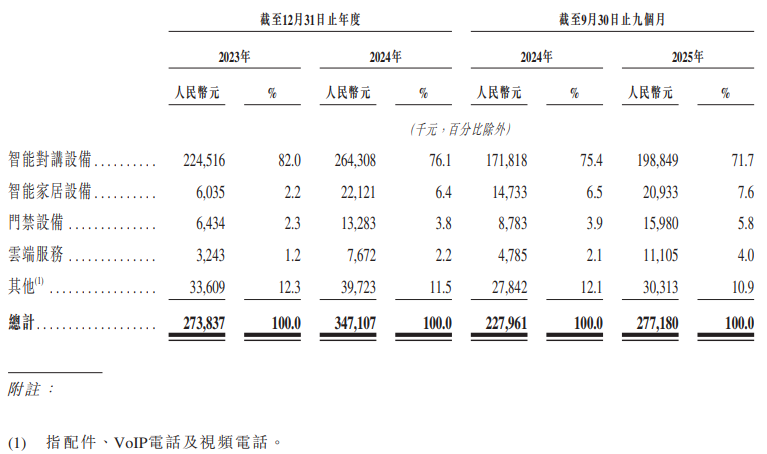
Core Viewpoint - Xiamen Ruiyun Lianchuang Technology Co., Ltd. has submitted a listing application to the Hong Kong Stock Exchange, with CMBI as the sole sponsor, indicating its intention to expand its market presence in the smart intercom solutions sector [3]. Company Overview - Founded in 2016, Ruiyun Lianchuang specializes in AI-driven smart intercom solutions, access control systems, smart home devices, and cloud services [3]. - According to Frost & Sullivan, Ruiyun Lianchuang is the largest provider of smart intercom solutions in North America and Europe by shipment volume in 2024 [3]. Product and Market Performance - As of September 30, 2025, Ruiyun Lianchuang has sold nearly 2 million units of its smart community solutions globally [4]. - The company's cloud services cover over 530,000 households, ranking second globally in household coverage, and have reached over 5,400 enterprises employing more than 163,000 staff [4]. Financial Performance - For the fiscal year ending December 31, 2023, Ruiyun Lianchuang reported revenues of RMB 273.84 million, with a profit of RMB 38.18 million, and a gross profit of RMB 136.56 million, resulting in a gross margin of 49.9% [5]. - In the first nine months of 2024, revenues increased to RMB 347.11 million, with profits rising to RMB 53.44 million and a gross profit of RMB 180.73 million, achieving a gross margin of 52.1% [5]. - For the first nine months of 2025, revenues are projected at RMB 277.18 million, with profits expected to be RMB 44.57 million and a gross profit of RMB 140.53 million, maintaining a gross margin of 50.7% [5].
睿云联递表港交所 招银国际为独家保荐人
Zheng Quan Shi Bao Wang· 2026-01-19 00:26
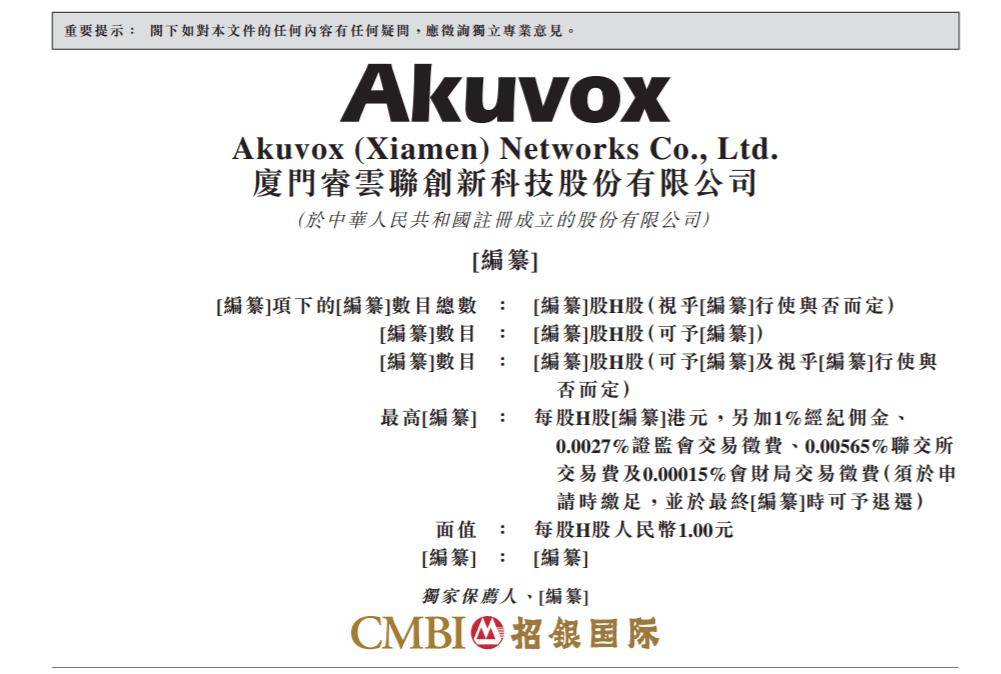
Company Overview - Ruijunlian has submitted a listing application to the Hong Kong Stock Exchange, with CMB International as the sole sponsor [1] - By 2024, Ruijunlian is the largest provider of smart intercom solutions in North America and Europe, with cloud services covering over 530,000 households globally as of September 30, 2025 [1] - The company offers AI-driven smart intercoms, access control devices, smart home equipment, and cloud services, targeting the global mid-to-high-end market across four main scenarios: residential, elderly care, commercial office, and community management [1] Technology and Integration - Ruijunlian employs an open architecture that allows seamless integration with third-party smart home devices, differing from traditional brands that use a closed architecture [1] - As of September 30, 2025, the company has sold nearly 2 million smart community solutions globally and has over 1 million mobile app users, collaborating with more than 180 distributors across 66 countries and regions [1] Market Growth - The global smart community market is rapidly expanding, with its size increasing from $467.8 billion in 2020 to an estimated $850.9 billion by 2024, reflecting a compound annual growth rate (CAGR) of 16.1% [1] - It is projected to reach $1,498.6 billion by 2029, with a CAGR of 12.3% from 2024 to 2029, driven by increased penetration of residential smart technology, deeper cross-scenario integration, and digital upgrades in community operations [1] Industry Insights - The smart intercom industry encompasses upstream components, midstream product manufacturing, and downstream applications [2] - The global intercom market is in a stable development phase, with its size growing from $1.68 billion in 2020 to $2.71 billion by 2024, representing a CAGR of 12.7% [2] - It is expected to reach $3.93 billion by 2029, with a CAGR of 7.7% from 2025 to 2029 [2]
厦门睿云联申请香港上市!北美及欧洲最大智能对讲解决方案提供商
Sou Hu Cai Jing· 2026-01-18 06:35
Core Viewpoint - Xiamen Ruiyun Lian Innovation Technology Co., Ltd. (referred to as "Ruiyun Lian") has submitted an application for an initial public offering (IPO) to list its H-shares on the Hong Kong Stock Exchange, with StarNet RuiJie (002396) holding a 37.91% stake in the company [1][3]. Company Overview - Ruiyun Lian is a leading global provider of smart intercom solutions, focusing on AI-driven products that cover multiple scenarios, including smart intercoms, access control systems, smart home devices, and cloud services [3]. - The company targets the global mid-to-high-end market and specializes in four key areas: residential, elderly care, commercial office, and community management [3]. Market Position - Ruiyun Lian is the largest provider of smart intercom solutions in North America and Europe by shipment volume as of 2024, according to Frost & Sullivan [5]. - As of September 30, 2025, Ruiyun Lian's cumulative sales of smart community solutions are close to 2 million units, and its cloud services cover over 530,000 households, ranking second globally in household coverage [5]. Financial Performance - For the nine months ending September 30 in 2023, 2024, and 2025, the company's revenues were approximately 274 million, 347 million, and 278 million RMB, respectively [7]. - The net profits for the same periods were approximately 38.18 million, 53.44 million, and 44.57 million RMB, respectively [7].

睿云联递表港交所 为北美及欧洲最大的智能对讲解决方案提供商
Zhi Tong Cai Jing· 2026-01-16 14:07
Company Overview - Xiamen Ruijun Lianxin Technology Co., Ltd. (Ruijun Lian) has submitted a listing application to the Hong Kong Stock Exchange, with CMB International as the sole sponsor [1] - Ruijun Lian is the largest provider of smart intercom solutions in North America and Europe by shipment volume as of 2024 [1] - The company focuses on four main scenarios: residential, elderly care, commercial office, and community unified management [4] Product and Market Position - Ruijun Lian offers AI-driven smart intercoms, access control devices, smart home devices, and cloud services, targeting the global mid-to-high-end market [4] - The company has established partnerships with over 180 distributors across 66 countries and regions [5] - As of September 30, 2025, the cumulative sales of its smart community solutions are close to 2 million units, and its cloud services cover over 530,000 households, ranking second globally in household coverage [1][4] Financial Performance - Revenue for the fiscal year ending December 31, 2023, was approximately 273.8 million RMB, with projected revenues of 347.1 million RMB for 2024 and 277.2 million RMB for the nine months ending September 30, 2025 [9] - The net profit for the same periods was approximately 38.2 million RMB for 2023, 53.4 million RMB for 2024, and 44.6 million RMB for the nine months ending September 30, 2025 [10] - The gross profit margin for 2023, 2024, and the nine months ending September 30, 2025, was 49.9%, 52.1%, and 50.7%, respectively [12] Industry Overview - The global smart community market is rapidly expanding, with a market size projected to grow from $467.8 billion in 2020 to $850.9 billion by 2024, representing a compound annual growth rate (CAGR) of 16.1% [13] - The global intercom market is also experiencing growth, with its size expected to increase from $1.68 billion in 2020 to $2.71 billion by 2024, at a CAGR of 12.7% [14] - By 2029, the smart community market is anticipated to reach $1,498.6 billion, driven by increased penetration of smart home technology and digital upgrades in community operations [13]
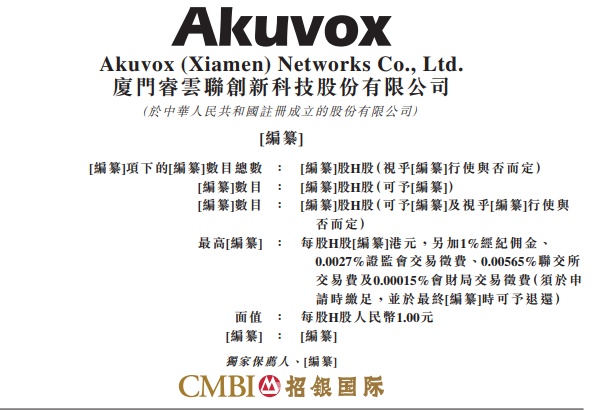
星网锐捷:参股公司睿云联1月16日申请港股上市
Sou Hu Cai Jing· 2026-01-16 13:40
Core Viewpoint - Xingwang Ruijie announced that its associate company, Xiamen Ruiyunlian Innovation Technology Co., Ltd., has submitted an application for an initial public offering (IPO) on the Hong Kong Stock Exchange, which has been accepted [1] Group 1: Company Overview - Ruiyunlian is a provider of intelligent intercom solutions, involved in the development, manufacturing, and sales of smart intercom, access control, and smart home products [1] - The company also offers cloud services to global customers [1] Group 2: Shareholding Information - As of the announcement date, Xingwang Ruijie holds a 37.9147% stake in Ruiyunlian [1]
