Mobileye Global Inc.

Search documents
XPEV Q1 Loss Narrows, Revenues Rise Y/Y on Higher Vehicle Delivery
ZACKS· 2025-05-22 15:46
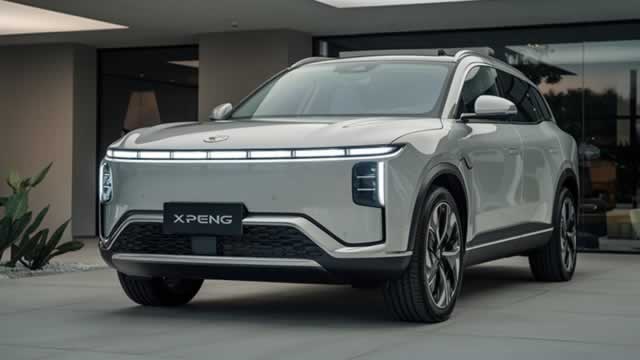
Core Insights - XPeng (XPEV) reported a first-quarter 2025 loss of 10 cents per share, an improvement from a loss of 20 cents in the same quarter last year. Revenues surged to $2.18 billion, up from $907 million, driven by a 330.8% year-over-year increase in vehicle deliveries [1] Financial Performance - Vehicle deliveries reached 94,008 in Q1 2025, with revenues from vehicle sales amounting to $1.98 billion, reflecting a 159.2% increase year-over-year. The gross margin from vehicle sales improved to 10.5% from 5.5% in the prior year [2][3] - Revenues from services and others were $200 million, a 43.6% increase year-over-year, with a gross margin of 66.4%, up from 53.9% in the previous year. The total gross margin for Q1 was 15.6%, compared to 12.9% in the prior-year quarter [3] Expenses and Cash Position - Research and development expenses rose by 46.7% year-over-year to $270 million, while selling, general, and administrative expenses increased by 40.2% to the same amount. As of March 31, 2025, cash and cash equivalents were RMB 45.28 billion, up from RMB 41.96 billion at the end of 2024 [4] Q2 Outlook - For Q2 2025, XPeng anticipates vehicle deliveries between 102,000 and 108,000, indicating a year-over-year increase of 237.7% to 257.5%. Total revenues are expected to be between RMB 17.5 billion and RMB 18.7 billion, suggesting a year-over-year growth of 115.7% to 130.5% [5]


Lyft's AV Plans, Rider Increase, Ads Drive Fuel Up To 70% Upside: Analyst
Benzinga· 2025-05-21 19:24
Core Viewpoint - Lyft has reported strong first-quarter performance, driven by a multifaceted strategy focused on service quality, innovation, and market expansion, leading to record metrics in rides, riders, driver hours, and gross bookings [1][2]. Financial Performance - First-quarter revenue increased by 14% to $1.5 billion [2]. - Gross bookings rose by 13% to $4.2 billion [2]. - The number of rides increased by 16% to a record 218.4 million [2]. - Active riders grew by 11% to a record 24.2 million [2]. Strategic Initiatives - Lyft is investing in AI-driven technologies to enhance the experience for both riders and drivers, while also improving operational efficiency and safety [3]. - Key growth initiatives include the launch of the Earnings Assistant, an AI-powered tool for drivers, and the Smooth Cruiser score for performance feedback [4]. - Lyft Silver, a service for adults aged 65 and older, targets an untapped demographic that constitutes about 5% of Lyft riders [5]. Geographic and Market Expansion - Lyft is focusing on geographic growth in smaller, car-dependent cities, with rides in Indianapolis growing by 37% in the first quarter [6]. - The company is expanding internationally with the acquisition of the European taxi-handling app FREENOW [7]. Advertising and Revenue Generation - Lyft is enhancing its advertising initiatives through Lyft Media, which includes in-app ads and vehicle signage to engage riders and generate additional revenue [6]. Future Growth Drivers - The introduction of the Wait & Save feature allows consumers to save money by waiting longer for rides, indicating a strategy to attract demand through discounts [8]. - Lyft has increased its share repurchase authorization to $750 million, with plans to buy back $500 million in stock over the next twelve months [9]. - The 12-month target price of $28 represents a potential return of close to 70% from current levels [9].


Qualcomm (QCOM) FY Conference Transcript
2025-05-14 16:20
Qualcomm (QCOM) FY Conference Summary Company Overview - **Company**: Qualcomm (QCOM) - **Date of Conference**: May 14, 2025 Key Developments - Qualcomm announced a partnership with Humane, Saudi Arabia's government data center initiative, to develop data center solutions for AI and CPU chips [2][5] - The focus is on low power processing for AI workloads, both in data centers and on devices [4][5] Industry Insights AI and Data Centers - Qualcomm believes in a hybrid approach to AI, with processing occurring both in the cloud and on devices [3][11] - The company emphasizes its unique value proposition in low power solutions for AI processing [4][5] - The partnership with Humane is seen as a strategic move to leverage Qualcomm's technology in the data center space [6][8] Edge AI Adoption - Qualcomm is optimistic about the long-term trend of edge AI adoption across various sectors, including phones, PCs, XR, industrial, and robotics [12][13] - The company anticipates that AI will drive differentiation, ASP growth, and new use cases, leading to increased device replacement rates [13][16] Industrial IoT - Qualcomm targets $4 billion in revenue from industrial IoT, viewing it as a significant growth opportunity similar to the automotive market transformation [19][22] - The company believes existing players in the microcontroller and industrial PC markets will struggle to adapt to new technologies, positioning Qualcomm favorably [23][24] XR Market - Qualcomm has set a revenue target of $2 billion for the XR market by 2029, based on a conservative estimate of 30 million units sold [29][31] - The company sees potential for growth driven by agentic AI and innovative use cases for XR devices [32][34] PC Market - Qualcomm holds a 9% market share in the PC segment, with a focus on transitioning from x86 to ARM architecture [36][39] - The company aims for $4 billion in revenue from the PC market by 2029, driven by the adoption of AI-centric devices [41][42] Automotive Sector - Qualcomm is positioned as a key player in the automotive market, with significant growth expected in digital cockpit and ADAS technologies [44][47] - The company has a diverse design win pipeline across major automotive markets globally [46][49] Smartphone Market - Qualcomm has reported low double-digit growth in its handset business, driven by a mix shift towards higher-end devices [52][54] - The company anticipates continued growth due to increased capabilities in devices and the integration of AI [55][56] Financial Strategy - Qualcomm plans to return 100% of its free cash flow to shareholders, indicating strong financial health [63][64] - The company is focused on managing operational expenses while investing in growth areas [58][59] Additional Considerations - Qualcomm does not foresee a direct impact from tariffs or the Section 332 investigation at this time, viewing its global presence as a mitigating factor [67][69]

从99%到99.99%,Robotaxi正在跨越“最后一公里”?
3 6 Ke· 2025-05-14 10:48
Group 1 - The year 2025 is anticipated to be a breakthrough year for the integration of autonomous driving and artificial intelligence, with Tesla launching a "fully autonomous" Robotaxi service in Austin, Texas, and planning to mass-produce the CyberCab model by 2026 [1] - Tesla's AI company, xAI, has completed a $6 billion financing round aimed at creating a supercomputing factory to enhance Tesla's autonomous driving technology [1] - Global ride-hailing giants Uber and Lyft are accelerating the commercialization of autonomous driving through partnerships with Waymo and Mobileye, with both companies reporting significant progress in their autonomous driving businesses [1][3] Group 2 - Tesla's Full Self-Driving (FSD) system is a key competitive advantage, having accumulated over 1.6 billion miles of driving data, with plans for the FSD V13 version to increase the required mileage by six times [2] - The FSD system utilizes end-to-end neural network technology to achieve "human-like" driving decisions, capable of handling complex scenarios [2] - The global Robotaxi market is projected to exceed $2 trillion by 2030, driven by technological breakthroughs and capital influx [3] Group 3 - The competition in the Robotaxi market is bifurcating into two camps: cost-driven and ecosystem-driven, with Waymo leveraging Google's ecosystem and Chinese players like Pony.ai and WeRide focusing on cost advantages [3] - Pony.ai has significantly reduced hardware costs, with an 80% decrease in onboard computing unit costs and a 68% reduction in lidar costs [3] - The financing for Robotaxi-related ventures has surged, with Waymo's valuation exceeding $45 billion and Uber's stock rising by 46.05% due to autonomous driving collaborations [3] Group 4 - The traditional automotive industry's business model is shifting from hardware sales to a data-driven, service-oriented ecosystem, with Tesla's "shared economy + subscription model" expected to transform its revenue structure [5][7] - Uber and Lyft are adopting a light-asset platform strategy, integrating third-party technologies to mitigate high costs associated with building their own fleets [7] - Chinese companies are leveraging local advantages to expand into international markets, with Pony.ai and WeRide entering the Middle East and Europe [8][12] Group 5 - China's regulatory environment is becoming more favorable for autonomous driving, with local legislation paving the way for commercial applications of Level 3 autonomous driving by 2025 [11] - Chinese companies are focusing on cost efficiency and localized innovation, with Pony.ai's seventh-generation system achieving significant cost reductions [11] - The global landscape is characterized by a complex interplay of policies, technology, and globalization, with China positioning itself to capitalize on these dynamics [10][12]


从99%到99.99%,Robotaxi正在跨越“最后一公里”?
美股研究社· 2025-05-14 10:28
Core Viewpoint - The year 2025 is anticipated to be a breakthrough year for the integration of autonomous driving and artificial intelligence, with significant advancements in Robotaxi services and AI capabilities [1]. Group 1: Industry Developments - Tesla plans to launch a "fully autonomous" Robotaxi service in Austin, Texas, in June 2025, and aims to mass-produce the CyberCab model without a steering wheel by 2026 [1]. - Elon Musk's AI company xAI has raised $6 billion to enhance Tesla's autonomous driving technology, indicating a strong push towards a supercomputing factory [1]. - Global ride-hailing giants Uber and Lyft are collaborating with Waymo and Mobileye to accelerate the commercialization of autonomous driving, with both companies reporting significant progress in their recent quarterly earnings [1][3]. Group 2: Technological Advancements - Tesla's Full Self-Driving (FSD) system has accumulated over 1.6 billion miles of driving data, with the upcoming FSD V13 expected to increase the necessary takeover mileage by six times [3]. - The FSD V12 version utilizes end-to-end neural network technology to achieve "human-like" driving decisions, capable of handling complex scenarios [3]. - The competition in the Robotaxi market is characterized by two main camps: cost-driven and ecosystem-driven, with companies like Waymo leveraging Google's ecosystem for high-value scenarios [4]. Group 3: Market Potential and Financial Insights - The global market for Robotaxi services is projected to exceed $2 trillion by 2030, driven by technological breakthroughs and capital influx [5]. - Waymo's valuation has surpassed $45 billion, and Uber's stock has risen by 46.05% year-to-date due to its autonomous driving collaborations [5]. Group 4: Business Model Transformation - The traditional automotive business model centered on hardware sales is being disrupted by a data-driven, service-oriented ecosystem model [7]. - Tesla's "shared economy + subscription model" is expected to significantly alter its revenue structure, allowing vehicle owners to earn income from idle cars [9]. - Uber's strategy focuses on a light-asset platform approach, integrating third-party technologies to mitigate high costs associated with building its own fleet [9]. Group 5: Global Competitive Landscape - Chinese companies are leveraging cost advantages and local operational strategies to penetrate markets like the Middle East, with successful deployments of Robotaxi services [10][14]. - The regulatory environment in the U.S. varies significantly, with Texas being more permissive for autonomous vehicle testing compared to California's stringent regulations [12][13]. - Chinese firms are forming a self-sufficient supply chain in critical areas such as lidar and high-precision mapping, which could diminish Tesla's global procurement advantages [14][15].


自动驾驶将在今年大爆发!这四家美股公司必须关注!
美股研究社· 2025-05-13 10:58
Core Viewpoint - The article emphasizes that the autonomous driving market is on the verge of a significant breakthrough, with major companies like Tesla, Uber, and Waymo making substantial advancements in the commercialization of autonomous vehicles this year [3][4]. Group 1: Market Overview - The autonomous driving market is projected to grow from $1.7 trillion to $3.9 trillion over the next decade, with fully autonomous driving expected to increase from $60 billion in 2024 to $200 billion by 2033 [4]. - McKinsey predicts that autonomous driving could generate $400 billion in revenue by 2035 [4]. Group 2: Deployment Strategies - There are two primary strategies for deploying autonomous vehicles: gradual deployment (L2/L3 to L4) and direct deployment of fully autonomous systems (L4 Robotaxi) [5][13]. - Gradual deployment involves traditional automakers like Tesla and BMW, focusing on enhancing automation through user data and algorithm training [7][10]. - Direct deployment is led by tech companies like Waymo and Cruise, focusing on specific geofenced areas for autonomous operations [14][15]. Group 3: Key Players - Mobileye (MBLY) is highlighted as a core supplier for the second deployment strategy, providing essential components like chips and software for autonomous driving [21][24]. - MBLY holds a 50% market share in the Advanced Driver Assistance Systems (ADAS) market, with its EyeQ chip integrated into approximately one-third of new vehicles globally [26]. - Collaborations with major automakers like BMW and Volkswagen enhance MBLY's market presence and revenue potential [30][34]. Group 4: Uber and Lyft's Role - Uber is positioned as a leading player in the ride-hailing market, holding a 75% market share in the U.S., while Lyft holds 25% [48]. - Uber's profitability, with a net profit margin of 22.4%, contrasts with Lyft's lower profitability, indicating Uber's stronger market position [50][52]. - Collaborations with MBLY and other tech companies are crucial for both Uber and Lyft to integrate autonomous vehicles into their platforms [46][56]. Group 5: Pony.ai's Expansion - Pony.ai is identified as a Chinese autonomous driving software company, with significant growth potential in the robotaxi market, projected to expand from $54 million in 2023 to $12 billion by 2030 [58]. - The company has achieved all-weather Level 4 autonomous driving and is expanding its services in major Chinese cities [59][61]. - Partnerships with Uber and Toyota are expected to enhance Pony.ai's global reach and operational capabilities [63].
AI 终端落地场景丰富,产业链迎高增机遇
2025-05-12 01:48
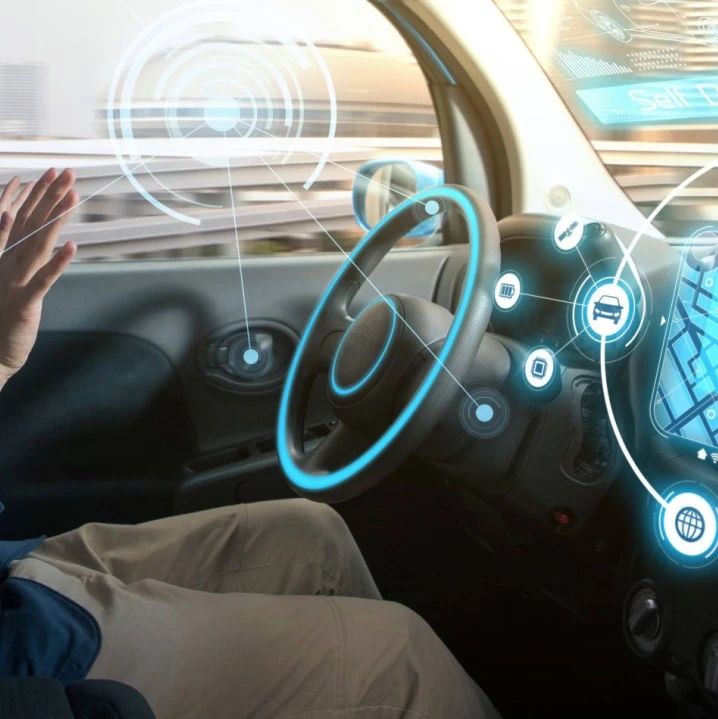
Summary of Key Points from Conference Call Records Industry Overview - The conference call discusses the **AI-driven consumer electronics industry**, focusing on the impact of AI applications on traditional smart devices such as smartphones and PCs, as well as emerging technologies like AI glasses and smart driving solutions [1][2][3]. Core Insights and Arguments - **AI Applications Driving Hardware Upgrades**: The integration of AI is leading to significant upgrades in core components of traditional smart devices, including processors, storage, and cameras. Major brands like Apple and Lenovo are expected to see substantial performance improvements [1][3]. - **Market Potential for New Smart Hardware**: The market for new smart hardware, particularly AI glasses, is projected to grow significantly, with sales expected to exceed ten million units. Meta is anticipated to launch AR glasses in the second half of the year, which will further stimulate market growth [1][8][11]. - **Transformations in Smartphone and PC Supply Chains**: The smartphone and PC supply chains are undergoing notable changes, with innovations in camera technology (e.g., periscope lenses) and cooling solutions becoming prevalent. The introduction of foldable screen technology is expected to be a key growth driver, particularly with Apple's upcoming foldable devices [1][5][7][9]. - **Increased Demand for Storage and Battery Performance**: AI smartphones and PCs will require enhanced storage and battery capabilities, leading to upgrades across the supply chain from battery cells to storage modules. This is expected to improve the profitability of related suppliers [1][10]. Additional Important Content - **Investment Opportunities in Consumer Electronics**: The current low valuation of the consumer electronics sector presents significant investment opportunities, especially as major companies report strong earnings and growth trends for the upcoming quarters [2]. - **Focus on Specific Sub-sectors**: Three key sub-sectors are highlighted for investment: traditional smart terminals (smartphones and PCs), new smart hardware (AI glasses), and smart driving technologies [3][4]. - **Smart Driving Sector Growth**: The smart driving sector is experiencing rapid advancements, with increased demand for high-performance camera modules and LiDAR technology. The number of cameras in advanced driving assistance systems (ADAS) is expected to rise significantly [4][13]. - **Emerging Technologies in Smart Driving**: The demand for high-speed connectors and advanced driving chips is increasing, with domestic companies like Lianxin and Luxshare actively participating in the automotive electronics market [15][16]. - **Key Companies to Watch**: Investors are advised to focus on companies with strong valuations and growth potential, including major players in the supply chain such as Luxshare, Lens Technology, and Gree Electric, as well as innovative firms in niche markets [17][18]. This summary encapsulates the essential insights and trends discussed in the conference call, providing a comprehensive overview of the current state and future potential of the AI-driven consumer electronics industry.

Lear's Q1 Earnings & Revenues Surpass Estimates, Decline Y/Y
ZACKS· 2025-05-08 13:40
Core Viewpoint - Lear Corp. reported adjusted earnings per share of $3.12 for Q1 2025, exceeding the Zacks Consensus Estimate of $2.64, driven by strong performance in the Seating segment, although it decreased from $3.18 in the same quarter last year [1] Financial Performance - Total revenues for Lear Corp. decreased by 7.24% year over year to $5.56 billion, slightly surpassing the Zacks Consensus Estimate of $5.55 billion [1] - The Seating segment generated sales of $4.15 billion, down from $4.48 billion year over year, but exceeded the Zacks Consensus Estimate by 1.1% [2] - The E-Systems segment reported sales of $1.41 billion, a decline of 7.12% year over year, missing the Zacks Consensus Estimate by 0.5% [3] Segment Performance - Adjusted earnings for the Seating segment were $280 million, down from $294.9 million year over year, but beat the Zacks Consensus Estimate by 16.2% [2] - The E-Systems segment's adjusted earnings were $73.8 million, down from $77.1 million in the same quarter last year, yet surpassed the Zacks Consensus Estimate by 25.4% [3] Regional Performance - North America sales fell by 9.2% year over year to $2.25 billion, missing the Zacks Consensus Estimate by 2.43% [4] - Sales in Europe and Africa decreased by 8.5% year over year to $2.06 billion, beating the Zacks Consensus Estimate by 7.28% [4] - Asia region sales totaled $1.07 billion, an increase of 1.12% year over year, but missed the Zacks Consensus Estimate by 0.5% [4] - South America sales were $177.8 million, down from $205.2 million year over year, missing the Zacks Consensus Estimate by 18.35% [5] Financial Position - As of March 29, 2025, Lear Corp. had $779.9 million in cash and cash equivalents, down from $1.05 billion at the end of 2024 [6] - Long-term debt remained unchanged at $2.73 billion as of March 29, 2025 [6] - The company reported a negative free cash flow of $231.7 million for the quarter [6] Share Repurchase and Guidance - During the quarter, Lear Corp. repurchased 263,003 shares for a total of $25 million, with a remaining share repurchase authorization of nearly $1.1 billion [7] - The company has not reaffirmed its full year 2025 guidance due to uncertain macroeconomic conditions [7]

吉利汽车宣布大动作:私有化极氪!
DT新材料· 2025-05-07 16:03
Core Viewpoint - Geely Auto has proposed a non-binding offer to privatize Zeekr, suggesting a purchase price of $2.57 per share or $25.66 per American Depositary Share, aiming to focus on its core automotive business and enhance operational efficiency [1][2][3] Group 1: Privatization Proposal - Geely Auto announced its intention to privatize Zeekr, which has been listed on the NYSE for only one year, to concentrate on its main automotive business [1][2] - The proposed privatization is part of Geely's strategy to integrate resources, reduce costs, and improve competitiveness in the electric vehicle sector [3] Group 2: Zeekr's Financial Performance - Zeekr completed a Pre-A round financing of $500 million and an A round financing of $750 million, with valuations rising from $9 billion to $13 billion [2] - In 2024, Zeekr reported total revenue of 75.913 billion RMB ($10.4 billion), a year-on-year increase of 46.9%, with a net loss of 5.791 billion RMB, reduced by 29.9% year-on-year [2] Group 3: Strategic Focus and Brand Positioning - Geely aims to enhance brand synergy and maintain distinct positioning for its various brands, including Zeekr as a luxury tech brand and Lynk & Co as a high-end new energy brand [3] - The privatization aligns with Geely's "Taizhou Declaration" to improve resource utilization and strengthen its global competitiveness in the smart electric vehicle market [3] Group 4: Recent Transactions - Geely has also sold stakes in its subsidiary, Geely Xinwanda, to further focus on its automotive business, with the total transaction value amounting to approximately 84.3 million RMB [4]


Rivian Q1 Earnings Surpass Expectations, Revenues Rise Y/Y
ZACKS· 2025-05-07 12:25
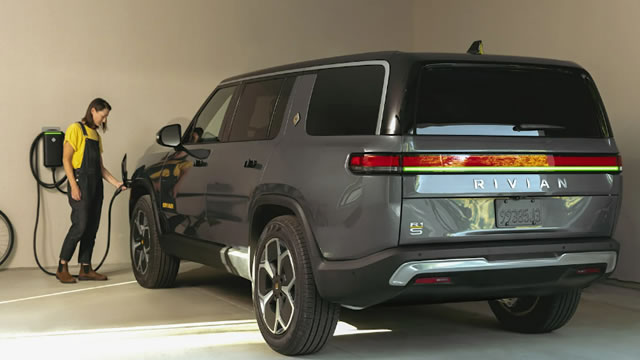
Core Insights - Rivian Automotive reported a narrower loss of 41 cents per share for Q1 2025, compared to a loss of $1.19 in the same period last year, and better than the Zacks Consensus Estimate of a loss of 80 cents per share [1] - Revenues reached $1.24 billion, exceeding the Zacks Consensus Estimate of $1.02 billion, and reflecting a 3% year-over-year increase driven by growth in software and services revenues as well as automotive regulatory credits [1] Q1 Highlights - Total production for Rivian in Q1 2025 was 14,611 units, an increase from 13,980 units in the prior year, while deliveries decreased to 8,640 units from 13,588 units year-over-year [2] - Gross profit for the quarter was $206 million, a significant improvement from a gross loss of $527 million in the prior-year quarter, resulting in a gross margin of 17% [3] Financial Performance - Adjusted operating expenses decreased to $630 million from $677 million in the previous year, while adjusted loss before interest, taxes, depreciation, and amortization improved to $329 million from $798 million [3] - Net cash used in operating activities was $188 million, a substantial reduction from $1.27 billion in the same period of 2024, with capital expenditures rising to $338 million from $254 million year-over-year [4] Segment Performance - The Automotive segment generated revenues of $922 million, down 17.4% year-over-year, primarily due to limited EDV sales, but achieved a gross profit of $92 million compared to a gross loss of $497 million in the prior-year quarter [5] - The Software and Services segment saw revenues of $318 million, more than doubling year-over-year, with a gross profit of $114 million compared to a loss of $30 million in the same quarter of 2024 [6] Financial Position - As of March 31, 2025, Rivian had $4.69 billion in cash and cash equivalents, down from $5.29 billion at the end of 2024, with long-term debt slightly increasing to $4.443 billion [7] Guidance Revision - Rivian revised its 2025 delivery guidance to 40,000 to 46,000 vehicles, down from the previous estimate of 46,000-51,000 units, and expects adjusted EBITDA to remain negative in the range of $1.7 billion to $1.9 billion [8]