
Mobileye Global Inc.

Search documents
Ford Q1 Earnings Surpass Expectations, Revenues Decline Y/Y
ZACKS· 2025-05-06 12:10
Core Insights - Ford Motor Company reported first-quarter 2025 adjusted earnings per share of 14 cents, surpassing the Zacks Consensus Estimate of breakeven earnings but declining from 49 cents in the same quarter last year [1] - The company's consolidated first-quarter revenues were $40.66 billion, down 5% year over year, while total automotive revenues were $37.42 billion, exceeding the Zacks Consensus Estimate of $35.48 billion but decreasing from $39.89 billion a year ago [1] Financial Performance - Ford suspended its guidance for 2025, anticipating an adverse adjusted EBIT impact of approximately $1.5 billion due to tariff issues [2] - In the Ford Blue segment, total wholesale volume decreased 6% year over year to 588,000 units, with revenues of $21 billion, down 3% year over year but exceeding estimates [3] - The Ford Model e segment saw total wholesale volume rise 213% year over year to 31,000 units, with revenues jumping 967% to $1.2 billion, although it fell short of estimates [4] - The Ford Pro segment experienced a 14% year-over-year decrease in total wholesale volume to 352,000 units, with revenues slumping 16% to $15.2 billion, missing expectations [5] - Revenues from the Ford Credit unit increased 12% year over year to $3.24 billion, with pretax earnings rising 78% to approximately $580 million [6] Financial Position - Ford reported negative adjusted free cash flow of $1.5 billion for the quarter, with cash and cash equivalents totaling $20.9 billion as of March 31, 2025, and long-term debt (excluding Ford Credit) at $16.64 billion [6]



Magna Q1 Earnings Miss Expectations, 2025 Guidance Revised
ZACKS· 2025-05-05 19:40
Magna International (MGA) reported first-quarter 2025 adjusted earnings of 78 cents per share, which decreased from the year-ago quarter’s $1.08, missing the Zacks Consensus Estimate of 90 cents.Net sales decreased 8.21% year over year to $10.06 billion but surpassed the Zacks Consensus Estimate of $9.5 billion.MGA’s Segmental PerformanceThe Body Exteriors & Structures segment’s revenues were $3.97 billion, down 10% year over year. This was due to lower production and the end of production of certain progra ...


Uber vs. Lyft Earnings Preview: Robotaxi Ambitions in Focus
ZACKS· 2025-05-05 19:35
Core Insights - Uber and Lyft are set to report their first-quarter 2025 earnings, with Lyft generating nearly all its revenue from ridesharing and holding about 25% of the U.S. market, while Uber dominates with approximately 75% market share [1][9] Earnings Expectations - Analysts predict Lyft will report flat EPS with gross bookings growth between 10-14%, while Uber is expected to report earnings of $0.51 per share, recovering from a loss last quarter, with gross bookings growth between 17-21% [2] Market Reactions - The options market indicates an expected post-earnings move of ±7.8% for Uber and ±15.6% for Lyft, reflecting traders' anticipation of volatility [3] Competitive Landscape - Uber has shown significant price performance, with shares up 43% year-to-date, compared to Lyft's 0.5% gain, highlighting Uber's relative strength in the market [4] - Uber's diverse business model, including its successful Uber Eats delivery service, contrasts with Lyft's more singular focus on ridesharing [5] - Uber has established partnerships for autonomous ride-sharing with companies like Nvidia and Volkswagen, positioning itself strongly in the robotaxi sector [6] Robotaxi Developments - The growth of robotaxi services, exemplified by Waymo's 250,000 paid rides per week, raises questions about Uber and Lyft's adaptation to this trend [10][11] - Lyft has made some moves in the robotaxi space, including a partnership with Mobileye, but is perceived to be lagging behind Uber in this area [11] Profitability and Growth - Both companies have reached profitability in 2023 after years of losses, indicating a significant shift in their financial health [12] - Historically, Lyft and Uber have exceeded Wall Street expectations, with Lyft beating estimates for eight consecutive quarters and achieving an average surprise of 42.11% over the past four quarters [14] Technical Analysis - Uber's stock has shown strong relative price strength and is emerging from a bullish pattern, while Lyft's stock is approaching a pivotal technical zone, indicating potential for change depending on upcoming earnings [16][18] Conclusion - As Uber and Lyft prepare to release their earnings, key areas of focus will include future growth prospects, robotaxi strategies, and overall performance in the evolving ride-sharing industry, with Uber currently positioned as the market leader [20]



英特尔2024年动荡与2025年扭转之路
傅里叶的猫· 2025-05-01 14:49
Core Viewpoint - Intel experienced significant turmoil in 2024, facing intense competition in the chip design and manufacturing market, leading to substantial losses. In 2025, under new CEO Lip-Bu Tan, the company is taking measures to address systemic issues and streamline operations, although a full turnaround will take several quarters [1][10]. Financial Performance - In Q1 2025, Intel reported revenue of $12.7 billion, flat year-over-year but down 11% quarter-over-quarter. The gross margin was 36.9%, a decline of 4.1 percentage points year-over-year and 2.3 percentage points quarter-over-quarter. The net loss was $888 million, a 115% decrease year-over-year and a 604% decline quarter-over-quarter [2][3]. - Despite the losses, Intel achieved a non-GAAP profit of $580 million, indicating that core operations are not entirely in distress. However, restructuring and compensation costs have significantly impacted overall performance [3]. Business Unit Developments - Intel's Foundry division generated $4.7 billion in revenue, a 7% increase year-over-year, but faced an operating loss of $2.3 billion, with an operating margin of -50%. The division is striving to become a key player in the contract manufacturing space [4][5]. - The Data Center and AI Group (DCAI) reported revenue of $4.1 billion, an 8% increase year-over-year, with operating income of $575 million and an operating margin of 13.9%, marking the best performance in over a year. AI hardware sales were below expectations, but CPU and storage sales exceeded forecasts [7]. - The Client Computing Group (CCG), Intel's primary revenue source, saw revenue of $7.6 billion, an 8% decline year-over-year, with operating income of $2.4 billion and an operating margin of 30.9%. The group absorbed the edge computing business, but overall performance was affected by inherited underperforming product lines [8]. Strategic Changes - Intel completed the divestiture of its NAND business, selling it to SK Hynix, and is in the process of selling a majority stake in FPGA manufacturer Altera to Silver Lake, retaining 49% ownership. The valuation for Altera is approximately $8.75 billion [2][9]. - The company is also restructuring its operations, with plans to reduce capital expenditures from $20 billion to $18 billion and operating expenses by $500 million to $17 billion in 2025, with further reductions planned for 2026 [10]. Future Outlook - Intel's Q2 2025 revenue outlook is projected at $11.8 billion (±$600 million), with GAAP and non-GAAP gross margins expected to be 34.3% and 36.5%, respectively. The company anticipates challenges due to U.S. trade policies and potential economic downturns [9][10].


都看好自动驾驶,为什么相关企业接连倒闭?
3 6 Ke· 2025-04-30 01:45
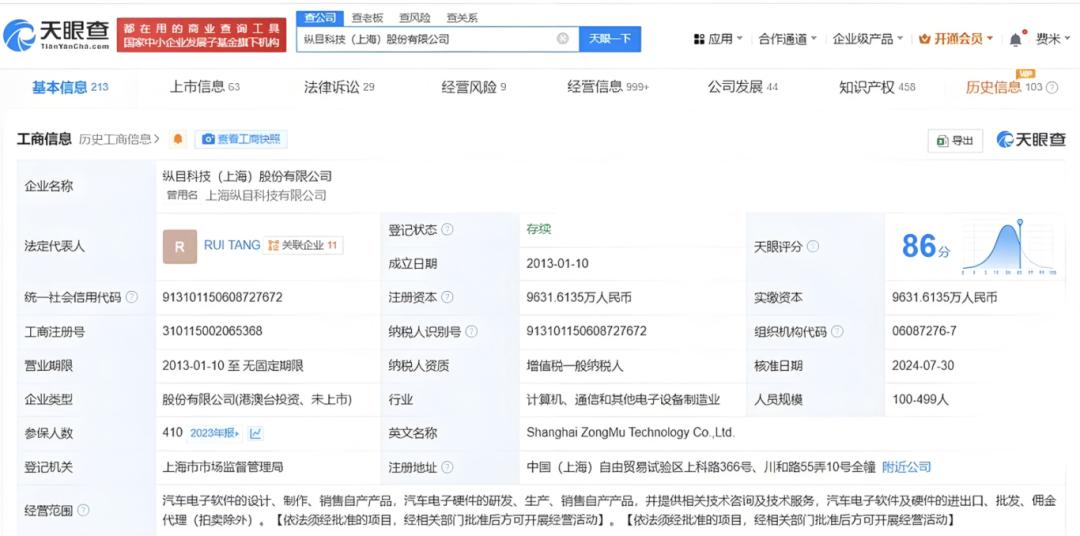
Core Viewpoint - Zongmu Technology has entered judicial reorganization, highlighting the challenges faced by the autonomous driving industry despite its previously high valuation and investment influx [1][3][6] Company Summary - Zongmu Technology, founded in 2013, has a registered capital of approximately 96.32 million RMB and focuses on the design, production, and sales of automotive electronic software and hardware [1][2] - The company has experienced significant financial losses, with net losses of 434 million RMB, 588 million RMB, and 564 million RMB from 2021 to 2023, respectively [6][8] - Zongmu's attempts to go public have failed multiple times, including a withdrawal of its IPO application in 2023, which has exacerbated its financial difficulties [6][8] Industry Summary - The autonomous driving sector has seen a decline in investment enthusiasm due to slow technological implementation and lack of profitability, leading to a "capital winter" [3][4][11] - Many companies in the industry, including Zongmu, are facing a "high investment, low output" cycle, with significant losses reported across the sector [6][10] - The shift towards in-house development by major automotive manufacturers has reduced the market for technology suppliers like Zongmu, leading to a decrease in orders and revenue [11][13] - Despite the challenges, the long-term market potential for autonomous driving remains significant, with projections suggesting a market size exceeding 500 billion USD by 2030 in China [17]
Gentex's Q1 Earnings Meet Estimates, Revenues Decline Y/Y
ZACKS· 2025-04-29 17:15
Core Viewpoint - Gentex Corporation (GNTX) reported a decline in adjusted earnings per share (EPS) and net sales for the first quarter of 2025, indicating challenges in the automotive products market and an unfavorable product mix [1][2]. Financial Performance - GNTX's adjusted EPS for Q1 2025 was 43 cents, matching the Zacks Consensus Estimate but down 8.5% year over year [1]. - The company reported net sales of $576.8 million, missing the Zacks Consensus Estimate of $587 million and decreasing by 2.3% from the previous year [2]. - Gross margin fell to 33.2%, a decline of 110 basis points from Q1 2024, attributed to lower sales, an unfavorable product mix, and new tariff costs [2]. Segmental Performance - The Automotive segment, which is the largest revenue contributor, had net sales of $563.9 million, down from $577.6 million year over year and below the estimate of $570.4 million [3]. - Auto-dimming mirror shipments in North America decreased by 7% to 3,619,000 units, while international shipments fell by 8% to 7,923,000 units, leading to a total shipment decline of 7% to 11,542,000 units [3]. Other Sales and Products - Other net sales, including dimmable aircraft windows and fire protection products, increased slightly from $12.6 million to $12.9 million but were below the estimate of $15.2 million [4]. - Fire protection sales decreased by 1.5% year over year, and dimmable aircraft window sales fell by 15.5% year over year [4]. Operating Expenses - Total operating expenses rose by 8% year over year to $78.7 million in Q1 2025 [5]. - Engineering and R&D expenses increased to $45.92 million from $42.18 million in the same quarter of 2024, while SG&A expenses decreased to $29.93 million from $30.71 million [5]. Shareholder Returns and Cash Position - GNTX paid a dividend of 12 cents per share and repurchased 3.1 million shares at an average price of $24.52 per share [6]. - As of March 31, 2025, the company had approximately $286.6 million in cash and cash equivalents [6]. 2025 Guidance - GNTX revised its 2025 sales guidance to a range of $2.10-$2.2 billion for the primary market and $50-$120 million for the Chinese market, highlighting exposure to tariffs [6]. - The gross margin is projected to be between 33-34%, down from the previous guidance of 33.5-34.5% [7]. - Capital expenditure is anticipated to be between $100 million and $125 million, and operating expenses are estimated to be in the range of $300-$310 million [7].


UBER vs. LYFT: Which Ride-Hailing Stock is a Stronger Play Now?
ZACKS· 2025-04-29 17:01
Core Insights - Uber is the dominant player in the North American ride-sharing market and has diversified into food delivery and freight, while Lyft focuses primarily on ride-sharing in the U.S. [4][5][22] - Uber's growth strategies include international expansion, acquisitions, and a strong buyback program, indicating confidence in its business model [6][7][22] - Lyft is also pursuing opportunities in the autonomous vehicle market but has faced challenges and is more vulnerable to economic downturns compared to Uber [9][23] Group 1: Uber's Performance and Strategy - Uber's gross bookings from the Mobility segment are expected to grow 15.6% year-over-year, while the Delivery segment is projected to grow 15.1% [6] - The company generated a record $6.9 billion in free cash flow in 2024 and announced a $1.5 billion accelerated stock buyback program [7] - Uber's market capitalization stands at $163.85 billion, positioning it well to navigate economic challenges [22] Group 2: Lyft's Position and Challenges - Lyft's sales estimates for 2025 and 2026 imply year-over-year increases of 12.6% and 12.2%, respectively, but its EPS estimates have been trending downward [15] - The company has introduced a Price Lock feature to attract more riders, which has shown better-than-expected performance [12][13] - Lyft's market capitalization is significantly smaller at $5.12 billion, making it less resilient in uncertain economic conditions [23] Group 3: Comparative Analysis - Uber has outperformed Lyft in stock market performance, with a year-to-date gain of 29.9% compared to Lyft's decline of 4.9% [18] - Lyft's forward sales multiple is 0.76, below its five-year median, while Uber's is 3.10, indicating a premium for its market position [21] - Overall, Uber is viewed as a better investment option compared to Lyft, despite both companies currently holding a Zacks Rank 3 (Hold) [24]

Mobileye's Robotaxi Push Gains Speed With Uber And Lyft, But Analyst Cuts 2026 Forecast On Tariff-Led SuperVision Delays
Benzinga· 2025-04-25 19:55
Core Viewpoint - Mobileye Global Inc. reported strong first-quarter revenue growth of 83% year-on-year, reaching $438 million, surpassing analyst expectations, while adjusted EPS met consensus estimates [1][2]. Group 1: Financial Performance - First-quarter revenue increased by 83% year-on-year to $438 million, exceeding the analyst consensus estimate of $435.2 million [1]. - Adjusted EPS for the quarter was 8 cents, aligning with analyst consensus [1]. - FY25 earnings per share projected at 27 cents, while FY26 EPS estimate was lowered from 40 cents to 35 cents [5]. Group 2: Partnerships and Contracts - Strong design win momentum highlighted, including Mobileye's first Surround ADAS win and a significant ADAS contract with a Korean automaker [2]. - Progress noted in robotaxi partnerships with Uber and Lyft, with potential for meaningful contributions by 2027 [2]. - Lyft collaboration is advancing, with initial rollouts expected in Dallas by 2026, operated by Marubeni [3]. Group 3: Business Model and Forecast Adjustments - Partnerships will follow a business model involving a one-time upfront system fee and recurring licensing fees based on mileage, providing solid average selling prices and favorable margins [4]. - 2025 estimates remain mostly intact, with slight adjustments to gross margin and operating expenses; however, 2026 forecasts were reduced due to anticipated delays in SuperVision and CAV unit volumes [4]. - Porsche identified as the only driver of incremental SV volume in the near term [5].


跨国汽车供应商加大中国本土化投入
Di Yi Cai Jing· 2025-04-25 11:37
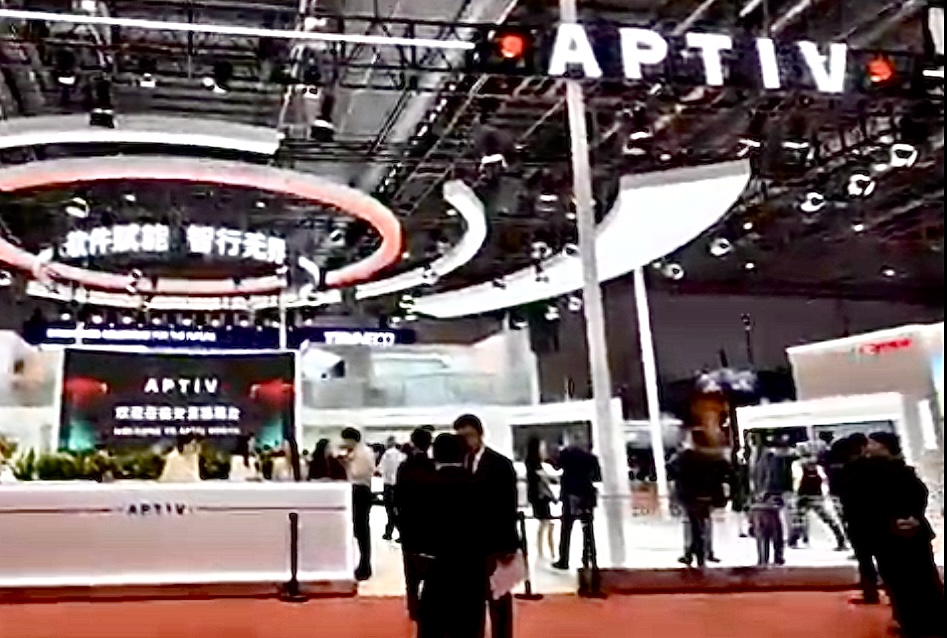
Group 1 - Aptiv aims to develop a self-controlled technology system and localize its supply chain in China amid a complex macro environment [1][3] - Mobileye showcased its comprehensive driving automation solutions based on Composite Artificial Intelligence Systems (CAIS) at the Shanghai Auto Show, targeting mainstream mass production vehicles [3] - Aptiv's president for China and Asia Pacific emphasized the necessity of creating a fully controllable and complete industrial chain in China [3][4] Group 2 - Aptiv announced the establishment of its Wind River China software headquarters in Shanghai, focusing on developing solutions suitable for the Chinese market and advancing its localization strategy [4] - The company highlighted its locally developed real-time operating system (RTOS) and virtualization platform, which are free from foreign control components and export restrictions [4] - Mobileye noted the accelerated pace of Chinese automakers entering overseas markets, facing stricter safety regulations and dynamic market conditions [4][5] Group 3 - Aptiv is committed to supporting Chinese automotive companies in their global expansion, addressing legal, data security, and compliance issues [5][6] - The future of China's automotive technology is expected to focus on software-defined intelligence, electrification, and digitalization [6] - The Chinese automotive industry has transitioned from "manufacturing" to "creation," emphasizing the need for innovative products to support global automotive development [6]

收购折戟十年路 英特尔(INTC.US)启动全栈式AI战略叫板英伟达(NVDA.US)
智通财经网· 2025-04-25 07:41
Group 1 - Intel has identified its failure to penetrate the rapidly growing AI chip market dominated by Nvidia as one of its significant strategic missteps over the past decade [1] - The new CEO, Pat Gelsinger, aims to revamp Intel's product offerings to align better with emerging AI trends, focusing on robotics and intelligent agents [1][2] - CFO David Zinsner indicated that Intel will not pursue significant acquisitions in the short term, prioritizing the improvement of its balance sheet instead [1] Group 2 - Intel is adopting a comprehensive approach to redefine its product portfolio, optimizing for emerging AI workloads and aiming to become the preferred platform for customers [2] - Historically, Intel's strategy involved acquiring AI startups to develop new chips, but many of these acquisitions have not provided a competitive edge against Nvidia [2] - Analysts express skepticism about Intel's ability to compete in the AI chip market, especially with major cloud companies like Amazon and Google developing their own AI chips [2] Group 3 - Intel plans to focus on developing chips and systems for running AI applications, as well as edge devices, although the growth potential in these areas remains uncertain [3]
