ST易购

Search documents
再卖 48 座万达广场,一个亿已经成为了王健林的大目标
3 6 Ke· 2025-05-27 05:00
Core Viewpoint - The recent large-scale equity transaction involving 48 Wanda Plaza locations, valued at approximately 50 billion yuan, highlights the ongoing challenges faced by Wanda Group, including debt pressures and a strategic shift towards asset-light operations [1][2][4]. Group 1: Transaction Details - The transaction was approved by the State Administration for Market Regulation and involved a consortium including TPG Capital, Tencent Holdings, and Sunshine Life Insurance [1]. - The Wanda Plazas involved are located in key urban areas such as Beijing, Guangzhou, Chengdu, and Hangzhou, with individual valuations typically between 700 million to 800 million yuan [1]. - This transaction marks the highest record of asset disposals for Wanda since 2023, continuing the company's unique "familiar group" cooperation model [1]. Group 2: Market Interpretation - While Wanda claims this is an "optimization of asset structure," many market observers interpret it as a desperate move to alleviate debt pressure, likening it to a "self-mutilation" decision [2]. - Insurance capital has emerged as a core force in this transaction, acquiring these commercial real estate projects at prices 40% below peak values, reflecting a significant value restructuring in the commercial real estate sector [2]. Group 3: Historical Context - Wanda's asset disposal journey began in 2017 due to tightened regulations on overseas investments, leading to significant sales of international assets and a shift towards a lighter asset model [3]. - In 2023, Wanda sold 30 plazas, with 14 acquired by Kunhua Fund, and plans to sell an additional 26 plazas in 2024, indicating a cumulative disposal of over 80 plazas, which is about a quarter of its original assets [3]. Group 4: Financial Challenges - As of March 2025, Wanda Commercial Management had interest-bearing liabilities of 141.2 billion yuan, with 40 billion yuan due within the year, while cash reserves stood at only 11.6 billion yuan [4]. - The company faces significant cash flow pressures, with former partners like Yonghui Supermarket and Suning seeking over 18 billion yuan in debts, leading to arbitration disputes and frozen equity [4]. Group 5: Structural Issues - Wanda's high-leverage expansion strategy has become a historical burden, with rapid growth leading to significant debt that is now unsustainable in a cooling market [6]. - The company's transition to an asset-light model has been hampered by its reliance on real estate sales, with rental income declining by 12% year-on-year starting in 2024 [6]. - The deterioration of trust with former partners has exacerbated cash flow issues and damaged Wanda's commercial reputation, complicating future collaborations and financing [6]. Group 6: Broader Implications - The struggles of Wanda reflect a broader narrative of Chinese entrepreneurs facing the end of high-leverage growth models, raising questions about how to balance survival and quality in business [7]. - The dramatic shift from ambitious growth goals to urgent debt repayment illustrates the challenges faced by the real estate sector as it transitions from a period of rapid expansion to one of restructuring [7]. - The market is keenly observing whether Wanda can successfully transform into a commercial service provider focused on operational capabilities after significant asset sales [7][8].
小业态“卷土重来”?
Xi Niu Cai Jing· 2025-05-27 04:55
Group 1 - The community store sector is experiencing renewed activity, with Walmart opening new community stores in Shenzhen, indicating a strategic shift in its approach to retail [1][2] - Walmart's new community stores are more refined, with a focus on optimizing store layout and product selection, reducing rental and labor costs, and alleviating inventory pressure [2][3] - The integration of online and offline operations allows for real-time inventory synchronization, enhancing efficiency in product availability and delivery [3][4] Group 2 - Other players in the market, such as Aldi and Hema, are also expanding their community store formats, with Hema setting ambitious goals for store openings and sales growth by 2025 [4][5] - The community store model has been validated in the current market environment, prompting companies like Meituan to re-enter the space with a focus on a hybrid offline and online retail strategy [5][6] Group 3 - The previous wave of community store expansion faced challenges due to a misalignment of strategies, with an overemphasis on traffic generation rather than sustainable retail fundamentals [6][7] - The failure of earlier community store models was attributed to structural imbalances, high operational costs, and a lack of differentiation from larger stores [7][8] Group 4 - The current shift in consumer behavior towards smaller, more frequent purchases has created a favorable environment for community stores, which can meet the demand for convenience [9][10] - The focus has shifted from merely increasing store count to ensuring each store is self-sustaining and profitable, with an emphasis on operational efficiency and cash flow [10][11] Group 5 - The concept of "hard discounting" is gaining traction, emphasizing cost control and efficiency to maintain low prices without sacrificing profitability [11][12] - Companies are restructuring their supply chains to enhance efficiency, with Walmart and Hema focusing on high-frequency essentials and optimizing their product offerings [13][14] Group 6 - The competition among community stores is increasingly centered on supply chain capabilities and cost management, moving away from a focus on store quantity [13][14] - The survival of community stores will depend on their ability to master supply chain efficiency and achieve profitability through meticulous operational practices [14]

南京市鼓楼区服务业一季度多维突破显活力
Xin Hua Ri Bao· 2025-05-26 23:52
Group 1: Economic Performance - In Q1 2025, the service industry in Gulou District achieved operating income accounting for one-fifth of the total city revenue, indicating strong momentum in high-quality service development [1] - The total retail sales of consumer goods reached 32.185 billion yuan, and trade sales amounted to 219.77 billion yuan, both ranking first in the city [3] Group 2: Industry Development - Gulou District is focusing on future industries such as artificial intelligence, biomedicine, and green low-carbon technologies, with significant projects signed, including partnerships with "unicorn" companies and state-owned enterprises [2] - The establishment of the "Algorithm Space" AI innovation community aims to create a collaborative environment for government and enterprises, enhancing the integration of AI with the real economy [2] Group 3: Consumer Trends - The district has actively promoted consumption through various initiatives, resulting in significant growth in trade-in orders, with home appliances and mobile phones seeing increases of 118% and 129% respectively [3] - The launch of the first Michelin Guide in Jiangsu Province highlighted Gulou as a culinary hub, with several restaurants receiving accolades, contributing to the local dining industry's growth [4] Group 4: Cultural and Tourism Integration - The district is leveraging cultural and tourism resources through events like "Ticket in Hand, Gulou Fun," integrating various businesses to enhance the visitor experience [5] - The combination of commerce, culture, and tourism is becoming a new consumption trend, with initiatives aimed at creating innovative service consumption scenarios [4] Group 5: Service Optimization - Gulou District is upgrading its service model to better meet the needs of businesses throughout their lifecycle, aiming to enhance the overall business environment [6] - Specialized meetings have been held to address the needs of financial and legal services, facilitating better communication between enterprises and local government [7] Group 6: Future Outlook - The district is committed to improving its business environment and enhancing core competitiveness, focusing on innovation and practical efforts to achieve economic growth [8]
万达退到悬崖边
21世纪经济报道· 2025-05-26 15:25
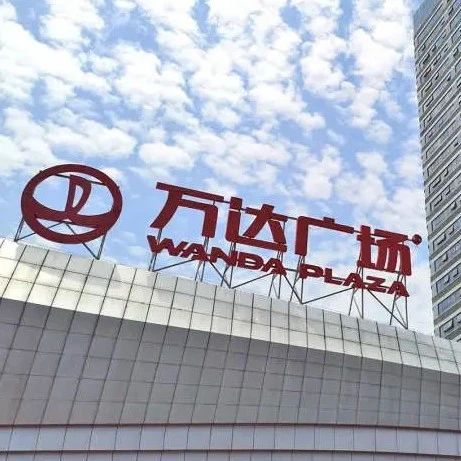
作 者丨张敏 编 辑丨张星 图 源丨IC p h o t o 近日,国家市场监管总局披露了一则收购信息。太盟投资、高和资本、腾讯、京东、阳光人 寿,直接或通过其各自关联方共同设立合营企业,并通过合营企业收购大连万达商业管理集团 股份有限公司(以下简称"大连万达商管")直接或间接持有的48家目标公司的100%股权。 这48家公司是万达广场的项目公司,分布于39个国内城市,其中包括北京、上海、广州等一 线城市。 | 石家庄万达广场投资有限公司 | | --- | | 徐州万达广场置业有限公司 | | 义乌万达广场投资有限公司 | | 杭州共墅万达投资有限公司 | | 榆林万达广场置业有限公司 | | 绍兴柯桥万达广场投资有限公司 | | 福州万达广场投资有限公司 | | 佛山南海万达广场有限公司 | | 乌鲁木齐万达广场投资有限公司 | | 乐山万达广场实业有限公司 | | 重庆万州万达商业广场有限公司 | | 运城万达商业综合体管理有限公司 | | 南京江宁万达广场有限公司 | | 绵阳涪城万达广场有限公司 | | 宜宾万达广场商业服务有限公司 | | 天津自贸区万达置业有限公司 | | 海安万达地产置业有限公 ...

四川长虹: 四川长虹关于下属控股子公司涉及诉讼的进展公告
Zheng Quan Zhi Xing· 2025-05-26 12:23
证券代码:600839 证券简称:四川长虹 公告编号:临 2025-038 号 四川长虹电器股份有限公司 关于公司下属控股子公司涉及诉讼的进展公告 本公司董事会及全体董事保证本公告内容不存在任何虚假记载、误导性陈述或者重大 遗漏,并对其内容的真实性、准确性和完整性承担法律责任。 重要内容提示: ●案件所处的诉讼阶段:一审已判决(尚在上诉期内,判决尚未生效) ●四川长虹电器股份有限公司(以下简称"公司"或"四川长虹")下属公 司在案件中的当事人地位:原告 ●案件的涉案金额:判决被告苏宁易购集团股份有限公司苏宁采购中心(以 下简称"苏宁采购中心")支付原告四川长虹佳华数字技术有限公司(以下简称 " 佳 华 数 字 " ) 货 款 本 金 720,466,948.25 元 、 资 金 占 用 损 失 包 括 以 同期全国银行间同业拆借中心公布的一年期贷款市场报价利率的 1.3 倍计算至 实际付清之日止的损失。案件受理费 4,444,655 元,由原告佳华数字负担 32,518 元,由被告苏宁采购中心、苏宁易购集团股份有限公司(以下简称"苏宁易购")、 包头苏宁易购销售有限公司(以下简称"包头苏宁")、大庆苏宁易购销 ...


超级财团“救急”王健林,出让48座万达广场能否解近渴?
第一财经· 2025-05-26 11:49
Core Viewpoint - The article discusses the significant asset divestiture by Wanda Group, led by Wang Jianlin, as part of a strategy to alleviate financial pressures and transition towards a lighter asset management model. The recent sale of 48 Wanda Plaza locations to a consortium led by PAG Capital and other investors marks a major step in this ongoing process [1][3][11]. Group 1: Asset Sale Details - Wanda Group is selling 48 of its commercial properties, including locations in major cities like Beijing, Shanghai, and Guangzhou, to a consortium that includes PAG Capital, Tencent, and others, for a total transaction value potentially reaching 500 billion yuan [3][4]. - This sale is part of a broader trend where Wanda has sold over 30 Wanda Plazas in the past two years, with seven sold in 2025 alone, indicating a strategic shift to reduce heavy asset burdens [1][3][11]. - The acquisition of these properties is expected to provide Wanda with much-needed liquidity, although the loss of core assets may impact long-term revenue generation [6][11]. Group 2: Financial Context and Implications - The financial restructuring efforts include not only the sale of properties but also the divestiture of the Wanda Hotel Management Company for approximately 2.49 billion yuan, aimed at improving Wanda's debt situation [7][11]. - As of the end of Q3 2024, Wanda's cash reserves were approximately 15.12 billion yuan, with short-term borrowings of about 3.89 billion yuan and non-current liabilities due within a year totaling around 40.08 billion yuan [14]. - The company has faced challenges in generating cash flow from asset sales, with net cash received from disposals in the first half of 2024 amounting to only 3.26 billion yuan, raising concerns about the effectiveness of its asset liquidation strategy [13][14]. Group 3: Strategic Shift and Market Conditions - The ongoing transition to a lighter asset model is seen as a necessary response to rising vacancy rates and declining rental yields in the retail sector, exacerbated by changing consumer habits and increased competition from e-commerce [6][11]. - The involvement of established investors like Tencent and JD.com, who have previously engaged with Wanda, suggests a strategic alignment aimed at stabilizing the company's financial health while navigating the current market challenges [5][11]. - Despite these efforts, the complexity of Wanda's financial obligations, including potential disputes with investors and the need for ongoing restructuring, indicates that the path to recovery may be lengthy and fraught with challenges [12][13].
热搜爆了,王健林又有大麻烦了?
凤凰网财经· 2025-05-26 10:45
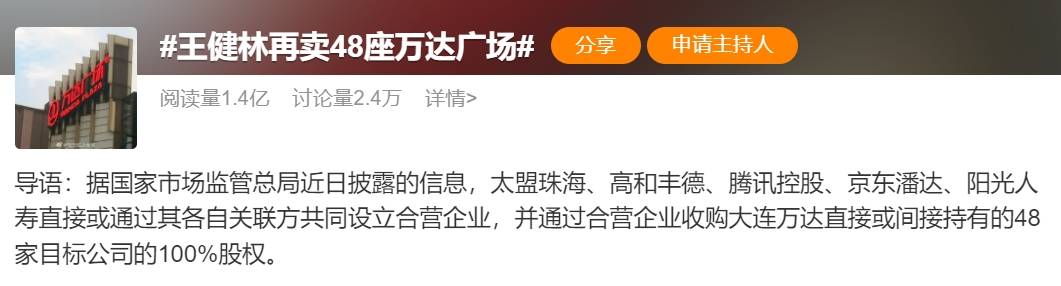
Core Insights - After the failed listing and the betting agreement, Wang Jianlin has been continuously optimizing Wanda's assets, including selling 78 Wanda Plazas, Wanda Hotels, and shares in Wanda Film [1][5] - As of the first three quarters of 2024, Wanda Commercial Management has significantly increased its borrowing, with short-term loans reaching 3.89 billion yuan, a year-on-year increase of 190.47%, and long-term loans amounting to 106.46 billion yuan, up nearly 14% [1][23] Group 1: Asset Sales and Financial Struggles - In 2024, Wanda Group faced a total execution amount exceeding 7.5 billion yuan, with an additional 8 billion yuan in equity frozen in 2025 [2][17] - Despite expanding the number of Wanda Plazas, the effectiveness has declined, with a decrease of nearly 10 million visitors and a sales drop of 5.1 billion yuan during the May Day holiday in 2025 compared to 2021 [3][26] - Wang Jianlin's recent sale of 48 Wanda Plazas has drawn significant public attention, indicating a continued trend of asset liquidation [6][8] Group 2: Historical Context and Debt Issues - Since 2017, Wang Jianlin has been selling assets primarily due to the failed attempt to list on the A-share market after the company's delisting from Hong Kong [14][15] - The company's debt reached nearly 300 billion yuan in 2019, prompting asset sales to reduce liabilities, including the sale of 91% of shares in 13 projects for 43.8 billion yuan [15][16] - As of the first half of 2024, Wanda Commercial Management reported a revenue of 39.93 billion yuan, a year-on-year increase of 2.83%, but net profit fell by 11.55% compared to the previous year [21][23] Group 3: Operational Performance - Wanda Commercial Management's cash flow from operating activities was approximately 16.45 billion yuan, while investment activities generated a negative cash flow of 13.90 billion yuan [21][23] - The gross profit margin for the investment property leasing and management business, which accounts for 90.87% of total revenue, improved from 69.4% to 71.37% [21][23] - However, hotel operations saw a decline in revenue from 789 million yuan to 598 million yuan, with a gross profit margin dropping to 36.32% [21][23]

王健林再卖48座万达广场,71岁骨瘦如柴,王思聪却在国外享受生活
Sou Hu Cai Jing· 2025-05-26 10:14
Core Viewpoint - Wang Jianlin, the founder of Wanda, is selling 48 Wanda Plazas as part of his efforts to repay a staggering debt of 600 billion yuan, reflecting the company's ongoing financial struggles and his commitment to addressing the crisis [1][4]. Group 1: Financial Struggles - Since the real estate industry's upheaval in 2017, Wanda's high-leverage model has collapsed, leading to a broken capital chain and transforming Wang Jianlin from a "richest man" to a "debtor" [2]. - Wang has pledged all of Wanda's equity and sold 77 hotels and over 60 Wanda Plazas to gradually repay debts [4]. Group 2: Personal Impact - Wang Jianlin's perseverance has improved his reputation among creditors, who now view him as trustworthy, despite the immense pressure causing visible aging and fatigue [6][9]. - The contrast between Wang Jianlin's current appearance and his previous robust image highlights the toll that financial stress has taken on him [9]. Group 3: Family Dynamics - Wang Jianlin's son, Wang Sicong, appears to be living a carefree life abroad, seemingly detached from the family's financial crisis, which raises questions about the family's asset planning [11][16]. - Despite the family's current challenges, it is suggested that Wang Jianlin has likely secured a financial safety net for his son, ensuring that he can maintain a comfortable lifestyle regardless of Wanda's situation [18][20].
日吞吐300万件!济宁兖州打造鲁西南智能物流枢纽新标杆
Zhong Guo Fa Zhan Wang· 2025-05-26 08:47
Group 1 - The express delivery industry in Yanzhou District, Jining City, Shandong Province is entering a new stage of high-quality development driven by policy support and intelligent upgrades [1][3] - Major express companies such as SF Express, Zhongtong, and JD have established regional distribution centers in Yanzhou, processing over 3 million packages daily and serving multiple cities in southwestern Shandong [1][2] - The SF Express distribution center in Jining covers an area of 25,000 square meters and features an automated sorting system, with over 1,000 cameras monitoring the entire process [1][2] Group 2 - The use of unmanned forklifts in the distribution center significantly reduces operational costs, with daily costs of 70 yuan compared to 200 yuan for human workers [2] - Yanzhou District has deployed 31 unmanned delivery vehicles, enhancing last-mile delivery efficiency and ensuring provincial deliveries are made within two days [2] - The Jining Zhongtong Smart E-commerce Express Industrial Park has introduced advanced sorting and delivery systems, processing approximately 1.5 million packages daily, with peak capacity exceeding 2 million during major sales events [2] Group 3 - Yanzhou District is focusing on safety in the express delivery industry, establishing a fast-track for the safe transport of goods and enhancing industry cohesion through the formation of a delivery industry party committee [3] - New projects such as the second phase of the Shentong distribution center and the China Post e-commerce logistics industrial park are expected to significantly increase daily processing capacities by 1.2 million and 1.5 million packages, respectively [3] - The district aims to leverage its geographical and infrastructural advantages to develop a billion-level logistics cluster, attracting over 80 well-known logistics companies [3]



沃尔玛、永辉、银座、胖东来......26 家零售企业一季度财报大曝光!
3 6 Ke· 2025-05-26 02:27
Core Insights - The Chinese retail market in Q1 2025 is experiencing a significant divergence, with some companies thriving while others struggle due to transformation pains and market pressures [1][29]. Group 1: Company Performance - Walmart China reported a net sales increase of 22.5% to $6.7 billion, with comparable sales up 16.8% and e-commerce sales growing by 34% [2]. - Fat East achieved a quarterly sales figure exceeding 6.3 billion, showcasing strong regional performance [20]. - Suning.com turned a profit with a net income of 1.796 million, marking a turnaround after four consecutive quarters of losses [4][5]. - Yonghui Supermarket faced a revenue decline of 19.32% to 17.48 billion, with net profit down 79.96% due to strategic transformation efforts [6]. - Lianhua Supermarket reported a revenue increase of 7.5% but a net profit drop of 59.9% [7]. - Changchun Eurasia Group's revenue grew by 0.38%, but net profit fell by 74.64% [8]. - Tianhong reported a revenue decline of 2.18%, despite a 1.8% increase in shopping center sales [9]. - Wushang Group's revenue decreased by 8.62%, while net profit increased by 2.85% [10]. - Yinzuo Group's revenue fell by 4.32%, with net profit down 20.66% [11]. - Chongqing Department Store's revenue decreased by 11.85%, but net profit increased by 9.23% [12]. - Jiajia Yue's cash flow surged by 355.7%, indicating strong operational efficiency [13]. - Li Qun Group's revenue fell by 5.14%, with net profit down 58.24% [14]. - Dazhong Group's revenue decreased by 8.04%, while net profit increased by 0.7% [21]. - Beijing Hualian's revenue grew by 7.52%, but net profit dropped by 59.92% [24]. - Youa Group's revenue fell by 14.59%, with net profit down 35.48% [25]. - Shanghai New World reported a revenue decline of 6.14% and a net profit drop of 33.95% [26]. - Sanjiang Shopping Club's revenue increased by 1.1%, with net profit up 35.3% [27]. - Renrenle's revenue plummeted by 77.81%, but net profit increased by 39.57% [28]. Group 2: Industry Trends - The retail sector is showing significant differentiation, with leading companies like Walmart and Suning leveraging operational adjustments for growth [29]. - Traditional supermarkets are under pressure, with companies like Yonghui and Lianhua experiencing substantial declines in both revenue and profit [30]. - Regional players like Fat East and Jiajia Yue are thriving due to localized operations and supply chain advantages [31]. - E-commerce and omnichannel strategies are driving growth, as seen with Walmart's e-commerce sales and Suning's offline revenue increase [32]. - Membership store models are gaining traction, with Walmart's Sam's Club expanding to 54 locations [34]. - Cost control and efficiency optimization are critical, with companies like Tianhong and Wushang improving profits despite revenue declines [37]. - Differentiated competition in niche markets, such as health and baby products, is evident with companies like Dazhong and Kid King showing strong performance [39].