盒马鲜生

Search documents
盒马2026年开店计划揭秘:冲击千亿,至少开300家
东京烘焙职业人· 2026-02-26 08:33
Core Viewpoint - The article highlights that 2025 is a transformative year for the retail industry, with Hema achieving significant growth and expansion, including entering 40 new cities and opening over 200 new stores, while focusing on core consumer needs and health-oriented products [5][6]. Group 1: Business Performance - Hema's overall GMV exceeded 75 billion yuan in the 2025 fiscal year, marking its first year of positive adjusted EBITA, with projections suggesting GMV could surpass 100 billion yuan by the end of March 2026 [5][6]. - The company plans to open nearly 100 new Hema Fresh stores and over 200 new Super Hema stores in 2026, aiming for a total of over 1,100 stores across all formats [8][10]. Group 2: Strategic Expansion - Hema's dual business strategy, combining Hema Fresh and Super Hema, is designed to drive growth through a "high-end focus + market penetration" approach, targeting both first-tier and potential second-tier cities [6][8]. - The company aims to enhance its supply chain and operational efficiency to support the differentiated growth of its two core business formats [6][11]. Group 3: Challenges Ahead - Hema faces challenges in supply chain depth and product selection adaptability, particularly in lower-tier markets where consumer price sensitivity is higher [12][15]. - The company must also address risks related to franchise management and quality control as it expands its franchise model, ensuring that product quality remains consistent across all locations [16][18]. - Increased competition in the retail sector, particularly from other major players like Meituan and JD, necessitates that Hema continuously enhance its market presence and customer experience [18][20]. Group 4: Future Outlook - Hema's future growth will depend on its ability to overcome current challenges and develop a retail capability that balances efficiency, quality, and consumer value [21]. - The company is positioned at a new starting point in 2026, with a focus on deepening value and addressing its operational shortcomings to sustain its competitive edge in the evolving retail landscape [21].

美团收购叮咚买菜:一场关于城市密度的并购
Jing Ji Guan Cha Wang· 2026-02-20 15:12
Core Insights - Meituan announced the acquisition of Dingdong Maicai's China business for approximately $717 million, marking a significant move in the instant retail sector [1][2] - The acquisition signals a shift in the industry towards consolidation, as various business models explored by entrepreneurs are being absorbed into platform-level infrastructure [2][13] - Instant retail is evolving from a startup-driven model to a platform-based infrastructure, focusing on time-sensitive consumer needs rather than just price and variety [2][23] Instant Retail Importance - Despite the maturity of e-commerce in China, there remains a significant portion of retail (approximately 73.9%) occurring in local offline settings, highlighting the ongoing relevance of physical retail [3][4] - Instant retail addresses the time-sensitive nature of consumer demand for everyday items, which traditional e-commerce struggles to fulfill promptly [4][5] Market Growth - The instant retail market in China is projected to reach 781 billion yuan in 2024, with a growth rate exceeding 20%, significantly outpacing traditional retail growth [5][6] - By 2026, the market is expected to surpass 1 trillion yuan, indicating a robust growth trajectory for instant retail [5] Consumer Behavior Changes - The value of consumer time is increasing, leading to a willingness to pay a premium for faster delivery, thus driving the growth of instant retail [7][8] - The evolution of consumer needs has led to a structural division in retail, with e-commerce focusing on planned purchases and instant retail catering to immediate needs [8][9] Evolution of Instant Retail - Instant retail has evolved through four stages: from the establishment of delivery networks via food delivery, to the integration of online and offline retail, followed by the rise of front warehouses, and now to a platform-based model [9][12] - The current phase emphasizes the integration of local stores and warehouses into a unified delivery system, expanding the range of products available for instant delivery [12][13] Competitive Landscape - The competition in instant retail is shifting from a focus on business models to a focus on order density within urban areas, where efficiency and speed are paramount [14][15] - Different operational models coexist, including platform connection models, self-operated front warehouse models, and hybrid models, each addressing the challenge of achieving high order density [15][16] Future Directions - The future of instant retail is likely to see a transition from traffic-based competition to density-based competition, emphasizing the importance of local network efficiency [19][20] - Instant retail may also blur the lines between e-commerce and local services, creating a unified consumption system based on time sensitivity [21][22] - Overall, the evolution of instant retail could redefine platform competition, focusing on who can effectively manage urban delivery networks rather than simply accumulating user numbers [22][24]


即时零售竞争全面升维,三方即配平台价值凸显
Changjiang Securities· 2026-02-09 02:20
Investment Rating - The report maintains a "Positive" investment rating for the transportation industry [10] Core Insights - The competition in the instant retail sector is intensifying, shifting from simple subsidy wars to a comprehensive competition for traffic entry and fulfillment capabilities [2][5] - Major e-commerce players are actively engaging in the instant retail space, with initiatives such as Taobao's "30 billion free order" campaign and Meituan's acquisition of Dingdong Maicai, indicating a strategic shift towards enhancing supply chain infrastructure [5][32] - The reliance on third-party logistics platforms is increasing, with SF Express being highlighted as the largest third-party instant delivery platform, showcasing superior service efficiency and coverage [5][37] Summary by Sections Instant Retail Competition - E-commerce giants are ramping up efforts in instant retail, with Taobao's initiatives driving significant increases in order volumes, particularly in beverage categories [5][27] - AI technology is being leveraged to optimize user decision-making and enhance fulfillment efficiency, with notable increases in order volumes driven by AI capabilities [27][28] Supply Chain Integration - Meituan's acquisition of Dingdong Maicai for $717 million aims to strengthen its supply chain capabilities in the fresh produce sector, addressing infrastructure gaps in its existing operations [5][32] - Dingdong Maicai has established a robust supply chain with over 1,000 front warehouses and a significant user base, positioning it as a key player in the market [32][33] Third-Party Delivery Platforms - The strategic value of third-party delivery platforms is becoming more pronounced, with SF Express leading the market in terms of service quality and operational scale [5][37] - SF Express is projected to achieve significant revenue growth, with expectations of a 33% year-on-year increase in revenue for the second half of 2025 [41][44] Transportation Trends - The report tracks spring transportation data, indicating stable growth in domestic passenger volumes despite slight fluctuations in ticket prices and capacity [48][49] - The logistics sector is experiencing a surge in express delivery volumes, particularly during the holiday season, with a year-on-year growth of 687% in express collection volumes [8]
港股美团下跌,50亿元拿下叮咚买菜
2 1 Shi Ji Jing Ji Bao Dao· 2026-02-06 04:13
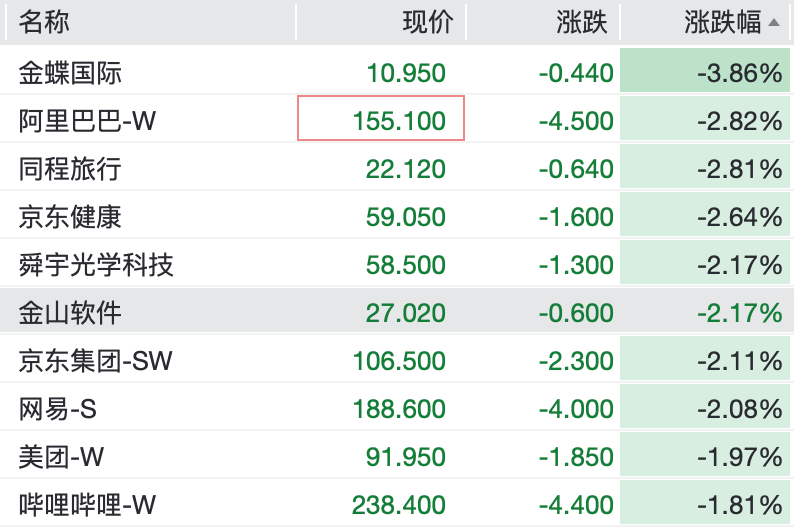
Core Viewpoint - Meituan announced the acquisition of Dingdong Maicai's 100% stake in its China business for approximately $717 million (around 5 billion RMB), marking a significant shift in the competitive landscape of the instant retail market [1][3] Group 1: Acquisition Details - The acquisition price is set at $717 million, but the actual cost to Meituan is effectively $567 million after accounting for Dingdong Maicai's retained cash of $150 million [3] - Dingdong Maicai's overseas business will not be included in this transaction and will be divested before the deal closes [3] - Dingdong Maicai has seen a significant decline in market value, dropping from over $5.5 billion at its IPO to approximately $694 million prior to the acquisition announcement [5] Group 2: Market Context - The instant retail sector is entering a phase of intense competition, with major players like Meituan, Alibaba, and JD.com vying for market share [5][6] - Dingdong Maicai has achieved profitability with a revenue of 6.66 billion RMB and a net profit of 80 million RMB in Q3 2025, but faces challenges as a mid-sized player in a market dominated by giants [5] - The acquisition is seen as a strategic move for Meituan to strengthen its Xiaoxiang business and enhance its market share in the East China region [4][6] Group 3: Industry Implications - The merger is expected to enhance the operational efficiency and product offerings of Dingdong Maicai under Meituan's platform [6] - Concerns regarding potential monopoly issues have been raised, with legal experts suggesting that market share and competitive dynamics will need to be closely monitored [6] - The competitive landscape is characterized by a "battle of giants," where smaller players like Dingdong Maicai may struggle to survive without the backing of larger companies [5]
港股美团下跌,50亿元拿下叮咚买菜
21世纪经济报道· 2026-02-06 04:10
Core Viewpoint - Meituan announced the acquisition of Dingdong Maicai's China business for approximately $717 million (around 5 billion RMB), marking a significant shift in the competitive landscape of the instant retail market [1][4][9] Group 1: Acquisition Details - The acquisition involves the purchase of 100% equity in Dingdong Maicai's China operations, with the deal expected to enhance Meituan's market share in the East China region through its Xiaoxiang business [1][6] - Dingdong Maicai's overseas business will not be included in this transaction, and the company will continue its operations as usual until the deal is finalized [4] - The actual cost to Meituan is approximately $567 million after accounting for a cash retention requirement of $150 million for the seller [4] Group 2: Market Context - The instant retail sector is entering a phase of intense competition, dominated by major players like Meituan, Alibaba, and JD.com, making survival increasingly difficult for mid-sized companies like Dingdong Maicai [1][8] - Dingdong Maicai's market capitalization has significantly decreased from over $5.5 billion at its IPO in 2021 to approximately $694 million, reflecting the challenges faced by non-leading players in the sector [8] - The competition has intensified since 2025, with major companies investing heavily in the instant retail space, leading to a "battle of giants" scenario [8] Group 3: Strategic Implications - The acquisition is seen as a strategic move for Meituan to strengthen its Xiaoxiang business, which has evolved from Meituan's earlier "Meituan Grocery" initiative [5][9] - Dingdong Maicai's founder highlighted the synergy between Dingdong's strengths in product offerings and service efficiency with Meituan's platform, suggesting that the merger will enhance overall value [9] - Legal experts have raised questions about potential monopoly concerns arising from this acquisition, indicating that market share and competitive dynamics will need to be closely monitored [9]

即时零售诞生50亿元收购案:美团和叮咚都需要机会
雷峰网· 2026-02-06 00:46
Core Viewpoint - Meituan's acquisition of Dingdong Maicai aims to enhance its regional advantages and accelerate national expansion in the fresh food e-commerce sector, amidst increasing competition from other players like JD and Douyin [2][3]. Group 1: Acquisition Details - Meituan announced the acquisition of Dingdong Maicai's China business for approximately $717 million (around 5 billion RMB), with the deal allowing Dingdong's shareholders to withdraw $280 million in cash, resulting in a total value of $999 million (approximately 6.9 billion RMB) for the shareholders [2]. - The acquisition was finalized quickly despite Meituan entering the bidding process later than competitors, indicating a strategic focus on urban coverage and competitive positioning [2][3]. Group 2: Business Expansion - Meituan's Xiaoxiang Supermarket has expanded to cover 46 cities, with plans to open over 20 new cities by the second half of 2025, aiming for a presence in all first- and second-tier cities [3]. - Dingdong Maicai has also been expanding, operating over 1,000 front warehouses across 29 cities as of September 2025, with a strong presence in the Shanghai and Jiangsu-Zhejiang regions [3]. Group 3: Financial Performance - Dingdong Maicai reported a revenue of 6.66 billion RMB and a net profit of 80 million RMB in Q3 2025, achieving profitability for seven consecutive quarters under GAAP standards [4]. - The competitive landscape shows that Dingdong Maicai's GMV was 25.5 billion RMB in 2024, while Xiaoxiang Supermarket's GMV approached 30 billion RMB, indicating a closely contested market [4]. Group 4: Strategic Rationale - Dingdong Maicai's founder emphasized the alignment in supply chain capabilities and product quality focus as key reasons for choosing Meituan as a partner, suggesting a strategic move towards collaboration rather than competition [3][5]. - The acquisition is seen as a way for Meituan to strengthen its position in the instant retail sector, where competitors like Alibaba's Hema and Sam's Club are also expanding rapidly [4].
美团拟7.17亿美元收购叮咚买菜 生鲜即时零售格局生变
Shang Hai Zheng Quan Bao· 2026-02-05 17:52
Group 1 - Meituan announced the acquisition of Dingdong Maicai's China business for approximately $717 million, which will make Dingdong a wholly-owned subsidiary of Meituan and integrate its financial performance into Meituan's financial statements [2][3] - This acquisition accelerates Meituan's strategy in the instant retail sector and indicates a potential concentration of competition towards leading platforms [2] - Dingdong Maicai, founded in 2017, focuses on the Jiangsu, Zhejiang, and Shanghai markets, utilizing a front warehouse model to deliver fresh produce within 29 minutes [3] Group 2 - Meituan already operates a similar instant retail platform, Xiaoxiang Supermarket, which aims to expand its coverage in major cities across China [4][5] - The acquisition is seen as a move to strengthen Xiaoxiang Supermarket's operations and increase market share in the Jiangsu, Zhejiang, and Shanghai regions [5] - Dingdong Maicai reported a revenue of 6.66 billion yuan and a GMV of 7.27 billion yuan for Q3 2025, with a net profit of 100 million yuan, indicating a net profit margin of 1.5% [3] Group 3 - The instant retail market is becoming increasingly competitive, with major players like Alibaba and JD.com also expanding their presence in this sector [6] - If the acquisition is successful, it may lead to a reshaping of the domestic instant retail landscape, consolidating resources between Xiaoxiang Supermarket and Dingdong Maicai [6][7] - Industry experts suggest that the future of the fresh retail sector will focus on private brand development, online-offline integration, and supply chain capabilities as key competitive factors [7]
美团买下叮咚买菜,防御还是进击?
第一财经· 2026-02-05 15:53
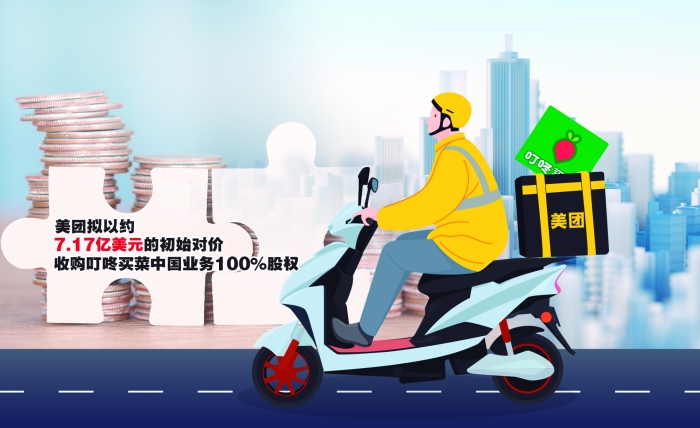
Core Viewpoint - Meituan has completed the acquisition of Dingdong Maicai's China business for approximately $717 million (about 4.98 billion RMB), emphasizing its commitment to the grocery retail sector and aligning with its long-term development strategy in this field [3]. Group 1: Acquisition Details - The acquisition allows Meituan to enhance its grocery retail capabilities, with Dingdong Maicai operating over 1,000 front warehouses and serving over 7 million monthly purchasing users as of September 2025 [3]. - Dingdong Maicai's founder expressed a shift from competition to collaboration, indicating a strategic alignment with Meituan's goals [4]. Group 2: Strategic Importance - Industry experts highlight the strategic value of Dingdong Maicai's mature front warehouse model and its established presence in East China, which can help Meituan fill gaps in its grocery retail strategy [4]. - The acquisition is seen as a response to competition from Alibaba and JD.com, which have made significant strides in the fresh grocery sector through their respective platforms [4][5]. Group 3: Competitive Landscape - The fresh grocery retail market is characterized by distinct focuses among major players: JD.com emphasizes supermarket formats, Alibaba's Hema integrates discount and supermarket models, while Meituan's Xiaoxiang Supermarket primarily utilizes a front warehouse approach [5][6]. - Despite Dingdong Maicai's profitability in recent quarters, it faces pressure from competition and operates in a low market valuation environment, with its market cap lingering between $500 million to $700 million [6][7]. Group 4: Market Challenges - Analysts point out that the high fulfillment costs and challenges in reducing fresh produce waste have led to growth bottlenecks for Dingdong Maicai, making it difficult for vertical platforms to compete against larger players like Meituan and Hema [7]. - The low valuation in the capital market and the need for early investors to exit have contributed to the decision to sell, allowing stakeholders to realize value while integrating into a larger ecosystem [7].

美团50亿元买下叮咚买菜 即时零售进入巨头混战时代
2 1 Shi Ji Jing Ji Bao Dao· 2026-02-05 15:27
Core Viewpoint - Meituan's acquisition of Dingdong Maicai marks a significant shift in the competitive landscape of the instant retail market, as it intensifies the rivalry among major players like Meituan, Alibaba, and JD.com [1][6]. Group 1: Acquisition Details - Meituan announced the acquisition of 100% of Dingdong Maicai's China business for an initial consideration of approximately $717 million (about 5 billion RMB) [3]. - The transaction will exclude Dingdong Maicai's overseas operations, which will be divested before the deal's completion [2]. - After the transfer, Meituan's effective payment for the acquisition will be around $567 million, as the seller can withdraw up to $280 million while ensuring a minimum net cash of $150 million remains in the target group [2]. Group 2: Market Context - The instant retail sector has seen intensified competition, particularly since 2025, with major players like JD.com and Alibaba entering the market, leading to a "war" characterized by price wars and aggressive marketing strategies [6]. - Dingdong Maicai, which went public in 2021 with an initial market value exceeding $5.5 billion, has seen its market value decline to approximately $694 million as of February 5, indicating significant challenges for mid-sized players in the current competitive environment [6]. - Despite achieving profitability with a revenue of 6.66 billion RMB and a net profit of 80 million RMB in Q3 2025, Dingdong Maicai's market position remains precarious amid fierce competition [6]. Group 3: Strategic Implications - The acquisition is expected to enhance Meituan's small elephant business, particularly in the East China region, where Dingdong Maicai holds a competitive advantage [5][4]. - Meituan's focus on strengthening its self-operated front warehouse and instant retail business through this acquisition reflects its strategy to consolidate its market position [4][7]. - The merger is anticipated to leverage Dingdong's product strength and service efficiency, potentially increasing value on a larger platform [7].
豪掷近10亿美元,美团为什么非要买叮咚买菜?
Xin Lang Cai Jing· 2026-02-05 13:40
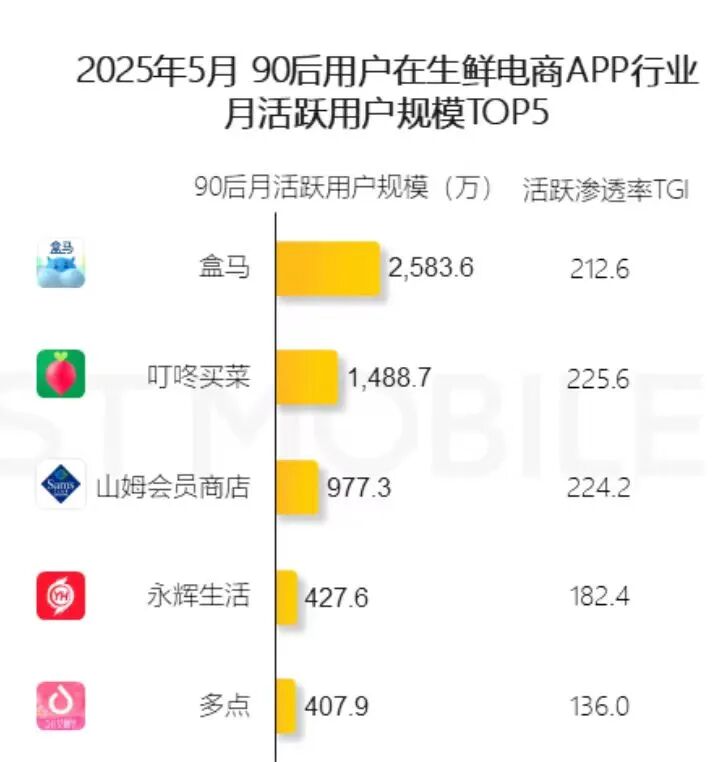
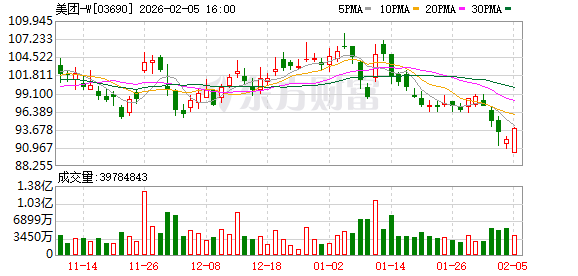
Core Viewpoint - Meituan is acquiring 100% of Dingdong Maicai's China business for approximately $717 million, with a total potential transaction value of up to $997 million, including a fund extraction of up to $280 million from the target group [1][2]. Group 1: Market Dynamics - The acquisition indicates a competitive shift in the fresh food e-commerce sector, where Meituan's entry disrupts previous expectations that JD.com would acquire Dingdong Maicai [2][3]. - Meituan's small elephant supermarket has already established a significant online scale advantage, while JD.com lags in its self-operated instant retail business due to strategic inconsistencies [2][4]. Group 2: Strategic Rationale - The acquisition is seen as a strategic move for Meituan to enhance its supply chain capabilities, particularly in the quality of fresh produce, which is a current shortfall for the company [4][5]. - Dingdong Maicai's supply chain strengths include over 85% of fresh produce sourced directly and a focus on quality product development, which aligns with Meituan's goals [5][6]. Group 3: Financial Implications - Dingdong Maicai has achieved profitability, albeit with a net profit margin of less than 2%, making it a valuable asset for Meituan to enhance its cash flow and profitability [6][7]. - The acquisition is expected to contribute positively to Meituan's financials, providing a potential for improved operational efficiency and market presence in the competitive landscape of East China [6][8]. Group 4: User Engagement - As of May 2025, Dingdong Maicai had approximately 14.89 million monthly active users, ranking second in the fresh food e-commerce app market, which highlights its strong user engagement [7][8].