软银集团

Search documents
OpenAI回应IPO筹备传闻:暂非工作重点
Huan Qiu Wang Zi Xun· 2025-10-30 07:03
Group 1 - OpenAI is preparing for an initial public offering (IPO), with market estimates valuing the company at up to $1 trillion, potentially making it one of the largest IPOs in history [1] - OpenAI's current focus is on creating a sustainable business model and advancing its mission of benefiting everyone with general artificial intelligence, rather than prioritizing the IPO [1][3] - The company is expected to achieve an annualized revenue of approximately $20 billion by the end of this year, although it is also experiencing an increase in losses as its valuation approaches $500 billion [3] Group 2 - CEO Sam Altman mentioned that an IPO could be a viable path for future capital support, but no specific timeline was provided [3] - OpenAI's structure is designed around the core goal of "safe development of artificial intelligence," with a recent reorganization that established the OpenAI Foundation to oversee the profit-making entity, ensuring that profit is not the primary goal [3] - Major investors include Microsoft, which has invested $13 billion and holds about 27% of OpenAI, along with other significant investors like SoftBank and Thrive Capital [4]

英特尔绝地反击!华人CEO裁员1.3万人换来41亿利润,股价涨90%,从低谷重回巅峰!
Sou Hu Cai Jing· 2025-10-30 06:57
Core Insights - Intel reported a net profit of $4.1 billion in Q3, a significant turnaround from a loss of $16.6 billion in the same period last year, marking its first quarterly profit since 2024 and breaking a 35-year streak of losses [1][3] - The company's stock surged over 7% in after-hours trading following the announcement of the financial results [1] Group 1: Strategic Decisions - CEO Pat Gelsinger implemented aggressive reforms, including laying off 13% of the workforce (13,000 employees), restructuring core businesses, and focusing on profitable segments [3][5] - Intel's gross margin improved from 37.5% in the previous quarter to 40%, with operating cash flow reaching $2.5 billion, exceeding market expectations [3][5] Group 2: AI Market Positioning - Intel is shifting its focus towards AI inference rather than competing directly with Nvidia for market share, aiming to establish a foothold in a larger and more sustainable market [3][5] - The company has launched new products, including next-generation Xeon server chips and GPUs specifically designed for AI inference [5] Group 3: External Funding and Partnerships - Intel secured significant external funding, including a $2 billion investment from SoftBank and additional investments from Nvidia, alongside $8.9 billion in support from the U.S. government [5] - These partnerships are expected to enhance technological collaboration and support the development of customized products for data centers and PCs [5] Group 4: Manufacturing and Operational Improvements - Intel's foundry business showed improvement, with net losses reduced from $5.8 billion to $2.3 billion year-over-year, indicating enhanced manufacturing efficiency [5] - The company is attracting external clients and has begun to separate its Altera subsidiary from its financial reporting, paving the way for an independent foundry business [5] Group 5: Future Outlook - Intel is transitioning into a comprehensive "AI + manufacturing" platform, reflecting its responsiveness to market dynamics and forward-looking demand [7] - Despite challenges such as lower-than-expected yields for the 18A process and unproduced AI products, market confidence is gradually returning, suggesting a potential recovery path for the company [8]

OpenAI上市计划曝光!冲刺万亿美元估值!
Sou Hu Cai Jing· 2025-10-30 05:54
Core Viewpoint - OpenAI is preparing for an initial public offering (IPO) with a potential valuation of up to $1 trillion, which could become one of the largest IPOs in history [1][5]. Group 1: IPO Preparation - The company plans to submit its IPO application in the second half of 2026, aiming for a formal listing in 2027 [3]. - OpenAI has completed a year-long restructuring process, adopting a hybrid structure of a non-profit holding a for-profit entity [4][8]. - The estimated minimum fundraising amount is $60 billion, with the final amount likely to be adjusted upwards [5]. Group 2: Corporate Structure - The non-profit entity, OpenAI Foundation, retains its charitable status and does not seek shareholder returns, holding 26% economic rights and a unique "super voting" power [6]. - The for-profit entity, OpenAI Group PBC, is designed to allow investor dividends while prioritizing public interest in its decision-making [6][7]. - The dual structure aims to attract significant capital while maintaining the mission of benefiting humanity through AGI [7]. Group 3: Regulatory and Market Position - OpenAI has engaged with California's Attorney General to ensure compliance and support for its restructuring, emphasizing its role as a key player in the state's economy [7][11]. - The company has secured a deal with California prosecutors, removing major regulatory hurdles for its IPO plans [8][11]. - Significant funding commitments, including $22.5 billion from SoftBank, have been lined up to support AI infrastructure investments totaling $1.4 trillion over the next five years [10].

OpenAI计划2027年上市,估值或高达一万亿美元
Sou Hu Cai Jing· 2025-10-30 04:32
Group 1 - OpenAI plans to submit an IPO application in the second half of 2026, with a potential valuation of approximately $1 trillion, aiming to raise at least $60 billion [1] - The company has completed a capital restructuring, establishing a structure where its non-profit organization, now called OpenAI Foundation, holds a 26% stake in its for-profit arm, OpenAI Group PBC, which is valued at around $135 billion [2] - OpenAI's revenue for the first half of 2025 is projected to be $4.3 billion, reflecting a 16% increase from the previous year's total revenue of $3.7 billion [4] Group 2 - OpenAI expects its annual revenue to more than double this year, reaching $12.7 billion, with further growth anticipated to over $29.4 billion next year [5] - The company secured $40 billion in funding led by SoftBank earlier this year, raising its valuation to $300 billion [4] - A significant portion of the recent funding, approximately $18 billion, is allocated for the Stargate infrastructure project, aimed at establishing an AI data center network in the U.S. [4]
英特尔电话会:与英伟达的战略合作将通过NVLink技术开辟市场,芯片产能紧张预计持续到2026年
Hua Er Jie Jian Wen· 2025-10-30 03:37
Core Insights - Intel's Q3 2025 revenue reached $13.7 billion, exceeding guidance and showing a 6% quarter-over-quarter increase, with a non-GAAP EPS of $0.23, significantly above analyst expectations [1][18] - The company faces capacity constraints, particularly in mature process nodes like Intel 10 and Intel 7, which are limiting its ability to meet demand in data center and client products, a situation expected to persist until 2026 [1][3][5] - To address challenges and seize AI opportunities, Intel has strengthened its balance sheet through various strategic actions, including $5.7 billion in government funding and investments from SoftBank and Nvidia, providing approximately $20 billion in cash [1][20][8] Financial Performance - The non-GAAP gross margin for Q3 was 40%, exceeding guidance by 4 percentage points, driven by higher revenue and a favorable product mix [7][19] - Q3 operating cash flow was $2.5 billion, with capital expenditures of $3 billion, resulting in adjusted free cash flow of $900 million [19] - Intel's cash and short-term investments totaled $30.9 billion at the end of Q3, bolstered by strategic partnerships and asset sales [20][8] Capacity Constraints and Strategies - CFO Dave Zinsner acknowledged that capacity limitations, especially in Intel 10 and Intel 7 nodes, impacted Q3 performance, prompting the company to guide demand towards available products [2][5] - Intel is prioritizing wafer capacity for server products and accelerating the transition to more advanced nodes like Intel 18A, with positive progress reported [3][6] - The company plans to maintain a disciplined capital expenditure strategy, with a total investment of approximately $18 billion in 2025, focusing on customer commitments before expanding capacity [5][19] AI and Strategic Collaborations - Intel's growth is significantly driven by the acceleration of AI infrastructure, with expectations to ship around 100 million AI PCs by year-end [4][18] - The strategic partnership with Nvidia aims to combine Intel's CPU capabilities with Nvidia's AI acceleration, creating new product categories for cloud and enterprise markets [4][11][47] - Intel has established a Central Engineering group to unify engineering functions and expand its ASIC and design services for external customers, enhancing its x86 IP influence [4][12] Market Outlook - Intel anticipates that the tight capacity situation will continue until the end of FY 2026, with a focus on managing the supply chain effectively [3][5] - The company expects the total addressable market (TAM) for CPUs to grow through 2026, driven by AI infrastructure expansion and increased demand for server CPUs [18][22] - Intel's product divisions, including Client Computing Group (CCG) and Data Center and AI (DCAI), reported revenue growth, with CCG revenue at $8.5 billion and DCAI at $4.1 billion for Q3 [21][22]
马斯克最大对手完成变身,史上最大IPO即将来临
创业邦· 2025-10-30 03:34
Core Viewpoint - OpenAI has successfully transformed from a non-profit organization to a profit-oriented tech giant, clearing major obstacles for its upcoming IPO, which is expected to be the largest in history, potentially occurring in 2027 [5][7][12]. Group 1: Transformation and Impact - OpenAI's transformation marks a significant shift in the AI industry, positioning it as a leader in the generative AI sector and influencing global infrastructure development [5][7]. - The restructuring process involved intense negotiations with regulators, investors, and competitors, particularly Elon Musk, who has been critical of OpenAI's shift from its original mission [8][12]. Group 2: Financial Structure and Control - OpenAI has adopted a new dual-layer structure, with the non-profit foundation retaining control over the profit-oriented entity, ensuring a balance between commercial interests and public mission [10][12]. - Microsoft remains the largest external investor with a 27% stake, valued at approximately $135 billion, while the non-profit foundation holds about 26% of the equity, valued at around $130 billion [10][12]. Group 3: Strategic Partnerships and Market Reaction - OpenAI's partnerships with major tech companies like Microsoft, Oracle, and Nvidia have led to significant stock price increases for these firms, with a combined market value increase of $630 billion following announcements of related deals [8][12]. - The new agreements with Microsoft include a commitment to purchase $250 billion in cloud services and shared intellectual property rights, while also allowing both companies to independently develop AGI [14][15]. Group 4: Competitive Landscape - Elon Musk's attempts to undermine OpenAI's transformation have included multiple lawsuits and a failed bid to acquire the company, reflecting his desire to regain influence over the AI landscape [18][20]. - Musk's new venture, xAI, aims to compete directly with OpenAI, having quickly developed its own AI models, indicating a rapidly evolving competitive environment in the AI sector [23][24]. Group 5: Future Investments and Risks - OpenAI's ambitious infrastructure investments are projected to exceed $1.5 trillion by 2025, with a focus on building AI data centers and securing necessary computing resources [25][27]. - Despite projected revenues of $4.5 billion in 2025, OpenAI faces significant financial challenges, with expected losses of at least $14 billion and a funding gap of $115 billion by 2029 [31].
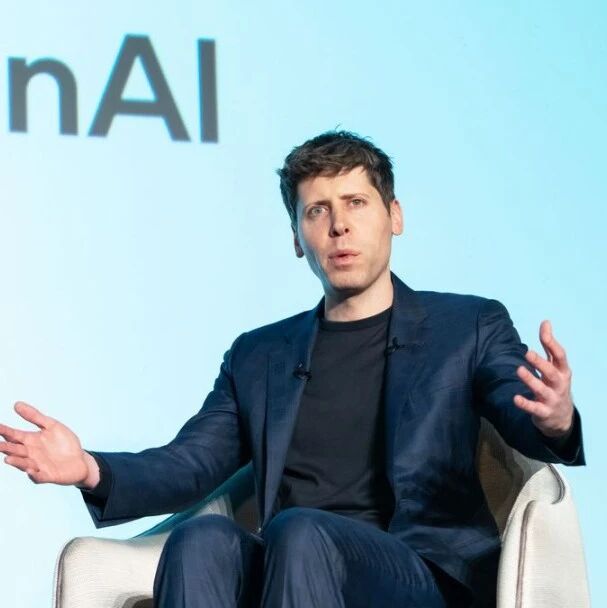
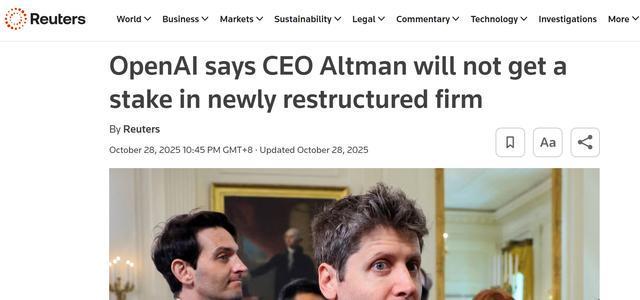
刚刚, OpenAI 上市计划曝光,冲刺万亿美元估值,将刷新历史纪录
3 6 Ke· 2025-10-30 03:03
英伟达刚刚创造了历史。 美国时间 10 月 29 日,英伟达成为史上首个市值突破 5 万亿美元的公司。截至当地收盘时间,英伟达总市值为 5.03 万亿美元。 据媒体分析,消息面上,英伟达 CEO 黄仁勋释放了 AI 需求强劲的信号。 就在刚刚,据路透社援引三位知情人士透露,OpenAI 正在为 IPO 做准备。要是成了,那 OpenAI 预计将会成为首个 IPO 估值就达到一万亿美元的科技公 司。 时间线大概是这样:最早 2026 年下半年提交上市申请,计划融资至少 600 亿美元(实际可能更高),OpenAI 首席财务官 Sarah Friar 已经跟同事们透了底 ——2027 年上市。 而 AI 浪潮的另一个主角,也有大动作了。 据华尔街日报报道,上市之前,Altman 特地搞定了一个硬茬——美国加州总检察长 Rob Bonta。 大约两周前,Altman 给 Bonta 打了个电话,核心意思就一句话:我真的很想留在加州。 但这话背后也暗藏杀机:OpenAI 花了好几个月游说,反复强调自己是加州经济的顶梁柱。言外之意就是:你要是不批,我们就……走咯? 这一招属实有点威胁意味。 不过 Altman 也表态了 ...

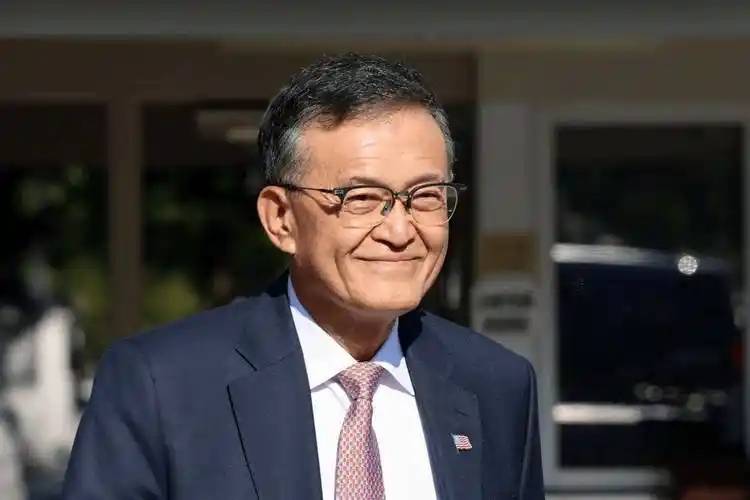
豪赌AI取得回报 孙正义财富暴涨248%超柳井正成日本首富
Sou Hu Cai Jing· 2025-10-30 02:35
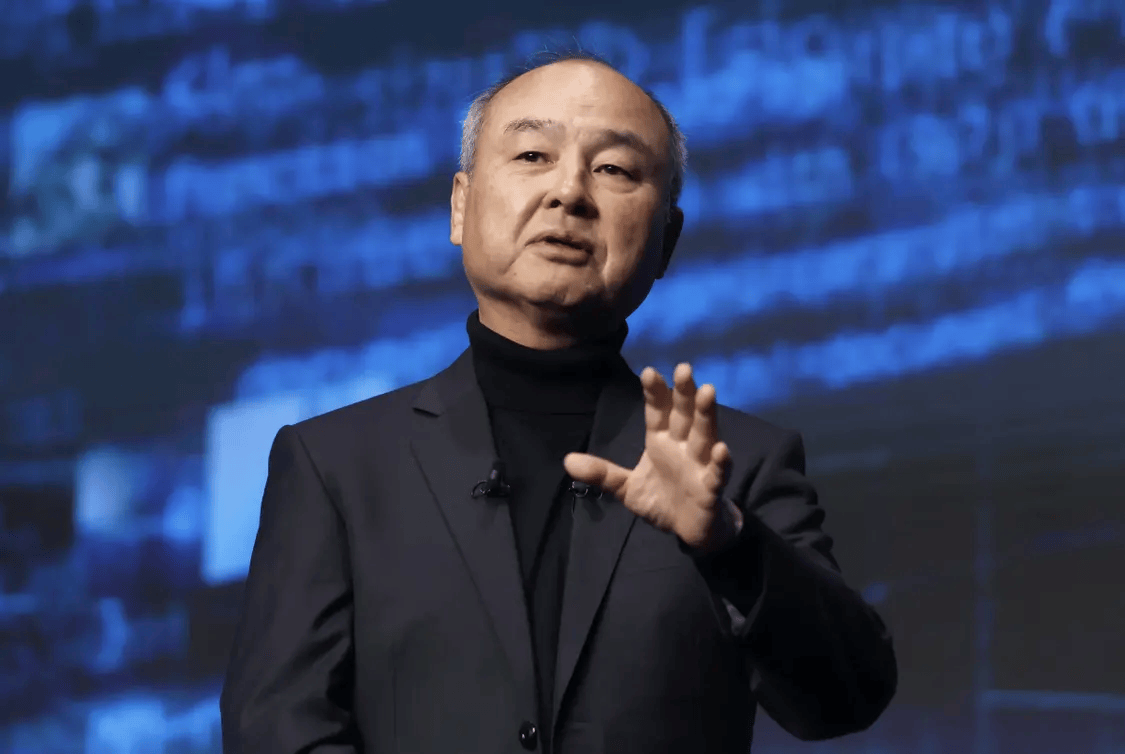
北京时间10月30日,据彭博社报道,软银创始人孙正义(Masayoshi Son)在AI领域的重磅押注获得了回报,他的财富现在超越了优衣库创始人柳井正(Tadashi Yanai),成为日本新首富。 图2:孙正义财富超越柳井正 图1:孙正义 孙正义财富的近期飙升得益于在东京上市的软银集团的股价表现。软银持有软银约三分之一的股份,是最大股东。现年68岁的孙正义掌控着全球科技投资组 合,从芯片制造商到创业公司。今年,他更是大举投资,试图将软银打造为全球AI浪潮中的关键枢纽。 彭博亿万富翁指数显示,孙正义的净资产今年飙升248%,在周三达到551亿美元,比优衣库母公司迅销公司最大股东兼董事长柳井正高出约2300万美元。过 去十年的大部分时间里,柳井正一直都是日本首富,自2022年4月以来没有失去过这一宝座。 【来源:凤凰网科技】 周三,软银股价上涨,此前该公司被列入有意在特朗普访日期间启动美国项目的企业名单。孙正义已成为特朗普在全球商业领域的关键外国支持者之一,今 年早些时候曾承诺将在美国投资1000亿美元。 孙正义最具雄心的投资交易包括计划对OpenAI投资300亿美元,以及与OpenAI、甲骨文公司和阿布扎比基 ...
马斯克最大对手完成变身,史上最大IPO即将来临
3 6 Ke· 2025-10-30 01:36
Core Insights - OpenAI has successfully completed its transformation from a non-profit organization to a profit-oriented tech giant, paving the way for a potential IPO, expected around 2027, which could set a record for fundraising [1][2][3] Group 1: Transformation and Market Impact - OpenAI's transition has significantly influenced the AI industry and global infrastructure, marking a dramatic shift from its original mission of ensuring AGI benefits all humanity [2][3] - The company has formed strategic partnerships with major tech firms like Microsoft, Oracle, NVIDIA, AMD, and Broadcom, which has tightly bound its interests with the broader AI ecosystem [2][3] - Following the announcement of its transformation, stock prices for NVIDIA and Microsoft surged, reaching new market capitalizations of over $5 trillion and $4 trillion respectively [2] Group 2: Financial Structure and Control - OpenAI's new structure includes a dual-layer system where the non-profit foundation retains control over the profit-oriented entity, OpenAI Group PBC, which is valued at approximately $5 trillion [4][6] - Microsoft remains the largest external investor with a 27% stake, valued at around $135 billion, while the foundation holds about 26% of the equity, valued at approximately $130 billion [4][6] - The restructuring has removed previous financing restrictions, allowing OpenAI to freely raise funds from investors and partners, thus facilitating its path to an IPO [7] Group 3: Strategic Agreements and Investments - OpenAI has committed to significant agreements, including a $500 billion project with Oracle and SoftBank for AI data centers, and a $300 billion cloud computing deal with Oracle [19][21] - The company has also secured a $250 billion cloud service agreement with Microsoft, alongside substantial investments from NVIDIA and AMD for hardware procurement [21][22] - OpenAI's aggressive investment strategy is projected to exceed $1.5 trillion by 2025, with a focus on expanding its AI infrastructure [18][22] Group 4: Competitive Landscape and Challenges - Elon Musk's opposition to OpenAI's transformation has been marked by multiple lawsuits and attempts to undermine its progress, reflecting a personal rivalry stemming from their shared founding of the organization [12][13][14] - OpenAI's financial model faces scrutiny, as its projected expenses significantly outweigh its revenues, leading to anticipated losses of at least $14 billion by 2025 [22][23] - The company's ambitious infrastructure investments are seen as a high-stakes gamble, with the potential to either revolutionize AI or trigger a systemic crisis in the industry [22][23]
OpenAI重组:软银砸2900亿破局,微软放手“云权”
阿尔法工场研究院· 2025-10-30 00:07
Core Insights - SoftBank, led by Masayoshi Son, is making a significant investment of approximately $41 billion (around 290 billion RMB) in OpenAI, marking a shift from being a passive investor to an active participant in the AI industry [4][13]. - OpenAI has restructured from a non-profit to a profit-oriented entity, with a new non-profit foundation retaining control, reflecting a transformation in its operational model [6][17]. - The valuation of OpenAI is estimated at around $500 billion, with the non-profit foundation holding 26% of the equity, valued at approximately $130 billion [6][17]. Investment Dynamics - Microsoft is a major beneficiary of OpenAI's restructuring, acquiring about 27% equity, which is valued at approximately $135 billion, indicating a nearly tenfold increase from its initial investment of around $13.8 billion [6][7]. - The new agreement between Microsoft and OpenAI extends their collaboration until 2032, allowing Microsoft to maintain priority access to OpenAI's latest AI models and products [7][8]. - OpenAI has entered into a significant cloud service agreement with Oracle, committing to purchase up to $300 billion in cloud services over five years, indicating a shift to a dual-cloud strategy [7][8]. Strategic Implications - The restructuring reflects a balance between Microsoft's interests and OpenAI's need for autonomy, as both parties navigate their evolving relationship from close partners to potential competitors [11][12]. - SoftBank's investment strategy involves a phased approach, with an initial commitment of $10 billion and an additional $22.5 billion contingent on OpenAI's successful restructuring [14][15]. - The "Stargate" initiative, a collaboration involving SoftBank, Microsoft, and Oracle, aims to invest $500 billion over four years to build next-generation AI supercomputing infrastructure across the U.S. [15][27]. Ethical Considerations - OpenAI's shift towards profit-making has raised concerns about its commitment to its original mission of benefiting humanity, with critics questioning the implications of prioritizing profit over public good [17][19]. - The internal dynamics at OpenAI reflect a tension between maintaining its altruistic goals and the pressures of commercial success, as highlighted by the contrasting views of co-founders like Elon Musk [17][19]. - Regulatory scrutiny has played a role in shaping OpenAI's new structure, ensuring that the non-profit foundation retains significant control and oversight [18][19]. Industry Ecosystem - The AI industry is evolving into a complex ecosystem characterized by interdependencies among major players, including chip manufacturers like NVIDIA and AMD, cloud service providers, and AI model developers [22][24]. - The capital flow within this ecosystem is cyclical, with investments and contracts binding various stakeholders together, facilitating rapid growth and innovation in the AI sector [26][27]. - The contrasting approaches of the U.S. and China in AI development highlight differences in market dynamics, with the U.S. fostering collaborative investments while Chinese tech giants tend to operate independently [28][29].