
中国科学技术大学

Search documents
VL-LN Bench:模拟「边走边问找具体目标」的真实导航场景
机器之心· 2026-02-02 08:00
交互式实例导航任务 (Interactive Instance Goal Navigation, IIGN) 本工作由上海人工智能实验室、中国科学技术大学、浙江大学、香港大学 的研究者们共同完成。 如果将一台在视觉语言导航(VLN)任务中表现优异的机器人直接搬进家庭场景,往往会遇到不少实 际问题。 首先是使用门槛偏高:传统 VLN 需要用户给出又长又精确的路线式指令,例如 "从门口直走三步,看到门右转,再往前……",这会显著增加沟通成本,降 低日常使用体验。 论文标题:VL-LN Bench: Towards Long-horizon Goal-oriented Navigation with Active Dialogs 项目主页:https://0309hws.github.io/VL-LN.github.io/ ArXiv 论文:https://arxiv.org/abs/2512.22342 Hugging Face 数据集: https://huggingface.co/datasets/InternRobotics/VL-LN-Bench Hugging Face 模型:https://huggi ...


布下宇宙信号“监听系统” 暗物质探测新增更精准“量子神器”
Ke Ji Ri Bao· 2026-01-30 02:00
Core Insights - The research team from the University of Science and Technology of China has developed the world's first quantum sensing network based on atomic nuclear spins, significantly enhancing the sensitivity for dark matter detection, as published in the journal Nature [1][2] Group 1: Quantum Sensing Technology - The quantum sensors are equipped with two key innovations: storing fleeting signals in a nuclear spin coherence state for nearly a minute, which greatly extends the detection window, and a self-developed quantum amplification technology that enhances weak signals by 100 times [1] - The team has successfully deployed five ultra-sensitive quantum sensors in Hefei and Hangzhou, creating a distributed detection network synchronized by satellite time [2] Group 2: Dark Matter Detection - The research has provided the most stringent limits on dark matter models across a wide range of axion masses, with some precision limits exceeding astronomical observations by 40 times [2] - This breakthrough adds a more precise "quantum tool" to humanity's toolkit for searching dark matter, with potential future enhancements in sensitivity by four orders of magnitude through global networking and space deployment [2]
量子“捕手”为暗物质探测提供全新路径
Huan Qiu Wang Zi Xun· 2026-01-30 01:45
Core Insights - The research team from the University of Science and Technology of China has developed the world's first quantum sensing network based on atomic nuclear spins, significantly enhancing the sensitivity for dark matter detection [1][3] - Dark matter, which constitutes approximately 26.8% of the universe, interacts through gravity but not electromagnetically, making it challenging to detect [1] - The team has established a distributed detection network using five ultra-sensitive quantum sensors, achieving detection precision that surpasses astronomical observations by 40 times in certain mass ranges of axions, a leading candidate for dark matter [3] Group 1 - The quantum sensors are equipped with advanced features that allow for the storage of fleeting signals in a nuclear spin coherence state for nearly a minute, greatly extending the detection window [1] - The team has developed a self-research quantum amplification technology that enhances weak signals by a factor of 100, making it easier to detect subtle interactions [1] - The breakthrough adds a new, more precise tool to humanity's arsenal for searching for dark matter, with potential future enhancements in sensitivity through global networking and space deployment [3] Group 2 - The sensors are deployed in Hefei and Hangzhou, synchronized via satellite for precise timing, forming a distributed detection network [3] - After two months of continuous observation, the team has provided the strictest constraints on dark matter models across a wide range of axion masses [3] - Future collaborations with gravitational wave observatories could further increase detection sensitivity by four orders of magnitude [3]
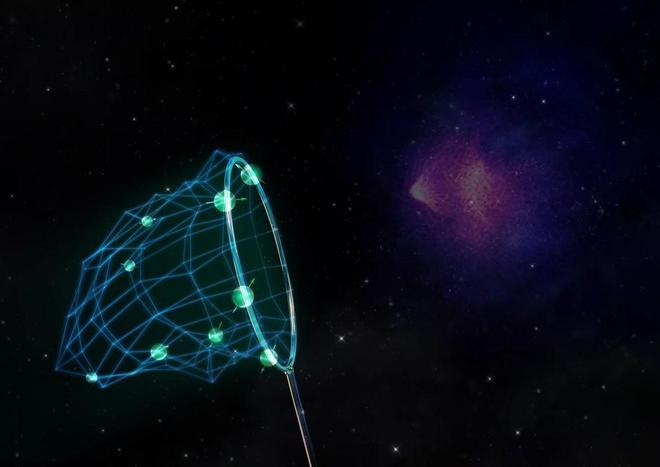
暗物质探测新增更精准“量子神器”
Ke Ji Ri Bao· 2026-01-30 01:17
Core Viewpoint - The research team from the University of Science and Technology of China has developed the world's first quantum sensing network based on atomic nuclear spins, significantly enhancing the sensitivity for dark matter detection and providing a new pathway to unravel this cosmic mystery [1][2]. Group 1: Quantum Sensing Technology - The team has innovatively equipped quantum sensors with two key enhancements: storing fleeting signals in a nuclear spin coherence state for nearly a minute, which greatly extends the detection window [1] - They also developed a quantum amplification technology that increases weak signals by 100 times, making it easier to detect subtle interactions [1]. Group 2: Dark Matter Detection - The research team deployed five ultra-sensitive quantum sensors in Hefei and Hangzhou, synchronizing them via satellite to create a distributed detection network [2] - After two months of observation, the team established the most stringent limits on dark matter models across a wide range of axion masses, achieving precision 40 times greater than results obtained from supernova observations [2]. Group 3: Future Implications - This breakthrough adds a more precise "quantum tool" to humanity's toolkit for searching dark matter, with potential future enhancements in sensitivity by four orders of magnitude through global networking and space deployment [2].
【新华社】量子“捕手”为寻找宇宙“隐形邻居”提供新工具
Xin Hua She· 2026-01-29 07:01
Core Insights - The research team from the University of Science and Technology of China has developed the world's first quantum sensing network based on atomic nuclear spins, significantly enhancing the sensitivity for dark matter detection [1][2] - Dark matter constitutes approximately 26.8% of the universe's total mass, yet it does not emit light or interact electromagnetically with ordinary matter, making it a critical component of the universe's structure [1] - The study introduces a new quantum sensor technology that can store fleeting signals for nearly a minute and amplify weak signals by 100 times, improving the chances of detecting dark matter interactions [1][2] Group 1 - The quantum sensing network connects Hefei and Hangzhou, utilizing satellite synchronization for precise time correlation, which enhances the reliability of detection results by filtering out noise [2] - Although the team did not capture a clear signal of the "dark matter wall," they established stringent limits on dark matter models across a wide range of axion masses, achieving a precision 40 times greater than astronomical observations using supernovae [2] Group 2 - This breakthrough adds a more precise "quantum tool" to humanity's arsenal for dark matter detection, paving the way for future collaborations with gravitational wave observatories to explore more cosmic mysteries [4] - The research team plans to expand the quantum detection network's coverage through global networking and space deployment to further enhance dark matter detection sensitivity [4]
【新华社】中国积极推进科技合作助力攻克全球难题
Xin Hua She· 2026-01-29 03:44
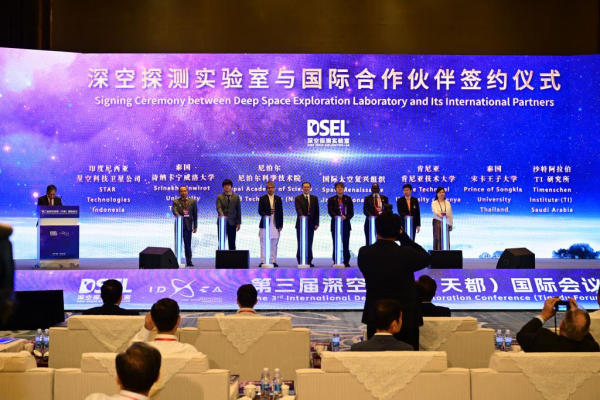
Group 1: International Collaboration in Science and Technology - China is actively promoting international cooperation in key scientific fields such as nuclear fusion, deep space exploration, and artificial intelligence, aiming to build a multi-level collaborative framework for global scientific governance [3][4][5] - The establishment of the International Lunar Research Station, led by China, has resulted in cooperation agreements with 17 countries and international organizations, showcasing China's leadership in international scientific projects [5][6] - The Chinese Academy of Sciences is opening multiple advanced fusion energy experimental facilities to global collaboration, emphasizing the importance of collective efforts to address energy challenges [4][7] Group 2: Advancements in Artificial Intelligence and Machine Chemistry - The Precision Intelligent Chemistry National Key Laboratory plans to establish an international organization for intelligent scientific standards, attracting attention from global research institutions [3][6] - The development of a machine chemist capable of conducting experiments autonomously has garnered interest from countries like Thailand and Singapore, with plans to share technology to assist in overcoming challenges in energy, medicine, and agriculture [6][7] - The initiative aims to democratize access to scientific research and innovation, breaking the monopoly of Western countries on AI data [6][7] Group 3: Global Governance and Rule Building - China is advocating for a fair and reasonable global scientific governance system, with the establishment of the International Society for Deep Space Exploration in Anhui [7] - The Hefei Fusion Declaration, signed by scientists from over ten countries, promotes the spirit of open sharing and collaborative win-win cooperation in fusion research [7] - The emphasis on building a new ecological system for global scientific collaboration reflects China's commitment to addressing common scientific goals for the benefit of humanity [7]
合肥3项成果入选 2025年中国十大科技进展新闻
Xin Lang Cai Jing· 2026-01-28 17:52
Core Insights - The article highlights three significant technological advancements from Hefei that have been recognized as part of the 2025 China's Top Ten Scientific Progresses [1] Group 1: Technological Achievements - The EAST (Experimental Advanced Superconducting Tokamak) achieved a world record by maintaining a temperature of 100 million degrees Celsius for 1066 seconds, marking a milestone in nuclear fusion research [1] - A high-precision AI diagnostic tool developed by the University of Science and Technology of China predicts the recurrence risk of liver cancer with an accuracy of 82.2%, providing a crucial tool for global precision diagnosis and treatment [1] - The "Zuchongzhi No. 3" quantum computing prototype was successfully constructed, capable of solving the "quantum random circuit sampling" problem at a speed 10 trillion times faster than the current fastest supercomputer [1]
科大国盾量子技术股份有限公司 关于日常关联交易的公告
Zhong Guo Zheng Quan Bao - Zhong Zheng Wang· 2026-01-20 23:37
Core Viewpoint - The announcement details a planned daily related transaction between Guodun Quantum Technology Co., Ltd. and Guoke Quantum Communication Network Co., Ltd., involving a maintenance service contract for quantum equipment along the Beijing-Shanghai route, with an estimated amount of 1.8 million yuan [2][5]. Group 1: Transaction Overview - The company intends to sign a sales service contract with Guoke Quantum Network for maintenance services, with an expected amount of 1.8 million yuan [2][5]. - Over the past 12 months, the total amount of sales service contracts signed with related parties, excluding previously disclosed amounts, is 4.6554 million yuan [2][5]. - This transaction does not constitute a major asset restructuring and is part of the company's normal business operations [3][5]. Group 2: Related Party Information - Guoke Quantum Network is a state-controlled limited liability company, established on November 29, 2016, with a registered capital of 103.183216 million yuan [6]. - The company has a relationship with Guoke Quantum Network due to a former director's previous role as a board member of Guoke Quantum Network [8]. Group 3: Transaction Details - The maintenance service contract is set to cover the period from January 1, 2026, to December 31, 2026, with a service fee of 1.8 million yuan [9]. - The pricing for the transaction is determined based on fair and reasonable principles, considering labor costs and material prices [10][11]. Group 4: Approval Process - The transaction was approved by the independent directors at a special meeting and subsequently by the board of directors, thus not requiring shareholder meeting approval [4][16][17]. - The independent directors unanimously agreed to submit the proposal to the board for further approval [16]. Group 5: Impact on Company Operations - The transaction is deemed necessary for the company's daily operations and does not significantly affect the company's independence or create major reliance on related parties [15]. - The related party involved has a good reputation and normal operational capabilities, ensuring compliance with the contract [14][15].

国盾量子(688027.SH):拟签订技术实施许可合同
Ge Long Hui A P P· 2026-01-20 10:16
Core Viewpoint - The company, Guodun Quantum (688027.SH), plans to sign licensing agreements with the University of Science and Technology of China (USTC) for several patents and software copyrights, indicating a strategic move to enhance its technological capabilities and business operations [1] Group 1: Licensing Agreements - The company intends to sign one patent/technology licensing contract and one software copyright/technology licensing contract with USTC, involving a total of 4 patents, 3 software copyrights, and 2 proprietary technologies [1] - The ownership of the technological achievements will be jointly held by USTC and another party [1] - The company will pay an entry fee and sales share as stipulated in the contract [1] Group 2: Additional Agreements - The company plans to sign similar licensing agreements with the other owner of the technological achievements, with terms including licensing method, duration, and fees consistent with those agreed upon with USTC [1]
国盾量子:拟签订技术实施许可合同
Ge Long Hui· 2026-01-20 10:10
Core Viewpoint - The company, Guodun Quantum (688027.SH), plans to sign licensing agreements with the University of Science and Technology of China (USTC) for several patents and software copyrights, indicating a strategic move to enhance its technological capabilities and product offerings [1] Group 1: Licensing Agreements - The company intends to sign one patent/technology licensing contract and one software copyright/technology licensing contract with USTC, involving a total of 4 patents, 3 software copyrights, and 2 proprietary technologies [1] - The ownership of the technological achievements will be jointly held by USTC and another party [1] - The company will pay an entry fee and sales share as stipulated in the contract [1] Group 2: Additional Agreements - The company plans to sign similar licensing agreements with the other owner of the technological achievements, with terms consistent with those agreed upon with USTC [1]