
瑞众人寿

Search documents
2026首份银行增持公告来了!顶流银行ETF(512800)上探1%,机构:历次春节前银行胜率最高,值得重视
Xin Lang Cai Jing· 2026-01-13 11:44
Core Viewpoint - The banking sector shows resilience with significant stock price increases, driven by executive buybacks and insurance capital inflows, indicating strong confidence in the sector's fundamentals and long-term value [3][12]. Group 1: Market Performance - On January 13, the market experienced a pullback, but the banking sector remained active, with notable gains: Ningbo Bank up over 4%, Hangzhou Bank up over 3%, and several others including CITIC Bank and Chongqing Rural Commercial Bank up over 2% [1][9]. - The top-tier banking ETF (512800) saw an intraday price increase of over 1%, closing up 0.37% and surpassing the 5-day moving average [1][10]. Group 2: Executive Buybacks - The first executive buyback announcement of 2026 was made by Chongqing Rural Commercial Bank, where some directors and executives purchased 192,000 shares from the secondary market, with a maximum investment of 1.23 million yuan [3][12]. - Nanjing Bank reported that its major shareholder, Zijin Group, increased its stake by 123,472,060 shares, representing 1.00% of the total share capital, continuing from previous increases since September 2025 [3][12]. Group 3: Insurance Capital Inflows - Insurance capital has been actively purchasing bank stocks, with Ping An Life announcing it reached a 20% stake in China Merchants Bank H-shares, triggering a mandatory bid [3][12]. - In 2025, insurance capital made 41 stake increases, the highest in nearly a decade, with bank stocks accounting for about 40% of these actions, highlighting their dominance in this area [3][12]. Group 4: Seasonal Trends - Historically, the banking sector has performed well before the Spring Festival, with the Shenwan Banking Index showing over 80% win rate in the past decade, except for 2020 [4][16]. - The average absolute return of the Shenwan Banking Index before the Spring Festival is 4.4%, with an average excess return of 4.9% compared to the Shanghai Composite Index, making it the highest among 31 industry indices [4][16]. Group 5: Future Outlook - Factors expected to drive the banking sector's performance leading up to the Spring Festival in 2026 include continued growth policies, ongoing insurance asset scarcity, and increased market volatility [7][16]. - The banking ETF (512800) is noted for its efficiency in tracking the banking sector, with a current scale of 11.95 billion yuan and an average daily trading volume exceeding 800 million yuan since 2025, making it the largest and most liquid banking ETF in A-shares [7][16].






险资持续“扫货”银行股 后续增持空间依然看好
Zhong Guo Jing Ying Bao· 2026-01-10 09:35
Core Viewpoint - Recently, Ping An Life has announced increased holdings in Agricultural Bank and China Merchants Bank H-shares, reflecting a broader trend among insurance companies to invest in bank stocks, particularly H-shares, due to their attractive dividend yields and valuation discounts [1][2]. Group 1: Investment Activities - Ping An Life announced that it has increased its stake in China Merchants Bank H-shares to 20% as of December 31, 2025, with a book value of 43.956 billion yuan, representing 0.78% of total assets [1]. - Similarly, Ping An Life has increased its stake in Agricultural Bank H-shares to 20% as of December 30, 2025, with a book value of 32.428 billion yuan, accounting for 0.58% of total assets [1]. - Multiple life insurance companies, including Ping An Life, have been actively acquiring shares in various banks, particularly H-share listed banks, throughout 2025 [1]. Group 2: Reasons for Increased Investment - The increase in insurance capital allocation to bank stocks, especially H-shares, is driven by favorable policies encouraging long-term capital market entry and the stable nature of bank stocks, which offer high dividends [2]. - The current low interest rate environment and "asset shortage" have highlighted the advantages of bank stocks as high-dividend, low-volatility investments, making them attractive to insurance funds [2]. - H-shares of banks are generally priced at a 15%-30% discount compared to their A-share counterparts, enhancing their appeal due to higher post-tax dividend yields [2][3]. Group 3: Impact of Increased Holdings - The rising shareholding of insurance funds in banks is expected to influence corporate governance and business strategies, promoting more sustainable dividend policies and enhancing governance structures [4]. - Insurance funds are likely to push for more rigid and tiered dividend policies, potentially increasing the average cash dividend payout ratio by 3-5 percentage points [4][5]. - The collaboration between insurance companies and banks is anticipated to deepen, leading to optimized financial services and improved operational efficiencies [5]. Group 4: Future Outlook - Analysts predict that there remains significant room for insurance capital to increase its holdings in banks, driven by ongoing regulatory encouragement and the need for asset allocation [5]. - The focus of insurance capital is expected to shift towards banks with clear dividend returns and strong asset quality, with H-shares likely remaining a primary target due to their cost-effectiveness [5].
年内举牌超30次 让险资为之“疯狂”的机构都有哪些特点
Mei Ri Jing Ji Xin Wen· 2026-01-06 10:36
Core Viewpoint - Insurance capital's involvement in listed companies is increasing, with a record number of shareholding actions in 2025, particularly favoring the financial sector, especially H-shares [1][2][4]. Group 1: Shareholding Activities - By the end of 2025, insurance capital had conducted over 30 shareholding actions, marking a significant increase compared to previous years [1]. - A total of 14 insurance institutions participated in 35 shareholding actions in 2025, with Ping An Life being the most active, conducting 12 actions [2]. - The month of August saw the highest activity, with 7 shareholding actions, including Ping An Life's investments in major banks [2]. Group 2: Investment Preferences - Financial stocks, particularly H-shares of banks, are the primary targets for insurance capital, with 15 actions in the financial sector [4]. - Insurance companies prefer low-valuation, high-dividend stocks with stable performance, which aligns with the new accounting standards that favor high-dividend stocks [4][5]. - The valuation of H-shares is generally lower than A-shares, providing greater appreciation potential, along with tax benefits through the Hong Kong Stock Connect [4][5]. Group 3: Market Impact and Trends - The shareholding actions by insurance capital have positively influenced stock prices, with notable increases following such actions [7]. - Major insurance companies have shown strong stock performance, with significant annual increases in share prices, outperforming the broader market indices [9]. - The trend of insurance capital's involvement in the equity market is expected to continue, driven by considerations of dividend yield and return on equity (ROE) [10].

年内举牌超30次 让险资为之“疯狂”的机构都有哪些特点⋯⋯
Mei Ri Jing Ji Xin Wen· 2026-01-06 10:17
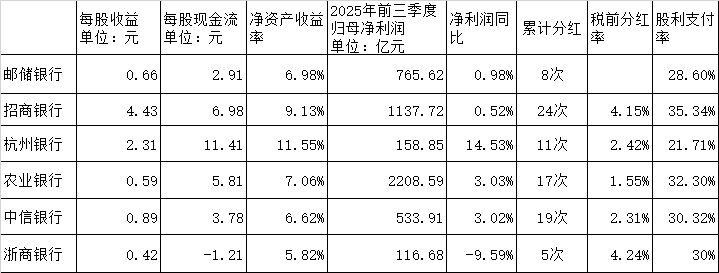
Core Viewpoint - Insurance capital's stake in listed companies has significantly increased, with over 30 instances of stake acquisitions in 2025, marking a new high in recent years [1][10]. Group 1: Stake Acquisition Trends - In 2025, insurance companies made 35 stake acquisitions, up from 20 in 2024, indicating a growing trend in equity market participation [2][11]. - The financial sector is the primary focus for insurance capital, with 15 stake acquisitions involving 6 banks and 2 insurance companies [1][4]. - The H-share market is the main venue for these acquisitions, as it offers better valuation opportunities compared to A-shares [1][4]. Group 2: Active Participants - A total of 14 insurance institutions participated in stake acquisitions in 2025, with Ping An Life leading with 12 acquisitions [2][11]. - Other notable participants include Great Wall Life and China Post Life, each with 4 acquisitions, and several others with fewer [2][11]. - August 2025 was particularly active, with 7 acquisitions, including Ping An Life's significant stake in Postal Savings Bank [2][11]. Group 3: Investment Characteristics - Insurance capital favors low-valuation, high-dividend stocks with stable performance, particularly in the banking sector [4][13]. - The new accounting standards encourage insurance companies to increase stake acquisitions to stabilize profit and loss fluctuations [3][12]. - Financial stocks, especially H-shares, are preferred due to their higher dividend yields compared to long-term bond yields [4][13]. Group 4: Financial Performance of Target Companies - Six banks targeted by insurance capital showed a range of return on equity (ROE) from approximately 6% to 11.55% [5][14]. - The banks reported stable dividend distributions, with China Merchants Bank having the highest number of cumulative dividends at 24 [5][14]. - In the first three quarters of 2025, five banks reported year-on-year profit increases, with Postal Savings Bank achieving a net profit of 765.62 billion yuan, up 0.98% [5][14]. Group 5: Market Reactions and Future Outlook - Stake acquisitions by insurance capital have positively influenced stock prices, often leading to short-term price surges [6][16]. - Insurance stocks have outperformed other sectors, with significant annual increases in stock prices for major insurance companies [8][18]. - The trend of insurance capital acquisitions is expected to continue into 2026, driven by considerations of dividend yield and return on equity [9][19].


2025年险资举牌图谱:39次“落子”创十年新高,银行压仓、偏爱公用事业
Xin Lang Cai Jing· 2026-01-05 13:14
Core Insights - In 2025, insurance capital became increasingly active in the equity market, with the number of stake acquisitions rising to 39, the highest since 2016, driven by policy relaxation and yield demands [2][12] - Bank stocks emerged as a key focus for insurance capital due to their low valuations and high dividend characteristics, aligning with the conservative preferences of insurance funds [2][7] - The ongoing regulatory encouragement for "long-term capital" to enter the market is expected to enhance the stability of insurance capital in the capital market [2][19] Stake Acquisition Trends - The number of stake acquisitions by insurance companies increased from 20 in 2024 to 39 in 2025, nearly doubling [2][12] - Ping An Life was the most active insurer, making 12 acquisitions in 2025, including three in August alone [2][12] - Other insurers like Great Wall Life and Hongkang Life also showed significant activity, with each making four acquisitions [3][13] Investment Preferences - In 2025, 39 stake acquisitions targeted 29 stocks, with over 70% being H-shares, reflecting a preference for low-valuation, high-dividend Hong Kong stocks [7][17] - Bank stocks accounted for nearly 40% of all stake acquisitions, with notable targets including Postal Savings Bank, China Merchants Bank, and Agricultural Bank [7][17] - The high dividend yields of bank stocks, such as 6.31% for China Merchants Bank and 6.73% for Zhejiang Merchants Bank, align with the stable investment preferences of insurance funds [7][17] Strategic Investment Approaches - Insurers are also engaging in strategic placements and cornerstone investments, as seen with Taikang Life's participation in the IPO of Fengzhao Technology [5][15] - Regulatory measures since 2023 have facilitated insurance capital's entry into the market by optimizing solvency and risk factors, thus enhancing investment flexibility [5][15] Future Outlook - The insurance sector is expected to further increase its allocation to equity markets, with projections indicating potential incremental allocations of approximately 968.1 billion to 1,175.4 billion yuan in 2026 under various scenarios [19] - The first trading day of 2026 saw a positive market response, indicating a significant potential for future investments by insurance capital [19]

保险25年显著跑赢大盘,险资举牌仅十年新高:保险行业周报(20251229-20251231)-20260105
Huachuang Securities· 2026-01-05 08:44
Investment Rating - The industry investment rating is "Recommended," indicating an expected increase in the industry index by more than 5% over the next 3-6 months compared to the benchmark index [19]. Core Insights - The insurance sector has significantly outperformed the market over the past 25 years, with insurance capital's stake acquisitions reaching a ten-year high [1]. - In 2025, there were a total of 31 stake acquisitions by insurance capital, marking a resurgence in activity, second only to 2015, and surpassing the 28 acquisitions in 2020 [3]. - The preference for H-shares among insurance capital is evident, with 26 out of 31 acquisitions targeting H-shares, likely due to favorable dividend yields [3]. - The main sectors attracting insurance capital include banking (7 acquisitions) and public utilities (6 acquisitions), reflecting a preference for dividend-yielding assets [3]. - The report anticipates that the trend of stake acquisitions will continue into 2026, driven by two main motivations: seeking stable dividend cash flows and targeting mature, monopolistic enterprises with solid ROE [3]. Summary by Sections Weekly Updates - China Pacific Insurance appointed Liu Long as the Chief Investment Officer [2]. - Great Wall Life successfully issued its first perpetual bond with a scale of 1 billion yuan and a rating of AAA [2]. - Great Wall Life increased its holdings in New Tian Green Energy and Datang New Energy, raising its shareholding percentages to 11.04% and 17.39%, respectively [2]. Stake Acquisition Overview - In 2025, insurance capital's stake acquisitions totaled 31 times, with a minimum of 38 times when accounting for repeated acquisitions [3]. - The report highlights a shift in acquisition activity towards larger insurance companies, with Ping An leading with 7 acquisitions, followed by Great Wall Life (5) and others [3]. Investment Recommendations - The insurance sector saw a general increase in December, driven by expectations of rising long-term interest rates and favorable sales performance [3]. - Despite anticipated pressure from high investment baselines, the report suggests that the sector's valuation may continue to recover due to stabilizing interest rates and declining liability costs [3]. - Companies recommended for investment include China Ping An and China Pacific Insurance, which are expected to manage liability costs effectively [3]. Valuation Metrics - The report provides PEV valuations for major life insurance companies, with China Life at 0.87x, Ping An at 0.82x, and China Pacific at 0.68x for A-shares [4]. - For H-shares, Ping An is valued at 0.75x, while China Life is at 0.51x [4]. - The report recommends a ranking of investment opportunities: China Ping An, China Pacific Insurance, China Life H, and China Property Insurance [4].



年内险资举牌39次
Xin Lang Cai Jing· 2025-12-23 23:14
H股成险资举牌重地 12月18日晚间,四川路桥披露的信息显示,中邮保险对其累计持股达4.35亿股,占公司总股本5.00%, 正式完成举牌。 这并非是中邮保险首次出手,此前它已经相继布局东航物流、绿色动力环保H股及中国通号H股。 近日,中邮保险增持四川路桥,完成中邮保险年内的第四次举牌,险资"长钱"加速入市。 随着中邮保险的举牌成功,今年险资的举牌次数达到39次,仅次于2015年的62次,为历史第二高。回顾 2025年险资举牌行为,呈现出举牌热情高涨、单一标的获多次举牌、举牌标的集中于H股等特点。业内 人士分析认为,预计2026年这一趋势仍将延续。从举牌资产所属板块来看,传统板块仍具有压舱石地 位,但科技板块的比重有望增加。 另一类是股票投资,选股方向以高股息、高分红资产为主,将其归类为以公允价值计量且变动计入其他 综合收益的金融资产(FVOCI),既能稳定获取分红现金流、增厚投资收益,又能规避股价波动对当期 净利润的影响,平安系年内多次举牌国有大行H股,正是这一策略的体现。 兴业证券的研究数据显示,2025年三季度保险资金的股票和基金的资产配置比例已升至15.5%,权益仓 位的提升,为险资举牌创造空间。 作为 ...

年内险资举牌39次 偏爱红利资产,科技板块迎布局机遇
2 1 Shi Ji Jing Ji Bao Dao· 2025-12-23 23:05
近日,中邮保险增持四川路桥,完成中邮保险年内的第四次举牌,险资"长钱"加速入市。 随着中邮保险的举牌成功,今年险资的举牌次数达到39次,仅次于2015年的62次,为历史第二高。回顾 2025年险资举牌行为,呈现出举牌热情高涨、单一标的获多次举牌、举牌标的集中于H股等特点。业内 人士分析认为,预计2026年这一趋势仍将延续。从举牌资产所属板块来看,传统板块仍具有压舱石地 位,但科技板块的比重有望增加。 H股成险资举牌重地 险资举牌热潮或将延续 12月18日晚间,四川路桥披露的信息显示,中邮保险对其累计持股达4.35亿股,占公司总股本5.00%, 正式完成举牌。 这并非是中邮保险首次出手,此前它已经相继布局东航物流、绿色动力环保H股及中国通号H股。 类似的举牌动作近期并不鲜见。12月初,瑞众人寿就公告称,12月5日买入青岛啤酒H股20万股,累计 持有青岛啤酒H股3276.4万股,占该上市公司H股股本的5%,由此触发举牌。 而在11月26日,泰康人寿也发布了举牌复宏汉霖H股的相关信息,披露其通过受托人泰康资产管理(香 港)有限公司(以下简称"泰康资产香港")管理的账户,于11月20日在二级市场买入复宏汉霖H股51. ...
年内险资举牌39次:偏爱红利资产,科技板块迎布局机遇
2 1 Shi Ji Jing Ji Bao Dao· 2025-12-23 13:16
Core Insights - The article highlights the increasing trend of insurance capital (险资) in China, particularly focusing on the surge in shareholding activities, with a total of 39 instances of shareholding increases recorded in 2025, marking the second-highest level in history after 2015 [2][4]. Group 1: Shareholding Activities - Zhongyou Insurance has increased its stake in Sichuan Road and Bridge, reaching a total of 435 million shares, which constitutes 5.00% of the company's total equity, marking its fourth shareholding increase this year [3]. - Other insurance companies, such as Ruizhong Life and Taikang Life, have also engaged in similar shareholding activities, with Taikang Life triggering multiple shareholding increases in companies like Fuhong Hanlin and participating as a cornerstone investor in the IPO of Fengcai Technology [3][4]. - The trend of multiple shareholding increases by the same insurance company in a single target has been observed, with companies like Hongkang Life and Ping An Life making several increases in their holdings in banks [4]. Group 2: Investment Trends and Characteristics - The insurance capital's shareholding activities are characterized by a preference for high Return on Equity (ROE) and high dividend stocks, indicating a strategic focus on long-term investments that enhance the ROE of the insurance companies themselves [6]. - The asset allocation of insurance funds has seen an increase, with the proportion of stocks and funds rising to 15.5% by the third quarter of 2025, creating more room for shareholding activities [6]. - The insurance capital's preference for H-shares reflects a broader trend of favoring dividend-paying assets, which is expected to continue into 2026, with a potential shift towards growth sectors [7][8]. Group 3: Regulatory Support and Future Outlook - Recent regulatory changes, including the adjustment of risk factors for long-term holdings of certain equity assets, are expected to support the ongoing trend of shareholding increases by insurance companies [7]. - Analysts predict that the high frequency of shareholding activities will persist into 2026, with a gradual shift in focus towards more dynamic sectors, particularly technology stocks [8].


涉违规运用保险公司资金 华夏久盈资产被罚70万元
Zhong Guo Jing Ying Bao· 2025-12-22 14:12
《中国经营报》记者注意到,这并非华夏久盈资产年内首次被罚。今年6月,华夏久盈资产及25名相关 责任人因"关联方报告中存在虚假记载和重大遗漏、协助其他机构违规大幅虚增偿付能力、违规运用资 金造成重大损失等"被警告并罚款共计266万元,其中多名相关责任人同时被处以终身禁止进入保险业或 禁业1年至15年不等。 公开资料显示,华夏久盈资产原为华夏人寿控股,但华夏人寿于2020年7月被接管。2023年7月,新设立 的瑞众人寿依法受让华夏人寿资产负债,承接机构网点及人员,全面履行保险合同义务。 12月19日,国家金融监督管理总局披露的行政处罚信息显示,华夏久盈资产管理有限责任公司(以下简 称"华夏久盈资产")因未按照规定运用保险公司资金等违法违规行为,被罚款70万元,一位相关责任人 被禁止10年进入保险业。 (编辑:李晖审核:何莎莎 校对:颜京宁) 今年4月份,监管批复华夏久盈资产变更股权,同意瑞众人寿受让华夏人寿持有的公司99%股权。目 前,瑞众人寿持有华夏久盈资产99%的股权,北京世纪力宏计算机软件科技有限公司持股1%。 中经记者 樊红敏 北京报道 ...