
联想控股

Search documents
一场科技与产业的“联想”实验
Xin Hua Wang· 2026-01-28 03:11
Core Viewpoint - The establishment of the "Peking University - Legend Holdings Advanced Photonic Integration Technology Joint Laboratory" aims to merge cutting-edge academic wisdom with real industrial needs to foster breakthrough results in photonic integration technology, which is crucial for overcoming energy consumption bottlenecks and enhancing computational efficiency [1][3]. Group 1: Laboratory Establishment and Goals - The joint laboratory is a collaboration between Peking University and Legend Holdings, focusing on the integration of advanced photonic technologies to address significant technical challenges in the industry [1][3]. - Legend Holdings aims to become a participant and enabler in China's technology industry ecosystem, with a three-tiered innovation system that includes increased R&D investment, investment in cutting-edge technologies, and commercialization of early-stage technologies [3][4]. Group 2: Research and Development Focus - The laboratory will leverage Peking University's research capabilities and Legend Holdings' financial support to tackle core issues such as the "power wall" and "capacity crisis" that hinder the development of next-generation communication and intelligent computing systems [10][12]. - The collaboration is expected to yield significant results by 2025, with the potential for joint patents and innovations that can transform the industry [12][13]. Group 3: Collaborative Model - Legend Holdings proposes a "co-creation partner" model that differs from traditional venture capital approaches, aiming for deep involvement in the entire lifecycle of research projects from early planning to industrialization [8][9]. - This model allows researchers to remain engaged in their scientific pursuits while ensuring that their innovations are applied in practical, societal contexts [9][10]. Group 4: Long-term Vision and Impact - The partnership is seen as a starting point for further collaborations that can lead to a broader integration of cutting-edge scientific achievements with industry applications, fostering a sustainable innovation ecosystem [13]. - The success of this model could lead to the emergence of new companies similar to Ayar Labs, which has recently gained significant investment and valuation, indicating a shift towards optical interconnect technologies as a solution for future computing demands [12][13].

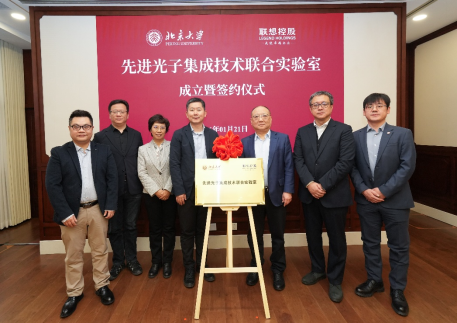
15年64期上市辅导报告,汉口银行问题有哪些?
Xin Lang Cai Jing· 2026-01-28 01:57
Core Viewpoint - Hankou Bank has faced significant challenges in its IPO journey, including prolonged delays, capital consumption issues, and limited channels for capital replenishment, leading to the longest ongoing IPO guidance period among banks in China [1][10]. Group 1: IPO Progress and Challenges - Hankou Bank signed an IPO guidance agreement with Haitong Securities in December 2010, aiming to become the first listed bank in Hubei province, but has yet to submit a prospectus after 15 years [1][2]. - The bank's IPO guidance report has reached its 64th update as of January 2026, marking a record duration for bank IPO guidance without a successful listing [1]. - The bank's IPO process has been hindered by a four-year "window" during which no banks have successfully listed on the A-share market, complicating its path to listing [1]. Group 2: Shareholding and Governance Issues - The introduction of Lenovo Holdings as a strategic shareholder in 2010 was expected to accelerate the bank's IPO process, but persistent shareholding issues have delayed progress [2][3]. - The bank faced significant shareholding complexities, including unclear ownership of state shares and issues with shareholding qualifications, which have been repeatedly highlighted in guidance reports [2][3]. - In December 2018, the bank's board approved a plan to resolve shareholding issues, leading to the approval of Wuhan Financial Holdings' shareholder qualifications in January 2020, allowing it to hold 11.44% of the bank's shares [3][4]. Group 3: Management and Operational Challenges - The bank's IPO efforts were further complicated by the denial of the CEO's qualification in April 2020, which is a rare occurrence and raised concerns about governance stability [6][7]. - The bank's performance was subpar in 2020, with a 12.49% decline in revenue and a 16.65% drop in net profit, alongside an increase in non-performing loans to 2.09% [7]. - Despite these challenges, the bank received approval to apply for an A-share IPO in December 2020, indicating some progress in its listing efforts [7]. Group 4: Capital Replenishment Issues - As of the end of 2023, the bank's core Tier 1 capital adequacy ratio was only 7.61%, just above the regulatory minimum, indicating significant capital replenishment pressure [10]. - The bank has undertaken capital increases to address its capital adequacy issues, raising 4.586 billion yuan in 2024, which temporarily improved its core Tier 1 capital ratio to 9.29% [10]. - However, by the third quarter of 2025, the bank's capital adequacy ratios had declined again, highlighting ongoing challenges in maintaining adequate capital levels [10].
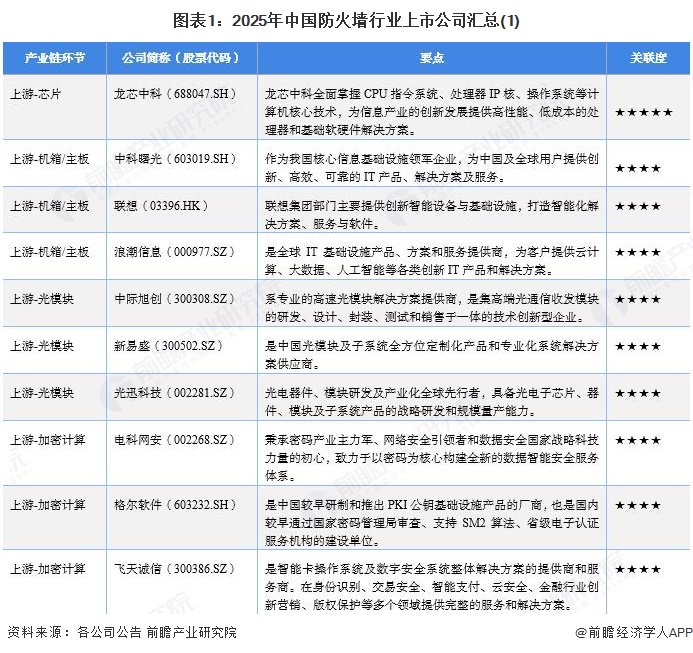
【最全】2025年防火墙行业上市公司全方位对比(附业务布局汇总、业绩对比、业务规划等)
Qian Zhan Wang· 2026-01-24 06:09
Core Insights - The firewall industry in China is a critical component of the network security system, serving as the first line of defense for enterprises and individuals. The industry is characterized by a diverse range of listed companies, primarily concentrated in the upstream and midstream segments of the supply chain [1][5]. Group 1: Company Overview - Major companies in the firewall industry include Sangfor (300454.SZ), Tianrongxin (002212.SZ), Hillstone Networks (688030.SH), Deepin Technology (300768.SZ), Ruijie Networks (301165.SZ), Venustech (002439.SZ), Qihoo 360 (688561.SH), and NSFOCUS (300369.SZ) [1]. - The highest revenue in the firewall industry for 2024 is projected to be from Lenovo, with revenue reaching 114.77 billion yuan, followed closely by Inspur with the same revenue figure [4]. - The registered capital is highest for NSFOCUS, while Tianrongxin is the oldest company in the industry. Ruijie Networks has the most bidding information, totaling 7,141 entries [8]. Group 2: Revenue and Profitability - In terms of revenue from firewall-related business, Sangfor is expected to generate 3.629 billion yuan in 2024, ranking second in the domestic market for unified threat management. Qihoo 360 follows with an expected revenue of 2.653 billion yuan [9]. - The gross profit margin for representative companies in the firewall industry is projected to be around 60% in 2024, with Sangfor achieving the highest margin at 79.31% and Hillstone Networks at 71.97% [11]. Group 3: Business Layout - The firewall business layout of listed companies shows a combination of regional focus and nationwide outreach, with technological innovation and scenario deepening being key characteristics. Sangfor focuses on South China, covering over 30 countries and regions, while Qihoo 360 is centered in Beijing, targeting government and state-owned enterprises [13][15]. - Companies like Tianrongxin and Venustech are also focusing on specific sectors such as industrial internet and government services, respectively, to enhance their market presence [15]. Group 4: Business Planning - Future business plans for firewall companies emphasize technological iteration and scenario deepening. Sangfor aims to integrate network security with cloud computing and transition to a subscription model by 2026 [17]. - Qihoo 360 plans to allocate 25% of its R&D budget to encryption firewall research, while Tianrongxin is focusing on smart solutions for industrial firewalls [17].


汉口银行谋求上市15年:资本补充渠道有限,IPO遥遥无期
Sou Hu Cai Jing· 2026-01-23 11:26
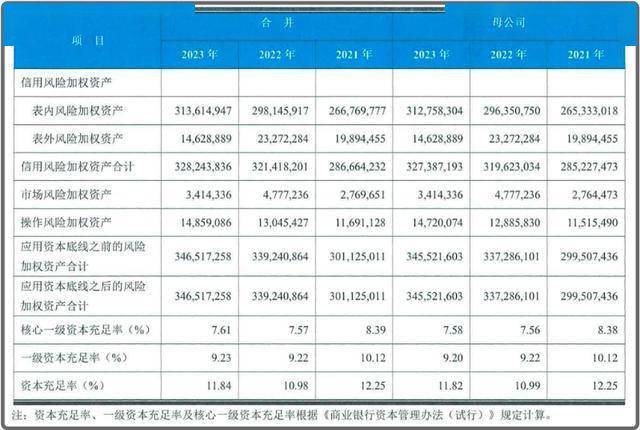
Core Viewpoint - The report from the China Securities Regulatory Commission indicates that Hankou Bank is undergoing guidance for its initial public offering (IPO), with the process having already taken 15 years, and the timeline for successful listing remains uncertain [2][6]. Group 1: Company Overview - Hankou Bank was established in December 1997 and currently operates over 200 branches with more than 5,000 employees, covering all cities in Hubei province and having a branch in Chongqing [2]. - As of the end of 2024, Hankou Bank's total assets reached 673.7 billion yuan [2]. Group 2: Capital Adequacy Ratios - Hankou Bank's capital adequacy ratios from 2021 to 2023 were as follows: - Capital adequacy ratio: 12.25% (2021), 10.98% (2022), 11.84% (2023) - Tier 1 capital adequacy ratio: 10.12% (2021), 9.22% (2022), 9.23% (2023) - Core Tier 1 capital adequacy ratio: 8.39% (2021), 7.57% (2022), 7.61% (2023) Although these ratios exceed regulatory minimums, they are close to the lower limits [2][3][4]. Group 3: Recent Financial Performance - In 2024, Hankou Bank's capital adequacy ratios improved to 14.38% (capital adequacy), 10.92% (Tier 1), and 9.30% (Core Tier 1) [4][5]. - The bank reported a net profit of 1.055 billion yuan in 2024, a decrease of 25.3% year-on-year, indicating limited internal capital replenishment capacity [6]. Group 4: Capital Raising Efforts - In February 2025, Hankou Bank announced a targeted issuance of 873.53 million shares to 11 qualified institutional shareholders, raising a total of 4.586 billion yuan to supplement core Tier 1 capital [6]. - Following this issuance, the ownership structure changed, with Lenovo Holdings' stake diluted from 13.11% to 11.1%, while Wuhan Financial Holdings became the largest shareholder with 11.62% [7]. Group 5: Ongoing Challenges - Despite the capital increase, Hankou Bank faces ongoing pressure on its capital adequacy ratios due to continuous business development and capital consumption [6][13]. - The latest report from Guotai Junan Securities highlights the limited channels for capital replenishment and emphasizes the need for Hankou Bank to explore diversified capital-raising methods [13][14].
智通港股沽空统计|1月14日
智通财经网· 2026-01-14 00:38
Group 1 - Anta Sports (82020), Lenovo Group (80992), and Kuaishou (81024) have the highest short-selling ratios at 100.00%, 78.04%, and 71.83% respectively [1][2] - Alibaba (09988), Tencent Holdings (00700), and Xiaomi Group (01810) lead in short-selling amounts, with 2.968 billion, 1.700 billion, and 1.588 billion respectively [1][2] - China National Building Material (03323), Jiangsu Nanjing Highway (00177), and China Liansu (02128) have the highest deviation values at 33.68%, 31.58%, and 22.77% respectively [1][2] Group 2 - The top short-selling stocks by amount include Alibaba (09988) at 2.968 billion, Tencent Holdings (00700) at 1.700 billion, and Xiaomi Group (01810) at 1.588 billion [2] - The top short-selling ratios are led by Anta Sports (82020) at 100.00%, followed by Lenovo Group (80992) at 78.04%, and Kuaishou (81024) at 71.83% [2] - The highest deviation values are recorded for China National Building Material (03323) at 33.68%, Jiangsu Nanjing Highway (00177) at 31.58%, and China Liansu (02128) at 22.77% [2][3]




生态赋能科技创新 联想控股(03396)与所投企业共创AI生态
智通财经网· 2026-01-13 09:46
Core Insights - Beijing Zhiyu Huazhang Technology Co., Ltd. successfully listed on the Hong Kong Stock Exchange, becoming the "first stock of large models," marking a significant milestone in its development and showcasing Lenovo Holdings' role in empowering AI startups [1] - Lenovo Holdings has made substantial investments in AI, with over 270 AI companies supported, establishing itself as one of the most comprehensive investment institutions in the field [2][9] Investment and Growth - Lenovo Holdings has been a key investor in Zhiyu, participating in multiple funding rounds and providing strategic support, which has accelerated Zhiyu's commercialization process [3][4] - Zhiyu's revenue is projected to grow significantly, with a compound annual growth rate of 130% from 2022 to 2024, reaching 312.4 million yuan by 2024 [4] Ecosystem and Collaboration - Lenovo Holdings has facilitated collaborations between Zhiyu and its own product lines, creating integrated solutions that combine hardware and large models, enhancing application in various sectors such as manufacturing and education [3] - Other AI companies backed by Lenovo Holdings, such as Moer Thread and Muxi, have also successfully entered the capital market, indicating a broader trend of AI integration across industries [5][6] Technological Advancements - Moer Thread and Muxi have achieved significant breakthroughs in AI chip technology, establishing themselves as leaders in the high-end GPU market [6] - Companies like Xiaoma Zhixing and Xidi Zhijia have made strides in autonomous driving, showcasing successful commercial applications of AI technology [6][7] Strategic Vision - Lenovo Holdings emphasizes the importance of "patient capital" in driving AI commercialization, focusing on long-term value creation and strategic investments [8] - The company aims to enhance its AI ecosystem by fostering collaboration across the industry, integrating technology and innovation to accelerate market validation and product deployment [9][10]
研判2025!中国电容笔行业进入壁垒、市场政策汇总、产业链图谱、市场规模、竞争格局及发展趋势分析:主动式电容笔将成为技术发展主流[图]
Chan Ye Xin Xi Wang· 2026-01-13 01:25
Core Insights - The global capacitive pen market is rapidly growing, with a projected market size of $2.018 billion in 2024, reflecting a year-on-year growth of 0.9%, where active capacitive pens account for approximately 67% and passive capacitive pens for about 33% [1][6] Industry Overview - Capacitive pens are input devices designed based on capacitive touch technology, allowing operations like writing, drawing, clicking, and sliding on capacitive touch screens [2] - The industry is characterized by various classifications of capacitive pens, including active vs. passive, basic vs. pressure-sensitive, and universal vs. specialized types [2] Industry Barriers - The main barrier to entry in the capacitive pen industry is the technical protocol certification required by operating system manufacturers like Microsoft and Google, which is essential for signal interaction [2] - The development of high-performance capacitive pens requires significant R&D investment and technological accumulation due to the complexity of the product [2] Policy Environment - The Chinese government has implemented several policies to support the development of the smart consumer device manufacturing industry, creating a favorable environment for the growth of the capacitive pen sector [4] Industry Chain - The capacitive pen industry supply chain includes upstream suppliers of raw materials like ICs, plastic components, and electronic materials, while the midstream focuses on R&D, design, and production [5] Market Growth in China - The Chinese capacitive pen market is expected to reach 5.562 billion yuan in 2024, with a year-on-year growth of 12.8%, driven by the digital economy and educational informationization policies [8] Competitive Landscape - The Chinese capacitive pen market is highly competitive, featuring major players like Apple, Microsoft, and Huawei, alongside local brands such as Hanvon Technology and MAXEYE, with MAXEYE projected to hold an 8.5% global market share in 2024 [6][11] Development Trends - Future trends indicate a focus on technological upgrades in active capacitive pens, enhancing pressure sensitivity and reducing latency, while integrating AI and IoT technologies [12] - The application of capacitive pens is expanding beyond consumer electronics into various industry sectors, driven by digital transformation needs [12] - Local brands are expected to enhance their market competitiveness through technological innovation and ecosystem development, moving towards a more integrated hardware-software-content model [13] - The industry is also moving towards sustainable development, with a focus on using biodegradable materials and optimizing production processes to meet environmental standards [15]


恒生指数午间收跌1.22% 恒生科技指数跌1.13%
Mei Ri Jing Ji Xin Wen· 2026-01-08 04:22
每经AI快讯,1月8日,港股午间收盘,恒生指数跌1.22%,恒生科技指数跌1.13%,智谱涨超11%,中 核国际涨超7%,中兴通讯涨近5%,中芯国际涨超2%。百度集团、联想控股跌超3%。 ...
精锋医疗®港股上市,联想之星早期布局手术机器人结硕果
投中网· 2026-01-08 02:23
Core Viewpoint - Shenzhen Jingfeng Medical Technology Co., Ltd. successfully listed on the Hong Kong Stock Exchange with an opening price of HKD 43.24 per share, achieving a market capitalization of HKD 23 billion on its first trading day, reflecting strong investor interest in the surgical robotics sector [3]. Company Overview - Jingfeng Medical specializes in advanced surgical robots, including multi-port and single-port laparoscopic surgical robots. The company received EU CE certification for its SP1000 and MSP2000 systems, marking a significant milestone as the first integrated surgical robot platform from China [5][11]. - The company was founded by alumni of Tianjin University, Wang Jianchen and Gao Yuanqian, and has attracted investments from notable firms such as Lenovo Star, Sequoia China, and Hillhouse Capital [5][11]. Investment Insights - Lenovo Star, the only early-stage investment firm with a systematic focus on healthcare, has seen a nearly 20-fold return on its investment of approximately HKD 28 million following Jingfeng Medical's successful IPO [5][12]. - The investment decision was based on a thorough analysis of the surgical robotics market, with a particular focus on the competitive landscape and the technical capabilities of Jingfeng Medical's team [10][14]. Market Potential - The laparoscopic surgical robot market is viewed as a critical battleground, with multi-port systems being essential for competitive positioning. The team behind Jingfeng Medical is recognized for its strong technical foundation and innovative capabilities [7][15]. - The company has expanded its clinical applications across 30 provinces in China, partnering with over 220 hospitals, including top-tier hospitals and grassroots healthcare facilities [11]. Technological Advancements - Jingfeng Medical's "Jingfeng Cloud" system aims to overcome geographical limitations in surgical capabilities, achieving over 500 surgeries globally and setting a Guinness World Record for the longest-distance surgery [11][18]. - The company is also focusing on enhancing AI capabilities in its surgical robots, with experimental validations indicating significant advancements in surgical efficiency and safety [18]. Strategic Positioning - Lenovo Star's investment strategy emphasizes the integration of AI and robotics in healthcare, aiming to identify and support innovative companies that can redefine industry standards [17][18]. - The firm has established a unique position by balancing investments in both technology and healthcare, allowing it to capitalize on emerging opportunities in the medical sector [16][17].

佳沃食品“保壳”:剥离三文鱼资产后收入骤降 盈利能力孱弱问题待解
Xin Lang Cai Jing· 2026-01-07 02:29
Core Viewpoint - Jiawo Food announced the termination of the KB Food asset injection due to the inability to meet conditions for acquisition after divesting its loss-making salmon assets, leading to a negative net asset situation and a delisting risk warning for 2024 [1][4][10]. Group 1: Asset Injection and Financial Status - The asset injection of KB Food was deemed unfeasible, marking the failure of a long-planned project [2][11]. - Jiawo Food's high debt and tight cash flow prevented it from acquiring KB Food through cash means [2][12]. - The company extended the commitment from its controlling shareholder to December 31, 2025, to address competitive issues [2][12]. Group 2: Salmon Business and Financial Losses - The outbreak of the Russia-Ukraine conflict in early 2022 accelerated the rise in commodity prices, particularly for salmon feed, leading to increased costs and significant losses for Jiawo Food in 2022 and 2023 [3][12]. - The company faced a debt ratio of approximately 100% since 2022, with financial expenses rising to 439 million yuan in 2023 [3][12]. - The divestment of the salmon business significantly improved Jiawo Food's financial metrics, reducing the debt ratio from 104.92% to 12.56% and turning net assets positive [4][13]. Group 3: Future Business Outlook - Following the divestment, Jiawo Food's main business shifted to processing and selling products like cod and northern shrimp, with salmon revenue previously accounting for about 74% of total revenue [7][14]. - The company's revenue for 2024 is projected to shrink to 901 million yuan, with ongoing losses reported in the third quarter [7][14]. - The profitability of the new main products remains uncertain, as they have historically low margins and are subject to market demand fluctuations [7][14]. Group 4: Financial Pressure and Dependency - In the first three quarters of 2025, Jiawo Food reported a net cash outflow of 604 million yuan, with only 20.25 million yuan in cash on hand against current liabilities of 57.39 million yuan [8][15]. - The company has relied heavily on its major shareholder for financial support, including debt waivers and guarantees, to manage its liquidity issues [8][16]. - In 2023, Jiawo Food was warned of delisting due to negative net assets, with its parent company waiving approximately 1.8 billion yuan in debt to help stabilize the situation [8][16].
