
Mistral

Search documents
These are the European startups Nvidia backed in 2025, as it ramped up investing in the continent's AI companies
CNBC· 2026-01-26 14:31
Core Insights - Nvidia has established itself as a significant player in the AI sector, actively investing in European startups to enhance its AI capabilities and maintain its leadership position in the industry [1][3]. Investment Trends - In 2025, Nvidia participated in 14 funding rounds for European tech companies, a significant increase from previous years, indicating a strategic focus on expanding its investment footprint in Europe [2]. - The total number of global startup rounds Nvidia invested in during the same year was 86, showcasing its aggressive investment strategy [2]. Notable Investments - Nvidia's investment in the French AI lab Mistral amounted to €1.7 billion in September, valuing the company at €11.7 billion ($13.6 billion) [5]. - The company invested $1.1 billion in Nscale in September and $433 million in October, highlighting its commitment to AI cloud computing services [6]. - Nvidia backed Quantinuum with $600 million in September, valuing the quantum computing company at $10 billion [7]. - In December, Nvidia participated in Lovable's Series B funding round, which raised $330 million and valued the startup at $6.6 billion [9]. - Nvidia also invested in Black Forest Labs, contributing to a $300 million funding round in December, valuing the company at $3.25 billion [10]. Additional Investments - Other notable investments include $180 million in N8n, $100 million in CuspAI, and $80 million in Charm Therapeutics, all occurring in September [12][13][15]. - Nvidia's participation in PolyAI's $86 million Series D in December further emphasizes its strategy to support AI-driven companies [14]. - The company made undisclosed equity investments in Cassava Technologies and Revolut, the latter being valued at $75 billion, marking it as Europe's highest valued startup [18][19].


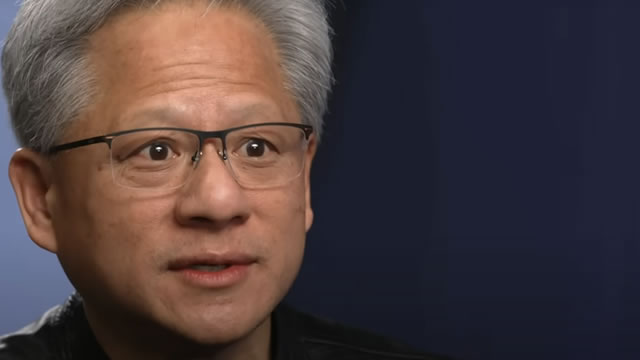
“DeepSeek-V3基于我们的架构打造”,欧版OpenAI CEO逆天发言被喷了
3 6 Ke· 2026-01-26 07:44
Core Viewpoint - The discussion centers around the competitive landscape in the AI field, particularly focusing on the contrasting approaches of Mistral and DeepSeek in developing sparse mixture of experts (MoE) models, with Mistral's CEO acknowledging China's strong position in AI and the significance of open-source models [1][4]. Group 1: Company Perspectives - Mistral's CEO, Arthur Mensch, claims that open-source models are a strategy for progress rather than competition, highlighting their early release of open-source models [1]. - The recent release of DeepSeek-V3 is built on Mistral's proposed architecture, indicating a collaborative yet competitive environment in AI development [1][4]. - There is skepticism among the audience regarding Mistral's claims, with some suggesting that Mistral's recent models may have borrowed heavily from DeepSeek's architecture [4][13]. Group 2: Technical Comparisons - Both DeepSeek and Mistral's Mixtral focus on sparse MoE systems, aiming to reduce computational costs while enhancing model capabilities, but they differ fundamentally in their approaches [9]. - Mixtral emphasizes engineering principles, showcasing the effectiveness of a robust base model combined with mature MoE technology, while DeepSeek focuses on algorithmic innovation to address issues in traditional MoE systems [9][12]. - DeepSeek introduces a fine-grained expert segmentation approach, allowing for more flexible combinations of experts, which contrasts with Mixtral's flat knowledge distribution among experts [11][12]. Group 3: Community Reactions - The community has reacted critically to Mistral's statements, with some users expressing disbelief and pointing out the similarities between Mistral's and DeepSeek's architectures [2][17]. - There is a sentiment that Mistral, once a pioneer in the open-source AI space, is now perceived as having lost its innovative edge, with DeepSeek gaining more influence in the sparse MoE and MLA technologies [14][17]. - The competitive race for foundational models is expected to continue, with DeepSeek reportedly targeting significant releases in the near future [19].


“DeepSeek-V3基于我们的架构打造”,欧版OpenAI CEO逆天发言被喷了
量子位· 2026-01-26 04:45
Core Viewpoint - The article discusses the competitive landscape between Mistral and DeepSeek in the AI field, particularly focusing on the architecture of their models and the implications of their recent statements and research papers [1][2][3]. Group 1: Mistral's Position and Statements - Mistral's CEO, Arthur Mensch, acknowledges China's strong development in AI and claims that open-source models are a successful strategy [2]. - Mensch expresses confidence in Mistral's contributions to the field, stating that their models are built on a foundation of open architecture [3][5]. - The recent statements from Mistral have sparked skepticism among the online community, with some questioning the validity of their claims [5][26]. Group 2: Comparison of DeepSeek and Mistral Models - Both DeepSeek and Mistral's models are based on sparse mixture of experts (SMoE) systems, aiming to reduce computational costs while enhancing model capabilities [13]. - The Mixtral model focuses on engineering aspects, emphasizing the combination of a strong base model with mature MoE technology, while DeepSeek prioritizes algorithmic innovation to address issues in traditional MoE architectures [14][15]. - DeepSeek introduces a fine-grained expert segmentation approach, allowing for more flexible combinations of smaller experts, which contrasts with Mixtral's standard MoE design [20]. Group 3: Technical Differences - The routing mechanisms differ significantly: Mixtral employs a flat knowledge distribution among experts, while DeepSeek utilizes shared experts for general knowledge and routing experts for specific knowledge [22]. - DeepSeek's architecture modifies the gating mechanism and expert structure compared to traditional MoE, leading to a more decoupled knowledge distribution [19][22]. - The mathematical formulations of both models highlight their differences, with DeepSeek's approach allowing for more precise knowledge acquisition [18][19]. Group 4: Community Reactions and Future Outlook - The online community has reacted critically to Mistral's claims, suggesting that they have borrowed heavily from DeepSeek's architecture [24][26]. - There is a sentiment that Mistral, once a pioneer in the open-source model space, is now facing challenges in maintaining its innovative edge [28]. - The competition between foundational models is expected to intensify, with DeepSeek already targeting upcoming releases [30][31].

法国AI公司CEO:“中国AI落后”是童话,实则让美国倍感压力
Sou Hu Cai Jing· 2026-01-23 01:50
Core Viewpoint - The CEO of French AI startup Mistral, Arthur Mense, claims that the notion of China lagging behind the U.S. in AI technology is a "fairy tale" and asserts that China's open-source AI capabilities may pressure U.S. CEOs [1][3] Group 1: Company Insights - Mistral is projected to exceed €1 billion in revenue by the end of this year [1] - The company plans to invest a similar amount in high-performance computing chips and related infrastructure for AI model development and operation [1] - Mistral's valuation reached $13.7 billion during a funding round last year, with Dutch chipmaker ASML as a major investor [1] Group 2: Industry Context - AI is becoming a significant geopolitical force with the potential to reshape economies and labor markets in the coming years, with companies and nations investing tens of billions of dollars in AI infrastructure [1] - The AI market is currently dominated by the U.S. and China, while Europe is seeking differentiation [1] - Many U.S. AI models, such as Google's Gemini and OpenAI's ChatGPT, are closed-source, which can lead to higher costs and less flexibility compared to China's leading position in open-source model development [4]
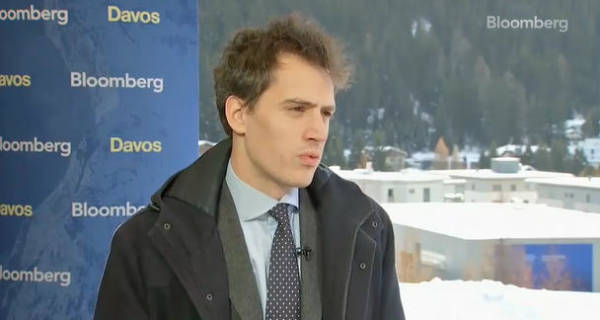
中国AI落后?“美国人压力太大,在说梦话”
Guan Cha Zhe Wang· 2026-01-23 01:45
Core Viewpoint - The CEO of French AI startup Mistral, Arthur Mense, claims that the notion of China lagging behind the U.S. in AI technology is a "fairy tale" and asserts that China's open-source AI capabilities may pressure U.S. CEOs [1][3] Group 1: Company Insights - Mistral is projected to exceed €1 billion in revenue by the end of this year [1] - The company plans to invest a similar amount in high-performance computing chips and related infrastructure for AI model development and operation [1] - Mistral's valuation reached $13.7 billion during a funding round last year, with Dutch chipmaker ASML as a major investor [1] Group 2: Industry Context - AI is becoming a significant geopolitical force with the potential to reshape economies and labor markets in the coming years, with companies and nations investing tens of billions of dollars in AI infrastructure [1] - The AI market is currently dominated by the U.S. and China, while Europe is seeking differentiation [1] - Many U.S. AI models, such as Google's Gemini and OpenAI's ChatGPT, are closed-source, which can lead to higher costs and less flexibility compared to China's leading position in open-source model development [5]
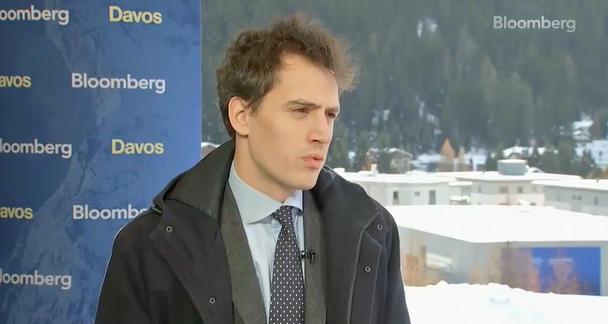
AI语音技术公司ElevenLabs拟展开新一轮融资,估值或攀升至110亿美元
Ge Long Hui· 2026-01-20 08:05
Core Insights - ElevenLabs, a UK-based AI voice technology company, is in preliminary talks with investors for a new funding round, with a projected valuation of $11 billion, nearly doubling its previous valuation of $6.6 billion from four months ago [1] - The company's investors include top-tier firms such as Sequoia Capital, a16z, Iconiq, and NEA, indicating strong backing from prominent venture capitalists [1] - If the funding round is successful, ElevenLabs will become one of the highest-valued AI startups in the UK and Europe, second only to the French large model company Mistral [1]
Who Wins if AI Models Commoditize? — With Mistral CEO Arthur Mensch
Alex Kantrowitz· 2026-01-16 18:09
What does the AI business look if all the leading models perform the same, which they kind of are, we'll find out with the CEO of Mistral right after this. Welcome to Big Technology Podcast, a show for Coolheaded and Nuance conversation of the tech world and beyond. We have a great show for you today. We're going to talk all about what's happening to the AI business and technology race as some of the leading foundational models start to look the same and how that changes the balance of power in the industry ...

全球资本加注盛宴中的MiniMax:长期被低估的模型 “多面手”
21世纪经济报道· 2026-01-09 09:51
Core Viewpoint - The article highlights the significant market response to the launch of the AI company MiniMax on the Hong Kong Stock Exchange, indicating a strong interest in the AI sector and the potential for investment opportunities in this field [1][3]. Market Performance - MiniMax's stock debuted at HKD 345, rising 109% from its issue price, with a total market capitalization of HKD 106.7 billion, igniting a rally in both Hong Kong and A-share AI sectors [1]. - The A-share market saw a strong performance, with the Shanghai Composite Index breaking 4100 points and over 3900 stocks rising, reflecting a collective surge in AI application concepts [1]. Valuation Logic - The article discusses a shift in valuation logic within the AI sector, where revenue quality, profit realization, and cash flow security are becoming more critical than mere technological vision [3]. - MiniMax is positioned as a key player in the global AI landscape, with its ability to produce cutting-edge models being a significant factor in its valuation [3]. Financial Performance - MiniMax's revenue trajectory shows rapid growth, with revenues increasing from USD 346,000 in 2023 to USD 5.344 million in the first nine months of 2025, indicating an acceleration beyond early-stage growth [9]. - The company has diversified its revenue streams, with a "B+C dual-wheel drive" structure, where To C revenue grew by 181% and contributed over 71% of total revenue, while To B business maintained a high growth rate of 160% with a gross margin of 69.4% [10]. Global Market Reach - By the first nine months of 2025, MiniMax's overseas revenue accounted for 73% of its total, demonstrating its global market acceptance and ability to generate revenue internationally [11]. Cost Management and Profitability - MiniMax has maintained a relatively controlled cost structure, with R&D expenses increasing at a manageable pace compared to revenue growth, leading to a significant improvement in gross margin from -24.7% in 2023 to 23.3% in 2025 [12]. - The company has accumulated over USD 1.5 billion in financing, with more than USD 1.1 billion in cash on hand, supporting over 53 months of operational sustainability [12]. Technological Leadership - MiniMax has achieved notable technological advancements, ranking among the top five globally in text models and demonstrating rapid iteration in video generation capabilities [12][13]. - The company has developed a unique organizational structure that emphasizes efficiency, with a high proportion of R&D personnel and a young workforce, fostering innovation and rapid decision-making [17]. Strategic Positioning - MiniMax is positioned as a standout in the domestic market, offering a comprehensive multi-modal model and product matrix, which contrasts with the more conservative valuation approaches seen in China compared to overseas markets [18]. - The company is transitioning from a phase of technological accumulation to one of sustainable commercial returns, with a clear path to profitability and operational efficiency [19].
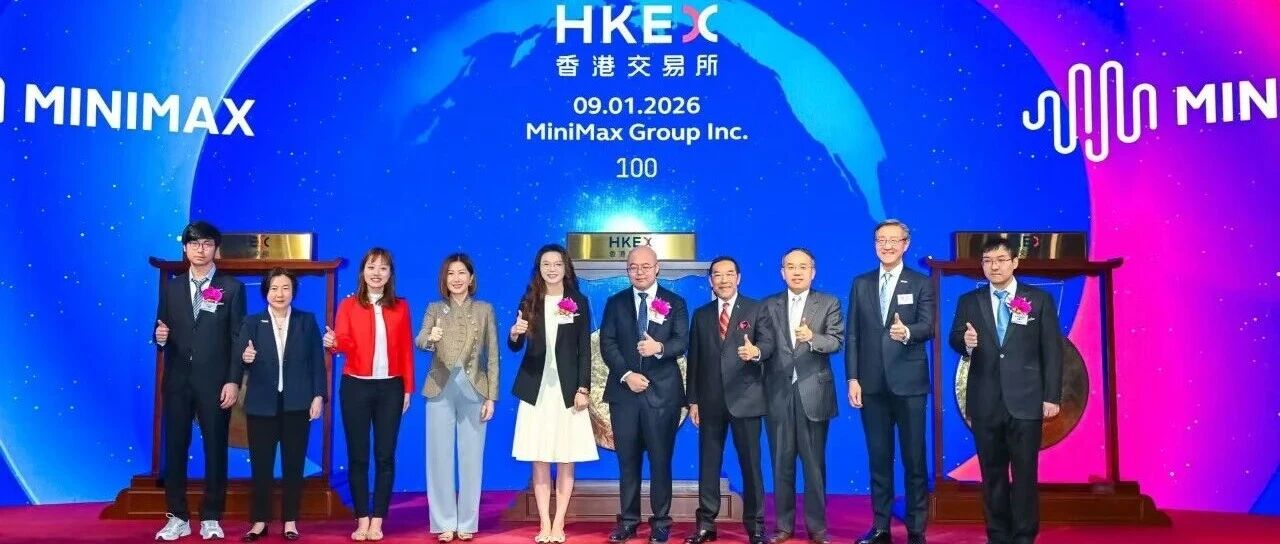
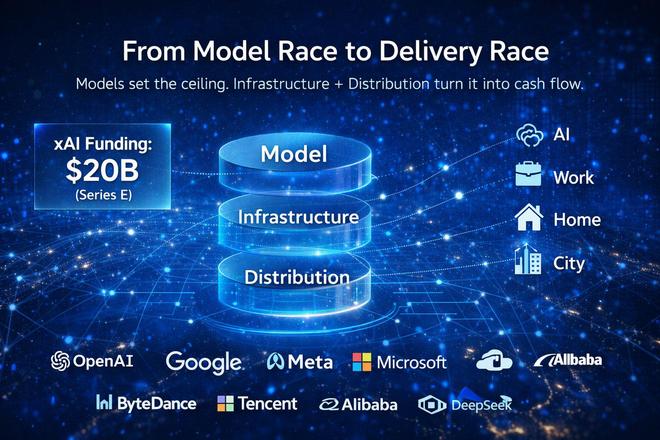
xAI 200亿美元之后:大模型竞赛开始拼交付
Tai Mei Ti A P P· 2026-01-08 01:43
Core Insights - The article emphasizes a shift in the AI industry from a model-centric competition to a delivery-centric competition, highlighting that while models determine the upper limits of capability, the infrastructure and delivery mechanisms are crucial for scaling and monetizing these capabilities [1][10][13] Group 1: Shift in Focus from Models to Delivery - The transition from model competition to delivery competition is driven by three constraints: rising costs of training and inference, accelerated capability diffusion, and the need for a robust commercial closure [2][8] - The marginal cost of achieving cutting-edge capabilities is increasing, making it essential for leading models to be supported by lower inference costs and stable delivery quality to realize their advantages in scalable scenarios [2][9] Group 2: xAI's $20 Billion Significance - xAI's $20 billion investment is aimed at enhancing its second and third layers of competitive capability, focusing on infrastructure and delivery systems rather than just model development [3][10] - The investment emphasizes the expansion of computational infrastructure and the establishment of a visible asset base with over one million H100 equivalent GPUs, thereby enhancing supply certainty [3][6] Group 3: Competitive Landscape and Capability Layers - The competitive landscape is structured into three layers: model and training methods (first layer), infrastructure and supply chain (second layer), and distribution and entry points (third layer) [3][4] - Major players like Google excel across all three layers, while others like OpenAI and Meta have strengths in specific areas, indicating a need for companies to enhance their infrastructure and delivery capabilities to remain competitive [6][10] Group 4: Future Competition Dynamics - The future competition is expected to resemble a platform war rather than a model elimination race, with a focus on scaling delivery capabilities and ensuring compliance and stability [10][11] - The probability of a single company dominating the global market is low due to the decentralized nature of user preferences and regulatory environments, leading to a scenario where platforms excel in delivery and compliance [11][13] Group 5: Key Indicators for Future Success - Companies should focus on three leading indicators: unit inference cost curves, entry penetration rates, and delivery capabilities to assess competitive positioning in the evolving landscape [9][13] - The ability to convert model capabilities into scalable cash flows will depend on performance in these three areas, marking a significant shift in how success is measured in the AI industry [9][10]
What scares AI investors the most about their own bets
Yahoo Finance· 2026-01-06 10:00
Core Insights - The AI sector is experiencing significant investment despite concerns about a potential bubble, drawing comparisons to the dot-com bust [1][2] - Investors are increasingly worried about external shocks that could derail the AI boom, particularly given the industry's reliance on advanced chips and geopolitical tensions [3][5] Investment Landscape - Lightspeed Venture Partners, managing approximately $35 billion, raised $9 billion in December, marking its largest fund to support AI technology investments [4] - The ongoing influx of capital into AI indicates a strong belief in the sector's potential, even amidst rising concerns [1][4] Risks and Challenges - The AI industry's dependence on advanced chips makes it vulnerable to global disruptions, particularly in Taiwan, where a significant portion of AI hardware is produced [5] - Potential crises, such as geopolitical tensions or pandemics, could severely impact data center builds and GPU availability, hindering AI growth [5][6] Competitive Landscape - The AI market is characterized by intense competition, with many companies rapidly developing similar products, making it difficult to identify truly innovative firms [6] - Startups often build on the same AI models, leading to a crowded market where successful ideas are quickly replicated [6]