Unimicron

Search documents
PCB、覆铜板与基板 -高密度互联(HDI)应用路线图浮现- PCB, CCL and substrates_ HDI adoption roadmap emerging
2025-12-20 09:54
Summary of the Conference Call on Taiwan PCB, CCL, and Substrates Industry Overview - The focus of the conference call was on the PCB (Printed Circuit Board), CCL (Copper Clad Laminate), and substrate industry, particularly in relation to HDI (High-Density Interconnect) technology adoption and its implications for ASIC (Application-Specific Integrated Circuit) servers [2][3]. Key Points and Arguments 1. **HDI Adoption Roadmap**: - There is a significant interest from long-term investors regarding the timeline for HDI technology adoption in ASIC servers, especially following Nvidia's extensive use in AI server boards. The adoption of TPU (Tensor Processing Unit) servers is anticipated by late-2027 or early-2028, with CCL shipments expected in Q4 2026 [2][3]. - Major AI HDI suppliers currently include VGT and Unimicron, both of which are closely tied to Nvidia. The inclusion of more AI HDI suppliers is expected as the industry prepares for v9 generation adoption [2][3]. 2. **Material Technology Insights**: - Nvidia is leading advancements in circuit board technology, particularly with high layer count AI HDI. The midplane PCB for the Rubin project will utilize M9 material, with a 20% probability of being used in NVLink switch boards, which could significantly benefit EMC if realized [2][3]. - There are two material options for ultra-high layer count boards: M9 PCB/HDI material and PTFE (Polytetrafluoroethylene). The potential inclusion of PTFE indicates a shift towards more demanding data loss requirements, although M9 is expected to be the prevailing choice due to fewer production challenges [2][3]. 3. **Unimicron's Capacity Expansion**: - Unimicron plans to increase its 2025 capital expenditure by NT$6 billion, raising it to NT$25.4 billion, primarily for substrate investments. This includes advancing the KF2 launch to mid-2026 and initiating the YM phase 2 project, which is expected to ramp up in late-2027/2028 [2][3]. - The KF2 capacity remains unchanged in size but is expected to be utilized for ASIC projects, indicating strong demand for advanced high-performance substrates [3]. 4. **Market Dynamics**: - The report highlights a strong demand for advanced high-performance substrates, with Unimicron positioned favorably among substrate suppliers for AI accelerators [3]. - The anticipated shipment timelines and material grades for TPU generations are outlined, indicating a structured approach to technology adoption and supplier engagement [4]. Additional Important Information - The dielectric loss comparison for various materials at 14GHz shows that PTFE has the lowest loss (<0.001), followed by M9 (0.001), M8 (0.0015-0.002), and M7 (0.004-0.005), which underscores the performance advantages of PTFE in specific applications [5]. - The report includes a detailed table of TPU CCL and PCB by generation, indicating the expected shipment start dates and material grades, which is crucial for understanding the supply chain dynamics [4]. Companies Discussed - **Elite Material Co** (Ticker: 2383.TW) - Current Price: NT$1,495.00, Rating: Overweight - **Unimicron** (Ticker: 3037.TW) - Current Price: NT$214.00, Rating: Overweight [7]. This summary encapsulates the critical insights and projections regarding the PCB, CCL, and substrate industry, particularly in the context of HDI technology and its implications for future market dynamics.
大族数控-需求依然强劲,超快激光钻孔业务或带来增长空间;重申 “买入” 评级
2025-12-18 02:35
Summary of Han's CNC Technology (301200.SZ) Conference Call Company Overview - **Company Name**: Han's CNC Technology (HC) - **Ticker**: 301200.SZ - **Industry**: PCB (Printed Circuit Board) Equipment Manufacturing - **Market Position**: Leading PCB equipment supplier in China with a global market share of 6.6% in 2024, potentially reaching 10-11% [23][24] Key Financial Highlights - **4Q25 Revenue Growth**: Estimated at 64% YoY, leading to a projected revenue of Rmb1,644 million [2][11] - **Net Profit**: Expected to increase by 117% YoY to Rmb213 million in 4Q25 [2] - **Gross Profit Margin (GPM)**: Anticipated expansion of 5.8 percentage points YoY, reaching 34.2% in 4Q25 [2][11] - **Earnings Forecast**: - 2025E Net Profit: Rmb705 million - 2026E Net Profit: Rmb1,179 million - 2027E Net Profit: Rmb1,666 million [4][10] Product and Market Dynamics - **Ultrafast Laser Drilling Equipment**: Recently started deliveries, with an average selling price (ASP) of US$800k and a gross profit margin (GPM) exceeding 50% [1] - **Mechanical vs. Laser Drilling**: Demand for mechanical drilling remains strong, as evidenced by capacity expansions from leading drill bit manufacturers [3] - **Competitors**: Notable competitors include Ta Liang (3167.TW) and China Tungsten and Hightech Materials (000657.SZ) [3][17] Investment Strategy - **Rating**: Buy/High Risk - **Target Price**: Rmb140, implying a potential upside of 17.4% from the current price of Rmb119.30 [5][10] - **Expected Total Return**: 18.1%, including a dividend yield of 0.8% [5] Risks and Considerations - **High Risk Rating**: Potential risks include weaker-than-expected demand for AI PCB equipment, rising component costs affecting GPM, and increased price competition due to supply increases in the industry [26] Conclusion - Han's CNC is positioned to benefit from the ongoing AI PCB super cycle, with strong revenue and profit growth expected in the coming years. The company remains a top pick in the automation and machinery sector in China, supported by robust demand for its products and strategic market positioning [1][24]
2026 年及以后,AI 相关 PCB、CCL需求强劲,CCLPCB 基板价格向好;路演要点_ Expect solid AI PCB_CCL demand and positive pricing for CCL_PCB_Substrate in 2026E and beyond; marketing trip takeaways
2025-12-05 06:35
Summary of Conference Call Notes Industry Overview - The focus is on the Taiwan PCB (Printed Circuit Board), CCL (Copper Clad Laminate), and substrate industry, with expectations of solid demand driven by AI applications in 2026 and beyond [1][2]. Key Takeaways 1. **Positive Market Sentiment**: Investors remain optimistic about the PCB/CCL/substrate industry, anticipating improved pricing and shipment conditions [1]. 2. **Earnings Estimates Adjustments**: Earnings estimates for companies like EMC, TUC, and UMC have been fine-tuned upwards by up to 15% to reflect the positive outlook and gains from ASIC AI [1]. 3. **Market Share Gains**: Taiwan suppliers are expected to gain market share in ASIC PCB/CCL from competitors in mainland China and Korea [2][3]. 4. **Demand from Major Players**: Increased demand from companies like NVIDIA (NVDA) for AI server PCB/CCL is anticipated, with EMC expected to dominate high-end products [2][3]. 5. **Raw Material Supply Risks**: There are increasing supply risks for high-end copper foil and glass fiber, leading to expectations of higher pricing across all PCB/CCL/substrate products [2][13]. Company-Specific Insights EMC (Electronics Manufacturing Company) - **Market Position**: Expected to hold a 70% market share in CCL for AWS Trainium 3 servers by 2026, with a significant ASP increase anticipated due to M9 grade CCL adoption [3][11]. - **Earnings Revisions**: 2026E/2027E earnings estimates revised up by 2%/3% due to earlier-than-expected M9 grade CCL adoption, leading to a 3x+ higher ASP compared to M8 grade [23][24]. - **Target Price Revision**: Target price raised to NT$1,800 from NT$1,695, maintaining a Buy rating [26]. TUC (Taiwan United Corporation) - **Earnings Outlook**: Earnings estimates for 2025E-2027E revised up by 1-3% due to better-than-expected market share in ASIC AI projects [29]. - **Target Price Revision**: Target price increased to NT$540 from NT$470, reflecting a better pricing environment [31]. Unimicron - **Earnings Revisions**: 2026E/2027E earnings estimates revised up by 2%/2% due to increasing penetration of CPO substrate [34]. - **Target Price Revision**: Target price raised to NT$170 from NT$148.84, maintaining a Neutral rating [36]. Additional Insights - **Material Shortages**: Shortages in both high-end and mid- to low-end PCB materials are expected to lead to increased pricing, with lead times for low-end E glass now exceeding 10 weeks [13][14][15]. - **ABF/BT Substrate Pricing**: Positive pricing outlook for ABF substrates, with a projected 30-40% supply gap in 2026, leading to potential shortages in 2027 [17][22]. - **Competition Dynamics**: Taiwan PCB/CCL players are expected to maintain leadership in the ASIC AI server supply chain, while second-tier suppliers may struggle to meet quality standards in the short term [9]. Conclusion The Taiwan PCB/CCL/substrate industry is poised for significant growth driven by AI demand, with key players like EMC and TUC expected to benefit from improved market conditions and pricing dynamics. The ongoing material shortages present both challenges and opportunities for pricing adjustments across the sector.
ABF 基板供需及PCB-人工智能仍是需求驱动力;覆铜板(CCL)供应及中国同业对比-ABF substrate S_D & PCB_ AI still demand driver; cloth_CCL supply & China comps
2025-11-24 01:46
Summary of Conference Call Notes Industry Overview - **Industry**: Technology Hardware - Asia-Pacific, specifically focusing on ABF substrate and PCB markets - **Key Drivers**: Continued demand from datacenter investments, particularly in AI and compute sectors Core Insights 1. **Demand Growth**: - AI server demand is projected to grow by over 25% from CY25 to CY27, significantly impacting the ABF substrate market [1][2] - Server accelerators and GPUs are expected to be the main growth drivers, with their mix in demand projected at 32% in 2025, 36% in 2026, and 43% in 2027 [2][15] 2. **Supply and Demand Dynamics**: - An oversupply of 6% is expected in 2025, followed by undersupply of 1% in 2026 and 6% in 2027 [2][10] - Ibiden aims to increase its capacity for GPU package substrates to 1.4x by FY3/26 and 2.3x by FY3/28 [2] 3. **Company Ratings and Price Objectives**: - Price objectives for Unimicron, NYPCB, and Kinsus have been raised to NT$150, NT$130, and NT$110 respectively, while maintaining an Underperform rating due to competitive pressures [1][9] - Ibiden maintains a Buy rating due to its technological strength in the high-end market [1] 4. **Competitive Landscape**: - Taiwan companies are losing market share to Chinese competitors due to faster production ramp-up and aggressive capacity expansion [4] - Unimicron's share loss in NVIDIA is highlighted as a significant concern [4] 5. **Material Supply Insights**: - Ibiden does not foresee major supply issues into FY3/26 and plans to diversify supply in FY3/27 [3] - Non-NVIDIA customers are adapting to substrate supply from non-Japanese vendors [3] Financial Projections 1. **Earnings Estimates**: - Unimicron's 2026/27 EPS estimates have been raised by 9-10% and 2-8% respectively, reflecting a better margin outlook due to price hikes [1][22] - The gross margin for Unimicron is expected to improve to 19.9% by 2027, up from 18.7% [22] 2. **Comparison with Consensus**: - BofA's estimates for Unimicron are 2% to 4% below consensus for 2026 and 2027 operating profit due to conservative gross margin assumptions [24][25] Additional Insights - **Technological Advancements**: The report emphasizes the importance of technological strength in maintaining competitive advantage in the high-end substrate market [1] - **Market Adaptation**: Non-NVIDIA customers are increasingly reliant on alternative supply sources, indicating a shift in the supply chain dynamics [3] This summary encapsulates the key points from the conference call, focusing on the industry dynamics, company performance, and financial projections.
亚洲科技 - ABF 供需展望改善,非英伟达系 ABF 及 BT 定价 2026 年展望稳健-Asia Technology_ ABF S_D outlook improving_ non-NVDA ABF & BT pricing outlook solid in 2026; Buy NYPCB
2025-10-22 02:12
Summary of Conference Call Notes Industry Overview - **Industry**: ABF (Ajinomoto Build-up Film) and BT (Bismaleimide Triazine) substrates - **Outlook**: The overall supply-demand outlook for ABF substrates is improving, with expectations of a return to balance by mid-2026, leading to sustainable pricing for suppliers post-2026 [1][3][10] Key Points Demand and Growth Projections - **AI Server Applications**: Demand for high-end ABF substrates is primarily driven by AI server applications, projected to account for 18% in 2025, 21% in 2026, and 26% in 2027 of the overall Total Addressable Market (TAM) [2][10][18] - **TAM Growth**: The ABF substrate TAM is expected to grow at a CAGR of 24% from 2025 to 2027 [3][10][16] - **Capacity Growth**: Industry capacity growth is forecasted to slow to 11% YoY from 2025 to 2027, down from 17% CAGR from 2020 to 2024 [3][10] Pricing Outlook - **Price Increases**: ABF and BT substrate prices are expected to rise by 5-10% each quarter in 2026 due to supply shortages and strong demand [4][31][35] - **BT Substrate Pricing**: A significant price increase of 30-45% has been observed since July, with further increases anticipated [4][31] - **Material Shortages**: Shortages of key production materials are expected to restrict ABF substrate suppliers' utilization rates in 2026, leading to a high order backlog ratio in early 2027 [11][12] Company-Specific Insights - **NYPCB**: Maintained a Buy rating with a revised 12-month target price of NT$330, reflecting a positive outlook due to flexible pricing strategies [9][68] - **Kinsus**: Expected to outperform due to high exposure to BT substrates, with a target price increase to NT$125 [8][63][68] - **Unimicron**: Anticipated to underperform due to weak performance in the AI HDI market, with a target price adjustment to NT$150 [8][9][68] Earnings Revisions - **NYPCB**: 2025E earnings revised down by 1% due to rising costs, but 2026/27E earnings revised up by 6%/10% due to better pricing outlook [59][60] - **Kinsus**: 2025E earnings revised down by 2%, but 2026/27E earnings revised up by 12%/17% [63][64] - **Unimicron**: 2025E earnings revised down by 7%, with 2026/27E earnings revised up by 3%/15% [66][67] Additional Insights - **Networking Demand**: Anticipated surge in networking-related demand, projected to grow at a CAGR of ~150% from 2024 to 2027, driven by increased data traffic in AI datacenters [19][21] - **Supply Constraints**: Expected capacity constraints from 2027, with no new major capacity expansions announced by Japanese and Taiwanese suppliers [22][30] Conclusion The ABF and BT substrate markets are poised for significant growth driven by AI applications and networking demands, with favorable pricing dynamics expected to support supplier margins. Companies like NYPCB and Kinsus are well-positioned to capitalize on these trends, while Unimicron faces challenges in specific market segments.

人工智能需求激增,涨价将推动 2026 年上半年每股收益上调;SPE 是下一个受益者,2026 年无人工智能泡沫迹象-Asia Tech Strategy-Supercharged AI demand, price hikes to drive EPS upgrades into 1H26; SPE next beneficiary, no signs of AI bubble bursting in 2026
2025-10-14 14:44
Summary of Key Points from the Conference Call Industry Overview - **Industry**: Asian Technology Sector - **Focus**: AI Infrastructure and Semiconductor Supply Chain Core Insights and Arguments 1. **Positive Outlook for Asian Tech**: Continued strong demand for AI infrastructure is expected to drive earnings per share (EPS) upgrades in the Asian tech sector, with estimates suggesting a potential 20-25% increase in consensus estimates for 4Q25 and 1H26 [2][6][8] 2. **AI Demand and Pricing Dynamics**: The demand for AI is tightening the supply-demand equation across various segments, leading to price hikes in DRAM, NAND Flash, and other components. This trend is anticipated to persist into 2026 [6][7][9] 3. **SPE Stocks Recovery**: After a period of underperformance, stocks in the semiconductor equipment (SPE) sector are expected to catch up due to strong front-end capital expenditure (capex) expectations, particularly from Foundry and DRAM sectors [2][6][8] 4. **No AI Bubble Burst Expected**: The current semiconductor capacity remains tight, and the anticipated capex increase in response to AI growth is just beginning, indicating that an AI bubble is unlikely to burst in 2026 [2][6][8] 5. **CSP Capex Growth**: The top four cloud service providers (CSPs) are expected to see a 20% growth in capex in 2026, driven by strong demand from AI labs like OpenAI and Oracle [6][8][9] 6. **Margin Pressure on OEMs**: Rising commodity prices are likely to pressure gross margins for PC and smartphone vendors, with specific concerns for companies like Asustek and Xiaomi [9][10] 7. **Industrial and Automotive Demand**: Recovery in industrial and automotive sectors is expected to be slow, influenced by macroeconomic conditions and new tariffs imposed by the US on China [9][10] 8. **Supply Chain Resilience**: Despite concerns over rare-earth export restrictions from China, large semiconductor vendors are believed to have sufficient inventory to mitigate production disruptions [9][10] Additional Important Insights 1. **Stock Picks**: Recommended stocks include TSMC, ASE Technology, Unimicron, and Tokyo Electron, with specific price targets and expected returns outlined [44][45] 2. **CSP Capex Composition**: The funding for capex among smaller CSPs is increasingly reliant on debt, which could impact future spending dynamics [8][9] 3. **Market Dynamics**: The competitive landscape in the AI server market is intensifying, which may lead to margin compression for OEMs as they compete for supply from major players like NVDA [9][10] This summary encapsulates the key points discussed in the conference call, highlighting the positive outlook for the Asian tech sector driven by AI demand, the expected recovery in semiconductor stocks, and the challenges posed by rising commodity prices and macroeconomic factors.

CCL_PCB_ 持续关注规格迁移;维持电子材料(EMC)买入评级,目标价调整
2025-09-29 03:06
Summary of Key Points from the Conference Call Industry Overview - The conference call focuses on the **Asia-Pacific Technology sector**, specifically **Copper Clad Laminate (CCL)** and **Printed Circuit Board (PCB)** industries, with a particular emphasis on companies like **Elite Material (EMC)**, **Taiwan Union Technology Corporation (TUC)**, **Unimicron**, and **Shengyi**. Core Insights and Arguments 1. **CCL and PCB Market Dynamics** - Continuous specification upgrades are observed in both CCL and PCB sectors, with a notable transition in AWS products expected to last until **1Q26**. The upgrade in CCL materials, particularly in copper foil, is highlighted as a significant trend [1][2][3]. 2. **EMC's Position** - EMC is positioned as a prime beneficiary of the adoption of **M9-grade CCL**, particularly for mid-plane applications with **40+ layers of PCB**. The demand for CCL is expected to increase due to additional PCB requirements from **CX9 networking cards** and **CPX GPUs** [2]. 3. **TUC's Outlook** - TUC is anticipated to benefit from the mainstream adoption of **M8-grade CCL** in AI servers by **2026**. The company is also expected to see a mix improvement in low earth orbit (LEO) applications, transitioning from **M6 to M7** materials [3]. 4. **Unimicron's Financial Projections** - Unimicron's estimates for **2026-27 EPS** have been raised by **2-6%** due to the positive impact of the VR NVL144 CPX. The price objective has been adjusted to **NT$110** from **NT$105**, maintaining a **13.5x 2026E P/E** [4][9]. 5. **Shengyi's Revenue Growth** - Shengyi has increased its revenue exposure to AI and infrastructure-related business to approximately **35%**. The price objective has been raised to **CNY32** from **CNY27.5**, with a higher P/E multiple of **18x** [5][21]. Additional Important Insights 1. **Market Competition** - The competitive landscape for CCL is less crowded compared to PCB, which is a favorable condition for companies like EMC and TUC [1]. 2. **Revenue Stagnation in Certain Segments** - Despite growth in AI-related business, Shengyi still derives about **40%** of its revenue from consumer electronics and industrial verticals, which are experiencing stagnant demand [5]. 3. **Valuation Adjustments** - The valuation multiples for Unimicron and Shengyi have been adjusted based on their respective market positions and growth prospects, reflecting a strategic response to evolving market conditions [9][10]. 4. **Risks and Challenges** - Potential risks include competition in high-end CCL, fluctuations in raw material prices, and execution challenges that could impact market share and business traction for these companies [20][24][26]. 5. **Analyst Ratings** - The report includes various investment ratings for the companies discussed, with EMC and TUC rated as **Buy**, while Unimicron and Shengyi are underperforming relative to their peers [19][30]. This summary encapsulates the key points discussed in the conference call, providing insights into the current state and future outlook of the CCL and PCB industries, along with specific company analyses.

台湾科技:ABF 与 BT 基板 10 月起涨价迹象更明朗-Taiwan Technology_ Better sign of ABF & BT substrate pricing hike from October; Buy on NYPCB with new TP of NT$310
2025-09-25 05:58
Summary of Conference Call Notes Industry Overview - The conference call discusses the Taiwan ABF (Ajinomoto Build-up Film) and BT (Bismaleimide Triazine) substrate industry, focusing on pricing trends and supply chain dynamics. Key Companies Mentioned - NYPCB (Nanya PCB) - Unimicron Technology - Kinsus - Ibiden Core Insights and Arguments 1. **Pricing Hike Expectations**: - A pricing hike for both ABF and BT substrates is anticipated in October, driven by a ~30% increase in T-glass related raw material costs, which accounts for ~5% of ABF and ~15% of BT substrate COGS [1][4] - Expected pricing increases: ABF substrate by 10%+ and BT substrate by 15%+ [1][4] 2. **Demand and Supply Dynamics**: - Solid demand for AI ABF substrates is expected, aligning with capacity expansion plans from Ibiden [2] - A supply shortage for ABF and BT substrates is projected due to lengthening raw material lead times and low inventory levels among suppliers [4][7] 3. **Earnings and Price Target Revisions**: - NYPCB's price target raised from NT$280 to NT$310, reflecting a positive outlook on revenue and gross margin improvements [3][14] - Unimicron's price target increased from NT$130 to NT$144, maintaining a Neutral rating due to high exposure to LTA business [3][20] 4. **Market Share and Competitive Position**: - NYPCB is expected to benefit significantly from the pricing uptrend, with a projected earnings CAGR of 175% from 2025 to 2027 [21][22] - Unimicron holds a 27% market share in ABF substrates but may lose market share in the AI server PCB segment due to production yield issues [24] 5. **Long-term Supply Constraints**: - T-glass supply is expected to remain tight until new capacity comes online in 1Q27, leading to sustained pricing pressure [11][12] - The shift in T-glass usage from BT to ABF substrates is anticipated due to higher demand from AI applications [8][9] Additional Important Points 1. **Raw Material Shortages**: - The shortage of T-glass could limit growth in BT applications and impact AI ASIC shipments, as T-glass is crucial for high-layer count ABF substrates [8][10] 2. **Earnings Estimates**: - NYPCB's 2025 earnings estimate revised down by 7% due to higher production costs, despite a 2% increase in revenue expectations [14] - Unimicron's earnings estimates for 2025-2027 revised up by 1-7% based on improved pricing outlook [19][20] 3. **Risks and Methodology**: - Key risks for NYPCB include slower-than-expected demand recovery and pricing upgrades [23] - Unimicron faces risks related to market share loss and demand recovery in the PC segment [25] 4. **Valuation Metrics**: - NYPCB's target price based on a 3.8x 2026E P/B, while Unimicron's target price based on a 2.1x blended 2026E P/B [22][25] This summary encapsulates the critical insights from the conference call, highlighting the dynamics of the ABF and BT substrate market, the performance outlook for key players, and the implications of raw material shortages on future growth.
2025 年第三季度人工智能服务器与边缘人工智能动态_持续前进_全球半导体、硬件、互联网与软件-3Q25 AI Server & Edge AI Pulse_ Marching ahead_ Global Semiconductors, Hardware, Internet & Software
2025-09-22 01:00
Summary of Key Points from the Conference Call Industry Overview - The conference call focuses on the **Global Semiconductors, Hardware, Internet & Software** industry, specifically the **AI Server and Edge AI** market for **3Q25** [2][3]. Core Insights and Arguments 1. **Investment in Data Centers**: Total investment in upcoming and under-construction data centers is approximately **US$770 billion**. This includes significant projects like Oracle's multi-billion-dollar cloud contracts and a **4.5GW** investment for Stargate in the U.S. [3][27]. 2. **Capex Growth**: Consensus estimates for **2026 capex** from major cloud service providers (CSPs) have been raised by nearly **20%** compared to previous estimates, projecting total capex to grow at a **26% CAGR** from **2024-2027**, reaching around **US$500 billion** by 2027 [3][26]. 3. **Server Market Projections**: The global server market is expected to reach **US$450 billion** in 2026, with high-end GPU AI server shipments projected to grow at **45% CAGR** from **2024-2026** [4][39]. 4. **ASIC Adoption**: ASICs are projected to comprise nearly **40%** of total CoWoS-based AI chip shipments by **2026**, with increasing adoption among external customers [4][41]. 5. **High-End GPU Server Growth**: High-end GPU servers are expected to grow approximately **55%** in **2025** and **35%** in **2026** [4][39]. Financial Performance of Suppliers 1. **Supplier Performance**: The financial performance of suppliers in the AI supply chain is improving, with companies like Wiwynn and Accton projected to see revenue growth of **130%** and **111%** YoY respectively [43]. 2. **Broadcom's Orders**: Broadcom has received over **$10 billion** in new orders, indicating strong demand for ASICs [6][41]. Innovations in Edge AI 1. **AI Capabilities in Devices**: Innovations in Edge AI are evident across various devices, with Android phones and Apple products integrating more AI features. Gartner forecasts AI PC penetration to rise from **15%** last year to approximately **80%** by **2027** [7][28]. Company Ratings and Price Targets 1. **Chroma**: Rated **Outperform** with a price target of **NT$570** [11]. 2. **Delta**: Rated **Outperform** with a price target of **NT$630** [12]. 3. **Unimicron**: Rated **Outperform** with a price target of **NT$170** [13]. 4. **Quanta**: Rated **Underperform** with a price target of **NT$240** [14]. 5. **NVIDIA**: Rated **Outperform** with a price target of **$225** [20]. Important but Overlooked Content 1. **AI Funding Trends**: AI funding in the primary market remains strong, with **$40 billion** raised in **2Q25**, accounting for about **45%** of global startup funding [28]. 2. **Future Monitoring**: Key events to watch include capex guidance from CSPs and the progress of major projects like Stargate and Oracle's data center build-out [28]. This summary encapsulates the critical insights and projections from the conference call, highlighting the growth trajectory of the AI server market and the financial performance of key players in the industry.




玻璃基板,一步之遥
半导体行业观察· 2025-09-20 01:55
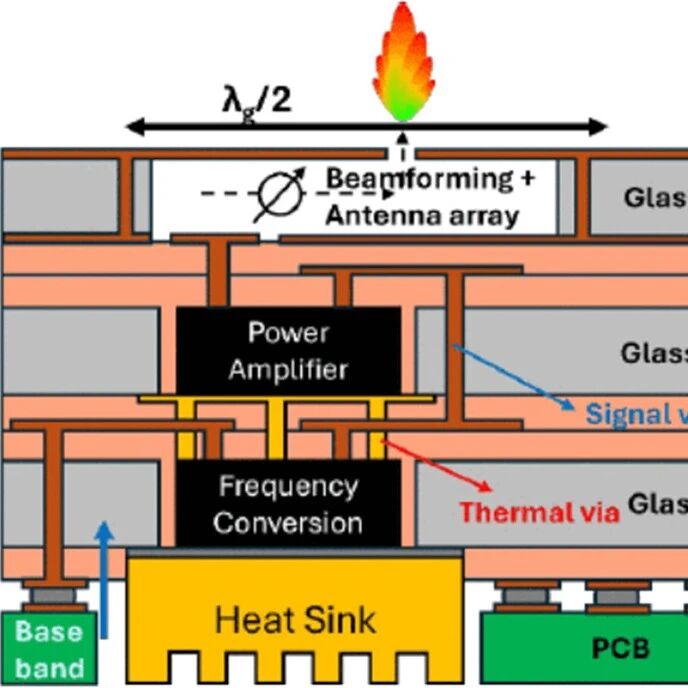
Core Viewpoint - Glass substrates are emerging as a superior alternative to organic substrates in advanced packaging due to their flatness, lower thermal expansion coefficient, and reduced warpage issues, making them ideal for high-frequency applications and 6G communications [2][3][5]. Group 1: Advantages of Glass Substrates - Glass substrates provide significant improvements in warpage reduction (50%) and positioning accuracy (35%) compared to organic substrates, facilitating the implementation of redistribution layers (RDL) with line widths and spacings below 2 micrometers [2]. - The dielectric constant of glass (2.8) is much lower than that of silicon (12), resulting in significantly lower transmission losses and enhanced signal integrity for high-frequency applications [3]. - Glass substrates are versatile and can be used as carriers, core substrates for embedded components, 3D stacking materials, or sealed cavities for sensors and MEMS [2]. Group 2: Manufacturing Challenges - Glass cutting is prone to micro-cracking, and the challenge of repeatedly manufacturing thousands of fine-pitch through-glass vias (TGV) hinders the full potential of glass substrates [3][22]. - The laser-induced deep etching (LIDE) technology is being improved to facilitate mass production of TGVs, allowing for the etching of vias as small as 3 micrometers with a spacing of 5 micrometers [10][11]. Group 3: Applications in 6G Technology - Glass substrates are ideal for 6G wireless communication networks, which require data rates exceeding 100 GHz, due to their high-frequency transmission capabilities and low loss characteristics [5]. - Heterogeneous integration in stacked glass can combine high-frequency front-end chips with low-loss interconnects, enhancing the performance of large-scale antenna arrays [5]. Group 4: Innovations in Glass Processing - The use of ABF (Ajinomoto Build-up Film) as a low-k dielectric and adhesive for glass bonding has shown promising results, achieving electrical performance up to 220 GHz with minimal loss [5][8]. - New methods for cutting glass substrates, such as embedding cut substrates in organic resin for edge protection, are being explored to minimize damage during handling [24]. Group 5: Yield Improvement Techniques - Predictive modeling and machine learning are being utilized to enhance yield rates in glass substrate manufacturing, particularly in identifying and mitigating defects early in the production process [18][19]. - The development of automated systems for wet etching and drying processes is aimed at improving the efficiency and yield of TGV manufacturing [10][11]. Group 6: Future Directions - The glass ecosystem is preparing for the continued growth in chip and substrate sizes in multi-chip advanced packaging, with significant progress being made in laser modification and high-frequency etching techniques [28]. - Ongoing research aims to further reduce micro-cracking during cutting processes and improve the compatibility of new processing techniques with stringent design rules [29].