VMware

Search documents
华为:2025年全域互联一键贯通-企业级骨干网云化演进趋势解析报告
Sou Hu Cai Jing· 2026-01-12 13:44
Group 1 - The core viewpoint of the report emphasizes the evolution of enterprise-level backbone networks towards cloud integration, driven by global digital transformation and the need for agile, reliable, and efficient digital infrastructure [1][9] - The report outlines the development background of cloud network integration, highlighting the supportive policies and increasing market demand for digital infrastructure upgrades [10][13] - The evolution of enterprise-level cloud networks is categorized into four stages: traditional networks, internet and mobile office, cloud computing and SDN integration, and the current phase of intelligence and 5G integration [27][30] Group 2 - The report identifies four core dimensions of cloud network integration: interconnectivity, scheduling, control, and reliability, focusing on the need for seamless connectivity and intelligent management [2][9] - Various enterprises have successfully upgraded their operations through cloud backbone networks, achieving significant improvements in latency, reliability, and operational efficiency [2][9] - Future trends in enterprise-level cloud networks include AI-driven standardization, enhanced network capabilities, and a shift from "network adapting to business" to "network sensing business" [2][9] Group 3 - The report discusses the challenges faced by existing cloud network solutions, including rigid architecture, insufficient performance guarantees, and low operational efficiency [36][38] - A new cloud network integration system is proposed, emphasizing capabilities such as one-click creation, multi-plane isolation, and intelligent control to overcome current limitations [44][49] - The design philosophy for future enterprise-level networks focuses on breaking boundaries and creating an integrated network that encompasses cloud, edge, and office environments [53][54]


The Best AI Semiconductor Stock to Buy for 2026, According to Certain Wall Street Analysts (Hint: Not Nvidia or Broadcom)
The Motley Fool· 2026-01-01 08:15
Group 1: Micron Technology - Morgan Stanley analysts have selected Micron Technology as their top semiconductor pick for 2026, highlighting its potential in the ongoing AI buildout and the current DRAM and NAND shortage [1][17] - Micron develops memory and storage solutions, including DRAM and NAND products, which are crucial for AI workloads [14][15] - Although Micron is not the market leader in DRAM or NAND, it is gaining market share, particularly with a 10 percentage point increase in HBM market share over the past year [16][17] - Wall Street expects Micron's earnings to grow at 48% annually over the next three years, making its current valuation of 28 times earnings appear attractive [17] Group 2: Nvidia - Nvidia is recognized for its leading graphics processing units (GPUs) and a full-stack strategy that includes hardware and software development tools [4][6] - The company dominates the AI accelerator space with over 80% market share and is expected to maintain this dominance due to its low total cost of ownership (TCO) [8][7] - Nvidia's earnings are projected to grow at 37% annually over the next three years, with a median target price of $250 per share, indicating a 33% upside from its current price of $187 [9][8] Group 3: Broadcom - Broadcom plays a significant role in the AI supply chain, holding 80% market share in high-speed Ethernet switching and routing chips, with a projected market growth of 20% to 30% annually [10] - The company is also a leading supplier of custom AI accelerators, with a market share of 70% to 80%, and has major customers including Google and OpenAI [11] - Wall Street estimates Broadcom's adjusted earnings will grow at 36% annually over the next three years, making its current valuation of 51 times earnings look appealing [13]


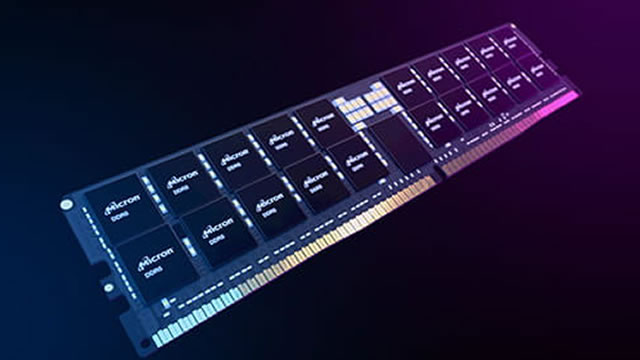
博通CEO:硅光是必经之路,但还要时间
半导体行业观察· 2025-12-15 01:33
Core Viewpoint - Broadcom's CEO Hock Tan indicated that silicon photonics technology will not have an immediate impact on data centers, suggesting that the transition to this technology will take time and require two waves of innovation before it becomes essential [2]. Group 1: Silicon Photonics Technology - The CEO believes that the adoption of silicon photonics technology will occur in the future, but it is not imminent. The first wave involves expanding copper interconnect technology for rack-level systems, followed by a second wave of pluggable optical devices that combine electronic and photonic components [2]. - Tan emphasized that the transition to silicon photonics is inevitable but will require time, stating that Broadcom is preparing for this shift through necessary R&D efforts [2]. Group 2: AI Hardware Demand - Broadcom is currently focused on producing AI hardware to fulfill a backlog of orders valued at $73 billion, with over $50 billion coming from large-scale customers ordering custom AI accelerators, referred to as "XPUs" [3]. - The CEO expressed confidence in the sustained demand for AI hardware, countering claims of a cooling market, and highlighted a recent $1 billion XPU order from a new customer and an additional $11 billion order from Anthropic [3]. Group 3: Financial Performance - In the fourth quarter, Broadcom's semiconductor business revenue reached $11 billion, a 35% year-over-year increase, with $6.7 billion attributed to AI products, marking a tenfold growth in AI hardware revenue in less than three years [4]. - The company's infrastructure software business generated $6.9 billion in revenue, up 19% year-over-year, primarily driven by VMware software sales, which are expected to maintain low double-digit growth until 2026 [4]. - The CEO projected that the semiconductor business will continue to drive rapid growth, with first-quarter revenue expectations for fiscal year 2026 set at $19.1 billion, reflecting a 28% increase [4]. Group 4: Stock Market Reaction - Following the earnings announcement, Broadcom's stock price initially rose by approximately 3% but quickly fell by 5% [5].

“未上调2026财年指引”不是大问题,高盛:越来越相信博通的AI业务
Hua Er Jie Jian Wen· 2025-12-12 05:56
Core Viewpoint - Despite not raising the full-year guidance for fiscal year 2026 as some investors expected, Goldman Sachs reaffirmed a "Buy" rating for Broadcom, citing the company's strengthening dominance in the custom chip sector and robust fundamentals in its AI business [1][2]. Financial Performance - Broadcom reported a strong fourth-quarter revenue of $18 billion, exceeding market expectations of $17.5 billion. The guidance for the first quarter of fiscal year 2026 is set at $19.1 billion, significantly above the analyst forecast of $18.3 billion. This growth is primarily driven by a 74% year-over-year increase in AI semiconductor revenue [1][5]. - The AI semiconductor revenue reached $6.5 billion, surpassing the expected $6.2 billion, while total semiconductor solutions revenue was $11.1 billion, above the anticipated $10.7 billion. Infrastructure software revenue was $6.9 billion, slightly exceeding expectations [5]. Market Reaction and Guidance - The market's reaction to the earnings report may be mixed, as there is disappointment over the lack of an updated full-year guidance for fiscal year 2026. Analysts noted that the absence of an upward revision could lead to short-term stock price pressure [1][3]. - Goldman Sachs' analysts predict that Broadcom's AI revenue growth for fiscal year 2026 will actually exceed 100%, despite management's conservative stance not reflecting the actual business momentum [3]. Customer Expansion and Orders - Broadcom has made significant progress in customer expansion, maintaining strong momentum with its largest client, Google, and announcing a new major customer. The company has secured a fifth XPU customer and received an additional $11 billion order from Anthropic for fiscal year 2026 [4]. - The backlog of AI orders has reached $73 billion for the next 18 months, indicating strong demand, with additional orders expected to increase this figure [4]. Profitability Trends - Broadcom's gross margin for the fourth quarter was 77.9%, slightly above market expectations. The adjusted EBITDA margin guidance for the first quarter of fiscal year 2026 is set at 67% [5]. - Goldman Sachs noted that as Broadcom begins delivering full-rack solutions to Anthropic and potentially OpenAI in the second half of fiscal year 2026, there may be some dilution in gross and operating margins due to a higher proportion of direct components in these solutions [5]. Valuation Logic - Goldman Sachs raised Broadcom's 12-month price target from $435 to $450, based on an increase in AI revenue expectations and improved visibility into industry cycles. The estimated EPS was adjusted from $11.50 to $12.00, maintaining a 38x P/E multiple [2][7].
财报前夕“放卫星”,摩根大通:博通明年AI收入将超500亿美元!
Hua Er Jie Jian Wen· 2025-12-09 13:22
Core Viewpoint - Morgan Stanley has a highly optimistic outlook for Broadcom, reiterating an "overweight" rating ahead of the company's earnings report, with AI revenue expected to exceed $50 billion by fiscal year 2026, driven by various projects and product launches [1][2]. Group 1: Earnings Forecast - Morgan Stanley anticipates Broadcom's revenue and earnings per share for the upcoming fiscal quarter (F4Q25) to surpass market consensus, with AI revenue projected to exceed $6.6 billion, higher than the expected $6.2 billion [1][3]. - For the January quarter, revenue guidance is expected to exceed $19 billion, significantly above the market consensus of $18.5 billion, driven by strong demand for Google TPU and Tomahawk 5 chips [1][3]. Group 2: AI Revenue Growth - Broadcom is projected to achieve approximately $20 billion to $21 billion in AI revenue for fiscal year 2025, representing a year-over-year growth of about 60%, with expectations to exceed $50 billion in fiscal year 2026 [2]. - Key growth drivers include the ongoing rollout of Google's TPU v6 chips and Meta's MTIA inference chip project, along with potential new clients such as Softbank/ARM and OpenAI [2]. Group 3: Non-AI Business and Synergies - Morgan Stanley notes a gradual improvement in Broadcom's traditional semiconductor business, with VMware's software infrastructure showing strong momentum due to enterprise clients upgrading to higher-priced solutions [4]. - The combination of strong AI fundamentals and aggressive synergies in the software business creates a unique investment thesis for Broadcom, which is positioned as a leading supplier in the AI semiconductor market [4]. Group 4: Cash Flow and Dividend Outlook - Strong cash flow is expected to support a double-digit increase in dividends, with continued deleveraging efforts reducing interest expenses and enhancing profitability [5].
3年7倍!博通的崛起与铁腕CEO陈福阳
华尔街见闻· 2025-12-07 12:44
Core Viewpoint - The article discusses Broadcom's CEO, Hock Tan, highlighting his pragmatic management style, cost-cutting measures, and focus on profitability, which have positioned Broadcom as a significant challenger to Nvidia in the AI chip market [1][3]. Group 1: Management Philosophy and Cost-Cutting - Hock Tan is known for his ruthless efficiency, exemplified by significant layoffs and the removal of office perks after acquiring VMware for $84 billion [2][3]. - Following the acquisition, approximately half of VMware's 38,000 employees were laid off, and the number of office buildings was reduced from 18 to 5, contributing to substantial revenue growth for Broadcom [3]. - Broadcom's sales exceeded $50 billion last year, growing over 50% in two years, with expectations to surpass $60 billion this year [3]. Group 2: Acquisition Strategy - Tan has acquired at least 11 companies in the past 15 years, applying a strict methodology to identify "diamonds" and "garbage" in potential acquisitions [4]. - After acquiring VMware, he reduced the product lineup from 8,000 to just 4, focusing on the most valuable offerings for data center clients [4][5]. Group 3: Custom Chip Business - Broadcom has revitalized its chip business by focusing on custom chips, specifically application-specific integrated circuits (ASICs), which are more efficient and cost-effective than Nvidia's general-purpose chips [6][7]. - Major clients include Google, OpenAI, and Meta, with significant contracts signed in recent years, indicating a strong market position [7][8]. - Tan predicts that AI could generate $60 billion to $90 billion in new revenue for Broadcom by 2027, with potential earnings from the partnership with OpenAI reaching up to $300 billion [8]. Group 4: Leadership and Succession - At 74, Tan plans to remain CEO at least until 2030, but there are indications that Broadcom is considering succession planning [12][14]. - Charlie Kawwas, the president of Broadcom's semiconductor solutions group, is increasingly visible in investor communications, suggesting he may be a potential successor [12][13].

Prediction: This Will Be the Top-Performing Chip Stock in 2026
The Motley Fool· 2025-12-04 19:40
Core Viewpoint - Broadcom is positioned to be the leading chip stock in the market next year, driven by the increasing demand for AI infrastructure and cloud computing solutions [1][2]. Group 1: Business Segments - Broadcom is a leader in data center networking, producing essential components like Ethernet switches and network interface cards, which are crucial for managing AI workloads [3]. - The company has expanded its infrastructure software business through acquisitions, with VMware being the largest acquisition, enhancing its cloud computing capabilities [4]. - Following the VMware acquisition, Broadcom has transitioned customers to a subscription model and is promoting its VMware Cloud Foundation platform for managing AI workloads [5]. Group 2: ASICs Opportunity - Broadcom's ASICs business presents significant growth potential, as these custom chips are more efficient for specific tasks compared to general-purpose chips [6]. - The company has collaborated with major clients like Alphabet to design tensor processing units, leading to increased interest in its ASIC solutions [7]. - A notable opportunity includes a $10 billion order from a potential customer, possibly Apple, for next year, alongside a projected $60 billion to $90 billion opportunity from three other major clients by fiscal 2027 [8]. Group 3: Major Contracts and Revenue Potential - Broadcom has secured a deal with OpenAI to supply 10 gigawatts of custom AI chips, valued at approximately $350 billion, to be fulfilled by the end of 2029 [9]. - This deal could translate to nearly $100 billion in annual chip sales, significantly boosting Broadcom's revenue [9]. Group 4: Valuation and Growth Prospects - Broadcom is currently trading at a forward P/E ratio of about 30 and a PEG ratio under 0.4, indicating it is undervalued given its growth prospects [10]. - The company is expected to experience strong growth next year, with explosive potential growth anticipated by fiscal 2027, likely leading to a significant stock rally [11].

高盛:博通(AVGO.US)或是AI热潮中最重要“军火商”,但市场预期门槛“极高”
智通财经网· 2025-11-28 01:49
Core Viewpoint - Broadcom (AVGO.US) has seen its stock price rise over 66% this year, approaching a market capitalization of $2 trillion, with analysts highlighting its significant role in the AI hardware market while also noting the high expectations for Q4 performance [1][2] Group 1: Stock Performance and Analyst Ratings - Goldman Sachs analyst James Schneider raised Broadcom's target price from $380 to $435, citing strong momentum as the company enters Q4 [2] - The current price-to-sales ratio exceeds 28 times, and the price-to-earnings ratio is over 55 times, indicating a strong market valuation [2] Group 2: Market Expectations and Revenue Projections - Market expectations for Broadcom's Q4 performance include earnings per share of approximately $1.87 and revenue between $17 billion to $17.4 billion, with the company guiding towards the upper end of this range at $17.4 billion [3] - AI chip revenue is projected to reach $6.2 billion in Q4, representing a 66% year-over-year increase and accounting for over one-third of total sales [3] Group 3: Strategic Partnerships and Future Growth - Broadcom is a key partner for Google and OpenAI, providing custom AI accelerators (XPU) and is expected to benefit from their advancements in chip development [4] - The company has a record backlog of $110 billion in orders, with a newly disclosed "fourth major AI customer" placing orders exceeding $10 billion, indicating sustained growth momentum into next year [3]
Dell Technologies(DELL) - 2026 Q3 - Earnings Call Presentation
2025-11-25 21:30
Q3 FY26 Performance Highlights - Dell Technologies achieved a record Q3 revenue of $2701 billion, up 11% year-over-year, driven by AI server shipments[10, 11] - The company's diluted EPS reached $228, a 39% year-over-year increase, with a record Q3 non-GAAP diluted EPS of $259, up 17% year-over-year[10, 11] - Dell Technologies generated $12 billion in cash flow from operations in Q3, bringing the year-to-date total to $65 billion[10] - The company returned $16 billion of capital to shareholders in Q3, resulting in $53 billion returned year-to-date[10] Infrastructure Solutions Group (ISG) Performance - ISG revenue reached $1411 billion, a 24% year-over-year increase, with servers and networking revenue up 37% to $1013 billion[11] - Storage revenue for ISG was $398 billion, a decrease of 1% year-over-year[11] - ISG operating income improved sequentially to 124%, driven by AI server and storage performance[10] AI Server Business - Dell Technologies booked $30 billion in AI-optimized server orders year-to-date and expects to ship $25 billion in FY26[12] - AI shipments reached $56 billion in Q3, leading to $156 billion of shipments year-to-date, with an AI backlog of $184 billion exiting Q3[10] - The company expects to ship roughly $94 billion of AI servers in Q4, bringing FY26 shipments to roughly $25 billion, a 150% year-over-year increase[10] Client Solutions Group (CSG) Performance - CSG revenue was $1248 billion, a 3% year-over-year increase, with commercial revenue up 5% to $1062 billion[11] - Consumer revenue for CSG was $186 billion, a decrease of 7% year-over-year[11] FY26 Guidance - Dell Technologies projects FY26 revenue of $1117 billion ± $05 billion, up approximately 17% year-over-year, and non-GAAP diluted EPS of $992 ± $010, up approximately 22% year-over-year[15]

AVGO Stock To $700 Amid Google Partnership?
Forbes· 2025-11-25 10:20
Core Viewpoint - Broadcom's stock has surged 11% due to its partnership with Google on AI chips and the launch of Gemini 3, with the stock price more than doubling over the past year, currently around $380, raising questions about future growth potential [2][18] Financial Performance - Broadcom has approximately $60 billion in trailing revenue, with an adjusted net margin exceeding 50% and a GAAP net margin of 32%, indicating strong profitability [3] - If revenue reaches $120 billion by 2028, driven by AI chips and VMware subscriptions, adjusted EPS could increase from around $6.29 to over $12, suggesting a near-doubling of earnings [4] Valuation Insights - The stock is currently trading at over 60 times its trailing earnings, reflecting Broadcom's strong market position; if EPS reaches $12, this could translate to a stock price of $720, with potential for further increases if the AI narrative gains momentum [5][18] AI Chip Market Dynamics - The success of Gemini 3 serves as a validation signal for AI models transitioning to large-scale production, increasing demand for Broadcom's custom TPU chips [6] - Inference has become the growth engine for AI, with Broadcom leading in providing custom silicon and networking solutions optimized for high-volume, power-efficient tasks [7] Customer Base and Competitive Landscape - Broadcom has four confirmed hyperscale customers, including Google and Meta, which will require continuous advancements in AI chip technology [8][9] - The company is well-positioned as hyperscalers expand their AI services, with significant technical barriers making it difficult for customers to switch suppliers [8] Networking Infrastructure - Broadcom's networking solutions, such as Tomahawk Ultra switches, are essential for connecting AI accelerators, providing a competitive edge in the market [10][11] VMware's Role - VMware offers a stable, recurring revenue stream that complements Broadcom's AI growth, with a 17% year-over-year growth to $6.8 billion in Q3, transitioning customers to subscription models [12][13] - This diversification reduces risk associated with reliance on AI chip demand alone, allowing Broadcom to weather fluctuations in the semiconductor market [14] Future Growth Potential - If Broadcom successfully expands its AI customer base and enhances VMware's recurring revenue, the stock could realistically double, with potential for even higher valuations if AI infrastructure spending exceeds expectations [17][18]