
新华三

Search documents
AI算力集群迈进“万卡”时代 超节点为什么火了?
Di Yi Cai Jing· 2025-07-30 10:24
Core Insights - The recent WAIC showcased the rising trend of supernodes, with multiple companies, including Huawei and Shanghai Yidian, presenting their supernode solutions, indicating a growing interest in high-performance computing [1][2][4] Group 1: Supernode Technology - Supernodes are designed to address the challenges of large-scale computing clusters by integrating computing resources to enhance efficiency and support models with trillions of parameters [1][2] - The technology allows for improved performance even when individual chip manufacturing processes are limited, marking a significant trend in the industry [1][5] - Supernodes can be developed through two main approaches: scale-out (horizontal expansion) and scale-up (vertical expansion), optimizing communication bandwidth and latency within the nodes [3][4] Group 2: Market Dynamics - The share of domestic AI chips in AI servers is increasing, with projections indicating a drop in reliance on foreign chips from 63% to 49% this year [6] - Companies like Nvidia are still focusing on the Chinese market, indicating the competitive landscape remains intense [6] - Domestic manufacturers are exploring alternative strategies to compete with established players like Nvidia, including optimizing for specific applications such as AI inference [6][8] Group 3: Innovation in Chip Design - Some domestic chip manufacturers are adopting sparse computing techniques, which require less stringent manufacturing processes, allowing for broader applicability in various scenarios [7] - Companies are focusing on edge computing and AI inference, aiming to reduce costs and improve efficiency in specific applications [8] - The introduction of new chips, such as the Homa M50, highlights the industry's shift towards innovative solutions that leverage emerging technologies like in-memory computing [8]


AI算力集群迈进“万卡”时代,超节点为什么火了?
Di Yi Cai Jing· 2025-07-30 07:59
Core Insights - The recent WAIC highlighted the growing interest in supernodes, with companies like Huawei, ZTE, and H3C showcasing their advancements in this technology [3][4][5] - Supernodes are essential for managing large-scale AI models, enabling efficient resource utilization and high-performance computing [3][4][5] - The shift from traditional AI servers to supernode architectures is driven by the increasing complexity and size of AI models, which now reach trillions of parameters [4][5][9] Group 1: Supernode Technology - Supernodes integrate computing resources to create low-latency, high-bandwidth computing entities, enhancing the efficiency of AI model training and inference [3][4] - The technology allows for performance improvements even when individual chip manufacturing processes are limited, making it a crucial development in the industry [4][9] - Companies are exploring both horizontal (scale out) and vertical (scale up) expansion strategies to optimize supernode performance [5][9] Group 2: Market Dynamics - Domestic AI chip manufacturers are increasing their market share in AI servers, with the proportion of externally sourced chips expected to drop from 63% to 49% this year [10] - Companies like墨芯人工智能 are adopting strategies that focus on specific AI applications, such as inference optimization, to compete with established players like NVIDIA [10][11] - The competitive landscape is shifting, with firms like云天励飞 and后摩智能 targeting niche markets in edge computing and AI inference, avoiding direct competition with larger chip manufacturers [11][12][13] Group 3: Technological Innovations - The introduction of optical interconnects in supernode technology is a significant advancement, providing high bandwidth and low latency for AI workloads [6][9] - Companies are developing solutions that leverage optical communication to enhance the performance of AI chip clusters, addressing the limitations of traditional electrical interconnects [6][9] - The focus on sparse computing techniques allows for lower manufacturing process requirements, enabling more efficient AI model computations [11][12]
杭州“天团”亮相世界人工智能大会
Mei Ri Shang Bao· 2025-07-29 23:20
Group 1 - The 2025 World Artificial Intelligence Conference in Shanghai showcased the innovative strength of Hangzhou companies, highlighting their advancements in various AI sectors including large models, intelligent robots, brain-machine interfaces, and AI terminals [1][2] - The event featured a record scale with over 70,000 square meters of exhibition space, more than 800 top global tech companies, and over 3,000 cutting-edge exhibits [1] - Hangzhou companies, including Alibaba, Yushun Technology, and Qiangnao Technology, formed a "Hangzhou Alliance" that demonstrated China's AI innovation capabilities on a global stage [1][2] Group 2 - In the field of large models, Alibaba Cloud's "Bailian" was recognized as a key exhibit, offering over 200 mainstream models for application development [2] - Ant Financial introduced the AI financial model "Agentar-Fin-R1," designed to assist users in stock trading and financial management [2] - The focus of the conference shifted from model development to application depth, with significant presentations in brain-machine interface technology from companies like Qiangnao Technology and Jialiang Medical [2] Group 3 - Alibaba's AI terminal product, Quark AI glasses, gained attention for its integration with Alibaba and Alipay ecosystems, supporting navigation and payment functions [3] - Other notable exhibitors from Hangzhou included Geely Auto and Xinhua San, contributing to a strong representation of the city's AI industry [3] - Hangzhou's continuous technological innovation solidifies its important position in the global AI landscape, showcasing the city's collective innovation strength and China's international competitiveness in AI [3]

2025WAIC全景观察: 算力筑基 模型进阶 AI应用实干突围
Zhong Guo Zheng Quan Bao - Zhong Zheng Wang· 2025-07-29 12:23
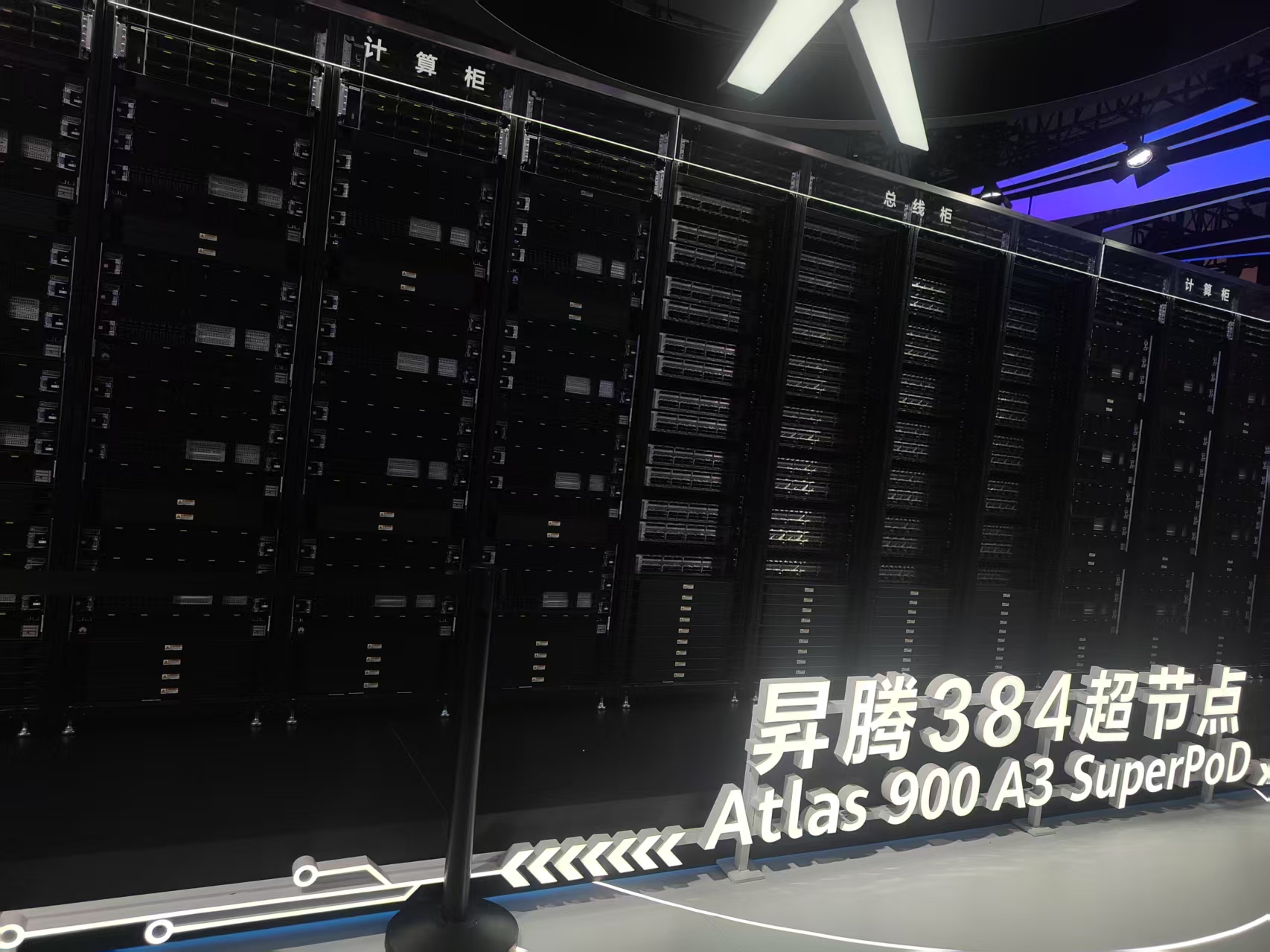
Group 1: AI Industry Development - The 2025 World Artificial Intelligence Conference (WAIC) showcased significant advancements in AI applications, marking the transition into a "practical era" of AI technology [1][5] - The demand for computing power is expected to increase dramatically, with predictions of a hundredfold to thousandfold growth in training computing power requirements due to the rapid evolution of AI applications [1][3] - AI models are shifting from a focus on "data + scale" to "self-optimization + multi-modal native integration," facilitating their transition from laboratories to real-world applications [5][6] Group 2: Computing Infrastructure - Companies like Huawei and ZTE presented innovative supernode solutions, with Huawei's "computing power bomb" showcasing a system where 384 cards work collaboratively, significantly enhancing resource utilization [2][3] - The introduction of the LightSphere X supernode by Shanghai Yidian and partners utilizes optical interconnect technology to overcome traditional physical limitations, allowing for dynamic scaling based on computing needs [2][3] - Companies are adapting their computing infrastructure to better meet AI demands, focusing on hardware, data centers, and intelligent scheduling of heterogeneous computing resources [3][4] Group 3: AI Applications and Agents - AI agents are becoming pivotal in various sectors, evolving from tools to "digital employees" capable of performing analysis, execution, and optimization tasks [6][7] - Personal AI applications are emerging, with products like Rokid Glasses enabling users to perform tasks through voice commands, showcasing the integration of AI into everyday life [7][8] - The Galbot robot, developed by Galaxy General, demonstrates advanced capabilities in retail and industrial settings, utilizing a combination of real and synthetic data for training to enhance operational efficiency [8]
算力筑基 模型进阶 AI应用实干突围
Zhong Guo Zheng Quan Bao· 2025-07-28 21:05
Group 1: AI Industry Development - The 2025 World Artificial Intelligence Conference (WAIC) showcased significant advancements in AI applications, marking the transition into a "practical era" of AI technology [1][6] - The demand for computing power is expected to increase dramatically, with predictions of a hundredfold to thousandfold growth in training computing power requirements due to the rapid evolution of AI applications [1][4] - AI foundational models are shifting their core competitiveness from "data + scale" to "self-optimization + multi-modal native integration," facilitating the transition of large models from laboratories to industry [4][5] Group 2: Computing Power Infrastructure - Companies like Huawei and ZTE presented innovative supernode solutions, with Huawei unveiling the Ascend 384 supernode, which enhances resource utilization by allowing 384 cards to work collaboratively as a single computer [2][3] - The introduction of the LightSphere X supernode by Shanghai Yidian and partners utilizes optical interconnect technology to overcome traditional physical limitations, allowing for elastic scaling and reduced deployment costs [2][3] - Companies are adapting to AI demands by developing hardware products, customized data center solutions, and intelligent scheduling platforms for heterogeneous computing [3][4] Group 3: AI Applications and Use Cases - AI agents are becoming pivotal in various sectors, evolving from tools to "digital employees" capable of analysis, execution, and optimization in government, finance, industry, and healthcare [5][6] - The Rokid Glasses, an AI + AR smart eyewear, exemplifies the integration of AI technology into consumer products, enabling users to perform tasks like information retrieval and translation through voice commands [6][7] - The Galbot robot, showcased in a simulated supermarket environment, demonstrates advanced capabilities in product recognition and retrieval, with applications already implemented in retail and industrial settings [7][8]
全球科技新闻汇总
Haitong Securities International· 2025-07-28 14:08
Investment Rating - The report does not explicitly state an investment rating for the industry or specific companies. Core Insights - The demand for Backup Battery Units (BBUs) is experiencing a significant increase due to the rising power consumption of AI servers, with key Taiwanese companies expected to benefit from this trend [8][9][10]. - Huawei's Ascend CloudMatrix 384 SuperPod made its debut at the WAIC 2025, showcasing advancements in intelligent computing alongside other domestic competitors [11][12]. - The competition in the AI computing power sector is intensifying, with OpenAI planning to deploy 1 million GPUs by the end of the year, while Elon Musk's xAI aims for 50 million chips in five years [13][16]. Summary by Sections AI and BBU Demand - AI servers are rapidly increasing in power consumption, leading to a "straight-line upward" explosion in BBU demand. Companies like Simplo Technology, Delta Electronics, AES, and Lite-On Technology are positioned to benefit [8][9]. - The proportion of BBU modules used in ASIC racks is also increasing, and the trend towards High-Voltage DC (HVDC) technology is expected to further boost BBU demand [9][10]. Huawei and Domestic Competitors - At WAIC 2025, Huawei's Ascend CloudMatrix 384 was highlighted, achieving the largest scale of 384-card high-speed bus interconnection. Major clients include Baidu, Meituan, and JD.com [11][12]. AI Computing Power Arms Race - OpenAI is pursuing a strategy for computing independence through self-developed chips and partnerships, with a goal to shift 75% of its computing resources to its Stargate project by 2030. AI capital expenditures are projected to reach $360 billion in 2025 [13][16]. - Meta has been actively recruiting talent from DeepMind, indicating a competitive landscape for AI expertise [14].



【WAIC2025】 AI算力创新竞速,国产化实践走出超节点等新路
Jing Ji Guan Cha Bao· 2025-07-28 12:39
Core Insights - The 2025 World Artificial Intelligence Conference (WAIC 2025) was held in Shanghai, showcasing innovations in AI chips, servers, and intelligent computing centers, emphasizing domestic R&D and solutions for various application scenarios [1][2]. AI Chip Innovations - Companies like Muxi and Houmo Intelligent presented their self-developed AI chips, with Muxi showcasing the Xiyun C600 general-purpose GPU, designed for cloud AI training and inference [3][4]. - Houmo Intelligent introduced the M50 chip, claiming a 5-10 times efficiency improvement over traditional architectures, with a processing power of 160 TOPS at only 10W, supporting large models locally [5]. Market Trends - The demand for computing power is growing exponentially alongside model iterations, with a shift towards edge AI chips as models migrate from cloud to edge applications [3][5][6]. - The industry is witnessing a trend towards high-efficiency inference becoming mainstream, with inference computing power expected to be 100 to 1000 times that of training power [6]. Supernode Developments - Major Chinese companies like Huawei and Xinhua San showcased their supernode solutions, with Huawei's Ascend 384 supernode being the largest in the industry, achieving 300 PFLOPs of computing power [7][8]. - The LightSphere X supernode, developed by a consortium including Shanghai Yidian and ZTE, utilizes innovative optical interconnect technology for high bandwidth and low latency [9][10]. Industry Collaboration - The development of supernodes requires cross-industry collaboration, as no single chip company can achieve the necessary technological advancements alone [8][10]. - The industry is encouraged to adopt open-source development to accelerate product development and market entry, with a focus on collaborative efforts in computing infrastructure and services [10][12].
AI为何成基础设施投资核心驱动力 解读IDC最新报告
Sou Hu Cai Jing· 2025-07-28 09:18
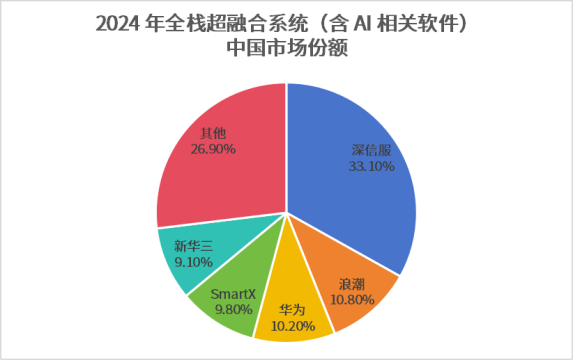
Core Insights - The overall market for hyper-convergence in China is projected to grow by 14.1% year-on-year, exceeding 3.09 billion RMB by Q1 2025, with Xinhua San leading the market share [1] - The report highlights that the implementation of artificial intelligence (AI) scenarios is driving the growth of full-stack hyper-convergence, with generative AI expected to become the primary driver of infrastructure investment in the next 18 months [1][6] Market Trends - The demand for enterprise-level AI applications necessitates high performance, resource utilization, container environment support, and diverse data storage capabilities from IT infrastructure [3] - Flexibility in computing and storage resource allocation is essential, as different development teams have varying GPU resource needs, which may change frequently [3][4] - High-performance, low-latency storage support is critical for fine-tuning large AI models, requiring storage to provide rapid data access for GPU parallel computing [3][4] Infrastructure Requirements - IT infrastructure must support diverse data storage technologies to handle structured, semi-structured, and unstructured data, as AI applications require different storage responses [4] - Unified support for virtualization and containerized workloads is necessary, as many AI applications are adopting cloud-native and containerized models while virtual machine-based applications will continue to exist [4][5] - The infrastructure should be flexible and easy to maintain, allowing for rapid deployment and scaling to support the quick launch of AI applications [5] Product Development - Full-stack hyper-converged products designed for AI training and inference can effectively address key challenges such as resource waste, data silos, and low training efficiency [5] - SmartX has upgraded its hyper-converged infrastructure solution to the "Sun-Mortise Cloud Platform," adding AI platform capabilities to support enterprise AI applications across various sectors [5] Future Outlook - The need for handling massive and diverse data types, along with multi-layered technology and resource management, will drive the growth of software-defined storage and hyper-converged infrastructure in the coming years [6]

这届世界人工智能大会,无问芯穹发布了“三个盒子”
Zheng Quan Shi Bao Wang· 2025-07-28 06:55
Core Insights - The article discusses the launch of three core products by Wunwen Xinqun at the 2025 World Artificial Intelligence Conference, aimed at enhancing AI computational efficiency and resource utilization [1][2][3] Product Overview - Wunwen Xinqun introduced three main products: Wuqiong AI Cloud, Wujie Intelligent Computing Platform, and Wuyin Terminal Intelligence, designed to provide a comprehensive solution for future intelligent infrastructure [1][2] - The Wuqiong AI Cloud serves as a systematic solution for utilizing large-scale computing clusters, integrating heterogeneous computing resources across various regions [3] - The Wujie Intelligent Computing Platform has been successfully implemented in over 100 large-scale research scenarios, supporting significant model training and inference tasks [3] - The Wuyin Terminal Intelligence solution focuses on creating an integrated solution for smart terminals, optimizing computational resources and performance [4][5] Technological Advancements - The Wuqiong AI Cloud has established a nationwide wide-area computing network, covering key nodes of the "East Data West Computing" national strategy, with a total computing power exceeding 25,000 Peta [3] - The Infini-Megrez2.0 model, developed in collaboration with Shanghai Chuangzhi Institute, achieves cloud-level performance with 21 billion parameters while minimizing memory usage to 7 billion [5] - The Mizar2.0 inference engine, launched alongside Infini-Megrez2.0, enhances inference speed and reduces memory and power consumption, achieving an 18% increase in intelligence level and over 100% improvement in inference performance [6] Market Impact - Wunwen Xinqun aims to address the contradiction between limited resources and infinite demand by improving intelligence efficiency and expanding computational resources [2] - The company emphasizes the importance of resource optimization in driving the evolution of intelligent efficiency, enabling AI applications to be deployed across various computational scenarios [2][3]
WAIC2025一线速递:全民AI热度空前,关注算力等投资机会
Haitong Securities International· 2025-07-28 05:52
Investment Rating - The report does not explicitly state an investment rating for the industry or specific companies involved in the AI sector Core Insights - The WAIC 2025 showcased unprecedented public interest in AI, with significant participation from over 800 companies and more than 3000 cutting-edge exhibits, marking the largest scale in its history [1][7] - The focus of the conference included key themes such as large model applications, computing power infrastructure, AI for science, and the integration of AI in various sectors including finance and healthcare [2][7] - Investment opportunities are shifting from individual GPU cards to full server racks, emphasizing the importance of computing power, model optimization, and AI infrastructure [8][15] Summary by Sections Core Technologies - The emphasis has shifted from individual chip performance to comprehensive solutions, with discussions focusing on efficient utilization of fragmented computing resources and low-power designs [2][12] - Major companies like Huawei and ZTE showcased advanced computing solutions, highlighting the integration of AI chips and servers into practical applications [3][4][5] Industry Applications - WAIC 2025 demonstrated a deeper commercialization of AI, with applications spanning robotics, smart glasses, and healthcare, reflecting a significant increase in participation from state-owned enterprises and international companies [7][13] - The event achieved record-breaking ticket sales and attendance, indicating a growing public enthusiasm for AI technologies [7][13] Smart Devices - The focus on embodied intelligence was evident, with dynamic usage scenarios presented through interactive exhibits that showcased advancements in humanoid robotics and smart glasses [8][14] - Notable product launches included Alibaba's Quark AI Glasses and China Telecom's Tianyi AI Glasses, which attracted significant public interest [8][14]