万泰生物

Search documents
万泰生物:公司始终高度重视投资者权益保护
Zheng Quan Ri Bao· 2025-12-08 14:15
(文章来源:证券日报) 证券日报网讯 12月8日,万泰生物在互动平台回答投资者提问时表示,公司始终高度重视投资者权益保 护,将继续严格遵守监管要求,不断完善投资者关系管理,切实维护投资者合法权益。 ...


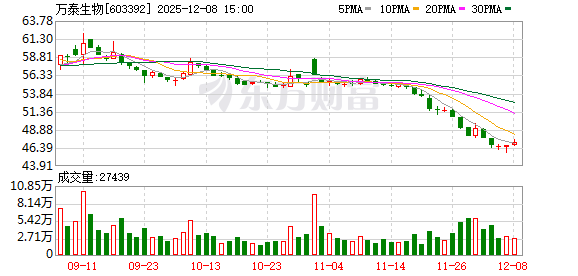
万泰生物:今年8月公司向无国界医生组织供应了重组戊型肝炎疫苗
Zheng Quan Ri Bao· 2025-12-08 14:14
证券日报网讯 12月8日,万泰生物在互动平台回答投资者提问时表示,今年8月公司向无国界医生组织 供应了重组戊型肝炎疫苗(大肠埃希菌)。 (文章来源:证券日报) ...
万泰生物:公司现阶段的亏损主要由于疫苗、IVD板块受市场调整、政府集采等影响
Zheng Quan Ri Bao Wang· 2025-12-08 14:13
Core Viewpoint - The company is currently experiencing losses primarily due to market adjustments and government procurement impacts on its vaccine and IVD segments [1] Group 1 - The company aims to continuously improve management levels to enhance business scale and efficiency [1] - The company plans to promote sustainable development and create greater value for shareholders through both organic growth and external expansion [1] - The company is committed to providing better returns for investors [1]
万泰生物:截至2025年11月,公司九价HPV疫苗已完成超过20个省份准入与首针接种工作
Zheng Quan Ri Bao Wang· 2025-12-08 13:41
证券日报网讯12月8日,万泰生物(603392)在互动平台回答投资者提问时表示,截至2025年11月,公 司九价HPV疫苗已完成超过20个省份准入与首针接种工作。公司营销团队正全力推进九价HPV疫苗的市 场覆盖工作。 ...
万泰生物:鼻喷流感疫苗正在按计划开展药学研究和药效研究
Zheng Quan Ri Bao· 2025-12-08 12:15
Core Viewpoint - Wantai Biological Pharmacy's nasal spray influenza vaccine is progressing smoothly in both pharmaceutical and efficacy research as per the company's response to investor inquiries on the interactive platform [2] Group 1 - The nasal spray influenza vaccine is being developed according to the planned schedule [2] - The company is currently conducting both pharmaceutical research and efficacy studies for the vaccine [2]
三价流感疫苗中标价低至5.5元,多款疫苗卷入价格战
Cai Jing Wang· 2025-12-08 05:09
Group 1 - The core point of the article highlights the significant price drop in various vaccines in the domestic market, with the three-valent flu vaccine priced at only 5.5 yuan, marking a new low for public flu vaccines [1] - The price of the two-valent HPV vaccine from Watson Bio has plummeted from 245 yuan per dose in 2022 to 27.5 yuan per dose in 2025, a decrease of nearly 90% [1] - The nine-valent HPV vaccine from Wantai Bio is priced at 499 yuan per dose, significantly lower than imported products, prompting the latter to engage in promotional activities to lower prices [1] Group 2 - The sharp decline in vaccine prices is expected to reduce public vaccination costs, theoretically improving vaccine accessibility and uptake [2] - Concerns have been raised regarding the potential impact of such low prices on public trust in vaccine quality, with fears that low-cost vaccines may compromise safety and effectiveness [2] - The public's skepticism may lead to a mindset of avoiding vaccinations altogether due to perceived risks associated with low-priced vaccines [2]


5.5元/支 比奶茶还便宜,疫苗价格“跳水”背后
3 6 Ke· 2025-12-08 04:29
Core Insights - The vaccine industry is experiencing intense competition characterized by price wars and oversupply, leading to significant price drops for various vaccines [1][3][4] - The China Vaccine Industry Association has issued an initiative to combat "involutionary" competition and promote high-quality development in the vaccine sector [1][2] - The current market conditions are described as a "winter" for the vaccine industry, with a structural differentiation in competition where some vaccines are priced at unsustainable levels [5][6] Price Trends - The price of the bivalent HPV vaccine has plummeted from over 300 yuan to around 30 yuan, a decrease of nearly 90% [3] - The three-valent flu vaccine has reached a record low of 5.5 yuan, significantly lower than previous prices [3] - Other vaccines, including shingles and pneumonia vaccines, are also experiencing price reductions as part of the ongoing price war [3] Public Perception and Trust - The drastic price reductions may lower public vaccination costs but could also undermine trust in vaccine quality [4][5] - Concerns about the safety and efficacy of low-priced vaccines may lead to a reluctance to vaccinate among the public [4][5] - The perception that vaccines are "not worth much" due to low prices could hinder the establishment of a healthy market view on vaccination [4] Industry Performance - The price war has resulted in significant financial pressure on vaccine companies, with many reporting declining revenues and profits [6] - Only 5 out of 14 listed vaccine companies saw revenue growth in the first three quarters of 2025, while 10 companies reported a decline in net profit [6] - The overall public willingness to vaccinate remains low, with flu vaccination rates in Shanghai estimated at less than 5% for the general population [6][7] Factors Influencing Vaccination Rates - Public awareness of diseases, vaccine pricing, and the convenience of vaccination services are key factors affecting vaccination willingness [7] - The lack of understanding about the severity of diseases like influenza contributes to low vaccination rates [7] - The infrastructure for vaccination services in China is still developing, with a need for improved accessibility and convenience [7][8] Future Market Potential - Despite current challenges, the long-term potential of the Chinese vaccine market remains strong, driven by an aging population and rising chronic disease rates [9][10] - The "Healthy China" strategy emphasizes prevention, which is expected to increase demand for vaccines among specific populations [9][10] - Companies are adapting to these trends by integrating preventive and therapeutic services into their business models [9][10]
疫苗比奶茶还便宜了
财联社· 2025-12-08 01:59
Core Viewpoint - The vaccine market in China is experiencing significant price fluctuations, with prices for certain vaccines dropping dramatically, leading to concerns about quality and sustainability in the industry [4][6][7]. Price Competition and Market Dynamics - The price of the bivalent HPV vaccine has plummeted from over 300 yuan to around 30 yuan, a decrease of nearly 90% [6]. - The three-valent flu vaccine's price has reached a record low of 5.5 yuan, significantly impacting the market [6]. - The price war is attributed to oversupply and intense competition among similar products, exacerbated by factors like vaccine hesitancy and declining birth rates [4][6][10]. Impact on Public Perception and Industry Health - While lower prices may increase accessibility, they also risk undermining public trust in vaccine quality, leading to skepticism about safety and effectiveness [7][10]. - The perception of vaccines as "cheap" could distort public understanding of their value, hindering the establishment of a market that supports health investments [7][10]. Industry Performance and Challenges - The price competition has resulted in declining revenues for many vaccine companies, with only 5 out of 14 companies reporting revenue growth in the first three quarters of 2025 [10]. - Companies like Zhifei Biological have reported significant losses, with a 66.53% drop in revenue and a net profit decline of 156.86% [10]. - The overall public willingness to receive vaccinations remains low, with flu vaccine uptake rates estimated at less than 5% for the general population in Shanghai [10][11]. Factors Influencing Vaccination Rates - Public awareness of diseases, vaccine pricing, and accessibility are key factors affecting vaccination rates [11]. - The lack of understanding about the severity of diseases like influenza contributes to low vaccination rates, alongside the self-pay nature of flu vaccines [11]. - The convenience of vaccination services is also a critical factor, with current service availability needing improvement [11][12]. Long-term Market Potential - Despite current challenges, the long-term potential of the Chinese vaccine market remains strong, driven by an aging population and rising chronic disease rates [12][13]. - The chronic disease management market is projected to reach 60,122 billion yuan by 2024, indicating a growing need for adult vaccination [12]. - The "Healthy China" strategy emphasizes prevention, which may lead to increased demand for vaccines among specific populations, such as the elderly and chronic disease patients [13].

2025年三季报总结:医疗器械、生命科学上游、疫苗
2025-12-08 00:41
Summary of Conference Call Records Industry Overview - The medical device industry is experiencing overall performance pressure in 2025, but third-quarter revenues have shown a year-on-year increase, with a narrowing decline in net profit attributable to the parent company, primarily due to domestic medical insurance cost control and geopolitical influences. It is expected that normal growth rates will resume in 2026 [1][3][8]. Key Points on Medical Device Sector - **Domestic Market Dynamics**: The slowdown in hospital bidding in 2024 is impacting revenue realization, with an expected boost from the "old-for-new" policy by the end of 2025. The In Vitro Diagnostics (IVD) sector is under pressure due to centralized procurement price adjustments and tax reimbursements [1][4]. - **International Market Challenges**: Companies are strengthening their overseas presence, but initial high costs are pressuring short-term profits. The impact of US-China tariffs on low-value consumables is significant, with expectations of price recovery in the glove industry from late 2025 to 2026 after inventory digestion [1][4][11]. - **Performance Metrics**: In the first three quarters of 2025, the medical device sector reported revenues of 145.7 billion yuan, a year-on-year decline of 2.4%, and a net profit of 26.5 billion yuan, down 14.4%. However, the third quarter showed a positive revenue trend and a narrowing profit decline [3][15]. Specific Sector Insights - **IVD Sector**: The IVD sector saw a year-on-year decline of 14.5% in the first three quarters, but the third quarter showed improvement with revenues of 11.02 billion yuan, benefiting from the implementation of centralized procurement and the release of DRG/DIP 2.0 [16]. - **High-Value Consumables**: This segment experienced a revenue growth of 6.6% year-on-year, with orthopedics showing a significant growth rate of 18.7%. The recovery in cardiovascular surgeries is driving sales, and the ophthalmology sector presents potential due to low penetration rates [17]. - **Medical Equipment**: The medical equipment sector's revenue remained flat, but profit growth was slightly higher. The imaging equipment sector is benefiting from the "old-for-new" projects, with a notable recovery in the endoscope segment [15]. Vaccine Sector Performance - The vaccine sector faced significant pressure, with revenues declining nearly 50% and profits turning negative. However, there is a quarter-on-quarter improvement trend. Future focus includes the recovery of traditional vaccines and the launch of new pipeline products, such as the domestically produced nine-valent HPV vaccine [2][23]. Life Sciences Upstream Sector - The life sciences upstream sector's performance remained stable, with a year-on-year profit growth of 68% in the third quarter, driven by recovering terminal demand and improved gross margins. The sector is benefiting from the expansion of the biopharmaceutical market and policy support [24]. Regulatory Environment and Challenges - The current regulatory environment emphasizes innovation while ensuring safety and efficacy. Domestic companies face challenges in international certifications, particularly with the FDA and CE, due to quality control issues [20][21][22]. Future Outlook - The industry outlook for 2026 includes a focus on self-sufficiency, innovative devices, and accelerated realization of centralized procurement categories. The recovery of orthopedic products is already evident, and international expansion remains a key area of interest [5][7][19].





深度|国产疫苗企业闯荡“一带一路”市场:从卖产品到布全局
Di Yi Cai Jing· 2025-12-05 07:46
Core Insights - Increasing number of Chinese vaccine companies are expanding their international presence, leveraging opportunities from the Belt and Road Initiative to enhance market layouts in developing countries [1] - In 2024, China's human vaccine export value is projected to reach $212 million, marking a 4.92% year-on-year growth and the first positive growth since 2022, following fluctuations due to COVID-19 [2] - The average export price of human vaccines increased by 9.42% in 2024, reflecting a 34.04% rise compared to the same period in 2019, indicating a shift towards higher value products [3] Export Growth - Major markets for China's vaccine exports in 2024 include Morocco, Pakistan, and Egypt, with exports to Pakistan increasing by 111.46% [2] - Companies like CanSino Biologics and Watson Biotech are actively pursuing overseas commercialization, with CanSino's products reaching Indonesia and Watson reporting overseas revenue of $214 million in the first half of 2025 [5] - As of mid-2025, WanTai Biologics has obtained market access for its HPV vaccine in 23 countries, indicating a growing international footprint [5] Challenges and Opportunities - Chinese vaccine companies face challenges such as market saturation and increased competition in domestic markets, prompting a shift towards international markets [6] - The global vaccine market is characterized by a concentration of major players, with opportunities arising from the lack of local production capabilities in many developing countries [7] - Despite the challenges, there is optimism for significant growth in vaccine exports as companies prepare for international commercialization [8]