
市场调整

Search documents
解套率新低
第一财经· 2026-03-23 11:23
Core Viewpoint - The A-share market experienced a significant decline, with all three major indices dropping over 3.4%, indicating a phase of market adjustment as the Shanghai Composite Index fell below 3900 points [4]. Market Performance - A total of 305 stocks rose, while the market showed a broad decline with a涨跌停比 of 38:14, reflecting a significant contraction in market profitability [5][6]. - Key sectors such as computing hardware, AI applications, cloud computing, consumer electronics, semiconductors, cybersecurity, commercial aerospace, fintech, humanoid robots, gold, basic metals, aviation, tourism, agriculture, brokerage, and real estate saw notable declines, while coal stocks performed positively [6]. Trading Volume - The total trading volume across both markets reached 4.43 trillion yuan, an increase of 6.33%, indicating heightened trading activity despite the index adjustments [7]. Capital Flow - There was a net outflow of funds from institutional investors, while retail investors showed a net inflow, indicating contrasting strategies between the two groups [8]. - Institutions displayed a cautious approach, reducing positions in most sectors while selectively allocating to undervalued defensive sectors, focusing on managing exposure to market volatility [9]. Investor Sentiment - Retail investors adopted a reverse strategy, actively participating in the market with significant net inflows, primarily focusing on buying on dips and optimizing their holdings [9].


晋控电力股价回调,受获利了结及市场调整影响
Jing Ji Guan Cha Wang· 2026-02-14 05:12
Stock Price Movement - On February 12, Jinko Power's stock price hit the daily limit, closing at 3.62 yuan with a single-day increase of 10.03%, and a net inflow of 248 million yuan from main funds [1] - On February 13, the stock price corrected by 6.63%, closing at 3.38 yuan, with a net outflow of approximately 94.86 million yuan from main funds [1] Market Performance - On February 13, the overall A-share market showed weakness, with the Shanghai Composite Index down 1.26% and the Shenzhen Component Index down 1.28% [2] - The power sector, to which Jinko Power belongs, declined by 1.34%, indicating sector-wide adjustment pressure [2] Company Fundamentals - Despite a strong earnings forecast for 2025, with expected net profit growth of 383.21% to 507.90% year-on-year, there are concerns regarding the sustainability of long-term profitability [3] - The company's debt ratio is relatively high, reported at 82.08% in the Q3 2025 report, which could pressure the gross margin of its thermal power business if coal prices rebound [3] - Revenue for the first three quarters of 2025 decreased by 5.82% year-on-year, indicating ongoing pressure on the revenue front [3] Technical and Financial Analysis - Following the price surge on February 12, some short-term technical indicators entered the overbought zone, potentially triggering a technical correction [4] - The stock price's retreat to the 5-day moving average on February 13 is considered a normal technical adjustment [4] - The recent price correction is attributed to multiple factors, including profit-taking after a significant short-term increase, market environment adjustments, fundamental concerns, and technical corrections [4]

浙商策略:市场放量滞涨后一定会下跌吗?
Sou Hu Cai Jing· 2026-02-12 06:07
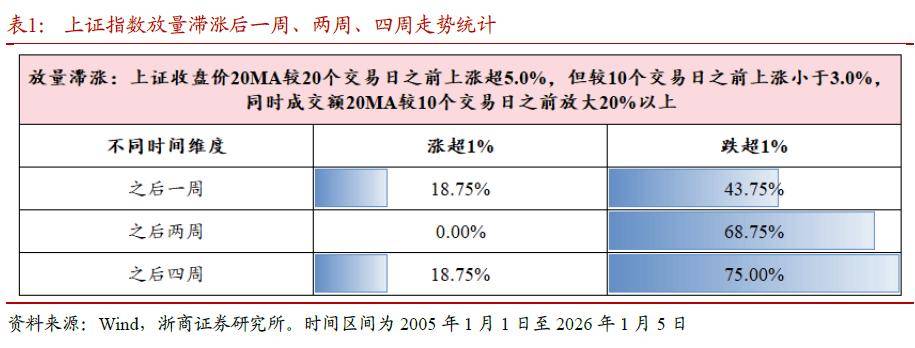
Core Viewpoint - The market is experiencing a significant volume stagnation with a low probability of upward movement following this trend, indicating potential adjustments ahead due to high-level capital divergence [1][2]. Group 1: Historical Analysis of Volume Stagnation - Since 2005, the Shanghai Composite Index has shown that after volume stagnation, the likelihood of a subsequent upward trend is low, with only 0.6% of the time exhibiting this pattern [2]. - Specifically, after one week of volume stagnation, the index continued to rise only 18.8% of the time, and this dropped to 0.0% after two weeks [2][7]. Group 2: External Factors Leading to Market Adjustments - Increased economic growth concerns and failed expectations of policy easing can lead to market corrections, as seen in March 2012 when the growth target was lowered to 7.5% [3]. - Anticipation of capital market expansion, such as the potential expansion of the New Third Board, can create market disturbances by diverting funds from the main board [3]. - Deteriorating overseas conditions combined with tightening domestic monetary policy can exert continuous pressure on market liquidity, as evidenced by significant events in early 2008 [4]. Group 3: Conditions for Continued Market Upward Movement - In December 2009, the Shanghai Composite Index experienced a rare upward movement after volume stagnation, driven by a combination of factors including a supportive policy stance and better-than-expected economic recovery [5]. - The central government's commitment to maintaining a proactive fiscal policy and moderately loose monetary policy was crucial during this period [5]. - Strong economic data in November 2009 indicated robust recovery momentum, contributing to a favorable liquidity environment [5].
A股超3700只个股下跌!白银大跳水,国投白银LOF连续4天跌停,投资者:“这几天要哭了”
Hua Xia Shi Bao· 2026-02-05 08:30
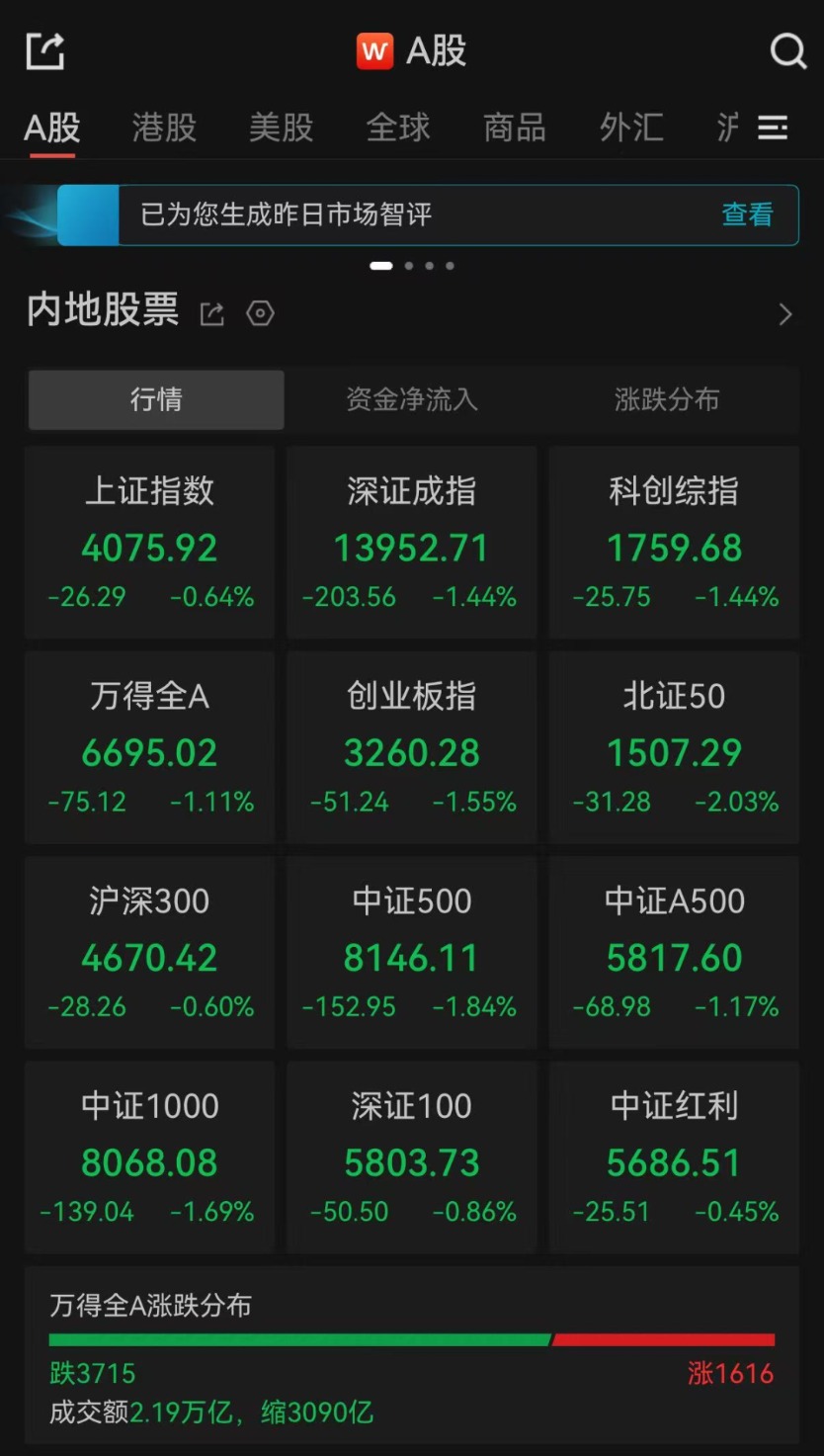
Market Overview - On February 5, A-shares opened lower with all three major indices experiencing fluctuations throughout the day. The Shanghai Composite Index fell by 0.64%, the Shenzhen Component Index dropped by 1.44%, and the ChiNext Index decreased by 1.55%. The total market turnover reached 2.19 trillion yuan, with over 3,700 stocks declining [1]. Sector Performance - In the afternoon, sectors such as securities and banking saw continuous gains, with multiple stocks rising. The tourism and hotel concept stocks performed actively, with many stocks experiencing significant increases. The consumer sector showed resilience, with film, food and beverage, and medical beauty stocks leading in gains. Conversely, the electric grid equipment sector weakened, and sectors like photovoltaic, non-ferrous metals, and computing hardware faced notable declines. The precious metals sector experienced a sharp drop, with stocks like Hunan Silver and Baiyin Nonferrous hitting the daily limit down [4]. Silver and Gold Market Dynamics - The spot silver price experienced a sharp decline, with intraday losses exceeding 16%, while spot gold saw a drop of over 3%. The Guotou Silver LOF fund was again locked at the daily limit down, marking its fourth consecutive trading day of such performance since resuming trading on February 2. The sell orders on the limit down exceeded 7.8 million hands, amounting to over 2.7 billion yuan. An investor expressed frustration over the continuous limit down after a previous surge in silver prices [5]. Institutional Insights - Despite the short-term volatility in silver prices, major financial institutions maintain an optimistic long-term outlook for silver. Citigroup has significantly raised its three-month silver price target to $150 per ounce, previously set at $100, suggesting that silver's current trend resembles a "squared version of gold." If the gold-silver ratio returns to historical highs, silver could potentially reach extreme levels of $160 to $300. ING's commodity strategist noted that the recent sell-off in gold and silver appears to be a market adjustment rather than a trend reversal [7]. Recommendations for Investors - Guoxin Futures advises investors to adopt a cautious defensive strategy in the short term. While the long-term logic for gold remains intact, it is recommended to maintain a light position in gold to stay connected to the long-term trend without speculating on short-term fluctuations. The risk associated with silver and platinum group metals has significantly increased, suggesting that investors should consider reducing positions or adopting a wait-and-see approach [8]. Gold Consumption Trends - According to the China Gold Association, in 2025, China's gold consumption reached 950.096 tons, a year-on-year decrease of 3.57%. Notably, gold jewelry consumption fell by 31.61% to 363.836 tons, while gold bars and coins saw a 35.14% increase to 504.238 tons. This shift indicates a structural change in the gold market, with investment demand for gold products becoming more prominent [9].
大调整!如何防守?
债券笔记· 2026-02-03 10:55
Core Viewpoint - The recent market decline is a normal adjustment due to short-term profit-taking, not indicative of systemic risk, with a focus on the concentrated risk in previously hot sectors [2][3]. Group 1: Market Performance - The three major indices fell over 2%, with the Shanghai Composite Index down 2.48%, Shenzhen Component down 2.69%, and ChiNext down 2.46%, while the STAR 50 Index dropped over 3% [2]. - More than 4,600 stocks declined, with 123 stocks hitting the daily limit down, and the total trading volume in the Shanghai and Shenzhen markets was 2.58 trillion, a decrease of 250.8 billion from the previous trading day [2]. Group 2: Causes of Adjustment - The decline was triggered by significant fluctuations in the global precious metals market, leading to panic selling in the A-share precious metals sector, compounded by a natural decline in risk appetite as the Spring Festival holiday approaches [3]. - Despite the drop, the trading volume remained at a trillion-level scale, indicating that the reduction was due to profit-taking rather than panic selling, with defensive sectors like liquor, electric grid equipment, and banking seeing net inflows [3]. Group 3: Sector-Specific Risks - The precious metals sector was the hardest hit, with many stocks hitting the limit down due to high previous gains and concentrated leverage, exacerbated by margin ratio increases triggering forced liquidations [4]. - The semiconductor sector also experienced significant declines, driven by a disconnect between valuations and earnings, as many companies reported substantial profit declines while still being valued at historical highs [4]. - Other cyclical sectors like non-ferrous metals and oil and gas also weakened, sharing the commonality of crowded trading structures and excessive profit accumulation without solid earnings support [4]. Group 4: Future Outlook - It is advisable to temporarily avoid high-volatility hot sectors and focus on low-valuation defensive sectors and areas with policy support, waiting for the risks in hot sectors to be fully released before making investment decisions [5]. - Following the holiday, a return to a stabilizing market rhythm is expected as market sentiment improves and liquidity returns [5].

未知机构:20260202Dzh的近期市场理解1本次市场调整并非国内-20260203
未知机构· 2026-02-03 01:55
Summary of Conference Call Notes Industry Overview - The recent market adjustment is not driven by domestic fundamentals or regulatory policies, but primarily by fluctuations in overseas commodity sectors and the spillover effects of deleveraging [1] - The tightening of overseas liquidity and the withdrawal of leveraged funds have created a chain reaction, which has transmitted risk preferences to the A-share market [1] - Future assessments should focus on changes in overseas liquidity and the progress of deleveraging as key variables, as prior domestic marginal disturbances are not the main logic [1] Key Market Insights - As of 8 PM today, overseas commodities such as gold, silver, and copper have shown signs of stabilization [2] - Notably, during the recent two trading days of market adjustment, the CSI 300 ETF did not exhibit significant volume changes [2] - The stability in trading volume of this core broad-based ETF during the market decline reflects key funds' recognition of the current market position [2] - The implied volatility (IV) of the CSI 300 and the CSI 1000 has risen to historically high levels, indicating extreme market panic [2] - High implied volatility typically corresponds to a release of market fear, suggesting that short-term market sentiment may be nearing a turning point [2] Strategic Recommendations - Overall, the core logic of the spring market rally before the Spring Festival has not fundamentally changed, and the current market adjustment may have created a "golden pit" for phase-based positioning [2] - It is recommended to adopt a balanced allocation strategy, focusing on high-growth and undervalued sectors, potentially prioritizing large-cap stocks before small-cap stocks to seize the opportunities presented by this adjustment [2]
市场调整的原因及性质
Guoxin Securities· 2026-02-02 12:16
Market Adjustment Reasons and Nature - The report highlights that the recent market adjustment is primarily due to a tightening of the funding environment in the stock market, with changes in the Federal Reserve's monetary policy expectations and fluctuations in the commodity market acting as catalysts for a decline in risk appetite [5][6]. Market Performance - On February 2, the Shanghai Composite Index closed at 4016 points, down 2.48%, while the Shenzhen Component Index closed at 13824 points, down 2.69%. The ChiNext Index also saw a decline of 2.46%, indicating a broad market downturn with sectors like metals, steel, and chemicals leading the losses [2]. Commentary on Federal Reserve's Influence - The report argues that the market's reaction to the nomination of Kevin Walsh as the next Federal Reserve Chair, known for his hawkish stance, should not be over-interpreted. Walsh has previously criticized the Fed's loose monetary policy but has also expressed a preference for lower interest rates and called for reforms in the Fed's operations [4]. Nature of the Adjustment - The essence of the current adjustment is closely linked to the micro liquidity environment of the stock market. Historical data suggests that the rhythm of spring market trends is significantly influenced by liquidity conditions, which have recently shown signs of tightening. This tightening has been exacerbated by external factors, including profit-taking in precious metals and regulatory actions in the domestic market [5][6]. Future Market Outlook - The report maintains a bullish outlook on the A-share market, suggesting that the ongoing bull market, which began in 2024, is not yet over. Despite short-term fluctuations due to liquidity constraints, the overall market sentiment remains positive, with expectations of gradual recovery in fundamentals supported by policy measures and increased retail investment [6][7].
暴涨20%后闪崩10%:黄金的史诗级过山车
Sou Hu Cai Jing· 2026-02-02 10:51
Group 1 - The gold market in January 2026 experienced an unprecedented surge, with prices skyrocketing from $4,600 to over $5,600 in less than three weeks, culminating in a historic high of $5,600 on January 29 [1][4] - The rapid increase in gold prices was driven by a combination of emotional trading, leverage, and a phenomenon known as "fear of missing out" (FOMO), rather than new positive news [4][8] - On January 30, the market faced a dramatic drop, with gold prices plummeting nearly 10% in a single day, marking the largest daily decline since 1983 [1][5][6] Group 2 - The sudden crash was triggered by multiple factors, including the nomination of a hawkish Federal Reserve chairman, which raised concerns about potential tightening of monetary policy, and increased margin requirements for gold and silver futures [7][8] - The market had accumulated significant speculative bubbles prior to the crash, with technical indicators showing extreme overbought conditions and high leverage levels, leading to forced liquidations as the market turned [8][9] - Analysts generally view the post-crash scenario as a healthy adjustment rather than the end of a bull market, with expectations that gold prices could reach $6,200 by March due to ongoing favorable monetary policies and persistent global risks [9][10] Group 3 - As February 2026 approached, the focus shifted to key economic data, particularly the U.S. non-farm payroll data on February 6, which is expected to influence gold prices significantly [11] - The January gold market dynamics serve as a case study illustrating the transition from rationality to euphoria and then to panic, highlighting the importance of understanding intrinsic asset value and managing risk [13][14]

市场单日暴跌超2%,4600只个股下跌,A股怎么了?
Sou Hu Cai Jing· 2026-02-02 08:53
Market Overview - On February 2, the Chinese A-share market experienced a significant downturn, with all three major indices (Shanghai Composite, Shenzhen Component, and ChiNext) falling over 2%, and the Sci-Tech 50 Index dropping more than 3%, reaching a recent low [1] - Over 4,600 stocks declined, indicating a widespread sell-off, with 123 stocks hitting the daily limit down, reflecting immense selling pressure and investor panic [1] Trading Volume and Investor Sentiment - The trading volume in the Shanghai and Shenzhen markets was only 2.58 trillion yuan, a substantial decrease of 250.8 billion yuan compared to the previous trading day, indicating a lack of active buying interest during the market decline [3] - The sharp drop in trading volume suggests insufficient confidence among market participants, leading to a "cash is king" strategy as investors opted for a wait-and-see approach [3] Market Dynamics - The market sentiment shifted dramatically from optimism, driven by improving economic data and policy expectations, to pessimism following the February 2 performance, which shattered previous investor confidence [3] - The broad-based decline across sectors indicates that the current market pressure is systemic rather than isolated to specific industries [3][4] Defensive Sectors - Defensive sectors performed relatively better during the market downturn but still could not escape the overall decline, highlighting that the selling pressure is primarily due to concerns about the overall economic outlook rather than specific sector fundamentals [4] Long-term Outlook - In the short term, the market may continue to face adjustment pressures influenced by macroeconomic data, policy environment, and external factors [5] - Long-term prospects for the Chinese economy remain resilient, supported by policy backing, economic structural optimization, and ongoing reforms, suggesting potential for future market growth [5][7] Investment Strategy - Investors are advised to focus on risk control and asset allocation, avoiding impulsive trading decisions and instead adopting a long-term value investment approach [5][9] - Diversification across different sectors and styles is emphasized as a strategy to mitigate the impact of volatility on overall investment portfolios [5]

被市场忽视的方向!
Sou Hu Cai Jing· 2026-01-22 02:25
Market Overview - The market experienced a decline yesterday, with major indices falling and the ChiNext index dropping over 1.5%, indicating a decrease in market risk appetite [1] - The total trading volume in both markets reached 2.78 trillion, maintaining a high level, suggesting a foundation for healthy market rotation [1] Sector Performance - Aerospace and AI application sectors saw significant declines, which are related to the retreat of margin financing [1] - The service consumption sector performed strongly against the trend, reaching new highs, likely due to rising policy expectations [1] Key News - The government plans to continue implementing an active fiscal policy in 2026 [1] - Major engineering projects and the establishment of a national-level merger fund are being considered [1] - The escalation of trade conflicts between the US and Europe has heightened market risk aversion, leading to a new high in gold prices [1] - Hikvision is projected to see net profit growth by 2025, while Yonghui Supermarket is expected to report a loss [1]