优必选科技

Search documents
全国首个全尺寸人形机器人赛事合肥开幕,五大赛项实战检验工业家庭真场景
机器人大讲堂· 2025-08-24 13:15
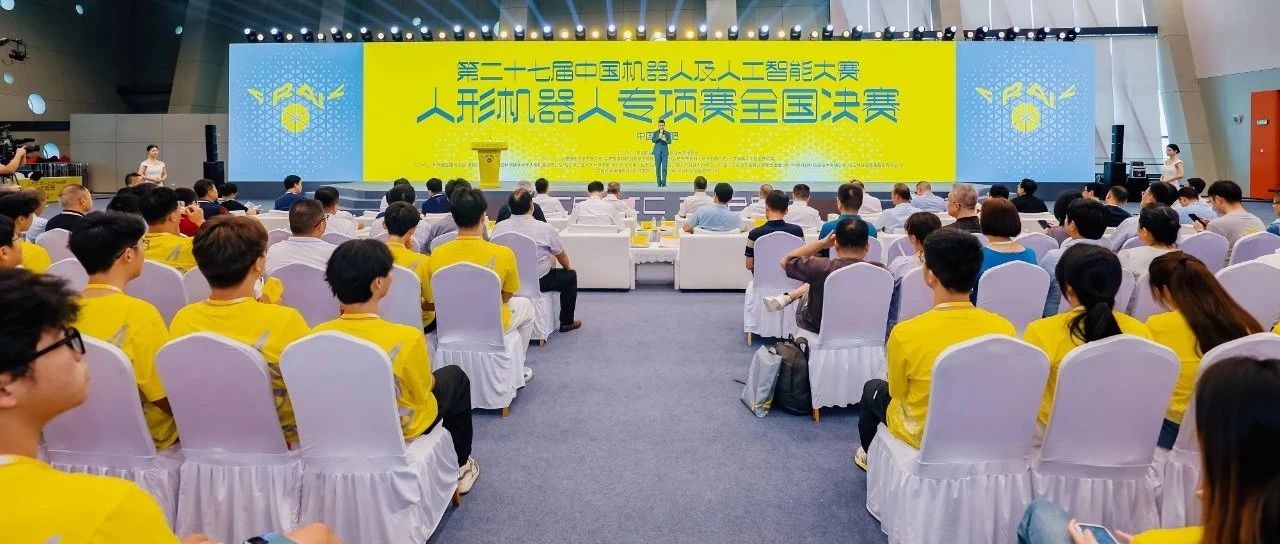
Group 1 - The 27th China Robot and Artificial Intelligence Competition's humanoid robot special event commenced in Hefei, attracting over 6,000 students from nearly 400 universities, with more than 200 teams and over 320 humanoid robots participating in the national finals [1][2] - The competition aims to promote the industrial application of humanoid robots in China, emphasizing innovation and the integration of hardware platforms, intelligent systems, and real-world applications [2][15] - The event is organized by the China Electromechanical Integration Technology Application Association and supported by various institutions, creating a high-level platform for competition and exchange [2][15] Group 2 - The competition features five innovative events focused on real-world needs, assessing humanoid robots in various environments, including industrial manufacturing and home services [3][4] - The "Humanoid Robot Innovation Challenge" tests full-size humanoid robots in simulated scenarios, evaluating their capabilities in complex terrain navigation, dynamic obstacle avoidance, and precise operation [4][15] - The Roban Robot Challenge evaluates medium-sized humanoid robots in structured environments, providing technical references for industrial warehouse automation [7][15] Group 3 - The Aelos Robot Challenge, based on the HarmonyOS, promotes multi-device collaboration in home scenarios, pushing for the application of open ecosystems in robotics [10][15] - The Aelos Cross-Platform Embodied Intelligence Creative Challenge combines virtual simulation systems with physical robots to advance embodied intelligence in home environments [11][15] - The competition emphasizes the importance of industry-academia-research collaboration and ecosystem building, supported by numerous research institutions and leading enterprises [15] Group 4 - Hefei is actively building a humanoid robot industry cluster, leveraging its advantages in high-end manufacturing and supply chains from the new energy vehicle sector to support technology implementation [15] - The competition serves as a bridge between artificial intelligence research and industrial application, showcasing China's cutting-edge humanoid robot technology and providing a practical platform for cultivating high-level technical talent [15]

深化科技创新引领新质生产力发展
Jing Ji Ri Bao· 2025-08-23 22:16
Group 1: Core Insights - The recent Central Political Bureau meeting emphasized the importance of technological innovation in leading the development of new productive forces and fostering internationally competitive emerging pillar industries [1] - Experts suggest that to solidify economic work in the second half of the year, it is crucial to enhance the source function of technological innovation, transforming it into a significant increment for high-quality development [1] Group 2: Technological Innovation and Research - The High Energy Synchrotron Radiation Source (HEPS) project in Beijing is set to complete its first phase by the end of this year, aiming to address national needs and promote industrial innovation [2] - There is a pressing need to strengthen basic research to achieve original and disruptive technological breakthroughs, which are essential for gaining strategic advantages in international technology competition [2] - Current evaluation mechanisms in research are criticized for being overly focused on publication metrics, which do not align with the long-term and exploratory nature of basic research [2] Group 3: Industry and Market Dynamics - The development of new productive forces requires a concerted effort to address core technologies, with a focus on aligning research with market demands [3] - A new paradigm of "enterprise-led, demand-driven, and deep integration of industry and academia" is proposed to enhance innovation efforts [3] - The high-tech manufacturing sector saw a 9.5% year-on-year increase in added value in the first half of the year, with the "three new" industries contributing approximately 18% to GDP last year [4] Group 4: Regional Development and Collaboration - Various regions are adapting their strategies to develop new productive forces, leading to the emergence of new business models and industries [6] - The establishment of a comprehensive incubation system in Anhui has resulted in over 3,600 trained technical managers, facilitating the transformation of scientific achievements into commercial applications [6] - The Ministry of Science and Technology is promoting the construction of regional innovation centers to enhance collaboration and resource sharing among cities [7]
快讯|优必选牵头两项人形国标;富士康投资机器人公司;盛视科技切入机器人潮玩市场等
机器人大讲堂· 2025-08-22 04:27
Group 1 - Robocore Technology, a Hong Kong robotics startup, recently secured a $10 million investment from Foxconn Technology Group, marking the first tranche of its Series D funding, with options for two additional $10 million investments in 2026 and 2027, giving Foxconn a 6.6% stake in Robocore [2] - Robocore was founded in 2018 by engineer Roy Lim and initially served as the exclusive distributor of Temi wheeled robots in Hong Kong, acquiring the Israeli company last year [2] - Foxconn is reportedly in talks with Nvidia to deploy humanoid robots in a Houston factory for the production of AI servers, and has previously collaborated with Shenzhen-based UBTECH Robotics to deploy humanoid robots in its factories [2] Group 2 - Boston Dynamics has trained a new large behavior model (LBMs) for its Atlas humanoid robot, enabling it to perform complex tasks requiring long-term planning, utilizing its unique capabilities such as walking, precise foot placement, and avoiding self-collision [5] - The LBM model converts inputs like images, proprioception, and language prompts into action commands for the Atlas robot, operating at a frequency of 30Hz [5] Group 3 - UBTECH Robotics has led the establishment of two national technical standards for humanoid robots, focusing on positioning and navigation, and human-robot interaction, aiming to support the development and standardization of humanoid robot technology [6] - The company has previously spearheaded the first batch of national standards for humanoid robot operational requirements and plans to continue its involvement in industry standardization efforts [6] Group 4 - Shengshi Technology announced plans to establish a wholly-owned subsidiary, Shenzhen Feifeite Cultural Innovation Co., Ltd., with an investment of 10 million yuan, aiming to combine AI and humanoid robot technology with innovative products for emotional interaction [9] - The company has acquired core assets from Aldebaran Robotics, focusing on educational and commercial robots to diversify its business [9] Group 5 - Grebo signed a cooperation agreement with Zhejiang Zhiding Robotics at the inaugural partner conference of Zhiyuan Robotics, marking a significant step in expanding its presence in the embodied intelligence sector [12] - The collaboration aims to enhance the global market reach of commercial cleaning robots, leveraging Grebo's overseas channel resources to increase product market share [12] - This partnership is seen as a key component of Grebo's strategic layout in the embodied intelligence field, promoting resource complementarity and collaborative development [12]

木林森:子公司朗德万斯与优必选教育达成AI照明机器人领域战略合作
Zhong Zheng Wang· 2025-08-21 10:41
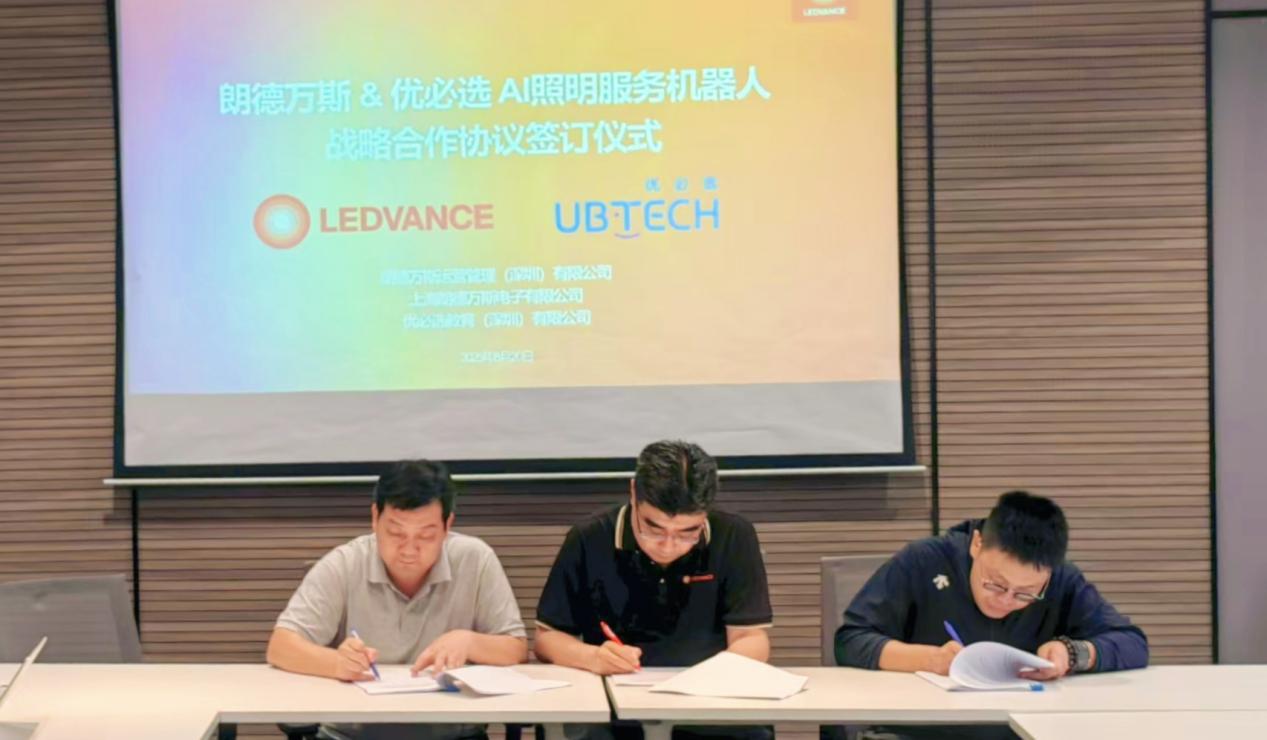
Core Viewpoint - The strategic partnership between Langdawans and UBTECH Education aims to innovate and apply AI lighting robot technology, enhancing smart and convenient lighting solutions for global users [1][2]. Group 1: Partnership Details - Langdawans signed a strategic cooperation agreement with UBTECH Education on August 20, focusing on deep collaboration in the AI lighting robot sector [1]. - The partnership will leverage Langdawans' strengths in lighting technology research and UBTECH's AI capabilities to develop a series of products for various environments, including home, office, and commercial spaces [2]. Group 2: Company Strengths - Langdawans has established a localized service network in over 140 countries, showcasing its robust capabilities in lighting technology and smart manufacturing [1]. - UBTECH Education holds 2,680 authorized patents, making it the company with the most effective humanoid robot patents globally, and is recognized for its commercialized humanoid robots [2]. Group 3: Future Development Plans - The companies plan to develop 10 to 20 different AI lighting robot products tailored to various scenarios, enhancing user experience through continuous technological iteration [3]. - The collaboration will focus on optimizing lighting adaptability for educational environments, aiming to improve learning experiences for children [2].

木林森:旗下子公司朗德万斯与优必选教育达成AI照明机器人领域战略合作
Zheng Quan Shi Bao Wang· 2025-08-21 07:48
Core Viewpoint - The strategic partnership between Langdawans Lighting and UBTECH Education aims to innovate and apply AI lighting robot technology, enhancing user experience through intelligent and convenient lighting solutions [1][4]. Group 1: Company Overview - Langdawans Lighting has a strong foundation in lighting technology research and development, intelligent manufacturing systems, and a global channel network, providing customized lighting solutions across over 140 countries [2][3]. - UBTECH Education, a subsidiary of UBTECH Robotics, focuses on humanoid robot technology and holds 2,680 authorized patents, making it a leader in the humanoid robotics sector [2][3]. Group 2: Product Development and Innovation - The AI lighting service robot developed by Langdawans transforms traditional lighting into an interactive and emotional experience, allowing dynamic adjustments based on user needs and scenarios [4][6]. - The collaboration will lead to the development of a series of AI lighting robot products for various environments, including home, office, and commercial spaces, with a focus on optimizing lighting for educational settings [6]. Group 3: Market Potential and Future Outlook - The partnership is expected to leverage the strengths of both companies to explore the vast potential of the AI lighting robot market, aiming to create innovative products that enhance daily life [6]. - Langdawans plans to develop 10 to 20 different AI lighting robot products, continuously iterating on technology and user experience [6].
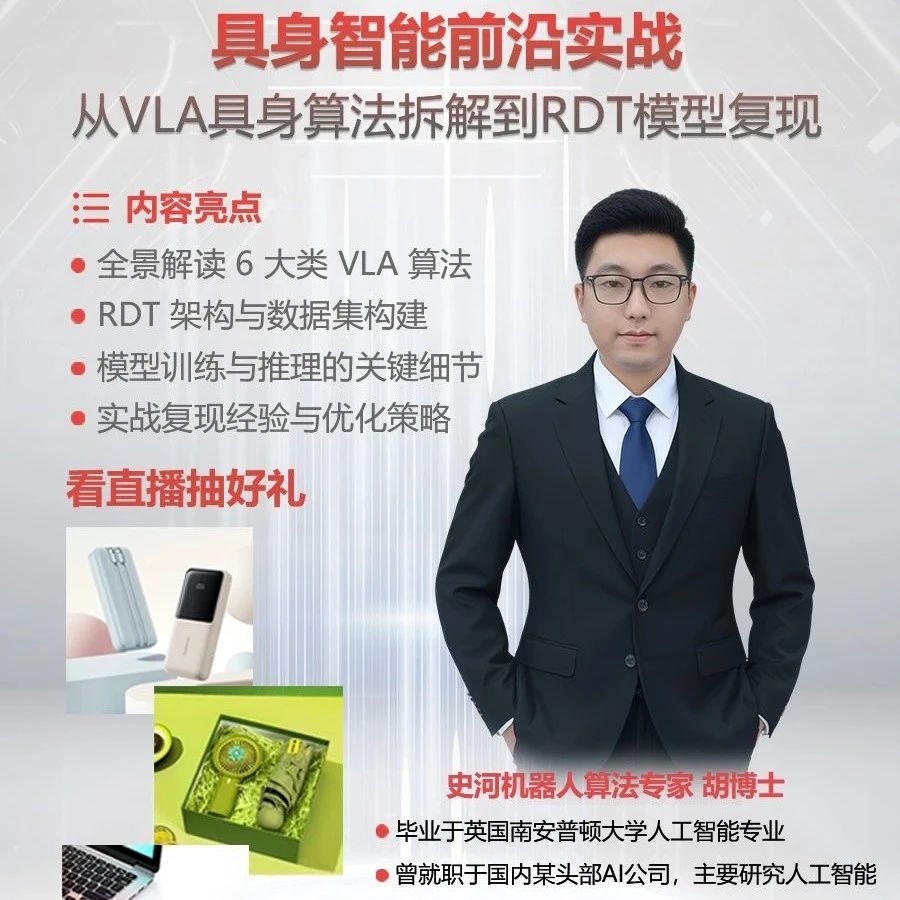
直播预告 | 从VLA具身算法拆解到RDT模型复现
机器人大讲堂· 2025-08-20 08:04
Core Viewpoint - The article highlights an upcoming live event focused on embodied intelligence technology, featuring expert Dr. Hu, who will discuss the VLA algorithm and RDT model, providing insights into their principles, applications, and development trends [1][2]. Group 1: Live Event Details - The live session is scheduled for August 21, 2025, at 19:00, hosted on the RoboTalk video platform [2]. - Participants will have the opportunity to engage in a multi-round lottery during the live stream, with chances to win various prizes [1]. Group 2: Key Highlights of the Live Session - Comprehensive interpretation of six categories of VA algorithms, focusing on understanding the content and advantages of different solutions [2]. - Full-chain analysis of the RDT model, covering architecture, dataset, training details, and inference effects [2]. - Sharing of practical replication experiences based on the EA200 platform, including algorithm replication and optimization strategies [2]. - Recommendations for quickly establishing an experimental environment for embodied intelligence [2].
宇树、优必选、智元领跑,人形机器人行业2025年订单与交付能力透视
3 6 Ke· 2025-08-20 07:54
Core Insights - The humanoid robot industry has seen significant order growth since 2025, shifting market focus from technology development to practical application and delivery capabilities [1][2] - There remains a gap between rapid order growth and actual delivery, with challenges related to supply chain capacity and technology maturity [1][3] - Major application scenarios for humanoid robots include industrial, guiding, research, education, and healthcare [1] Order and Market Dynamics - As of mid-2025, over 83 humanoid robot projects have been publicly disclosed in China, with a total contract value of nearly 330 million yuan, marking an increase from the previous year [2] - Leading companies such as UBTECH, Yushutech, and Zhiyuan Robot have captured 60% of the total transaction value, with Yushutech leading in the number of bids [2] - A notable contract of 124 million yuan was awarded to Yushutech and Zhiyuan Robot for humanoid biped robot manufacturing services for China Mobile [2] Commercialization and Delivery Challenges - Companies like UBTECH aim to deliver hundreds of humanoid robots this year, with expectations of increasing efficiency in industrial applications [4] - Zhiyuan Robot has achieved significant milestones, including the mass production of over 1,000 robots, with plans for thousands more in 2025 [5] - The industry is experiencing a surge in smaller contracts, with projects under 1 million yuan making up 60% of the total [3] Industry Trends and Future Outlook - The humanoid robot market is projected to see substantial growth, with global sales expected to reach 12,400 units by 2025 and 340,000 units by 2030 [13] - Companies are focusing on industrial applications first, followed by commercial and household uses, indicating a strategic approach to market entry [8] - The lack of standardization in the humanoid robot industry poses challenges for mass production and integration, which companies are actively working to address [14][15]

人形机器人倒逼电池技术创新升级
Zhong Guo Chan Ye Jing Ji Xin Xi Wang· 2025-08-20 00:41
Group 1: Market Dynamics - The humanoid robot market is experiencing rapid growth, with companies like UBTECH winning significant contracts, such as a 90.51 million yuan project for robot equipment procurement [1] - The market is expected to reach nearly 38 billion yuan by 2030, with a compound annual growth rate exceeding 61%, and annual sales projected to grow to 271,200 units [3] - The demand for humanoid robots is increasing in various sectors, including automotive manufacturing, logistics, and healthcare, driven by advancements in AI and the need for efficiency [2] Group 2: Battery Technology and Demand - The rise of humanoid robots is anticipated to create new opportunities for battery manufacturers, with demand for batteries in this sector expected to reach 2 GWh by 2025 and 100 GWh by 2030 [4] - Solid-state batteries are seen as a promising solution for humanoid robots due to their high energy density, safety, and lightweight characteristics, aligning well with the operational requirements of these robots [4][5] - The market for lithium batteries used in humanoid robots is projected to exceed 1 billion yuan by 2025, with shipments expected to reach 72 GWh by 2035 [5] Group 3: Industry Challenges and Future Outlook - Despite the promising outlook, the humanoid robot industry faces challenges such as high R&D costs, the need for technological maturity, and the current reliance on overseas suppliers for core components [7] - The commercialization of humanoid robots is contingent on reducing costs, as current pricing remains a barrier to widespread adoption [7] - The industry is at a critical stage of technological breakthroughs and initial applications, necessitating collaboration across the supply chain to foster sustainable development [7]
机器人创业者注意!通往XbotPark生态与千万融资的明月湖硬科技大赛报名倒计时!
机器人大讲堂· 2025-08-19 05:40
Core Viewpoint - The XbotMan—2025 Mingyue Lake Hard Technology Entrepreneur Competition is a significant opportunity for innovators in robotics and smart hardware, providing not only substantial prizes but also comprehensive support for project development and funding access [1][5][9]. Group 1: Competition Structure - The competition features a dual-track system: the "Seed Innovation Group" for early-stage projects and the "Innovative Enterprise Group" for established companies seeking funding [3][4]. - Participants in the Seed Innovation Group can include startups or individuals, while the Innovative Enterprise Group requires a core team of at least three members and existing technology or product prototypes [3][4]. Group 2: Resources and Support - Winning projects will share a total prize pool of 330,000 yuan and gain access to the Mingyue Lake International Smart Industry Innovation Base, which offers free office space and entrepreneurial funding ranging from 500,000 to 3.5 million yuan [5][19]. - The XbotPark ecosystem, initiated by Professor Li Zexiang from Hong Kong University of Science and Technology, has nurtured over 140 hard technology companies with an 80% survival rate and a 15% unicorn conversion rate, collectively valued at over 80 billion yuan [7][19]. Group 3: Industry and Financing Support - The competition will provide industry support through a Shared Factory and the Mingyue Lake Hard Technology Supply Chain Alliance, aimed at assisting projects in overcoming production challenges [8][10]. - Notable investment firms such as Sequoia Capital and Kexing Capital will participate in the event, offering direct financing opportunities to winning projects [9][19]. Group 4: Policy and Timeline - Outstanding projects will receive priority recommendations for provincial and municipal talent policies and technology project applications, with special channels for high-level talent and overseas returnees [12]. - The competition timeline includes registration from now until August 31, 2025, with preliminary rounds in September and finals in October [12][17].
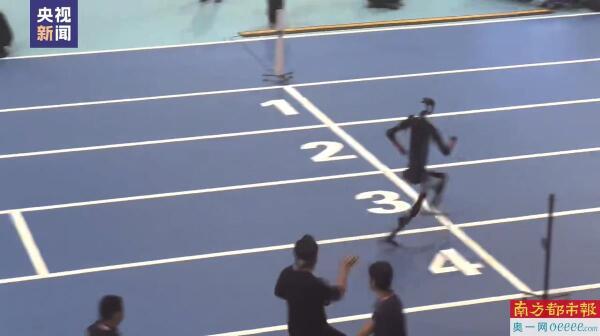
机器人“半马冠军”加冕“百米飞人”
Nan Fang Du Shi Bao· 2025-08-17 23:12
Group 1 - The first World Humanoid Robot Games concluded with significant achievements, including the establishment of the World Humanoid Robot Sports Federation [5] - The next edition of the World Humanoid Robot Games is scheduled for August next year, co-hosted by the Beijing Municipal Government and other organizations [5] - The Guangdong Lingzhi team won two gold medals in the "Factory Material Handling" and "Mixed Material Sorting" events, showcasing strong industrial application capabilities [12] Group 2 - The Tian Gong robot, developed by the Beijing Humanoid Robot Innovation Center, won the 100-meter race using a fully autonomous navigation system, marking a significant technological advancement [6][8] - The Tian Gong robot's performance demonstrated its ability to navigate complex environments without human intervention, highlighting its stability and control [7][8] - The competition sparked debates about the merits of remote-controlled versus fully autonomous robots, with supporters of both sides presenting their arguments [10][11] Group 3 - The Lingzhi team achieved breakthroughs in high-precision visual guidance and dual-arm collaboration, significantly improving efficiency in material handling tasks [12] - The team utilized a self-developed wheeled chassis and laser radar for precise obstacle avoidance and efficient operation in confined spaces [12] - The competition served as a platform for Lingzhi to assess its capabilities in humanoid robot industrial applications after announcing its strategic focus on robotics [13]