
安踏

Search documents
NEW REALITY 2025|不确定性中,中国鞋履市场的新增长极
Sou Hu Cai Jing· 2025-09-25 06:52
Core Insights - The demand for athletic shoes among the younger generation has shifted from basic functionality to a three-dimensional value system of "technology + culture + social," indicating a structural change in consumer preferences [1][2] - The Chinese footwear industry is undergoing a deep reconstruction from a "scale-oriented" to a "value-oriented" model, with market growth slowing from 12.8% in 2019 to 5.3% in 2024, while high-end professional sports and functional segments are experiencing a 23.7% growth [4] Group 1: Market Trends - The global footwear market is facing dual pressures of shrinking consumer markets and the failure of traditional growth models, leading to significant structural changes in the Chinese market [4] - The younger generation is increasingly prioritizing products that resonate with their social interests and personal values, transforming footwear from a necessity into a medium for self-expression [9][12] - The trend of "scene-based functional segmentation" is becoming a core focus, with consumers willing to pay for products that offer precise fit and a combination of functionality and aesthetics [16] Group 2: Consumer Behavior - Consumers are becoming more cautious and rational, showing a preference for the technological value behind products, while also returning to the essence of comfort [12] - The rise of outdoor footwear, such as creek shoes and trail running shoes, reflects a shift in consumer demands from single functionality to comfort, scene adaptability, and value integration [8][12] - Brands like Skechers are adapting their product designs to meet the diverse lifestyle needs of consumers, emphasizing comfort and versatility [12][19] Group 3: Brand Strategies - Companies are focusing on deep localization of supply chains to mitigate risks associated with rising tariffs and supply chain disruptions, with Skechers achieving 90% local manufacturing in China [5] - Anta is observing a blurring of boundaries between categories, with cross-category integration becoming a significant trend in fashion, as seen in their Anta Sneakerverse brand [18] - The footwear industry’s growth will depend on the integration of multiple capabilities, including continuous technological innovation, flexible supply chain systems, and localized strategies [24][25]

当你的老板叫你去“炸山”
Hu Xiu· 2025-09-25 03:44
Group 1 - The core issue revolves around the public relations crisis faced by the outdoor brand Arc'teryx, which is now owned by Anta, a Chinese company [1] - The incident highlights a disconnect between leadership decisions and practical execution, as seen in the example of a civil engineering project in Iran where a leader's directive was impractical [2][3] - The narrative suggests that employees often have to navigate the challenges posed by leadership's unrealistic expectations, leading to potential misalignment in project execution [4][5] Group 2 - The article reflects on the broader implications of leadership styles in Chinese companies, where decision-making is centralized and often lacks consideration for ground realities [2][4] - It raises questions about accountability and the dynamics of blame in corporate settings, particularly when projects do not go as planned [4][5] - The discussion invites readers to share their experiences and strategies for dealing with challenging leadership directives [6]
始祖鸟为什么会去炸山?
Hu Xiu· 2025-09-25 03:06
Core Viewpoint - The incident involving Arc'teryx setting off fireworks at a 5500-meter snow mountain, intended as a tribute to nature, has led to widespread backlash online, resulting in a significant loss of nearly 10 billion HKD in market value for Anta [1] Group 1 - Arc'teryx, a brand regarded as an outdoor luxury label by the middle class, has faced criticism for its actions, which have transformed its image from a nature protector to an ecological destroyer [1]
始祖鸟烟花事件,怎么就烧穿了奢侈品的虚伪营销?
Hu Xiu· 2025-09-25 01:48
Group 1 - The core viewpoint is that the marketing strategy of the company "始祖鸟" (Arc'teryx) has backfired spectacularly, leading to increased visibility despite negative public backlash [1] - The incident involved a fireworks display in the Himalayas that resulted in significant criticism and controversy, which paradoxically boosted the brand's recognition [1] - The event raises questions about the effectiveness of controversial marketing tactics in enhancing brand awareness and consumer engagement [1]
该买始祖鸟的还会接着买
3 6 Ke· 2025-09-24 23:54
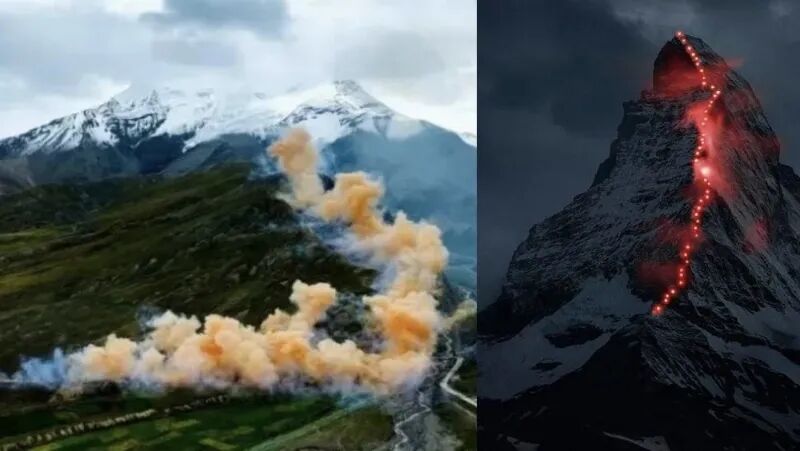
Core Viewpoint - The controversy surrounding the fireworks event led by artist Cai Guoqiang has significantly impacted the reputation of the outdoor brand Arc'teryx and its parent company Amer Sports, resulting in a notable decline in stock prices for Anta, the parent company of Arc'teryx [1][3][4]. Company Overview - Arc'teryx, under Amer Sports, aims to penetrate three market segments: outdoor sports, high-end apparel, and luxury goods, with a revenue target of $5 billion within five years, which is equivalent to the total revenue of Amer Sports in the previous year [3][4][12]. - The brand's strategy includes a shift from a niche outdoor market to a broader consumer base, targeting affluent individuals rather than just outdoor enthusiasts [13][16]. Strategic Decisions - The acquisition of Amer Sports by Anta in 2019, which included a 43% premium for a loss-making Arc'teryx, initiated significant reforms, including a direct-to-consumer (DTC) model and the closure of distributor stores [4][5]. - Arc'teryx has adjusted its channel strategy to open stores in high-end shopping districts, with flagship stores in prime locations like Shanghai's Huaihai Road, which has the highest rent among its peers [7][8]. Market Positioning - The brand has successfully redefined its consumer demographic, moving from professional outdoor enthusiasts to wealthy consumers who may not engage in outdoor activities but are attracted to the brand's luxury positioning [12][13]. - The marketing approach has shifted to emphasize the fashion aspect of outdoor gear, creating a new concept of "luxury outdoor" that appeals to a broader audience [10][14]. Financial Performance - Despite the recent controversy, the brand's sales and market presence remain robust, indicating that negative public sentiment may not significantly impact its financial performance [25][27]. - The luxury market's resilience to public relations crises is highlighted by the performance of other luxury brands, suggesting that Arc'teryx may similarly weather the storm [27][30].
该买始祖鸟的还会接着买
远川研究所· 2025-09-24 13:05
Core Viewpoint - The article discusses the backlash against the brand Arc'teryx and artist Cai Guoqiang following a controversial fireworks display in a fragile ecological area, highlighting the disconnect between luxury branding and environmental responsibility [2][4][32]. Group 1: Brand Positioning and Market Strategy - Arc'teryx, under Amer Sports, aims to penetrate the outdoor, high-end apparel, and luxury markets, targeting a revenue goal of $5 billion within five years [6][34]. - The brand has shifted its retail strategy to open flagship stores in high-end shopping districts, significantly increasing its visibility and brand prestige [8][9]. - The brand's marketing approach includes creating a new concept of "luxury outdoor," appealing to affluent consumers rather than traditional outdoor enthusiasts [11][14]. Group 2: Consumer Demographics and Market Impact - Arc'teryx's customer base has evolved from outdoor enthusiasts to affluent individuals who may not engage in outdoor activities but are attracted to the brand's luxury image [14][22]. - The brand's marketing strategy has successfully attracted a new demographic, including investment bankers and professionals, rather than its original target audience [15][17]. - The disconnect between the brand's environmental messaging and its actual consumer base raises questions about authenticity and responsibility in luxury branding [32][34]. Group 3: Controversy and Public Perception - The fireworks incident has sparked significant public outrage, with many criticizing the brand for its environmental insensitivity, despite the brand's previous efforts to promote environmental values [2][24][32]. - The backlash has highlighted the irony of a luxury brand's environmental claims being undermined by its actions, leading to a complex public relations challenge [4][16][32]. - Despite the controversy, the brand's sales and reputation may remain unaffected, as luxury brands often manage to separate public criticism from their market performance [26][30].
商业头条No.93 | 始祖鸟忧思录
Xin Lang Cai Jing· 2025-09-24 05:36
Core Insights - The outdoor sports market in China has seen significant growth, with brands like Arc'teryx and domestic competitor Kailas gaining traction [1][6] - Arc'teryx has shifted its strategy towards becoming a "luxury sports brand," focusing on high-end marketing and exclusive retail experiences [2][4] - The brand's revenue has increased from $547 million in 2020 to $952 million in 2022, making it a key driver for its parent company, Amer Sports [6] Group 1: Market Dynamics - The outdoor market in China has evolved from a niche segment to a competitive landscape with both domestic and international brands [1][14] - Arc'teryx's growth rate in the Greater China region has slowed from 84% in FY2021 to 54% in FY2024, indicating increasing competition [14] - The rise of vertical brands focusing on specific outdoor activities poses a threat to Arc'teryx's market share [14] Group 2: Brand Strategy - Arc'teryx has opened themed flagship stores in major cities, employing luxury-style one-on-one customer service [2][4] - The brand has engaged in high-profile collaborations with fashion brands, enhancing its appeal beyond traditional outdoor enthusiasts [4][6] - Arc'teryx aims to achieve 20 billion RMB in sales by 2030 through 100 stores, with some locations already generating 1.5 to 2 billion RMB annually [14][15] Group 3: Consumer Perception - Despite its luxury positioning, Arc'teryx faces challenges in maintaining a positive brand image among broader consumer groups [11][12] - The brand's marketing strategies have led to mixed perceptions, with some consumers associating it with elitism and a disconnect from its outdoor roots [13][24] - The need to balance high-end branding with professional credibility is crucial for sustaining its reputation in the outdoor market [12][24] Group 4: Future Directions - Arc'teryx is expected to refocus on its core outdoor expertise while addressing the evolving consumer landscape [24][25] - The brand's recent leadership changes indicate a shift towards a more professional and performance-oriented approach [15][20] - Increased investment in professional outdoor events and community engagement is necessary to rebuild trust and relevance among outdoor enthusiasts [20][24]
都是晋江系企业,匹克混得也太差了
创业邦· 2025-09-23 10:30
Core Viewpoint - After a decade of being delisted and becoming a "marginal player," Peak has returned to public attention, but the news is not positive, as the company is facing significant salary cuts for employees without prior notice [5][6]. Salary Cuts and Financial Performance - Peak's chairman, Xu Jingnan, announced salary reductions for various positions, with cuts of 10% for salaries between 5,000-10,000 yuan, 20% for 10,000-20,000 yuan, and 30% for positions above 20,000 yuan. Some positions in loss-making departments faced cuts of up to 50% [5]. - Despite the salary cuts, Peak donated 100 million yuan to a charity just a week before the announcement, highlighting a stark contrast between corporate responsibility and financial struggles [6]. - The company reported a cumulative loss of over 130 million yuan in its direct sales segment from January to July this year [5]. Strategic Goals and Historical Context - Xu Jingnan stated that Peak is formulating a ten-year plan aiming for over 10 billion yuan in exports and 20 billion yuan in domestic sales, with the core strategy being to "build an international brand for Chinese people" [8]. - Peak was once a leading brand in the sportswear industry, achieving a valuation of nearly 200 million yuan in 1997 and collaborating with NBA stars to enhance brand influence [9]. - However, the company faced challenges during the global financial crisis and subsequent market adjustments, leading to significant store closures and a decline in net profits [11][12]. Market Position and Competitors - Other brands like Anta and Li Ning adapted to market changes more effectively, with Anta increasing its market share through strategic acquisitions and operational improvements [14][17]. - Peak's revenue and profit have been declining, with a 6% drop in revenue in 2016, leading to its delisting from the Hong Kong Stock Exchange [16]. - In 2021, Peak appeared to show signs of recovery with a financing round that valued the company over 10 billion yuan, but it has since struggled to maintain momentum amid high inventory and competitive pressures [19][20]. Product Development and Market Trends - Peak attempted to innovate with the launch of the "PEAK-TAICHI" technology, which gained attention and significant sales during events like Double Eleven [20][23]. - However, as international brands re-entered the Chinese market and domestic competitors improved their technology, Peak's competitive edge diminished [20][23]. - The company has also lagged in the women's sportswear segment, with a significant imbalance in product offerings compared to men's [28][29]. Future Considerations - To regain market relevance, Peak needs to focus on internal management, employee welfare, R&D investment, and enhancing brand influence in professional sports [29].

始祖鸟翻车,为什么中产“大崩溃”?
3 6 Ke· 2025-09-23 08:18
Core Viewpoint - The outdoor brand Arc'teryx faced significant backlash for hosting a fireworks event in the ecologically fragile Tibetan Plateau, leading to public outrage and a sharp decline in its parent company Anta's stock price, resulting in a loss of over 100 billion yuan in a single day [5][7]. Group 1: Public Reaction and Consequences - The public response to the fireworks event was overwhelmingly negative, with strong condemnation from individuals and local authorities launching investigations [5][7]. - The incident resulted in a dramatic drop in Anta's stock price, reflecting the financial repercussions of the public relations disaster [7]. Group 2: Environmental Concerns - The fireworks display was criticized for its potential long-term ecological damage, including the release of heavy metals and acid gases that degrade slowly in the high-altitude environment, potentially affecting soil and water quality for over five years [20]. - The event contradicted Arc'teryx's stated commitment to environmental sustainability, as the brand promotes itself as eco-friendly while engaging in activities that harm the environment [9][13][20]. Group 3: Consumer Backlash - Consumers who identify as environmentally conscious felt betrayed by Arc'teryx's actions, as they often engage in eco-friendly practices such as cleaning up litter during outdoor activities [23][30]. - The disconnect between the brand's environmental messaging and its actions led to a perception of hypocrisy, damaging consumer trust and loyalty [30][56]. Group 4: Brand Identity and Market Position - Arc'teryx's brand identity is closely tied to environmental stewardship, which is a fundamental aspect of its market positioning and pricing strategy [44][49]. - The brand's high prices are justified by its commitment to sustainability and quality, but the recent incident undermines this narrative, risking consumer perception and brand integrity [52][56].
始祖鸟是只什么鸟?
Hu Xiu· 2025-09-23 07:56
Group 1 - The recent incident involving Arc'teryx and Cai Guoqiang has sparked public outrage [1] - A Chinese new consumer brand aimed for a brand upgrade by 2025, focusing on globalization, luxury, and technology with a budget of 20 million [2] - The brand proposed a collaboration with Cai Guoqiang for a fireworks show, which would span six months and include live streaming, short videos, and co-branded merchandise [3] Group 2 - Cai Guoqiang declined the collaboration due to a fully booked schedule, a high fee starting at 10 million, and unfamiliarity with the brand [5][7] - Cai Guoqiang is a rare asset in the market, capable of fulfilling the brand's three key attributes [8] - His recognition and artistic background make him irreplaceable for brands seeking to convey a strong image [10][11] Group 3 - High-end brands like LV and Uniqlo have profit margins of 70% and 50% respectively, while lower-end brands like Pinduoduo have only 5% [14] - Luxury brands invest heavily in collaborations with top artists and designers to create memorable experiences, which justifies their high price points [15][18] - Arc'teryx, positioned as a luxury outdoor brand, struggles with brand management, which is a fundamental issue for its parent company, Anta [19][20] Group 4 - Anta's strategy of acquiring foreign brands has proven successful, with Fila being a notable example that turned profitable after its acquisition [26][30] - The acquisition of Amer Sports, which includes Arc'teryx, was a significant move for Anta, marking the largest merger in the Chinese sports industry [31][32] - Anta's market value remains strong, often ranking as the top sports brand in China [33] Group 5 - The challenge for Chinese brands lies in effectively building a brand identity that resonates with consumers [34][35] - Anta's marketing strategy initially positioned Arc'teryx as a luxury brand, but the company faces difficulties in maintaining that image [38] - The recent controversial event has raised questions about the brand's commitment to its values and the environmental impact of its activities [51][53]