
瑞声科技

Search documents
港股科技等行业回购动作最为明显,港股通科技ETF(513860)飘红,机构:看好明年科技成长投资主线
2 1 Shi Ji Jing Ji Bao Dao· 2025-12-08 02:11
Group 1 - The Hang Seng Index opened with a slight decline of 0.07%, while the Hang Seng Tech Index saw a minor increase of 0.08% [1] - Notable performers in the Hong Kong stock market included Health Road, which rose over 3%, and several companies like SMIC and AAC Technologies, which increased by more than 2% [1] - The Hong Kong Stock Connect Tech ETF (513860) experienced a 0.13% rise, with a trading volume of 13.68 million yuan and a real-time premium rate of 0.01% [1] Group 2 - A significant trend in the Hong Kong stock market has been a surge in share buybacks, with 250 companies participating and repurchasing over 7 billion shares for a total amount exceeding 162 billion HKD as of December 4 [2] - The technology and consumer discretionary sectors have been the most active in terms of buybacks, driven by factors such as reasonable blue-chip valuations and companies holding ample cash [2] - The Hong Kong Stock Exchange's upcoming revision of the "treasury stock new regulations" in June 2024 will allow companies to repurchase shares without canceling them, thus lowering operational barriers for buybacks [2] Group 3 - The Hong Kong Stock Connect Tech ETF (513860) closely tracks the CSI Hong Kong Stock Connect Tech Index, which includes 50 large-cap technology companies with high R&D investment and rapid revenue growth [3] - The top ten weighted stocks in the index include major players like Alibaba, Tencent, SMIC, Xiaomi, and BYD [3] - According to CICC, the technology sector is expected to present significant investment opportunities by 2026, particularly in new infrastructure driven by technological innovation and structural opportunities arising from domestic demand recovery and high export growth [3]




智通港股回购统计|12月8日




Zhi Tong Cai Jing· 2025-12-08 02:11
Core Insights - Multiple companies, including Tencent Holdings and China Petroleum & Chemical Corporation, conducted share buybacks on December 5, 2025, with Tencent leading in both volume and monetary value [1][2] Company Summaries - **Tencent Holdings (00700)**: Repurchased 1.046 million shares for a total of 636 million, with a year-to-date total of 85.148 million shares, representing 0.927% of total share capital [2] - **China National Offshore Oil Corporation (01919)**: Bought back 3 million shares for 41.6745 million, with a cumulative total of 6.9543 million shares, accounting for 2.415% of total share capital [2] - **Kuaishou-W (01024)**: Acquired 438,000 shares for 29.9859 million, with a year-to-date total of 682,460 shares, representing 0.159% of total share capital [2] - **Fenbi (02469)**: Conducted a buyback of 6.657 million shares for 21.0954 million, with a cumulative total of 26.657 million shares, accounting for 1.193% of total share capital [2] - **Jinxin Fertility (01951)**: Repurchased 7.722 million shares for 19.7977 million, with a total of 7.722 million shares year-to-date, representing 0.280% of total share capital [2] - **Yum China (09987)**: Engaged in two buybacks, totaling 57,000 shares for 19.1905 million, with a cumulative total of 16.2024 million shares, accounting for 4.350% of total share capital [2] - **China Feihe (06186)**: Bought back 3 million shares for 12.3 million, with a cumulative total of 208 million shares, representing 2.295% of total share capital [2] - **Haier Smart Home (06690)**: Acquired 450,000 shares for 12.1991 million, with a total of 330,000 shares year-to-date, representing 0.116% of total share capital [2] - **Vitasoy International (00345)**: Repurchased 1.302 million shares for 8.6504 million, with a cumulative total of 1.928 million shares, accounting for 1.837% of total share capital [2] - **Coolpad Group (02369)**: Conducted a buyback of 4.144 million shares for 5.5725 million, with a total of 15.048 million shares year-to-date, representing 3.925% of total share capital [2]
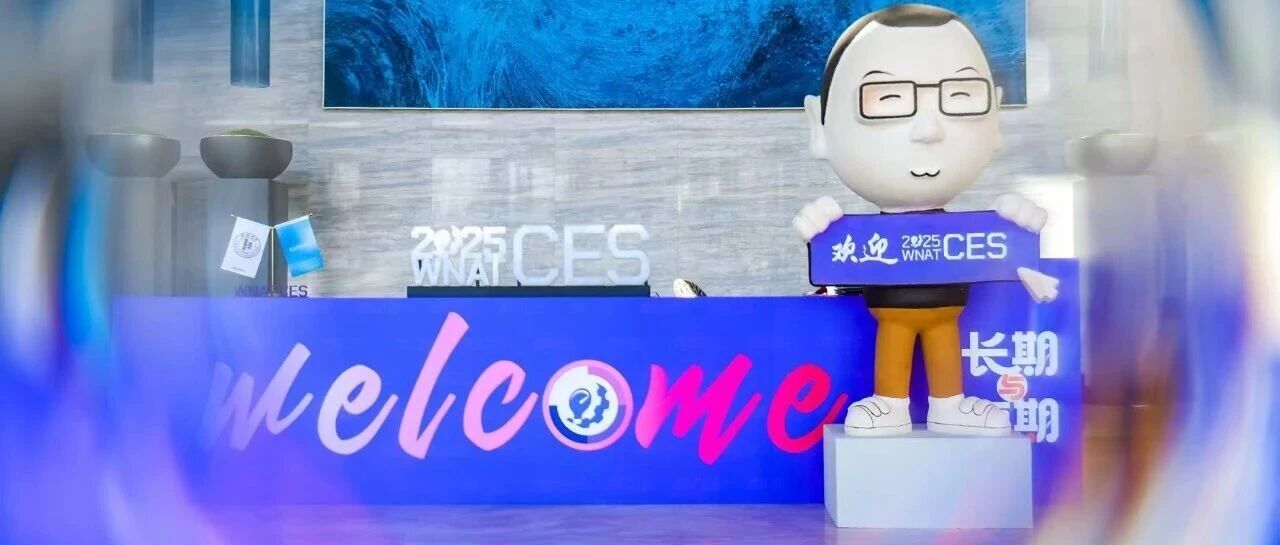
搭建主零桥梁,中国新汽车CES第二天
汽车商业评论· 2025-12-06 23:07
Core Viewpoint - The automotive industry is experiencing a significant transformation driven by competition among different technology routes, including pure electric, plug-in hybrid, and range-extended vehicles. This has led to a shift in the relationship between manufacturers and suppliers, emphasizing collaboration and shared growth in the face of survival anxiety [5][7][14]. Group 1: Industry Dynamics - The competition in the automotive sector is intensifying, with the landscape for electrification still uncertain while the race for intelligence in vehicles is accelerating [5]. - Suppliers are now taking on a more prominent role in defining technologies, particularly in key areas such as the three electric systems, intelligent driving, and vehicle chips, marking a structural shift in their industry position [7]. - The relationship between manufacturers and suppliers is evolving from a linear model to a collaborative partnership, especially as Chinese automotive companies expand globally [7][9]. Group 2: Challenges and Opportunities - Despite an increase in orders for many component manufacturers, profit margins are shrinking, leading to a paradox where value creation is becoming more challenging [7]. - The automotive industry is entering a critical phase of scale development, with projections indicating that by 2025, the penetration rate of new energy vehicles in China will exceed 50% [28]. - The industry faces regulatory challenges, such as the EU battery regulations that trace carbon footprints back to mineral sourcing, necessitating a transformation in supply chain structures [23][24]. Group 3: Technological Innovations - The focus on quality is paramount, as it is seen as the foundation for long-term cooperation and high-quality development within the industry [18]. - Innovations in thermal management systems are becoming increasingly important, with energy consumption in electric vehicles attributed to these systems ranging from 15% to 20% [28]. - The integration of new refrigerants and thermal management technologies is essential for improving vehicle performance and reducing costs [36][40]. Group 4: Strategic Collaborations - Companies are encouraged to shift from a transactional relationship to a co-creative partnership, enhancing their collaborative capabilities to develop core technologies together [26]. - The automotive sector is witnessing a trend towards creating shared, open, and win-win ecosystems, moving away from short-term transactional dynamics [24]. - The emphasis on long-term strategic collaboration is crucial for navigating the competitive landscape and ensuring sustainable growth [24][26].
11月多地二手房成交量上涨 市场有望量价趋稳
Feng Huang Wang· 2025-12-06 03:38
Group 1 - The core viewpoint of the articles indicates a significant recovery in the second-hand housing market across multiple cities in November, with first-tier cities showing particularly strong performance, as transaction volumes reached new highs since May, with a month-on-month increase of 20% [1][2][8] - In November, the total transaction area of second-hand houses in 30 monitored key cities was approximately 17.04 million square meters, reflecting a month-on-month growth of 14%, and a cumulative year-on-year increase of 3% for the first 11 months [2] - First-tier cities saw a total of 49,000 second-hand residential transactions in November, marking a 20% month-on-month increase, surpassing the transaction levels of the traditional peak season in September [2] Group 2 - The second-hand housing market in second-tier cities also showed positive trends, with a total transaction area of 11.13 million square meters, representing a month-on-month increase of 13% [3] - In November, the transaction volume in Chengdu reached 1.74 million square meters, leading among second-tier cities, while Wuhan experienced a month-on-month increase of 12% and a year-on-year increase of 31% [3] - The transaction volume in third and fourth-tier cities stabilized, with a total of 189,000 square meters transacted, reflecting a month-on-month increase of 37% and a year-on-year increase of 3% [3] Group 3 - The demand for both affordable and high-end properties is rising simultaneously in core cities, with significant structural differentiation observed in the Shanghai market, where core districts are experiencing increased demand and price appreciation [4][5] - In Shanghai, the proportion of second-hand homes sold for under 3 million yuan has risen to 60%, continuing a three-month upward trend, while the segment under 5 million yuan remains stable at around 80% [4] - In Shenzhen, the second-hand housing market is characterized by strong demand from both first-time buyers and high-end property seekers, with second-hand transactions consistently dominating the market [5][6] Group 4 - The real estate market is expected to transition towards a "stable volume and price" phase, as local housing policies have largely been exhausted, with over 560 policy measures introduced this year [7] - Analysts predict that short-term real estate policies will focus on stabilizing the market, while long-term strategies will aim for high-quality development and the implementation of various reform measures [7] - The second-hand housing market in first-tier cities is anticipated to develop positively, supported by improved buyer confidence and a favorable price adjustment, leading to increased transactions and a more active market [8]
瑞声科技(02018.HK)12月5日回购578.97万港元,年内累计回购10.29亿港元
Zheng Quan Shi Bao Wang· 2025-12-05 15:01
Summary of Key Points Core Viewpoint - 瑞声科技 has been actively repurchasing its shares, indicating a strategy to support its stock price amidst recent declines [1]. Group 1: Share Buyback Details - On December 5, 瑞声科技 repurchased 150,000 shares at prices ranging from HKD 38.280 to HKD 39.220, totaling HKD 5.7897 million [1]. - The stock closed at HKD 38.480 on the same day, down 1.08%, with a total trading volume of HKD 203 million [1]. - Since December 3, the company has repurchased shares for three consecutive days, totaling 450,000 shares and an aggregate amount of HKD 17.4123 million, with the stock down 2.48% during this period [1]. Group 2: Year-to-Date Buyback Activity - Year-to-date, 瑞声科技 has conducted 89 buyback transactions, repurchasing a total of 26.5685 million shares for an aggregate amount of HKD 1.029 billion [1].
瑞声科技(02018.HK)12月5日耗资579万港元回购15万股
Jin Rong Jie· 2025-12-05 10:45
格隆汇12月5日丨瑞声科技(02018.HK)公告,12月5日耗资579万港元回购15万股,每股购回价38.28- 39.22港元。 本文源自:格隆汇 ...
瑞声科技12月5日耗资约578.97万港元回购15万股
Zhi Tong Cai Jing· 2025-12-05 10:36
瑞声科技(02018)公布,2025年12月5日耗资约578.97万港元回购15万股股份。 ...
瑞声科技(02018)12月5日耗资约578.97万港元回购15万股
Zhi Tong Cai Jing· 2025-12-05 10:25
智通财经APP讯,瑞声科技(02018)公布,2025年12月5日耗资约578.97万港元回购15万股股份。 (原标题:瑞声科技(02018)12月5日耗资约578.97万港元回购15万股) ...
瑞声科技(02018) - 翌日披露报表
2025-12-05 10:14
翌日披露報表 (股份發行人 ── 已發行股份或庫存股份變動、股份購回及/或在場内出售庫存股份) FF305 表格類別: 股票 狀態: 新提交 公司名稱: 瑞聲科技控股有限公司(於開曼群島註冊成立之有限公司) 呈交日期: 2025年12月5日 如上市發行人的已發行股份或庫存股份出現變動而須根據《香港聯合交易所有限公司(「香港聯交所」)證券上市規則》(「《主板上市規則》」)第13.25A條 / 《香港聯合交易所有限公司GEM證券 上市規則》(「《GEM上市規則》」)第17.27A條作出披露,必須填妥第一章節 。 | 第一章節 | | | | | | | | --- | --- | --- | --- | --- | --- | --- | | 1. 股份分類 | 普通股 | 股份類別 不適用 | | 於香港聯交所上市 | 是 | | | 證券代號 (如上市) | 02018 | 說明 | | | | | | A. 已發行股份或庫存股份變動 | | | | | | | | | | 已發行股份(不包括庫存股份)變動 | | 庫存股份變動 | | | | 事件 | | 已發行股份(不包括庫存股份)數 目 | 佔有關事件 ...
瑞声科技(02018.HK)12月4日回购15.00万股,耗资582.79万港元
Zheng Quan Shi Bao Wang· 2025-12-04 13:39
Summary of Key Points Core Viewpoint - 瑞声科技 has been actively repurchasing its shares, indicating a strategy to enhance shareholder value amidst recent stock price fluctuations [1]. Share Buyback Details - On December 4, 瑞声科技 repurchased 150,000 shares at a price range of HKD 38.640 to HKD 39.000, totaling HKD 5.8279 million [1]. - The stock closed at HKD 38.900 on the same day, reflecting a 0.78% increase, with a total trading volume of HKD 105 million [1]. - Since December 3, the company has conducted buybacks for two consecutive days, acquiring a total of 300,000 shares for a cumulative amount of HKD 11.6226 million [1]. - The stock has seen a cumulative decline of 1.42% during this buyback period [1]. Year-to-Date Buyback Activity - In 2025, 瑞声科技 has executed 88 buyback transactions, acquiring a total of 26.4185 million shares for a total expenditure of HKD 1.024 billion [1].