
联影医疗

Search documents
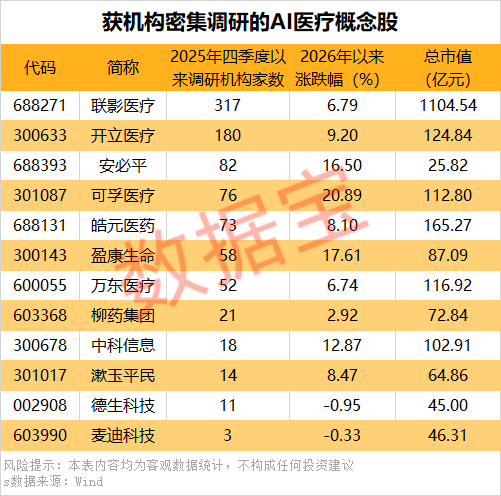
万亿级AI医疗市场 科技巨头接连出手 获机构密集调研的概念股出炉
Zheng Quan Shi Bao Wang· 2026-01-08 23:48
Group 1 - OpenAI launched the ChatGPT Health feature on January 8, which aims to provide health-related answers, connect smart devices, and plan diet and exercise, similar to Alibaba's "Ant Aifu" [1] - The ChatGPT Health feature is expected to be rolled out to users in the coming weeks, as over 230 million health-related inquiries are made weekly on the platform [1] - Ant Group's "Ant Aifu" has already connected with 5,000 hospitals and 300,000 real doctors for online consultations, achieving 30 million monthly active users and over 10 million daily inquiries within a month of its launch [1] Group 2 - AI healthcare is gaining significant policy attention, with plans to create over 100 typical application scenarios by 2027 as outlined in the "Implementation Plan for the Digital Transformation of the Pharmaceutical Industry" [2] - The "Implementation Opinions on Promoting and Regulating the Application of 'Artificial Intelligence + Healthcare'" set development goals for 2027 and 2030, focusing on key applications, safety regulation, and organizational support [2] - Beijing's health commission aims for widespread AI product application in healthcare institutions by 2027 to ensure safety and increase effective supply [2] Group 3 - According to Grand View Research, the global AI healthcare market is projected to reach approximately $26.65 billion (about 186.1 billion yuan) in 2024 and is expected to soar to around $505.59 billion (about 3.5 trillion yuan) by 2033, with a compound annual growth rate of 38.8% [3] Group 4 - Over 30 AI healthcare-related concept stocks have been identified, with companies like Chuangye Huikang and Desheng Technology actively engaging with investors about their AI healthcare strategies [4] - Companies are integrating AI into healthcare services, with Chuangye Huikang promoting its "Huikang Cloud Hub" and Desheng Technology implementing "seamless payment" solutions in major hospitals [4] Group 5 - Institutions are closely monitoring innovations in the "AI + healthcare" sector, with companies like Runda Medical and Yuyupingmin launching AI-driven tools for clinical support [5] - A total of 12 concept stocks have received institutional research attention since Q4 2025, with significant interest in companies like Union Medical and Kairui Medical [5][6] - Kairui Medical plans to launch three new AI-integrated ventilators and masks in 2026, which will analyze sleep states and identify sleep events accurately [5]

股票行情快报:联影医疗(688271)1月8日主力资金净买入955.98万元
Sou Hu Cai Jing· 2026-01-08 11:27
Core Viewpoint - The financial performance of United Imaging Healthcare (688271) shows significant growth in revenue and net profit for the first three quarters of 2025, indicating strong operational efficiency and market demand for its medical imaging and treatment solutions [2]. Financial Performance - For the first three quarters of 2025, the company's main revenue reached 8.859 billion yuan, a year-on-year increase of 27.39% [2]. - The net profit attributable to shareholders was 1.12 billion yuan, reflecting a year-on-year growth of 66.91% [2]. - The net profit excluding non-recurring items was 1.053 billion yuan, up 126.94% year-on-year [2]. - In Q3 2025 alone, the company reported a single-quarter revenue of 2.843 billion yuan, a 75.41% increase compared to the same quarter last year [2]. - The single-quarter net profit attributable to shareholders was 122 million yuan, showing a remarkable increase of 143.8% year-on-year [2]. - The single-quarter net profit excluding non-recurring items was 87.6141 million yuan, up 126.24% year-on-year [2]. - The company's debt ratio stands at 30.08%, with investment income of 606.847 million yuan and financial expenses of -438.233 million yuan [2]. - The gross profit margin is reported at 47.02% [2]. Market Activity - As of January 8, 2026, the stock price of United Imaging Healthcare closed at 134.02 yuan, with a slight decline of 0.13% [1]. - The turnover rate was 0.61%, with a trading volume of 50,200 hands and a total transaction amount of 675 million yuan [1]. - On January 8, the net inflow of main funds was 9.5598 million yuan, accounting for 1.42% of the total transaction amount, while retail investors saw a net inflow of 30.9545 million yuan, making up 4.58% of the total [1]. Analyst Ratings - In the last 90 days, 25 institutions have provided ratings for the stock, with 18 buy ratings and 7 hold ratings [2]. - The average target price set by institutions over the past 90 days is 17.312 billion yuan [2].


强脑科技完成20亿元融资,马斯克按下脑机接口“量产键”!同类费率最低档的医疗器械ETF基金(159797)再涨超1%!
Sou Hu Cai Jing· 2026-01-08 09:37
Core Viewpoint - The brain-computer interface (BCI) sector is experiencing significant growth, driven by technological advancements, increased investment, and supportive policies, indicating a promising future for the industry [3][6][9]. Market Performance - The Shanghai Composite Index recorded a 15-day consecutive rise, with the brain-computer interface concept continuing to surge, and the medical device ETF (159797) rising by 1.26% [1]. - The medical device ETF has seen a net inflow of over 27 million yuan in the past 20 days [1]. Investment and Financing - Strong Brain Technology has completed approximately 2 billion yuan in financing, becoming the second-largest financing project in the global BCI field [3]. - Neuralink, led by Elon Musk, plans to initiate large-scale production this year, with 12 severely paralyzed patients already implanted with their devices [3]. - Neuralink raised 650 million USD in a recent funding round, with plans to advance a "full-brain interface program" by 2028 [3]. Policy Developments - Sichuan Province has set clear pricing for BCI medical services, with the highest implantation fee at 6,583 yuan per procedure [4]. - The Chinese government is increasingly prioritizing brain science, with various policies being introduced to support the BCI industry [9]. Industry Growth Projections - The BCI market in China is projected to reach 3.2 billion yuan in 2024 and exceed 5.5 billion yuan by 2027 [11]. - Globally, the BCI market in the medical application sector is expected to reach 40 billion USD by 2030 and surpass 145 billion USD by 2040 [11]. Company Developments - Domestic companies are actively entering the BCI market, with over 200 firms reported, including Shanghai Ladder Medical and Beijing Brain Science Institute, which have made significant advancements in clinical trials [10]. - The medical device ETF (159797) covers a wide range of sectors, including high-value consumables and diagnostic equipment, with the top ten weighted stocks accounting for 45.04% of the fund [11].

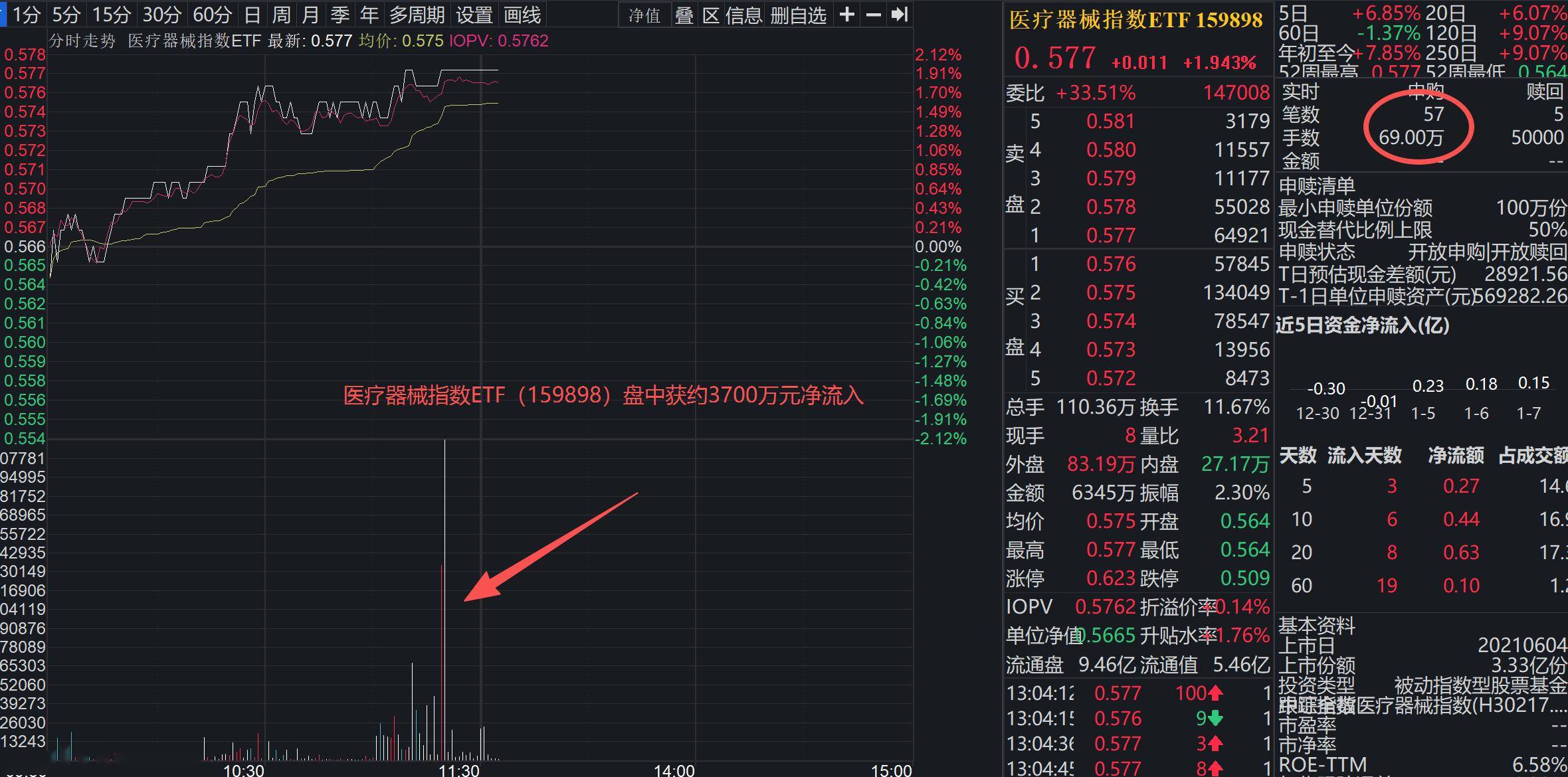
脑机接口概念引爆!资金大举涌入含“脑”量24%的医疗器械指数ETF(159898)
Sou Hu Cai Jing· 2026-01-08 05:49
Core Insights - The brain-computer interface (BCI) concept continues to gain momentum, with related stocks experiencing significant increases, particularly in the medical device sector [1][2]. Group 1: Market Performance - The medical device index ETF (159898) has seen a rise of over 1.94%, with approximately 37 million yuan in net inflow as of the latest report [1]. - Key stocks such as Kewei Medical surged over 19%, while others like Shuoshi Bio and Lepu Medical increased by over 13% and 6% respectively [1]. Group 2: ETF and Index Details - The medical device index ETF (159898) tracks the CSI All Share Medical Device Index, with a BCI concept weight of about 24% [2][3]. - The ETF's latest scale is 536 million yuan, and it has outperformed its peers since 2025 [2]. Group 3: Industry Growth and Projections - The global BCI market size grew from 1.2 billion USD in 2019 to nearly 2 billion USD in 2023, with a compound annual growth rate (CAGR) exceeding 13% [4]. - Projections indicate that the global BCI industry could reach 7.63 billion USD by 2029, with a CAGR of over 25% from 2024 to 2029 [4]. Group 4: Investment Opportunities - The BCI sector is currently experiencing a high-growth phase driven by technological breakthroughs, policy support, and ecosystem collaboration [7]. - The medical field is identified as the most mature and largest segment for BCI commercialization, making it a key area for investment [7].
“脑机接口概念”含量24%!量产预期持续升温,如何驱动医疗器械板块拐点行情?
Sou Hu Cai Jing· 2026-01-08 04:51
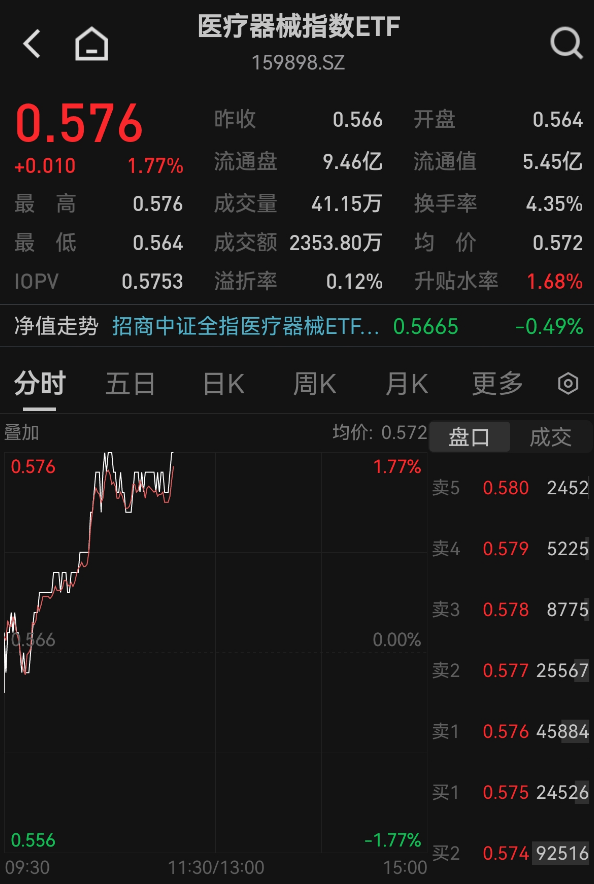
Core Viewpoint - The medical device sector, particularly the brain-computer interface (BCI) segment, is experiencing significant growth driven by technological advancements and increased funding, with the medical device index ETF (159898) showing strong performance and investor interest [1][3]. Group 1: Market Performance - The medical device index ETF (159898) saw a 1.77% increase, with key stocks like Kefu Medical and Shuoshi Bio rising over 11% [1]. - The ETF has recorded over 56 million yuan in net subscriptions over the past three trading days, indicating strong investor interest [1]. Group 2: Investment Drivers - The surge in investment is attributed to the scaling production expectations and technological breakthroughs from Neuralink, alongside significant funding for domestic BCI companies, marking a pivotal moment for the industry [3]. - The global BCI market is projected to grow to approximately $12.4 billion by 2034, with a CAGR of 17% from 2025 to 2034, suggesting a robust growth trajectory for related A-share companies [3]. Group 3: Industry Outlook - The medical device industry is at a turning point, with expectations of rapid development driven by innovation and policy support, particularly in the BCI sector [4]. - Specific innovative products and supportive policies are seen as key factors that could propel the medical device sector upward, with BCI being a focal point of future industry growth [4]. - The ETF tracks a broad index of the medical device sector, with approximately 24% of its composition related to BCI, indicating a strong alignment with emerging market trends [4].
24%“脑机接口”含量!医疗器械指数ETF(159898)盘中上涨1.77%,连续三日逆势吸金
Sou Hu Cai Jing· 2026-01-08 03:42
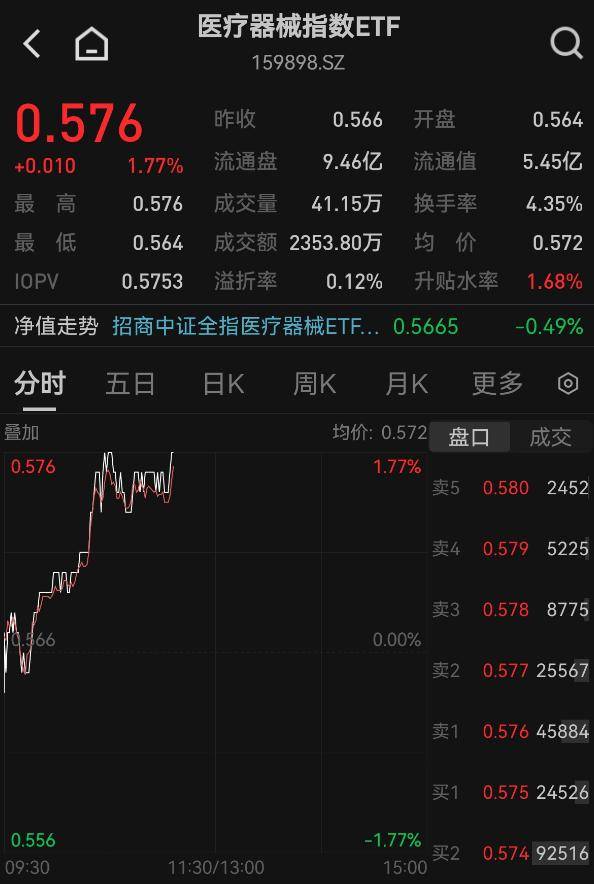
Core Viewpoint - The medical device sector, particularly the brain-computer interface (BCI) segment, is experiencing significant growth driven by technological advancements and increased funding, with the medical device index ETF (159898) showing strong performance and inflows [1][3]. Group 1: Market Performance - The medical device index ETF (159898) saw a 1.77% increase, with key stocks like Kefu Medical and Shuoshi Bio rising over 11% [1]. - The ETF has recorded over 56 million yuan in net subscriptions over the past three trading days, indicating strong investor interest [1]. - The BCI concept constitutes approximately 24% of the ETF's underlying index [1][4]. Group 2: Industry Drivers - The influx of capital into the medical device index ETF is attributed to expectations surrounding Neuralink's mass production and technological breakthroughs in the BCI field [3]. - A recent financing round of about 2 billion yuan for a "unicorn" company in the BCI sector positions it as the second-largest financing globally, following Neuralink [3]. - The global BCI market is projected to grow to approximately $12.4 billion by 2034, with a CAGR of 17% from 2025 to 2034 [3]. Group 3: Sector Outlook - The medical device industry is at a pivotal point, with expectations of rapid growth driven by innovation and policy support [4]. - Specific innovative products and supportive policies are seen as key factors that could drive the upward trend in the medical device sector [4]. - The ETF tracks the CSI All-Share Medical Device Index, which includes segments such as medical equipment, consumables, and in vitro diagnostics, with a significant focus on BCI [4].
中国医疗健康 2026 展望:行情由投机启动,但基本面提供支撑-China Healthcare 2026 Outlook Rally Started by Speculators But Buoyed by Fundamentals
2026-01-08 02:43
Summary of Key Points from the Conference Call Industry Overview - **Industry**: China Healthcare - **Outlook**: The healthcare industry is expected to experience growth driven by supportive policies, innovation, and the expansion of commercial insurance, which will create a sustainable growth environment starting in 2026 [1][2][10]. Core Insights and Arguments 1. **Speculative Rally and Fundamentals**: The rally in the first half of 2025 was driven by speculators, but long-term investors are returning due to improved fundamentals in the second half of 2025 [1]. 2. **Commercial Insurance Expansion**: The commercial health insurance market is projected to expand significantly, potentially covering 30% of national direct medical expenditures, which could lead to a 3-5x growth in the domestic innovative drug market [2][9][10]. 3. **Government Support for Biopharma**: The Chinese government is positioning biopharma as a strategic pillar industry, with initiatives like the National Venture Fund of Rmb100 billion to support innovative drug development [2][17]. 4. **Bio-manufacturing Growth**: China's bio-manufacturers are expected to strengthen their market position due to favorable US/China policies and increased clinical trial activities [3][54]. 5. **Medtech Expansion**: Medtech leaders are anticipated to grow through product upgrades and overseas market expansion, with companies like Mindray and MicroPort Scientific being key beneficiaries [4]. 6. **Impact of DRG Policies**: The worst impacts of Diagnosis-Related Group (DRG) policies are expected to be over, with hospitals likely to see revenue recovery starting in the second half of 2025 [6]. 7. **AI Integration in Healthcare**: Larger hospitals are budgeting significant amounts for AI technologies, which is expected to benefit online healthcare platforms [5]. Additional Important Insights 1. **Clinical Trial Growth**: There has been a notable increase in clinical trial numbers in China, particularly for innovative drugs, which is expected to continue into 2026 [59][60]. 2. **Prescription Trends**: A significant shift is occurring in prescription patterns, with generics dominating public prescriptions and online platforms benefiting from prescription outflow [65][70]. 3. **Investment in Innovative Drugs**: The financing for innovative drugs in China has seen a substantial increase, with total financing reaching Rmb102.6 billion in 2025, marking a 38% increase [43]. 4. **Geopolitical Considerations**: There are minimal concerns regarding the geopolitical landscape affecting the biotech sector, although the upcoming announcement of the 1260H list may cause short-term volatility [64]. Top Investment Picks - **Pharma/Biotech**: Hengrui, Ascletis, Abbisco, Wuxi Apptec, Tigermed, Hygeia, SSY, AliHealth, Yidu Tech [2][3][4][5][6][10]. - **Medtech**: Mindray, United Imaging, MicroPort Scientific [4]. This summary encapsulates the key points discussed in the conference call, highlighting the growth potential and strategic shifts within the China healthcare industry.
科创50ETF指数(588040)涨近3%,八部门发文推进“人工智能+制造”专项行动
Xin Lang Cai Jing· 2026-01-08 02:23
Group 1 - The core viewpoint of the news highlights the strengthening of the computing chip concept in the early market, driven by the Ministry of Industry and Information Technology and eight other departments issuing the "Implementation Opinions on the Special Action of 'Artificial Intelligence + Manufacturing'" [1] - The document emphasizes the need to enhance the supply of artificial intelligence computing power and promote the coordinated development of intelligent chips, supporting breakthroughs in key technologies such as high-end training chips, edge inference chips, AI servers, high-speed interconnects, and intelligent cloud operating systems [1] - East China Securities points out that the domestic trend of AI and computing chip localization continues, with companies like Moer Thread and Muxi Co. set to list on the STAR Market in December, while others like Tian Shuzhixin and Biran Technology are pushing for listings in Hong Kong [1] Group 2 - As of January 8, 2026, the STAR Market 50 Index (000688) saw a strong increase of 1.88%, with notable gains from stocks such as Haiguang Information (688041) up 11.25% and Zhongkong Technology (688777) up 5.74% [1] - The STAR Market 50 ETF Index (588040) rose by 2.93%, marking a fourth consecutive increase, with the latest price reported at 1.51 yuan [1] - The STAR Market 50 Index consists of 50 securities with large market capitalization and good liquidity, reflecting the overall performance of the most representative innovative enterprises in the market [2]
股票行情快报:联影医疗(688271)1月7日主力资金净卖出2374.80万元
Sou Hu Cai Jing· 2026-01-07 11:55
Core Viewpoint - The financial performance of United Imaging Healthcare (688271) shows significant growth in revenue and net profit, indicating strong operational efficiency and market demand for its medical imaging and related products [2]. Financial Performance - For the first three quarters of 2025, the company's main revenue reached 8.859 billion yuan, a year-on-year increase of 27.39% [2] - The net profit attributable to shareholders was 1.12 billion yuan, up 66.91% year-on-year [2] - The non-recurring net profit was 1.053 billion yuan, reflecting a substantial increase of 126.94% year-on-year [2] - In Q3 2025 alone, the company reported a single-quarter revenue of 2.843 billion yuan, a remarkable increase of 75.41% year-on-year [2] - The single-quarter net profit attributable to shareholders was 122 million yuan, up 143.8% year-on-year [2] - The non-recurring net profit for Q3 was 87.6141 million yuan, increasing by 126.24% year-on-year [2] - The company's debt ratio stands at 30.08%, with investment income of 606.847 million yuan and financial expenses of -438.233 million yuan, while the gross profit margin is 47.02% [2]. Market Activity - As of January 7, 2026, the stock price of United Imaging Healthcare closed at 134.19 yuan, with a slight increase of 0.15% [1] - The turnover rate was 0.76%, with a trading volume of 62,600 hands and a total transaction amount of 845 million yuan [1] - The net outflow of main funds was 23.748 million yuan, accounting for 2.81% of the total transaction amount, while retail investors saw a net inflow of 18.4835 million yuan, representing 2.19% of the total [1]. Analyst Ratings - In the last 90 days, 25 institutions have provided ratings for the stock, with 18 buy ratings and 7 hold ratings [2] - The average target price set by institutions over the past 90 days is 17.312 billion yuan [2].
技术风暴席卷,2026年医疗生态大洗牌
Guo Ji Jin Rong Bao· 2026-01-07 07:45
Group 1: Overall Industry Outlook - In 2026, the pharmaceutical industry is expected to experience a surge in innovative drugs, a recovery in the CXO sector, transformation in traditional Chinese medicine, contraction of retail pharmacies, restructuring of hospitals, and a wave of mergers and acquisitions, leading to increased industry differentiation and stronger players remaining dominant [1] Group 2: Innovative Drugs - A total of 76 innovative drugs were approved in 2025, marking a 58% increase from the previous year, with over 150 licensing transactions totaling more than $130 billion, indicating robust growth in China's innovative drug sector [3] - Approximately 20 major innovative drugs are anticipated to be approved in China in 2026, covering various therapeutic areas including oncology and rare diseases, with notable examples such as BL-B01D1 for esophageal squamous carcinoma [3][4] Group 3: CXO Sector - The CXO (Contract Research Organization) industry is experiencing a recovery driven by external factors such as U.S. interest rate cuts and increased R&D investments from multinational pharmaceutical companies, alongside domestic demand for CRO services [5][6] - The penetration rate of outsourcing in areas like ADCs and oligonucleotides is expected to rise to 65%, with companies like WuXi AppTec and Kelun Biotech showing strong growth in these segments [6] Group 4: Traditional Chinese Medicine - The Chinese medicine sector is entering an era of refined management, driven by policy upgrades and market innovations, with a focus on quality and cost balance in procurement [7][9] - By the end of 2026, China aims to establish 180 domestic and 30 international standards for traditional Chinese medicine, with the market expected to exceed 1 trillion yuan for the first time in 2024 [9] Group 5: Medical Devices - The medical device industry is shifting from price suppression to innovation-driven growth, with domestic companies rapidly advancing in high-end imaging, surgical robots, and AI medical devices [10] - Chinese medical device companies are increasingly expanding into international markets, with a notable rise in export volumes expected by 2026 [10] Group 6: Retail Pharmacies - The offline pharmacy sector is projected to contract significantly due to the growth of O2O and B2C models, with over 15,975 stores closing by September 2025, reflecting a 73% year-on-year increase in closures [12][13] Group 7: Private Hospitals - Private hospitals are facing severe challenges, with an average of 1.4 closures per day in 2024, and this trend is expected to continue into 2026 due to regulatory pressures and financial difficulties [14][15]