
L'Oreal

Search documents
欧莱雅旗下Aesop中国内地首店将关闭 高端香水赛道“卷”不动了
Bei Jing Shang Bao· 2025-05-07 12:46
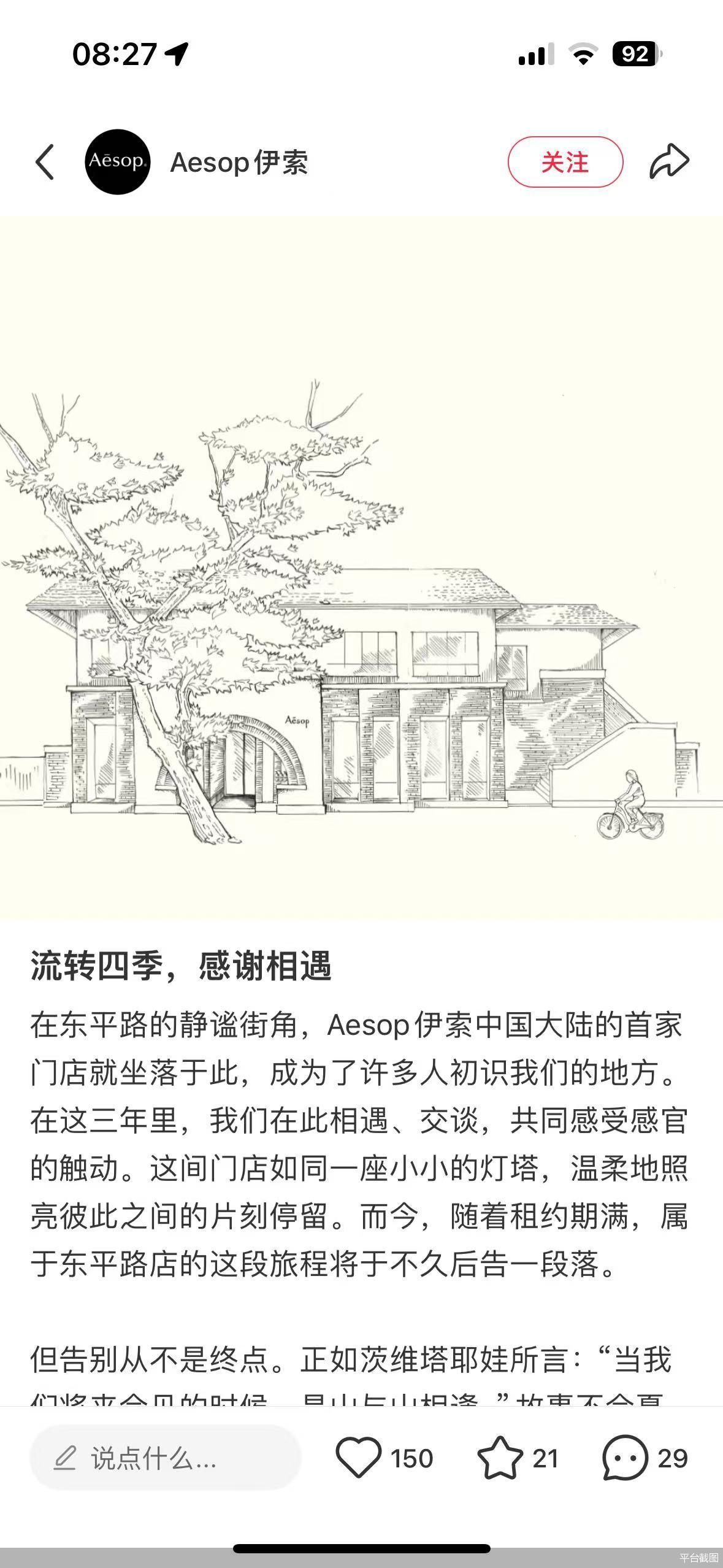
5月6日晚间,欧莱雅旗下高端个护与香水品牌Aesop伊索发布公告称,品牌中国内地首店将于5月11日关闭。对此,欧莱雅集团回应北京商报记者称,关闭 原因是租约到期。2023年欧莱雅对Aesop完成收购后,品牌在中国市场加速扩张,目前已有21家门店,几乎维持着每月开一店的速度。 业内人士指出,当地产红利不再,获客成本增高,品牌按传统方式开店已不符合市场发展趋势。大规模开店会让品牌知名度快速提升,但也会直接导致投入 产出比降低,没有较高影响力的品牌难以长期维持高速扩张的模式。 鉴于中国高端美容市场的放缓,欧莱雅集团也在不断自我反思调整,欧莱雅集团首席执行官叶鸿慕在今年初的业绩会上坦言,对中国高端美妆市场存在过度 扩张的问题,并表示将扭转这一趋势。他指出,当前中国消费者更加注重性价比,这也是高端市场的表现不如大众市场的原因。 尽管目前中国香水市场仍保持高增长,但增速的放缓已成为不争的事实。2023年全年,欧莱雅集团香氛品类增长了17%,推动高档化妆品部增长,2024年前 三季度,该业务仍保持两位数增长,远超市场平均水平。2024年财报则显示,Aesop所在的高档化妆品部销售额155.91亿欧元,同比增长2.7%,北亚 ...


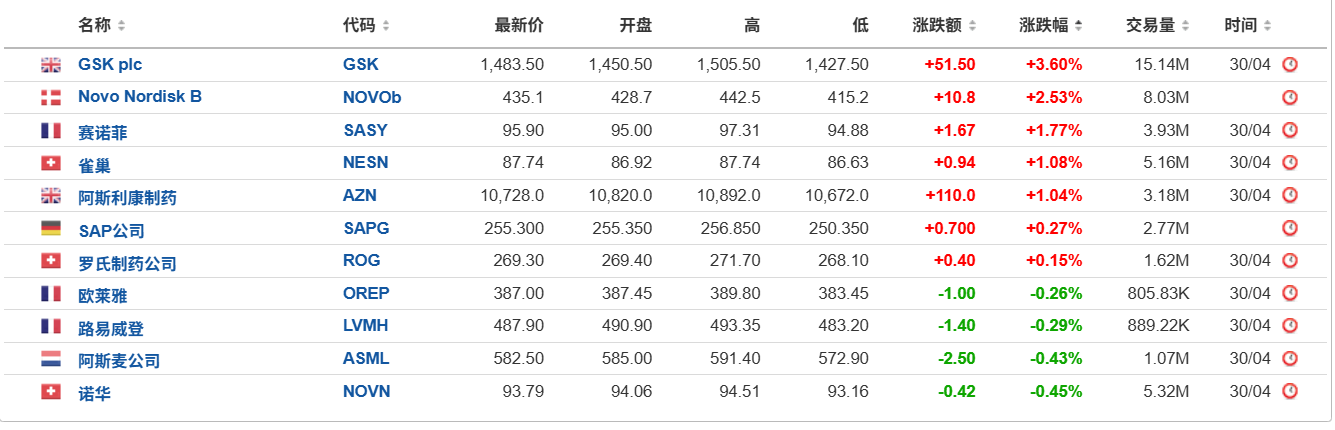
欧股“十一罗汉”收盘播报|4月份LVMH集团跌14.8%,诺和诺德跌约7.4%,欧莱雅则涨将近12.9%
news flash· 2025-04-30 17:22
周三(4月30日),阿斯麦控股荷兰阿姆斯特丹股价(ASML.NA)收跌0.43%,报582.50欧元,4月份累计下跌3.88%。 诺和诺德哥本哈根股价(NOVOB.DC)收涨2.53%,报435.10(丹麦克朗),4月份累跌7.39%。 | 名称 = | 代码 : | | 开盘 | 흥 | | 涨跌额 # | 涨跌幅 * | | --- | --- | --- | --- | --- | --- | --- | --- | | GSK plc | GSK | 1.483.50 | 1.450.50 | 1.505.50 | 1.427.50 | +51.50 | +3.60% | | 1 Novo Nordisk B | NOVOb | 435.1 | 428.7 | 442.5 | 415.2 | +10.8 | +2.53% | | 赛诺菲 | SASY | 95.90 | 95.00 | 97.31 | 94.88 | +1.67 | +1.77% | | + 雀菓 | NESN | 87.74 | 86.92 | 87.74 | 86.63 | +0.94 | +1.08% | | អត 阿斯利康制药 ...
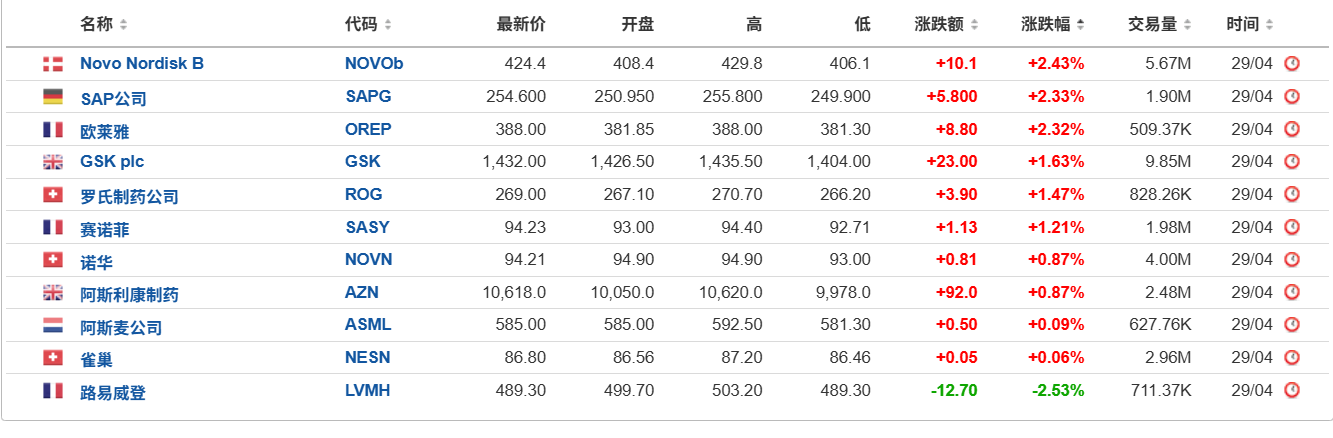
欧股“十一罗汉”收盘播报|诺和诺德、Sap、欧莱雅收涨超2%
news flash· 2025-04-29 16:44
德国思爱普Sap和欧莱雅至少涨2.32%,葛兰素史克、罗氏制药、赛诺菲涨1.63%-1.21%,阿斯利康和雀巢至多涨0.87%。 LVMH集团则收跌2.53%。 | 名称 = | 代码 : | 最新价 | 开营 | 高 | | 低 | | | --- | --- | --- | --- | --- | --- | --- | --- | | Novo Nordisk B H | NOVOb | 424.4 | 408.4 | 429.8 | 406.1 | +10.1 | +2.43% | | I SAP公司 | SAPG | 254.600 | 250.950 | 255.800 | 249.900 | +5.800 | +2.33% | | 欧莱雅 | OREP | 388.00 | 381.85 | 388.00 | 381.30 | +8.80 | +2.32% | | តន GSK plc | લેટાર | 1.432.00 | 1.426.50 | 1.435.50 | 1.404.00 | +23.00 | +1.63% | | + 罗氏制药公司 | ROG | 269.00 | 267.10 ...
2025年企业采用生成式AI报告
Writer· 2025-04-27 09:35
Investment Rating - The report does not explicitly provide an investment rating for the industry Core Insights - The report highlights a significant gap between the potential of generative AI and its actual implementation within enterprises, with many organizations facing challenges in adoption and alignment [6][7][51] Summary by Sections Voices of AI Adopters - A survey of 1,600 knowledge workers, including 800 C-suite executives and 800 employees, was conducted to understand the state of generative AI adoption [14][15][17] Key Findings - 88% of employees and 97% of executives report benefiting from generative AI, yet 72% of C-suite executives acknowledge facing challenges in the adoption process [26][27][51] - There is a disconnect between employees and executives regarding the success of AI implementation, with only 45% of employees feeling their company has been successful compared to 75% of executives [29] Widespread AI Optimism - 90% of employees and 93% of executives express optimism about their company's approach to generative AI, driven by factors such as revenue opportunities and employee interest [37][39] Generative AI Adoption Challenges - Key challenges include internal alignment issues, employee dissatisfaction with AI tools, and a lack of effective change management processes [27][28][30][32] - 41% of Millennial and Gen Z employees report sabotaging their company's AI strategy due to concerns about job security and tool quality [30][67] Strategies to Maximize the Potential of Generative AI - The report suggests formalizing a generative AI strategy, nurturing AI champions within organizations, and selecting the right vendors to support AI initiatives [82][87][97] - Companies that invest more significantly in generative AI see a 40 percentage-point gap in success compared to those that invest less [86] Traits of Supportive Technology Partners - Executives express dissatisfaction with their current generative AI vendors, indicating a need for better support in areas such as security, user experience, and integration [106][113] The Path to AI Transformation - Successful AI transformation requires deep integration of AI into all functions, empowering employees, and choosing the right technology partners [114][116]
Jefferies:中美第一季度影响探讨
2025-04-27 03:56
Summary of Key Points from the Conference Call Industry Overview - **Industry**: Cosmetics, Household & Personal Care - **Key Companies Discussed**: L'Oreal, Kao (4452 JP), Kose (4922 JP), Shiseido (4911 JP) [1][2] Core Insights - **US Market Outlook**: The outlook for the US cosmetics market remains uncertain, particularly in the makeup segment, which is experiencing weakness. There was a notable drop in demand in the second half of March, influenced by Latino consumer dynamics [5][6]. - **China Market Dynamics**: The Chinese market is described as flat, with local companies, including smaller players, gaining market share, especially in the Consumer/Mass market category. Travel retail sales for L'Oreal were down approximately 8% in Q1 [3][4]. - **Growth Projections**: L'Oreal's growth guidance for the Chinese market is considered optimistic at 4-5%, with a more realistic expectation of 2-3% for FY25 [4]. Additional Important Points - **Tariff Impact**: L'Oreal indicated that 50% of its US sales are manufactured domestically, with manageable tariff impacts on cost of goods sold (COGS). The tariff can be passed through at a retail price increase of 3-4% depending on the product portfolio [6]. - **Upcoming Briefings**: Key Q1 briefings for Kao, Kose, and Shiseido are scheduled for May 8, May 9, and May 12, respectively, which may provide further insights into the market conditions [1][2].
欧莱雅去年亮眼的医美业务一季度“哑火”,北亚市场恢复增长,中国地区陷裁员风波
Zheng Quan Zhi Xing· 2025-04-25 09:58
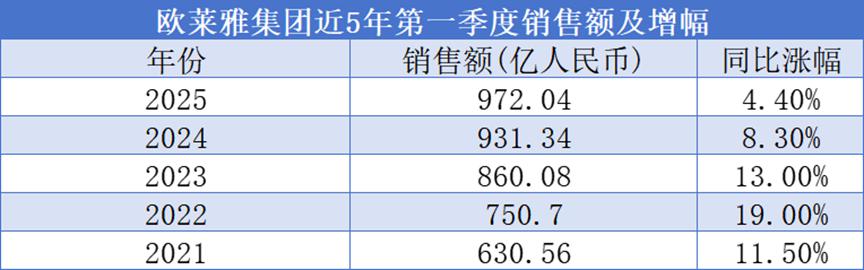
Core Insights - L'Oréal reported Q1 2025 sales of €11.73 billion, a 4.4% year-on-year increase, marking the lowest growth rate in five years [1][2] - The "Dermatological Beauty" segment, which had previously shown strong performance, experienced a significant slowdown in growth during this quarter [1][4] Sales Performance - The sales figures for the past five years indicate a consistent increase in Q1 sales, but the growth rate has been declining, with 2025 showing the lowest increase of 4.4% compared to previous years [2] - The breakdown of sales by segment shows: - Mass Cosmetics: €4.279 billion, up 2.5% [3] - Premium Cosmetics: €4.093 billion, up 7.3% [3] - Professional Hair Products: €1.277 billion, up 2.7% [3] - Dermatological Beauty: €2.086 billion, up 3.5% [3] Regional Performance - The European market was a highlight for L'Oréal, with sales reaching €3.915 billion, a 4.9% increase [6] - North America faced a decline, with sales of €2.973 billion, down 1.4% [6] - North Asia showed recovery with sales of €2.953 billion, up 8.4%, despite previous declines [7] Market Challenges - The Chinese market has been a focal point, with L'Oréal experiencing its first negative growth in a decade in 2024, impacting overall performance [2][7] - The rise of domestic brands among Gen Z consumers poses a challenge to L'Oréal's market share, as evidenced by the strong performance of local brand Pechoin [8] - Recent reports indicate significant layoffs in the travel retail department, with claims of up to 50% workforce reduction, reflecting the need for strategic adjustments in response to market changes [9]
Will Solid Software Revenues Boost IBM's Q1 Earnings Results?
ZACKS· 2025-04-22 17:56
Core Viewpoint - IBM is expected to report higher revenues in its Software segment for Q1 2025, driven by product innovation and strong AI traction across various sectors [1]. Factors at Play - IBM's Software segment focuses on enhancing enterprise productivity through four key areas: Transaction Processing, Automation, Data and AI, and Hybrid Cloud Platform (Red Hat) [2]. - The acquisition of HashiCorp Inc. for an enterprise value of $6.4 billion has created synergies in strategic growth areas, improving cloud infrastructure management and hybrid cloud security [3]. - Strategic partnerships, such as with Telefonica for cybersecurity solutions and L'Oreal for generative AI technology, are expected to positively impact IBM's performance [4]. - IBM's collaboration with Mitsubishi Motors and Lenovo to develop tailored AI solutions is likely to support revenue growth in the Software segment [5]. - An extended collaboration with NVIDIA aims to scale AI workloads and introduce new capabilities, potentially generating incremental revenues [6]. Overall Expectations - The Zacks Consensus Estimate for revenues from the Software segment is $6.27 billion, while IBM's model projects $5.97 billion [7]. - Total revenue for the March quarter is estimated at $14.45 billion, a slight decline from $14.46 billion in the prior year, with adjusted earnings per share expected to decrease from $1.68 to $1.42 [8]. - The earnings prediction model indicates that IBM is not expected to beat earnings estimates for the first quarter, with an Earnings ESP of -1.68% [9][10].

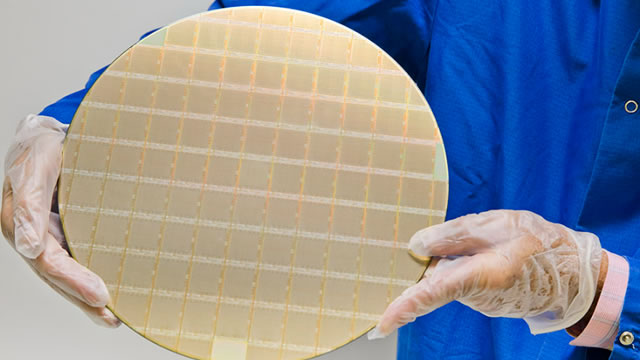
欧莱雅:一季度财报逆势增长3.5% 中国大陆美妆市场正缓慢复苏
Jing Ji Guan Cha Bao· 2025-04-21 13:07
Core Viewpoint - L'Oréal reported a 3.5% year-on-year sales growth in Q1 2025, driven by an IT transformation project and a gradual recovery in the Chinese beauty market, outperforming the global beauty market [1] Group 1: Financial Performance - L'Oréal's Q1 sales reached €11.73 billion, with a consolidated growth of over 4.4% [1] - The North Asia region saw a sales increase of 6.9% year-on-year, with a consolidated growth of 8.4% [1] - The luxury cosmetics division, skin science beauty division, and professional hair products division continued to outperform the market, while the mass cosmetics division's growth was slightly below the market average [1][2] Group 2: Market Strategy - L'Oréal is actively participating in the China International Consumer Products Expo for the fifth consecutive year to strengthen its position in the travel retail market [2] - The company is undergoing a strategic transformation in its travel retail business to adapt to changing market conditions and consumer demands [2] - L'Oréal plans to invest in innovative retail experiences and sustainable growth solutions in collaboration with Hainan [2] Group 3: Future Initiatives - The "Beauty Stimulus Plan" for 2025 emphasizes investment in R&D and supply chain improvements, including the establishment of smart operation centers [3] - L'Oréal aims to enhance brand positioning and personalization to meet evolving consumer expectations, focusing on the unique identity of each brand [3][4] - The company plans to expand its presence in third- and fourth-tier cities and transform offline sales points into experiential locations [5]
看好未来发展潜力 欧莱雅持续加码中国市场
Zhong Guo Jing Ying Bao· 2025-04-14 08:25
对于2025年在中国的投资方向,欧莱雅北亚总裁及中国首席执行官博万尚表示:"2025年,第一个投资 方向是研发创新。我们将继续加大在这一领域的投资,以确保欧莱雅在中国市场上推出的产品质量是最 高的,同时在安全性方面绝不妥协。第二个投资方向集中在供应链(优化)上。继苏州智能运营中心之 后,我们即将落成南通智能运营中心。第三个投资方向是美妆基金。我们与凯辉基金和上海市静安区合 作成立了基金,将重点投资处于成长阶段的美妆品牌和相关企业,另一只基金由天图投资管理,与欧莱 雅集团战略创新风险投资基金公司BOLD合作,旨在投资同领域的早期公司。投资生态圈将为欧莱雅中 国未来二十年的发展奠定坚实基础。第四个投资方向是人才发展。欧莱雅始终秉持技能提升为核心的企 业文化,所以我们计划投资于人才的技术培养,帮助他们掌握新科技、人工智能等未来必备技能。" (文章来源:中国经营报) 马晓宇指出,在Z世代、45岁以上的熟龄人群以及男性这三类消费群体中看到增长机会。其中在男性消 费者方面,马晓宇表示:"在我们的品牌矩阵中,巴黎欧莱雅和碧欧泉这两个品牌有非常专业的男士系 列。但我们也意识到,其实很多男性,特别是当他们身边有擅长护肤的女性朋 ...