Snowflake Inc.

Search documents
The reality check everyone’s ignoring
Yahoo Finance· 2026-01-15 22:16
分组1 - Taiwan Semiconductor (TSM) reached an all-time high of $342.92, reflecting a 72% increase over the past year and a 19% rise in the past month, with a revenue growth of 30.3% year-over-year and a profit margin of 43.3% [1] - NVIDIA (NVDA) saw a 42% increase over the past year, trading at $187.30, with Q3 2025 revenue of $57 billion, up 62.5% year-over-year, highlighting the importance of power infrastructure over chip manufacturing [1] - Vistra Energy (VST) surged 19.7% this week to $180.27, up 11.7% year-to-date, as UBS raised its target to $233, indicating a shift in focus towards electricity needs for AI data centers [1] 分组2 - Reddit (RDDT) experienced a 10% decline this week to $228.61, trading at high valuations of 116x trailing earnings and 25x sales, with retail sentiment showing a disconnect from institutional selling [2] - The sentiment for Reddit shifted from very bullish to bearish within a day, indicating a potential for further downside as retail traders remain overly optimistic despite stock performance [2] 分组3 - Software stocks, including Salesforce (CRM) and Snowflake (SNOW), are facing significant selloffs, with CRM down 27% over the past year and trading at 32x trailing earnings, while SNOW has a negative profit margin of 31% [3] - Barron's described the software selloff as "overdone," suggesting that the market is still adjusting to elevated multiples and rising expectations for earnings that are not being met [3] 分组4 - Netflix (NFLX) is set to report earnings with expectations of $0.56 EPS on $12.21 billion in revenue, while the stock has declined 6.1% over the past month to $88.05, indicating a low bar for performance after recent pullbacks [4] - The prediction markets show a high probability of NFLX trading within a tight range, suggesting limited potential for breakout or collapse, while recent earnings missed estimates by 15.7% [4] 分组5 - American EV companies are struggling financially, with Rivian (RIVN) downgraded to sell and trading at a negative profit margin of 61.3%, while Tesla (TSLA) reported a 37% year-over-year earnings decline despite revenue growth [5] - In contrast, Chinese EV maker NIO grew revenue by 16.7% year-over-year and trades at a significantly lower sales multiple, indicating a market shift away from American EV companies [5] 分组6 - The focus for investors should shift towards power utility stocks as the real infrastructure play for AI in 2026, rather than semiconductor stocks that have already appreciated significantly [6] - The ongoing challenges faced by American EV companies, coupled with the competitive advantage of Chinese manufacturers, highlight a critical shift in the automotive market landscape [6]
Barclays Says Snowflake’s (SNOW) Strong Run Leaves Limited Upside, Downgrades Stock
Yahoo Finance· 2026-01-15 20:28
Core Viewpoint - Snowflake Inc. has been downgraded by Barclays from Overweight to Equalweight, with a new price target of $250, down from $290, reflecting strong fundamentals but limited upside potential after a significant price increase [1][2]. Group 1: Company Performance - Snowflake is recognized as a "best-in-class software" stock, with one of the strongest top-line growth rates and above-average free cash flow margins in its sector [2]. - The company's execution has improved under CEO Sridhar Ramaswamy, contributing to positive momentum for the stock [2][3]. Group 2: Analyst Ratings History - The downgrade represents Barclays' third rating change for Snowflake in the past three years, following an upgrade to Overweight in the 2025 Outlook and a previous downgrade to Equal Weight in the 2024 Outlook [3]. - The improved execution on product and go-to-market strategies under the current CEO has been a key factor in the stock's momentum [3].

Can Palantir's Commercial Surge Sustain PLTR's Next Leg of Growth?
ZACKS· 2026-01-15 19:10
Core Insights - Palantir's commercial business is rapidly accelerating and has become the main driver of its growth story [1] - The company raised its U.S. commercial revenue guidance to over $1.433 billion, indicating at least 104% year-over-year growth, reflecting a shift in enterprise demand towards full-scale deployments of its AI-powered platforms [2] - Palantir's revenue outlook for Q4 and full-year 2025 has been upgraded, with expected Q4 revenues of $1.329 billion (13% sequential growth, 61% year-over-year growth) and full-year guidance raised to $4.398 billion (53% increase from 2024) [3] Financial Performance - Adjusted operating income forecast has been increased to a range of $2.151-$2.155 billion, up from $1.912-$1.920 billion, while adjusted free cash flow is projected between $1.9 billion and $2.1 billion, compared to the previous range of $1.8 billion to $2.0 billion [4] - Palantir expects to generate GAAP operating income and net income in every quarter of 2025, enhancing credibility in its long-term operating model [5] Competitive Positioning - Palantir's ability to diversify its revenue base while maintaining stability from government clients positions it as a reliable long-term player in enterprise AI [6] - The company is experiencing a growing commercial pipeline, which provides a scalable growth runway as organizations adopt AI-driven decision systems [6] Peer Comparison - Snowflake is a relevant peer, focusing on high-value enterprise data workloads and embedding AI into its cloud data platform, while facing pressure to improve profitability [7] - Datadog specializes in observability and cloud intelligence, expanding its AI-driven capabilities, indirectly competing with Palantir as enterprises seek unified intelligence platforms [8] Stock Performance - Palantir's stock has surged 158% over the past year, significantly outperforming the industry's 2% rally [9] - The company trades at a forward price-to-sales ratio of 67X, well above the industry's 4.6X [11]



摩根大通一线调研:微软领先所有人至少10光年,生态整合能力非常强大!
Hua Er Jie Jian Wen· 2026-01-15 16:22
Group 1 - Microsoft has established a significant advantage in cloud ecosystem integration, described by respondents as "leading all others by at least 10 light years" [1][2] - The comprehensive and collaborative product system of Microsoft is becoming the preferred platform for enterprises to scale AI and digital transformation [1][2] - Key trends in the software market over the next 12-18 months include a shift in AI project budgets from pilot scales of $250,000-$500,000 to production-level investments of $2.5 million-$5 million [1][2] Group 2 - IT spending decision-making has shifted from Chief Information Officers (CIOs) to Chief Financial Officers (CFOs), with a greater focus on measurable returns and investment cycles [1][4] - Data infrastructure companies like Databricks, Snowflake, and Datadog are benefiting from this transformation process [1][2] - The report highlights structural challenges in the industry, including scrutiny of reasoning costs and the need for repeatable, standardized use cases for AI project scaling [3][4] Group 3 - IT budgets are expected to stabilize without explosive growth by 2026, with a healthy pipeline noted [4] - Clients are increasingly focused on shorter cycles, ROI, and cash returns, marking a shift in IT spending review from CIOs to CFOs [4] - Investment in data infrastructure remains active, with clients recognizing the importance of data modernization and responding to existing gaps [4]

美国科技 - 2025 年第四季度 CIO 调研:核心增长点何在?-US Tech-4Q25 CIO Survey – Where's The Beef
2026-01-15 02:51
Summary of 4Q25 CIO Survey – Key Points Industry Overview - The survey focuses on the **US Tech** industry, particularly the **IT budget outlook** for 2026, highlighting trends in **Software**, **Communications**, **Hardware**, and **IT Services** sectors [2][40]. Core Insights 1. **IT Budget Growth Expectations**: - IT budget growth is expected to moderate from **+3.5% in 2025 to +3.4% in 2026**, a decline of **8 basis points** [2][40]. - Sequentially, the growth expectation for 2026 deteriorated from **+3.8% YoY** in the previous quarter [2][40]. 2. **Sector-Specific Trends**: - **Software**: Expected to see a modest acceleration in growth to **+3.8%** in 2026, up **9 basis points YoY** [2][40]. - **Communications**: Growth is expected to decelerate to **+2.2%**, down **27 basis points YoY** [2][40]. - **Hardware**: Anticipated growth is only **+1.0%**, a significant drop of **58 basis points YoY** [2][40]. - **IT Services**: Expected to grow by **+2.0%**, a slight decrease of **3 basis points YoY** [2][40]. 3. **Regional Insights**: - US CIOs expect budget growth of **+3.5%**, while EU counterparts anticipate **+3.1%**, indicating a narrowing gap between the two regions [2][40]. 4. **CIO Sentiment**: - The **1-year up-to-down ratio** for budget revisions fell to **0.5x**, indicating a more cautious outlook among CIOs [2][40]. - The percentage of CIOs expecting budget increases dropped to **17%**, while those expecting decreases rose to **36%** [2][40]. 5. **AI and IT Spending**: - **Artificial Intelligence** remains the top priority for CIOs, with **68%** planning to engage service providers for AI projects [40]. - **81%** of CIOs expect to have GenAI-based workloads in production by the end of 2026, up from **79%** in the previous quarter [40][37]. Additional Insights 1. **Hiring Expectations**: - **33%** of CIOs expect overall hiring to decrease in 2026, while **18%** expect an increase, reflecting a cautious hiring outlook [6][40]. - **63%** of CIOs believe AI-related IT spending will impact hiring plans, with a significant portion expecting hiring to decrease [6][40]. 2. **K-Shaped IT Budget**: - CIOs may be reallocating budgets from less strategic areas to prioritize AI-related investments, indicating a shift in spending dynamics [6][40]. 3. **Vendor Insights**: - Microsoft, Google, and Amazon are expected to gain the largest incremental share of GenAI spend in 2026, with Microsoft leading at **35%** [8][11][40]. - The survey indicates a trend towards consolidating IT spending with fewer vendors, particularly in software [6][40]. 4. **Concerns Over Hardware Spending**: - Hardware budgets are projected to grow at the slowest rate since 2009, raising concerns about potential demand destruction in the sector [18][40]. 5. **Long-Term Outlook**: - CIOs' confidence in the long-term spending environment has moderated, with only **38%** expecting IT spending as a percentage of revenue to increase over the next three years [40]. Conclusion The 4Q25 CIO Survey indicates a cautious outlook for IT budgets in 2026, with sector-specific deceleration, particularly in Hardware and Communications. Despite the excitement surrounding AI, the anticipated growth in IT budgets does not fully align with expectations, suggesting a need for strategic reallocations and a focus on consolidating vendor relationships.
独家洞察 | AI掘金术:从非结构化数据中,挖出金融高见
慧甚FactSet· 2026-01-15 02:13
Core Insights - The article emphasizes the increasing complexity of transforming financial data into actionable intelligence due to the rapid growth of data and the challenges posed by unstructured formats and fragmented systems [1][4]. Group 1: Importance of Unstructured Data - Unstructured data holds significant insights that are often overlooked, as key information is trapped in sources like earnings call transcripts, regulatory filings, and news articles [1][4]. - The ability to access and utilize unstructured content is crucial for overcoming data fragmentation and ensuring readiness for AI applications [4][9]. Group 2: AI Integration and Workflow Automation - Seamless integration of AI is essential for unlocking the value of unstructured data, enabling standardization, vectorization, and information enhancement [3][5]. - The development of an AI-ready financial document corpus is underway, which includes global regulatory filings and earnings call transcripts, enriched with metadata and contextual layers to improve AI performance [4][5]. Group 3: Enhanced Decision-Making Capabilities - The integration of AI-ready data with Snowflake Intelligence allows users to conduct semantic searches and retrieve relevant documents, enhancing decision-making processes [5][9]. - By combining structured market data, proprietary holdings, and unstructured content into a unified view, deeper insights can be gained, leading to faster and more informed decisions [7][9]. Group 4: Flexibility and Interoperability - An open ecosystem enables financial institutions to access and leverage AI-ready content flexibly, whether within the Snowflake platform or through API integrations [9]. - The infrastructure's interoperability is vital for scaling data enhancement and ensuring that insight generation keeps pace with the growing volume and complexity of information [9]. Group 5: Real-Time Insights and Automation - Semantic search technology allows for quicker identification of emerging themes in news and text records compared to traditional datasets [11]. - Automated intelligence agents can track peer commentary, regulatory changes, and filing updates in real-time, extracting actionable insights from unstructured content [11].

为什么现代人工智能项目离不开数据运维 (DataOps) 与机器学习运维 (MLOps)
3 6 Ke· 2026-01-14 07:31
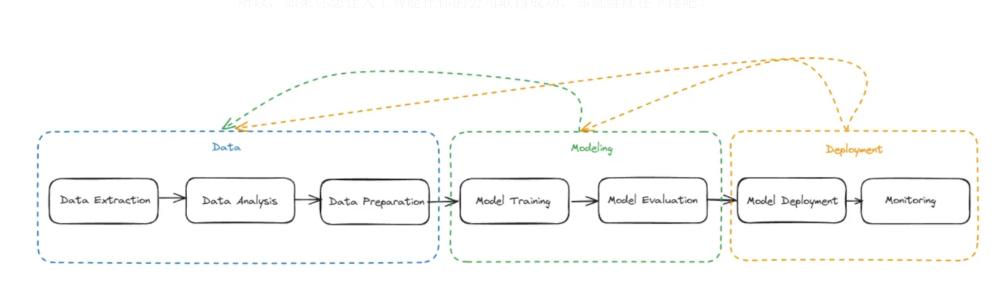
Core Insights - The article emphasizes the critical interdependence between DataOps and MLOps, highlighting that effective machine learning operations cannot succeed without robust data operations [3][15][70] - It argues for a unified approach to AI infrastructure that integrates both data management and machine learning processes, moving away from isolated practices [66][70] DataOps Overview - DataOps is influenced by DevOps and focuses on treating data pipelines as living systems that require strict standards, testing, and automation [4] - The main goals of DataOps include eliminating ETL job failures, ensuring data consistency, and fostering collaboration across teams [4][5] - Key principles of DataOps include data quality as code, declarative pipelines with version control, and data lineage tracking [4][5][16] MLOps Overview - MLOps serves as a bridge between training machine learning models and deploying them in real-world applications, applying DevOps principles to the machine learning lifecycle [7][8] - Essential components of a good MLOps stack include experiment tracking, model version control, continuous training and deployment, and monitoring [9][10][11] Intersection of DataOps and MLOps - The article stresses that both DataOps and MLOps must work together, as issues in one area can adversely affect the other [15][16][70] - It highlights the importance of establishing a feedback loop where data changes can trigger model retraining, and model performance can inform data improvements [17][70] Unified Workflow Design - A unified DataOps and MLOps workflow should begin with data ingestion and validation, followed by metadata tracking, model training, continuous deployment, and monitoring [21][28][31] - The integration of tools like Dagster for orchestration, MLflow for experiment tracking, and CI/CD pipelines for automation is essential for creating a seamless workflow [37][39][66] Future Trends - The article notes a shift towards AI infrastructure platforms that provide a common foundation for both DataOps and MLOps, blurring the lines between data and machine learning platforms [63][66] - It suggests that the industry is moving from a model-centric to a data-centric operational mindset, focusing on continuous improvement of the data that underpins machine learning models [66][70]
AI Could Spell Trouble for Software. These Experts Say to Avoid One Stock In Particular
Investopedia· 2026-01-13 22:41
Core Insights - The software industry is facing challenges in the AI era, with S&P 500 software stocks underperforming the broader index for the second consecutive year in 2025, as companies involved in AI infrastructure, such as semiconductors, have led market gains [1][9] - Analysts predict that the difficulties affecting software stocks, particularly application developers, will continue into 2026 [1] Company-Specific Analysis - Oppenheimer downgraded Adobe (ADBE) stock from "Outperform" to "Perform" and removed its price target, citing AI-related threats impacting the application software sector [2] - Adobe's shares have decreased by over 20% in the past year, with a more than 5% drop following the downgrade [2] - The perception that AI is diminishing Adobe's competitive edge is a significant concern, as generative AI accelerates content creation while reducing pricing and subscriber growth [4] - Adobe's traditional seat-based pricing model is at risk from generative AI, which may shift the industry towards usage-based pricing, potentially affecting revenue stability [5][6] - Adobe's stock has fallen over 50% since its peak in 2021, with current analyst ratings showing mixed sentiments: about half rate it a "Buy," while others are neutral or recommend selling [11] Industry Trends - The rollout of AI agents has been slower than anticipated, negatively impacting investor sentiment and raising concerns about the software industry's vulnerability to AI disruption [3] - Despite challenges for application software, infrastructure software stocks have performed well, driven by IT modernization and cloud migration efforts [7] - Companies like Palantir (PLTR) have seen significant stock value increases due to strong commercial sales, with cloud migrations benefiting firms like MongoDB (MDB) and Snowflake (SNOW) [8] - Cloud spending growth is projected to remain steady at 10%, with nearly 12% of IT budgets allocated to AI in 2026, up from 6.5% the previous year [10]


3 Technology Stocks to Sell in 2026
Benzinga· 2026-01-13 17:35
Industry Outlook - The S&P 500 Information Technology Index has declined by -1.75% year to date and -2.53% over the past month, indicating a challenging outlook for tech stocks in 2026, although not all major sector names are affected [1] - There is a prevailing optimism around AI, but experts caution that 2026 will focus on the proof of AI's return on investment, particularly for hyperscalers that have been investing heavily [2] - The market is expected to be "fine" in 2026, with positive results but likely unable to match the significant tech gains seen in previous years [3] Company-Specific Insights - Palantir has shown a one-year performance of 162.95%, but its stock may be losing appeal as it trades at over 100 times its revenue, raising concerns about its valuation amidst slowing growth [5][6] - Apple has a one-year performance of 9.37%, but faces challenges such as a 3.6% year-over-year decline in sales from China and high operating expenses, leading to a bearish outlook with shares potentially sliding to around $200 in 2026 [9][10] - Salesforce has experienced a one-year performance decline of -18.03% and is facing enterprise spending pressures, with a notable slowdown in Sales Cloud growth to 8.4% year-over-year [11][14] Investment Strategy - Investors are advised to consider selling high-valued, long-duration AI stocks with weak cash flow, as these stocks may not withstand market corrections if AI adoption does not meet expectations [6][15] - The technology sector is expected to undergo a consolidation phase in 2026, with a focus on companies that demonstrate visible AI revenue, strong cash flow, and reasonable valuations [4][17] - High-quality businesses like Apple, Salesforce, and Palantir may struggle if growth slows, suggesting that trimming or selling some technology names could be a prudent strategy for investors [18]



Can Salesforce's Data 360 Push Drive Its Next Phase of Sales Growth?
ZACKS· 2026-01-13 14:11
Core Insights - Salesforce, Inc. (CRM) is focusing on Data 360, previously known as Data Cloud, to stimulate growth as revenue expansion has slowed to single digits, with year-over-year revenue increases of 7.6%, 9.8%, and 8.6% in the first three quarters of fiscal 2026 [1][5] Group 1: Data 360 Strategy - Data 360 is central to Salesforce's strategy to address slowing top-line growth, combining various data tools into a unified offering to help companies manage and activate their data in real time [2] - The integration of Data 360 with other tools like Agentforce and Mulesoft is enabling enterprises to analyze data and apply AI across operations, potentially driving higher-value contracts for Salesforce [3] Group 2: Financial Performance - Data 360 and Agentforce generated $1.4 billion in recurring revenues in Q3 of fiscal 2026, marking a 114% year-over-year increase, with expectations that the data-related business could reach around $10 billion annually by fiscal 2027 [4] - The Zacks Consensus Estimate predicts revenue growth of 9.5% and 11% for fiscal 2026 and 2027, respectively, indicating a potential path for Salesforce to reaccelerate growth [5] Group 3: Competitive Landscape - Salesforce faces increased competition from Microsoft Corporation (MSFT) and Snowflake Inc. (SNOW) in the data cloud sector, with Microsoft leveraging its Azure Data platform and Snowflake focusing solely on data management [6][7][8] Group 4: Valuation and Estimates - Salesforce shares have decreased by 19.8% over the past year, contrasting with the Zacks Computer – Software industry's growth of 10.5% [9] - The company trades at a forward price-to-earnings ratio of 20.07, significantly lower than the industry average of 28.31 [13] - The Zacks Consensus Estimate for fiscal 2026 and 2027 earnings suggests year-over-year increases of approximately 15.3% and 10.4%, respectively, with upward revisions in estimates over the past 30 days [16]