
云深处科技

Search documents
多家未上市企业背后现险资身影,保险私募股权基金抢占机器人赛道
Hua Xia Shi Bao· 2025-11-03 11:51
Core Insights - The investment in the robotics sector is gaining momentum, with numerous insurance funds actively participating in the funding of various robotics companies aiming for IPOs [2][3] - Insurance capital is primarily acting as secondary to fourth-level shareholders rather than direct investors in the primary market [3][5] - The total scale of private equity funds established by insurance companies has exceeded 100 billion yuan, with a significant focus on artificial intelligence and semiconductor industries [2][9] Investment Landscape - At least 38 insurance companies are involved in funding companies like Yushutech and Yundongchu Technology, with 27 and 25 insurance firms respectively investing indirectly through private equity funds [2][4] - Major insurance groups have established private equity funds with scales reaching hundreds of millions, targeting sectors like AI and semiconductors [2][5] Investment Strategy - Insurance funds are increasingly participating as limited partners (LPs) in government-led funds, which allows them to engage in technology innovation investments [3][5] - The investment approach helps mitigate risks associated with direct investments in early-stage technology projects, while also supporting the development of new productive forces [5][6] Challenges and Advantages - Insurance capital faces challenges in identifying high-quality projects due to competition and the high failure rate of startups, but its characteristics of patient and long-term capital position it well for technology investments [6][7] - The insurance sector is expanding its investment scope from listed to unlisted AI companies, indicating a broadening strategy to capture emerging opportunities [7][8] Recent Developments - In August, significant private equity funds were established, including a 224.3 billion yuan fund involving multiple insurance companies and a 100 billion yuan fund by China Life [8][9] - The cumulative investment scale of insurance capital in private equity funds has surpassed 777 billion yuan, reflecting a robust entry into the market [9][10]



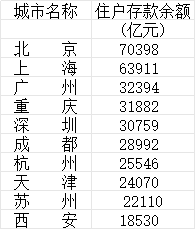
住户存款10强城市出炉,3城人均超20万元
Di Yi Cai Jing· 2025-10-30 11:05
Core Insights - By the end of 2024, 34 cities in China have household deposits exceeding 1 trillion yuan, with the top ten cities being Beijing, Shanghai, Guangzhou, Chongqing, Shenzhen, Chengdu, Hangzhou, Tianjin, Suzhou, and Xi'an [1][2] - The top three cities, Beijing, Shanghai, and Guangzhou, have household deposits exceeding 20 trillion yuan, with Beijing leading at over 7 trillion yuan [2][3] Summary by Category Household Deposits - The household deposit balance in Beijing is over 7 trillion yuan, while Shanghai's is more than 6.39 trillion yuan, placing them first and second respectively [2][3] - Guangzhou, Chongqing, and Shenzhen have household deposits exceeding 3 trillion yuan, ranking third to fifth [3] Per Capita Deposits - Among the 34 cities with household deposits over 1 trillion yuan, 14 cities have per capita deposits exceeding 160,000 yuan, with Beijing, Shanghai, and Hangzhou surpassing 200,000 yuan [3] Digital Economy - In 2024, Hangzhou's digital economy core industry added value reached 630.5 billion yuan, growing by 7.1%, accounting for 28.8% of the city's GDP [4] - The core industry of the digital economy in Hangzhou achieved operating income of 2,040.1 billion yuan, with a growth rate of 4.9% [4] - The "Hangzhou Six Little Dragons," consisting of various tech companies, have gained significant attention in the digital economy sector [4]
爱施德:前三季度实现营收超390亿元 现金流同比增长129.21%
Zhong Zheng Wang· 2025-10-26 09:31
Core Viewpoint - Aishide has reported strong financial performance for the first three quarters of 2025, with revenue of 39.375 billion yuan and a net profit of 337 million yuan, driven by its core business and strategic investments in AI and robotics [1][2][3] Financial Performance - For the first three quarters of 2025, Aishide achieved revenue of 39.375 billion yuan and operating profit of 574 million yuan, with a net profit attributable to shareholders of 337 million yuan [1] - The net cash flow from operating activities reached 2.701 billion yuan, representing a year-on-year increase of 129.21% [1] Business Strategy - Aishide is enhancing its core business by expanding its channel system and deepening capital layout, particularly in the context of the Apple AI terminal cycle [1] - As of September 30, 2025, the total number of Apple Authorized Retail Stores (APR) reached 246, an increase of 46 stores from the beginning of the year, maintaining its position as the largest in the country [1] - The company is also strengthening its online operational capabilities across platforms like Tmall, JD.com, and Douyin [1] Investment in High-Growth Sectors - Aishide has established a 500 million yuan "Aishide Smart City Fund" in partnership with Shenzhen Smart City Industry Investment Fund, focusing on AI, smart terminals, and next-generation information technology [2] - The company has made strategic investments in two high-growth firms, Yunshen Technology and Saigan Technology, which specialize in robotics and flexible tactile sensors, respectively [2] Global Expansion - Aishide's partnership with Honor is accelerating its international business, with exclusive sales and service authorizations in regions including Hong Kong, Thailand, and Vietnam, and new authorizations in the Middle East, Africa, and Australia planned for 2025 [2] - Honor's market share in Hong Kong reached 20.2%, ranking it among the top two, while in Macau, it held a 32.4% market share, and retail activation in Vietnam grew by over 300% year-on-year [2] Transformation and Future Outlook - Aishide is transitioning from a traditional distributor to an "intelligent terminal ecosystem enterprise," leveraging stable cash flow from the Apple ecosystem and growth potential from AI and robotics investments [3] - The company aims to create a new global growth pattern through a synergistic layout of "equity + channels + regional expansion," benefiting from the appreciation of equity value and channel expansion [3]

杭州“六小龙”背后险资名单曝光→
Sou Hu Cai Jing· 2025-10-25 10:40
Core Insights - The article highlights the increasing involvement of insurance capital in the investment landscape of emerging technology companies, particularly in the "Six Little Dragons" of Hangzhou, which challenges the perception that insurance funds only invest in mature enterprises [1][2][4]. Group 1: Investment Landscape - A total of 38 insurance institutions have been identified as investors in the "Six Little Dragons," with significant participation in companies like Yushut Technology and Cloud Deep Technology [3]. - Among these, 27 insurance institutions have indirectly invested in Yushut Technology, while 25 have done so in Cloud Deep Technology, indicating a robust interest from the insurance sector [3]. - The types of insurance institutions involved range from state-owned enterprises to private and foreign insurance companies, showcasing a diverse investment base [3]. Group 2: Investment Strategies - Insurance capital is primarily investing through private equity funds as limited partners (LPs), often via government-led funds, which reflects a strategic alignment with policy needs [5][7]. - Notable examples include investments from the National SME Development Fund and various sub-funds that have backed the "Six Little Dragons" [5]. - The trend indicates a shift towards more active participation in early-stage technology investments, which were previously considered outside the typical risk appetite of insurance funds [4][7]. Group 3: Challenges and Opportunities - Despite the growing involvement, insurance capital faces challenges in terms of investment capabilities and mechanisms, particularly in high-tech sectors where traditional financial models may not apply [8][9]. - The unique characteristics of insurance capital, such as long-term investment horizons and stable returns, align well with the high-risk, high-reward nature of technology innovation [8]. - Industry experts suggest that insurance funds should enhance their research capabilities and adopt more flexible internal mechanisms to better navigate the rapidly evolving investment landscape [9].
爱施德三季报:经营质量持续优化,政策东风驱动产业新探索
Quan Jing Wang· 2025-10-24 11:58
Group 1 - The core viewpoint of the news is that Aishide (002416) is experiencing a strategic transformation focusing on high-value-added businesses, which has led to improved operational quality and financial performance despite short-term revenue and profit pressures [1][3] - In the first three quarters of 2025, Aishide achieved a revenue of 39.375 billion yuan and a net profit attributable to shareholders of 337 million yuan, indicating a proactive approach to restructuring low-margin segments [1] - The company's cash flow from operating activities reached 2.7 billion yuan, with a year-on-year increase of 129%, reflecting enhanced sales collection efficiency and cost control [1] Group 2 - Aishide has established a 500 million yuan "Aishide Smart City Fund" in collaboration with a state-owned investment platform, focusing on AI, smart terminals, and robotics, which aligns with government policy support [2] - The fund has made two significant investments in companies specializing in robotics and flexible tactile sensors, showcasing Aishide's unique competitive advantage through its extensive distribution network [2] - The company’s distribution network covers over 100,000 mobile phone stores nationwide, providing essential market access and support for invested companies, thus creating a "technology + channel" synergy [2] Group 3 - The combination of policy benefits and Aishide's strengths is driving the construction of a "industry + capital + channel" growth model, with the current 500 million yuan fund seen as just the starting point [3] - Aishide is expected to leverage its channel resources and industry insights to evolve the fund from a mere investment tool to a platform for industry integration under policy guidance [3] - The company is well-positioned to expand its industrial layout in response to the recovery of the consumer electronics industry and the cultivation of new productive forces, indicating significant future growth potential [3]
AI的“破局时刻”与中国路径|聚焦2025外滩年会
Guo Ji Jin Rong Bao· 2025-10-24 11:20
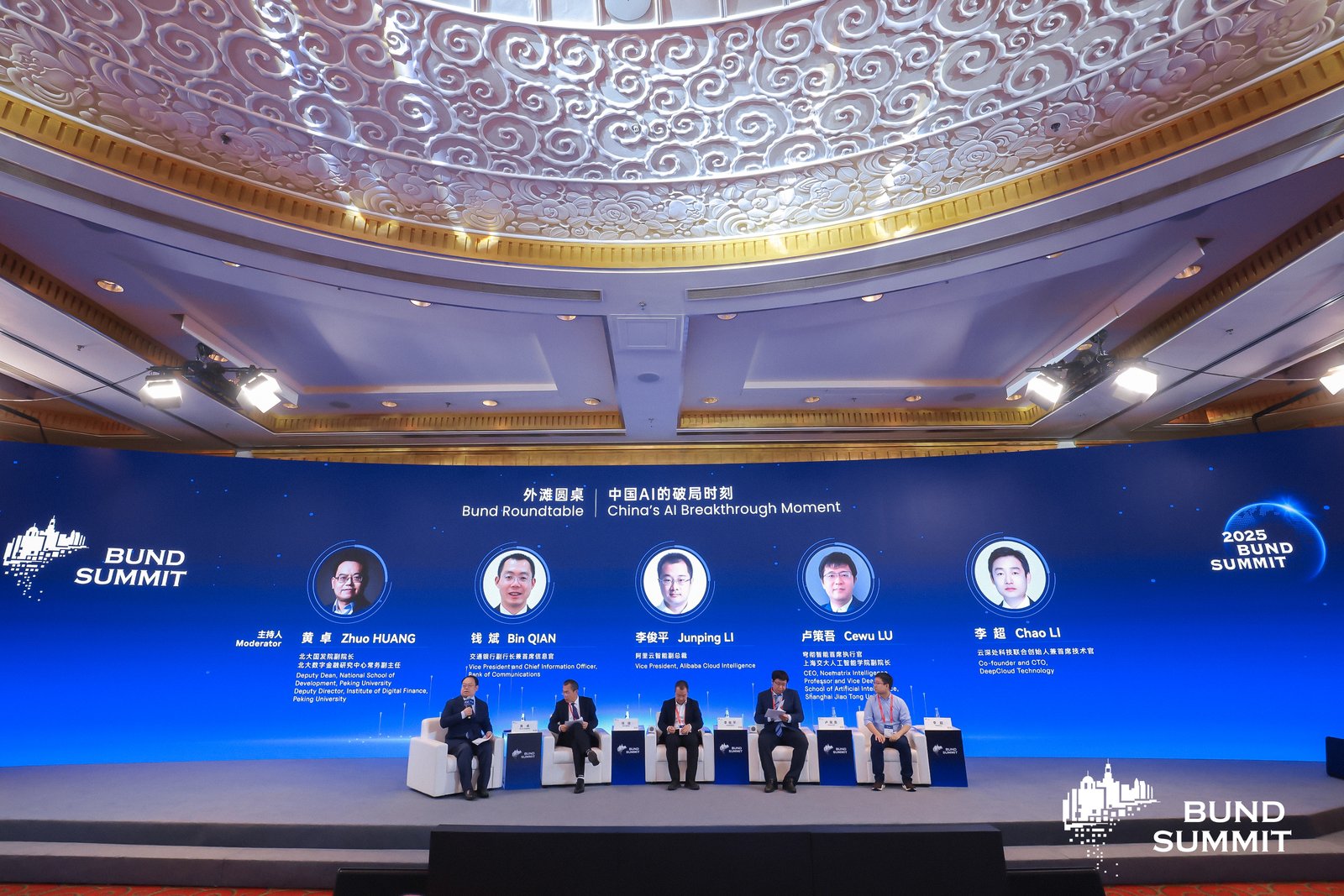
10月24日,在以"AI破局时刻:中国人工智能的新周期"为主题的圆桌对话上,北京大学国家发展研究院黄卓教授主持讨论,多位嘉宾聚焦中国人工智能 (AI)产业的最新进展、智能体生态的崛起及未来竞争格局,碰撞出一场关于中国人工智能发展方向的高水平思想交锋。 云深处科技联合创始人兼首席技术官李超则从机器人视角出发,探讨AI赋能实体经济的未来。他认为,AI大模型正在让机器人从"可编程"走向"可理解",标 志着智能体(Agentic AI)时代的到来。 "未来五年,AI将成为所有终端的基础能力,就像电力和互联网一样。"李超指出,中国在机器人算法、传感系统和本地化数据方面具有独特优势,应进一步 推动软硬件一体化创新,构建可持续的AI产业生态。 主持人黄卓在总结中指出,中国AI产业正在迎来厚积薄发的关键时刻。无论是金融、制造还是交通等领域,人工智能的深入应用正重塑生产效率与组织结 构。面对全球AI产业格局的深刻调整,中国在算力体系建设、数据要素流通、监管框架完善等方面持续发力,为构建中国特色的智能经济体系奠定了坚实 基础。 "AI的价值不仅在于技术突破,更在于制度创新与治理能力的同步提升。"黄卓强调,如何在安全可控的前提下实 ...
杭州“六小龙”,隐现38家险资!
券商中国· 2025-10-24 05:49
Core Viewpoint - The article highlights the increasing involvement of insurance capital in the investment of early-stage technology companies, particularly in the context of the "Six Little Dragons" in Hangzhou, which contrasts with the common perception that insurance funds primarily invest in mature enterprises [1][5]. Group 1: Investment Landscape - A total of 38 insurance institutions have been identified as investors behind the "Six Little Dragons," with significant participation in companies like Yushutech and Yundeshuchu Technology [3][4]. - Notable insurance companies involved include China Life, Ping An, and AIA, among others, showcasing a diverse mix of state-owned, private, and foreign insurance entities [4][5]. Group 2: Investment Mechanism - Insurance capital is primarily investing in the "Six Little Dragons" through private equity funds as limited partners (LPs), often in collaboration with government-led funds [7][8]. - The National SME Development Fund and other similar funds have been instrumental in channeling insurance capital into these technology firms [7]. Group 3: Challenges and Opportunities - Despite the growing trend, insurance capital faces challenges in terms of investment capabilities and mechanisms, particularly in identifying and evaluating early-stage technology projects [11][12]. - The unique characteristics of insurance capital, such as long-term investment horizons and stable returns, align well with the needs of high-investment, long-cycle technology innovation [10]. Group 4: Future Directions - Experts suggest that insurance asset management should enhance their research capabilities and adopt a more open approach to collaborate with top-tier investment teams in the market [12][13]. - The adoption of a PSD strategy (primary, secondary, direct) is recommended to better match the characteristics of technology investments, allowing for diversified risk and improved returns [13].

杭州“六小龙”背后隐现数十家险资机构身影
Zheng Quan Shi Bao Wang· 2025-10-22 23:07
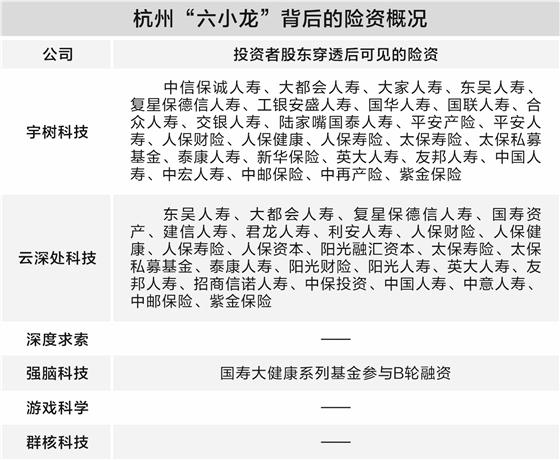
Core Insights - The article highlights the increasing involvement of insurance capital in the technology innovation sector, particularly through investments in the "Six Little Dragons" of Hangzhou, which are emerging tech companies [1] Group 1: Insurance Capital Involvement - Multiple insurance institutions have been identified as indirect investors in the "Six Little Dragons," with at least 38 insurance companies backing firms like Yushu Technology and Yundong Technology [1] - Specifically, 27 insurance companies have indirectly invested in Yushu Technology, while 25 have done so for Yundong Technology, indicating a significant presence of insurance capital in these startups [1] Group 2: Notable Investors - The article lists several prominent insurance companies involved, including CITIC Prudential Life, MetLife, and Ping An Property & Casualty, among others, showcasing a diverse range of investors [2] - For Yushu Technology, notable investors include China Life Insurance, Taikang Life, and New China Life, while Yundong Technology has similar backing from major players like China Life and Sunshine Insurance [2]
杭州“六小龙”背后隐现38家险资机构身影
Zheng Quan Shi Bao Wang· 2025-10-22 23:02
Core Insights - The article highlights the increasing involvement of insurance capital in the investment landscape of emerging technology companies, particularly in the "Six Little Dragons" of Hangzhou, which contrasts with the common perception that insurance funds primarily invest in mature enterprises [1] Group 1: Insurance Capital Involvement - Multiple insurance institutions have emerged as indirect investors in the "Six Little Dragons," participating through state-owned fund investments, indicating a shift towards technology innovation investments [1] - A total of at least 38 insurance capital institutions are linked to companies like Yushu Technology and Yundong Technology, with 27 and 25 insurance entities respectively investing in these firms [1] Group 2: Specific Investments - Yushu Technology has 27 insurance investors as indirect shareholders, while Yundong Technology has 25, with 14 insurance institutions investing in both companies [2] - The article lists various insurance companies involved, including CITIC Prudential Life, MetLife, and others, showcasing a diverse range of insurance capital participating in these technology ventures [2]
杭州“六小龙”背后隐现险资身影38家机构“借道”国资基金布局
Zheng Quan Shi Bao· 2025-10-22 17:28
Core Insights - Insurance capital is increasingly participating in the investment of early-stage technology innovation companies, contrary to the common perception that it primarily invests in mature enterprises [1][3]. Group 1: Investment Landscape - The "Six Little Dragons" in Hangzhou have attracted significant attention, with at least 38 insurance institutions identified as indirect investors in these companies [2]. - Notable insurance companies involved include MetLife, Dongwu Life, and China Life, among others, indicating a broad interest in the technology sector [2][3]. - Insurance capital is primarily investing through limited partnership (LP) structures in private equity funds, mainly those led by state-owned enterprises [3]. Group 2: Strategic Approaches - Insurance funds are leveraging government-led funds to align with policy needs and market trends, indicating a shift towards more market-driven investment strategies [3]. - The involvement of insurance capital in venture capital (VC) and private equity (PE) funds allows for targeted investments in early-stage "hard tech" companies, addressing the gap in early project identification [4]. Group 3: Challenges and Opportunities - Insurance asset management faces challenges in investment philosophy, capability, and mechanisms, particularly in comparison to top-tier VC/PE firms [5]. - Recommendations include enhancing research capabilities to understand both financial metrics and technological landscapes, fostering a competitive edge in the market [5][6]. - A proposed investment strategy involves a combination of mother funds, secondary fund shares, and direct investments to diversify risks and optimize returns in technology investments [6].