科技创新投资

Search documents
雄安未来之城场景汇股权投资基招GP
FOFWEEKLY· 2026-02-25 10:22
Group 1 - The core viewpoint of the article is the announcement by Xiong'an Future City Scene Investment Fund Co., Ltd. to publicly recruit fund management institutions to accelerate business development [1] - The fund was established on September 4, 2025, with a total scale of RMB 200 million and a long-term duration [1] - Management fees will be charged annually, with specific rates to be agreed upon in the contract and may vary based on management performance [1] Group 2 - The fund focuses on supporting advanced technological achievements and high-quality sci-tech enterprises selected from the Scene Competition [1] - It aims to create an innovative cooperation model that integrates "fund-driven + park support + policy support + professional implementation mechanism" [1] - Investment strategies may include a combination of direct investments and sub-funds, or focus on direct equity investments in regional projects, with the goal of strengthening, supplementing, and extending industrial chains to cultivate industrial clusters [1]

上海国际信托党委书记、总经理陈兵发表新春畅想
Xin Lang Cai Jing· 2026-02-12 11:37
Core Insights - The trust industry is responding to the complexities of the modern world by addressing specific human needs through innovative financial solutions [4][11] - Trust is seen as a means of instilling confidence and supporting creative destruction by investing in innovative companies and platforms [4][11] Group 1: Investment Strategies - The company has invested nearly 40 billion yuan in technology equity, with a 30% success rate in the listing and exit of self-invested tech enterprises [5][12] - Investments include domestic AI chip clusters, the first quadrivalent influenza vaccine, and advanced treatments for diabetes, bridging the gap between technological innovation and practical human needs [5][12] Group 2: Services Offered - The trust provides a range of services for entrepreneurs, including asset management, wealth inheritance, and family governance, aimed at facilitating their entrepreneurial journeys [5][12] - For ordinary individuals, the trust offers low-volatility asset management solutions and various types of trusts, such as real estate family service trusts and special needs trusts for families with disabilities [5][12][13] Group 3: Social Impact - The trust acts as a connector between individuals, businesses, and society, promoting security and stability through various trust projects, including prepayment funds and risk management services [6][13] - The company emphasizes the importance of investing in people and reform, aiming to integrate trust services into various sectors and households as it approaches its 45th anniversary [6][13]
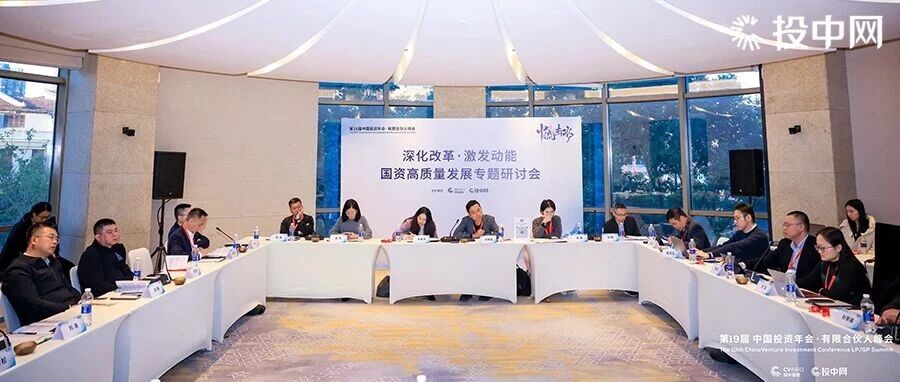
一场关于国资投早投小的“坦白局”
投中网· 2026-01-14 03:22
Core Viewpoint - The article discusses the challenges and progress of state-owned capital in early-stage technology investments, emphasizing the need for systemic reforms to enhance investment effectiveness and adaptability in the current economic environment [3][29]. Group 1: Progress in State-Owned Capital Investment - Over the past five years, state-owned capital has significantly increased its involvement in early-stage technology investments, with new funds established in cities like Shanghai and Suzhou focusing on disruptive and interdisciplinary innovations [6][11]. - The Shanghai Future Industry Fund has invested in nearly 20 sub-funds and 10 direct projects within its first year, demonstrating a proactive approach to early-stage investments [6][8]. - Various local governments have launched substantial funds, such as Suzhou's talent fund and Hangzhou's "Run Miao" fund, to support early-stage financing [8][9]. Group 2: Challenges Faced - The current investment landscape presents challenges such as mismatched evaluation mechanisms, professional capabilities, and project supply, which hinder effective early-stage investments [12][13]. - State-owned capital must balance asset preservation with strategic goals like industry cultivation and technological breakthroughs, leading to higher demands for investment decision-making [13][14]. - There is a notable shortage of professionals capable of evaluating cutting-edge technologies, which complicates the investment process [15][16]. Group 3: Recommendations for Systemic Reform - A call for improved evaluation and error tolerance mechanisms has emerged, with examples from various regions advocating for more flexible assessment criteria for technology innovation funds [19][20]. - Encouraging long-term capital market participation and ecological collaboration is essential, with suggestions to broaden funding sources to include insurance and asset management institutions [21][22]. - The integration of industry, academia, and research is crucial for enhancing talent cultivation and investment effectiveness, with examples of successful models emerging from various localities [24][25]. Group 4: Future Directions - The article concludes that the next steps for state-owned capital in technology investment lie in refining institutional frameworks to better support innovation and adaptability in investment strategies [29][30].
四川社保科创股权投资基金登记成立,出资额200亿
Zhong Guo Neng Yuan Wang· 2026-01-04 06:35
Core Viewpoint - The establishment of the Sichuan Social Security Science and Technology Innovation Equity Investment Fund Partnership aims to support key technological advancements and the transformation of scientific achievements in Sichuan's advantageous and strategic emerging industries, with a total scale of 500 billion RMB and an initial capital of 200 billion RMB [1] Group 1: Fund Details - The fund is established with a total scale of 500 billion RMB, with the first phase comprising 200 billion RMB [1] - The fund's operational scope includes private equity investment, investment management, and asset management [1] - The executing partner is Sichuan Development Science and Technology Innovation Investment Private Fund Management Co., Ltd. and Jianxin Financial Investment Private Fund Management (Beijing) Co., Ltd. [1] Group 2: Contributors - The fund is jointly funded by several entities, including the National Social Security Fund Council, Jianxin Financial Asset Investment Co., Ltd., Sichuan Science and Technology Innovation Investment Group Co., Ltd., Chengdu Industrial Investment Group Co., Ltd., Sichuan Revitalization Investment Co., Ltd., Sichuan Development Science and Technology Innovation Investment Private Fund Management Co., Ltd., and Jianxin Financial Investment Private Fund Management (Beijing) Co., Ltd. [1] Group 3: Strategic Focus - The fund will focus on supporting enterprises in tackling key core technologies, transforming scientific achievements, and industrialization [1] - It aims to foster a positive ecosystem that promotes the interaction between technology, industry, and finance [1]
掘金“国产GPU双雄”!险资积极布局硬科技赛道
Huan Qiu Wang· 2025-12-21 01:41
Group 1 - The recent IPOs of domestic GPU companies, Moore Threads and Muxi Co., have reignited market interest in the hard technology sector, with several insurance funds indirectly investing in these companies through private equity channels [1] - Muxi Co.'s IPO prospectus reveals that China Life's Shenzhen Technology Innovation Private Equity Investment Fund holds 3.417 million shares, representing 0.85% ownership post-IPO [3] - Shenzhen Hancheng Venture Capital Fund, as the seventh largest shareholder of Muxi Co., holds 12.5041 million shares, accounting for 3.13% ownership, with multiple insurance companies involved in the fund [3] Group 2 - Moore Threads has also attracted interest from insurance capital, with Harmony Health Insurance and other insurance-related private equity funds listed among its shareholders [3] - During the strategic allocation phase of Moore Threads' IPO, China Insurance Investment Fund was allocated 4.3752 million shares [3] - Insurance funds have increasingly established or participated in private equity funds focused on technology investments, such as China Pacific Insurance's 30 billion yuan fund targeting key areas in Shanghai's state-owned enterprise reform [4] Group 3 - In addition to private equity funds, insurance capital is actively participating in technology innovation investments through various models, with over 300 listed companies becoming significant shareholders of insurance funds in Q3 [5] - The manufacturing sector represents the highest proportion of these investments, with over 200 individual stocks involved and a total market value exceeding 45 billion yuan by the end of Q3 [5] - Insurance asset management institutions can invest across multiple asset classes, providing a wide range of financial tools to meet the financing needs of technology innovation industries [5]

浮盈超70倍!“GPU双雄”背后,险资多模式布局!
证券时报· 2025-12-20 02:51
Core Viewpoint - The recent IPOs of domestic GPU companies, Moore Threads and Muxi Co., have sparked significant market interest, highlighting the growing trend of investment in hard technology sectors [1]. Group 1: Investment Trends - A large insurance institution reported a return of over 70 times on its investment in Moore Threads, amounting to several tens of millions of yuan, indicating strong interest from insurance funds in the tech sector [2][5]. - Muxi Co. has emerged as a highly profitable new stock, with at least 13 insurance institutions identified as investors, showcasing the active participation of insurance capital in the tech innovation space [3]. - Insurance funds have increasingly established or participated in private equity funds focused on technology investments, with notable examples including China Pacific Insurance's 30 billion yuan fund aimed at supporting Shanghai's strategic industries [7]. Group 2: Sector Focus - Insurance capital is focusing on strategic emerging industries and high-tech manufacturing, with over 300 listed companies becoming significant shareholders, particularly in manufacturing, with a total market value exceeding 45 billion yuan [8]. - Investments are concentrated in sectors such as semiconductors, medical devices, and automotive components, reflecting a strategic alignment with national priorities in technology and innovation [8]. Group 3: Challenges and Solutions - Despite the growing involvement, challenges remain, including risk mismatch, capability gaps, and capital constraints, which need to be addressed to enhance the effectiveness of insurance capital in tech innovation [11]. - Industry experts suggest optimizing investment strategies and establishing a robust risk management framework to better align with the characteristics of tech investments [11].

浮盈超70倍!“GPU双雄”背后,险资多模式布局!
券商中国· 2025-12-20 02:10
Core Viewpoint - The recent IPOs of domestic GPU companies, Moore Threads and Muxi Co., have attracted significant market attention, highlighting the growing interest of insurance funds in the tech sector [1][2]. Group 1: Investment Trends - Insurance funds have made substantial indirect investments in the "GPU dual giants," with reports indicating that a large insurance institution has seen a return of over 70 times on its investment in Moore Threads, amounting to several tens of millions [1][3]. - Muxi Co. has emerged as a highly profitable new stock, with at least 13 insurance institutions identified as investors, including China Life and several other insurance companies [2][3]. - The strategic allocation of insurance funds in Moore Threads included significant investments from various insurance-related private equity funds, indicating a strong interest in the tech innovation space [3]. Group 2: Insurance Funds' Strategies - Insurance funds are increasingly establishing or participating in private equity funds focused on technology investments, with notable examples including China Pacific Insurance's 30 billion yuan fund aimed at supporting Shanghai's industrial modernization [4]. - The investment landscape shows that insurance funds are diversifying their strategies, engaging in both private equity and public market investments, with over 300 listed companies seeing new investments from insurance funds in the third quarter alone [4][5]. - The sectors attracting insurance investments include strategic emerging industries and high-tech manufacturing, particularly in semiconductors, medical devices, and hardware [5]. Group 3: Challenges and Solutions - Despite the growing involvement in tech innovation, insurance funds face challenges such as risk misalignment, capability gaps, and capital constraints, which need to be addressed for effective investment [6][7]. - Industry experts suggest that optimizing investment strategies and aligning asset-liability structures with the needs of new productive forces are essential for enhancing the role of insurance funds in tech innovation [7]. - Establishing a robust risk management framework that includes long-term assessments and real-time monitoring is crucial for insurance funds to navigate the high-risk nature of tech investments [7].

37万亿保险资金“耐心”护航科技创新
Xin Hua Cai Jing· 2025-12-19 05:43
Core Viewpoint - The insurance asset management industry is increasingly supporting technological innovation through optimized regulatory policies and leveraging its advantages of large scale and long-term funding [1][2]. Group 1: Investment Characteristics - Insurance funds are characterized as "patient capital" due to their large scale and stable sources, making them suitable for the long development cycles of technology innovation [2][3]. - As of the end of Q3 2025, the balance of funds utilized by insurance companies reached 37.46 trillion yuan, indicating significant capital availability for investment [2]. - Insurance asset management companies are enhancing their investment in technology innovation through equity investments, debt plans, and industrial funds [2][3]. Group 2: Investment Strategies - Insurance funds are increasingly involved in technology sectors by establishing specialized investment plans, such as the "China Life-Hu Fa No. 1 Equity Investment Plan" with an investment scale of approximately 11.8 billion yuan [2]. - The "P&C Asset-Zhongguancun Technology Leasing No. 1 Asset Support Plan" was launched to support small and medium-sized tech enterprises, covering various sectors including AI and lithium-ion battery manufacturing [2][3]. - The investment strategies include a combination of equity financing, debt financing, government subsidies, and innovative models like intellectual property pledges to meet diverse funding needs [3][6]. Group 3: Challenges and Solutions - Challenges such as risk mismatch and insufficient research capabilities are present in the insurance sector's technology investment [4][5]. - The inherent high-risk nature of technology innovation poses structural contradictions with the cautious investment principles of insurance funds [4]. - To address these challenges, insurance asset management companies are focusing on enhancing their research capabilities and developing a comprehensive investment management system tailored to the characteristics of technology innovation [6][7]. Group 4: Future Directions - Insurance asset management firms are encouraged to diversify their investment across various technology sectors, including chips, communication technology, robotics, AI, and innovative pharmaceuticals, to mitigate risks [8]. - There is a call for a shift in the traditional risk-return matching framework to accommodate the long-term nature of technology innovation, emphasizing the need for a flexible and multi-faceted investment ecosystem [7][8].
掘金“GPU双雄”险资布局硬科技版图浮出水面
Zheng Quan Shi Bao· 2025-12-18 18:47
Core Insights - The recent IPOs of domestic GPU companies, Moore Threads and Muxi Co., have reignited market interest in the hard technology sector, with insurance funds actively investing through private equity channels [1] Group 1: Investment Activity - Muxi Co. has become the "most profitable new stock" post-IPO, with at least 13 insurance institutions among its investors [2] - China Life's Shenzhen Technology Innovation Private Equity Fund holds 341.7 thousand shares of Muxi, representing 0.85% of the company post-IPO [2] - Shenzhen Hancheng Venture Capital, a significant shareholder of Muxi, has 12.5 million shares, accounting for 3.13%, with multiple insurance firms involved in its partnerships [2] Group 2: Insurance Fund Strategies - Insurance funds are increasingly establishing or participating in private equity funds focused on technology investments, such as China Pacific Insurance's 30 billion yuan fund targeting Shanghai's modernization [4] - In Q3, insurance funds became major shareholders in over 300 listed companies, with manufacturing being the most represented sector, involving more than 200 stocks and a total market value exceeding 45 billion yuan [4] - Insurance asset management can invest across various asset classes, providing comprehensive financing solutions for technology innovation [4] Group 3: Growth in Technology Investment - China Insurance Asset's technology finance investment has grown nearly 30% year-on-year, focusing on AI, computing, biomedicine, and machinery [5] - The company emphasizes its long-term advantages in AI core areas, including computing power, algorithms, and data [5] Group 4: Challenges and Recommendations - There are inherent conflicts between the cautious investment principles of insurance funds and the high-risk nature of technology innovation, necessitating a balance [6] - Recommendations include optimizing investment strategies, transforming insurance business structures, and establishing a risk control system tailored to technology investments [6]
北上广深杭最新10强私募揭晓!橡木、泽元、华澄上榜!仅3家百亿私募跻身前5
私募排排网· 2025-12-16 10:00
Core Viewpoint - The concentration of private equity firms reflects regional economic vitality and industrial upgrading potential, with significant clustering in coastal developed areas like Shanghai, Shenzhen, Beijing, Hangzhou, and Guangzhou, which together account for 74.88% of the total private equity firms with performance data [2]. Summary by Sections Private Equity Distribution - A total of 649 private equity firms have at least three products that meet performance criteria, with Shanghai, Shenzhen, Beijing, Hangzhou, and Guangzhou hosting 486 firms [2]. - Other strong economic cities like Xiamen, Chengdu, Zhuhai, Xi'an, Changsha, and Chongqing have at least five private equity firms each [2]. Performance Metrics - The average return for private equity firms in Shanghai is 27.54%, in Shenzhen is 31.97%, in Beijing is 31.14%, in Hangzhou is 37.63%, and in Guangzhou is 34.74% [3][4][6][8][16]. - The top private equity firms in Shanghai include Haisheng Fund, Shanghai Hengsui Asset, and Jiuge Investment, with the top 10 firms having a return threshold of ***% [4][5]. Shanghai Private Equity - Shanghai has 202 private equity firms with an average return of 27.54%, and 45 firms with assets over 5 billion [4]. - The top five firms in Shanghai are Haisheng Fund, Shanghai Hengsui Asset, Jiuge Investment, Longhang Asset, and Liangli Private Equity [5]. Beijing Private Equity - Beijing has 91 private equity firms with an average return of 31.14%, and 17 firms with assets over 5 billion [6]. - The top five firms in Beijing are Xiyue Private Equity, Beiheng Fund, Huacheng Private Equity, Lingjun Investment, and Yuanxin Investment [6]. Shenzhen Private Equity - Shenzhen has 112 private equity firms with an average return of 31.97%, and 18 firms with assets over 5 billion [8]. - The top five firms in Shenzhen are Qiantu Investment, Fuyuan Capital, Zhongying Investment, Rongshu Investment, and Nengjing Investment Holdings [8][11]. Hangzhou Private Equity - Hangzhou has 45 private equity firms with an average return of 37.63%, and 4 firms with assets over 5 billion [13]. - The top five firms in Hangzhou are Nongfu Private Equity, Haokun Shengfa Asset, Yunqi Quantitative, Ningbo Huansheng Quantitative, and Berkshire Investment [13][15]. Guangzhou Private Equity - Guangzhou has 36 private equity firms with an average return of 34.74%, and 2 firms with assets over 5 billion [16]. - The top five firms in Guangzhou are Jingyan Private Equity, Hainan Xiangyuan Private Equity, Sanhe Chuangying, Zeyuan Investment, and Guangzhou Shouzheng Yiqi [16][18]. Other Regions - In other regions, there are 163 private equity firms with an average return of 25.26%, with 20 firms having assets over 5 billion [19]. - The top five firms in other regions are Luyuan Private Equity, Zhihua Asset Management, Yidian Najin (Quanzhou) Private Equity, Longyin Huaxiao, and Juli Fund [19].