
华厦眼科

Search documents
华厦眼科(301267) - 2024年年度权益分派实施公告
2025-07-07 09:16
证券代码:301267 证券简称:华厦眼科 公告编号:2025-021 华厦眼科医院集团股份有限公司 2024 年年度权益分派实施公告 本公司及董事会全体成员保证信息披露的内容真实、准确、完整,没有虚假 记载、误导性陈述或重大遗漏。 特别提示: 1、根据《上市公司股份回购规则》《深圳证券交易所上市公司自律监管指 引第 9 号——回购股份》等相关规定,华厦眼科医院集团股份有限公司(以下简 称"公司"或"本公司")回购专用账户中的股份不参与本次权益分派。公司 2024 年年度权益分派以当前总股本 840,000,000 股剔除已回购股份 7,527,840 股 后的 832,472,160 股为基数,向全体股东每 10 股派发现金红利人民币 2.20 元(含 税),合计派发现金红利 183,143,875.20 元。 2、本次权益分派实施后计算除权除息价格时,以公司总股本(含回购股份, 即 840,000,000 股)折算后的每 10 股现金红利(含税)=现金分红总额/总股本(含 回购股份)*10=183,143,875.20 元/840,000,000 股*10=2.180284 元(保留六位小 数,最后一位直 ...
先进制造基金二度减持何氏眼科,历史计划未实施引何种猜想?
Sou Hu Cai Jing· 2025-07-03 08:00
Core Viewpoint - The company, He Shi Eye Hospital, is facing significant challenges, including a substantial decline in stock price and ongoing shareholder reduction pressures, amid a competitive landscape in the ophthalmology industry [1][3][7]. Company Summary - He Shi Eye Hospital's major shareholder, Advanced Manufacturing Industry Investment Fund, plans to reduce its holdings by up to 3.1061 million shares, representing 2% of the total share capital, marking the second attempt for a similar reduction [3]. - The company's stock price has dropped over 60% from its historical peak, closing at 21.82 yuan per share as of July 2, 2025 [1][3]. - Since its establishment in 1995, He Shi Eye Hospital has expanded from a small clinic to a group-based ophthalmology service provider, currently operating 127 service institutions as of the end of 2024 [6]. Financial Performance - In 2022, He Shi Eye Hospital reported a revenue of 9.55 billion yuan, a slight decrease of 0.74% year-on-year, with a net profit of 0.33 billion yuan, down 61.55% [7]. - The financial situation worsened in 2024, with revenue declining by 7.56% to 10.96 billion yuan and a net loss of 0.2739 billion yuan, marking a 143.11% year-on-year decline [7][8]. - Compared to competitors like Aier Eye Hospital, which maintained a revenue growth rate of around 20%, He Shi Eye Hospital has experienced negative growth since its IPO [7][9]. Industry Context - The ophthalmology market in China is undergoing significant changes, with the number of private eye hospitals increasing from 890 to 1,609 between 2019 and 2023, reflecting a compound annual growth rate of 15.4% [9]. - He Shi Eye Hospital's main business segments, including cataract, optical, and refractive services, have all faced revenue declines due to increased competition from larger players [9][10]. - The industry is also impacted by policy changes, such as the reform of medical insurance payment methods and centralized procurement of medical supplies, which have reduced procurement costs by 60% but also compressed profit margins [10].

医药生物行业周报:全球首个双靶点减重药上市,持续关注GLP-1赛道机会-20250630
Donghai Securities· 2025-06-30 10:50
Investment Rating - The report assigns an "Overweight" rating to the pharmaceutical and biotechnology industry, indicating that the industry index is expected to outperform the CSI 300 index by 10% or more over the next six months [1]. Core Insights - The pharmaceutical and biotechnology sector saw an overall increase of 1.60% in the week from June 23 to June 27, ranking 24th among 31 industries, underperforming the CSI 300 index by 0.35 percentage points. The current PE valuation for the sector is 27.67 times, which is at a historically low level, with a valuation premium of 124% compared to the CSI 300 [3][13][23]. - The top-performing sub-sectors during this period were medical services (2.92%), medical devices (2.10%), and pharmaceutical commerce (2.08%) [3][13]. - A significant event in the industry was the approval of the dual-target weight loss drug, Ma Shidu, by the National Medical Products Administration (NMPA) on June 27, 2025. This drug is aimed at long-term weight control for adults with obesity or overweight conditions and is the first of its kind globally [4][35][37]. Summary by Sections Market Performance - The pharmaceutical and biotechnology sector increased by 1.60% in the week of June 23-27, 2025, ranking 24th among 31 industries and lagging behind the CSI 300 index by 0.35 percentage points. The PE valuation for the sector is currently 27.67 times, with a 124% premium over the CSI 300 [3][13][23]. Industry News - The approval of Ma Shidu (Mastride Injection) by the NMPA is a key highlight, showing significant weight loss and metabolic benefits based on clinical trial results. The drug demonstrated a mean percentage change in body weight of -12.0% and -14.8% for the 4mg and 6mg doses, respectively, compared to a placebo [4][36][37]. - Other notable developments include ongoing clinical trials and advancements in GLP-1 class weight loss drugs, with several companies reporting promising results at the American Diabetes Association conference [34][37]. Investment Recommendations - The report suggests focusing on the GLP-1 class weight loss drugs and related commercial opportunities, highlighting the potential for long-acting/oral formulations and multi-target molecules. It recommends quality stocks in medical devices, traditional Chinese medicine, chain pharmacies, and medical services [6][38][39]. - Recommended stocks include Beida Pharmaceutical, Teabo Bio, Laobaixing Pharmacy, Huaxia Eye Hospital, and Nuotai Bio, with additional stocks to watch such as Kelun Pharmaceutical, Rongchang Bio, and Lijun Group [6][39].
高考结束后,准大学生们挤爆眼科门诊
3 6 Ke· 2025-06-20 09:43
Core Viewpoint - The increasing prevalence of myopia in China is driving a significant rise in the demand for myopia surgery, particularly among the youth, with a notable peak in surgeries during the summer months following the national college entrance examination [1][13]. Group 1: Market Trends - The myopia surgery market is experiencing robust growth, with a reported 1.5 surgeries per 1,000 people in China, and the average age of patients is around 24.7 years, predominantly under 20 years old [13][15]. - The market for myopia treatment has evolved beyond traditional eyewear, with myopia surgery becoming a prominent option among consumers [7][16]. - The myopia surgery market is characterized by a trend towards "quality consumption," with common procedures including corneal laser surgery and implantable contact lenses, priced between 15,000 to 30,000 yuan [15][16]. Group 2: Industry Dynamics - The demand for myopia surgery has attracted significant investment, leading to a proliferation of eye care institutions, including both chain brands and independent clinics [17][20]. - Aier Eye Hospital, a leading private eye care chain, has expanded its network from 71 to 974 facilities over nine years, highlighting the rapid growth in the sector [19]. - Other emerging players, such as Huaxia Eye Hospital and Puri Eye Hospital, are also expanding through financing and mergers, with Huaxia's assets increasing from 953 million yuan to 3.872 billion yuan from 2021 to 2024 [19]. Group 3: Service Diversification - Eye care institutions are diversifying their services to include comprehensive eye health management, from prevention to treatment and rehabilitation, thus providing consumers with more choices [22]. - Traditional eyewear retailers are also entering the myopia treatment market, leveraging their existing sales channels to offer myopia prevention and vision correction services [20]. Group 4: Challenges and Regulatory Issues - Despite the growth, the industry faces challenges, including the prevalence of misleading marketing practices and the sale of unapproved products, which can mislead consumers about the safety and effectiveness of myopia treatments [25][27][28]. - Regulatory bodies are increasingly focusing on combating false advertising in the myopia treatment sector, particularly concerning claims of "curing" myopia [28].


华厦眼科跨界联名挪瓦咖啡,发布全国首个干眼AI自测工具
Nan Fang Du Shi Bao· 2025-06-14 05:22
Core Viewpoint - Huaxia Eye Hospital Group, in collaboration with Shanghai University, Nova Coffee, and Shanghai Xin'ao Guangming Public Welfare Foundation, launched the "Eye Health Dry Eye Moisturizing Public Welfare Activity and Technology Innovation Platform Release Ceremony," introducing the first AI self-test tool for dry eye in China, named "Smart Eye Guardian" [1][2]. Group 1: AI Self-Test Tool - The "Smart Eye Guardian" mini-program is the first AI self-test tool for dry eye in China, allowing users to upload images and videos for quick, contactless preliminary diagnosis of dry eye symptoms [2][3]. - The program aims to address the increasing prevalence of dry eye, which affects approximately 360 million people in China, growing at a rate of 10% annually [3]. Group 2: Public Health Challenge - The World Health Organization reports that over 2 billion people globally spend more than 8 hours a day on screens, with about 35% experiencing dry eye symptoms [3]. - The rise of digital device usage has led to a significant increase in dry eye cases, highlighting the need for innovative solutions like the "Smart Eye Guardian" [3]. Group 3: Collaborative Initiatives - Huaxia Eye Hospital partnered with Nova Coffee to launch the "Good for Eyes" blueberry beverage, targeting the 20-45 age group, which faces higher risks of dry eye due to busy lifestyles and lack of awareness [4]. - The collaboration includes a public welfare project where 0.1 yuan from each "nourishing coffee" sold will be donated to a public welfare fund, promoting a "consumption equals public welfare" model [4]. Group 4: Community Engagement - Over 50 hospitals under Huaxia Eye Hospital will participate in eye health public welfare projects, conducting a series of dry eye care activities in the coming month [4]. - The initiative aims to fill the gap in dry eye health education and patient care, focusing on preventive measures and raising awareness among high screen-time populations [4]. Group 5: Professional Insights - Experts emphasized the importance of understanding the causes and development of dry eye, advocating for good lifestyle habits to prevent the condition [5]. - The misconception that dry eye is untreatable was addressed, with experts stating that all cases can be effectively treated once the underlying causes are identified [5].
一杯咖啡重构眼健康生态 华厦眼科跨界破局书写“向善经济”
Cai Jing Wang· 2025-06-13 10:46
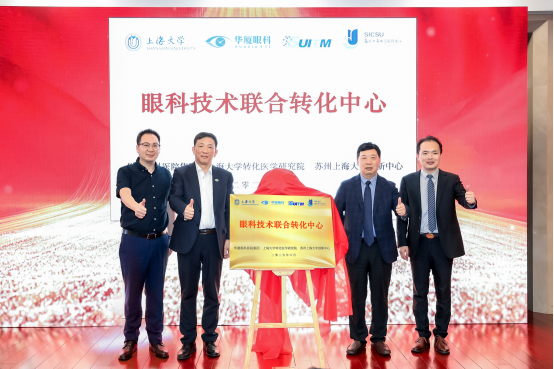
Core Viewpoint - The collaboration between Huaxia Eye Hospital Group, Shanghai University, Nova Coffee, and Shanghai Xin'ao Guangming Public Welfare Foundation aims to redefine the boundaries of ophthalmic healthcare through innovation and integration of industry, academia, and research [1][3]. Group 1: Industry Collaboration - The establishment of the "Ophthalmic Technology Joint Transformation Center" signifies a commitment to the transformation and application of ophthalmic technologies, leveraging Shanghai University's research strengths and Huaxia Eye Hospital's clinical experience [3]. - The center aims to promote deep integration of industry, academia, and research, aligning with China's health strategy to enhance technological innovation and industrial upgrading [3]. Group 2: AI and Healthcare Innovation - The launch of the "Smart Eye Guardian" AI self-test tool marks a significant advancement in dry eye screening, filling a gap in domestic intelligent screening and extending traditional hospital screening to end-users [5]. - With over 2 billion people globally using screens for more than 8 hours daily, and 35% experiencing dry eye symptoms, the tool addresses a pressing healthcare need [5]. Group 3: Public Welfare Initiatives - Huaxia Eye Hospital has initiated a public welfare project by donating 10,000 dry eye experience services to Shanghai University students and alumni, integrating professional medical services with high eye-use consumer scenarios [7]. - The collaboration with Nova Coffee aims to make public welfare services more accessible and participatory, blending corporate activities with social responsibility [7][8]. - The initiative reflects a forward-looking approach to the "big health" ecosystem, exploring innovative models that combine healthcare and consumer engagement [8].
全国爱眼月 | 华厦眼科领衔启动首次跨界活动,携手公益伙伴守护3.6亿干眼人群
Zheng Quan Zhi Xing· 2025-06-13 06:15
Core Insights - The digitalization wave is posing significant challenges to eye health, with over 2 billion people globally using screens for more than 8 hours daily, leading to a 35% incidence of dry eye syndrome [1] - The prevalence of dry eye syndrome in China is reported to be between 21% and 30%, making it a common ocular surface disease affecting public health and quality of life [3] Group 1: AI and Technological Innovations - The launch of the "Smart Eye Guardian" mini-program marks the introduction of China's first AI self-testing tool for dry eye, which analyzes user-uploaded images, videos, and symptom assessments [3] - The event also saw the establishment of the "Ophthalmic Technology Joint Transformation Center," aimed at leveraging Shanghai University’s research strengths for innovation in eye care [5] Group 2: Public Health Initiatives - The collaboration between Huaxia Eye Hospital Group and various partners aims to raise awareness about eye health, particularly among the 20-45 age group, who are at higher risk due to busy lifestyles and lack of awareness [7] - The initiative includes a "Good Eye" blueberry coffee product, where a portion of sales will be donated to public welfare projects, promoting a "consumption equals charity" model [7][10] Group 3: Future Directions and Goals - Huaxia Eye Hospital Group plans to engage over 50 hospitals in a month-long public health project focused on dry eye care, emphasizing the integration of medical expertise with consumer innovation [12] - The organization aims to transform eye health services from a reactive to a proactive approach, aligning with the Healthy China 2030 strategy to make quality eye care accessible to the general public [12]

大湾区再添医联体!眼科诊疗支付一体化落地
思宇MedTech· 2025-06-12 08:04
Core Viewpoint - The establishment of the "Greater Bay Area Health Medical Alliance" aims to address the practical pain points of cross-border medical services by leveraging specialized technology and international service systems [1][2][3]. Group 1: Pain Points in Cross-Border Medical Services - Pain Point One: Uneven distribution of resources limits cross-border accessibility, with significant differences in medical insurance systems across Guangdong, Hong Kong, and Macau [2]. - Pain Point Two: The referral process is cumbersome, lacking a unified mechanism, which complicates patient pathways and requires coordination among multiple intermediaries [3]. - Pain Point Three: The fragmented settlement system places a heavy burden on insurance, as cross-border claims rely on commercial insurance companies, leading to high costs for ordinary families [4]. Group 2: Operational Framework of the Medical Alliance - The alliance operates on a "specialty + general practice + insurance settlement" model, enhancing the service chain by integrating specialized eye care with comprehensive health management [5]. - A dual standardized referral and data-sharing platform is being developed to streamline patient journeys and reduce the risk of misdiagnosis [6]. Group 3: Research and Public Welfare Initiatives - The collaboration includes regular expert consultations and case studies to foster the integration of ophthalmology and general medicine, establishing common diagnostic standards [7]. - The "Bay Area Brightness Express" public welfare project aims to enhance community awareness of eye health and improve accessibility to medical services [7]. Group 4: Challenges to Implementation - The medical alliance faces challenges in data collaboration, patient acceptance, and the stability of insurance mechanisms, which are crucial for promoting convenience and inclusivity in cross-border healthcare [8][9][10]. - The sustainability of commercial insurance agreements remains uncertain, particularly regarding large-scale claims and unexpected medical expenses [11]. Group 5: Future Directions and Recommendations - The alliance should consider expanding its reach beyond Shenzhen and Hong Kong to other areas like Zhuhai and Foshan, while addressing regulatory and standardization challenges [12]. - Establishing data governance protocols and initiating pilot inclusive programs can help reduce settlement barriers and broaden coverage [15].

华厦眼科收盘上涨1.21%,滚动市盈率38.26倍,总市值161.62亿元
Sou Hu Cai Jing· 2025-06-09 10:14
Group 1 - The core viewpoint of the article highlights Huaxia Eye Hospital's current stock performance, with a closing price of 19.24 yuan, an increase of 1.21%, and a rolling PE ratio of 38.26 times, with a total market value of 16.162 billion yuan [1] - The average PE ratio for the medical services industry is 41.42 times, with a median of 44.32 times, placing Huaxia Eye Hospital at the 28th position in the industry ranking [1] - As of the first quarter of 2025, 18 institutions hold shares in Huaxia Eye Hospital, including 10 funds and 8 other entities, with a total holding of 192.8128 million shares valued at 3.843 billion yuan [1] Group 2 - Huaxia Eye Hospital's main business is specialized ophthalmic medical services, with key products including cataract projects, posterior segment projects, refractive projects, and comprehensive optometry projects [1] - The latest performance report for the first quarter of 2025 shows the company achieved an operating income of 1.093 billion yuan, a year-on-year increase of 11.74%, and a net profit of 150 million yuan, reflecting a year-on-year decrease of 4.00%, with a gross profit margin of 44.97% [1]
华厦眼科(301267) - 关于注销部分募集资金专项账户的公告
2025-06-06 08:28
证券代码:301267 证券简称:华厦眼科 公告编号:2025-020 华厦眼科医院集团股份有限公司 关于注销部分募集资金专项账户的公告 本公司及董事会全体成员保证信息披露的内容真实、准确、完整,没有虚假 记载、误导性陈述或重大遗漏。 一、募集资金基本情况 经中国证券监督管理委员会《关于同意华厦眼科医院集团股份有限公司首次 公开发行股票注册的批复》(证监许可〔2022〕2085 号)同意,华厦眼科医院 集团股份有限公司(以下简称"公司")首次公开发行人民币普通股(A 股)股票 6,000.00 万股,每股发行价格为人民币 50.88 元,募集资金总额为人民币 3,052,800,000.00 元,扣除不含税的发行费用人民币 284,307,454.70 元,实际募集 资金净额为人民币 2,768,492,545.30 元。容诚会计师事务所(特殊普通合伙)对 募集资金到位情况进行了审验,并出具了《验资报告》(容诚验字[2022]361Z0068 号)。 | | 门厦禾支行 | | | | --- | --- | --- | --- | | 6 | 兴业银行股份有限公司厦门分 | 1296801001012086 ...