
华大基因

Search documents
松禾资本厉伟:做创业者身边最坚定的“时间合伙人”
Shang Hai Zheng Quan Bao· 2025-11-05 18:41
Core Insights - The article emphasizes the importance of patience in technology investment, highlighting that successful investment requires a long-term commitment and understanding of the industry dynamics [2][4][9] Investment Philosophy - The founder of Songhe Capital, Li Wei, believes that technology investment is not a gamble but requires professionalism, courage, and patience [4][9] - Professionalism is crucial as different technology sectors require specialized knowledge and expertise [4] - Courage is necessary to support companies through their non-linear growth paths, which may deviate from initial expectations [4] - Patience is essential, as high-tech companies often take years to mature, with some requiring over a decade from angel investment to IPO [4][9] Investment Focus - As of September 2025, Songhe Capital has invested in over 200 technology companies, including notable firms like SenseTime, Aibee, and Defang Nano [2][4] - The investment strategy focuses on three main areas: digital technology centered on artificial intelligence, precision medicine based on genetic testing, and breakthroughs in innovative materials [9] Entrepreneurial Support - Li Wei views investors as companions to entrepreneurs, providing support and guidance throughout different stages of a company's growth [5][7] - The article illustrates the collaborative relationship between Songhe Capital and its portfolio companies, such as BGI Genomics, where the firm provided crucial funding and resources to overcome challenges [3][6] Market Trends - The article discusses the long-term nature of technological innovation, emphasizing that sectors like information technology, optical chips, aerospace, synthetic biology, and artificial intelligence are characterized by extended development cycles [9] - Li Wei stresses the need for Chinese companies to master hard technology to compete globally, aligning investment strategies with national priorities and macro trends [9]



今日共62只个股发生大宗交易,总成交24.18亿元
Di Yi Cai Jing· 2025-11-03 09:51
Summary of Key Points Core Viewpoint - The A-share market experienced significant block trading activity on November 3, with a total transaction value of 2.418 billion yuan, indicating robust trading interest in select stocks [1]. Group 1: Trading Activity - A total of 62 stocks underwent block trading, with the top three by transaction value being Gongniu Group (683 million yuan), Guangqi Technology (324 million yuan), and Zhongwen Online (184 million yuan) [1]. - Among the stocks traded, 6 were sold at par value, 2 at a premium, and 54 at a discount [1]. Group 2: Price Movements - The stocks with the highest premium rates were Huahong Company (1.87%) and Hangyang Co. (0.26%) [1]. - The stocks with the highest discount rates included Zizhong Palace (28.92%), XGIMI Technology (26.63%), and Yingtai Biology (21.72%) [1]. Group 3: Institutional Buying and Selling - The top stocks purchased by institutional special seats included Zhongwen Online (184 million yuan), Kesi Co. (106 million yuan), and Baiwei Storage (49.518 million yuan) [1]. - The leading stocks sold by institutional special seats were Longqi Technology (13.422 million yuan) and Feima International (2.67 million yuan) [2].
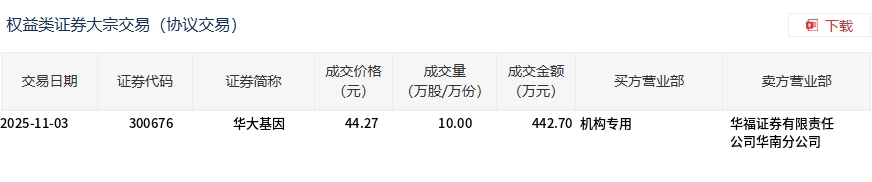
华大基因今日大宗交易折价成交10万股,成交额442.7万元
Xin Lang Cai Jing· 2025-11-03 08:52
Group 1 - On November 3, BGI Genomics conducted a block trade of 100,000 shares, with a total transaction value of 4.427 million yuan, accounting for 1.37% of the total trading volume for the day [1] - The transaction price was 44.27 yuan per share, which represents a 10% discount compared to the market closing price of 49.19 yuan [1] - The buyer of the block trade was an institutional investor, while the seller was Huafu Securities Co., Ltd. South China Branch [2]
这些未来产业如何助力中国下一个五年?
Huan Qiu Wang· 2025-11-02 04:51
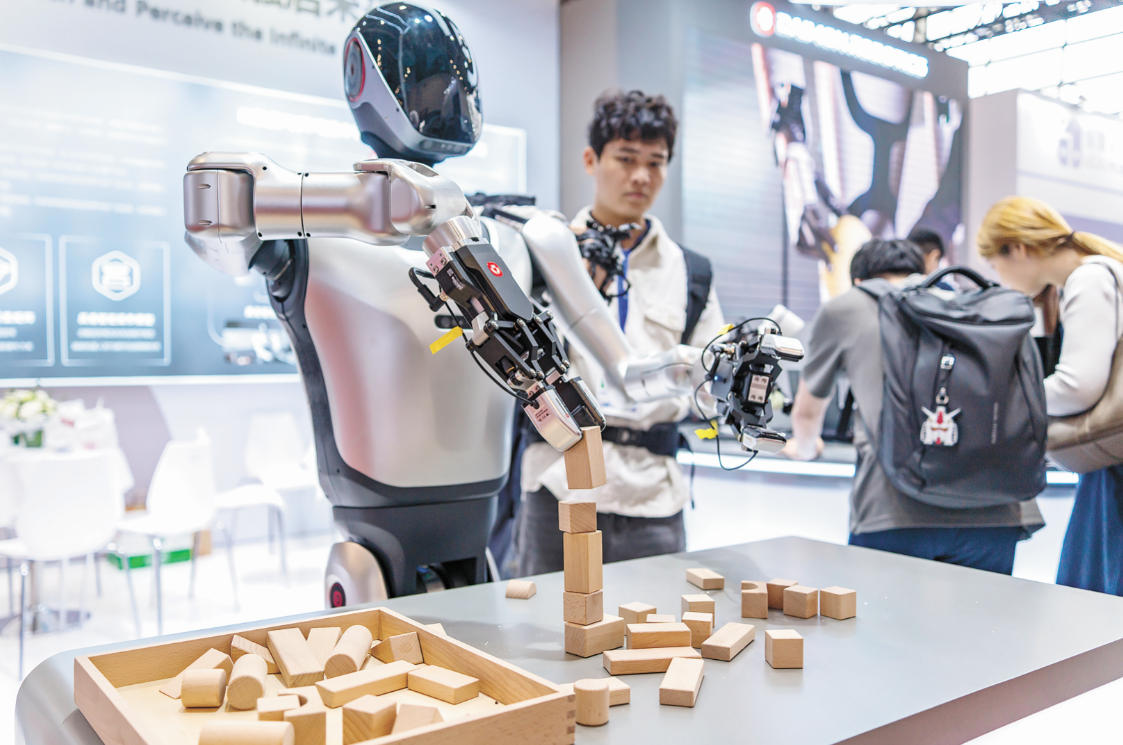
Core Insights - The article discusses China's strategic focus on emerging industries as outlined in the 14th Five-Year Plan, emphasizing the development of sectors like quantum technology, bio-manufacturing, and embodied intelligence as new economic growth points [1][12]. Group 1: Embodied Intelligence - The embodied intelligence industry in China is rapidly advancing, transitioning from technology validation to industrialization and ecosystem development [3]. - Significant breakthroughs have been made in algorithms, operating systems, and low-power computing platforms, enabling robots to interact more naturally with the physical world [3]. - The next five years are expected to see humanoid robots evolve into a platform for various applications, although widespread household adoption remains unlikely due to cost and reliability challenges [4][5]. - The industry is anticipated to drive innovation in manufacturing, leading to a shift from automation to self-organization and cognitive manufacturing [5]. Group 2: Quantum Technology - Quantum technology is recognized as a critical component of future industrial development, with applications in quantum computing, communication, and measurement [6][8]. - Global competition in quantum computing is intensifying, with over 300 companies emerging in the field, and significant investments being made by various countries [8][10]. - China is making strides in quantum technology, with initiatives to create a comprehensive ecosystem that includes hardware, software, and applications [10][11]. - The potential applications of quantum computing span various industries, including finance, pharmaceuticals, and logistics, with ongoing collaborations yielding promising results [9][10]. Group 3: Bio-Manufacturing - Bio-manufacturing is positioned as a future industry with the potential to rival the scale of the electric vehicle sector, contributing significantly to China's GDP by 2049 [12][14]. - The sector is expected to drive innovation across multiple fields, including agriculture, healthcare, and environmental sustainability [15][16]. - China's advancements in life sciences and biotechnology are noted, with the potential for the country to lead in global gene sequencing and biomanufacturing [15][16]. Group 4: 6G Technology - The 6G industry is projected to become a new economic growth point, with expectations of a market size exceeding $150 billion by 2030, and China aiming for a significant market share [17][19]. - 6G technology is seen as foundational for the development of various emerging industries, including aerospace and brain-computer interfaces [19]. - Despite China's advantages in deployment and engineering talent, challenges remain in chip technology, which is crucial for 6G development [20].
金融如何助力企业走出内卷?专家建议资本投早投小、投硬科技
Nan Fang Du Shi Bao· 2025-10-30 12:08
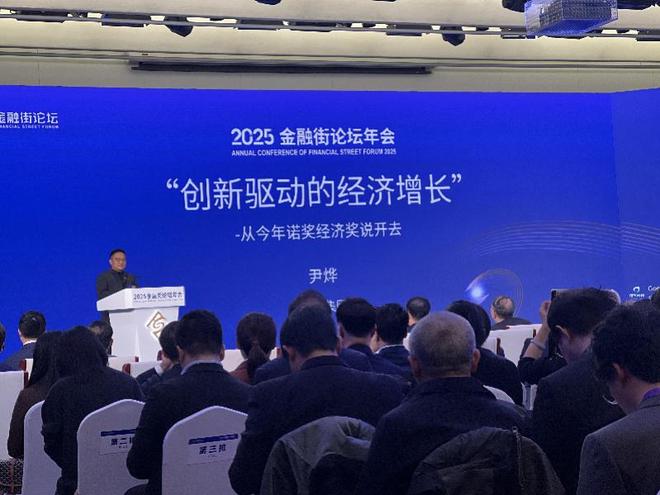
Group 1 - The forum on financial empowerment of the private economy attracted significant attention, reflecting the rising interest in private enterprises following high-profile discussions and the introduction of the Private Economy Promotion Law [1][4] - Experts discussed the challenges faced by private enterprises, particularly the issue of "involution" driven by price wars, and emphasized the need for innovation as a solution [4][5] - The importance of creating a conducive policy environment for innovation was highlighted, with a focus on finding a "golden balance" in competition to stimulate innovation and prevent monopolistic practices [5][6] Group 2 - Financial support is crucial for the growth of private enterprises, with data showing that nearly two-thirds of A-share listed companies are private, and private enterprise loan growth has outpaced average loan growth by 1.1 percentage points over the past five years [7][8] - The role of venture capital and early-stage investments in helping private enterprises navigate challenges and foster innovation was emphasized, with suggestions for policies to encourage early and small investments in hard technology [8][9] - Recommendations were made for establishing a technology finance support system led by enterprises, including the use of long-term special government bonds to create patient capital for strategic emerging industries [8][9]
华大基因徐茜入选2025 ALB China 十五佳总法律顾问,以法务智慧护航生命科学创新
Jing Ji Guan Cha Wang· 2025-10-30 03:50
Core Insights - The article highlights the recognition of Xu Qian, the Vice President and General Counsel of BGI Genomics, as one of the "Top 15 General Counsels in China" by Asian Legal Business, reflecting her outstanding contributions in legal exploration, technological innovation, and global compliance [1][4]. Group 1: Recognition and Awards - The "Top 15 General Counsels in China" list has been published for ten consecutive years, aiming to identify outstanding general counsels who demonstrate foresight, leadership, and significant influence in complex environments [4]. - Xu Qian's inclusion in the list is a testament to her exceptional legal skills and strategic understanding of business, which have redefined the role of general counsel and expanded its value boundaries [4]. Group 2: AI and Legal Compliance - BGI Genomics is integrating AI technology into its research platforms, data analysis, and clinical applications, enhancing diagnostic efficiency while ensuring data sovereignty and compliance [5]. - The company has launched innovative products, such as the "Hereditary Tumor Variation Knowledge Base," addressing gaps in domestic tumor precision diagnosis data products, supported by a robust legal compliance team [5]. Group 3: Globalization and Compliance Strategy - BGI Genomics is advancing its globalization strategy by establishing precision medicine laboratories and joint ventures in key overseas markets, promoting Chinese technology and standards internationally [6]. - Under Xu Qian's leadership, the company has developed an international compliance system, becoming the first in China to obtain ISO37301 compliance management certification, which enhances its global strategy and sets a positive example for industry compliance standards [6]. Group 4: Role Evolution of Legal Team - Xu Qian has transformed the legal team's role from risk managers to drivers of technological innovation and global strategy, emphasizing the critical value of legal expertise in the high-quality development of the life sciences sector [7]. - The legal team is expected to continue its focus on cutting-edge legal issues, providing strong legal support for corporate innovation and industry compliance upgrades [7].

为人类健康与可持续发展贡献科研力量
Ren Min Wang· 2025-10-28 01:12
Core Insights - The 20th International Genomics Conference (ICG) was held in Hangzhou, Zhejiang Province, focusing on the theme "The Future of Omics and Artificial Intelligence (AI)" with over 100 experts from 19 countries participating [1][2] - This year's conference marks the 25th anniversary of the completion of the Human Genome Project, highlighting the transformative impact of genomics technology on fields such as medicine and agriculture [1] - The ICG aims to promote global collaboration in omics research and the bio-industry, serving as a vital bridge for advancing life sciences [1] Industry Developments - Scholars shared insights on various cutting-edge topics, with notable contributions from prominent figures such as Yang Huanming, George Church, and Wang Jian, focusing on the integration of AI with omics and disease prevention strategies [2] - Discussions included the construction of the "Healthy Zhejiang" cohort by Zhejiang University and calls for enhanced international cooperation in the field of genomics [2] - A special "Science Carnival" was organized for youth, aimed at making advanced scientific research accessible and inspiring a passion for scientific exploration among young people [2]
德州|德州打造千亿元级 “北方生物谷”
Da Zhong Ri Bao· 2025-10-27 01:15
Core Insights - The article discusses the development of a billion-level "Northern Bio Valley" in Dezhou, focusing on the growth and innovation in the biotechnology industry [1][3][6] Industry Overview - Dezhou is concentrating on five key areas within the biotechnology sector: biomanufacturing, biopharmaceuticals, bio-agriculture, biomedical engineering, and biomass energy [3] - The city has established a clear layout and strong innovation initiatives to promote high-end, clustered, and international development of the industry [3] Current Developments - The biomanufacturing industry in Dezhou has seen significant growth, with 153 enterprises in the sector and projected revenue of 40.4 billion yuan in 2024 [3] - Eight companies in the biotechnology sector have achieved over 1 billion yuan in output value, while 41 companies have surpassed 100 million yuan [3] Innovation and Collaboration - Innovation is identified as the core driver for overcoming challenges and seizing development opportunities in the biotechnology industry [4] - Dezhou has established numerous national and provincial innovation platforms and maintains long-term collaborations with over 40 universities and research institutions [4] Product Development - Companies like Baolingbao Biological Co., Ltd. are developing new products such as erythritol, with a production capacity of 30,000 tons per year, and exporting to over 70 countries [4] Strategic Initiatives - Dezhou is implementing mechanisms for regular roadshows and results transformation to connect investors, entrepreneurs, and industry experts [5] - The city is also exploring the establishment of a specialized fund for the biotechnology industry and has formed an association for high-quality development in the sector [5] Future Outlook - Dezhou aims to focus on cutting-edge areas such as synthetic biology, gene cell therapy, and AI pharmaceuticals, while continuing to optimize its industrial layout and attract leading enterprises [6]
中央定调六大未来产业,这些城市已抢先布局
第一财经· 2025-10-26 02:45
Core Viewpoint - The article emphasizes the importance of emerging industries such as quantum technology, biomanufacturing, hydrogen energy, nuclear fusion energy, brain-computer interfaces, and embodied intelligence as new economic growth points in China's future development strategy [3][4]. Quantum Technology - Quantum technology is identified as a core area of the new technological revolution, with Hefei, Beijing, and Shanghai forming the "first tier" in terms of enterprise and patent applications [6][7]. - Hefei leads the domestic quantum industry, ranking second globally after San Francisco, with 93 quantum enterprises and over 2000 related patents [7]. - Beijing focuses on foundational technology breakthroughs, leveraging its dense research resources, and aims to build a trillion-yuan industry cluster by 2030 [7][8]. - Shanghai is concentrating on neutral atom quantum computing and has established key laboratories to drive innovation [8]. Biomanufacturing - Shanghai, Beijing, Shenzhen, and Tianjin are the top four cities in biomanufacturing competitiveness, with Shanghai's industry scale expected to exceed 1 trillion yuan by 2025 [10][11]. - Shenzhen has established a national biomanufacturing innovation center and is a hub for new enterprises in synthetic biology [11]. - Tianjin is leveraging its chemical industry base to develop biomanufacturing projects, attracting multinational companies [11]. Hydrogen and Nuclear Fusion Energy - Hydrogen and nuclear fusion energy are highlighted as clean energy "dual engines," with Beijing and Shanghai leading in technology and infrastructure development [12][13]. - Beijing plans to have 1,200 hydrogen fuel cell buses and 35 hydrogen stations by 2025, while Shanghai aims for its hydrogen industry to reach international leading levels by 2035 [13]. - Hefei is making significant advancements in nuclear fusion technology, participating in key international projects [14]. Brain-Computer Interfaces - The brain-computer interface (BCI) market in China is projected to grow from 3.2 billion yuan in 2024 to 5.58 billion yuan by 2027, with Shanghai, Beijing, and Shenzhen as the leading cities [15][16]. - Shanghai is developing a comprehensive BCI ecosystem and has launched the first BCI industrial cluster [16]. - Beijing is focusing on non-invasive BCI technologies, while Shenzhen is applying BCI in various fields, including education and gaming [17]. Embodied Intelligence - Embodied intelligence, represented by humanoid robots, sees Beijing, Shenzhen, Shanghai, and Hangzhou as the leading cities in technology and industry [18][19]. - Beijing aims to achieve significant technological breakthroughs and establish a robust industrial cluster by 2027 [19]. - Shenzhen is the manufacturing hub for humanoid robots, with a goal to support over 1,200 related enterprises by 2027 [19][20]. - Shanghai is working on a complete ecosystem for robotics, targeting a core industry scale of over 50 billion yuan by 2027 [20]. 6G Technology - 6G technology is being developed with Beijing as a core hub for standard-setting and innovation, aiming to create a testing environment by 2026 [21][22]. - Shenzhen is integrating 6G with AI and plans to establish a low-altitude economy demonstration zone [21][22]. - Nanjing is focusing on terahertz communication breakthroughs and aims for a 300 billion yuan industry value within five years [22][23].

中央定调六大未来产业,这些城市已抢先布局
Di Yi Cai Jing Zi Xun· 2025-10-26 01:13
Core Insights - The National Development and Reform Commission emphasizes the development of emerging pillar industries, including quantum technology, biomanufacturing, hydrogen energy, nuclear fusion energy, brain-computer interfaces, embodied intelligence, and 6G technology as new economic growth points [1] Quantum Technology - Hefei, Beijing, and Shanghai form the "first tier" in quantum technology, leading in enterprise and patent applications [2] - Hefei ranks first in China's quantum industry and second globally, with significant achievements in quantum computing [2] - Beijing focuses on foundational technology breakthroughs, while Shanghai specializes in neutral atom quantum computing [3] Biomanufacturing - Shanghai, Beijing, Shenzhen, and Tianjin are the top four cities in biomanufacturing competitiveness [4] - Shanghai's biomanufacturing industry is projected to exceed 1 trillion yuan by 2025, focusing on synthetic biology and cell therapy [5] - Shenzhen has established a national biomanufacturing innovation center, attracting a significant number of new enterprises [6] Hydrogen and Nuclear Fusion Energy - Beijing and Shanghai lead in hydrogen and nuclear fusion energy development, with various cities forming differentiated layouts [7] - Beijing plans to establish a comprehensive hydrogen energy infrastructure and has made breakthroughs in hydrogen fuel cell catalysts [8] - Shanghai aims to develop a leading hydrogen energy industry by 2035, with significant advancements in fuel cell vehicles [8] Brain-Computer Interfaces - Shanghai, Beijing, and Shenzhen are the leaders in the brain-computer interface market, which is expected to grow significantly by 2027 [9] - Shanghai has initiated a comprehensive layout for brain-computer interface technology, while Beijing focuses on non-invasive applications [10] Embodied Intelligence - Beijing, Shenzhen, Shanghai, and Hangzhou are leading in the embodied intelligence sector, particularly in humanoid robotics [12] - Beijing has established a humanoid robot innovation center, while Shenzhen is a manufacturing hub with a significant number of related enterprises [12][13] 6G Technology - Beijing, Shenzhen, Nanjing, and Shanghai are collaborating to establish a future network through 6G technology [14] - Beijing is a core hub for 6G standard formulation, while Shenzhen has a complete communication industry chain [15] - Nanjing has made breakthroughs in 6G terahertz frequency, aiming to become a 6G city with significant industrial output [16]