SK Hynix

Search documents
CES 展会及科技行业更新-Greater China Semi and Tech - Nomura CES conference and tech industry update
2026-01-13 11:56
Summary of Key Points from the Conference Call Industry Overview - The conference focused on the technology sector, particularly the semiconductor and memory markets, highlighting the ongoing supply tightness and its implications for various applications, especially in AI and cloud computing [1][2]. Core Insights - **Memory Supply and Pricing**: There is a significant surge in memory prices, with Sandisk's NAND for enterprise SSDs expected to increase by over 100% quarter-on-quarter in the March quarter [2]. This price increase is driven by strong demand and supply constraints in the memory market [5]. - **AI Demand Divergence**: The demand for cloud AI applications is anticipated to grow significantly, while non-cloud AI applications may experience a decline. This divergence is attributed to uneven supply distribution favoring cloud AI [1]. - **Context Storage as a Bottleneck**: Jensen Huang from nVidia emphasized that as AI models grow, the retention and movement of context data will become critical, shifting the focus from just computing performance (FLOPS) to how context data is managed [3]. - **Incremental NAND Demand**: The introduction of the Inference Context Memory Storage Platform (ICMSP) by nVidia could lead to an incremental NAND demand of approximately 60EB in 2026, representing 10-20% of enterprise SSD demand [4]. Market Sentiment - Investor sentiment is increasingly optimistic regarding the memory upcycle, with a bullish outlook not only on DRAM but also on NAND, which was previously viewed with skepticism [5]. - The semiconductor wafer spot prices are recovering, with expectations of a 5-10% rebound in prices for certain memory makers in the first half of 2026 [14]. Supply Chain Dynamics - **CPO Demand**: The demand for CPO (Chip-on-Panel) version Spectrum-X switches is expected to be strong, with estimates suggesting 2-6 switches per Vera Rubin rack, indicating a positive outlook for the supply chain, particularly for companies like Himax and its partners [8]. - **Competitive Landscape**: Largan is partnering with TSMC to provide future CPO solutions, potentially positioning itself as a competitor to Himax and FOCI in the next generation of CPO technology [9]. Concerns and Risks - There are concerns regarding inventory restocking in non-cloud AI applications, particularly in the smartphone and PC markets, which may lead to weaker demand than previously expected. Global smartphone shipments are projected to decline by 2% year-on-year, with some companies forecasting declines of 10-15% [18]. Conclusion - The technology sector, particularly in semiconductors and memory, is experiencing significant changes driven by AI demand and supply chain dynamics. While there is optimism regarding memory pricing and demand, potential risks in non-cloud AI applications and inventory management could impact overall market performance [1][5][18].

亚洲经济:亚洲 AI 敞口图谱-Asia Economic Monthly_ Mapping Asia‘s AI exposure
2026-01-13 11:56
Summary of Key Points from the Conference Call Industry Overview - The focus of the conference call is on the **AI industry** in Asia, particularly how the **US AI capital expenditure (capex) boom** is benefiting various Asian economies beyond just leading tech hubs [8][41]. Core Insights and Arguments - **AI Capex Impact**: The rising US AI capex is positively impacting Asia through multiple channels, primarily through increased exports of chips and servers, investments in data centers, and consumption effects [9][12][40]. - **Export Channel Dominance**: The export channel is the most significant, with Asian economies benefiting from higher demand for AI-related products, including advanced chips and semiconductor equipment [9][12]. - **Investment Surge**: Asian tech firms are experiencing a surge in capital expenditure, with 2025 YTD capex exceeding full-year 2024 levels by **23.9%**, reaching **USD 123.8 billion** [34]. - **Data Center Growth**: There is a notable increase in data center construction across Asia, with **3.2 GW** of capacity under construction and projections indicating operational capacity will double to **26.1 GW** by 2028 [35]. Country-Specific Insights - **Taiwan**: Ranks highest in AI exposure due to its dominance in semiconductor manufacturing, particularly through TSMC, which significantly benefits from AI demand [15][18]. - **South Korea**: Also ranks very high, benefiting from its leadership in memory production, with DRAM prices rising by approximately **40%** and NAND prices by **30%** quarter-on-quarter in Q4 2025 [25]. - **China**: While benefiting from a self-contained AI ecosystem, it faces challenges due to export controls. The AI industry in China was valued at **USD 126.7 billion** in 2024, growing **24%** year-on-year [18]. - **Southeast Asia**: Countries like Singapore, Malaysia, and Vietnam are gaining from their roles in the AI supply chain, particularly in assembly and data center operations [41]. Economic Forecasts - **China's GDP Growth**: Forecasted at **4.3%** for 2026, below consensus expectations, with a significant divide between the export and property sectors [53]. - **Inflation in China**: Expected to remain low, with CPI inflation projected at **0.4%** in 2026, up from **0.0%** in 2025 [55]. - **Capex Projections**: Consensus projects a **15%** rise in capex to **USD 139 billion** in 2026, indicating sustained momentum in tech investments [34]. Additional Important Insights - **AI Trade Exposure**: Asia contributes to nearly two-thirds of global AI trade growth, with Taiwan and Korea leading in AI-enabled goods exports [21][24]. - **Wealth Effects**: The valuations of AI-exposed firms in tech-heavy economies are rising, leading to significant equity wealth effects for investors [12]. - **Risks**: The evolution of US-China relations, domestic policy stimulus, and the performance of the property market pose significant risks to the economic outlook [57]. This summary encapsulates the key points discussed in the conference call, highlighting the impact of AI on various Asian economies, the specific benefits to leading countries, and the broader economic implications.
Wall Street Breakfast Podcast: Trump Targets Iran Trade
Seeking Alpha· 2026-01-13 11:48
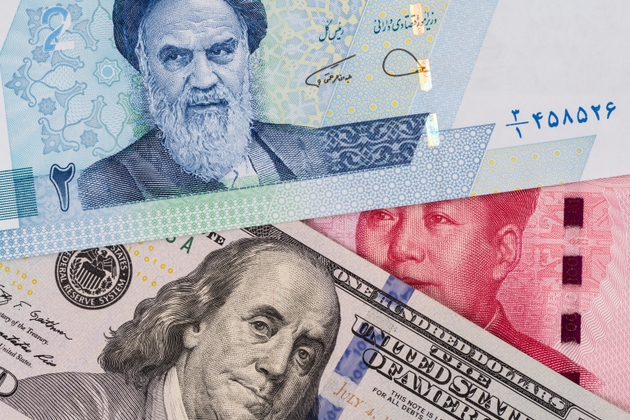
Trade and Tariffs - President Trump announced a 25% tariff on goods from any country conducting business with Iran, impacting major trading partners like China, the UAE, India, and Turkey [3][4] - China is identified as the top global importer of Iranian crude, which may face increased costs due to the new tariffs [3] Federal Reserve and Interest Rates - Federal Reserve Bank of New York President John Williams indicated there is no urgency for a fourth consecutive interest rate cut, with the next meeting scheduled for the end of the month [5][6] - The Federal Open Market Committee (FOMC) has already reduced the federal funds rate by a cumulative 75 basis points last year, moving towards a neutral monetary policy stance [6] Aldi's Expansion Plans - Aldi plans to open over 180 new stores across 31 states by the end of 2026, celebrating its 50th anniversary in the U.S. [7][8] - This expansion will increase Aldi's total U.S. store count to nearly 2,800, with a target of 3,200 stores by the end of 2028 [8] - Aldi is also expanding its distribution network by 20% with new centers planned in Florida, Arizona, and Colorado over the next three years [9]


Wall Street Breakfast Podcast: Trump Targets Iran Trade With New Tariffs
Seeking Alpha· 2026-01-13 11:48
Trade and Tariffs - President Trump announced a 25% tariff on goods from any country conducting business with Iran, affecting major trading partners like China, the UAE, India, and Turkey [3][4] - China is identified as the top global importer of Iranian crude, which may face increased costs due to the new tariffs [3] Federal Reserve and Interest Rates - Federal Reserve Bank of New York President John Williams indicated there is no urgency for a fourth consecutive interest rate cut, with the next meeting scheduled for the end of the month [5][6] - The Federal Open Market Committee (FOMC) has already reduced the federal funds rate by a cumulative 75 basis points last year, moving towards a neutral monetary policy stance [6] Aldi's Expansion Plans - Aldi plans to open over 180 new stores across 31 states by the end of 2026, celebrating its 50th anniversary in the U.S. [7][8] - This expansion will increase Aldi's total U.S. store count to nearly 2,800, with a target of 3,200 stores by the end of 2028 [8] - Aldi is also expanding its distribution network by 20% with new centers planned in Florida, Arizona, and Colorado over the next three years [9]

Mint Explainer | India invited to Pax Silica: What it could mean for AI, chip supply chains
MINT· 2026-01-13 10:32
Core Insights - The US is inviting India to join Pax Silica, a strategic initiative aimed at securing the global silicon supply chain in the AI era [1][2] Group 1: Overview of Pax Silica - Pax Silica is designed to identify trusted partner nations to enhance AI efforts and create a robust global supply chain for silicon and related materials [3] - The initiative includes countries such as the US, Japan, South Korea, Singapore, the Netherlands, Israel, UAE, the UK, and Australia, with India potentially joining [3] - Each participating nation is expected to contribute unique strengths in areas like critical minerals, advanced manufacturing, semiconductor capability, and AI innovation [3] Group 2: Importance for India - India's participation in Pax Silica would signify its role in shaping future supply chains for AI and advanced computing [7] - The Indian government emphasizes the strategic importance of being involved in critical mineral security discussions [8] - India's existing initiatives in AI and semiconductors align with Pax Silica's objectives, including the India AI Mission with a ₹10,372 crore budget and the India Semiconductor Mission with a ₹76,000 crore allocation [9] Group 3: India's Technological Landscape - India hosts over 2,975 global capability centers (GCCs), employing nearly 1.9 million professionals, highlighting its significant role in the global tech ecosystem [10][11] - Major multinational investments, such as Microsoft's $17.5 billion investment in AI and cloud infrastructure in India, further strengthen its positioning [11] Group 4: Geopolitical Context - Pax Silica reflects a strategic shift where economic tools are increasingly used for geopolitical ends, particularly in the context of reducing dependence on China [12][13] - China's dominance in critical supply chains, especially in rare earth materials, has prompted India to support domestic manufacturing initiatives [14] - India's potential contributions to Pax Silica include its large market for new technology and its integration into the global tech ecosystem [15]


SK Hynix to invest $13 billion in new plant amid memory chip shortage
CNBC· 2026-01-13 02:36
Core Viewpoint - SK Hynix is investing 19 trillion Korean won ($12.9 billion) to build a new advanced packaging plant to meet rising demand driven by the artificial intelligence boom [1][2]. Company Summary - The new fabrication facility will be located in Cheongju, South Korea, with construction starting in April and completion targeted for the end of 2027 [2]. - SK Hynix is a leading global producer of memory chips and is at the forefront of high-bandwidth memory (HBM) technology, which is essential for AI processors, including those from Nvidia [2][3]. Industry Summary - The HBM market is projected to grow at a compound annual growth rate of 33% from 2025 to 2030, driven by increasing global AI competition [3]. - The shift towards AI demand has strained supplies of conventional memory chips, raising concerns about potential shortages affecting the broader electronics industry [3]. - In response to rising demand, memory chip manufacturers, including SK Hynix and Samsung Electronics, are expanding production capacity [4].
把握全球增长机遇-AI 在亚洲供应链的更广泛深度渗透_ Seizing the Global Growth Opportunity_ A broader and deeper AI presence in the Asian supply chain
2026-01-13 02:11
Summary of Key Points from the Conference Call Industry Overview - Focus on the Asia technology (hardware) sector, particularly the AI supply chain, as a priority investment area for 1H26 due to its significant influence on earnings growth amid concerns over smartphone/PC demand and auto production recovery [2][12] Core Themes and Stock Recommendations 1. **AI Supply Chain Investment**: - Emphasis on investing in the AI supply chain, which is expected to drive earnings growth despite potential slowdowns in other sectors [2][12] - Anticipation of clearer benefits from AI for earnings in 2026, with no signs of slowdown heading into 2027 [12] 2. **Under-the-Radar AI Themes**: - Five notable themes identified: 1. **Power Consumption**: Opportunities in power supply, power rack products, capacitors, and power semiconductors. Companies to watch include Delta Electronics, Panasonic HD, Murata Mfg., Taiyo Yuden, and Renesas Electronics [6][25] 2. **Data Transmission**: Advancements in large-scale data transmission technologies, with companies like Fujikura and Mitsubishi Electric highlighted [6][25] 3. **Niche Components**: Price stabilization and increases in demand for components like MLCCs and substrates, with key players including Murata Mfg. and SEMCO [6][25] 4. **Physical AI Integration**: Companies like Hitachi and Mitsubishi Electric are leading in embedding AI into industrial applications [6][27] 5. **Software/Services Disruption**: Generative AI's potential to improve productivity in Japan's software industry, with Fujitsu and NEC as key players [6][27] 3. **High-Profile Sub-Sectors**: - Continued growth in foundry, memory, semiconductor production equipment, AI servers, and edge AI, with recommended stocks including TSMC, Samsung Electronics, and Hon Hai [30][31] Market Dynamics and Risks - **Top-Down Risks**: - Concerns regarding valuations, implementation risks, over-investment, monetization challenges, and funding sources, particularly with emerging players in the market [13] - **Bottom-Up Perspective**: - Fundamentals differ from the IT bubble of 2000, with a larger scale and longer timeline for AI infrastructure development, and sound supply chain management in Asian hardware [14][16] Technological Advancements - **Power Consumption Trends**: - Significant rise in power consumption for AI servers, with expectations for voltage increases to 800V and beyond, creating business opportunities for power-related products [33][38] - **Data Transmission Innovations**: - Transition to higher communication speeds (800-1.6Tbps) and co-packaged optics (CPO) expected to enhance industry value [58][59] Conclusion - The Asia technology sector, particularly the AI supply chain, presents substantial investment opportunities driven by technological advancements and evolving market dynamics. Key players and themes are positioned to benefit from these trends, while investors should remain cautious of potential risks associated with rapid market changes.
SK 海力士:盈利大幅提升潜力-目标价上调至 100 万韩元
2026-01-13 02:11
Summary of SK Hynix Conference Call Company Overview - **Company**: SK Hynix - **Industry**: Memory Semiconductors - **Specialization**: DRAM (68% of sales in 2024) and NAND flash memory chips (29% of sales) [10][10] Key Points and Arguments Industry Dynamics - The memory semiconductor industry is experiencing an unprecedented upcycle, driven by strong demand for High Bandwidth Memory (HBM) and a robust server refresh cycle [1][9] - Forecasts indicate that DDR (Double Data Rate) pricing will approach the peak levels seen in 3Q18, with expectations of significant price increases in 1Q26 [1][2] Financial Forecasts - **Revenue Projections**: - 2026 revenue forecast is Won 215.4 trillion, a substantial increase from Won 97.6 trillion in 2025 [5][11] - 2027 revenue forecast is Won 236.7 trillion [5][11] - **Operating Profit**: - 2026 operating profit is projected to be Won 150.2 trillion, a 211% increase from previous estimates [3][11] - Operating margin expected to reach 82% by 4Q26, significantly above the previous peak of 65% in 3Q18 [1][2] - **Earnings Per Share (EPS)**: - 2026 EPS forecast increased by 21% to Won 152,310 [7][11] - 2027 EPS forecast also increased by 21% to Won 160,977 [7][11] Capital Expenditure - 2026 capital expenditure forecast raised to Won 38 trillion from Won 35 trillion, reflecting increased investment in production capacity [3][11] Market Position and Competitive Advantage - SK Hynix is expected to maintain its leadership in HBM with a projected 56% market share in 2026 [1][9] - The company is anticipated to benefit from AI compute semiconductor growth, particularly through its HBM products [1][9] Valuation and Price Target - Price target raised from Won 853,000 to Won 1,000,000, reflecting a valuation of 3.00x NTM book value [4][6] - Current share price as of January 9, 2026, is Won 744,000, indicating a potential upside of 34% based on the new price target [6][9] Additional Insights - The memory cycle is characterized by acute shortages, particularly in DDR due to high HBM demand and limited wafer capacity additions [9][9] - Strong contract pricing for DDR and NAND expected to continue into 2Q26 and beyond, with DDR contract pricing forecasted to rise 60% QoQ in 1Q26 [2][9] Important but Overlooked Content - The potential for SK Hynix to manage its manufacturing footprint in China, which may involve ramping down DRAM capacity due to restrictions on acquiring advanced EUV lithography tools [9][9] - The impact of AI and enterprise SSD demand on overall memory pricing and capacity allocation, which could moderate cyclical corrections in the long run [9][9] This summary encapsulates the key insights from the SK Hynix conference call, highlighting the company's strong market position, financial forecasts, and the broader industry dynamics influencing its performance.
大摩闭门会-邢自强-Laura-Wang-开门红之后-纪要
2026-01-13 01:10
2026 年开年市场表现如何?有哪些值得关注的现象? 2026 年开年市场表现积极,全球地缘政治格局呈现东稳西荡的局面,人民币 汇率突破走强,A 股和港股活跃度回升。CPI、PPI 等反映通缩的指标近期有所 回弹,香港楼市量价齐升。尽管这些迹象令人乐观,但能否持续仍需观察。 人民币汇率近期走强的原因是什么?未来走势如何? 人民币汇率近期走强有多方面原因,包括全球对美元资产去魅、中国出口商季 节性结算换汇、美元贬值等因素。短期内人民币对美元可能触及 6.85 甚至 6.8。然而,从全年看,由于国内通缩压力依然存在,中国货币当局会避免重蹈 日本 90 年代通缩政策失误的覆辙,因此预计年底人民币对美元汇率将保持在 7 左右。 大摩闭门会:邢自强、Laura Wang:开门红之后 260112_原文 摘要 人民币汇率短期或触及 6.85,但全年预计保持在 7 左右,因国内通缩压 力犹存,中国或避免重蹈日本覆辙,不会大幅升值人民币。 中国经济尚未摆脱通缩,CPI 和 PPI 反弹主要由季节性因素和黄金价格 驱动,内需复苏乏力,上游价格难向下游传导,物价反弹难持续。 香港房地产市场回暖得益于政策放松、按揭利率下行,内地可 ...
SK Hynix to invest nearly $13 bln in chip packaging plant in South Korea
Reuters· 2026-01-13 00:57
South Korea's SK Hynix said on Tuesday it has decided to invest 19 trillion won ($12.90 billion) to build an advanced chip packaging plant in South Korea to meet rising memory chip demand related to artificial intelligence. ...