宁波银行

Search documents
避险情绪+业绩提振,规模最大银行ETF(512800)上涨1.4%,宁波银行、厦门银行涨超3%,青岛银行盈利大增21%
Xin Lang Cai Jing· 2026-02-04 11:33
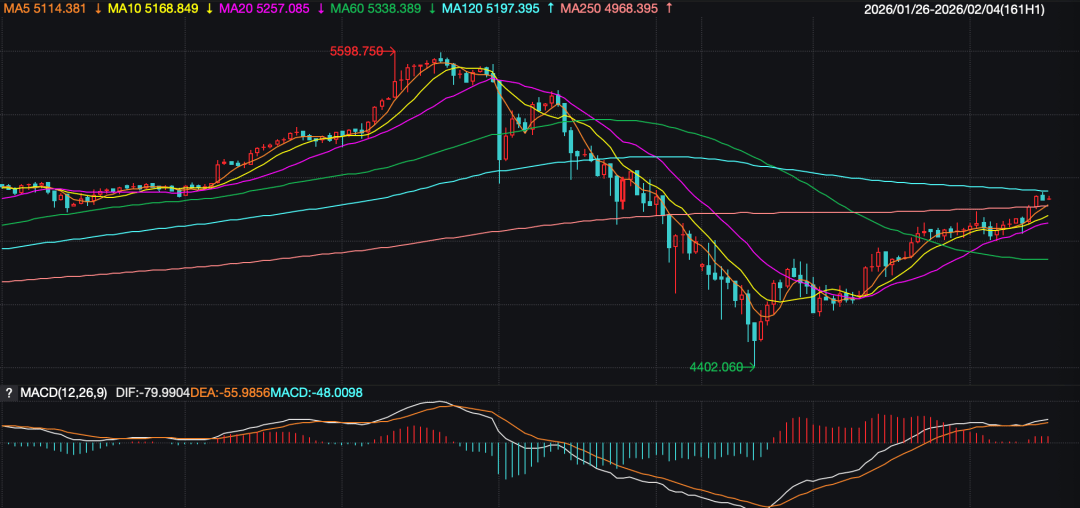
Core Viewpoint - The banking sector in A-shares showed strong performance on February 4, with nearly 90% of the 42 listed bank stocks rising over 1%, driven by risk appetite and solid earnings reports [1][5][9]. Market Performance - The largest bank ETF (512800) closed up 1.43%, recovering key moving averages with a trading volume of 757 million yuan [2][10]. - A total of 11.48 billion yuan net inflow was recorded in the bank ETF over the past 10 days, indicating increased investor interest [3][11]. Earnings Reports - Among the 42 A-share listed banks, 10 have released preliminary earnings reports for 2025, with all showing positive growth in net profit. Notably, Qingdao Bank led with a 21.66% increase in net profit [5][13]. - The earnings data highlights that 9 banks achieved both revenue and net profit growth, while 3 banks reported double-digit growth in net profit [5][13]. Investment Outlook - The banking sector is viewed as an attractive option for investors seeking stable returns due to its high dividend yield and improving fundamentals. The sector is expected to maintain a positive valuation recovery trend as market confidence gradually returns [15]. - The bank ETF (512800) is recognized as an efficient investment tool tracking the overall banking sector, with a current scale exceeding 12.2 billion yuan and an average daily trading volume of over 800 million yuan since 2025 [15].



付文生再次出任宁波银行副行长
Zhong Guo Zheng Quan Bao· 2026-02-04 11:24
Group 1 - Ningbo Bank announced the approval of Fu Wensheng's appointment as Vice President by the Ningbo Financial Regulatory Bureau, marking his return to the position after more than a year [1] - Fu Wensheng has extensive experience, having served in various roles within the bank and previously held the position of Vice President from September 2012 until February 2024 [1] - Following his resignation in February 2024, Fu Wensheng was appointed as the Deputy Secretary of the Party Committee of Ningbo Bank [1] Group 2 - As of the end of 2025, Ningbo Bank reported total assets of approximately 3.63 trillion yuan, reflecting a year-on-year growth of over 16% [2] - For the full year of 2025, Ningbo Bank achieved operating income of 71.968 billion yuan, an increase of 8.01% year-on-year [2] - The bank's net profit attributable to shareholders reached 29.333 billion yuan, representing a year-on-year growth of 8.13% [2]
银行业月报:行业盈利温和修复,关注优质区域行-20260204
Ping An Securities· 2026-02-04 10:08
Investment Rating - The industry investment rating is "Outperform the Market" (maintained) [1][38] Core Viewpoints - The industry is experiencing profound changes in funding structure, leading to a shift towards reallocation rather than trading. The continuous expansion of passive indices has brought stable capital inflows, and the high dividend yield of the banking sector, currently averaging 4.50%, is attracting long-term funds such as insurance capital. Regulatory measures aimed at guiding long-term capital into the market are expected to sustain the attractiveness of dividend allocation value [2][10] - The 2025 annual performance reports indicate a recovery in revenue and profit, with asset quality showing steady improvement. As of the end of January, ten banks reported their 2025 performance, with most showing a year-on-year increase in revenue and profit. Notably, Qingdao Bank, Nanjing Bank, and Shanghai Pudong Development Bank maintained high growth rates in net profit and revenue, with growth rates of 21.7%, 8.1%, and 10.5% respectively [3][6][7] Summary by Sections Performance Overview - Revenue and profit are recovering, with asset quality improving. The average year-on-year growth rate of net profit for the ten banks is 7.2%, with a quarter-on-quarter increase of 0.6 percentage points. The average non-performing loan (NPL) ratio decreased by 2 basis points to 0.94% [6][7][8] - The average loan growth rate for the ten banks increased from 10.1% in the first three quarters of 2025 to 15.5% for the full year, indicating a positive loan issuance trend [6][7] Market Trends - In January 2026, the banking sector declined by 6.18%, underperforming the CSI 300 index by 7.83 percentage points, ranking last among 30 sectors [14] - Individual bank performances varied, with Qingdao Bank, Ningbo Bank, and Hangzhou Bank showing increases of 16.5%, 10.2%, and 5.8% respectively [15] Macro and Liquidity Tracking - The manufacturing PMI for January was 49.30%, a decrease of 0.80 percentage points from the previous month. The CPI for December was 0.80% year-on-year, while the PPI was -1.90% [25][22] - In January, the one-year and five-year LPR remained stable at 3.0% and 3.50% respectively. The interbank lending rates for 7D, 14D, and 3M changed to 1.61%, 1.68%, and 1.78% respectively [28][26] Credit and Social Financing Data - In December 2025, new RMB loans increased by 910 billion, a year-on-year decrease of 80 billion, with a balance growth rate of 6.40%. Corporate loans increased by 1.07 trillion, while household loans decreased by 91.6 billion [29][32] - The social financing scale increased by 2.21 trillion in December, with a year-on-year growth rate of 8.30% [32]





城商行板块2月4日涨1.9%,宁波银行领涨,主力资金净流入1.28亿元
Zheng Xing Xing Ye Ri Bao· 2026-02-04 08:56
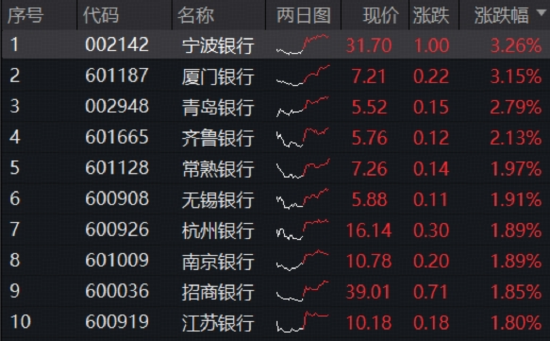
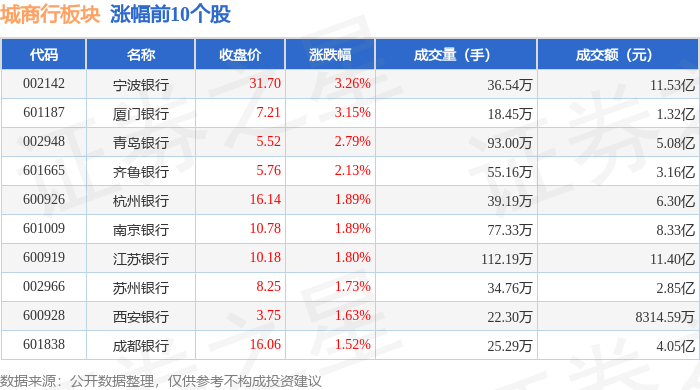
Group 1 - The city commercial bank sector increased by 1.9% on February 4, with Ningbo Bank leading the gains [1] - The Shanghai Composite Index closed at 4102.2, up 0.85%, while the Shenzhen Component Index closed at 14156.27, up 0.21% [1] - Key individual stock performances included Ningbo Bank at 31.70 with a rise of 3.26%, Xiamen Bank at 7.21 with a rise of 3.15%, and Qingdao Bank at 5.52 with a rise of 2.79% [1] Group 2 - The net inflow of main funds in the city commercial bank sector was 128 million yuan, while retail funds saw a net inflow of 67.65 million yuan [1] - The table of fund flows indicated that Ningbo Bank had a main fund net inflow of 1.15 billion yuan, while retail funds experienced a net outflow of 1.34 billion yuan [2] - Jiangsu Bank had a main fund net inflow of 38.95 million yuan, but retail funds saw a net outflow of 73.94 million yuan [2]

“短短几天坐了一趟过山车”!金价狂震,各大银行密集公告
Sou Hu Cai Jing· 2026-02-04 07:40
Core Viewpoint - International gold prices have experienced significant volatility, rebounding from a previous drop and surpassing the $5000 per ounce mark as of February 4, 2026, prompting banks to enhance risk management for gold investment businesses [1][2]. Group 1: Gold Price Fluctuations - Gold prices saw a dramatic rise and fall, peaking near $5600 per ounce on January 29, 2026, followed by a nearly 10% drop on January 30, and falling below $4500 per ounce by February 2, before rebounding with over a 6% increase on February 3 [2]. - Analysts from Guangzhou Futures Co. noted that concerns over future monetary policy, coupled with technical selling pressure, contributed to the significant price drop, while long-term factors such as central bank gold purchases and geopolitical risks are expected to support gold prices [3]. Group 2: Bank Responses to Volatility - Major state-owned banks, including Bank of China and Agricultural Bank of China, have announced adjustments to margin requirements and trading limits for gold and silver contracts in response to the volatility [4][5]. - The Bank of China adjusted the margin ratio for gold contracts from 16% to 17% and for silver contracts from 26% to 23%, effective February 3, 2026 [4]. - Agricultural Bank of China also modified the trading limits for gold and silver contracts, reducing the daily price fluctuation limit from 25% to 22% for silver and from 15% to 16% for gold [5]. Group 3: Changes in Investment Products - Some banks have raised the minimum purchase threshold for gold accumulation products to 1500 yuan, reflecting a tightening of investment conditions [10]. - Industrial and Commercial Bank of China announced limits on gold accumulation business during weekends and holidays, indicating a more cautious approach to managing gold investments [8]. - Analysts emphasize the importance of viewing gold as a stabilizing asset in investment portfolios, advising against speculative trading practices [10][11].
逆回购加量续作,流动性充裕利好银行板块业绩提升
Sou Hu Cai Jing· 2026-02-04 06:28
Group 1 - The core viewpoint of the article highlights the positive performance of the banking sector, with the China Securities Bank Index rising by 1.38% and several constituent banks showing significant gains, such as Ningbo Bank up by 3.29% and Xiamen Bank up by 2.86% [1] - The People's Bank of China conducted a reverse repurchase operation of 800 billion yuan with a three-month term, marking the first increase in this type of operation in four months, indicating a proactive approach to maintain liquidity in the banking system [1] - Market analysts believe that this operation will inject medium-term liquidity into the market, effectively alleviating short-term liquidity pressure for banks and supporting a stable financial market at the beginning of the year [1] Group 2 - China Galaxy suggests that the current positive fiscal policy and stable monetary policy will support bank performance and valuation recovery, making the banking sector an attractive investment opportunity [1]
银行信贷开门红亮眼,净息差趋稳,银行板块或迎布局时机
Mei Ri Jing Ji Xin Wen· 2026-02-04 05:56
Core Viewpoint - The banking sector is experiencing a strong performance, with significant increases in stock prices and positive sentiment regarding credit issuance during the marketing peak season [1] Group 1: Market Performance - The China Securities Bank Index (399986) rose by 1.09%, with notable increases in individual bank stocks such as Ningbo Bank (002142) up by 3.16%, Xiamen Bank (601187) up by 2.72%, and Qingdao Bank (002948) up by 2.05% [1] - The Bank ETF Huaxia (515020) increased by 0.92%, with the latest price reported at 1.65 yuan [1] Group 2: Credit Issuance and Marketing Season - The current period is identified as the marketing peak season for banks, with institutions actively researching the credit issuance situation during this time [1] - Several banks reported that credit issuance during the marketing peak is better than the same period in 2025, indicating a positive trend in corporate credit issuance [1] Group 3: Asset Quality and Net Interest Margin - Institutions are focusing on banks' asset allocation and liability costs, with net interest margin being a key indicator of the banking sector's operational status [1] - Banks indicated that asset quality is expected to remain stable in 2026 through measures such as improving the quality of new loans and increasing the disposal of non-performing loans [1] - A researcher from Postal Savings Bank (601658) noted that improvements in liability costs will support a slowdown in the pressure on net interest margins for listed banks in 2026, suggesting a potential stabilization in the industry [1]
开年股价遇冷,机构调研升温,2026年银行股怎么看?
Huan Qiu Wang· 2026-02-04 05:08
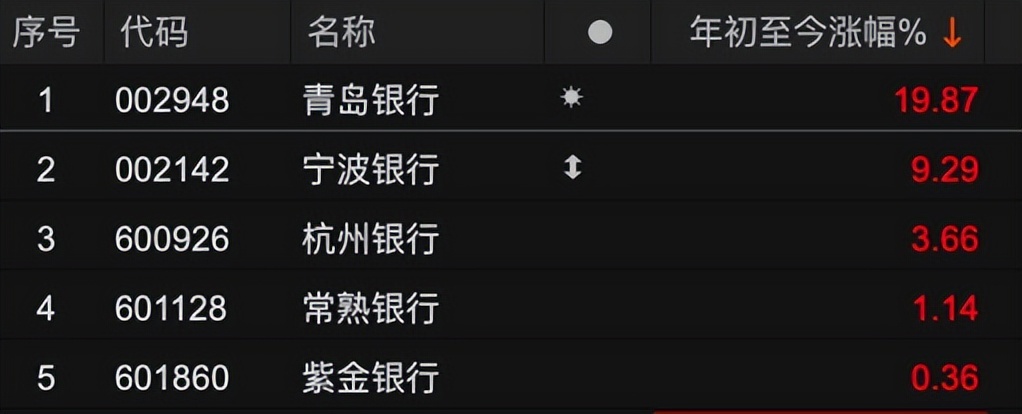
Core Viewpoint - The A-share banking sector has experienced a significant decline of 5.8% year-to-date, contrasting with a 1.1% increase in H-share Chinese banks, indicating a divergence in market performance [1] Group 1: Market Performance - The banking sector's performance has been weak, ranking last among 35 industries in the Wind secondary industry classification [1] - Despite the overall downturn, certain banks like Qingdao Bank and Ningbo Bank have shown strong performance, with increases of 19.87% and 9.29% respectively in January [2] - The average dividend yield for A-share banks remains at approximately 4.5%, which is higher than the 0.5%-2.0% returns of various risk-free assets, making bank stocks attractive for long-term investors [3] Group 2: Fund Flow and Market Sentiment - Since October 2025, there has been a cautious approach from funds towards the banking sector, leading to a period of consolidation [5] - Significant outflows have been recorded, with estimates showing that around 10% of the trading volume has been affected by net outflows from bank-related ETFs, totaling approximately 9111 billion yuan [6] - Despite short-term pressures, there is a belief that the fundamentals of the banking sector are improving, as indicated by increased institutional interest in bank credit issuance [6][9] Group 3: Long-term Opportunities - The banking sector is expected to see internal differentiation, with regional banks like Qingdao Bank and Ningbo Bank performing well against the backdrop of overall sector weakness [7] - Analysts predict that Qingdao Bank will maintain double-digit profit growth in 2026, supported by strong loan issuance capabilities and stable asset quality [8] - The demand for high-dividend assets remains strong, with expectations that insurance funds will inject over 2 trillion yuan into the market in 2026, further supporting bank stocks [9][10] Group 4: Investment Strategies - The current market adjustment reflects short-term fund disturbances, but the long-term outlook remains positive due to improving fundamentals [9] - Institutions are focusing on banks with strong asset quality and those that are improving their cost of liabilities and non-interest income [10] - The banking sector is anticipated to benefit from a stable dividend profile and recovery trading logic, especially as credit issuance continues to grow [10]
付文生再次出任宁波银行副行长,兼任公司党委副书记
Nan Fang Du Shi Bao· 2026-02-04 04:35
Core Viewpoint - Ningbo Bank has officially appointed Fu Wensheng as the vice president, marking his return to the executive team after over ten years in a similar role, which is expected to enhance the bank's governance and operational capabilities [2][4][6]. Group 1: Management Changes - Fu Wensheng's appointment as vice president is effective immediately following approval from the Ningbo Financial Regulatory Bureau, solidifying his role within the bank's leadership [2][4]. - Fu Wensheng has a strong background, having served in various key positions within Ningbo Bank and other financial institutions, which positions him as a core executive with both management and party responsibilities [6][7]. Group 2: Governance Structure - The current management structure of Ningbo Bank consists of a "one president and six vice presidents" model, which includes a diverse team with significant experience and a focus on internal cultivation [7]. - The stability of the management team is highlighted by the long tenure of Chairman Lu Huayu and the recent promotion of President Zhuang Lingjun, indicating a strategic approach to leadership development [7]. Group 3: Financial Performance - As of the end of 2025, Ningbo Bank's total assets reached 3.63 trillion yuan, reflecting a 16.11% increase from the beginning of the year [8]. - The bank reported total revenue of 71.968 billion yuan for the year, an 8.01% year-on-year growth, with net profit attributable to shareholders increasing by 8.13% to 29.333 billion yuan [8]. - Notably, interest income grew by 10.77% to 53.161 billion yuan, and net commission income surged by 30.72% to 6.085 billion yuan, showcasing the bank's strong performance in wealth management and other light capital businesses [8].

“短短几天坐了一趟过山车!”金价剧烈波动,银行密集发公告
Sou Hu Cai Jing· 2026-02-04 04:16
Core Viewpoint - International gold prices have experienced significant volatility, rebounding from a previous drop and surpassing the $5000 per ounce mark as of February 4, 2026, following a sharp decline earlier in the week [2][3]. Market Dynamics - Gold prices saw a dramatic fluctuation, peaking near $5600 per ounce on January 29, 2026, before plummeting nearly 10% on January 30, dropping below $4500 per ounce by February 2, and then rebounding with over a 6% increase on February 3 [3]. - Analysts from Guangzhou Futures Co. noted that concerns over future monetary policy, coupled with technical selling pressure due to crowded positions, contributed to the price drop. However, long-term factors such as central bank gold purchases and geopolitical risks are expected to support gold prices [5]. Risk Management Adjustments - Major state-owned banks have announced measures to strengthen risk management for gold investment businesses in response to price volatility. For instance, China Bank adjusted margin requirements and trading limits for gold and silver contracts starting February 3 and 4, respectively [6][8]. - Agricultural Bank also modified trading limits for gold and silver contracts effective February 3 and 4, respectively, to mitigate risks associated with market fluctuations [7][8]. Changes in Investment Products - Industrial and Commercial Bank of China announced limits on its gold accumulation business starting February 7, 2026, particularly on non-trading days, to manage risk exposure [10]. - Construction Bank raised the minimum investment amount for personal gold accumulation to 1500 yuan, reflecting a tightening of investment conditions amid increased market volatility [11]. Investor Guidance - Banks have urged clients to monitor changes in trading limits and manage their positions wisely, emphasizing the importance of rational investment strategies [9][11]. - Financial experts recommend a systematic approach to gold investment, such as regular contributions, to avoid the pitfalls of emotional trading during volatile periods [12].