华硕

Search documents
浪人早报 | 赛力斯拟在港交所上市、华为余承东职务更新、王者荣耀日活跃用户数突破1.39亿…
Xin Lang Ke Ji· 2025-10-27 02:50
Group 1 - Seres Group plans to list on the Hong Kong Stock Exchange with a maximum issue price of HKD 131.50 per share, aiming for a total issuance scale of approximately USD 1.7 billion [1] - If priced at HKD 131.50, Seres' market capitalization will reach approximately HKD 215 billion, positioning it alongside other new energy vehicle companies like NIO and Li Auto [1] Group 2 - Huawei's Yu Chengdong has been appointed as the head of the Product Investment Committee while continuing his roles as Executive Director and Chairman of the Terminal BG [2] - Huawei's Pura 80 Ultra and Watch GT 6 Pro have been recognized in Time magazine's list of the best inventions of 2025, highlighting their innovative features [5] Group 3 - "Honor of Kings" has surpassed 139 million daily active users and over 260 million monthly active users globally [3] Group 4 - Following Microsoft's termination of support for Windows 10, the global PC market saw an 8.1% year-on-year growth in Q3, driven by users upgrading to Windows 11 and companies stockpiling to mitigate tariff risks [4] - Lenovo led the market with a 17.4% increase in shipments, while Apple Mac sales grew by 14.9%, making it the second-largest beneficiary [4] Group 5 - NIO announced that its battery swap service has surpassed 90 million swaps, achieving this milestone in just 100 days from the 80 million mark, with an average of over 100,000 swaps per day [7] Group 6 - Two multinational medical giants, AstraZeneca and Medtronic, have announced the establishment of new R&D centers in Beijing, reinforcing China's position as a global hub for medical innovation [8] Group 7 - ByteDance is reportedly developing a new game distribution platform called GameTop, similar to Steam, aimed at providing diverse gaming content and social spaces for overseas users [6]

Win10停服后Mac销量大增14.9%,联想增长17.4%领跑PC市场
Xin Lang Ke Ji· 2025-10-26 23:54
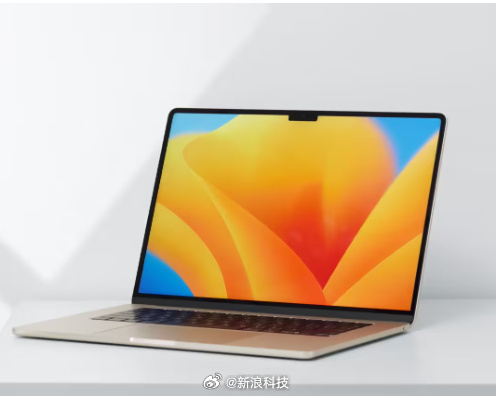
Core Insights - Microsoft officially ended support for Windows 10 on October 14, leading to increased demand for new PCs as users transition to Windows 11 [1] - The global PC market is projected to grow by 8.1% year-on-year in Q3 2025, driven by user upgrades and companies stockpiling to mitigate tariff risks [1] Company Performance - Lenovo experienced the highest shipment growth at 17.4%, making it the top performer in the market [1] - Apple Mac saw a significant increase in shipments, growing by 14.9%, positioning it as the second-largest beneficiary of the market shift [1] - Asus and HP also reported growths of 14% and 10% respectively, while Dell experienced a slight decline of 0.9% [1] Market Dynamics - A portion of users unable to upgrade to Windows 11 due to the lack of TPM 2.0 in their devices are shifting towards the Mac ecosystem [1]



Windows 10退役引发换机潮,苹果Mac成最大赢家
Huan Qiu Wang Zi Xun· 2025-10-26 02:49
Group 1 - The core point of the article highlights the impending end of support for Windows 10 by October 2025, prompting a significant wave of PC procurement as both enterprises and individual users prepare for device upgrades [1][4] Group 2 - According to Counterpoint Research, the global PC market showed notable differentiation in Q3 2025, with Lenovo leading at a 17.4% year-on-year growth, attributed to its comprehensive product line and deep enterprise partnerships [4] - ASUS followed closely with a 14.1% growth, demonstrating strong momentum in the consumer market [4] - Mac shipments surged by 14.9% year-on-year, driven by the recognition of new MacBook models featuring self-developed chips and increasing acceptance of Apple hardware among enterprise users [4] Group 3 - IT leaders from major enterprises have indicated that new device procurement plans require sufficient AI computing power to accommodate the upcoming AI workflows expected to proliferate in the next two to three years [5] - This forward-looking procurement strategy signifies a shift in the PC industry from traditional performance competition to a focus on AI capability development [5]

PC换机潮引爆供应链进补 带旺华硕、宏碁、广达等运营
Jing Ji Ri Bao· 2025-10-25 23:26
Core Insights - Microsoft has officially ended support for Windows 10, leading to a global PC replacement wave and an 8.1% year-over-year increase in PC shipments in Q3 [1] - Approximately 40% of PCs are still using Windows 10, indicating that replacement demand will continue to drive market growth for several years [1] - Major PC brands such as ASUS, Acer, Quanta, and Compal are expected to benefit from this ongoing growth trend [1] Group 1 - Q3 global PC shipments increased by 8.1% year-over-year, primarily driven by the end of Windows 10 support and changes in U.S. tariff policies [1] - Lenovo maintains its leading position in the market, followed by HP, Dell, Apple, and ASUS, with only Dell showing a year-over-year decline [1] - ASUS experienced a significant increase in shipments, with a quarterly growth of 22.5% and a year-over-year growth of 14.1%, making it the fastest-growing company among the top five PC manufacturers [1] Group 2 - Beyond the operating system-driven replacement demand, the rise of AI PCs is expected to create another significant wave of change, although this has not yet been reflected in current data [2] - With the introduction of new AI-capable processors from Qualcomm and NVIDIA, AI PC shipments are projected to see substantial growth starting in 2026 [2] - The combination of ongoing Windows 10 replacement demand and the growth of AI PC shipments is expected to sustain year-over-year increases in PC shipments through 2026 [2] Group 3 - Compal noted that despite the end of the industry seasonality effect, uncertainties remain in the PC market, but Q4 shipments may still see growth [2] - Quanta shipped 12.7 million laptops in Q3, reflecting a 5% quarter-over-quarter increase and a 0.8% year-over-year increase, with expectations of single-digit percentage growth for the full year [2] - Wistron shipped 6.4 million laptops in Q3, achieving an 8.5% quarter-over-quarter increase and a 23.1% year-over-year increase, with an upward revision of the annual growth rate to double digits [2]
英特尔新AI PC处理器 催动换机潮
Jing Ji Ri Bao· 2025-10-25 23:23
Core Insights - Intel's recent earnings report and future outlook are optimistic, particularly with strong growth in the PC segment [1] - The upcoming AI PC processor, Intel Core Ultra series 3 (codename Panther Lake), is expected to drive a wave of upgrades as Windows 10 ceases updates, benefiting brands like Asus and Acer, as well as manufacturers such as Quanta, Hon Hai, Compal, and Inventec [1] Group 1: Product Performance - Panther Lake is Intel's first product built on the Intel 18A process, showcasing significant performance improvements with a total platform computing power of up to 180 TOPS [1] - Compared to the previous Lunar Lake processor, Panther Lake's CPU performance shows over a 50% improvement in multi-threaded execution under the same power consumption, and over a 10% improvement in single-threaded performance [1] - GPU performance has also increased by more than 50% compared to Lunar Lake [1] Group 2: Market Trends - According to Gartner, global PC shipments exceeded 69 million units in Q3, marking an 8.2% year-over-year increase, with AI PCs expected to account for over 30% of shipments this year [2] - Intel is anticipated to solidify or even increase its market share in the PC processor domain with the launch of the Panther Lake series and the upgrade demand triggered by the end of Windows 10 support [2]

洛图Q3排名 | 中国大陆电竞显示器线上市场品牌销量
Xin Lang Cai Jing· 2025-10-25 00:10
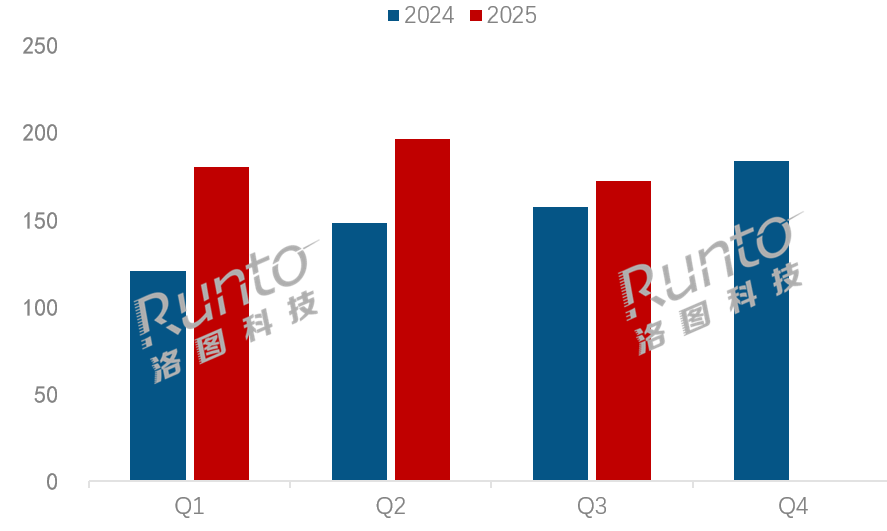
Core Insights - The report from Runto Technology indicates that in Q3 2025, the sales volume of gaming monitors in China's online retail market reached 1.72 million units, representing a year-on-year growth of 9.5%, while sales revenue amounted to 1.9 billion yuan, up 2.6% from the previous year [1] - The average price of gaming monitors decreased to 1,085 yuan, a reduction of 73 yuan compared to the same period last year [1] - The growth rate of gaming monitor sales is expected to slow down starting Q3 2024, with the penetration rate stabilizing [1] Market Dynamics - In the first half of 2025, government subsidy policies significantly boosted market consumption, leading to a sales growth rate of 40% for gaming monitors [1] - However, by Q3 2025, the impact of these subsidies diminished due to a reduction in the scope of subsidies and increased eligibility requirements, contributing less than 10% to sales growth [1] Product Performance - The gaming monitor market is transitioning from being driven by policy to relying on endogenous growth, primarily fueled by upgrades in product performance [1] - In Q3 2025, 180Hz monitors held a 23% market share, but this was a decrease of 24 percentage points compared to 2024. Conversely, the penetration rate of 240Hz models rose to 18%, and 300Hz products increased to 6% from nearly 0% last year [1][4] Brand Analysis - The top three brands in the gaming monitor online market accounted for 44% of total sales, an increase of 11 percentage points year-on-year, with AOC leading at nearly 20% market share and a sales growth of nearly 60% [7] - HKC and KTC ranked second and third, respectively, with differentiated product offerings of 240Hz and 260Hz [7] - Xiaomi and ROG also showed significant growth, with Xiaomi achieving a 71% increase in sales due to its dual strategy of focusing on both office and entry-level gaming products [7] - ROG, a high-end gaming brand under ASUS, experienced a 24% growth in Q3, supported by new products featuring 600+Hz refresh rates and a dual-mode design [7] Competitive Landscape - Other brands like KTC, SANC, and Titan Legion experienced growth rates of 20%-60% in the first half of the year but faced varying declines in Q3 due to high base effects from the previous year and limited quotas this year [9]
资本争相入局,Micro LED商业化还有多远?
WitsView睿智显示· 2025-10-24 10:23
Core Insights - The Micro LED industry is experiencing significant advancements in technology, product development, capacity planning, and ecosystem collaboration, particularly in applications such as AR glasses, smartwatches, automotive displays, and optical communication [2][6][24] - The AR sector has become a major focus for investment, with numerous financing rounds exceeding hundreds of millions, indicating strong capital interest in Micro LED technologies [3][5][24] Investment Trends - The AR-related companies have received the most funding, with notable investments including Mojo Vision's $75 million (approximately 535 million RMB) B round in September and XPANCEO's $250 million (approximately 1.8 billion RMB) A round in July for developing Micro LED AR contact lenses [4][5] - Other significant funding rounds include 壹倍科技's multi-hundred million RMB A+ round for Micro LED equipment and影目科技's 150 million RMB B2 round for AR glasses [4][5] Technological Developments - The AR glasses sector is becoming a battleground for technological iteration and product deployment, with companies competing on high brightness, full-color capabilities, high pixel density, and miniaturization [6][8] - JBD launched a Micro LED microdisplay technology platform achieving a 2.5μm pixel pitch, while other companies are making strides in achieving ultra-high pixel densities and full-color displays [7][8] Product Launches - Multiple new products featuring Micro LED technology have been released, including Waterfall Glasses and INMO GO3 AI glasses, both launched in October [10][12] - Garmin introduced the world's first Micro LED smartwatch in September, showcasing the technology's advantages in readability under bright conditions [15][16] Capacity Expansion - The industry is accelerating capacity construction, with projects like国兆光电's 1 billion RMB investment in an 8-inch silicon-based Micro LED production line and星钥半导体's first 8-inch GaN Micro LED chip pilot line [20][21] - Companies are also establishing their own manufacturing facilities to support AR and automotive markets, with雷鸟创新 and赛富乐斯 launching their production projects [22][23] Market Outlook - The penetration rate of Micro LED in consumer electronics is expected to accelerate, with significant products like the Garmin Fenix 8 Pro smartwatch and Sony Honda Afeela's 30-inch automotive display anticipated to drive market growth [24] - TrendForce forecasts that the Micro LED chip market value will reach $461 million by 2029, indicating a robust growth trajectory for the industry [24]

2025CJ回顾:由AI和电竞构成的科技碰撞
Sou Hu Cai Jing· 2025-10-22 02:37
Core Insights - The CJ exhibition, despite previous skepticism, continues to evolve and adapt, showcasing not just games but also emerging trends in technology and AI, reflecting the industry's dynamic nature [1][19] AI and Robotics - AI has rapidly transformed from basic functionalities to advanced capabilities, significantly impacting the gaming industry by enhancing creativity and efficiency for game developers [2][10] - The exhibition featured a dedicated area for robots, showcasing their advancements, including interactive robots that engage with attendees, highlighting the integration of AI in robotics [5][8] - Robots demonstrated their skills in a mini soccer field, showcasing their evolution from basic movement to complex interactions, raising questions about their indistinguishability from humans [7][11] E-sports and Gaming Hardware - E-sports remains a central theme, with major companies like Sony and Samsung emphasizing high-performance gaming hardware, catering to the growing demands of gamers [13][15] - Sony set up interactive experience zones focused on e-sports, enhancing auditory and visual experiences for players, while Samsung showcased powerful gaming rigs with substantial storage [13][15] - Other hardware manufacturers, such as Zotac and Galax, also participated, leveraging collaborations with popular games to attract attendees and enhance brand visibility [17][20] Overall Industry Trends - The CJ exhibition has successfully repositioned itself, attracting large crowds and generating discussions beyond gaming, indicating a thriving and evolving industry landscape [19]
端侧AI需求爆发改写联想估值逻辑
Zhi Tong Cai Jing· 2025-10-21 12:10
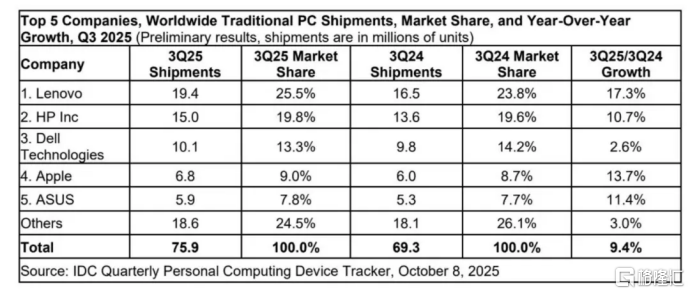
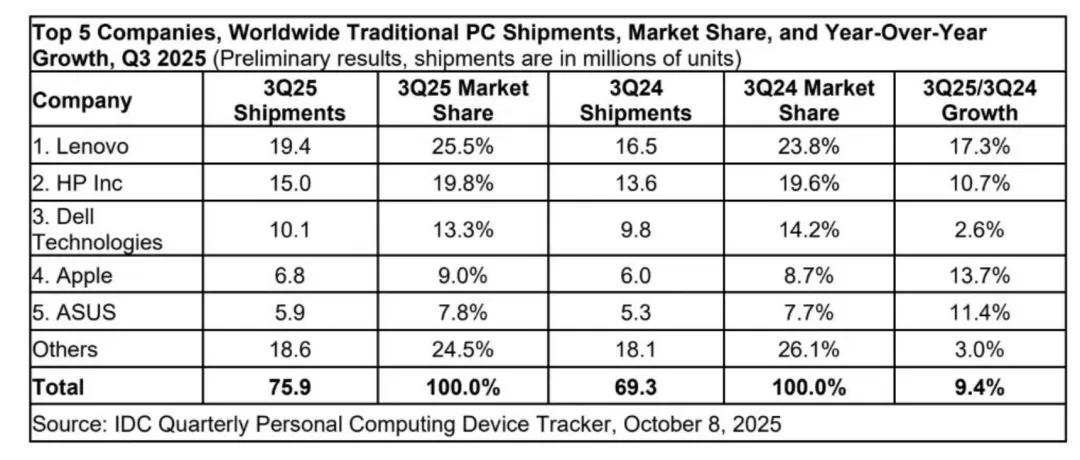
Core Insights - The global PC market is experiencing a resurgence driven by artificial intelligence (AI), with shipments expected to reach 75.9 million units in Q3 2025, marking a 9.4% year-over-year increase [1][2] - Lenovo has significantly increased its market share to 25.5%, outperforming competitors like HP and Dell, which indicates a shift towards AI-driven demand in the PC sector [1][2][7] - The competition among leading PC manufacturers is increasingly focused on capturing the AI edge, with Lenovo's strategy aligning well with the industry's shift towards edge AI [3][6] Market Performance - Lenovo's PC shipments reached 19.4 million units in Q3 2025, reflecting a 17.3% growth compared to the previous year, while HP and Dell saw lower growth rates of 10.7% and 2.6%, respectively [2][7] - The overall market share distribution shows Lenovo leading with 25.5%, followed by HP at 19.8%, and Dell at 13.3% [2] AI PC Market Dynamics - The AI PC segment is projected to grow at a compound annual growth rate (CAGR) of 44% from 2024 to 2028, with expectations that AI PCs will account for 70% of total PC shipments by 2028 [6] - Lenovo's AI PC shipments have surpassed 30%, positioning the company as a leader in the global Windows AI PC market [7] Strategic Positioning - Major tech companies like NVIDIA, OpenAI, and Microsoft are recognizing the potential of edge AI, with NVIDIA investing $5 billion in Intel to enhance AI PC capabilities [3][4] - Lenovo's "hybrid AI" strategy aligns with the industry's focus on local computing power, data privacy, and low latency, positioning it as a key player in the AI ecosystem [5][9] Financial Implications - The shift towards AI PCs is expected to enhance Lenovo's overall gross margin, as AI PCs are viewed as high-value products [9] - Lenovo's service business (SSG) is projected to maintain high growth and profitability, further supporting the company's transition from hardware sales to integrated AI service offerings [9][10]
PC市场再现加速增长,背后绝非简单的周期轮回
Ge Long Hui· 2025-10-21 11:38
Core Insights - The global PC market is experiencing a resurgence driven by artificial intelligence (AI), with a projected shipment of 75.9 million units in Q3 2025, representing a year-over-year growth of 9.4% [1][2] - Lenovo leads the market with a 25.5% share, significantly ahead of HP at 19.8%, and has shown a remarkable growth rate of 17.3%, far exceeding the industry average [1][2][8] - The competition among top manufacturers is increasingly focused on capturing the edge AI market, with companies like NVIDIA and OpenAI recognizing the potential of AI PCs as critical hardware for AI applications [3][4][5] Market Dynamics - The AI PC segment is expected to grow at a compound annual growth rate (CAGR) of 44% from 2024 to 2028, potentially capturing 70% of the total PC market by 2028 [7] - Lenovo's AI PC shipments accounted for over 30% of its total PC shipments in Q3 2025, solidifying its position as a leader in the AI PC market [8][9] - The shift towards AI PCs is reshaping the valuation logic for companies, with AI PCs being viewed as high-margin products compared to traditional PCs [9] Strategic Positioning - Lenovo's "hybrid AI" strategy aligns with the broader industry trend towards localized AI models and edge computing, positioning the company as a key player in the AI ecosystem [6] - The integration of AI capabilities into Lenovo's service offerings is expected to enhance overall profitability, with the services segment showing a 22% operating margin, significantly higher than hardware [9][10] - Lenovo's robust supply chain and operational resilience are critical competitive advantages, enabling the company to meet large-scale enterprise demands effectively [10]