
国家电投

Search documents
国家能源局:2025年全社会用电量突破10万亿度!
Xin Lang Cai Jing· 2026-01-18 16:23
#能聊# 【国家能源局:2025年全社会用电量突破10万亿度!】#用电量首破10万亿##我国年用电量首次 超过10万亿千瓦时##我国全年用电量是美国两倍多##我国年用电量超过欧盟俄印日总和# @人民网 @新 华社 @央视财经 @国资小新 @中国石油 @中国石化 @海油螺号 @中核集团 @国家电网 @电网头条 @ 南网50Hz @中国华能 @中国大唐 @中国华电 @国家能源集团之声 @国家电投 @中国三峡集团 @中国 电建 @中国能建 @中国广核集团 @中国电气装备 @中国电力企业联合会 文案:周潇、张栋钧出镜、拍 摄:周潇视频:关子晴 转自:中国能源新闻 ...
我国年用电量首破10万亿千瓦时,精准供电解密
Xin Lang Cai Jing· 2026-01-17 14:41
Group 1 - China's annual electricity consumption has surpassed 10 trillion kilowatt-hours for the first time, indicating a significant milestone in energy usage [1] - The annual electricity consumption in China is more than double that of the United States, highlighting the scale of China's energy demand [1] - China's electricity consumption exceeds the combined total of the European Union, Russia, India, and Japan, showcasing its dominant position in global energy consumption [1]
“新能源入市”“煤电改造升级”等入选2026年中国发电企业发展关键词
Zhong Guo Xin Wen Wang· 2026-01-15 06:17
Group 1 - The core viewpoint of the report emphasizes that in 2026, keywords for the development of Chinese power generation companies will include energy powerhouse, new energy market entry, coal power transformation and upgrading, new industrial scenarios, and "Artificial Intelligence+" [1] - The report indicates that Chinese power generation companies will enhance power security capabilities, maintain a multi-energy approach including wind, solar, water, and nuclear, and solidify the foundation for clean power supply driven by both non-fossil and traditional energy sources [1] - It highlights the goal of building world-class enterprises by setting 18 benchmarking indicators across dimensions such as product excellence and innovation leadership, analyzing 24 representative energy companies domestically and internationally to help improve the core competitiveness of Chinese power generation companies [1] Group 2 - The report states that by the end of 2024, domestic benchmark companies will have a power generation capacity of 1.86 billion kilowatts, which is 2.3 times that of foreign benchmark companies, with a non-fossil energy installed capacity ratio increasing by 3.8 percentage points to 54.3%, surpassing foreign counterparts by 1.8 percentage points [2] - It notes that while domestic companies are expanding their asset scale advantage, foreign benchmark companies are experiencing a higher growth rate in non-fossil energy generation volume, leading to an increasing gap in installed capacity [2] - The profit levels and cash flows of both domestic and foreign benchmark companies are improving, indicating a positive trend in financial performance [2]
《中国发电企业与世界同类能源企业对标分析报告2025》解读:5/8!国家能源集团等中国央企上榜第一方阵
Zhong Guo Dian Li Bao· 2026-01-15 00:19
Core Insights - The report titled "Analysis Report on Benchmarking Chinese Power Generation Enterprises with Global Energy Companies 2025" indicates that eight companies, including five Chinese state-owned enterprises, are ranked in the top tier for 2024, with China Energy Group leading among Chinese firms [1] - The report aims to enhance the core functions and competitiveness of Chinese power generation companies by comparing them with 12 representative global energy enterprises across four dimensions: product excellence, brand prestige, innovation leadership, and modern governance [1] Group 1: Product Excellence - Domestic benchmark companies have significantly increased their power generation asset scale, with a total installed capacity of 1.86 billion kilowatts, which is 2.3 times that of foreign counterparts [1] - The proportion of non-fossil energy installed capacity in domestic benchmark companies has risen by 3.8 percentage points year-on-year to 54.3%, surpassing foreign benchmark companies by 1.8 percentage points [1] Group 2: Non-Fossil Energy Generation - Foreign benchmark companies have shown a higher growth rate in the proportion of non-fossil energy generation, reaching 56.8% in 2024, an increase of 3.3 percentage points year-on-year, which is 0.5 percentage points higher than domestic companies [2] - The overseas installed capacity increased by 7.38 million kilowatts, with a year-on-year growth rate that is 4.4 times that of domestic companies [2] Group 3: Modern Governance - Both domestic and foreign benchmark companies have seen improvements in profit levels, with EBITDA reaching $145.7 billion for domestic companies and $166.9 billion for foreign companies, reflecting year-on-year growth of 7.0% and 4.8%, respectively [2] - The operating cash flow ratio for domestic and foreign benchmark companies stands at 26.1% and 21.3%, with foreign companies improving by 4.0 percentage points year-on-year, narrowing the gap with domestic firms by 2.1 percentage points [2] Group 4: Financial Metrics - The return on equity for domestic and foreign benchmark companies is 8.1% and 13.2%, respectively, with foreign companies increasing by 5.1 percentage points year-on-year, outpacing domestic firms by 4.7 percentage points [3] - Labor productivity for domestic and foreign benchmark companies is $220,000 per person and $350,000 per person, with foreign companies experiencing a year-on-year growth of 15.7%, exceeding domestic growth by 9.3 percentage points [3] - The debt-to-asset ratio for foreign benchmark companies is 73.7%, down 1.8 percentage points from the previous year, while domestic companies maintain a stable ratio of 64.8% over the past three years [3]


报告称,“新能源入市”“煤电改造升级”等入选2026年中国发电企业发展关键词
Zhong Guo Xin Wen Wang· 2026-01-14 06:26
Core Insights - The report identifies key development themes for Chinese power generation companies in 2026, including energy security, integration of new energy sources, coal power upgrades, and the application of "Artificial Intelligence+" [1] Group 1: Development Trends - Chinese power generation companies will enhance their electricity security capabilities and promote a multi-energy approach, including wind, solar, hydro, and nuclear power, to solidify a clean electricity supply base [1] - The report emphasizes the need to improve the green development capacity of the electricity sector and increase the system's adjustment capabilities to support an annual addition of over 200 million kilowatts of new energy [1] - The report aims to establish a world-class enterprise by setting 18 benchmarking indicators across dimensions such as product excellence and innovation leadership, analyzing 24 representative energy companies [1] Group 2: Comparative Analysis - By the end of 2024, domestic benchmark companies will have a power generation capacity of 1.86 billion kilowatts, which is 2.3 times that of foreign benchmark companies [2] - The proportion of non-fossil energy installed capacity in domestic benchmark companies has increased by 3.8 percentage points to 54.3%, surpassing foreign counterparts by 1.8 percentage points [2] - Profit levels and cash flows for both domestic and foreign benchmark companies have shown positive trends [2]
远景/中核/大唐/运达/华润/中国绿发/国家电投等入选!8.8GWh独立储能项目投资主体优选结果公示
中关村储能产业技术联盟· 2026-01-12 08:14
1月12日,乌兰察布市独立新型储能电站项目投资主体优选结果公示。 据项目清单, 共16个项目,合计2 .2GW/ 8.8GWh,均为4h储能项目 ,其中10个主体选择建设100MW/ 400MWh规模项目, 6个主体选择建设200MW/ 800MWh规模项目。 从投资主体来看, 核心关联主体包括 远景能源、海泰新能、中核南京、大唐、运达能源、中国建筑股份、华润新能源、中 国绿发、中国铁道建筑、国家电投、海博思创智储投资、青岛金湖电力、陕西煤业化工 等。 | 序号 | 投资主体名称 | 核心关联主体 | 装机容量 | 装机容量 | | --- | --- | --- | --- | --- | | | | | (MW) | (MW) | | 1 | 远景能源有限公司 | 远景能源 | 100 | 400 | | 2 | 唐山海泰新能科技股份有限公司 | 海泰新能 | 100 | 400 | | 3 | 乌兰察布核祥新能源有限公司 | 中核(南京)能源发展有限公司 | 100 | 400 | | 4 | 大唐(四子王旗) 新能源有限公司 | 中国大唐集团 | 100 | 400 | | 5 | 运达能源科技集团股 ...






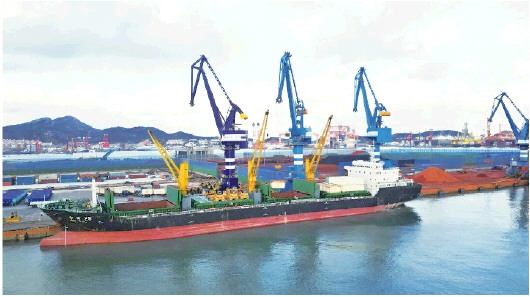
争夺出海枢纽,山东港口群加码基建
Qi Lu Wan Bao· 2026-01-09 13:53
Core Insights - The article highlights the competitive landscape among coastal ports in Shandong, driven by infrastructure investments to enhance their capabilities as key maritime gateways for Chinese exports [2][3][4][5]. Group 1: Infrastructure Developments - Yantai Port's annual cargo throughput is projected to exceed 16 million tons by 2025, reflecting a 35.5% year-on-year growth [11]. - The Qingdao Dongjiakou to Rizhao Wulian railway, with a total investment of approximately 17.577 billion yuan, is set to enhance cargo transport capacity by adding 8 million tons annually [3]. - Qingdao Port plans to invest 15.7 billion yuan to construct two new terminals, aiming to increase its comprehensive throughput capacity to 830 million tons by 2035 [4]. Group 2: Competitive Positioning - Ports in Shandong are engaged in a strategic positioning battle to become leading maritime hubs, with Jining Port aiming to solidify its status as the first inland port in northern China to handle over 100 million tons [6]. - Weifang Port is initiating a 5-million-ton channel project to increase its annual throughput by over 40 million tons, while also reducing logistics costs for local enterprises by 1.5 billion yuan [6][7]. - Yantai Port is focusing on becoming the primary trade port for China-Africa relations, with a significant increase in its cargo volume to African nations [9][10]. Group 3: Market Trends and Supply Chain Dynamics - The restructuring of global supply chains is influencing cargo throughput at major ports, with a notable increase in the importance of equipment and components in exports [9][10]. - The competition among ports is intensifying as they adapt to changes in trade structures, with Yantai Port establishing a logistics corridor to facilitate trade with over 20 African countries [11][12]. - The integration of ports into global supply chains is leading to enhanced international transit capabilities and a reduction in overall logistics costs [13].
5年5倍,四川新能源装机容量在“十四五”实现爆发式增长 “风光四川”的跨越密码
Si Chuan Ri Bao· 2026-01-06 00:27
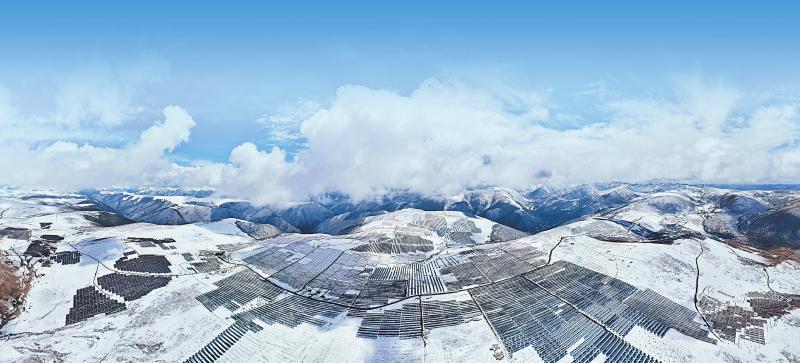
Core Viewpoint - Sichuan's renewable energy capacity has experienced a remarkable fivefold increase over the past five years, reaching 32 million kilowatts, marking a significant transition from supplementary to a primary energy source, now accounting for over 20% of the province's total power generation capacity [4][5][10]. Group 1: Capacity Growth - The recent commissioning of multiple large-scale photovoltaic projects, including the 1.2 million kilowatt Batang project, has contributed to this growth, with Sichuan's renewable energy capacity increasing from approximately 6 million kilowatts at the beginning of the 14th Five-Year Plan to 32 million kilowatts [3][4][9]. - The total renewable energy capacity of 32 million kilowatts is equivalent to 1.4 Three Gorges dams, highlighting its significance in the national context, despite not being the largest in absolute terms compared to regions like Inner Mongolia and Xinjiang [5][6]. Group 2: Industry Development - Sichuan has developed a robust renewable energy industry chain, with nearly 200 companies in sectors such as photovoltaics, wind energy, and hydrogen, leading to an estimated revenue of 207.9 billion yuan in 2024 [6][7]. - The province's photovoltaic production capacity ranks among the top three in the country, with a sixth of the national capacity in battery production, and significant advancements in wind energy installations [6][7]. Group 3: Strategic Shift - The strategic shift towards integrated development of hydropower, wind, and solar energy has been a key factor in the rapid growth of renewable energy capacity, particularly following the electricity shortages experienced in the summer of 2022 [7][8]. - The provincial government has prioritized renewable energy development as a critical component for ensuring energy security and addressing power shortages during dry seasons [8][10]. Group 4: Future Projections - By 2030, Sichuan aims to achieve a renewable energy capacity of 82 million kilowatts, which would represent over 45% of the total power generation capacity, transitioning to a dual-mainstay energy structure of hydropower and renewables [10][11]. - This ambitious target implies an additional 50 million kilowatts of renewable energy capacity will need to be added in the next five years, presenting both opportunities and challenges for the energy sector [10][11]. Group 5: Challenges Ahead - Key challenges include ensuring the compatibility of the power grid with the increased capacity, addressing land and ecological constraints, and maintaining the stability of the power system amidst the variability of renewable energy sources [11][12]. - The need for technological innovation in energy storage and grid management will be crucial to support the anticipated growth and ensure a reliable energy supply [12].
无人驾驶矿卡厂商伯镭科技完成新一轮融资 累计融资已超10亿元
Xin Lang Cai Jing· 2026-01-04 12:48
Core Insights - Berai Technology has completed a new round of financing, raising over 1 billion yuan in total financing for 2025, making it the largest financing in the unmanned driving sector for mining in the primary market [1] - The company focuses on electric unmanned mining trucks and zero-carbon mining solutions, achieving a full-stack technology self-research closed loop with L4-level autonomous driving [1][5] - The market for automation in mining is experiencing structural changes, with significant growth potential estimated at over 1 trillion yuan annually [2] Company Overview - Berai Technology was founded in 2015 in Zhangjiang, Shanghai, and has completed over 30 mining projects, including significant projects in Xinjiang and other regions [1] - The company has developed a business model around "unmanned transportation in mining," offering a flexible combination of products and services [4] - The company emphasizes a green pure electric battery swap technology, which has shown value in operational efficiency and lifecycle costs [4] Market Dynamics - The traditional manual operations in mining are associated with high risks, leading to losses exceeding 25 billion yuan annually due to accidents and occupational diseases [2] - The penetration rate of unmanned driving in mining is expected to exceed 8% by 2025, indicating a critical period for commercial delivery [2][3] - The market for mining truck replacement is projected to create a space of 120 billion yuan annually, while the transportation service market could reach approximately 180 billion yuan [2] Strategic Partnerships - Berai Technology has formed strategic partnerships with various stakeholders, including State Power Investment Corporation, to enhance its battery swap network and financial support [4] - The company is also collaborating with major machinery manufacturers to ensure supply chain stability and synergy in developing new intelligent mining trucks [4] Data Accumulation - The accumulation of scene data is crucial for the development of autonomous mining trucks, with Berai Technology having completed over 30 projects and accumulated 25 million kilometers of safe driving [5] - The company has transported a total of 380 million tons of earth and stone, showcasing its operational capabilities [5]
电动无人驾驶矿卡公司伯镭科技累计完成超10亿元融资
Guan Cha Zhe Wang· 2026-01-04 10:01
Core Insights - Berai Technology, a leading provider of electric unmanned mining trucks and zero-carbon mining solutions, has completed a new round of financing, bringing its total funding to over 1 billion yuan by 2025, marking the largest financing amount in the unmanned mining sector in the primary market [1] - The financing will be used to enhance R&D investment, expand intelligent production capacity, accelerate domestic and international market expansion, and deepen industrial ecosystem cooperation [1] Company Overview - Berai Technology aims to lead the low-carbon and unmanned transformation of global mining, positioning itself as a top electric unmanned mining truck company and a provider of zero-carbon mining solutions, with a core strategy of "unmanned + electric" [1] - According to the "China Low-Speed Unmanned Driving Industry Development Research Report," Berai Technology holds the largest market share in pure electric unmanned mining trucks by the end of 2024, with over 300 unmanned trucks equipped with Berai systems operating safely for 20 million kilometers and transporting over 370 million tons of materials [1] Operational Performance - The company has added over 500 operational vehicles, with a growth rate approaching 200% for 2025 compared to 2024; the total number of electric unmanned mining trucks equipped with Berai's autonomous driving system has reached 1,000, a year-on-year increase of nearly 230% [3] - Berai Technology has established the industry's largest electric mining truck fleet, with multiple mining areas achieving operational scales exceeding 100 trucks [3] Technological Advancements - Berai Technology is one of the few companies globally to achieve a full-stack technology self-research closed loop for "L4 level unmanned driving + unmanned battery swapping + intelligent scheduling," maintaining a green pure electric battery swapping route that offers significant advantages in operational efficiency, stability, and lifecycle costs [5] - The company has over 200 authorized patents and has developed its own vehicle controller and drive-by-wire chassis, achieving deep integration of algorithms and vehicles [5] Strategic Partnerships - Berai Technology is building an industrial ecosystem through strategic partnerships and joint ventures, with strategic shareholder State Power Investment Corporation providing battery swapping networks, financial support, and scene resources [5] - The company is accelerating its global expansion, focusing on key mining regions in Southeast Asia, Australia, and South America, exporting Chinese smart mining solutions [5] Market Positioning - Berai Technology is often compared to "NIO in the commercial vehicle sector," with its core product competitiveness centered on the dual innovation of "unmanned driving technology + unmanned battery swapping system" [3] - The company has collaborated with State Power Investment Corporation to create the first unmanned battery swapping station, which can complete battery changes in six minutes using robotic arms [3] Future Outlook - The recent financing round signifies market recognition of Berai Technology's "unmanned + electric" technological path and business model [6] - The company plans to leverage this financing to deepen its full-stack technology closed loop and accelerate global market expansion, aiming to drive mining transportation towards zero-carbon, intelligent, and efficient directions [6]
