
金赛药业

Search documents
长春高新:子公司褪黑素颗粒上市申请获得受理
Mei Ri Jing Ji Xin Wen· 2026-01-08 08:37
Core Viewpoint - Changchun High-tech (000661.SZ) announced that its subsidiary, Jinsai Pharmaceutical, has received the acceptance notice from the National Medical Products Administration for the registration application of melatonin granules, indicating progress in the development of a product aimed at addressing sleep difficulties in children with neurodevelopmental disorders [2]. Company Summary - Jinsai Pharmaceutical's melatonin granules are developed for the pediatric neuropsychiatric field and are classified as a Class 4 chemical drug [2]. - The product works by activating the MT1 and MT2 receptors in the suprachiasmatic nucleus, demonstrating sleep-inducing effects [2]. - The completion of the bioequivalence study comparing the test formulation with the reference formulation has been reported, and a generic drug application (ANDA) has been submitted [2]. Industry Summary - The approval of melatonin granules is expected to enhance the options available for treating sleep difficulties in children, thereby better meeting clinical needs [2].


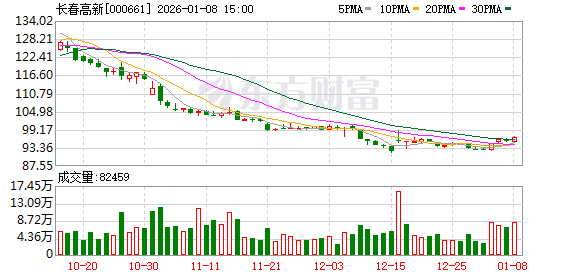
长春高新:子公司注射用GenSci136境内生产药品注册临床试验申请获得受理
Xin Lang Cai Jing· 2026-01-08 08:34
Core Viewpoint - Changchun High-tech announced that its subsidiary, Jinsai Pharmaceutical, has had its clinical trial application for the domestically produced injectable GenSci136 accepted by the National Medical Products Administration [1] Group 1: Product Development - Injectable GenSci136 is a Class 1 therapeutic biological product independently developed by Jinsai Pharmaceutical, intended for the treatment of Immunoglobulin A Nephropathy (IgAN) [1] - The drug functions as a B-cell maturation antigen (BCMA) trimeric fusion protein, capable of binding to B lymphocyte stimulator (BlyS) and a proliferation-inducing ligand (APRIL) [1] - GenSci136 has the potential to block the interaction between BlyS, APRIL, and B cell membrane receptors, which may help in treating various autoimmune diseases characterized by fluid immune disorders and tissue damage caused by pathogenic antibodies [1]
中国创新药BD交易创新高,浦东核心枢纽如何炼成?丨出海观察
2 1 Shi Ji Jing Ji Bao Dao· 2026-01-07 12:30
Core Insights - The Chinese innovative pharmaceutical industry is undergoing a historic transformation, shifting from "fast followers" to "original creators" supported by solid data and market performance [1] - By 2025, the total value of innovative drug licensing transactions in China is expected to exceed $130 billion, with over 150 transactions, marking a historical high [1] - Shanghai's Pudong district is becoming a key hub for the global market, with significant achievements in CAR-T products and first-class new drugs [1] Industry Overview - China's pharmaceutical industry ranks second globally, with approximately 30% of innovative drugs in development worldwide [1] - The industry is entering a critical phase characterized by "innovation realization + global layout" [1] Company Developments - Chinese innovative drug companies are leveraging speed and cost-effectiveness to gain a competitive edge in the global market [3] - Companies like Maiwei Biotech and Jinsai Pharmaceutical are forming significant overseas business development (BD) partnerships, enhancing China's global competitiveness [3][4] - Maiwei Biotech has accelerated its BD efforts, securing exclusive licensing agreements for innovative therapies, including a $1 billion potential deal with Aditum Bio [4][5] Market Trends - By 2025, Pudong is expected to have approved four CAR-T products, accounting for 30% of the global total, and seven first-class new drugs, representing 14% of the national total [1] - The commercial sales of innovative drugs in Pudong are projected to exceed 11.6 billion yuan in 2024, with several new drugs achieving over 1 billion yuan in annual sales [10] Strategic Initiatives - Companies are focusing on building comprehensive global capabilities covering research, registration, and sales to transition from "licensing out" to "commercialization abroad" [10] - Jinsai Pharmaceutical has established local teams in the U.S. and Europe to manage clinical trials and seek collaboration opportunities [8] Innovation and Collaboration - The future of innovative drugs lies in international markets, with companies emphasizing deep understanding of disease biology as a core competitive advantage [5] - Companies are forming cooperative committees with BD partners to ensure project progress through information sharing and resource collaboration [5] Ecosystem Support - The rise of China's innovative drug industry is attributed to years of policy guidance, technological accumulation, and capital cultivation [23] - The unique industrial atmosphere, talent pool, and complete industrial chain in Zhangjiang are seen as core advantages for local companies [23][24] - Pudong's talent policies and supportive platforms are facilitating the rapid gathering of global talent resources [23] Future Outlook - The next 3-5 years are expected to see continued emphasis on internationalization and globalization among Chinese biopharmaceutical companies [14] - Companies are increasingly focusing on source innovation and high-quality BD potential to meet global market demands and achieve high valuations [17]



中国创新药BD交易创新高,浦东核心枢纽如何炼成?丨出海观察
21世纪经济报道· 2026-01-07 12:09
Core Viewpoint - The Chinese innovative pharmaceutical industry is undergoing a historic transformation, shifting from "fast followers" to "original creators," supported by solid data and market performance [1]. Group 1: Industry Overview - China's pharmaceutical industry is the second largest globally, with innovative drugs accounting for approximately 30% of global research [1]. - By 2025, the total value of innovative drug licensing transactions in China is expected to exceed $130 billion, with over 150 transactions, marking historical highs [1]. - The increase in competitiveness and cost-effectiveness of Chinese pharmaceutical assets is driving the industry into a critical phase of "innovation realization + global layout" [1]. Group 2: Regional Development - Shanghai's Pudong district is becoming a core hub for the global market connection of China's biopharmaceutical industry, with significant achievements in innovative drug approvals and business development transactions [1]. - By 2025, Pudong has approved 4 CAR-T products (30% of the global total) and 7 Class 1 new drugs (14% of the national total), with business development transaction amounts reaching $20.4 billion (14% of the global total) [1]. Group 3: Competitive Advantages - Chinese innovative pharmaceutical companies are gaining a competitive edge in the global market due to their speed and cost-effectiveness, being able to advance drug discovery 2-3 times faster and recruit clinical trial patients 2-5 times faster than international counterparts [3]. - The cost per patient for clinical trials in China is only half that of Europe and the US [3]. Group 4: Business Development Collaborations - Companies like Maiwei Biopharma and Jinsai Pharmaceutical are forming significant overseas business development collaborations, enhancing China's global competitiveness in innovative drugs [3][5]. - Maiwei Biopharma has accelerated its business development efforts, securing exclusive licensing agreements for innovative therapies within months of initial meetings [3][4]. Group 5: Full-Chain Layout - A number of innovative pharmaceutical companies are rapidly constructing comprehensive overseas layouts covering research, registration, and sales, transitioning from "licensing out" to "commercialization abroad" [9]. - By 2024, Pudong is expected to have over 20 innovative drugs achieving commercial sales, with total sales exceeding 11.6 billion yuan [9]. Group 6: Source Innovation - The market consensus is that only companies with source innovation capabilities, quality business development potential, and global layout abilities can effectively meet global market demands and achieve high valuations [16]. - Companies like Jinfang Pharmaceutical are focusing on unique therapeutic areas and avoiding following trends, which positions them favorably in the global market [17]. Group 7: Industry Ecosystem - The rise of China's innovative pharmaceutical industry is attributed to years of policy guidance, technological accumulation, and capital cultivation, leading to a critical growth inflection point [21]. - The unique industrial atmosphere, quality talent pool, and complete industrial chain in Zhangjiang are considered core advantages for companies operating in the region [21][22]. Group 8: Future Outlook - The Pudong district is set to enhance its support for the biopharmaceutical industry, aiming to become a global hub for innovative drug launches and scientific entrepreneurship [23]. - The ongoing development of a differentiated industrial linkage pattern is expected to further support the growth of the life sciences industry in the region [23]. Group 9: Conclusion - The path of globalization for Chinese innovative drugs is deepening, supported by core industrial hubs like Pudong and the continuous upgrading of companies' innovation and internationalization capabilities [24].

筑巢引凤聚合力 创新药出海再添“浦东动力”
2 1 Shi Ji Jing Ji Bao Dao· 2026-01-06 08:37
Core Insights - The Chinese innovative pharmaceutical industry is undergoing a historic transformation, shifting from "fast followers" to "originators" in drug development, supported by solid data and market performance [1] - By 2025, the total value of innovative drug licensing transactions in China is expected to exceed $130 billion, with over 150 transactions, marking a historical high [1] - Shanghai's Pudong district is becoming a key hub for the global market, with significant achievements in CAR-T products and first-class new drugs [1] Industry Performance - China's pharmaceutical industry ranks second globally, with approximately 30% of innovative drugs in development worldwide [1] - Pudong has approved 4 CAR-T products, accounting for 30% of the global total, and 7 first-class new drugs, representing 14% of the national total [1] - Business development (BD) transaction amounts in Pudong reached $20.4 billion, making up 14% of the global total [1] Competitive Advantages - Chinese innovative drug companies are gaining a competitive edge in the global market due to their speed and cost-effectiveness, being able to advance drug discovery 2-3 times faster and recruit clinical trial patients at half the cost compared to Western counterparts [2] - Companies like Maiwei Biotech and Jinsai Pharmaceutical are establishing significant overseas BD collaborations, enhancing China's global competitiveness in innovative drugs [2] Strategic Collaborations - Maiwei Biotech has accelerated its BD efforts, forming exclusive licensing agreements for innovative therapies, including a collaboration with Calico Life Sciences for an IL-11 targeted therapy [2][3] - Jinsai Pharmaceutical's subsidiary has signed an exclusive licensing agreement with Yarrow Bioscience for a monoclonal antibody, with potential milestone payments totaling up to $1.365 billion [4] Full-Chain Development - A number of innovative drug companies are building comprehensive overseas strategies that cover research, registration, and sales, transitioning from "licensing out" to "commercialization abroad" [5] - By 2024, Pudong is expected to have over 20 innovative drugs achieving commercial sales, with total sales exceeding 11.6 billion yuan [5] Global Market Positioning - Junshi Bioscience's innovative drug has become a benchmark for commercialization abroad, having been approved in over 40 countries and regions [5][6] - The core challenge for Chinese companies in international markets is to ensure their products meet local medical needs, requiring innovation, efficacy, and safety [5] Talent and Ecosystem - The rise of China's innovative drug industry is supported by years of policy guidance, technological accumulation, and capital cultivation, with a strong emphasis on the importance of a mature industrial ecosystem [12] - Pudong's unique industrial atmosphere, talent pool, and complete industrial chain are critical advantages for local companies [12][13] Future Outlook - The Pudong district plans to enhance its support for the life sciences industry, aiming to become a global hub for innovative drugs and medical devices by 2025 [15] - The industry anticipates that internationalization will remain a core development trend for domestic biopharmaceutical companies over the next 3-5 years [7][8]
纳入医保,已正式落地实施!
Xin Lang Cai Jing· 2026-01-04 01:41
Core Insights - The new national medical insurance drug list was officially implemented on January 1, adding 114 new drugs, including long-acting growth hormones for children with endogenous growth hormone deficiency [1] Group 1: Drug Inclusion and Benefits - Two domestic long-acting growth hormone preparations included in the insurance are Yipei (from TeBao Biotech) and Jinpei (from JinSai Pharmaceutical), with Yipei being a class 1 new drug expected to launch in 2025 [2] - Long-acting growth hormones require administration only once a week, significantly reducing the number of injections by over 300 per year compared to traditional short-acting hormones, thus improving adherence and long-term management [2] Group 2: Price Adjustments - The price of Yipei 5mg was reduced from 1798 yuan to 853.2 yuan, a decrease of approximately 53%, while Jinpei's price was reported to drop from about 3500 yuan to approximately 900 yuan, a reduction of about 75% [2] - The actual price for Jinpei may vary as it still requires negotiations with local insurance bureaus, and the reported price of 900 yuan is considered an industry secret [2] Group 3: Financial Impact on Patients - For a child weighing 30 kg, the annual treatment cost with Jinpei was estimated to drop from about 120,000 yuan to 30,000 yuan after the price reduction, with potential further reductions based on local insurance reimbursement policies [5] - Families previously facing high treatment costs due to ineffective therapies will experience substantial relief from the new pricing structure [5]


长效生长激素首次纳入国家医保,700万矮小患儿迎来“普惠曙光”
Xin Lang Cai Jing· 2026-01-01 01:16
Core Viewpoint - The inclusion of the long-acting growth hormone, Jinpei, in the national medical insurance directory marks a significant milestone in the treatment of children's growth disorders in China, aiming to improve treatment rates and reduce financial burdens on families [1][3][7]. Group 1: Market Opportunity - Approximately 7 million children in China suffer from short stature, with a treatment rate of less than 5%, compared to 20%-30% in developed countries [2]. - The new medical insurance policy is expected to enhance the treatment rate for short stature by making long-acting growth hormone more accessible and affordable [2][3]. Group 2: Economic Impact - The annual treatment cost for a 30 kg child using Jinpei will decrease from approximately 120,000 yuan to 30,000 yuan after being included in the insurance [3]. - The long-acting formulation reduces the injection frequency from daily to weekly, significantly improving patient compliance and reducing treatment-related pain [3][5]. Group 3: Innovation and Development - Jinpei is the first PEG long-acting growth hormone globally, representing a breakthrough in the treatment of growth hormone deficiency [1][4]. - The product has been validated through over 150,000 patient clinical applications, demonstrating its safety and efficacy [5][6]. Group 4: Competitive Landscape - The entry of Jinpei into the insurance directory is expected to reshape the pediatric pharmaceutical market, enhancing the company's competitive position by providing a comprehensive product line [7][8]. - The official endorsement from the insurance directory is likely to alleviate parental concerns regarding the safety of growth hormone treatments, potentially increasing patient conversion rates [7][8]. Group 5: Future Prospects - The successful integration of Jinpei into the medical insurance system is anticipated to pave the way for further pediatric product launches by the company, enhancing its brand trust among healthcare providers and patients [8][9]. - The trajectory of the company reflects the broader innovation and upgrade trends within China's pharmaceutical industry, indicating a shift towards more accessible and effective treatments for pediatric patients [9].
长春高新:子公司GenSci141软膏境内生产药品注册临床试验申请获受理
Xin Lang Cai Jing· 2025-12-26 08:06
Core Viewpoint - Changchun High-tech announced that its subsidiary, Jinsai Pharmaceutical, received the Acceptance Notice from the National Medical Products Administration for the clinical trial application of GenSci141 ointment, which is a dihydrotestosterone ointment aimed at improving children's micropenis [1] Group 1 - The drug is classified as a chemical drug of categories 2.2 and 2.4 [1] - Successful progress in clinical trials could help the company expand its business and optimize its product structure [1] - The pharmaceutical product development cycle is long and involves multiple stages, leading to uncertainties in the clinical trial process [1]
长春高新:子公司GenSci145片注册临床试验申请获得受理
Xin Lang Cai Jing· 2025-12-24 11:34
Core Viewpoint - Changchun High-tech announced that its subsidiary, Gensci Pharmaceutical, has received the Acceptance Notice from the National Medical Products Administration for the clinical trial application of GenSci145 tablets, a new selective PI3Kα inhibitor developed by Gensci [1] Group 1 - Gensci145 tablets have demonstrated strong selective inhibitory activity against various hotspot mutations in the PIK3CA helical and kinase domains during preclinical studies [1] - The drug has shown clear efficacy and good safety characteristics in animal models [1]
金赛药业子公司超13亿美元新药授权交易达成
Mei Ri Jing Ji Xin Wen· 2025-12-17 13:36
Core Viewpoint - Changchun High-tech (000661) has seen a significant stock price increase following the announcement of a licensing agreement for the GenSci098 injection project, indicating a strategic move towards internationalization and diversification in its product offerings [1][2]. Group 1: Licensing Agreement Details - Changchun High-tech's subsidiary, Changchun Jinsai Pharmaceutical, has entered into an exclusive licensing agreement with Yarrow Bioscience, which includes an upfront payment of $120 million, with $70 million being non-refundable [1][2][3]. - The agreement allows Yarrow to develop and commercialize GenSci098 outside of China, while Changchun retains rights for development and commercialization within China [2][3]. Group 2: Financial Implications - The total potential milestone payments from the agreement could reach up to $1.365 billion, in addition to a sales commission exceeding 10% of net sales once the product is launched [3][4]. - The financial performance of Changchun High-tech has faced challenges, with a reported revenue decline of 7.55% and a net profit drop of 43.01% last year, primarily due to decreased sales of its short-acting growth hormone product [6][7]. Group 3: Strategic Focus and Market Position - Changchun High-tech is focusing on expanding its product lines beyond growth hormones, targeting areas such as pediatrics, women's health, and anti-aging [6][7]. - The company has increased its R&D investment by 17.32% year-on-year, indicating a commitment to innovation and product development [6][7]. - The company is also pursuing international market expansion, having submitted a listing application to the Hong Kong Stock Exchange to raise funds for global collaboration and development [7].