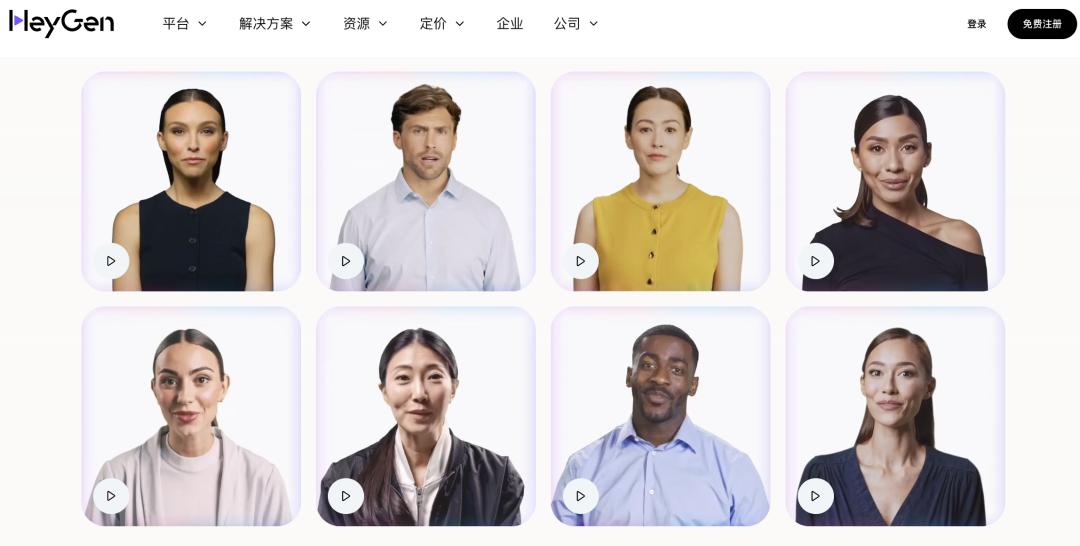
HeyGen

Search documents
第一批把脸卖给AI的人,已经后悔了
创业邦· 2025-09-14 11:38
Core Viewpoint - The article discusses the emerging business of "selling faces" for AI-generated digital avatars, highlighting both the lucrative opportunities and the potential risks associated with loss of control over one's image and identity [5][30]. Group 1: Business Model and Financials - AI companies are shifting from crowdsourcing facial data to directly purchasing face rights, creating "premium digital humans" that can be infinitely replicated and monetized [5][30]. - Companies like Synthesia and HeyGen have achieved annual revenues in the hundreds of millions by mass-producing digital avatars, with initial investments of a few thousand dollars potentially leading to significant long-term returns [5][19]. - The cost of acquiring facial data has decreased significantly, with companies now able to purchase licensed faces for around $300 each, leading to a scalable and profitable business model [19][20]. Group 2: Risks and Ethical Concerns - Individuals who have sold their likenesses often face unexpected consequences, such as their digital avatars being used in ways they did not consent to, including promoting dubious products or political agendas [7][10][11]. - Contracts for selling facial rights are typically heavily skewed in favor of the companies, often including clauses for unlimited and irreversible usage, which can lead to significant personal and professional repercussions for the individuals involved [14][30]. - The rapid growth of this industry raises questions about the nature of personal identity and the ethical implications of treating human likenesses as digital assets that can be bought, sold, and exploited [30]. Group 3: Industry Landscape - The AI digital human sector is becoming increasingly crowded, with numerous players entering the market, including Synthesia, HeyGen, and DeepBrain, each targeting different applications such as corporate training and marketing [27][29]. - The business model of "selling faces" is seen as a win-win for both actors seeking quick income and companies looking to reduce costs and improve efficiency in content creation [27][30]. - Despite the ongoing risks and control issues, the underlying business logic remains clear and operational, with companies exploring ways to optimize their practices and mitigate potential fallout [30].


HeyGen与Manus:同为华人AI独角兽,为何命运截然不同?
Hu Xiu· 2025-08-22 03:53
Core Viewpoint - The article discusses the contrasting fates of two AI companies, HeyGen and Manus, highlighting how regulatory compliance and strategic decisions have led to HeyGen's success and Manus's struggles amid U.S. scrutiny [1][2][3]. Group 1: Company Backgrounds - HeyGen, founded by Chinese entrepreneurs, is an AI video generation platform that allows users to create professional videos quickly, supporting 175 languages and serving 85,000 global clients [3][4][26]. - Manus, also founded by Chinese entrepreneurs, operates in the AI space but has faced challenges due to U.S. regulatory investigations, particularly the Reverse CFIUS inquiry [1][2][22]. Group 2: Strategic Decisions and Compliance - HeyGen successfully relocated its headquarters from Shenzhen to Los Angeles in 2022 and completely divested from Chinese investors by 2023, effectively distancing itself from potential regulatory issues [20][23]. - Manus, in contrast, has retained its Chinese corporate structure and investors, which has drawn increased scrutiny from U.S. regulators, especially after its recent high-profile marketing efforts [25][28][29]. Group 3: Financial Trajectories - HeyGen raised approximately $9 million in seed funding from notable investors like Sequoia China and IDG Capital, followed by a $5.6 million round in 2023, leading to a valuation of $500 million [15][19][20]. - Manus's financial activities have been less clear, with its recent fundraising efforts occurring under the shadow of regulatory concerns, potentially limiting its growth prospects [25][28]. Group 4: Market Positioning and Risks - HeyGen has positioned itself as a "low-profile leader" in the AI video generation market, focusing on marketing and education applications, which appear to be less sensitive to regulatory scrutiny [26][27]. - Manus's high-profile marketing and attempts to enter the Chinese market have raised alarms among U.S. regulators, complicating its operational landscape and leading to mixed perceptions in both the U.S. and China [29][30]. Group 5: Lessons and Future Considerations - The experiences of HeyGen and Manus illustrate the importance of strategic positioning in the face of geopolitical tensions, emphasizing the need for companies to choose between markets rather than attempting to operate in both simultaneously [30][31]. - The article suggests that future AI entrepreneurs must carefully consider their corporate structures and compliance strategies to navigate the evolving regulatory landscape [36][37].

别听模型厂商的,Prompt 不是功能,是 bug
Founder Park· 2025-08-04 13:38
Core Insights - Sarah Guo, founder of Conviction, emphasizes the rapid adoption of AI across various industries, particularly in traditional sectors [2][4] - The article discusses the importance of user experience in AI products, suggesting that prompts are a flaw rather than a feature [5][28] - AI coding is identified as the first breakthrough application of AI, with significant growth potential in the sector [6][23] Investment Opportunities - Conviction has invested in several AI companies, including Cursor, Cognition, and Mistral, covering various aspects of AI infrastructure and applications [2][10] - The article highlights the impressive revenue growth of AI companies, with some achieving annual revenues of $10 million to $100 million in a short time [11][21] - The potential for creating value in traditional industries through AI is noted, with many sectors rapidly embracing AI technologies [31][32] AI Capabilities and Trends - The enhancement of reasoning capabilities in AI models is seen as a significant advancement, unlocking new application scenarios [13][18] - The rise of AI agents, which can autonomously complete tasks, is highlighted as a growing trend in the AI landscape [14][20] - The article discusses the competitive landscape of AI models, with various players emerging and the importance of multi-modal capabilities [20][18] Product Development Insights - Cursor's success is attributed to its orchestration of multiple models to enhance user experience and efficiency [25][21] - The article argues that the best AI products should feel intuitive and require minimal user input, moving beyond traditional text boxes [28][30] - Emphasis is placed on the need for a deep understanding of user workflows and industry-specific knowledge to create effective AI solutions [30][31] Execution and Competitive Advantage - Execution is identified as a key competitive advantage in the AI space, with companies needing to deliver superior experiences to win over users [35][36] - The article suggests that the current AI landscape offers significant opportunities for innovation and user experience enhancement [36][37] - The importance of leveraging private data and deep workflows to maintain a competitive edge is emphasized [36][35]


Benchmark又一GP离职,2 年投资收益超 10 亿美金
投资实习所· 2025-07-25 11:07
Core Insights - Benchmark is facing significant challenges with its GP team, which has now dwindled to just three members [1][2] - The firm has recently raised a new fund of $425 million focused on AI investments [1][10] - Victor Lazarte, a GP partner, has announced his departure to start his own VC, marking a notable shift in Benchmark's team dynamics [2][5] Team Changes - Miles Grimshaw left Benchmark to join Thrive Capital for more flexible investment opportunities [1] - Sarah Tavel transitioned from GP to Venture Partner to focus on AI research [1] - Victor Lazarte's exit leaves Benchmark with only three remaining GP partners: Chetan Puttagunta, Eric Vishria, and Peter Fenton, each recognized for their expertise in different sectors [2] Investment Performance - During his two years at Benchmark, Victor Lazarte led investments in several AI companies, achieving significant returns [3] - Benchmark invested $60 million in Wildlife Studios, which has grown from a $1.3 billion valuation in 2019 to $3 billion, with total revenues exceeding $2 billion [2][3] - Lazarte's investments have reportedly generated over $1 billion in returns from an investment of $160 million [3] Future Directions - Lazarte plans to focus his new fund on AI investments and will continue to collaborate with former Benchmark colleagues [7] - Benchmark remains committed to investing in AI companies founded by Chinese teams, despite facing criticism from some industry peers [4]

Manus闪电撤离中国,Fabarta精准补位
Sou Hu Wang· 2025-07-23 08:24
Group 1 - Manus has announced significant layoffs, with 120 employees affected, and has relocated its headquarters from China to Singapore, leaving only about 40 core technical staff in Singapore [1] - The launch of Fabarta, a personal AI assistant by Fengqing Technology, coincides with Manus's exit, indicating a shift in the market towards more personalized AI solutions [2][8] - Capital pressure and regulatory challenges, particularly from the U.S. investment restrictions, have been identified as key factors driving Manus's decision to leave the Chinese market [2][3] Group 2 - The demand for intelligent assistants among Chinese users remains strong despite Manus's exit, highlighting a continued need for efficient tools in specific tasks like long-form writing and data processing [2] - Manus's business model has been criticized for its reliance on external models and high API costs, which, combined with fierce domestic competition, contributed to its struggles [3][5] - Fabarta differentiates itself by focusing on enterprise-level capabilities and personalized user experiences, positioning itself as a more reliable and context-aware assistant compared to Manus [8][9]

裁员80人背后的AI生死局:Manus何以至此?
凤凰网财经· 2025-07-10 13:13
Core Viewpoint - Manus, an AI Agent company, has faced significant challenges following a large-scale layoff and a shift of its headquarters to Singapore, indicating a strategic pivot in response to market pressures and operational efficiency [1][3][10]. Group 1: Company Developments - Manus confirmed a layoff of non-core technical staff, reducing its workforce from 120 to around 40 core technical personnel, as part of a strategy to enhance operational efficiency [1][3]. - The company has rapidly expanded its global presence, moving its headquarters to Singapore and establishing offices in California and Tokyo, reflecting a trend of "de-Chinaization" in its operations [3][4]. - Manus has completed two rounds of financing within a year, with a notable $75 million Series B funding led by Benchmark, raising its valuation to $500 million [4][6]. Group 2: Market Challenges - The AI Agent market is highly competitive, with the need for strong user retention and data accumulation to create a sustainable business model [2][10]. - Manus faces internal challenges related to the complexity of coordinating multiple AI models as tasks grow in scale and complexity [14]. - External competition is intensifying, particularly from newer entrants like GenSpark, which has demonstrated rapid growth and user acquisition, posing a threat to Manus's market position [15][16]. Group 3: Strategic Considerations - Manus has a significant user base of 200,000 potential paying customers, which could be monetized if user engagement and retention strategies are effectively implemented [17][20]. - The company must focus on creating a product that is not only functional but also engaging to retain users, as evidenced by successful strategies employed by other AI startups [18][19]. - There is a potential path for Manus to pivot towards niche markets or vertical applications, which could provide a more secure competitive position in the evolving AI landscape [20][22].

中国AI Agent新贵Manus大规模裁员,将总部迁至新加坡并百万年薪招聘|独家
Tai Mei Ti A P P· 2025-07-08 09:13
Core Viewpoint - Manus, a Chinese AI Agent company, has relocated its headquarters to Singapore and is undergoing layoffs in its domestic operations due to funding and technological constraints related to US-China AI competition [2][3][10]. Group 1: Company Operations - Manus has approximately 120 employees in China, with over 40 core technical staff moving to Singapore, while the remaining employees will face layoffs with compensation packages [2]. - The company has initiated local recruitment in Singapore for positions such as AI engineers and data scientists, offering salaries ranging from $8,000 to $16,000 per month [2]. - Manus has established a new entity in Singapore, registered as "Butterfly Effect," and is planning to open an office in Tokyo to expand into markets outside the US [3][9]. Group 2: Funding and Financials - Manus has completed a new funding round led by Benchmark, raising $75 million (approximately 540 million yuan) and achieving a valuation of $500 million (approximately 3.6 billion yuan) [3]. - The company plans to use the funds from its recent B round financing to explore new markets, including the US, Japan, and the Middle East [3]. Group 3: Product and Technology - Manus's core product, Monica.im, is designed to perform complex tasks beyond traditional AI assistants, achieving state-of-the-art results in GAIA benchmark tests [4]. - The company has faced delays in technology development due to restrictions on accessing NVIDIA AI chips, impacting its product iteration [3][10]. - Manus's AI Agent product is positioned as a tool that can replace existing tools rather than just a conversational AI, aiming to provide more comprehensive task solutions [11]. Group 4: Market Context - The shift of Manus to Singapore reflects a broader trend among AI companies moving operations overseas due to US-China investment restrictions and technological limitations [9][10]. - The Singaporean AI sector is experiencing significant growth, with a reported 45% increase in financing in 2024, indicating a favorable environment for AI startups [10].
腾讯研究院AI速递 20250703
腾讯研究院· 2025-07-02 15:52
Group 1 - Cursor's developer Anysphere has poached two key figures, Boris Cherny and Cat Wu, from Claude Code, despite their close partnership [1] - Anthropic's annual revenue has reached $4 billion with a valuation of $61.5 billion, and its Claude model is regarded as the best programming model [1] - Anysphere's revenue has doubled within three months to an annual income of $500 million, with a valuation of $9.9 billion, intensifying competition in the AI programming market [1] Group 2 - Zhizhu has released the open-source GLM-4.1V-Thinking visual reasoning model, which surpasses an 8x parameter 72B model in 18 authoritative evaluations [2] - The model architecture integrates ViT visual encoders, MLP adapters, and GLM language decoders, enhancing processing capabilities with 2D-RoPE and 3D-RoPE positional encodings [2] - The training process consists of four stages: multi-modal pre-training, long-context continuous training, supervised fine-tuning, and curriculum sampling reinforcement learning, significantly improving logical reasoning abilities [2] Group 3 - Sakana AI has introduced the Adaptive Branch Monte Carlo Tree Search (AB-MCTS) algorithm, enhancing large model reasoning capabilities through flexible dual-directional search [3] - The Multi-LLM AB-MCTS system allows multiple cutting-edge models (Gemini 2.5 Pro, o4-mini, DeepSeek-R1-0528) to collaborate, achieving a 30% performance improvement on the ARC-AGI-2 benchmark test [3] - This algorithm dynamically selects the optimal model based on the problem, enabling collective intelligence to surpass the limitations of individual models, with the underlying framework TreeQuest open-sourced for user applications [3] Group 4 - HeyGen has launched a "product placement" feature that generates realistic promotional videos by simply uploading a character's avatar and product images, with Elon Musk promoting Labubu as a notable case [4] - Founded by two alumni from Tongji University, HeyGen is valued at $500 million with an annual revenue nearing $80 million, expected to surpass $100 million [5] - Compared to competitors like Topview, HeyGen excels in model expression naturalness and lip-sync accuracy, offering unlimited short video production for a monthly fee of $29 [5] Group 5 - Baidu has undergone its most significant self-revolution in nearly a decade by upgrading its search function to an AI smart box that supports ultra-long text, while still retaining the traditional search mode [6] - The introduction of the "Bai Kan" feature innovates the way search results are displayed, prioritizing the most useful rich media content such as video explanations and intelligent summaries [6] - The search functionality has evolved from simple information retrieval to task delivery, allowing users to obtain ratings, locations, and travel plans directly, even supporting one-click taxi booking or package purchases [6] Group 6 - Microsoft has released the MAI-DxO medical AI system, which boasts an accuracy rate of 85.5%, outperforming a professional doctor with 10 years of experience by four times [7] - MAI-DxO simulates a real medical team's sequential diagnostic process through collaboration among five virtual doctor roles [7] - The system offers five diagnostic modes to meet various scenario needs and has introduced a professional medical sequential diagnostic benchmark, SDBench, featuring 304 challenging diagnostic cases [7] Group 7 - Baidu has launched its self-developed multi-modal generative large model MuseSteamer and the "Hui Xiang" platform, supporting high-quality video generation at resolutions from 720p to 1080p, setting a new record on the VBench-I2V video generation leaderboard [8] - The model is available in four versions: Lite (720p fast speed), Turbo (720p excellent character motion), Pro (1080p cinematic quality), and Voice (automatically generates sound effects and dialogue), catering to different creative needs [8] - Key technological highlights include precise understanding of Chinese semantics, structured video description language, cinematic dynamic beauty generation, and integrated audio-video generation, already applied in advertising creativity and short drama production [8] Group 8 - Cloudflare has introduced the "Pay Per Crawl" experimental feature, allowing websites to set permissions, fees, or blocks for AI crawlers, granting content creators bargaining power over their content [10] - Data indicates a significant disparity between AI crawlers and traditional search engines: Google returns one click for every 6-7 crawls, while OpenAI requires 1,500 crawls and Anthropic 73,300 crawls for a single click, disrupting the existing ecological balance [10] - This feature implements fee control through HTTP 402 status codes and digital signature authentication mechanisms, currently in beta testing, potentially creating a new monetization model for internet content creators from "advertising monetization" to "content licensing monetization" [10] Group 9 - Chai Discovery, supported by OpenAI, has launched the Chai-2 multi-modal generative model, achieving a 16% hit rate in de novo antibody design, improving over 100 times compared to previous SOTA technologies [11] - Chai-2 can identify effective antibodies for 26 out of 52 test targets (50%) within a 24-well plate (≤20 designs) and can generate various forms of sequences, including scFv antibodies, VHH domains, and mini-binding sites [11] - The model employs a controllable model-driven framework, reducing the development cycle from months to two weeks, achieving a 68% success rate in wet lab experiments for micro-protein design, potentially unlocking drug development capabilities beyond traditional technologies [11] Group 10 - The New Yorker highlights that AI teaches humans to write "good" articles but causes truly good articles to disappear [12] - The article points out that AI is reconstructing culture with an "average" logic, leading to standardization and loss of uniqueness in writing, with MIT experiments showing a significant reduction in brain activity levels among students using ChatGPT for writing [12] - Research indicates that AI leads to cultural homogenization, with Cornell University experiments confirming that AI-assisted writing styles of users from India and the US converge towards a "Western paradigm," with common references to pizza and Christmas [12]



独家:HeyGen ARR 破 8000 万美金,Benchmark 又投了一位华人创始人
投资实习所· 2025-06-30 09:51
Core Insights - HeyGen has achieved significant growth, with its Annual Recurring Revenue (ARR) increasing from $35 million to $80 million, and it is projected to surpass $100 million this year [1][2] - The company has a valuation exceeding $1 billion, driven by a user base of over 15 million, including more than 100,000 paying users and 45,000 enterprise clients [2] - HeyGen's recent product launch, a video Agent, automates the video creation process, transforming ideas into videos in minutes, which positions the company at the forefront of creative automation [3][4] Group 1 - HeyGen completed a $60 million Series A funding round led by Benchmark at a valuation of $500 million, with an ARR of $35 million at that time [1] - The company has maintained profitability, with previous funding largely sitting in the bank, similar to the AI recruitment platform Mercor, which has a valuation of $10 billion [1] - HeyGen's ARR growth indicates a strong market position, with a user base that includes various industries, such as manufacturing and Fortune 500 companies [2] Group 2 - The competitive landscape includes Synthesia, which focuses on enterprise clients and has an ARR of $100 million, with a valuation of $2.1 billion after a recent funding round [2] - Synthesia has over 65,000 enterprise clients and has implemented cash compensation and equity offerings to alleviate concerns from actors about being replaced by digital avatars [2] - The rise of digital content creation tools is impacting traditional video production roles, leading to a shift in the industry [2] Group 3 - HeyGen's video Agent is described as the world's first creative operating system, automating the entire video production workflow from scriptwriting to editing [3] - The system analyzes brand data to ensure consistency in output and optimizes content for multiple platforms [3][4] - The trend towards automation in creative processes is evident, with traditional tools being replaced by AI-driven solutions [4]

北美老牌基金突袭硅谷,5家隐身华人AI公司获千万级“战略押注”
3 6 Ke· 2025-05-21 03:42
Core Insights - Manus, an AI platform, has gained significant attention by opening registration to overseas users and removing the waiting list, allowing users to execute one free task daily and earn rewards [1] - The parent company, Butterfly Effect, raised $75 million in funding led by Benchmark, increasing its valuation to $3.6 billion, nearly five times its valuation at the beginning of the year [1] - Manus focuses on application-level AI solutions, utilizing a hybrid architecture for multi-model collaborative reasoning, achieving an accuracy rate of 86.5% in GAIA benchmark tests, surpassing OpenAI's similar products [2][3] - The success of Manus highlights the growing influence of Chinese AI teams in Silicon Valley, with many venture capitalists seeking recommendations for similar teams [1][2][3][4] Company Developments - Manus has launched a new product line aimed at enterprise-level markets, focusing on AI automation workflows to help small and medium-sized enterprises reduce costs and increase efficiency [1] - The platform's unique approach combines asynchronous processing and automated execution, enabling a seamless transition from AI-generated suggestions to closed-loop execution [3] - The company has garnered support from notable figures in the tech industry, indicating a strong belief in its potential to redefine practical AI applications [3] Market Trends - The rise of Manus reflects a broader trend of Chinese teams transitioning from followers to leaders in the AI space, with a focus on practical applications rather than theoretical advancements [4][14] - There is a growing interest in AI solutions that integrate existing technologies into business workflows, as evidenced by the emergence of new startups leveraging Chinese technology to address unmet needs in the market [14] - The competitive landscape is evolving, with multiple teams exploring innovative applications of AI, indicating a vibrant ecosystem poised for further growth [4][14]