Twilio Inc.

Search documents
2026,是个“AI多模态大年”!普通人如何看懂十万亿美金的变局?
混沌学园· 2026-02-02 12:47
Core Insights - The article discusses the evolving landscape of the global AI industry, focusing on the competition among leading companies like OpenAI, Google, and Anthropic, and the potential of the next technological paradigm, Continual Learning, to disrupt the current market dynamics [2][7][15]. Group 1: AI Labs Competition - AI Labs are expected to exhibit a pattern of "alternating leadership" and "differentiation" in their competition, with the top three players—OpenAI, Anthropic, and Google—dominating the market and capturing approximately 90% of total AI revenue [7][8]. - OpenAI maintains a significant lead in consumer-facing applications with ChatGPT, boasting around 480-500 million daily active users, which is approximately 5.6 times that of Google's Gemini [9][10]. - Anthropic focuses on business applications and coding, with its Claude model being recognized as a state-of-the-art (SOTA) in software development [9][10]. Group 2: Technological Differentiation - Different AI labs have made strategic choices leading to clear technological differentiation, with OpenAI focusing on consumer applications, Anthropic on business and coding, and Google prioritizing multimodal capabilities [9][10][11]. - The competition between GPU and TPU architectures is forming two distinct camps, with Google leveraging its TPU technology to create a self-contained ecosystem, while NVIDIA continues to support OpenAI and Anthropic with GPU technology [11][12]. Group 3: Future Trends and Predictions - Continual Learning is identified as a critical future paradigm that could significantly enhance AI capabilities by allowing models to learn in real-time from interactions, moving away from static knowledge storage [17][21]. - The article predicts that by 2026, advancements in Continual Learning will lead to significant breakthroughs in AI, enabling models to become more adaptive and efficient [21][22]. - The AGI race is characterized as a long-term battle requiring sustained cash flow and investment, with companies needing to address commercial viability and efficiency concerns [23][26]. Group 4: Market Dynamics and Business Models - OpenAI's financial obligations raise questions about its business model, with estimates suggesting that its future revenue may only reach $200-300 billion, insufficient to cover its substantial capital expenditures [28][30]. - The article emphasizes the importance of new revenue streams and the potential for AI to create new economic value, particularly in sectors like SaaS and consumer applications [32][33]. - The competition in the AI market is not merely about technology but also about establishing sustainable business models that can withstand market pressures and capitalize on new opportunities [35][36]. Group 5: Emerging AI Applications - The article highlights the emergence of proactive agents that can provide services autonomously, requiring models to possess real-time learning capabilities [60][62]. - Voice agents are becoming a new interface for operating systems, with advancements in real-time speech-to-speech solutions expected to reshape user interactions [66][68]. - The rapid decline in LLM inference costs is noted, although the complexity of interactions may offset these savings, leading to a nuanced understanding of cost dynamics in AI applications [74][75].




科技巨头财报后“冰火两重天”! 市场严格“审判”AI投资回报率
智通财经网· 2026-02-02 01:21
近几个季度,市场一直对AI泡沫保持警惕,希望看到公司在AI技术上投入的数十亿美元能在业绩中得 到回报。 "投资者正在用脚投票,他们正进入那些增长更为显见、且感觉更具持续性的领域," Wolfe Research董 事总经理兼软件研究主管亚历克斯·祖金表示。 不过,华尔街认为近期软件股的抛售有些过度,并指出AI的益处需要更长时间才能体现。 "企业级应用涉及数据、治理、安全、合规、风险等诸多复杂因素,我们认为其中一些趋势和主题可能 需要更长时间才能完全展现,"他补充道,"我们仍处于采用的'零阶段'。" 智通财经APP获悉,上周,科技巨头的财报后股价表现显著分化,随着华尔街寻求人工智能投资回报的 明确信号以判定市场领头羊,清晰的赢家与落后者已然浮现。 Meta(META.US)股价单日飙升逾10%,投资者对其生产力提升以及AI技术全面整合至社交媒体应用、广 告与购物工具及内部工作流程表示欢迎。 与此同时,特斯拉(TSLA.US)股价在周五抛售后出现反弹,投资者正在消化埃隆·马斯克强调公司从电动 车制造商向自动驾驶和机器人领域转型后,所公布的大规模支出预测。 而科技巨头微软(MSFT.US)在公布业绩后股价重挫,市场 ...
How To Play AI Beta:拾象 2026 AGI 投资思考开源
海外独角兽· 2026-02-02 01:14
Core Insights - The rapid evolution of AI is outpacing market expectations, with significant shifts in consensus and narratives occurring almost monthly [2] - The report aims to recalibrate the understanding of the current AI competitive landscape and identify key technological and product trends that may dominate by 2026 [2] Current Landscape - The leading AI models are dominated by OpenAI, Anthropic, and Google, forming a top tier where slight advantages in model capabilities translate into substantial commercial value [6] - The competitive state among AI labs is characterized by alternating leadership and differentiation [4] Trends in AI Development - **Trend 1: Differentiation in Technical Approaches** - OpenAI focuses on consumer applications, maintaining a significant lead with ChatGPT, which has around 480-500 million daily active users, compared to Gemini's approximately 90 million [7] - Anthropic targets business applications and coding, with Claude Opus 4.5 being a strong performer in software development [7] - Google prioritizes multimodal capabilities, with Gemini 3 leading in this area but still catching up in text and coding capabilities [8] - **Trend 2: Two Major Computing Camps** - The industry is forming two camps: GPU (NVIDIA) and TPU (Google), with Google creating an integrated ecosystem while NVIDIA supports a broader alliance [10] - Current performance favors GPUs, but TPUs show potential for better cost control [10] Future Predictions - **Prediction 1: Continued Learning as a Key Paradigm** - Continual Learning is emerging as a critical paradigm, with expectations for significant advancements by 2026 [15] - This approach emphasizes models' ability to learn autonomously from interactions, moving from static to dynamic learning [16] - **Prediction 2: AGI Competition as a Long-term Battle** - The race for AGI resembles a marathon, requiring extensive data collection and long-term investment [21] - Companies like Google and ByteDance are positioned as strong contenders due to their cash flow and talent density [23] Business Model Considerations - The market is questioning the sustainability of AI investments, particularly regarding OpenAI's projected $1.4 trillion financial obligations [24] - OpenAI's revenue potential is estimated to be between $200-300 billion, which may not cover its capital expenditures [25] Key Investment Strategies - The ideal AGI investment strategy involves betting on the most promising model companies, necessary computing infrastructure, and the benefits of leading model technologies [32] - A recommended AGI basket includes OpenAI, ByteDance, Google, Anthropic, NVIDIA, and TSMC [32] Emerging Trends - **Trend 1: Models as Products** - The concept of "models as products" highlights that significant product improvements often stem from advancements in underlying models [36] - **Trend 2: Voice Agents as New OS Interfaces** - Voice agents are evolving into a new operating system layer, with a shift towards real-time speech-to-speech solutions [53] - **Trend 3: LLM Cost Deflation** - The cost of LLM inference is rapidly decreasing, with a reported 1000-fold reduction since GPT-3's launch [60] Competitive Dynamics - The release of Gemini 3 has altered the competitive landscape, leading to a decline in ChatGPT's user engagement, although ChatGPT maintains higher user retention and engagement metrics [62][63]

'The haves and the have nots': Wall Street sees divide in tech stock performance after earnings reports
Yahoo Finance· 2026-02-01 15:30
Core Insights - The stock performance of major tech companies diverged post-earnings, with Meta showing significant gains while Microsoft faced declines due to concerns over cloud growth and AI spending [1][3]. Group 1: Company Performance - Meta's stock surged over 10% in one day, driven by productivity gains and AI integration across its platforms [1]. - Tesla's shares rebounded after a sell-off, as investors reacted to a substantial spending forecast related to its shift towards autonomous driving and robotics [2]. - Microsoft's stock was negatively impacted by fears of slowing cloud growth and high AI-related expenditures, leading to a drop in shares for cloud software leaders like Salesforce and ServiceNow [3]. Group 2: Market Sentiment and Trends - There is a noticeable bifurcation in the tech sector, with clear distinctions between companies that are thriving and those that are struggling [4]. - Investors are gravitating towards sectors with more apparent growth, indicating a cautious approach towards software stocks amid concerns of an AI bubble [5]. - Analysts suggest that the recent sell-off in software stocks may be overdone, as the benefits of AI are expected to take longer to materialize [5]. Group 3: Investment Opportunities - Analysts highlight potential buying opportunities in data platform companies like MongoDB, data warehouse providers such as Snowflake, observability vendors like Datadog, and communications platform companies like Twilio, which have all seen declines alongside broader software stock weakness [6]. - A strong demand for memory and storage solutions for AI is emerging as a clear theme in the market [7].



Inside the future of growth for Apple
Youtube· 2026-01-28 06:30
Group 1: Market Trends and Company Performance - The stock of Corning is highlighted as a top performer due to increased demand for glass in data centers, particularly following a deal with Meta [2] - Companies are facing rising component prices, including memory, glass, and PCBs, which may lead to price increases for consumers [1][3] - Digital ad spending is expected to be positive if the economy remains strong, benefiting companies with significant spending plans for 2026 [7] Group 2: Product Developments and Innovations - Apple is set to release the iPhone Fold and a new home hub as part of the iPhone 18 family, indicating a strategic push into the home technology market [4][5] - There is an introduction of a lower-priced MacBook, which has not been seen in many years, suggesting a shift in product strategy [5] Group 3: AI and Software Industry Dynamics - The rise of AI is expected to commoditize software, impacting traditional software companies, particularly those reliant on seat-based models like Salesforce and Workday [11][12] - Data Dog is positioned as a key player in helping companies manage their IT stacks amidst the complexities introduced by AI [12][13] - Companies like Data Dog, Twilio, and MongoDB have reported strong quarterly results, indicating resilience in the data consumption sector [10]


AWS 网络指标数据 - 2026 年 1 月中旬更新-AWS Web Metrics Data Hint into the Print - Mid-Jan'26 Update
2026-01-22 02:44
Summary of Key Points from the Conference Call Industry Overview - The focus is on the U.S. Internet and U.S. SMID-Cap Software sectors, particularly Amazon Web Services (AWS) and its correlation with cloud-linked infrastructure companies like Datadog (DDOG) and Cloudflare (NET) [1][2]. Core Insights and Arguments - **Web Metrics Correlation**: There is a strong correlation between engaged visits to AWS' SSO web interface and AWS' non-AI revenue in the following quarter, indicating real-time trends that can predict revenue performance [1][34]. - **Q4 Revenue Acceleration**: Strong web metrics in H2'25 signal a potential acceleration in Q4 revenue for AWS and related companies. Q3 was noted as the strongest since 2021, with continued momentum into Q4 [2][33]. - **2025 IT Budget Dynamics**: IT budgets were reportedly spent more aggressively in H2'25, which may impact growth in H2'26 due to tougher comparisons with the end of 2025 [5][20]. - **CIO Survey Insights**: The recent CIO survey indicates that IT budgets entering 2026 are the strongest since 2018, with a focus on cloud modernization and platform investments [4][14]. - **AI Demand and Supply**: AI demand is critical for revenue acceleration in 2026, with an under-supply environment expected to persist despite significant capacity additions. AWS is expected to double its capacity by 2027, which is essential for continued revenue growth [6][15]. Financial Metrics and Forecasts - **Amazon (AMZN)**: Outperform rating maintained with a price target of $300. Expected adjusted EPS for 2026 is $8.31, with a P/E ratio of 28.8 [7][8]. - **Datadog (DDOG)**: Outperform rating maintained with a price target of $180. Expected adjusted EPS for 2026 is $2.85, with a P/E ratio of 41.8 [9]. - **Twilio (TWLO)**: Market-Perform rating maintained with a price target of $119. Expected adjusted EPS for 2026 is $5.83, with a P/E ratio of 20.4 [10]. - **Cloudflare (NET)**: Market-Perform rating maintained with a price target of $131. Expected adjusted EPS for 2026 is $1.58, with a P/E ratio of 116.6 [11]. Additional Important Insights - **Q1 Trends for 2026**: Early indicators suggest that Q1'26 may see growth acceleration compared to previous years, with a focus on avoiding the nuances that have historically dragged down performance [3][12]. - **Spending Patterns**: The spending patterns observed in 2025, particularly around the holiday season, may have implications for Q1'26 performance, as IT budgets were largely spent early [20][21]. - **Correlation with Other Companies**: AWS serves as a bellwether for other cloud consumption-linked companies, with strong correlations noted between AWS and Datadog, Cloudflare, and Twilio [49][50][53]. This summary encapsulates the key points discussed in the conference call, highlighting the trends, financial forecasts, and implications for the industry and specific companies.


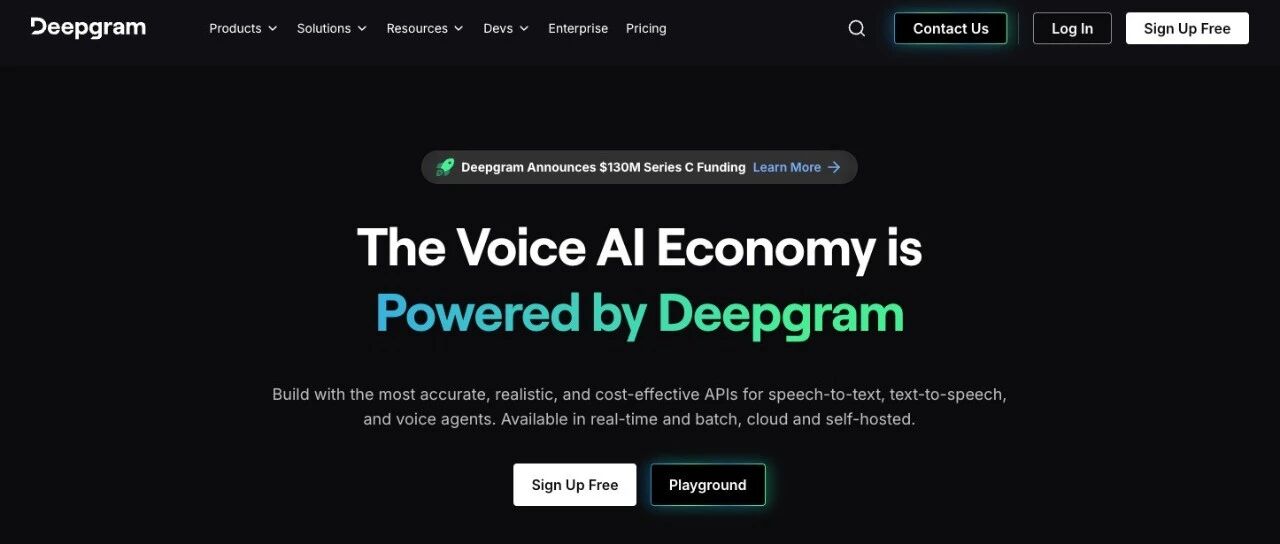
速递|AI语音Deepgram以13亿美元估值融资1.3亿美元,并收购YC初创公司OfOne
Z Potentials· 2026-01-14 03:55
AVP 合伙人 Elizabeth de Saint-Aignan 向 TechCrunch 表示,当该基金与企业探讨其 AI 应用情况时,语音技术频繁被提及,这促使他们开始关注该领域的 公司。 "2024 年,我们在与企业探讨如何在其业务中应用 AI 时,开始听到他们将语音 AI 应用于呼叫中心和销售发展等流程。进一步交流后,我们发现许多语音 AI 技术都由 Deepgram 提供支持,这促使我们最终联系了他们( Deepgram )。 " de Saint-Aignan 说道。 她指出,语音人工智能能帮助提升客户与企业互动体验,同时为企业降低成本,而 Deepgram 可在其中发挥核心作用。 Deepgram 拥有多款与文本转语音及语音转文本相关的模型,并提供支持低延迟对话语音识别与中断处理的平台及 API 。 该公司透露,已有超过 1,300 家 机构使用其语音 AI 产品与模型,包括会议记录工具 Granola 、语音助手初创公司 Vapi 以及 Twilio 。 在过去的几年里,语音 AI 在销售、市场营销、客户支持和消费者应用中的使用量急剧上升。因此,模型提供商获得了更多的业务,同时也引起了投资者 ...
为什么顶尖公司都在高薪寻找Storyteller?
3 6 Ke· 2026-01-13 09:41
Core Insights - The rise of the Storyteller role signifies a shift in corporate strategy, emphasizing storytelling as a core capability in business [1][8] - Companies are increasingly recognizing the importance of emotional connections and brand narratives in a saturated market [9][10] Group 1: Definition and Role of Storyteller - The Storyteller is not merely a copywriter but a strategic architect of brand narratives, responsible for creating a cohesive brand identity in consumers' minds [2][3] - The role involves defining the brand's identity, relationship with consumers, and its position in their lives, transforming abstract concepts into relatable stories [4][5][6][7] Group 2: Importance of Storyteller - The emergence of the Storyteller role is a response to the changing landscape of commercial communication, where emotional value has become crucial due to product homogenization [9][10] - In the age of social media, brands must engage directly with consumers, making the Storyteller akin to a brand's media editor [11] - As AI-generated content proliferates, the human touch in storytelling becomes a competitive advantage, making skilled Storytellers increasingly valuable [12][13] Group 3: Building Storyteller Capabilities - Effective Storytellers must possess a worldview and value judgment, enabling them to articulate a brand's identity and values [16] - Understanding audience psychology is essential for creating resonant narratives that reflect consumer desires and fears [17] - The ability to adapt stories across various platforms is crucial, ensuring that the core message resonates in different formats [18][19][20] - Long-term consistency and restraint in storytelling are vital, as they help maintain a brand's integrity and build trust over time [21] Group 4: Future of Storytelling in Business - The focus is shifting from data-driven efficiency to meaningful narratives, with brands needing to explain their existence and the value they bring to consumers [22][23] - The competition will increasingly revolve around narrative weight, with companies that master storytelling gaining a significant advantage [23][24]
Analysts Mixed on Twilio Inc. (TWLO) as AI Voice Momentum Builds
Yahoo Finance· 2026-01-12 10:45
Core Viewpoint - Twilio Inc. is viewed as a strong software infrastructure stock by hedge funds, despite a recent downgrade by Piper Sandler from Overweight to Neutral, with a slight increase in price target to $148 from $145 [1][2]. Group 1: Downgrade and Valuation - The downgrade by Piper Sandler is primarily due to expectations that Twilio's growth re-acceleration may slow down in 2026, along with limited potential for further increases in free cash flow estimates [2]. - Piper Sandler believes Twilio has met its capital-return expectations and is currently trading at a "relatively fair valuation" [2]. Group 2: Strategic Positioning and Growth Potential - Despite the cautious rating, Piper Sandler maintains a positive outlook on Twilio, considering it the "best house in this neighbourhood" within the communications software sector [3]. - The firm highlights the Voice AI infrastructure as a small but rapidly growing segment that could contribute to future growth [3]. Group 3: Future Catalysts - Piper Sandler suggests that a more positive stance on Twilio could emerge if the stock price decreases, with the upcoming fourth-quarter results and initial 2026 guidance being potential catalysts for reassessment [4]. Group 4: Analyst Perspectives - Analysts from RBC Capital and Citizens JMP have raised their price targets for Twilio, with Citizens JMP's analyst setting a target of $185, which is below the consensus high of $200, driven by strong trends in the AI voice business [5].
MongoDB, Inc. (NASDAQ:MDB) Financial Performance Analysis
Financial Modeling Prep· 2026-01-07 17:00
Company Overview - MongoDB, Inc. is a leading player in the database management industry, recognized for its innovative cloud-based solutions and modern, general-purpose database platform designed for developers and their applications [1] Financial Performance - The Return on Invested Capital (ROIC) for MongoDB is -5.15%, while its Weighted Average Cost of Capital (WACC) is 10.25%, resulting in a ROIC to WACC ratio of -0.50, indicating inefficiencies in capital utilization [2] - Compared to its peers, Okta, Inc. shows the most efficient capital utilization with a ROIC of 1.36% and a WACC of 7.09%, leading to a ROIC to WACC ratio of 0.19 [3] Peer Comparison - Other peers like Datadog, Zscaler, and Atlassian also exhibit negative ROIC to WACC ratios. Datadog has a ROIC of -0.78% and a WACC of 9.46%, resulting in a ratio of -0.08. Zscaler's ROIC is -3.00% with a WACC of 8.30%, leading to a ratio of -0.36. Atlassian's ROIC is -6.72% against a WACC of 7.79%, resulting in a ratio of -0.86 [4] - Twilio Inc. shows a slightly positive ROIC to WACC ratio of 0.11, with a ROIC of 1.08% and a WACC of 9.60%, indicating room for improvement in capital utilization [5] Conclusion - The analysis emphasizes the importance of efficient capital management in enhancing financial performance and boosting investor confidence across the industry [5]