
华东医药

Search documents
小菌种“撬动”大制造
Zheng Quan Ri Bao Zhi Sheng· 2025-11-27 16:07
Core Insights - The article discusses the transformative potential of biomanufacturing, which utilizes microorganisms to create sustainable products, thereby reducing reliance on fossil fuels and minimizing environmental impact [1][2][4]. Group 1: Biomanufacturing Overview - Biomanufacturing is defined as a process where microorganisms convert renewable resources into valuable products, such as biodegradable plastics and high-performance materials [2][3]. - The shift from traditional petrochemical-based production to biomanufacturing is seen as essential for achieving a more sustainable industrial model [2][4]. Group 2: Economic Impact and Market Potential - The biomanufacturing industry in China is approaching a total scale of nearly 1 trillion yuan, driven by policy support and capital investment [6]. - Utilizing agricultural waste, such as crop straw, could potentially generate over 1 million tons of biodegradable plastic annually, creating a market worth hundreds of billions [5][6]. Group 3: Industry Development and Collaboration - Companies like Kasei Biotech are forming strategic partnerships to develop biobased materials, demonstrating a collaborative approach to building a competitive biomanufacturing ecosystem [7]. - The integration of biomanufacturing in various sectors, including healthcare and consumer products, is expanding, with companies innovating in areas like biodegradable medical materials and low-sugar food products [8]. Group 4: Challenges and Barriers - The biomanufacturing sector faces challenges in scaling up from laboratory to industrial production, particularly in optimizing microbial strains and production processes [9][10]. - Regulatory hurdles and slow approval processes for genetically engineered strains hinder the speed of innovation and market entry for new biomanufactured products [9][10].

华东医药:目前刘东舟为公司首席科学官
Zheng Quan Ri Bao· 2025-11-27 11:13
(文章来源:证券日报) 证券日报网讯华东医药11月27日在互动平台回答投资者提问时表示,目前刘东舟博士为公司首席科学官 (CSO),同时兼任参股公司HeidelbergPharmaAG的首席执行官(CEO)。 ...


累计亏损超12亿元,明宇制药商业化闯关在即
Bei Jing Shang Bao· 2025-11-27 10:43
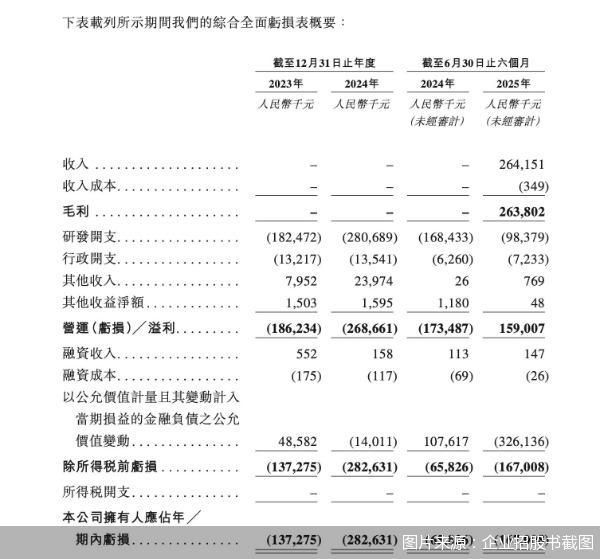
Core Viewpoint - Mingyu Pharmaceutical, founded by former Heng Rui executive Cao Guoqing, has officially submitted its IPO application to the Hong Kong Stock Exchange, focusing on oncology and autoimmune diseases, but has yet to achieve commercialization [1][3]. Financial Performance - The company reported no revenue for 2023 and 2024, with a revenue of 264.15 million RMB in the first half of 2025, primarily from a strategic partnership with Qilu Pharmaceutical [1][3]. - Cumulative losses reached 1.239 billion RMB by mid-2025, with net losses of 137.275 million RMB in 2023, 282.631 million RMB in 2024, and 167 million RMB in the first half of 2025 [2][3][4]. - Operating cash flow was negative for 2023 and 2024, at -143 million RMB and -146 million RMB respectively, turning positive to 102 million RMB in the first half of 2025 due to licensing fees from Qilu [4]. Research and Development - Mingyu Pharmaceutical has 13 candidate products in its pipeline, with 10 in clinical stages, but has not yet commercialized any products [3][5]. - The company plans to allocate 51% of its fundraising net proceeds to the development of two core products, MHB036C and MHB018A, with 26% for MHB036C and 25% for MHB018A [6]. Market Competition - The most advanced product, MH004, targets atopic dermatitis and has submitted a new drug application in China, facing competition from Heng Rui's products in a market projected to reach 14.9 billion USD in 2024 [5][6]. - The global market for atopic dermatitis drugs is expected to grow to 29.5 billion USD by 2035, indicating significant commercial potential [5]. Strategic Partnerships - The partnership with Qilu Pharmaceutical has been crucial for generating revenue, with a total transaction value of 1.345 billion RMB for rights in the Greater China region [3][4].
国产医美械三产品参与全球抗衰赛道竞争 半岛医疗点亮纳斯达克大屏
21世纪经济报道· 2025-11-27 10:33
Core Viewpoint - The article highlights the rapid growth of China's medical aesthetics equipment industry, showcasing the emergence of domestic brands like Peninsula Medical, which are gaining market share and technological advancements in the field [3][19]. Industry Growth - The domestic medical aesthetics equipment market is projected to exceed 32 billion yuan by 2024, with a compound annual growth rate (CAGR) of 13%-15% [3]. - The market share of domestic equipment has increased from 38% in 2020 to 42% in 2024, with energy source segments like radiofrequency and intense pulsed light reaching a 46% share [3]. Product Innovation - Peninsula Medical's two core products, the Peninsula Ultra Cannon and Peninsula Counterclockwise, represent significant advancements in energy source medical aesthetics devices, with a focus on clinical needs and technological innovation [3][5]. - The Peninsula Ultra Cannon is the first and only ultrasound medical aesthetics device to receive NMPA Class III certification, achieving precise anti-aging treatment from the epidermis to the SMAS layer [3][5]. - The Peninsula Counterclockwise is the first domestic radiofrequency medical aesthetics device to obtain NMPA Class III certification, featuring innovative technologies for effective treatment [5][7]. Clinical Research and Efficacy - Clinical studies led by top hospitals show that the Peninsula Ultra Cannon has an effectiveness rate of over 89% in improving skin laxity, with a satisfaction rate exceeding 90% among participants [5]. - Since its launch in 2021, the Peninsula Ultra Cannon has been used in over 4 million treatments, averaging more than 3,000 treatments per day [5]. R&D and Patents - Peninsula Medical has a strong focus on R&D, with nearly 400 staff dedicated to research, accounting for 30% of total employees, and R&D investment representing 25%-27% of sales revenue [9]. - The company has filed over 1,000 domestic and international patents, with more than 70 global certifications, and has played a role in drafting industry standards [9][19]. International Expansion - The presence of Chinese dermatologists and plastic surgeons on the Nasdaq screen signifies the increasing international participation of China's medical aesthetics professionals [11]. - Peninsula Medical's collaboration with Boston Aesthetics aims to bridge the gap between Chinese R&D and U.S. clinical needs, facilitating the entry of Chinese products into the global market [12][18]. Market Trends - The export value of domestic medical aesthetics equipment is expected to grow by 35% in 2024, with energy source devices making up 42% of exports, expanding into high-end markets like Europe and the U.S. [19]. - The industry is transitioning from a focus on cost-effectiveness to differentiation, with domestic companies targeting specific needs of Asian skin types [14][19]. Future Outlook - The integration of artificial intelligence with medical aesthetics devices is emerging as a new trend, enabling personalized treatment parameters [19]. - The industry is poised for a comprehensive upgrade from "Made in China" to "Intelligent Manufacturing in China," driven by companies focused on R&D and clinical needs [19].

国产医美械三产品参与全球抗衰赛道竞争 半岛医疗点亮纳斯达克大屏
2 1 Shi Ji Jing Ji Bao Dao· 2025-11-27 08:58
Core Insights - Peninsula Medical showcased its brand on the Nasdaq screen, highlighting its rapid growth in the Chinese medical aesthetics industry, with the domestic medical aesthetic equipment market projected to exceed 32 billion yuan by 2024, maintaining a compound annual growth rate of 13%-15% [1][11] - The company presented two NMPA Class III certified products, the Peninsula Ultra Cannon and Peninsula Counterclockwise, in collaboration with Boston Aesthetics and numerous Chinese dermatologists and plastic surgeons [1][2] Industry Growth - The domestic medical aesthetic equipment market is expected to grow significantly, with the share of domestic equipment increasing from 38% in 2020 to 42% in 2024, particularly in energy source segments like RF and IPL, where domestic brands now hold a 46% market share [1][11] - The clinical demand drives technological innovation, with Peninsula Medical focusing on addressing industry pain points through medical-engineering collaboration [2][3] Product Innovation - The Peninsula Ultra Cannon is the first globally to receive NMPA Class III certification for ultrasound medical aesthetics, achieving over 89% effectiveness in improving skin laxity in clinical studies [2][3] - The Peninsula Counterclockwise is the first domestic RF medical aesthetic device to receive NMPA Class III certification, featuring innovative technologies for precise depth control in clinical applications [3][4] Research and Development - Peninsula Medical has a robust R&D team of nearly 400, accounting for 30% of its workforce, with R&D investment constituting 25%-27% of sales revenue, which is high for the industry [4][5] - The company has filed over 1,000 domestic and international patents and has received more than 70 global certifications, contributing to the industry's shift from imitation to independent innovation [5][11] International Expansion - The presence of Chinese dermatologists and plastic surgeons on the Nasdaq screen signifies the increasing international participation of Chinese medical aesthetics professionals [6][11] - Peninsula Medical's Boston Aesthetics team is pivotal in bridging Chinese R&D with U.S. clinical needs, having successfully registered the Peninsula Counterclockwise in the U.S. [7][10] Market Trends - The international competitiveness of domestic devices is shifting from cost-effectiveness to differentiated advantages, focusing on the unique characteristics of Asian skin [8][9] - The export value of domestic medical aesthetic devices is projected to grow by 35% in 2024, with energy source devices making up 42% of exports, expanding into high-end markets like Europe and the U.S. [11]
生物医药ETF(512290)涨超1.2%,GLP-1赛道进展引关注
Mei Ri Jing Ji Xin Wen· 2025-11-26 10:33
Group 1: Industry Insights - The domestic GLP-1 sector is highly competitive, with multiple pharmaceutical companies actively engaging in innovative targets, formulations, clinical data, and commercialization efforts [1] - Innovative therapies such as GLP-1R/GIPR dual-target and triple-target agonists are continuously advancing, indicating significant industry innovation vitality [1] Group 2: Company Developments - Heng Rui Medicine's GLP-1/GIP dual receptor agonist HRS9531 injection has achieved efficacy in Phase III clinical trials, and its market application has been accepted [1] - Zhongsheng Pharmaceutical's RAY1225 injection has shown positive efficacy and excellent safety in Phase II clinical trials, with gastrointestinal adverse reactions and hypoglycemia risks lower than those of teriparatide [1] - Huadong Medicine's oral small molecule GLP-1 receptor agonist HDM1002 has completed participant enrollment for weight management indication in Phase III trials, with multiple clinical progressions proceeding smoothly [1] - Innovent Biologics' Ma Shidu peptide injection has met the primary endpoint in Phase III studies, achieving an average weight reduction of 20.08% in subjects without type 2 diabetes and significantly improving liver fat content [1]
礼来登顶万亿美元药企,“神话”背后暗藏隐忧
2 1 Shi Ji Jing Ji Bao Dao· 2025-11-24 09:44
Core Insights - Eli Lilly has achieved a market capitalization exceeding $1 trillion, becoming the first pharmaceutical company to reach this milestone, driven by the strong performance of its flagship product, tirzepatide [2][4] - The sales of tirzepatide's diabetes version, Mounjaro, reached $6.515 billion in Q3, contributing significantly to Eli Lilly's overall revenue growth [2] - The competitive landscape for GLP-1 drugs is intensifying, with Eli Lilly facing challenges from patent expirations, market competition, and pricing pressures [2][8] Financial Performance - Eli Lilly's Q3 revenue reached $17.6 billion, a 54% year-over-year increase, with tirzepatide accounting for 49% of total revenue [2] - The combined sales of tirzepatide's two versions in Q3 amounted to $10.103 billion, with a total of $24.837 billion for the first three quarters, indicating a 125% year-over-year growth [2] Market Dynamics - The GLP-1 drug class is expected to become one of the largest pharmaceutical categories globally within the next three to five years, highlighting the potential for significant market growth [3][6] - Eli Lilly's market share among new patients in the U.S. has risen to between 70% and 75%, surpassing its main competitor, semaglutide [4] Competitive Landscape - Novo Nordisk remains a strong competitor in the weight loss drug market, with its product semaglutide generating substantial revenue [5] - The GLP-1 market is characterized by a "dual oligopoly" competition, with many domestic pharmaceutical companies actively developing next-generation GLP-1 drugs [6][7] Strategic Initiatives - Eli Lilly is pursuing aggressive acquisition strategies and business development plans to expand its market presence and explore new growth avenues [10] - The company has made significant investments in gene therapy and AI drug development, indicating a strategic shift towards innovative treatment options [10] Challenges Ahead - Despite current success, Eli Lilly faces significant challenges, including reliance on a single product, patent expiration risks, and increasing competition [9] - The company must accelerate efforts to diversify its product portfolio and develop new growth drivers to sustain its market position [9][10]


研报掘金丨华创证券:维持华东医药“推荐”评级,看好后续创新药弹性释放
Ge Long Hui A P P· 2025-11-24 07:32
(PDL1/VEGF/TGFβ)正在推进I 期临床;HDM1002(GLP-1 小分子)减重III 期临床加速推进。根据 分部估值计算,公司2026 年医药工业对应估值658亿元,医美业务对应估值151亿元,医药商业对应估 值51亿元,2026年公司合理估值为859亿元,对应股价为49.0元,维持"推荐"评级。 格隆汇11月24日|华创证券日前研报指出,华东医药发布2025年三季度归母净利润9.33亿元,同比增长 7.71%;业绩稳健增长,看好后续创新药弹性释放。目前公司创新药研发中心正在推进90余项创新药管 线项目,多款重磅产品数据读出值得关注,HDM2005(ROR1 ADC)已于Q3读出I期数据;根据医药魔 方数据显示,DR10624(GLP-1/GIP/GCGR)正在推进MASH II 期临床;DR30206 ...
建信中证创新药ETF(159835)所跟踪指数盘中涨超1%,百利天恒iza-bren药品上市申请获受理,机构看好2026年医药行业有望重启升势
Sou Hu Cai Jing· 2025-11-24 04:01
Core Insights - The innovation drug sector in China is experiencing a strong upward trend driven by policy, industry dynamics, demand, and globalization, with expectations for continued growth into 2026 [1][2] Group 1: Market Performance - As of November 24, 2025, the CSI Innovation Drug Industry Index rose by 0.82%, with notable increases in stocks such as Zai Lab (up 4.64%) and Kelun Pharmaceutical (up 2.47%) [1] - The index reflects the performance of up to 50 representative listed companies involved in innovative drug research and development [2] Group 2: Regulatory Developments - Baili Tianheng announced that it received a formal acceptance notice from the National Medical Products Administration for its first-in-class EGFR×HER3 dual antibody ADC drug, which is now in Phase III clinical trials [1] Group 3: Industry Outlook - Citic Construction Investment Securities highlights that the Chinese pharmaceutical industry is entering a critical phase of "innovation realization and global layout," supported by population and domestic demand, as well as manufacturing capabilities [2] - The industry is expected to focus on internal supply chain security and compliance while exploring diversified international expansion [2] - The outlook for 2026 includes opportunities from innovation commercialization, global breakthroughs, policy optimization, and industry mergers and acquisitions [2]
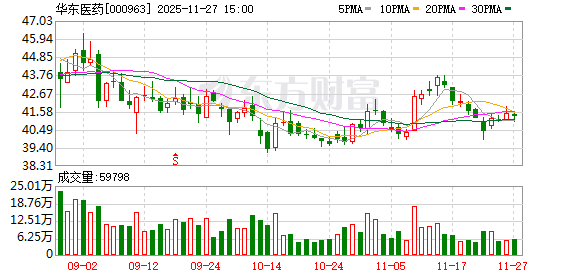
华东医药涨2.03%,成交额9616.13万元,主力资金净流入95.64万元
Xin Lang Cai Jing· 2025-11-24 02:30
Core Viewpoint - Huadong Medicine's stock price has shown a mixed performance in recent trading sessions, with a year-to-date increase of 22.30% but a decline of 2.39% over the last five trading days [1] Financial Performance - For the period from January to September 2025, Huadong Medicine achieved a revenue of 32.664 billion yuan, representing a year-on-year growth of 3.77% [2] - The net profit attributable to shareholders for the same period was 2.748 billion yuan, reflecting a year-on-year increase of 7.24% [2] Shareholder Information - As of September 30, 2025, the number of Huadong Medicine's shareholders decreased by 1.50% to 68,800, while the average number of circulating shares per person increased by 1.53% to 25,466 shares [2] - The company has cumulatively distributed 8.873 billion yuan in dividends since its A-share listing, with 3.771 billion yuan distributed over the last three years [3] Institutional Holdings - As of September 30, 2025, Hong Kong Central Clearing Limited is the third-largest circulating shareholder, holding 52.004 million shares, an increase of 12.1653 million shares from the previous period [3] - China Securities Finance Corporation remains the fourth-largest shareholder with 22.1868 million shares, unchanged from the previous period [3] - Notable changes in holdings include a decrease of 4.3243 million shares for the fifth-largest shareholder, China Universal Healthcare Mixed A [3]