Sea Limited

Search documents
金十图示:2025年07月03日(周四)全球主要科技与互联网公司市值变化
news flash· 2025-07-03 03:01
Market Capitalization Changes - Major technology and internet companies experienced varied market capitalization changes as of July 3, 2025, with notable increases for companies like Tesla and 台棋电, which rose by 4.97% and 3.97% respectively [3][4] - Oracle saw a significant increase of 5.03%, while Tencent and Netflix experienced slight declines of 1.19% and 0.68% respectively [3][4] Company Performance Highlights - Tesla's market cap reached $1,016.6 billion, reflecting a strong performance [3] - Oracle's market cap stood at $645.9 billion, indicating robust growth [3] - Tencent's market cap was $579.0 billion, showing a slight decrease [3] - Netflix's market cap was $546.7 billion, also reflecting a minor decline [3] Sector Trends - The technology sector showed resilience with companies like AMD and 德州仪器 reporting increases of 1.77% and 2.44% respectively [3][4] - Companies such as Adobe and Intel faced declines of 3.48% and 4.25%, indicating challenges within certain segments of the tech industry [4][5] Emerging Companies - Newer players like Palantir and ServiceNow showed positive growth, with market caps of $311.7 billion and $209.1 billion respectively [3][4] - Companies like Robinhood and Coinbase also reported increases, with market caps of $864 million and $902 million respectively [5][6] Overall Market Sentiment - The overall market sentiment appears mixed, with some companies thriving while others struggle, reflecting a diverse landscape within the technology and internet sectors [3][4][5]


下半年第一天,美股“变脸”了,上半年的赢家们大跌
美股研究社· 2025-07-02 11:39
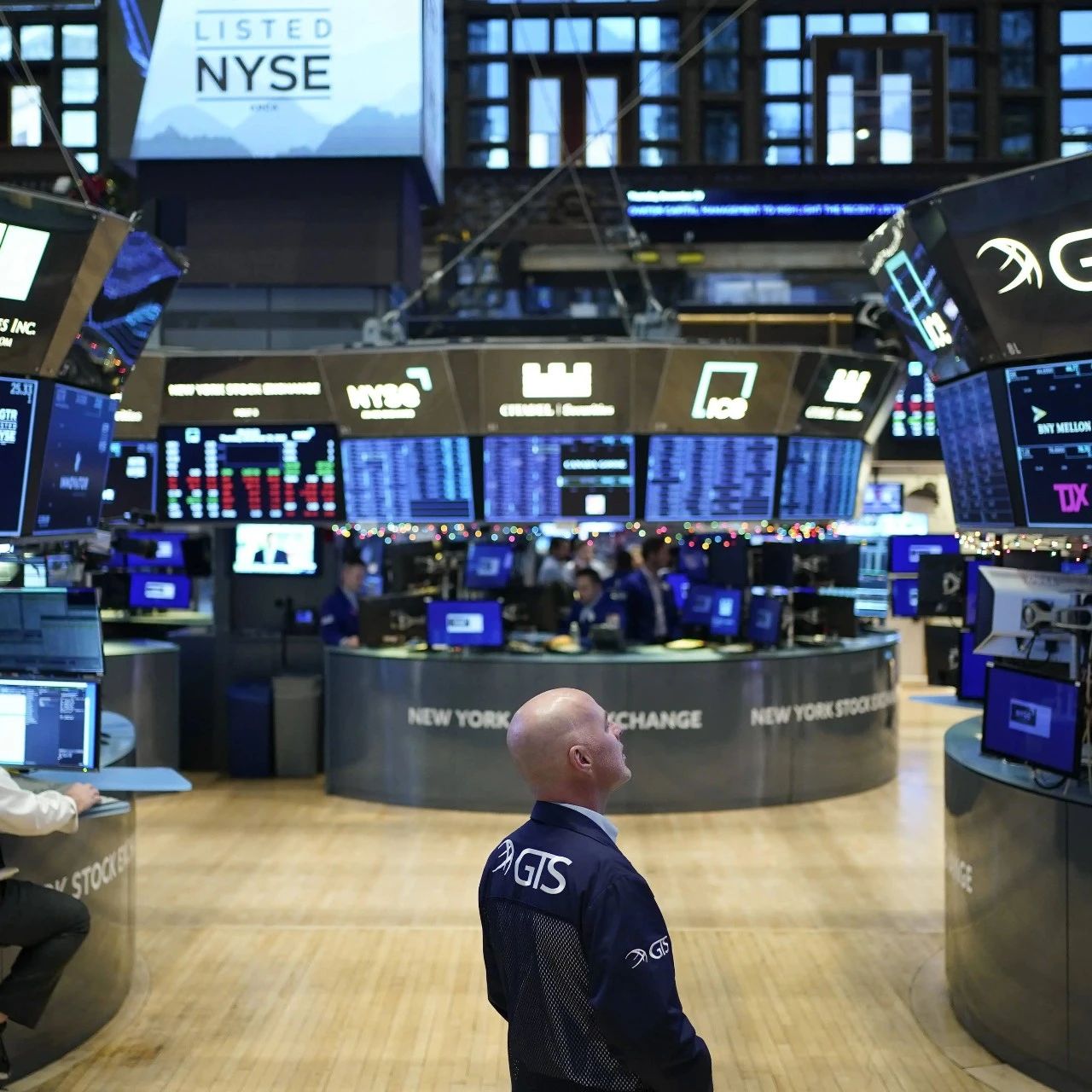
Core Viewpoint - The article discusses a significant shift in market dynamics on the first trading day of the second half of the year, with investors rotating from strong-performing tech stocks to defensive sectors like healthcare [1][5]. Market Performance - On the first trading day of the second half, the Dow Jones Industrial Average rose by 400 points, while the Nasdaq Composite Index fell by 0.82%, indicating a rotation away from tech stocks that had previously led the market [1]. - The AI-related stocks and other tech giants, including Sea Limited, Spotify, and Nvidia, experienced notable declines, with the tech giants index dropping by 1.15% [1][2]. Sector Rotation - The healthcare sector saw a strong rebound, with stocks like Amgen and UnitedHealth Group rising over 4%, and Merck increasing by more than 3% [12][13]. - The consumer discretionary sector also benefited from the rotation, particularly non-essential consumer goods, which had seen significant net selling earlier in the year [13]. Influencing Factors - The market rotation was influenced by several factors, including the start of a new quarter, comments from Federal Reserve Chairman Jerome Powell, and profit-taking ahead of the non-farm payroll data release [5][10]. - Powell's remarks indicated a cautious stance on inflation and suggested that future actions would depend on data, contributing to market volatility [11]. Trading Dynamics - The trading day was characterized as a "violent" unwinding of momentum trades, with a significant sell-off in previously high-performing stocks [10]. - High-profile stocks that had been shorted, such as American Eagle Outfitters and Abercrombie & Fitch, saw price increases, while heavily held stocks like Ralph Lauren performed poorly [14].
下半年第一天,美股“变脸”了,上半年的赢家们大跌
华尔街见闻· 2025-07-02 02:28
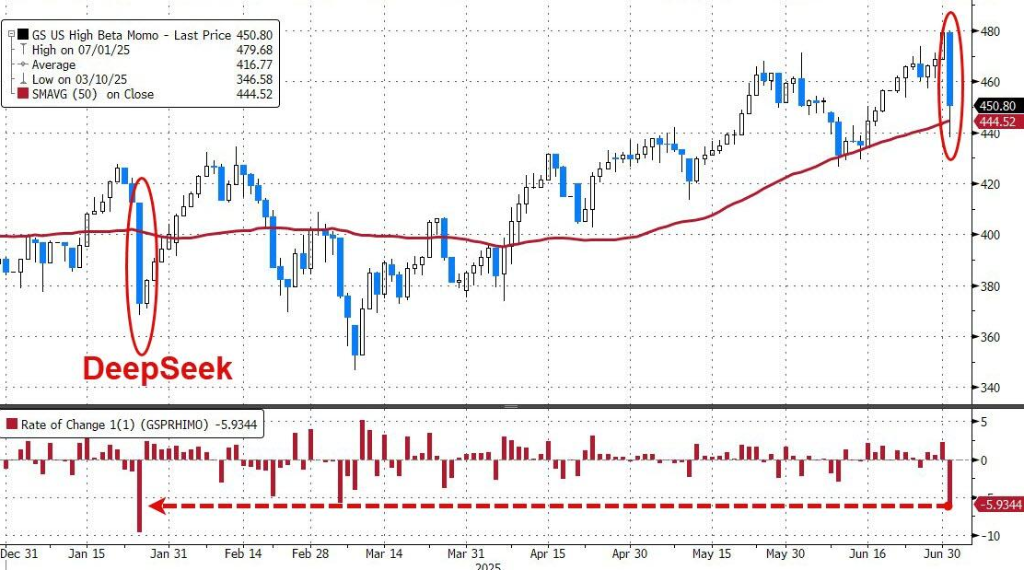
Core Viewpoint - The article discusses a significant shift in market dynamics on the first trading day of the second half of the year, with investors rotating from strong-performing tech stocks to defensive sectors like healthcare, driven by various factors including profit-taking and macroeconomic commentary from the Federal Reserve [1][2][4]. Market Dynamics - On the first trading day of the second half, the Dow Jones Industrial Average rose by 400 points, while the Nasdaq Composite Index fell by 0.82%, indicating a rotation away from tech stocks that had performed well in the first half of the year [1]. - The technology sector's seven giants index dropped by 1.15%, with notable declines in stocks like Sea Limited, Spotify, and Nvidia, which had been significant winners earlier [1][3]. - This marked the largest scale of momentum stock liquidation since January, with AI-related trades experiencing substantial sell-offs [1]. Factors Driving Market Rotation - The market rotation was influenced by the start of the third quarter, comments from Federal Reserve Chairman Jerome Powell, and profit-taking ahead of the non-farm payroll data release [2][4][5]. - Investors were cautious and opted to lock in profits before the key employment report, contributing to the market's volatility [5]. Sector Performance - The healthcare sector showed resilience, with managed care, pharmaceuticals, and medical devices recording gains of 2-3%, as it had underperformed relative to the S&P 500 at the end of the second quarter [8]. - The consumer discretionary sector also benefited from the rotation, with non-essential consumer goods being net sold the most among major brokerage accounts [8]. Comments from Federal Reserve - Powell's remarks indicated a cautious stance on inflation due to tariffs, suggesting that without tariffs, the Fed might have already cut rates again [6][7]. - His comments led to a significant rise in U.S. Treasury yields, particularly affecting long-term rates [7].



下半年第一个交易日,美股“变脸”了,上半年的赢家们大跌
Hua Er Jie Jian Wen· 2025-07-02 00:53
Group 1 - The first trading day of the second half of the year saw a significant shift in market sentiment, with investors rotating from strong-performing tech stocks to defensive sectors like healthcare [1][2] - The Dow Jones Industrial Average rose by 400 points, while the Nasdaq Composite Index fell by 0.82%, indicating a divergence in sector performance [1] - Major tech stocks, including Sea Limited, Spotify, and Nvidia, experienced notable declines, with the tech giants index down by 1.15% [1][3] Group 2 - Market movements were influenced by the anticipation of trade agreements and the expiration of a 90-day tariff suspension, which led to declines across major indices [2] - Goldman Sachs noted that the market rotation was driven by portfolio rebalancing at the start of the new quarter, as well as profit-taking ahead of employment data releases [2][5] - The technology sector ETF surged nearly 23% in the second quarter but fell by 0.9% on the first day of the third quarter, indicating a cooling interest in AI and tech stocks [3] Group 3 - Healthcare stocks showed strong performance, with companies like Amgen and UnitedHealth Group rising over 4%, contributing to the Dow's increase [8] - The healthcare sector's relative performance at the end of the second quarter was the lowest since 2001, making it particularly resilient during the market rotation [8] - Consumer discretionary stocks also benefited from the rotation, with non-essential consumer goods seeing significant net selling throughout the year [8] Group 4 - The market experienced its largest momentum stock liquidation since January, with AI-related trades facing substantial sell-offs, while previously underperforming stocks in tariffs and real estate surged [7] - Stocks that were heavily shorted, such as American Eagle Outfitters and Abercrombie & Fitch, saw significant gains, contrasting with the performance of heavily held stocks like Ralph Lauren [9]

Mercado Ads Scales Up: Can it Become MELI's Third Growth Engine?
ZACKS· 2025-06-27 16:21
Core Insights - MercadoLibre (MELI) is enhancing its ecosystem with a focus on digital advertising, positioning Mercado Ads as a potential core growth engine [2] - The company launched Mercado Play, a TV streaming app, targeting a market with significant untapped ad inventory [4] - Mercado Ads has become a $1 billion-plus annual revenue business, growing nearly 50% year over year on an FX-neutral basis [5] Digital Advertising Growth - Brand ads have expanded beyond top brands, leading to strong growth, while display ads grew over 100% year over year in Q1 2025 [3] - New features like automated creative generation and improved analytics have made ad tools more effective and accessible [3] - Ad penetration has increased across Brazil, Mexico, and Argentina, indicating a larger opportunity in Latin America's digital ad market [5] Competitive Landscape - Mercado Ads faces competition from global players like Amazon and Sea Limited, which are increasing their ad spend efforts in MELI's key markets [6][7] - Amazon is expanding its ad business in Brazil and Mexico, while Shopee, backed by Sea Limited, is introducing low-cost ad options targeting price-sensitive sellers [6][7] Stock Performance and Valuation - MELI shares have gained 50.6% year-to-date, outperforming the Zacks Internet – Commerce industry and the Zacks Retail-Wholesale sector [8] - The stock is trading at a forward 12-month Price/Sales ratio of 4.20X, compared to the industry's 2.01X [12] - The Zacks Consensus Estimate for Q2 2025 earnings is $12.01 per share, indicating 14.60% year-over-year growth [14]


9 Under-the-Radar Tech Stocks With Incredible Growth Potential
The Motley Fool· 2025-06-25 09:10
Core Insights - The article emphasizes the importance of exploring lesser-known tech stocks for investment opportunities, highlighting companies with significant growth potential outside of the major players like Apple and Microsoft [2][3] Group 1: Company Highlights - **DoorDash**: The company has expanded its advertising services with AI-powered tools to help businesses enhance their presence on the platform. It also acquired the adtech platform Symbiosys to improve advertising across multiple digital channels [5][6][7] - **Sea Limited**: This Singapore-based company operates in digital entertainment, e-commerce, and financial services, reporting a revenue of $4.8 billion in Q1, up 29.6% year-over-year, and profits of $2.2 billion, up 43.9% [9][10] - **Airbnb**: The platform has facilitated over 2 billion stays since its inception in 2007, and despite recent growth slowdowns, it continues to show solid performance, with notable investment from Ark Invest [11][12] - **Coinbase Global**: The platform manages $328 billion in assets and has a quarterly trading volume of $393 billion, positioning itself as a key player in the cryptocurrency market [13][14] - **Snowflake**: The cloud-based data platform reported $1 billion in revenue in Q1, up 26% year-over-year, and estimates its market opportunity will grow from $170 billion in 2024 to $355 billion by 2029 [15][16] - **Robinhood Markets**: The platform manages $255 billion in assets, up 89% from the previous year, and serves 25.9 million customers, reflecting a 7% increase [17][18] - **Marvell Technology**: The company reported a record revenue of $1.89 billion in Q1, driven by increased demand for AI infrastructure [19][20] - **Cloudflare**: The cybersecurity company operates a massive network with servers in 330 cities and 125 countries, capable of reaching 95% of the global population within 50 milliseconds [21][22] - **Block**: Formerly known as Square, the company has evolved to focus on blockchain and Bitcoin, offering various financial services including Bitcoin mining and wallets [23][24]






Top Stock Pick Report: V-Shaped Rallies Everywhere
Schaeffers Investment Research· 2025-06-24 14:42
Core Insights - The narrative surrounding the top stock picks has shifted dramatically from March, with a focus now on which stocks can maintain their gains and finish strong in the second half of 2025 [3] Stock Performance Summary - Beam Therapeutics (BEAM) has seen a significant decline of 32.70% year-to-date, with a recent drop of 21.25% in Q1 and 14.70% in Q2 [3] - Bloom Energy (BE) has rebounded with a 9.89% gain in Q2, although it remains below its year-to-date breakeven level [3][5] - Boeing (BA) has shown resilience with a 16.27% increase in Q2, leading to a 12.03% year-to-date gain [3][5] - Carvana (CVNA) has surged with a remarkable 51.87% gain in Q2, resulting in a 56.17% year-to-date increase [3] - CF Industries (CF) has rebounded with a 27.34% gain in Q2, bringing its year-to-date performance to 16.64% [3][6] - Coinbase Global (COIN) has experienced a significant turnaround with a 76.55% gain in Q2, leading to a 22.46% year-to-date increase [3][7] - Dell Technologies (DELL) has gained 30.27% in Q2, with a modest year-to-date increase of 3.04% [3][8] - Deutsche Bank (DB) has performed exceptionally well, with a 62.31% year-to-date gain, including a 16.11% increase in Q2 [3][8] - Nebius Group (NBIS) has surged with a 127.85% gain in Q2, resulting in a 73.83% year-to-date increase [3][9] - Rocket Lab (RKLB) has shown a 66.85% gain in Q2, leading to a 17.17% year-to-date performance [3][10] - Sea Ltd (SE) has maintained a strong performance with a 17.90% gain in Q2, resulting in a 45.00% year-to-date increase [3][11] - STMicroelectronics NV (STM) has seen a nearly 60% increase from its five-year low, supported by a price-target hike [3][12] - Roku Inc (ROKU) has only increased by 10.5% year-to-date, but a new partnership with Amazon could enhance its prospects [3][13] Market Sentiment and Technical Analysis - A total of 13 stocks have transitioned from negative to positive performance in Q2, with only two stocks remaining in the red [3] - The overall total return for the top picks has shifted from a loss of -163% in Q1 to a gain of approximately 271% year-to-date [3] - The market sentiment remains cautious, with lingering negative sentiment from Q1 underperformance affecting some stocks [15] - Stocks like EZPW and Rocket Lab have notable short interest, indicating potential volatility [16]


2025年《财富》东南亚500强排行榜揭晓
财富FORTUNE· 2025-06-20 13:02
Core Insights - The article highlights the emerging opportunities in Southeast Asia, driven by global supply chain changes and the growth of industries such as mining, electric vehicles, and artificial intelligence, despite potential setbacks from U.S. tariff policies [1] Group 1: Economic Overview - The total revenue of the companies listed in the Southeast Asia 500 reached $1.82 trillion, reflecting a 1.7% increase from the previous year, which lags behind the reported 4.1% GDP growth of the seven economies covered [1] - Indonesia has the highest number of companies on the list (109), followed by Thailand with 100 companies, while Singapore leads in revenue generation with $637.1 billion, accounting for slightly over one-third of the region's total revenue [1] Group 2: Industry Leaders - The top five companies in the Southeast Asia 500 are all involved in commodity businesses, including Trafigura (metals), PTT (oil), Pertamina (oil), Wilmar International (agriculture), and Olam Group (agriculture) [2] - The energy sector dominates the Southeast Asia 500, contributing nearly one-third of the total regional revenue, with notable growth from Bangchak, a Thai energy company, which saw a 47% increase in revenue [2] Group 3: Profitability and Technology - The most profitable companies in the list are Singapore's three major banks: DBS, OCBC, and UOB, with DBS leading at $8.5 billion in profit [3] - Despite predictions of growth in the digital economy, technology companies have a small representation in the Southeast Asia 500, with only one tech company, Sea, in the top 20 [3] Group 4: Emerging Trends - NationGate Holdings, a Malaysian contract manufacturer, experienced a remarkable 723% increase in sales, surpassing $1 billion, largely due to its role as the sole assembler of AI servers for Nvidia in the region [4] - Southeast Asia's 500 companies are increasingly playing a significant role in the global supply chain, attracting substantial capital inflows and reshaping global trade dynamics [5]

Shopee虾皮本土店用ERP有什么好处?都用什么ERP工具
Sou Hu Cai Jing· 2025-06-11 12:34
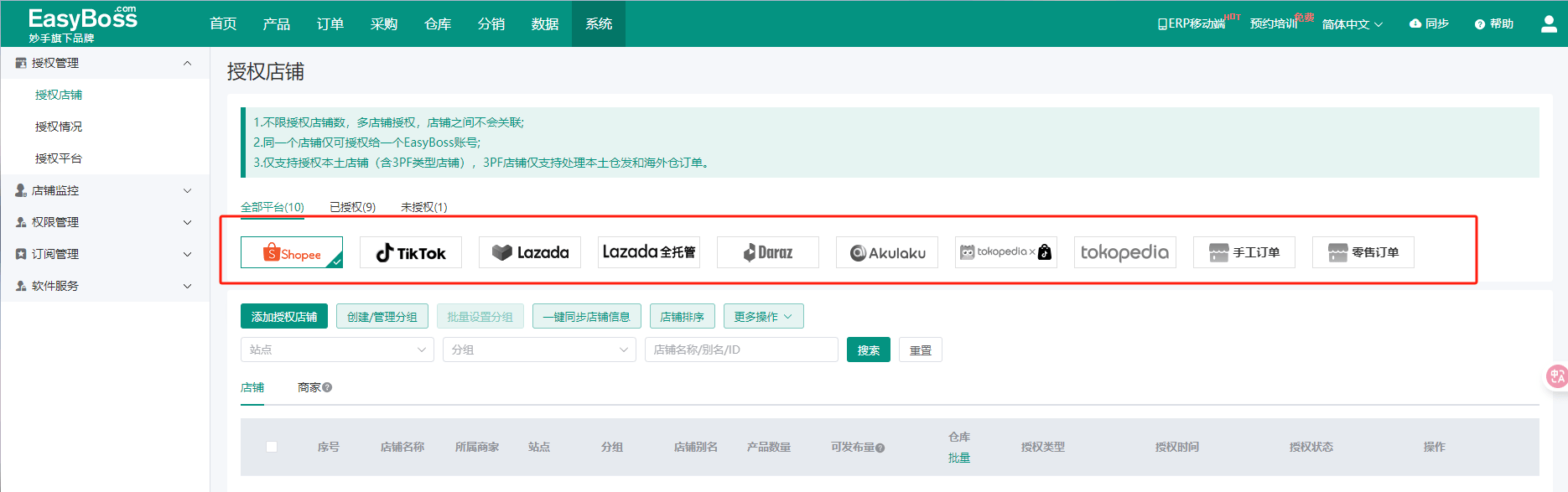
考虑到流量优势以及长远的发展考虑,越来越多Shopee跨境卖家或者是国内电商转向了做Shopee本土店的,但是,很多卖家在运营过程中会发现很多不便: 1. 店铺的销售、财务、库存模块是分开的,但是做电商的,很多数据都是一体的,跨部门之间的沟通很容易导致错误和错漏的产生。 2. Shopee店铺日常运营有很多重复性的工作,人工处理太低效 3. 库存管理这个是最大的问题,店铺多了,仓库数据很容易混乱 4. 还有一个就是产品发布的问题,虽然说可以找翻译、设计,但是很麻烦,需要不同软件之间切换。 根据我自己多年的运营经验,想要解决这些问题, 一个合适的ERP系统就可以帮忙搞定,比如我自己正在用的EasyBoss ERP: | EasyBoss | 首页 | 产品 | 订单 采购 | 仓库 分销 | 数据 | 系统 | | | | --- | --- | --- | --- | --- | --- | --- | --- | --- | | 妙手旗下品牌 | | | | | | | | | | 置 授权管理 | < | 授权店铺 | | 阜 综合分析 | 实时数据 | | 实时大屏 | | | 授权店铺 | | | | ...
跨境电商运营:2025年全球电子商务趋势报告:购物行为、物流偏好与市场动
Sou Hu Cai Jing· 2025-06-10 11:27
Core Insights - The report highlights diverse trends in the global e-commerce market and changing consumer behaviors, indicating that 52% of global consumers shop online at least once a month, with China, Morocco, and Nigeria leading in browsing activity [1][2] - Mobile shopping is predominant, with 83% of millennials using retailer apps, and voice search gaining traction in markets like India and Turkey, where 47% of social shoppers utilize voice commands [1][2] - Logistics and return experiences are critical, as 72% of consumers expect free shipping, and 55% prefer free returns, with high shipping costs (58%) and long delivery times (52%) being significant pain points [1][2] E-commerce Landscape - Social commerce is increasingly influential, with 37% of clothing purchases made through social media, particularly in Turkey and Nigeria, where social shopping penetration exceeds 30% [2][3] - Cross-border shopping is prevalent, with 60% of consumers purchasing overseas at least once a month, driven by factors like free shipping (55%) and secure payment options (50%) [2][3] - Sustainability is emerging as a key demand, with 93% of Nigerian consumers concerned about delivery's environmental impact, and 57% of global consumers willing to pay a premium for eco-friendly options [2][3] Regional Market Differences - Significant regional variations exist, with Mercado Libre dominating 94% of the Argentine market, while Amazon leads in the US and Europe, and Shopee and Lazada have over 80% penetration in Southeast Asia [3] - The growth of second-hand trading and subscription models is notable, with platforms like Vinted promoting a circular economy in Europe, and 42% of UAE consumers engaging in subscription clothing services [3] - Overall, the global e-commerce landscape is evolving towards mobile, social, and localized experiences, with logistics, technological innovation, and sustainability practices becoming competitive core elements [3]