泰康基金

Search documents
国信(香港)基金周报:美国利率维持不变符合预期,利好美元货基
Guoxin Securities· 2025-05-13 03:05
国信(香港)基金周报 2025 年 5 月 12 日 美国利率维持不变符合预期,利好美元货基 一、国信香港精选基金表现 表 1 国信香港精选基金表现 | 基金名称 | 周涨跌幅 | 七天年化收益率 | 近一年收益率 | 基金净值 | | --- | --- | --- | --- | --- | | 华夏精选美元货币基金 | 0.035% | 4.420% | - | 113.4948 | | 泰康开泰美元货币基金 | 0.033% | 4.000% | - | 11.3983 | | 高腾微金美元货币市场基金 | 0.034% | 4.410% | - | 11.54196 | | 泰康开泰海外短期债券基金 | 0.181% | - | 6.440% | 13.2630 | | 华夏精选固定收益配置基金 | 0.015% | | 4.630% | 11.6571 | | 华夏恒生科技指数ETF-非上市份额* | -0.305% | - | 32.810% | 10.8526 | | | | | *因产品成立时间问题,近一年采用场内ETF同期的数据。 や五草金箔信日: 6月0日: 儒美利知 昭和草型科学会治植 ...
这类基金,密集限购
Zhong Guo Ji Jin Bao· 2025-05-12 11:42
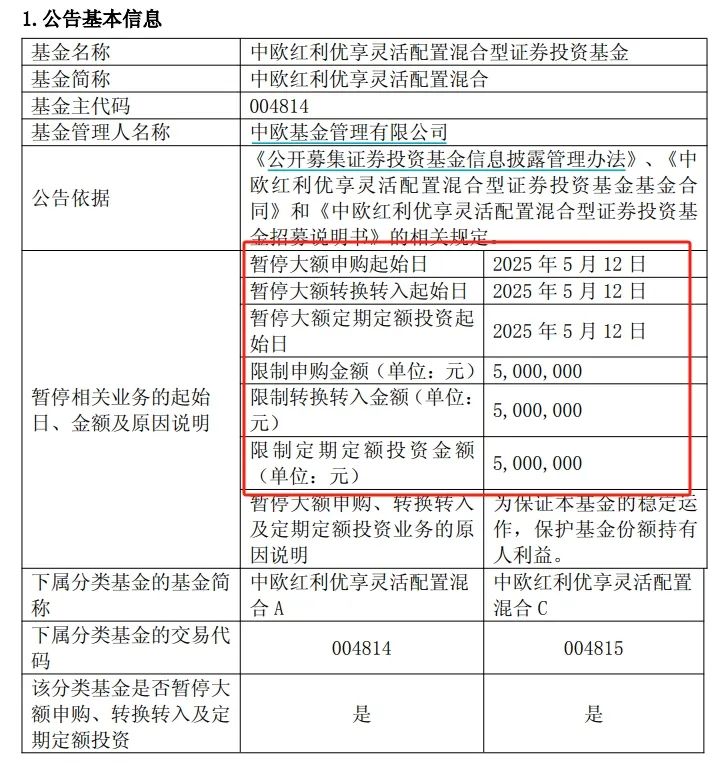
Core Viewpoint - The recent market volatility has led to a resurgence in the popularity of dividend assets, prompting several dividend-themed equity funds to announce subscription limits [1][2][4]. Group 1: Fund Subscription Limits - Multiple fund companies have announced the suspension of large subscriptions for their dividend-themed funds, with China Europe Fund limiting subscriptions to 500,000 yuan starting May 12, 2025, to ensure stable operation and protect the interests of fund shareholders [2][3]. - Western Li De Fund has also suspended subscriptions over 10 million yuan for its Central Enterprise Preferred Stock Fund, citing similar reasons for protecting fund holders' interests [4]. Group 2: Performance of Dividend Assets - The Central Enterprise Dividend Index has shown a 1.85% increase since the beginning of the second quarter, outperforming the Shanghai Composite Index and the CSI 300 Index, which increased by 1% and 0.09% respectively [4]. - Over the past year, the Central Enterprise Dividend Index has risen by 14.20%, significantly outperforming the broader market indices [5]. Group 3: Investment Opportunities - The total scale of dividend funds reached 251.367 billion yuan by the end of the first quarter, an increase of approximately 27 billion yuan from the previous quarter, marking a new high [5]. - The cost-effectiveness of dividend assets is currently at the 99th percentile of the past decade, indicating that they are among the most attractive investments in recent history [5]. - Recent monetary policy measures, including interest rate cuts, are expected to enhance the appeal of high-dividend assets, particularly in a low-interest-rate environment [5]. Group 4: Investment Strategies - For long-term holdings, the probability of dividend assets outperforming the CSI 300 and CSI 800 indices exceeds 70% after one year and approaches 90% after three to five years [6]. - Investment strategies suggest adjusting the amount of regular investments based on market conditions, such as reducing contributions during periods of excessive returns and increasing them during significant market corrections [6].

A股优胜劣汰提速,ST股风险骤升,基金如何应对?
券商中国· 2025-05-12 00:53
Core Viewpoint - The A-share market is accelerating the elimination of underperforming companies, with over 140 listed companies facing delisting risk warnings this year, leading to significant stock price declines for many of these companies and the funds that invested in them [1][3]. Group 1: Market Dynamics - More than 140 listed companies have been subjected to delisting risk warnings, with 27 and 43 companies receiving such warnings on April 30 and May 6, respectively [3]. - The stock prices of most companies that received delisting risk warnings experienced sharp declines following the announcements [3]. - The "shell value" of listed companies has significantly decreased due to the strict enforcement of delisting regulations [8]. Group 2: Fund Holdings and Reactions - The interest of public funds in ST stocks has significantly decreased compared to the past, although some companies still attract public fund interest when they have the potential to remove the delisting risk [2][8]. - Among the 140 companies facing delisting risks, only 19 have public fund holdings, primarily in passive funds like ETFs [5]. - Specific companies like *ST Tianze and *ST Songfa have seen significant public fund holdings, with the former having a fund holding ratio of approximately 5.57% and the latter at 7.09% as of the end of Q1 this year [4]. Group 3: Investment Strategies - The process of selecting stocks for public funds involves multiple layers of screening, with a focus on fundamental quality and liquidity [5][6]. - Fund managers must submit research reports and obtain approval from the investment decision committee before including stocks in the core portfolio [6][8]. - The handling of ST stocks by index funds varies, with some funds choosing to remove them from their portfolios while others may retain them temporarily [7]. Group 4: Potential Opportunities - Despite the decline in interest in ST stocks, some companies like ST Huayuan and *ST Chengchang have shown potential for recovery, attracting interest from various public funds [8]. - The investment decision-making process for these stocks remains complex, requiring thorough research and committee approval, especially under the current regulatory environment [8].




市场按下优胜劣汰“加速键” 公募基金努力出招应对
Zheng Quan Shi Bao· 2025-05-11 18:33
Core Viewpoint - The A-share market is accelerating the elimination of underperforming companies, with over 140 listed companies facing delisting risk warnings this year, leading to significant stock price declines for many of these companies [1][2][4]. Group 1: Market Dynamics - More than 140 listed companies have been implemented with ST (Special Treatment) status due to new regulations, with 43 and 27 companies receiving this status on April 30 and May 6, respectively [2]. - Companies under delisting risk warnings generally experience sharp declines in stock prices, impacting funds that have invested in these stocks [2][4]. - The "shell value" of listed companies has significantly decreased due to strict enforcement of delisting regulations [7]. Group 2: Fund Involvement - Despite the decline in interest from public funds in ST stocks, some companies that may potentially remove their ST status are still attracting attention from public funds [1][7]. - Among the 140+ companies facing delisting risk, only 19 have fund holdings, primarily from passive funds like ETFs [4]. - Public funds have a low "踩雷" (踩雷 means to hit a mine, referring to investment losses) ratio, with most holdings being in theme ETFs rather than actively managed funds [4]. Group 3: Specific Company Cases - *ST天择, an AI media concept stock, saw its stock price drop significantly after being placed under ST status, despite previously attracting substantial public fund investment [3][2]. - 松发股份 also faced ST status due to negative financial performance, with public funds holding a high concentration in this stock [3]. - ST华通, which faced ST status due to financial fraud, has seen a recovery in stock price, with 22 equity products investing in it as of the end of Q1 this year [7]. Group 4: Investment Strategies - The process for a stock to enter a core stock pool involves multiple layers of scrutiny, with fundamental performance being the primary criterion [5]. - Fund managers must undergo a complex approval process to invest in high-risk ST stocks, reflecting a cautious approach in the current regulatory environment [8]. - Some index funds may choose to retain ST stocks in their portfolios, while others may opt to remove them based on their investment strategies [6].
稳健医疗(300888) - 2025年5月7日-5月8日投资者关系活动记录表附件之与会清单
2025-05-09 01:04
Group 1: Meeting Details - The meetings are scheduled for May 7, 2025, with various institutions participating both online and in-person [1][2][3][4] - A total of 143 participants from different financial institutions are listed, indicating a significant interest in the event [1][4] Group 2: Participant Breakdown - Major institutions include Anxin Fund, BlackRock, and Guotai Junan Securities, with multiple representatives attending [1][2][4] - The majority of participants (approximately 70%) are attending online, reflecting a trend towards virtual engagement in the financial sector [1][2][3] Group 3: Representation by Institution - Anxin Fund has three representatives, while Guotai Junan Securities has four, showcasing their active involvement [1][4] - Other notable participants include China Merchants Bank and Huatai Securities, each with multiple attendees [2][4] Group 4: Event Format - The event features both online and in-person formats, allowing flexibility for participants [1][2] - The online format is particularly favored, with a significant number of attendees opting for this method [1][3]

【读财报】公募基金发行透视:4月新发基金约934亿元 浦银安盛基金、泰康基金等发行规模居前
Xin Hua Cai Jing· 2025-05-08 23:25
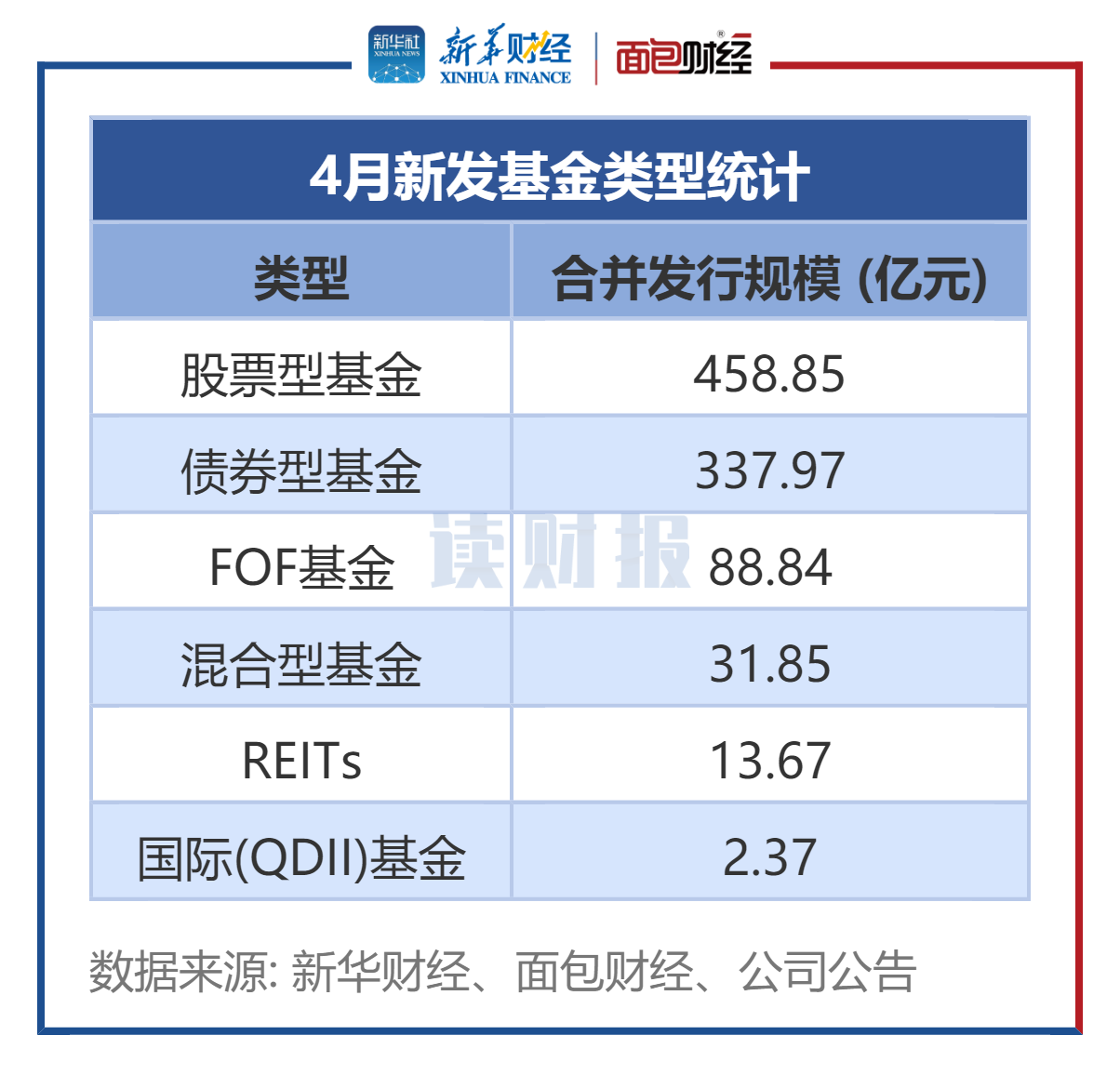
Summary of Key Points Core Viewpoint - The public fund market in April 2025 experienced a significant decline in issuance scale, with a total of approximately 933.55 billion yuan, reflecting a month-on-month decrease of 10.3% and a year-on-year decrease of 34.88% [1][2]. Fund Issuance Structure - In April, the largest issuance scale was for equity funds, exceeding 400 billion yuan, followed by bond funds with an issuance scale of 337.97 billion yuan [3][4]. - The total number of newly established funds in April was 125, with a total issuance of 924.88 billion units, which is a decrease of 34.45% compared to the same period in 2024 [2]. Top Issued Funds - The fund with the largest issuance scale in April was the "浦银安盛普航3个月定开" with a scale of 59.99 billion yuan, followed closely by "泰康中债1-5年政策性金融债指数A," also near 60 billion yuan [4][5]. - Several funds related to the STAR Market, such as "华夏上证科创板综合联接A" and "易方达上证科创板综合联接A," were also launched during this period, indicating a focus on technology and innovation sectors [5]. Fund Extension Announcements - Over twenty funds announced extensions for their fundraising periods in April, including notable ETFs like "万家国证航天航空行业ETF" and "招商中证卫星产业ETF," indicating challenges in meeting initial fundraising targets [6][7].
A股“黄金坑”,迎来新基金发行热!4月发行规模超900亿份
Zheng Quan Shi Bao Wang· 2025-05-03 01:59
Core Viewpoint - The A-share market in April experienced significant fluctuations, leading to a "golden pit" bottoming out, with a notable influx of funds into equity funds, particularly FOF funds, which have gained popularity due to their "dumbbell" configuration advantage [1][2]. Fund Issuance Summary - In April, 119 new funds raised a total of 901.56 million units, with equity funds accounting for 435.53 million units, representing 48.31% of the total issuance [2][5]. - Passive index funds contributed nearly 60% of the total, with individual products from Huaxia and E Fund each raising over 40 million units, highlighting strong market interest in the sci-tech sector [2][6]. - Fixed income products maintained a steady issuance pace, with 20 bond funds raising 337.97 million units, making up 37.5% of the total, and long-term pure bond funds comprising 68% of this category [2]. FOF Fund Performance - Four newly launched mixed FOF funds raised a total of 88.84 million units, accounting for nearly 10% of the total for the month, with an average size of 22.21 million units, significantly above the industry average [3]. - The popularity of FOF funds is attributed to a shift in wealth management strategies among residents from single products to diversified portfolios, aligning with the current market demand for stable growth [3]. Innovative Products - April saw the emergence of several innovative products, including a new REIT focused on rental housing, which successfully raised 500 million units, indicating a deepening of public REITs in the livelihood sector [4]. - The introduction of cross-border index products and thematic funds focused on sectors like sci-tech and artificial intelligence reflects a trend towards precise investment strategies in a volatile market [4]. Head Effect in Fund Issuance - The top 20 equity funds accounted for 73% of the total issuance, significantly higher than the industry average, indicating a strengthening head effect in the market [5]. - Investors are increasingly favoring established products with clear investment frameworks, leading to a concentration of resources among high-quality managers [5][6].
A股“黄金坑”,迎来新基金发行热!4月发行规模超900亿份
券商中国· 2025-05-03 01:33
Core Viewpoint - The A-share market in April experienced significant fluctuations, creating a "golden pit" for investment opportunities, with a notable influx of funds into equity funds and FOF products, indicating a shift in investor preferences towards stable and diversified investment strategies [1][2][3]. Fund Issuance Overview - In April, a total of 119 new funds raised 901.56 billion units, with equity funds accounting for 435.53 billion units, representing 48.31% of the total issuance [2][5]. - Passive index funds contributed nearly 60% of the total, with specific products from Huaxia and E Fund each raising over 40 billion units, highlighting strong market interest in the technology sector [2][5]. - Fixed income products maintained a steady issuance pace, with 20 bond funds raising 337.97 billion units, making up 37.5% of the total, and long-term pure bond funds comprising 68% of this category [2]. Performance of FOF Funds - Four newly launched mixed FOF funds raised a total of 88.84 billion units, accounting for nearly 10% of the total issuance, with an average size of 22.21 billion units, significantly above the industry average [3]. - The popularity of FOF products is attributed to a shift in wealth management strategies among investors, moving from single products to diversified portfolios, aligning with the current market demand for stable growth [3]. Innovative Products - April saw the introduction of several innovative fund products, including a new REIT focused on rental housing, which successfully raised 5 billion units, indicating ongoing development in public REITs within the housing sector [4]. - The launch of cross-border index products and thematic funds, such as those focused on artificial intelligence, reflects a trend towards targeted investment strategies in a volatile market [4]. - Funds targeting specific themes like the STAR Market and Hong Kong Stock Connect accounted for 37% of new fund issuances, suggesting a preference for precise investment rather than broad-based strategies [4]. Head of Fund Issuance - The top 20 equity funds accounted for 73% of the total issuance, indicating a strong head effect where investors prefer established products with clear performance histories [5][6]. - Notably, passive index and actively managed products exhibited distinct head characteristics, with leading funds in the technology sector attracting significant capital [5][6].

基金双周报:ETF市场跟踪报告-20250428
Ping An Securities· 2025-04-28 04:41
ETF Market Overview - The performance of ETFs has been generally positive in the last two weeks, with the exception of the Sci-Tech 100 and Sci-Tech 50 ETFs. The largest gains were seen in ETFs tracking the Hang Seng Index and the CSI 2000, while the manufacturing sector ETFs showed the highest increase among industry and thematic products [3][11]. - In terms of fund flows, major broad-based ETFs experienced significant net inflows, particularly the CSI 300 and the SSE 50 ETFs. After a substantial outflow at the beginning of the year, technology ETFs have shifted to net inflows since March, although the inflow rate has slowed in the last two weeks [3][11]. Fund Flow Analysis - As of April 25, 2025, a total of 15 new ETFs were launched, with a combined issuance of 8.99 billion shares, all of which are stock ETFs. Compared to the end of 2024, the scale of various ETFs has increased, with commodity ETFs, bond ETFs, industry + dividend ETFs, QDII ETFs, and broad-based ETFs rising by 120.33%, 38.17%, 14.44%, 7.58%, and 1.14% respectively [21][22]. - The cumulative fund flow for broad-based ETFs has shown a trend of inflows since early April 2025, particularly for the CSI 300, CSI 1000, and CSI 2000 ETFs, with the CSI 300 ETF seeing a net inflow exceeding 130 billion [12][14]. Thematic ETF Performance - The technology-themed ETFs have shown strong performance, particularly those tracking the new exchange's Southeast Asia Technology Index, with overseas technology ETFs outperforming domestic ones. In terms of fund flows, ETFs tracking the Hang Seng Technology Index have seen significant net inflows, while those tracking 5G communications have experienced outflows [27][28]. - The healthcare-themed ETFs have also performed well, with those tracking innovative drug indices seeing notable gains. However, funds have shifted from inflows to outflows for medical, military, dividend, and consumer ETFs in the last two weeks [16][28]. ETF Product Structure - The structure of newly launched ETFs indicates a growing trend towards thematic and sector-specific investments, with a notable increase in the issuance of stock ETFs. The overall market for ETFs is expanding, reflecting a shift in investor preferences towards diversified and thematic investment strategies [21][22].
红利基金规模再创新高
Zhong Guo Ji Jin Bao· 2025-04-27 08:18
Group 1 - The core viewpoint of the article highlights that despite fluctuations in the dividend index, dividend funds have continued to attract capital, reaching a record high in total scale in the first quarter of the year [2][4] - As of the end of the first quarter, the total scale of dividend funds reached 251.367 billion yuan, an increase of approximately 27 billion yuan compared to the end of the previous quarter [4] - Several products saw significant scale increases, with the Morgan S&P Hong Kong Stock Connect Low Volatility Dividend ETF and the China Europe Dividend Preferred Fund increasing by 3.468 billion yuan and 2.76 billion yuan, respectively [4] Group 2 - Industry insiders believe that while equity funds have reduced their allocation to dividend assets, the scarcity of quality assets suggests that dividend assets still hold good allocation value [3] - The growth in the scale of dividend funds is attributed to several factors, including policy encouragement for companies to distribute dividends, long-term capital entering the market, and a flight to safety amid tariff disruptions [4][6] - The performance of dividend indices was generally negative in the first quarter, with the CSI Dividend Index declining by 3.11%, leading to a reduction in equity funds' allocation to dividend assets [4][5] Group 3 - Analysts suggest that the current market is shifting from "broad dividends" to "high-quality dividends," with stable dividend-paying sectors like banking and publishing showing resilience against macroeconomic variables [5][6] - The investment value of dividend assets remains, with a focus on low valuation and high dividend yield sectors presenting opportunities, particularly before the annual dividend distribution period from May to July [6] - Dividend assets are expected to benefit from economic improvement, with a GDP growth rate of 5.4% in the first quarter indicating potential positive trends for these assets [6] Group 4 - Potential risks include the possibility of capital flow reversals if dividend assets experience increased volatility, especially given the significant gains accumulated in 2024 [7][8] - High levels of trading congestion and market changes are also noted as risks, particularly if the development logic of consumer and technology assets reverses, which could siphon off capital from dividend assets [8] - Recommendations for investing in dividend assets include using dollar-cost averaging and grid trading strategies, while closely monitoring macroeconomic changes [9]