
上海莱士

Search documents
中国血王之战
Hua Er Jie Jian Wen· 2025-06-12 06:50
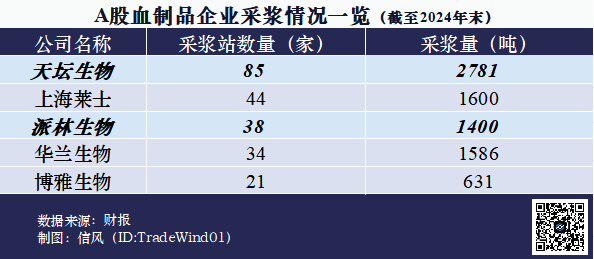
Core Viewpoint - The control of blood product company Palin Bio (000403.SZ) has been transferred to China National Pharmaceutical Group (Sinopharm), which may lead to the integration of Palin Bio and Tian Tan Bio (600161.SH), potentially reshaping the competitive landscape in the blood product industry [1][5][9]. Group 1: Company Control and Financials - On June 10, Palin Bio announced that its controlling shareholder, Qiongcheng Shengbang Yinghao Investment Partnership, plans to transfer its entire 21.03% stake to China National Biotechnology Co., Ltd. [1] - The transaction is valued at 38.44 billion yuan, with a share price of 24.96 yuan, representing a 47% premium over the closing price of 16.96 yuan on June 6 [3]. - The estimated price-to-earnings ratio for this transaction is close to 32 times, based on a projected net profit of 7.45 billion yuan for 2024 [3][4]. Group 2: Industry Competition and Market Position - The integration of Tian Tan Bio and Palin Bio could lead to a combined revenue of approximately 86.87 billion yuan, surpassing Shanghai Lai Shi's (002252.SZ) projected revenue of 81.76 billion yuan for 2024 [7][15]. - If the integration occurs, the combined entity would control at least 123 plasma collection stations and have a total plasma collection volume of 4,181 tons, significantly increasing market share to nearly 30% [7][16]. - The blood product industry is experiencing consolidation due to limited new entrants since 2001, with companies increasingly acquiring others to expand market share [16][17]. Group 3: Challenges and Future Outlook - The integration process may face challenges, particularly regarding the internal conflicts within Palin Bio, especially with its second-largest shareholder, Harbin Tongzhi Cheng Technology Development Co., Ltd. [10][11][14]. - The future of the blood product industry may depend on how effectively China National Pharmaceutical Group can manage these internal dynamics while pursuing further consolidation [9][14]. - The industry is also exploring innovative solutions to reduce reliance on human plasma, with several companies making progress in developing recombinant products [21][22].


派林生物三年两易主:国药系或坐拥154个浆站,重构血制品格局丨并购一线
Tai Mei Ti A P P· 2025-06-11 08:43
Core Viewpoint - The blood products industry is undergoing significant consolidation, with the leading player, China National Pharmaceutical Group (Sinopharm), acquiring the third-ranked company, Pailin Biotech, which will further solidify its market position [2][3]. Group 1: Acquisition Details - Pailin Biotech's controlling shareholder, Shengbang Yinghao, signed an acquisition framework agreement with China National Pharmaceutical, intending to transfer 21.03% of its shares [2]. - The estimated transaction price for the share transfer is approximately 4.612 billion yuan, translating to a per-share price of about 29.99 yuan, representing a premium of approximately 76.83% compared to the last closing price before suspension [2]. - The acquisition is still subject to due diligence and final agreement on transaction terms, with the final payment arrangements yet to be clarified [2]. Group 2: Market Impact - The acquisition will reshape the competitive landscape of the blood products sector, with Sinopharm's market dominance being reinforced by its ownership of three major blood product companies, including Tian Tan Biological and Wei Guang Biological, totaling 154 plasma collection stations [3][10]. - Following the announcement, Pailin Biotech's stock rose by 1.06%, while Tian Tan Biological and Wei Guang Biological experienced slight declines [3]. Group 3: Historical Context - Pailin Biotech has undergone multiple ownership changes, with its focus shifting to the blood products sector since 2007, culminating in its rebranding after acquiring another company in 2021 [4][5]. - The company has faced internal conflicts and governance issues, particularly during its transition to new shareholders, which have impacted its operational stability [5][9]. Group 4: Industry Dynamics - The blood products market is characterized by a "three-legged" competitive structure, with Sinopharm, China Resources, and Haier Group as the main players, but Sinopharm has established a significant lead in both the number of plasma stations and collection volume [10][15]. - As of 2024, Sinopharm's total plasma collection volume is 4,743 tons, accounting for approximately 35.4% of the industry, with further growth expected as additional stations become operational [10][16].

派林生物易主:国药系拟再收千吨级血企竞逐百亿市场
2 1 Shi Ji Jing Ji Bao Dao· 2025-06-11 06:18
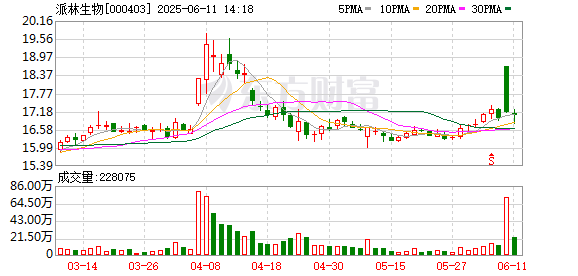
Core Viewpoint - The control of Palin Biotech (000403.SZ) is set to change hands as its major shareholder, Shengbang Yinghao, has signed a framework agreement with China Biotech to transfer 21.03% of its shares, potentially enhancing China Biotech's position in the blood products industry [2][3] Company Summary - The transaction will be completed in cash, but there are risks associated with the due diligence process and the uncertainty of finalizing the agreement [2] - If the deal is successful, the controlling shareholder will shift from the Shaanxi Provincial Government's State-owned Assets Supervision and Administration Commission to China National Pharmaceutical Group (Sinopharm) [2] - Following the acquisition, Sinopharm will strengthen its presence in the blood products sector, joining its existing holdings in Tian Tan Biological (600161.SH) and Weigao Biotech (002880.SZ) [2] - In 2024, the combined plasma collection volume of these three companies is projected to reach 4,743 tons, significantly surpassing competitors like Shanghai Raist (002252.SZ) and Hualan Biological (002007.SZ) [2] Industry Summary - The change in ownership of Palin Biotech may reshape its future development and could lead to a reconfiguration of competition within the blood products industry [3] - The market response has been lukewarm, with Palin Biotech's stock showing minimal fluctuations following the announcement [3] - The blood products industry in China is expected to undergo consolidation, driven by government policies and the need for industry growth, favoring companies with strong plasma collection resources and R&D capabilities [3][7] - The global blood products industry has seen a significant reduction in the number of major players, with the top five companies controlling 80%-85% of the market share [7] - In China, the number of operational blood product companies is under 30, with strict regulations on the establishment of new plasma collection stations [8] - The industry is projected to grow, with the blood products market expected to reach 600 billion yuan in 2024 and 780 billion yuan by 2027, reflecting a compound annual growth rate of 11.6% from 2022 to 2027 [10]
年内超20家上市公司重大资产重组折戟,“价格谈不拢”是主因
Sou Hu Cai Jing· 2025-06-10 07:47
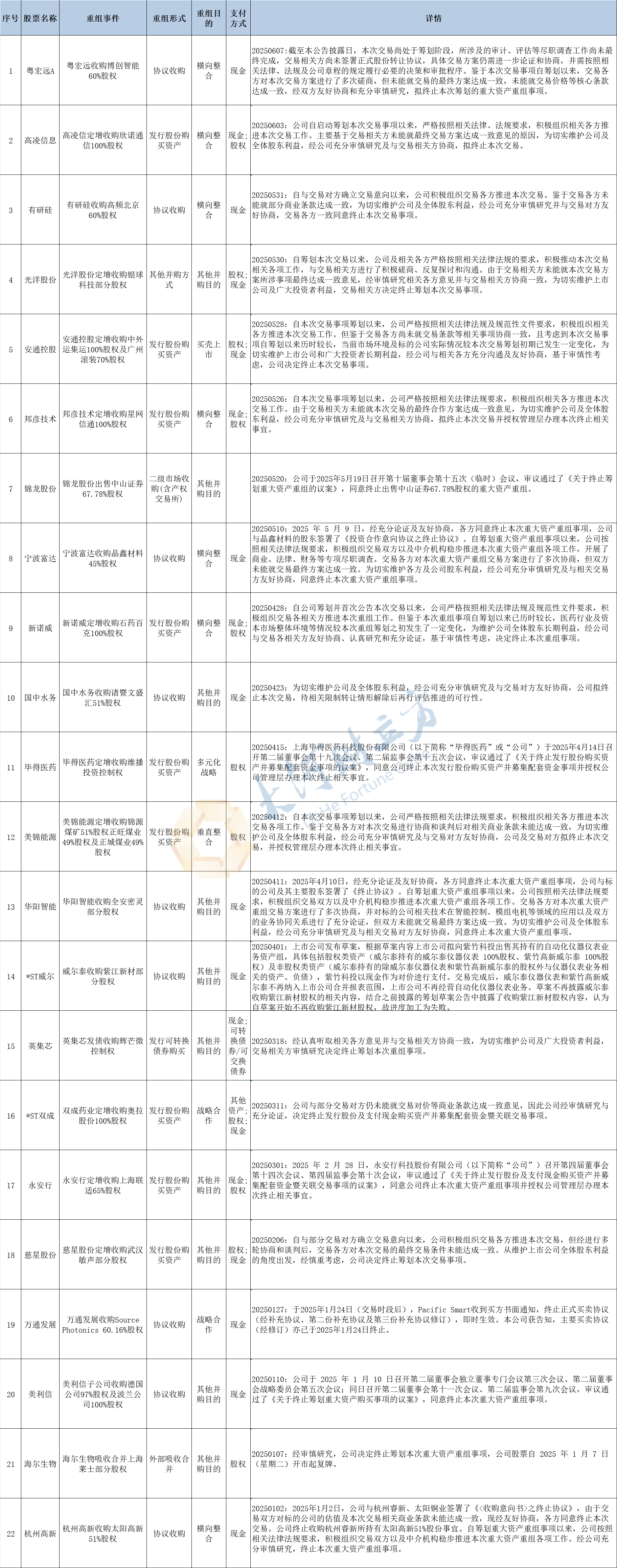
Group 1 - The core issue leading to the termination of major asset restructurings among listed companies is the inability to reach an agreement on key terms, particularly the transaction price [5][6][7] - Since 2025, over 20 listed companies have announced the failure of significant asset restructurings, including well-known firms such as Guozhong Water, China Merchants Energy, and Haier Biomedical [1][5] - Companies like Yuehongyuan A and *ST Shuangcheng have also faced similar issues, primarily due to disagreements on pricing [7][11] Group 2 - Market environment changes and prolonged negotiation periods have contributed to the abandonment of restructuring plans, as seen in cases like Xinno and Antong Holdings [9][10] - The complexity of transaction structures and the presence of asset ownership issues have also been significant factors in the failure of mergers and acquisitions [11][12] - The need for effective communication and coordination among parties involved in the transaction is crucial to avoid misunderstandings and ensure successful negotiations [17][19] Group 3 - Recent policy initiatives, such as the revised "Major Asset Restructuring Management Measures," aim to enhance the merger and acquisition market's activity and success rates [14][15] - Companies are encouraged to conduct thorough due diligence and risk assessments as foundational steps in the merger process [16] - Establishing a joint working group and regular communication mechanisms can help address disputes and facilitate smoother negotiations [18][19]


派林生物拟易主中国生物,整合预期再起?
Di Yi Cai Jing· 2025-06-10 04:10
Group 1 - The competitive landscape of the blood products industry is undergoing restructuring due to changes in control of companies [1][6] - On June 10, 2023, Palin Bio (000403.SZ) resumed trading with a stock price increase of over 3% following an announcement of a change in control [2] - China National Pharmaceutical Group Corporation (China Biotech) signed an acquisition framework agreement to acquire 21.03% of Palin Bio's shares from its controlling shareholder, Shengbang Yinghao Investment Partnership [2][4] Group 2 - The transaction will shift Palin Bio from being controlled by a local state-owned enterprise to being controlled by a central state-owned enterprise [4] - The acquisition price is based on a principal amount of 3.844 billion yuan plus interest calculated at an annual simple interest rate of 9% from March 20, 2023, until the signing of the transaction documents [4] - This marks the second change in control for Palin Bio since October 2023, highlighting the company's history of ownership changes in the blood products sector [4][5] Group 3 - The blood products industry has high barriers to entry, scarce plasma resources, and is subject to strict regulatory oversight, with fewer than 30 operational companies remaining after several rounds of consolidation [5] - Due to the scarcity of blood product targets, the industry has seen frequent new capital entering, such as China Biotech's acquisition of Palin Bio and previous acquisitions by other companies [6] - The entry of China Biotech into Palin Bio may lead to increased competition with Tian Tan Bio, another blood products company already under its control [4][6]
派林生物易主敲定中国生物 血制品集中度提升再下一城
Hua Er Jie Jian Wen· 2025-06-09 15:15
Core Viewpoint - The acquisition of a controlling stake in Pailin Biological by China National Pharmaceutical Group signifies a significant shift in ownership and control within the blood products industry in China, with implications for market competition and consolidation strategies [2][3]. Group 1: Acquisition Details - Pailin Biological's controlling shareholder, Shengbang Yinghao Investment Partnership, plans to transfer its entire 21.03% stake to China National Pharmaceutical for a total cash consideration of 3.844 billion yuan [1][3]. - The transaction values Pailin Biological at 24.96 yuan per share, representing a 47% premium over its closing price of 16.96 yuan on June 6 [3]. - The estimated price-to-earnings (P/E) ratio for this transaction is approximately 32 times, based on Pailin's projected net profit of 745 million yuan for 2024 [3]. Group 2: Industry Context - The valuation of Pailin Biological is notably higher than that of several other A-share blood product companies, which have P/E ratios around 25 times, with only Boya Bio reaching 36 times [4]. - The scarcity of blood products in China, due to regulatory restrictions on new production facilities since 2001, underpins the rationale for China National Pharmaceutical's substantial investment [5]. Group 3: Competitive Landscape - Following the acquisition, Tian Tan Biological, another player in the blood products sector, will face increased competition as both companies operate in the same industry [6]. - There are expectations that China National Pharmaceutical may integrate Pailin Biological into Tian Tan Biological, enhancing operational efficiency and market share [8]. - If the integration occurs, the combined entity would control at least 123 plasma collection stations, with a total collection volume exceeding 4,000 tons, significantly outpacing competitors like Shanghai Raist and Hualan Biological [8][9].


2025年易凯资本中国健康产业白皮书_健康产业并购篇
Sou Hu Cai Jing· 2025-06-09 03:04
Group 1 - The core viewpoint of the report is that the Chinese healthcare M&A market experienced a significant rebound in 2024, driven by policy support, valuation adjustments, and changes in capital structure, with a total transaction scale of 75 billion yuan, representing an 82% year-on-year increase [1][10][11] - The number of M&A transactions in the domestic healthcare sector reached 148, a 17% increase compared to 2023, indicating a recovery to a relatively high level [1][11] - Large transactions (over 500 million yuan) accounted for 701 billion yuan, with a notable 117% increase year-on-year, primarily driven by landmark cases such as Haier's acquisition of Shanghai Laishi (12.5 billion yuan) and Genmab's acquisition of Pufang Bio (1.8 billion USD) [1][11][13] Group 2 - Key driving factors include the release of policy dividends, changes in exit paths, and valuation reconstruction, with the "M&A Six Articles" policy significantly enhancing market activity [2][34] - The number of A-share listed companies participating as buyers and targets increased by 58% and 82% respectively after the introduction of supportive policies [2][39] - The tightening of IPO reviews has made M&A the primary exit option for investors, with a 64% year-on-year increase in terminated or withdrawn IPOs in 2024 [2][40] Group 3 - Key M&A themes include accelerated industry consolidation, valuation arbitrage, and innovative models, with leading companies employing strategies to break growth bottlenecks [3][44] - The NewCo model, where core pipelines are spun off into overseas joint ventures, has become mainstream, exemplified by Heng Rui Pharmaceutical's injection of GLP-1 product rights into Hercules, resulting in an upfront payment of 110 million USD and potential milestone revenues of up to 6 billion USD [3][4] - The rise of consumer healthcare is evident, with active M&A in non-insurance-dependent sectors like medical aesthetics and ophthalmology [3][5] Group 4 - In the biopharmaceutical sector, cross-border capital participation is deepening, with AI-driven R&D M&A gaining momentum, and traditional Chinese medicine accelerating integration under policy support [4] - The medical device sector is witnessing rapid domestic substitution, with companies like Xinmai Medical acquiring European Optimum Medical for technology and channels [4] - The medical services sector is expanding through specialty chain growth and digital integration, as seen in ByteDance's acquisition of Meizhong Yihe [5] Group 5 - The future outlook suggests a shift from capital-driven to value creation, with a focus on synergy effects and flexible transaction structures to resolve valuation discrepancies [6] - The M&A market is expected to transition from "quantity increase" to "quality improvement," driven by policy support, technological innovation, and globalization [6]

山东上市公司2024年报纵览:四大新特点推动山东绿色低碳高质量发展
Jing Ji Guan Cha Wang· 2025-06-06 10:02
Economic Overview - In 2024, Shandong's GDP reached 98,565.8 billion yuan, growing by 5.7% year-on-year, with the primary, secondary, and tertiary industries contributing 6.7%, 40.2%, and 53.1% respectively [2] - The province's listed companies are crucial for economic development, focusing on green, low-carbon, and high-quality growth while enhancing technological innovation [2] Performance of Listed Companies - Shandong's listed companies achieved a total revenue of 2.95 trillion yuan in 2024, a year-on-year increase of 4.61%, while net profit was 175.9 billion yuan, down 3.20% [4] - 78.96% of the companies reported profits, which is 5.27 percentage points higher than the national average, indicating better performance despite challenges in traditional industries [4][5] Contribution to Economic Growth - Listed companies in Shandong contributed 29.92% of the province's GDP, with an added value of 705.18 billion yuan, reflecting their significant role in regional economic growth [5] - The labor productivity of listed companies was 483,600 yuan per person, 2.78 times the national average, showcasing their efficiency [5] Innovation and Growth of SMEs - In 2024, 67 companies on the Growth Enterprise Market reported revenues of 177.98 billion yuan, up 15.13%, and net profits of 11.74 billion yuan, up 49.42%, indicating strong growth in innovative SMEs [6] - The total R&D expenditure for these companies was 6.44 billion yuan, a 8.11% increase, highlighting their commitment to innovation [6] Market Capitalization and Value Management - By the end of 2024, the market capitalization of Shandong's listed companies reached 3.63 trillion yuan, a 4.18% increase, ranking seventh nationally [8] - 125 companies conducted share buybacks, totaling 9.568 billion yuan, reflecting a strong commitment to value management [8] Characteristics of Listed Companies - Private listed companies in Shandong accounted for 62.14% of the total, achieving revenues of 838.06 billion yuan, up 4.64%, and net profits of 431.87 billion yuan, up 16.49% [9][10] - Companies with overseas business generated 842.85 billion yuan in foreign income, a year-on-year increase of 8.89%, indicating the importance of international markets [12] Mergers and Acquisitions - In 2024, 13 listed companies in Shandong participated in mergers and acquisitions, with a total transaction value of 38.75 billion yuan, a 3.58-fold increase [14][15] - The trend of state-owned enterprises merging with peers is becoming more common, enhancing market competitiveness [15] Sustainable Development and ESG - Shandong's listed companies showed a 44.34% ESG report disclosure rate, slightly above the national average, indicating a growing recognition of sustainability [16][17] - The average ESG score for Shandong's companies was 5.79, higher than the national average, with two companies scoring above 9.00 [17] Innovation and Digital Transformation - R&D expenses for Shandong's listed companies reached 84.51 billion yuan, a 3.94% increase, with a focus on enhancing innovation capabilities [18] - The digital economy's core companies reported revenues of 330.38 billion yuan, up 27.57%, demonstrating significant growth in this sector [20] Traditional Industry Transformation - Traditional industries in Shandong are undergoing digital and intelligent transformations, with companies like Shandong High-Speed adopting advanced technologies to enhance operational efficiency [23] - The integration of digital and green technologies is seen as essential for fostering new productive forces in traditional sectors [24]



上海莱士(002252) - 关于回购公司股份的进展公告
2025-06-03 11:02
证券代码:002252 证券简称:上海莱士 公告编号:2025-044 上海莱士血液制品股份有限公司 关于回购公司股份的进展公告 本公司及董事会全体成员保证信息披露的内容真实、准确、完整, 没有虚假记载、误导性陈述或重大遗漏。 上海莱士血液制品股份有限公司("公司")于 2025 年 1 月 13 日召开了第六 届董事会第七次(临时)会议,审议通过了《关于回购公司股份方案的议案》, 同意公司使用自有或自筹资金以集中竞价交易方式从二级市场回购公司股份,用 于实施员工持股计划或股权激励,拟回购股份的资金总额为不低于人民币 2.5 亿 元(含)且不超过人民币 5 亿元(含),拟回购股份价格不超过人民币 9.55 元/ 股(含),具体回购股份数量以回购股份方案实施完毕或回购实施期限届满时实 际回购情况为准。回购期限自股东大会审议通过本次回购股份方案之日起 12 个 月内,如果触及回购股份方案提及的相关条件时,回购期限提前届满。公司于 2025 年 2 月 14 日召开 2025 年第一次临时股东大会审议通过了上述股份回购方 案。具体内容详见公司分别于 2025 年 1 月 14 日、2025 年 2 月 15 日在《 ...
沪深300制药与生物科技指数报7971.61点,前十大权重包含片仔癀等
Jin Rong Jie· 2025-06-03 07:46
Group 1 - The Shanghai Composite Index opened lower but rose throughout the day, with the CSI 300 Pharmaceutical and Biotechnology Index reported at 7971.61 points [1] - The CSI 300 Pharmaceutical and Biotechnology Index has increased by 5.53% in the past month, 7.39% in the past three months, and 7.09% year-to-date [1] - The CSI 300 Index categorizes its 300 sample stocks into 11 primary industries, 35 secondary industries, over 90 tertiary industries, and more than 200 quaternary industries [1] Group 2 - The top ten holdings of the CSI 300 Pharmaceutical and Biotechnology Index are: Heng Rui Medicine (25.29%), WuXi AppTec (16.43%), Pian Zai Huang (6.37%), Yunnan Baiyao (5.21%), Kelun Pharmaceutical (5.11%), East China Pharmaceutical (4.06%), Xinhecheng (3.51%), Changchun High-tech (3.48%), Fosun Pharma (3.34%), and Shanghai Raas (3.27%) [1] - The market segments of the CSI 300 Pharmaceutical and Biotechnology Index show that the Shanghai Stock Exchange accounts for 63.65% and the Shenzhen Stock Exchange accounts for 36.35% [2] - The industry composition of the CSI 300 Pharmaceutical and Biotechnology Index includes: chemical drugs (43.80%), pharmaceutical and biotechnology services (21.66%), traditional Chinese medicine (18.52%), and biological drugs (16.02%) [2] Group 3 - The index samples are adjusted every six months, with adjustments implemented on the next trading day following the second Friday of June and December each year [2] - Weight factors are adjusted along with the periodic sample adjustments, which are generally fixed until the next scheduled adjustment [2] - Temporary adjustments occur when the CSI 300 Index samples are modified, and changes in industry classification due to special events will also lead to corresponding adjustments in the CSI 300 industry index samples [2]




