
微盟集团

Search documents
人工智能激发云计算订单释放 相关基金重仓股大幅异动
Zheng Quan Shi Bao· 2025-09-10 17:54
Group 1 - The rapid development of artificial intelligence (AI) is significantly driving the demand for cloud computing and big data companies, leading to increased orders and stock performance in these sectors [1][2] - Major public funds are heavily investing in cloud computing companies, with notable movements in stocks like Kingdee International, GDS Holdings, Weimob, and Mingyuan Cloud, attributed to the accelerated overseas demand for cloud services [1][2] - Oracle Corporation reported a surge in customer orders due to rising demand for its low-cost cloud infrastructure services, with expectations of signing several multi-billion dollar contracts, resulting in a stock price increase of approximately 28% [1] Group 2 - There is a growing focus among funds on cloud computing and cloud data services, with initiatives like the South Fund's collaboration with GDS Holdings to launch a REIT, and investments in AI medical cloud platforms by various funds [2] - The cloud computing industry is evolving from traditional IaaS services to higher value-added PaaS and SaaS offerings, driven by the increased demand for computing power from AI model training and inference [2] - The cloud computing sector is expected to benefit from long-term growth potential and short-term policy support, particularly in areas like AI computing power, hybrid cloud, and industry-specific cloud solutions [2] Group 3 - The A-share market is anticipated to maintain a structural trend into the second half of 2025, with computing power infrastructure and AI application commercialization as core drivers [3] - The demand for computing power is expected to surge as global AI giants engage in a competitive race, leading to significant opportunities in the cloud computing sector [3] - Cloud computing and big data are identified as foundational elements for digital transformation in China, with their importance highlighted in the "14th Five-Year Plan" for accelerating digital development [3]


智通港股空仓持单统计|9月5日
智通财经网· 2025-09-05 10:36
Group 1 - The top three companies with the highest short positions as of August 29 are ZTE Corporation (00763) at 16.47%, COSCO Shipping Holdings (01919) at 13.94%, and CATL (03750) at 13.88% [1][2] - The company with the largest increase in short positions is Ganfeng Lithium (01772), which rose by 2.85% to 12.46% [2][3] - The companies with the largest decrease in short positions include Hisense Home Appliances (00921), which decreased by 3.57% to 4.72%, and WuXi AppTec (02359), which decreased by 2.44% to 11.64% [3][4] Group 2 - The latest short position data shows that the top ten companies with the highest short ratios include China Ping An (02318) at 12.58% and Zijin Mining (02899) at 11.91% [2] - The companies with the most significant increases in short positions also include Huahong Semiconductor (01347) with an increase of 2.56% to 9.73% and Meitu (01357) with an increase of 1.80% to 4.85% [2] - The companies with the most significant decreases in short positions also include Weimob (02013) with a decrease of 1.66% to 9.40% and Linklogis Technology (09959) with a decrease of 1.43% to 2.76% [3][4]


三年半累计亏损近9200万,小鹅通仍冲港股IPO
Sou Hu Cai Jing· 2025-09-05 10:25
Core Viewpoint - Xiaoe Technology has submitted its prospectus for an IPO on the Hong Kong Stock Exchange, aiming to become the first "private domain SaaS stock" despite facing challenges such as continuous losses, supplier dependence, and compliance risks [2][11]. Group 1: Company Overview - Founded in 2015, Xiaoe Technology quickly capitalized on the knowledge payment trend, evolving from a tool provider to a comprehensive SaaS solution covering e-commerce, digital marketing, and CRM [3]. - As of 2024, Xiaoe Technology ranks first among interactive private domain operation solution providers in China, with a market share of 4.4% and the fastest revenue growth among the top five providers from 2022 to 2024 [3]. Group 2: Financial Performance - Revenue from 2022 to 2024 was 299 million RMB, 415 million RMB, and 521 million RMB, with a compound annual growth rate (CAGR) of 32.0%. In the first half of 2025, revenue reached 306 million RMB, a year-on-year increase of 26.4% [5]. - Gross profit for the same period was 162 million RMB, 300 million RMB, and 389 million RMB, with a CAGR of 54.9%. The gross margin improved from 54.3% in 2022 to 75.5% in the first half of 2025 [5]. - Despite revenue growth, Xiaoe Technology reported losses of 34 million RMB, 37 million RMB, and 15 million RMB from 2022 to 2024, with a cumulative loss of nearly 92 million RMB over three and a half years [7][9]. Group 3: Customer and Market Dynamics - As of June 30, 2025, Xiaoe Technology had 1,838 key customers, with average revenue per key customer increasing from 77,700 RMB in 2022 to 128,200 RMB in the first half of 2025 [6]. - The contribution of key customers to revenue rose from 7.1% to 38.1% from 2022 to 2025, indicating a growing reliance on a concentrated customer base [6]. Group 4: Risks and Challenges - Xiaoe Technology's financial health is under pressure due to significant liabilities, with total current liabilities increasing from 2.26 billion RMB in 2022 to 2.44 billion RMB in 2024, while current assets remained low [9][10]. - The company is heavily reliant on Tencent, which holds a 16.82% stake and is both a major supplier and customer, raising concerns about potential impacts on operations if Tencent alters its business strategy [11]. - Compliance risks are significant, as the company has faced regulatory scrutiny due to issues like false advertising and infringement by merchants on its platform, which could harm its reputation and customer retention [12]. Group 5: Industry Context - The private domain SaaS market in China is projected to grow from 11.9 billion RMB in 2024 to 25.8 billion RMB by 2029, with a CAGR of 16.7% [13]. - The competitive landscape includes established players like Youzan and Weimob, as well as tech giants like Alibaba and Tencent, intensifying the pressure on Xiaoe Technology to maintain its market position [13]. Group 6: Future Outlook - Xiaoe Technology's IPO is seen as a critical move for securing funding for research and market expansion, but concerns about its ability to achieve sustainable profitability remain [14]. - The company must address its supplier dependence and compliance issues to enhance its financial stability and attract long-term investor interest post-IPO [14].

智通港股通占比异动统计|9月2日
Zhi Tong Cai Jing· 2025-09-02 00:51
Core Insights - The report highlights the changes in the Hong Kong Stock Connect holdings, indicating significant increases and decreases in ownership percentages for various companies as of September 1, 2025 [1][2][3]. Group 1: Increased Holdings - Aikang Medical (01789) saw the largest increase in holdings, up by 1.59%, bringing its total to 20.34% [1]. - Yimai Sunshine (02522) and Shanghai Fudan (01385) also experienced notable increases of 1.19% and 0.91%, with new holdings of 38.82% and 41.13% respectively [1]. - Other companies with significant increases include Jingtai Holdings (02228) and Fourth Paradigm (06682), both up by 0.86%, with holdings of 41.75% and 46.65% respectively [1]. Group 2: Decreased Holdings - Hang Seng China Enterprises (02828) experienced the largest decrease, down by 15.91%, now holding only 0.50% [2]. - Other notable decreases include the Tracker Fund of Hong Kong (02800) and Southern Hang Seng Technology (03033), which fell by 7.39% and 2.67%, with holdings of 0.69% and 59.48% respectively [2]. - Companies like Huaxia Hang Seng Biotechnology (03069) and Yuzhou Group (01628) also saw reductions of 1.59% and 1.27%, with holdings of 13.93% and 2.06% respectively [2]. Group 3: Five-Day Changes - Over the last five trading days, Anjijia Food (02648) led with a 4.24% increase, reaching a holding of 16.87% [3]. - Other companies with significant five-day increases include Jinli Permanent Magnet (06680) and Ganfeng Lithium (01772), which rose by 3.94% and 3.34%, with holdings of 28.00% and 34.97% respectively [3]. - Companies like Jingtai Holdings (02228) and Times Angel (06699) also saw increases of 3.12% and 2.06%, with holdings of 41.75% and 23.15% respectively [3]. Group 4: Twenty-Day Changes - In the last twenty days, Anjijia Food (02648) had the highest increase at 14.45%, with a holding of 16.87% [4]. - Changfei Optical Fiber (06869) and Yimai Sunshine (02522) also saw significant increases of 8.06% and 7.96%, with holdings of 54.02% and 38.82% respectively [4]. - Other notable increases include Meizhong Jiahe (02453) and Jingtai Holdings (02228), which rose by 7.16% and 6.99%, with holdings of 37.60% and 41.75% respectively [4].
微盟集团(02013) - 截至2025年8月31日止股份发行人的证券变动月报表
2025-09-01 08:31
股份發行人及根據《上市規則》第十九B章上市的香港預託證券發行人的證券變動月報表 II. 已發行股份及/或庫存股份變動 | 1. 股份分類 | 普通股 | 股份類別 | 不適用 | | 於香港聯交所上市 (註1) | 是 | | | --- | --- | --- | --- | --- | --- | --- | --- | | 證券代號 (如上市) | 02013 | 說明 | | | | | | | | | 已發行股份(不包括庫存股份)數目 | | 庫存股份數目 | | 已發行股份總數 | | | 上月底結存 | | | 3,615,888,208 | | 0 | | 3,615,888,208 | | 增加 / 減少 (-) | | | 0 | | 0 | | | | 本月底結存 | | | 3,615,888,208 | | 0 | | 3,615,888,208 | 第 2 頁 共 10 頁 v 1.1.1 | 截至月份: | 2025年8月31日 | | | | 狀態: 新提交 | | --- | --- | --- | --- | --- | --- | | 致:香港交易及結算所有限公司 | | ...
微盟集团(2013.HK):SAAS业务逐步企稳 广告客户结构持续优化
Ge Long Hui· 2025-08-30 03:16
Core Viewpoint - The company reported a revenue of 775 million RMB for 1H25, a year-on-year decrease of 10.6%, primarily due to cost-cutting measures and a reduction in low-margin businesses, leading to a decrease in deferred revenue [1] Group 1: Financial Performance - The company achieved a gross profit of 582 million RMB in 1H25, reflecting a year-on-year increase of 1.1%, with a gross margin of 75.1%, up by 8.7 percentage points [1] - Adjusted net profit for 1H25 was 17 million RMB, marking the first profit since 2021, attributed to cost reduction and efficiency improvements [1] Group 2: Subscription Revenue and Market Focus - Subscription solutions revenue for 1H25 was 438 million RMB, down 10.1% year-on-year, mainly due to the reduction of low-quality subscription businesses, resulting in a decrease of approximately 30 million RMB in deferred subscription revenue [2] - The number of paying merchants reached 59,100, a year-on-year decrease of 13.9%, with an average revenue per user (ARPU) of 7,402 RMB, up 4.5% year-on-year [2] - The smart retail business generated 286 million RMB in revenue, accounting for 65.2% of subscription solutions revenue, with a year-on-year decline of 6.1% [2] Group 3: Advertising and Merchant Solutions - Merchant solutions revenue for 1H25 was 338 million RMB, down 11.3% year-on-year; however, after adjusting for a reduction in the rebate ratio, the revenue growth was 45.3% [3] - The gross advertising revenue for merchants was approximately 8.623 billion RMB, reflecting a year-on-year growth of 3.4% [3] - The gross margin for this business segment reached 91.3%, compared to 74.5% in 24H1, due to the reduction of low-margin businesses [3] Group 4: AI Integration and Product Development - AI product revenue for 1H25 was approximately 34 million RMB, with the development of three major products: WAI SaaS, WAI Pro, and WIME, covering various application scenarios [4] - The usage rate of the WAI SaaS for store operations increased by 4.5 times, indicating strong adoption among merchants [4] - The number of registered users for WIME reached 110,000, with revenue growth of 172% quarter-on-quarter [4]
有赞、微盟扭亏为盈,电商SaaS进入盈利期?
Zhong Guo Jing Ying Bao· 2025-08-29 15:54
Core Insights - The e-commerce SaaS industry has been struggling with high growth and high losses, primarily relying on capital infusion for expansion. However, signs of profitability have emerged in the mid-2025 financial reports, with major players Youzan and Weimob reporting their first profits after years of losses [2][3][7] - Despite achieving profitability, both companies face challenges such as declining revenue and customer attrition, raising questions about whether this turnaround is sustainable or merely a temporary phenomenon [2][7] Revenue Performance - Youzan reported a net profit of 72.57 million yuan in the first half of 2025, while Weimob achieved an adjusted net profit of 16.9 million yuan, marking their first profit since 2021 [2][3] - Youzan's revenue for the first half of 2025 was approximately 710 million yuan, showing a modest year-on-year growth of about 4%, following eight consecutive periods of negative growth [2][3] - Weimob's revenue was 775 million yuan, a decline of 10.6% compared to the previous year, although adjusted revenue showed a growth of 7.8% [3][4] Revenue Structure - For Youzan, the merchant solutions segment saw a revenue increase of 10.3% to approximately 338 million yuan, driven by the rapid expansion of its logistics solutions [3] - The subscription solutions segment, which constitutes 52.7% of total revenue, experienced a 1.0% decline to about 374 million yuan, with a decrease in gross margin by 2.8% [3] - Weimob's subscription solutions revenue fell by 10% to 438 million yuan, while its merchant solutions revenue also declined by 11.3% to 338 million yuan. However, adjusted merchant solutions revenue grew significantly by 45.3% [4] Cost Management - Weimob successfully reduced its sales costs from 292 million yuan to 193 million yuan, a decrease of 33.9%, which contributed to its improved gross profit and margin [5][6] - Youzan's sales and distribution expenses were 260 million yuan, slightly down from 266 million yuan, accounting for 36.6% of total revenue, indicating a small optimization [6] - Both companies have focused on cost-cutting measures, including workforce optimization and a shift towards high-margin business areas [5][6] Customer Dynamics - Both Youzan and Weimob have experienced a decline in customer numbers, with Youzan's total merchants dropping by 4% to 53,651 in the first half of 2025, significantly lower than its peak of nearly 100,000 in 2020 [7][8] - Weimob's paid merchants in the subscription solutions segment decreased by 13.9%, while its merchant solutions segment saw a slight increase of 1.5% [8][9] Strategic Shifts - In response to declining customer numbers, both companies have shifted from a broad acquisition strategy to focusing on larger clients and reducing non-core and low-quality business segments [10] - Weimob's large client strategy has shown success, with significant revenue contributions from key industries, while Youzan has concentrated on high-margin sectors [10] Workforce Adjustments - Both companies expanded their workforce significantly during the pandemic but have since undergone substantial layoffs to improve efficiency [11][12][14] - Youzan's employee count dropped from 4,494 in 2021 to 1,509 in 2025, while Weimob's workforce decreased from 8,562 to 3,400 in the same period [14][15] AI Integration - Both companies are embracing AI to enhance operational efficiency, with Weimob reporting a 30% improvement in overall operations through AI applications [16][17] - Youzan has begun integrating AI into its offerings but has not yet seen significant revenue impacts from these initiatives [17][18]
智通港股通占比异动统计|8月29日
Zhi Tong Cai Jing· 2025-08-29 02:05
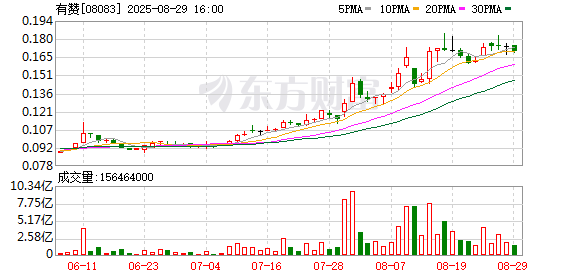
Core Insights - The article highlights the changes in the Hong Kong Stock Connect holdings, indicating significant increases and decreases in ownership percentages for various companies [1][2][3][4]. Summary by Category Increase in Holdings - The companies with the largest increases in Hong Kong Stock Connect holdings include: - Hang Seng China Enterprises (02828) with an increase of 5.48%, bringing the total holding to 6.10% - Tracker Fund of Hong Kong (02800) with an increase of 4.07%, totaling 4.76% - Anjoy Foods (02648) with an increase of 1.74%, now at 15.81% [2] - Other notable increases include: - Angelalign Technology (06699) +1.66% to 23.03% - Ganfeng Lithium (01772) +1.44% to 34.51% - East China Environmental Protection (00895) +1.44% to 43.67% [2] Decrease in Holdings - The companies with the largest decreases in Hong Kong Stock Connect holdings include: - Kinglong Motor Group (06680) with a decrease of 3.39%, now at 24.56% - Interstellar Technology (01725) with a decrease of 2.02%, totaling 10.16% - Goldwind (02208) with a decrease of 1.48%, now at 41.84% [3] - Other notable decreases include: - ZTE Corporation (00763) -1.35% to 56.09% - Longpan Technology (02465) -1.08% to 49.62% [3] Five-Day Changes - Over the last five trading days, the companies with the largest increases in holdings are: - Lens Technology (06613) +6.93% to 13.85% - ZTE Corporation (00763) +5.92% to 56.09% - Tongyu Pharmaceutical-B (02410) +5.40% to 14.72% [4] - The companies with the largest decreases in holdings over the same period include: - Hang Seng China Enterprises (02828) -14.01% to 6.10% - Tracker Fund of Hong Kong (02800) -4.36% to 4.76% [4] Twenty-Day Changes - In the last twenty days, the companies with the largest increases in holdings are: - Meizhong Jiahe (02453) +12.09% to 37.34% - Changfei Optical Fiber (06869) +10.66% to 54.73% - Tongyu Pharmaceutical-B (02410) +8.30% to 14.72% [5] - The companies with the largest decreases in holdings over the same period include: - Yisou Technology (02550) -10.13% to 47.88% - Chongqing Steel (01053) -5.27% to 31.55% [6]

微盟“AI技术驱动”喊破喉咙:研发下滑41.8%、收入占比不足5%
Sou Hu Cai Jing· 2025-08-28 11:26
Core Viewpoint - Weimob Group's AI-related revenue for the first half of 2025 was only 34 million yuan, accounting for a mere 4.4% of total revenue of 775.5 million yuan, highlighting the failure of its "AI-driven" strategy [2][4][5] Financial Performance Summary - Total revenue for the first half of 2025 was approximately 775.5 million yuan, a decrease of 10.6% compared to 867.4 million yuan in 2024 [4] - Adjusted revenue increased by 7.8% year-on-year, from 719.1 million yuan to 775.5 million yuan [4] - Adjusted net profit was 16.9 million yuan, marking the first profit since 2021 [4][5] - AI-related revenue was only 34 million yuan, significantly underperforming against the company's strategic claims [2][4] AI Business Performance - The AI business has shown a concerning decline in both revenue and R&D investment, indicating serious issues [3][6] - Despite launching several AI products, the actual revenue contribution from these products remains minimal, with a significant gap between user engagement and revenue generation [5][6] - The AI revenue growth of 172% for the WIME tool is misleading due to its small base, failing to impact overall AI revenue meaningfully [5] R&D Investment - R&D expenditure dropped from 234 million yuan in 2024 to 136 million yuan in 2025, a decline of 41.8% [6][7] - The company claims to have shifted R&D resources towards AI, but the absolute reduction in investment raises concerns about the viability of its AI strategy [6][7] - The decline in R&D investment reflects broader strategic instability within the company, impacting its ability to innovate and develop AI solutions effectively [6][8] Strategic Challenges - The company's reliance on Tencent's ecosystem has diminished, as Tencent enhances its own e-commerce tools, reducing Weimob's competitive edge [8][9] - Competitors like Youzan are gaining market share through differentiated product strategies, further complicating Weimob's market position [9] - The AI business, intended to be a growth engine, has not performed as expected, leading to uncertainty in future profitability [9]

摩根大通增持微盟集团(02013)约2256.18万股 每股作价约2.77港元
Zhi Tong Cai Jing· 2025-08-28 10:55
Group 1 - JPMorgan Chase increased its stake in Weimob Group (02013) by approximately 22.56 million shares at a price of about HKD 2.77 per share [1] - The total amount for this transaction was approximately HKD 62.44 million [1] - After the increase, JPMorgan's total shareholding in Weimob Group reached approximately 192 million shares, representing a holding percentage of 5.31% [1]