
WIME

Search documents
微盟集团(02013):2025年业绩点评:SaaS业务环比企稳,广告平台返点比例恢复正常
EBSCN· 2026-03-22 09:32
2026 年 3 月 22 日 盈利预测、估值与评级:微盟集团 SaaS 业务经历调整已逐步呈现企稳态势; 商家解决方案业务方面,公司主动调整广告业务客户结构,与抖音旗下巨量引 擎达成合作;全面拥抱 AI,AI 产品收入预计增长强劲。维持 26-27 年收入预测 17.9/20.0 亿元,新增 28 年收入预测 21.4 亿元。维持"增持"评级。 公司研究 SaaS 业务环比企稳,广告平台返点比例恢复正常 ——微盟集团(2013.HK)2025 年业绩点评 要点 事件: 公司发布 2025 年 全 年 业 绩 , 实 现 营 收 15.92 亿 元 人 民 币 (YoY+18.9%),系公司商家解决方案收入大幅增加所致;实现毛利润 11.95 亿元(YoY+100.4%),对应毛利率为 75.1%,同比提升 30.6pct;经调整净利 润为 0.42 亿元(vs24 年经调整净亏损 5.10 亿元),自 2021 年来首次扭亏转 盈,主要系降本增效所致。 订阅收入环比企稳,聚焦智慧零售大客市场。25 年订阅解决方案收入 8.97 亿 元(YoY-2.3%),主要系公司 24 年削减低质量订阅业务,带来 25 ...
微盟集团(02013):经调利润回正,AI贡献提速
NORTHEAST SECURITIES· 2026-03-18 06:03
Investment Rating - The report maintains a "Buy" rating for the company, indicating a positive outlook for the stock's performance in the coming months [4][6]. Core Insights - The company has achieved its first positive adjusted profit since 2021, with total revenue reaching 1.592 billion yuan in 2025, a year-on-year increase of 18.9%. The adjusted net profit was 42 million yuan, marking a significant improvement [1]. - The company's strategic focus on AI is showing results, with AI-related revenue expected to accelerate in 2026. The introduction of various AI products has contributed to this growth [3][4]. - The company is optimizing its SaaS offerings, particularly in retail, which has led to improved operational efficiency and customer quality, despite a short-term decline in the number of paying users [2]. Financial Performance Summary - In 2025, the company reported total revenue of 1.592 billion yuan, with a gross profit of 1.195 billion yuan and a gross margin of 75.1% [1]. - The adjusted net profit for 2025 was 42 million yuan, a notable recovery from previous losses, while the net profit attributable to shareholders was a loss of 221 million yuan, significantly narrowed compared to prior periods [1][5]. - The company expects to achieve revenues of 1.763 billion yuan in 2026, with a projected net profit of 5 million yuan, indicating a continued recovery trajectory [5][10]. AI Strategy and Product Development - The company has launched several AI products, including WAI and WIME, which have seen significant user engagement and growth in GMV [3]. - The AI-related revenue reached 116 million yuan in 2025, with a substantial quarter-on-quarter growth of 137.5% in the second half of 2025 [3]. - The company is also exploring new business units and partnerships in the AI sector, indicating a robust commitment to expanding its AI capabilities [3]. Market Position and Future Outlook - The company is expected to see revenue growth of 17.63 billion yuan in 2026, with a corresponding price-to-sales ratio of 3.55 [4]. - The report anticipates a continued increase in profitability, with net profit projections of 67 million yuan in 2027 and 138 million yuan in 2028, reflecting a strong recovery and growth potential [4][5].
WEIMOB INC(02013) - 2025 Q4 - Earnings Call Transcript
2026-03-17 13:02
Weimob (SEHK:02013) H2 2025 Earnings call March 17, 2026 08:00 AM ET Company ParticipantsCao Yi - CFOSun Taoyong - Chairman of the Board and CEOYou Fengchun - Executive Director and PresidentConference Call ParticipantsLiao Yuan - AnalystXia Jun - AnalystOperatorThe event is for invited investors only. The audio recording transcript is for meeting for internal use by participants, not to be made public. Weimob Group has not authorized any media outlet to redistribute any content of this event. Any unauthori ...
WEIMOB INC(02013) - 2025 Q4 - Earnings Call Transcript
2026-03-17 13:02
Financial Data and Key Metrics Changes - Overall revenue grew by 80.9%, reaching CNY 1.592 billion, with a gross profit (GP) margin of CNY 1.2 billion, reflecting a 100% year-over-year increase [4][30] - GP margin rate increased by 31%, reaching 75.1%, indicating a successful high-quality development strategy [4] - Adjusted profit turned positive at CNY 42 million, with positive cash flows and free cash flow reaching CNY 300 million [6][38] Business Line Data and Key Metrics Changes - Subscription revenue was CNY 900 million, showing a slight decrease of 2.3% due to historical low-margin orders and economic pressures [30][33] - Merchant Solutions revenue grew by 65.1%, reaching CNY 690 million, with a GP margin for Merchant Solutions reaching 90% [5][30] - AI-related revenue reached CNY 160 million, contributing significantly to the overall revenue and indicating a new growth engine [5][31] Market Data and Key Metrics Changes - The retail industry spending on software continued to decline, impacting the SaaS business, but the company managed to optimize its customer base [8][29] - The overall market environment remains challenging due to deflation and tight merchant budgets, but the company is adapting through strategic transformation [29][30] Company Strategy and Development Direction - The company is focusing on an "All-in AI" strategy and high-quality growth, with plans to continue expanding into local life services and verticals like pets and fitness [3][9] - The international expansion strategy aims to support Chinese enterprises in global markets, leveraging AI for marketing and operational solutions [25][64] - The company is enhancing its multi-channel marketing strategy, including partnerships with platforms like Douyin and Xiaohongshu [12][70] Management's Comments on Operating Environment and Future Outlook - Management expressed confidence in achieving significant growth in 2026, driven by AI adoption and international expansion [40][66] - The company acknowledges the challenges posed by AI on the SaaS industry but believes that its vertical-specific solutions will remain relevant [54][58] - The management team is optimistic about the future, expecting overall revenue growth of 20%-50% in 2026 due to improved operational efficiency and reduced costs [70] Other Important Information - The company has optimized its client structure by reducing low-margin customers, which has positively impacted overall profitability [30][39] - The total assets of the group reached CNY 6.96 billion, with cash and cash equivalents at CNY 2.1 billion, indicating a solid financial position [32] Q&A Session Summary Question: Can the management team walk us through the AI business revenue and future outlook? - Management highlighted that AI-related revenue reached CNY 160 million, with various agent applications embedded into SaaS products, contributing to commercialization [42][45] Question: What are the challenges and opportunities for the SaaS industry in the face of AI? - Management noted that while AI impacts general SaaS tools, vertical-specific solutions remain essential due to the need for industry know-how [54][55] Question: Can the management elaborate on the overseas strategy and expected growth? - The company aims to provide a one-stop solution for Chinese merchants expanding internationally, with expectations for overseas business revenue to grow significantly [60][66]
微盟推出“AI试衣”赋能零售电商,搭载千问大模型构筑AI应用层护城河
Xin Lang Cai Jing· 2026-01-27 05:20
Core Viewpoint - The introduction of the "AI fitting" solution by Weimob Group aims to address the high return rates and low conversion rates faced by the retail e-commerce sector, particularly in the apparel industry, by providing an immersive shopping experience through AI technology [1][2][5]. Group 1: AI Fitting Solution - Weimob's AI fitting solution integrates Alibaba's Qianwen large model and Weimob's self-developed clothing recognition model, offering capabilities such as "realistic fitting effects" and "intelligent outfit recommendations" [1][2][3]. - The solution targets the pain points of consumers' purchasing decisions and aims to enhance conversion efficiency while reducing return rates for retailers [1][2][5]. - The AI fitting feature allows consumers to upload personal photos for real-time clothing matching, with plans to connect this capability to retail clients' sales agents for improved customer insights and recommendations [2][10]. Group 2: Industry Challenges - The apparel e-commerce sector faces significant challenges, with return rates for women's clothing reaching 50% to 60%, and even up to 80% for live-streamed sales, which severely impacts brand revenues [2][10]. - Traditional online shopping lacks fitting experiences, leading to issues such as inconsistent sizing and product mismatches, which contribute to high return rates [2][10]. Group 3: Competitive Advantage - Weimob leverages its deep industry know-how and extensive merchant ecosystem to differentiate itself in the AI fitting space, focusing on understanding retail scenarios and customer needs [3][11]. - The company has improved its clothing recognition accuracy from 50% to over 95% through its self-developed model, significantly enhancing user experience and reducing operational costs for merchants [3][11][12]. Group 4: AI Application Value - The current AI application landscape is experiencing explosive growth, shifting focus from computational power to application value, with SaaS companies like Weimob emerging as key players in realizing AI's commercial potential [5][13]. - Weimob's continuous application and iteration of AI large models have led to the development of a comprehensive AI product matrix centered around AI agents, enhancing customer engagement and lifecycle value [5][14]. Group 5: Future Prospects - Weimob's AI fitting function represents a significant step in integrating AI technology into the retail sector, showcasing its potential to solve core industry pain points and enhance productivity [7][15]. - As competition in the AI application layer intensifies, Weimob is well-positioned to achieve a new round of value reassessment due to its multi-scenario layout and proven merchant effectiveness [7][15].
GEO解决方案推动微盟集团股价暴涨超20%
Zhong Guo Jing Ying Bao· 2026-01-13 14:49
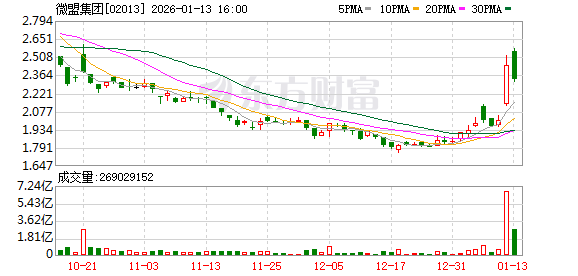
Core Viewpoint - Weimob Group launched its Generative Engine Optimization (GEO) solution "Weimob Xingqi" on January 12, 2026, leading to a 21.39% surge in stock price, the largest single-day increase in nearly a year, driven by strong investor interest in the "AI + Marketing" sector [2][4] Group 1: Market Reaction and Stock Performance - Following the launch of "Weimob Xingqi," the stock price initially surged over 20%, reflecting market excitement around the "AI + Marketing" concept [4][5] - However, the stock experienced a decline the next day, attributed to the thin liquidity in the Hong Kong market and investors' tendency to take profits after significant gains [2][5] - The market's reaction is characterized by a conflict between high interest in the GEO concept and the lack of concrete performance metrics, leading to volatility in stock prices [2][6] Group 2: Industry Context and Challenges - Gartner predicts that by 2028, 50% of search engine traffic will be captured by AI searches, indicating a significant shift in consumer behavior and a potential survival crisis for brands not visible in AI-generated answers [3][4] - Weimob's GEO solution aims to address the challenge of brand visibility in an AI-dominated information distribution system, utilizing AI-driven data monitoring, content generation, and distribution strategies [3][4] - Despite the innovative nature of GEO, its commercialization is still in the early stages, with unclear revenue models and market potential [4][6] Group 3: Business Development and Future Outlook - Weimob has expanded the GEO solution across various industries, including consumer goods and software applications, marking a strategic move in the "AI + Marketing" landscape [4][6] - The company is positioning itself to leverage advancements in AI marketing technology, aiming to transform from content production tools to foundational infrastructure for information distribution [6][7] - The GEO business has the potential to become a new growth curve for Weimob, but its success hinges on the validation of its business model and the regulatory environment surrounding generative AI [7]

微盟集团加速AI战略布局,正式发布微盟星启GEO解决方案
Jin Rong Jie· 2026-01-12 01:47
Core Insights - Weimob Group (2013.HK) has launched the Weimob Star Start solution, utilizing self-developed Generative Engine Optimization (GEO) technology to enhance brand visibility in the AI ecosystem and drive performance growth for clients [1][2] - The shift from traditional search to AI-driven search is transforming the traffic ecosystem, with Gartner predicting that by 2028, 50% of search engine traffic will be captured by AI searches [1][2] Group 1 - The Weimob Star Start solution aims to improve brand presence in the AI era by enabling brands to be discovered, understood, and recommended through a new conversational information entry point [2] - The solution employs AI-driven non-linear logic based on search intent, facilitating a full-link marketing loop that includes capturing user intent, diagnosing AI visibility, and content strategy planning [2][3] - The business of Weimob Star Start has already expanded across various industries, including consumer goods, digital appliances, business services, and software applications, showcasing strong market demand and commercial conversion capabilities [2][3] Group 2 - The launch of the Weimob Star Start solution signifies Weimob Group's further enhancement of its "AI + Marketing" business layout, positioning itself in the trillion-dollar brand marketing sector [3] - Over the past three years, Weimob has focused on AI Agent application ecosystems, reshaping its core SaaS and precision marketing business models while exploring opportunities in both consumer and overseas markets [3][4] - Weimob is strategically positioning itself at a critical juncture in the evolution of AI marketing technology, aiming to transform from content production tools to information distribution infrastructure [4]
微盟集团(2013.HK)加速AI战略布局,正式发布微盟星启GEO解决方案
Ge Long Hui· 2026-01-12 00:53
Core Insights - Weimob Group has launched the GEO solution "Weimob Xingqi," utilizing self-developed Generative Engine Optimization (GEO) technology to enhance brand visibility in the AI ecosystem and drive customer performance in the AI search era [1][2] - The shift from traditional search to AI-driven search is transforming the traffic ecosystem, with predictions indicating that by 2028, 50% of search engine traffic will be captured by AI searches [1][2] - Weimob's strategy focuses on leveraging its strengths in SaaS and precision marketing to capitalize on opportunities in the AI generative application ecosystem [1][3] Weimob Xingqi Solution - The Weimob Xingqi solution employs AI search intent-based non-linear logic, utilizing full-link data monitoring, intelligent content generation, and smart distribution to enhance brand visibility in AI platforms [2] - The solution creates a comprehensive marketing loop that captures user intent, diagnoses AI visibility, plans content strategy, and executes distribution, thereby increasing brand exposure and consumer choice [2] - The solution has already been implemented across various industries, including consumer goods, digital appliances, business services, and software applications, demonstrating strong market demand and commercial conversion capabilities [2] AI and Marketing Strategy - The launch of the Weimob Xingqi solution signifies Weimob Group's commitment to enhancing its "AI + Marketing" business layout and solidifying its position in the trillion-dollar brand marketing sector [3] - Over the past three years, Weimob has focused on AI Agent application ecosystems, reshaping its core SaaS and precision marketing business models while exploring opportunities in both consumer and overseas markets [3] - Future product launches include a multimodal generative AI product for small and micro e-commerce operators and a customized AI solution for enterprise clients, indicating a robust pipeline for AI-driven offerings [3] Industry Trends and Future Outlook - Weimob is strategically positioned to leverage the evolution of AI marketing technology, transitioning from content production tools to information distribution infrastructure [4] - The company anticipates that by 2026, AI large model technology will accelerate industrial application, prompting further strategic expansion in both B2B and B2C sectors [4] - Weimob aims to drive digital upgrades for both enterprise and individual users, fostering business model iterations and growth potential for high-quality development [4]
微盟集团加速AI战略布局 正式发布微盟星启GEO解决方案
Zhi Tong Cai Jing· 2026-01-12 00:42
Core Insights - Weimob Group has launched the GEO solution Weimob Star Start, utilizing self-developed Generative Engine Optimization (GEO) technology to enhance brand visibility in the AI ecosystem and drive brand exposure and performance growth in the AI search era [1][2] - The shift from traditional search to AI-driven search is transforming the traffic ecosystem, with Gartner predicting that by 2028, 50% of search engine traffic will be captured by AI searches [1][2] Group 1 - The Weimob Star Start solution employs AI search intent-based non-linear logic, utilizing full-link data monitoring, intelligent content generation, and smart distribution to create a comprehensive marketing loop that enhances brand visibility in AI dialogues [2][3] - The solution has already been implemented across various industries, including consumer goods, digital appliances, business services, and software applications, demonstrating strong market demand and commercial conversion capabilities [2][3] Group 2 - The launch of the Weimob Star Start solution signifies Weimob Group's advancement in the "AI + Marketing" business layout, positioning itself strategically in the trillion-dollar brand marketing sector [3][4] - Weimob Group is focusing on AI Agent application ecosystems and has introduced several AI products over the past three years, including Weimob WAI and WIME, while also investing in North American AI innovation [3][4]
微盟集团(02013)加速AI战略布局 正式发布微盟星启GEO解决方案
智通财经网· 2026-01-12 00:40
Core Insights - Weimob Group has launched the Weimob Star Start GEO solution, utilizing self-developed Generative Engine Optimization (GEO) technology to enhance brand visibility in the AI ecosystem and drive performance growth in the AI search era [1][2] Group 1: AI Search and Market Dynamics - The shift from traditional search to AI-driven search is transforming the traffic ecosystem, with Gartner predicting that by 2028, 50% of search engine traffic will be captured by AI searches [1] - QuestMobile data indicates that by 2025, the average daily usage of AI-native apps in China will reach 4.0-5.4 times per user, with leading tools capturing half of the market share [1] Group 2: Weimob Star Start GEO Solution - The Weimob Star Start solution employs AI search intent-based non-linear logic, utilizing full-link data monitoring, intelligent content generation, and smart distribution to enhance brand visibility in AI platforms [2] - The solution covers multiple industries, including consumer goods, digital appliances, business services, and software applications, demonstrating strong market demand and commercial conversion capabilities [2] Group 3: Strategic Positioning and Future Outlook - The launch of the Weimob Star Start solution signifies Weimob Group's commitment to the "AI + Marketing" business layout, positioning itself in the trillion-dollar brand marketing sector [3] - Weimob is focusing on AI Agent applications and has introduced several AI products, including Weimob WAI and WIME, while also investing in North American AI innovation [3][4] - The company aims to accelerate AI's application in various fields, including TOB and TOC, and is focused on digital upgrades for enterprises and individual users, driving business model iterations and growth potential [4]