国家开发银行

Search documents
新型政策性金融工具与专项债如何形成政策 “组合拳”?
Sou Hu Cai Jing· 2025-08-17 04:13
Core Viewpoint - The new policy financial tools proposed by the central government in 2025 and the existing special bonds have distinct differences yet can work synergistically to enhance project financing and support high-quality economic development [1][20]. Group 1: Key Differences Between New Policy Financial Tools and Special Bonds - The new policy financial tools are operated by three policy banks and are market-driven with flexible funding sources, while special bonds are issued by local governments and are considered "explicit debts" [3][4]. - New policy financial tools focus on front-end capital supplementation for projects, whereas special bonds are aimed at back-end project construction [7][8]. - The new tools operate under a market mechanism with risk borne by the market, while special bonds are closely tied to government finances and rely on local government credit [5][6]. Group 2: Collaborative Synergy - The collaboration between new policy financial tools and special bonds creates a "1+1>2" effect through capital supplementation, field collaboration, and financing innovation [8]. - New policy financial tools can directly inject capital or provide interest subsidies to alleviate the capital pressure of special bond projects, enhancing project initiation [9]. - The two tools complement each other in their focus areas, with special bonds emphasizing infrastructure and livelihood projects, while new tools strengthen support for technology and innovation sectors [10]. Group 3: Practical Implementation and Compliance - The collaborative application of new policy financial tools and special bonds must ensure policy compliance and avoid negative list projects [12][13]. - Capital contribution rules dictate that special bond projects must maintain a capital ratio of at least 20%, while new tools can contribute up to 60% of total capital [14]. - Project selection should prioritize areas with overlapping policies and significant strategic importance, ensuring comprehensive revenue coverage [15]. Group 4: Operational Efficiency - Pilot regions can utilize a "self-review" mechanism to expedite project approvals, significantly enhancing operational efficiency [16]. - Non-pilot regions can simplify review processes for eligible projects, allowing for quicker access to funding [17]. - Risk management requires comprehensive monitoring and clear exit strategies for equity investments made through new policy financial tools [18][19].


悠闲夜生活 十足烟火气
Jing Ji Ri Bao· 2025-08-15 22:31
Core Viewpoint - The night economy in Liaoning is emerging as a new engine for cultural and tourism consumption, driven by the creative transformation of industrial heritage and vibrant urban activities [1][2][3][4] Group 1: Night Economy Development - The night economy in Tiexi District is characterized by the creative transformation of industrial sites, such as the 1905 Cultural Creative Park and Hongmei Cultural Park, which have turned from "rusty fields" into cultural tourism showcases [2] - The West Tower Street and Old North Market are significant contributors to Shenyang's night economy, attracting visitors with diverse cultural activities and rich historical backgrounds [2][3] - The overall night economy in Shenyang includes over 60 businesses operating 24 hours, with more than 70% of the commercial area dedicated to night economy activities, making it a popular destination for young tourists [3] Group 2: Cultural and Tourism Integration - The integration of cultural resources in Chaoyang, such as the North Tower Museum and the Paleontological Museum, enhances the night tourism experience, allowing cultural artifacts to be showcased in a unique nighttime setting [3] - Various cultural events and performances have been organized in the Old North Market, attracting over 20 million visitors since 2023, with an increase in visit duration by over 49% [3] Group 3: Financial Support for Night Economy - Financial institutions like China Construction Bank and Industrial and Commercial Bank of China are providing loans and support to enhance the night economy, facilitating the development of night markets and cultural streets [4] - Liaoning Province is actively promoting the night economy through policies and initiatives, including the "2023-2025 Enjoyable Liaoning" program, which aims to enrich night consumption scenarios and support the development of night economy districts [4]
广湛高铁枢纽站点湛江北站项目建设获25亿元授信额度
Zhong Guo Xin Wen Wang· 2025-08-14 19:29
中新网湛江8月14日电(梁盛詹慧俐)14日,广湛高铁关键节点工程——湛江北站综合交通枢纽工程项目 建设迎来重大融资进展,获得国家开发银行广东省分行25亿元的授信额度并成功签约。 据了解,这是湛江市首个采用"债贷组合"模式融资的重大基础设施项目,该创新模式通过专项债券与信 贷融资的有机结合,充分发挥专项债券的增信撬动作用,既拓宽了项目的资金筹集渠道,又有效降低融 资成本,为重大项目建设提供了可复制的融资样板。 该项目建成后,依托广湛高铁构建的快速通道,湛江将深度融入粤港澳大湾区"一小时经济圈",进一步 提升粤西地区交通互联互通水平和强化省域副中心城市辐射带动作用,为承接产业转移、吸引高端人才 集聚、促进商贸文旅繁荣提供强有力支撑。(完) (文章来源:中国新闻网) 湛江北站项目总投资达82.43亿元,投资规模大、建设周期长,传统的资金筹集模式难以满足项目建设 需求。国家开发银行广东省分行此次提供25亿元长期、稳定、低成本的政策性金融支持,精准对接项目 特点与发展需求,有效缓解地方财政的阶段性压力,保障项目建设资金持续供给,为工程按计划高质量 实施解除了后顾之忧,直接保障了站房主体、配套路网及相关设施建设资金需求, ...
深圳华强:关于为全资子公司提供担保的公告
Zheng Quan Ri Bao· 2025-08-14 14:12
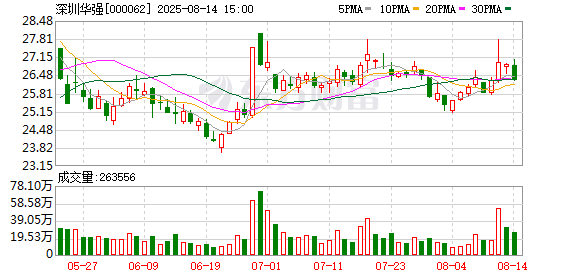
证券日报网讯 8月14日晚间,深圳华强发布公告称,公司为香港湘海向国开行申请贷款提供担保。提供 担保的形式为公司与香港湘海作为联合申请人向国开行申请贷款,并由公司与香港湘海共同对该贷款项 下产生的全部债务向国开行承担连带清偿责任。前述担保的总金额不超过人民币24,000万元,担保期 限自贷款的首次提款日起至被担保的债权全部清偿完毕之日止。本次担保后,公司及控股子公司累计的 对外担保余额为人民币772,185万元,占公司最近一期经审计归母净资产的110.98%。 (文章来源:证券日报) ...

贵州5个全域土地综合整治试点子项目累计完成3.3万亩土地整治
Xin Hua Cai Jing· 2025-08-14 07:53
Group 1 - The core viewpoint is that Guizhou is advancing comprehensive land remediation pilot work through typical demonstration, institutional innovation, and multi-source funding coordination, implementing land remediation over an area of 139,900 acres [1] - A new development model combining "ecological restoration + industrial development + rural revitalization" has been initially formed, with 5 provincial financial subsidy projects completing remediation over 33,000 acres and receiving a total of 88.56 million yuan in provincial subsidies [1] - Guizhou has established a "provincial coordination + demonstration leading" work mechanism, issuing normative documents such as the "Pilot Work Guidelines" and selecting 5 pilot projects for provincial financial subsidies [1] Group 2 - The province has deepened cooperation between government, banks, and enterprises, actively engaging with the China Development Bank and Agricultural Development Bank to provide comprehensive financial services, including 30-year preferential loans [2] - The establishment of a collaborative mechanism has improved work efficiency, exemplified by the approval of 300 million yuan in loans within 10 working days for a national pilot project in Anshun City [2] - Guizhou has issued project application guidelines for comprehensive land remediation, clarifying responsibilities across provincial, municipal, and county levels, with 13 projects currently submitted for approval [2]
最高1万元!这些贷款贴息,怎么申领?
Jin Rong Shi Bao· 2025-08-14 02:27
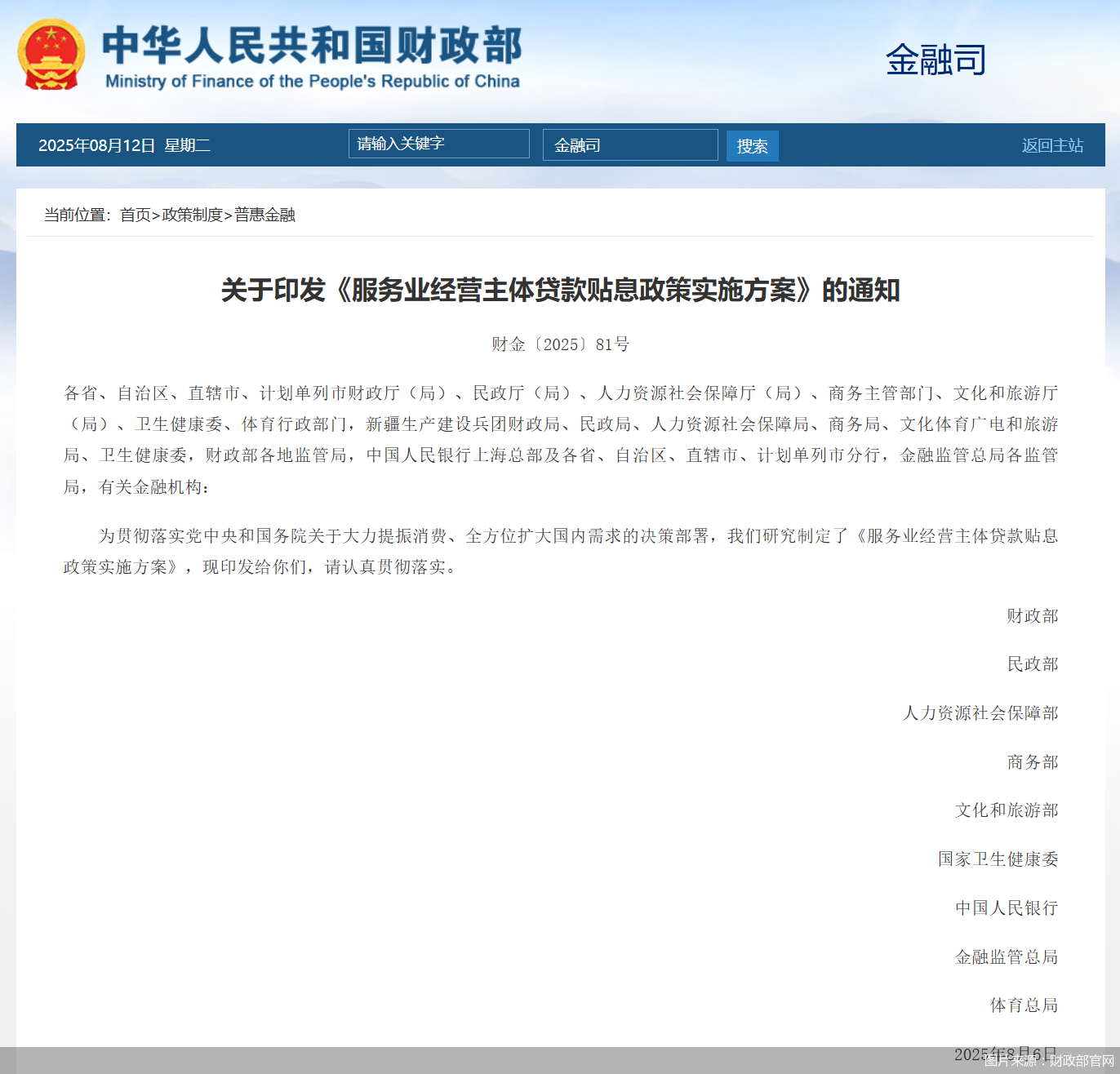
Core Points - The Ministry of Finance and nine other departments have jointly issued the "Implementation Plan for Loan Interest Subsidy Policy for Service Industry Operating Entities" [1] - The policy is applicable for loan contracts signed between March 16, 2025, and December 31, 2025, with funds disbursed to operating entities [1] Group 1: Eligibility and Conditions - To qualify for the loan interest subsidy, the loan funds must be used for operational activities [2] - The eligible sectors include eight categories: catering, accommodation, health, elderly care, childcare, housekeeping, cultural entertainment, tourism, and sports [2] - The subsidy can last for up to one year, with the actual duration based on the loan term if it is less than one year [2] Group 2: Application Process - Borrowing entities do not need to apply for the subsidy; they only need to follow the standard loan process with banks [3] - Once the bank receives the subsidy funds from the government, it will return the corresponding subsidy amount to the operating entity for interest already paid [3] Group 3: Subsidy Details - The subsidy rate is set at 1%, with a maximum loan amount of 1 million yuan per entity, allowing for a maximum subsidy of 10,000 yuan [4] - The example provided illustrates that a restaurant obtaining a 900,000 yuan loan can receive a total subsidy of 9,000 yuan, with specific disbursement timelines [4] Group 4: Participating Banks - A total of 21 national banks are designated as the lending institutions for this subsidy program [5] - The list includes major banks such as the Agricultural Bank of China, Industrial and Commercial Bank of China, and China Construction Bank among others [5]
《服务业经营主体贷款贴息政策实施方案》热点问题解答
Jin Rong Shi Bao· 2025-08-14 01:35
什么时间能享受到政策? 在2025年3月16日《提振消费专项行动方案》公开时至2025年12月31日期间签订贷款合同且相关贷 款资金发放至经营主体的,按照贷款本金对经营主体进行贴息。 需要符合哪些条件才能申请? 服务业经营主体贷款贴息的条件,核心是要将贷款资金用于经营活动。 对于餐饮住宿、健康、养老、托育、家政、文化娱乐、旅游、体育八类消费领域服务业经营主体而 言,从今年3月16日到年底的时间里,只要与银行签订了贷款合同,而且已经收到贷款资金的这些经营 主体,都可以享受最长1年的贴息,贷款期限不足1年的,按照实际期限来进行贴息。 经办银行收到财政贴息资金以后,对经营主体已经支付的利息,一次性向经营主体返还对应的贴息 资金。 对于经营主体未来需支付的利息,贷款经办银行在后续按期收取时,直接扣除对应的贴息资金。 最高能享受多少贴息? 贴息比例为1个百分点,可以贴息1年,上述八类主要消费领域的服务业经营主体单户享受贴息的贷 款规模最高是100万元,单户享受贴息最高1万元。 同一笔贷款不得重复享受中央财政其他贴息政策;已享受地方财政相关贴息政策的,此次贴息不得 超出扣除已有贴息后的实际利率水平。 贷款经办银行有哪些? ...
银行业迅速响应两项贷款贴息政策部署
Jin Rong Shi Bao· 2025-08-14 01:30
7月31日召开的国务院常务会议,部署实施个人消费贷款贴息政策与服务业经营主体贷款贴息政 策,并提出要求,推动政策尽快落地。 两项贷款贴息政策的落地落实在8月12日迎来重要进展。当天下午,《服务业经营主体贷款贴息政 策实施方案》(以下简称《实施方案一》)和《个人消费贷款财政贴息政策实施方案》(以下简称《实 施方案二》)先后发布。 随后,作为主要贷款经办机构的银行业金融机构迅速作出反应,多家银行发布公告,对两项贷款贴 息政策进行响应。 政策落实能够带来多方共赢局面 在业内专家看来,国务院常务会议部署的个人消费贷款贴息政策和服务业经营主体贷款贴息政策, 核心是通过财政金融联动来提振消费、激活市场。 "此次出台的两项贴息政策,从居民消费需求和企业服务供给两端发力,加大融资支持力度,进一 步体现了财政与金融政策的协同配合。"8月13日,在国新办举行的新闻发布会上,中国人民银行信贷市 场司负责人车士义表示,在需求端增强居民消费意愿,在供给端提高企业优质服务供给能力,与中国人 民银行前期出台的消费领域金融支持政策着力点一致,有利于产生"1+1>2"的政策效应。 银行业金融机构迅速响应 在两项贴息政策的实施方案公布后,农业银 ...
又省一笔钱!两项贷款贴息政策来了 年贴息1个百分点
2 1 Shi Ji Jing Ji Bao Dao· 2025-08-12 14:30
继国务院常务会议部署实施个人消费贷款贴息政策与服务业经营主体贷款贴息政策之后,两项贷款贴息 政策的细则正式明确。 据财政部消息,财政部等九部门印发《服务业经营主体贷款贴息政策实施方案》(以下简称《实施方案 一》),对服务业经营主体贷款贴息政策的支持范围、贴息标准、贷款经办银行、贷款流程、贴息流程 和监督管理等进行了明确。 根据《实施方案一》,餐饮住宿、健康、养老、托育、家政、文化娱乐、旅游、体育8类消费领域服务 业经营主体满足条件的贷款可享受贴息政策,贴息期限不超过1年,年贴息比例为1个百分点,单户享受 贴息的贷款规模最高可达100万元。经办银行方面,《实施方案一》也明确了名单,包括3家政策性银 行、6家国有行和12家股份行。 据财政部同日消息,财政部等三部门印发《个人消费贷款财政贴息政策实施方案》(以下简称《实施方 案二》),对个人消费贷款财政贴息政策的支持范围、贴息标准、贷款经办银行、组织实施和监督管理 等进行了明确。 根据《实施方案二》,2025年9月1日至2026年8月31日期间,居民个人使用贷款经办机构发放的个人消 费贷款(不含信用卡业务)中实际用于消费且可识别相关消费交易信息的,可按规定享受贴息政 ...






两大政策齐发!服务业经营主体和个人消费贷款迎贴息“红包”
Bei Jing Shang Bao· 2025-08-12 14:22
Core Points - The article discusses the launch of two significant subsidy policies aimed at boosting consumption in China, specifically targeting service industry operators and individual consumers [1][3][9] - The policies are designed to lower the cost of loans, thereby stimulating demand and enhancing consumer spending [4][5][9] Policy Overview - The subsidy policies include a loan interest subsidy for service industry operators and a personal consumption loan subsidy, marking the first time such measures have been implemented at the central government level [1][5] - The service industry subsidy focuses on eight sectors, including dining, elderly care, and childcare, while the personal consumption loan subsidy is aimed at individual consumers [4][5] Financial Details - Both policies feature a subsidy rate of 1% per year, with the central government covering 90% of the subsidy costs and provincial governments covering the remaining 10% [6][7] - For service industry loans, the maximum subsidy per loan can reach 1 million yuan, while for personal loans, the cumulative subsidy cap is set at 3,000 yuan for eligible consumers [7][8] Implementation and Compliance - The policies are set to take effect from September 1, 2025, and will require strict compliance regarding the use of loan funds, prohibiting their use for real estate or investment activities [9][10] - Financial institutions are tasked with ensuring that the loans are used for legitimate consumption and service improvements, with oversight mechanisms in place to prevent misuse [10][11] Institutional Framework - The implementation of these policies involves various financial institutions, including state-owned banks and private banks, ensuring a broad reach for the subsidy programs [8][9] - The article emphasizes the importance of collaboration between central and local governments to enhance the effectiveness of these subsidy measures [8]