大疆

Search documents
【深圳特区报】“广货行天下”春季行动今日在佛山启幕 广货已备好 等您来采购
Sou Hu Cai Jing· 2026-01-15 00:11
Core Viewpoint - The article highlights the significant growth and transformation of Guangdong's manufacturing industry, particularly in the context of the upcoming Spring Festival, showcasing the region's products and innovations to global consumers [3][12]. Group 1: Overview of Guangdong's Manufacturing - Guangdong's industrial economy has evolved from small-scale operations to a leading position, with classic products like home appliances and textiles now complemented by high-tech goods such as drones and 5G smartphones [8][10]. - The "Guangdong Goods Going Global" initiative aims to promote local products through various online and offline activities, enhancing visibility and sales on major e-commerce platforms [8][9]. Group 2: Technological Advancements - Guangdong produces 70% of the world's consumer drones, 40% of smartphones, and significant portions of industrial robots and integrated circuits, indicating its strong manufacturing capabilities [9][10]. - Traditional industries in Guangdong are undergoing transformation through technological innovation, with companies like Gree and TCL achieving remarkable efficiency improvements [10][11]. Group 3: Focus on Foshan - Foshan, as the first stop for the "Guangdong Goods Going Global" campaign, exemplifies the region's manufacturing strength, contributing nearly 30% of Guangdong's revenue in the home appliance sector [12][13]. - The city is actively promoting the transformation of traditional industries and has seen an average production efficiency increase of 16% through digitalization [12].

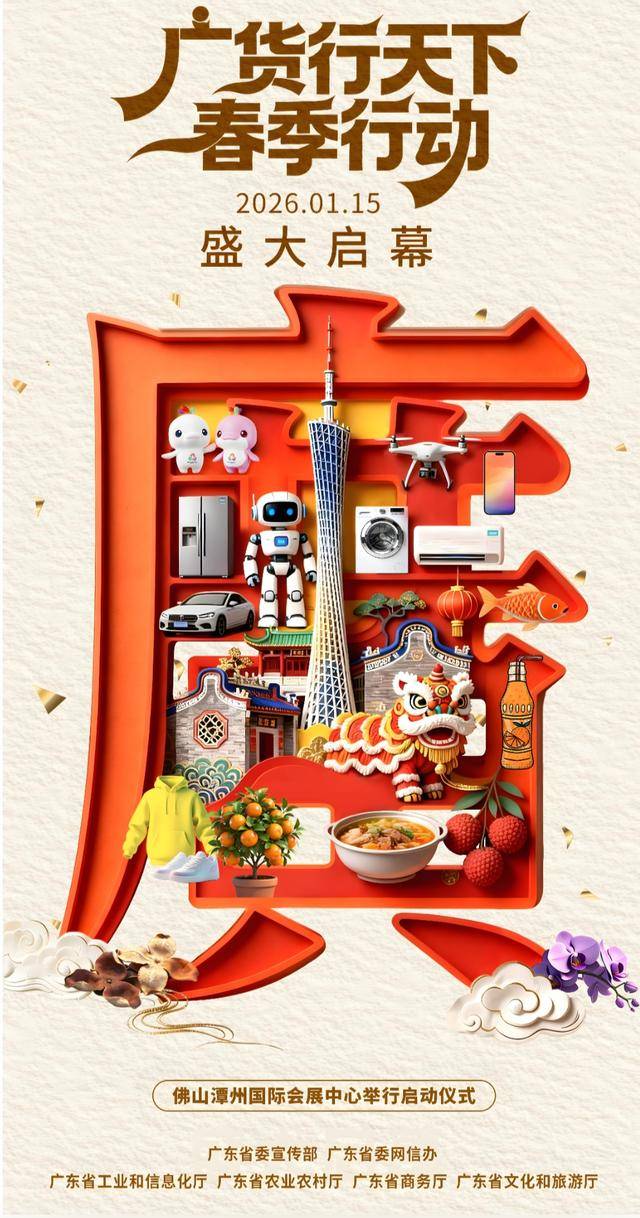
展示广东制造实力 传递品牌价值
Nan Fang Du Shi Bao· 2026-01-14 23:14
Core Viewpoint - Guangdong's manufacturing industry is evolving, with a strong emphasis on quality and innovation, positioning itself as a global leader in various sectors, including smart home appliances, food production, and beauty products [12][16][20]. Industry Overview - Guangdong accounts for approximately 30% of the global smart home appliance market, with significant contributions from companies like Gree and Skyworth [12][20]. - The province's cross-border e-commerce has expanded 66 times over the past nine years, holding over one-third of the national market share [13]. - By 2027, Guangdong aims for its food industry output to exceed 1.5 trillion yuan, with mooncake production leading the nation [14]. Ecosystem and Collaboration - Guangdong's manufacturing ecosystem includes 31 major manufacturing categories, with 15 being the largest in the country, fostering a collaborative environment that enhances efficiency and innovation [15][16]. - The textile and apparel sector has developed micro-ecosystems that allow for rapid production cycles, exemplified by a one-day turnaround from design to delivery [15]. - In consumer electronics, the "one-hour industrial circle" around Dongguan enables quick assembly of mobile phone components, supporting brands like Huawei and OPPO [15]. Technological Innovation - The integration of AI into manufacturing processes is transforming user experiences, with companies focusing on personalized solutions rather than just standardized products [17][19]. - Gree's smart factories and Skyworth's AI-driven product recommendations illustrate the shift towards technology that enhances daily life [18]. Global Expansion Initiatives - The "Guangdong Goods Going Global" initiative aims to strengthen market presence and brand recognition, particularly for small and medium enterprises [20][21]. - Experts suggest that enhancing brand image and leveraging high-tech innovations are crucial for Guangdong's global competitiveness [21]. Future Outlook - Guangdong's manufacturers are encouraged to harness traditional cultural elements alongside technological advancements to create unique products that resonate globally [21]. - The combination of a robust industrial ecosystem, innovative technologies, and rich cultural heritage positions Guangdong to redefine its global market presence [21].




“新广货”彰显中国智造全球竞争力
2 1 Shi Ji Jing Ji Bao Dao· 2026-01-14 22:54
Group 1 - The core viewpoint of the articles highlights the significant growth of China's foreign trade, with a total import and export value reaching 45.47 trillion yuan in 2025, marking a 3.8% year-on-year increase, and maintaining its position as the world's largest goods trading nation [1] - Guangdong province plays a crucial role in China's foreign trade, consistently accounting for over 20% of the national total, showcasing its evolution from labor-intensive manufacturing to a competitive global brand cluster [1][2] - The participation of over 530 companies from Guangdong at the CES in Las Vegas illustrates the province's transformation from "manufacturing" to "intelligent manufacturing," emphasizing its strong competitive edge in the global market [1] Group 2 - The globalization of "Guangdong goods" reflects the province's deep integration into the global value chain, transitioning from imitation to independent research and brand development [2] - Major companies like OPPO and vivo have over 60% of their sales from overseas, while DJI holds approximately 70% of the global consumer drone market, indicating Guangdong's significant presence in international markets [2] - The export of industrial robots from China is projected to grow by 48.7% in 2025, with the Greater Bay Area contributing about one-third of the national export volume [2] Group 3 - Guangdong enterprises are leading the trend of establishing overseas production bases, with companies like BYD and Midea setting up factories in various countries, indicating a shift from being the "world's workshop" to becoming a "nurturing ground for multinational enterprises" [3] - The new "Guangdong goods" integrate advanced technology, sustainability, and cultural elements, resulting in high-value, intelligent products that compete on quality, technology, and brand rather than just price [3] - The story of Guangdong exemplifies China's transition towards becoming a "global innovation workshop," driven by innovation and efficiency honed in a large domestic market [3]


21社论丨“新广货”彰显中国智造全球竞争力
2 1 Shi Ji Jing Ji Bao Dao· 2026-01-14 22:25
Group 1 - In 2025, China's total foreign trade import and export value reached 45.47 trillion yuan, a year-on-year increase of 3.8%, maintaining its position as the world's largest goods trading nation [1] - Guangdong province accounted for over 20% of the national total in foreign trade, showcasing its role as a stabilizing force in the sector [1] - The transformation of Guangdong's manufacturing from labor-intensive to competitive global brands is highlighted by its strong presence at the CES, with over 530 companies participating [1] Group 2 - The globalization of "Guangdong goods" reflects the province's deep integration into the global value chain, evolving from imitation to independent research and brand development [2] - Major companies like OPPO and vivo have over 60% of their sales from overseas, while DJI holds about 70% of the global consumer drone market [2] - By mid-2025, China is projected to surpass the U.S. as the largest source of foreign direct investment, with a notable shift towards establishing overseas production bases [2] Group 3 - Guangdong enterprises are leading the trend of establishing overseas factories, with companies like BYD and Midea setting up production bases in various countries [3] - The new "Guangdong goods" integrate advanced technology and sustainable practices, moving from price competition to a focus on quality, technology, and brand [3] - The rise of "Guangdong goods" indicates a significant trend where innovations and efficiencies developed in the domestic market are reshaping the global manufacturing landscape [3]
迟来的Pocket狂欢,与大疆的野望
3 6 Ke· 2026-01-14 13:39
Core Insights - The DJI Osmo Pocket 3 has emerged as a significant player in the consumer electronics market, maintaining high visibility and popularity two years post-launch, defying typical product lifecycle trends [1] - The product has successfully transitioned from a niche professional tool to a widely accepted consumer device, appealing to a broader audience including families and young people [1][2] - The success of Pocket 3 has prompted major smartphone manufacturers and traditional imaging companies to develop similar products, indicating a shift in the imaging industry towards a new standard [2] Product Evolution - The journey of the Osmo Pocket series began in 2014 when DJI identified a market need for ground-based filming solutions, leading to the development of the first integrated handheld gimbal camera [3][5] - The first generation of Pocket was launched in 2018, validating the product category but revealing limitations that were addressed in subsequent iterations [9][12] - The Pocket 3 represents a culmination of years of technological refinement, overcoming challenges in image quality, usability, and aesthetic appeal [13][15][17] Market Positioning - The Pocket 3 has established itself as a high-value independent imaging device, not merely an accessory to smartphones, showcasing a strong premium pricing capability [2] - The user demographic has notably shifted, with over 50% of Pocket 3 users being female, indicating a successful rebranding of DJI's image from a technical brand to one that resonates with lifestyle and aesthetic values [2][17] - The product's design and functionality have been tailored to enhance user experience, making it an attractive option for casual users and content creators alike [15][17] Competitive Landscape - The entry of multiple manufacturers into the "Pocket-like" product space signifies a competitive shift in the imaging market, with DJI's Pocket 3 remaining a benchmark for quality and performance [2][19] - The ongoing evolution of the Pocket series is expected to include advanced features such as dual-camera systems and enhanced optical capabilities, further differentiating it from smartphone offerings [21][22] - The market is anticipated to see a coexistence of smartphone-based imaging solutions and dedicated independent cameras, with DJI's approach emphasizing the importance of physical optics and mechanical stabilization [22][24]

迟来的Pocket狂欢,与大疆的野望
36氪· 2026-01-14 13:13
Core Viewpoint - The article discusses the rise of the Osmo Pocket 3 as a significant player in the imaging market, highlighting its transition from a niche product to a mainstream favorite, and its impact on the industry as a whole [2][3][4]. Group 1: Product Evolution and Market Impact - The Osmo Pocket 3 has maintained high visibility and popularity over two years, becoming a symbol of cross-cycle appeal in the consumer electronics market [3]. - The product has successfully bridged the gap between professional equipment and everyday use, evolving from a tool for creators to a device for the general public [3][4]. - DJI's Pocket 3 has achieved a user demographic shift, with female users surpassing 50%, indicating a successful break from traditional tech product marketing [4]. Group 2: Technological Advancements - The development of the Pocket series began in 2014, inspired by user modifications of existing DJI products, leading to the creation of the first integrated handheld gimbal camera [6][8]. - The transition to a more compact design in the Pocket series involved significant engineering challenges, including miniaturizing components while maintaining functionality [10][11]. - The Pocket 3's success is attributed to overcoming three main challenges: image quality, ease of use, and aesthetic appeal, which have collectively enhanced its market position [20][21][23]. Group 3: Competitive Landscape - The emergence of competitors in the "Pocket-like" product space indicates a growing recognition of the market potential for handheld imaging devices [4][28]. - DJI's vertical integration strategy allows for cost advantages, enabling the Pocket 3 to maintain competitive pricing while ensuring high profit margins [25]. - The article predicts a future where both smartphone ecosystems and independent imaging tools coexist, with DJI continuing to focus on high-end imaging solutions [30][31]. Group 4: Future Trends - The demand for independent cameras is on the rise, particularly among younger consumers in China, suggesting a robust market for products like the Pocket series [28]. - Future iterations of the Pocket series may incorporate advanced features such as dual-camera systems, expanding its functionality beyond just Vlog applications [30]. - The article emphasizes that the future of the imaging industry will not be a zero-sum game, as both software-driven and hardware-focused approaches will thrive [31]. Group 5: Historical Context and Brand Evolution - DJI's journey from pioneering consumer drones to defining handheld gimbal cameras illustrates a consistent product logic focused on solving complex mechanical and physical challenges [33]. - The brand's ability to create a unique user experience through engineering excellence has established a competitive barrier that is difficult for competitors to replicate [33].

AI新纪元,谁在制造爆款新广货?
2 1 Shi Ji Jing Ji Bao Dao· 2026-01-14 12:42
Group 1 - The global consumer market is expected to see a strong start in 2026, with various events and innovations showcasing new consumption methods and products [1] - Guangdong's manufacturing, known for its high-quality products, continues to evolve with advancements in AI technology, leading to the emergence of new popular products [2][5] - The "Guangdong Goods" brand has a rich history, evolving from traditional products to high-tech innovations like electric vehicles and AI glasses, demonstrating resilience through economic cycles [1][2][6] Group 2 - The "Guangdong Goods Going Global" spring campaign will kick off on January 15, 2026, featuring nearly 30 key events and participation from over 6000 enterprises [2] - The transformation of Guangdong's manufacturing sector is highlighted by companies like TCL, which has successfully transitioned to smart technology and achieved significant revenue growth [4][5] - The integration of AI across various industries in Guangdong, including home appliances and textiles, is accelerating product innovation and market responsiveness [5][6] Group 3 - Guangdong has become a global manufacturing hub, producing a significant share of the world's smartphones and drones, with major brands like Huawei and OPPO leading the market [7] - The rise of innovative pharmaceuticals from Guangdong, such as the dual-target antibody developed by Kangfang Biotech, showcases the region's capabilities in high-tech industries [8][9] - The collaborative environment in innovation hubs like Guangzhou International Bio Island fosters rapid development and commercialization of new products [9][10] Group 4 - The rapid development of AI technology is reshaping global industry dynamics, with companies in Guangdong leveraging this to enhance their competitive edge [5][11] - The CES exhibition highlighted the global appeal of new Guangdong products, indicating a shift from simple product exports to comprehensive global strategies [12] - Companies like Raybird Innovation and others are achieving significant market shares in their respective fields, reflecting the successful globalization of Guangdong's manufacturing [12]
脉脉公布互联网大厂人才数据:万人以上规模企业中,加薪员工占比达17.4%
Xin Lang Cai Jing· 2026-01-14 09:42
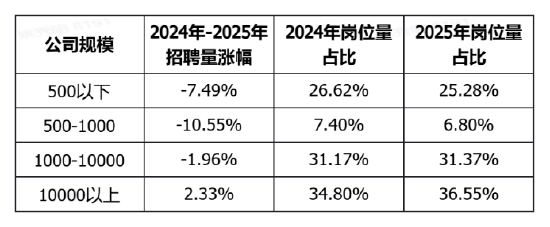
Group 1 - The core point of the articles indicates that companies with over 10,000 employees are the only category to see an increase in new job postings in 2025, with a growth rate of 2.33% year-on-year [1][3] - Notable companies such as DJI, Didi, and Xiaomi have achieved significant growth in new job postings [1][3] - Among large companies, 17.44% of employees received salary increases, which is significantly higher than other company sizes [1][3] Group 2 - Salary increases are concentrated in the internet and new energy vehicle sectors, with BYD's new "AI infra algorithm engineer" position seeing an average monthly salary increase of over 36% [2][4] - DJI's "industrial designer" position has an average monthly salary increase of 20%, while Tencent's "AI product manager" position has increased by 5.56% [2][4] - AI positions have become a focal point for recruitment and salary increases, with companies like DJI, Xiaopeng, JD, Didi, Xiaohongshu, and Kuaishou seeing new AI job postings increase by over tenfold [2][4]
南财快评|从广货到“新广货” 为何全球爆款频出?
2 1 Shi Ji Jing Ji Bao Dao· 2026-01-14 09:00
Core Viewpoint - The "Guangdong Products Going Global" spring campaign will kick off a series of promotional activities aimed at showcasing the diverse charm of Guangdong manufacturing, highlighting its evolution from traditional goods to advanced technology products like smart appliances and drones [1][2]. Group 1: Geographic and Trade Advantages - Guangdong's geographic location provides significant advantages for trade, facilitating industrialization and attracting foreign investment, which are foundational for the success of Guangdong products [2]. - The historical success of Guangdong products is attributed to its trade structure, which evolved from initial processing trades to attracting foreign capital and advanced manufacturing techniques, laying the groundwork for Guangdong's economic development [2]. Group 2: Technological Advancements and Industry Evolution - The current competitive edge of Guangdong products is driven by smart manufacturing, moving from traditional appliances to innovative products like smart glasses and drones, reflecting a shift towards intelligent production [3]. - Guangdong has established nine trillion-yuan industrial clusters, with projected revenues exceeding 19 trillion yuan by 2025, and is home to over 800,000 industrial enterprises, leading the nation in industrial output [3]. Group 3: Traditional and Emerging Industries - Traditional industries remain crucial for Guangdong's economic foundation, with significant contributions to the production of consumer electronics, such as televisions and air conditioners, and advancements in production efficiency through technology [4]. - Guangdong is a major hub for the smartphone industry, producing a significant portion of the world's smartphones and achieving breakthroughs in semiconductor technology, which supports the ongoing innovation in the sector [5]. Group 4: Future Prospects - Initiatives like "Smart Electric Guangdong," "Fashion in Guangdong," and "Guangdong Quality Products" are set to enhance the technological capabilities of Guangdong products, ensuring continuous innovation and market expansion [5].
从广货到“新广货”,为何全球爆款频出?
2 1 Shi Ji Jing Ji Bao Dao· 2026-01-14 08:49
Core Viewpoint - The "Guangdong Products Going Global" spring promotional campaign is set to launch in Foshan, marking the beginning of the 2026 online promotional activities for Guangdong products, showcasing the diverse appeal of Guangdong manufacturing [2] Group 1: Geographic and Trade Advantages - Guangdong's geographic location, backed by the Nanling Mountains and facing the South China Sea, provides excellent conditions for foreign trade and industrialization, forming the foundation for the success of Guangdong products [3] - The evolution of trade structures has allowed Guangdong to continuously upgrade its products, with initial trade models attracting foreign investment and advanced manufacturing techniques, contributing to the wealth of Guangdong products [3] Group 2: Technological Advancements and Manufacturing - The current competitive edge of Guangdong products lies in intelligent manufacturing, moving from traditional appliances to smart devices like drones and robots, reflecting the region's adaptation to technological revolutions [4] - Guangdong is home to nine trillion-yuan industrial clusters, with projected revenues exceeding 19 trillion yuan by 2025, and it leads the nation in the number of industrial enterprises, producing a significant share of global consumer drones and smartphones [4] Group 3: Traditional and Emerging Industries - Traditional industries remain crucial for the legacy of Guangdong products, with ongoing transformations enhancing their viability through strategic investments in future industries [5] - Guangdong is a major hub for smartphone manufacturing, with significant advancements in technology, including breakthroughs in high-end chips and AI integration in mobile devices, further solidifying its position in the global market [6] Group 4: Future Prospects - Initiatives like "Smart Electric Guangdong Manufacturing" and "Fashion from Guangdong" are expected to further enhance the iterative upgrades of Guangdong products, indicating a promising future for the region's manufacturing sector [6]