LVMH

Search documents
辛芷蕾封后,“押对宝”的香奈儿危机四伏?
新浪财经· 2025-09-07 08:11
Core Viewpoint - Chanel is facing significant challenges in the Chinese market, with declining revenues and increased layoffs, despite recent accolades for actress Xin Zhilei and ongoing collaborations that have generated substantial exposure for the brand [3][5][18]. Financial Performance - Chanel's total revenue for 2024 decreased by 5.3% to $18.7 billion, with net profit dropping by 28.2% to $3.4 billion [5][18]. - The Asia-Pacific market, which accounts for nearly half of Chanel's total revenue, saw a significant decline of 9.3%, totaling $9.233 billion [5][18]. - In contrast, competitors like Hermes and Prada reported growth, with Hermes achieving a 4.5% increase in global revenue and Prada experiencing a 17% rise, reaching €5.4 billion [5][18]. Layoffs and Workforce Changes - Chanel is reportedly increasing layoffs in China, with plans to reduce its workforce from approximately 460 to about 370 employees, representing a nearly 20% cut [6][8]. - The layoffs are affecting various levels of employees, including those with long-term contracts, and are primarily targeting high-salary positions in technical and digital departments [6][8]. Brand Image and Consumer Sentiment - Chanel has faced numerous negative incidents, including conflicts between staff and customers, which have damaged its brand reputation in China [10][11]. - Complaints regarding poor service and product quality have surged, with over 6,000 complaints filed against the brand on consumer platforms [4][11]. - Recent pricing controversies, such as the perceived unreasonable pricing of its powder products, have led to public backlash and accusations of exploiting consumers [13][18]. Market Position and Strategy - The luxury market in China is experiencing a slowdown, with consumers becoming more rational in their spending, contributing to Chanel's declining popularity [5][18]. - Analysts suggest that Chanel's reliance on classic products and frequent price increases without adequate value justification have alienated some consumers [17][18]. - The rise of domestic luxury brands and changing consumer preferences are further challenging Chanel's market position [17][18].

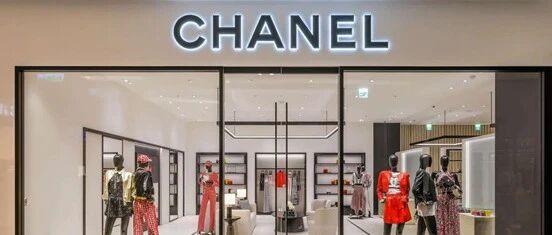
辛芷蕾封后,“押对宝”的香奈儿危机四伏?
Xin Lang Cai Jing· 2025-09-07 08:07
Core Viewpoint - Chanel is facing significant challenges in the Chinese market, with declining revenues and increased layoffs, while its brand image is suffering due to various controversies and consumer dissatisfaction [2][3][4]. Financial Performance - Chanel's total revenue for 2024 decreased by 5.3% to $18.7 billion, and net profit fell by 28.2% to $3.4 billion [3]. - The Asia-Pacific market, which accounts for nearly half of Chanel's total revenue, saw a substantial decline of 9.3%, totaling $9.233 billion [3]. - In contrast, competitors like Hermès and Prada reported growth, with Hermès achieving a 4.5% increase and Prada experiencing a 17% rise in global revenue [3]. Layoffs and Workforce Changes - Chanel is reportedly increasing layoffs in China, with plans to reduce its workforce from approximately 460 to about 370, representing a nearly 20% cut [6]. - The layoffs are affecting various employee levels, including long-term staff with permanent contracts [4][6]. Brand Image and Consumer Sentiment - Chanel's brand image has been negatively impacted by incidents involving staff and customer conflicts, leading to public backlash [7][8]. - Complaints regarding poor service and product quality have surged, with over 6,000 complaints filed against Chanel [2]. - Controversies such as the "powder pricing incident" have further fueled consumer dissatisfaction, with consumers accusing Chanel of overpricing [10]. Market Position and Strategy - Chanel's reliance on classic products and frequent price increases have led to consumer resistance, as many perceive a lack of innovation and value [13][14]. - The rise of domestic luxury brands and changing consumer preferences are diverting demand away from Chanel [14]. - Analysts suggest that Chanel needs to realign its value proposition and improve service quality to regain consumer trust and market position [14].
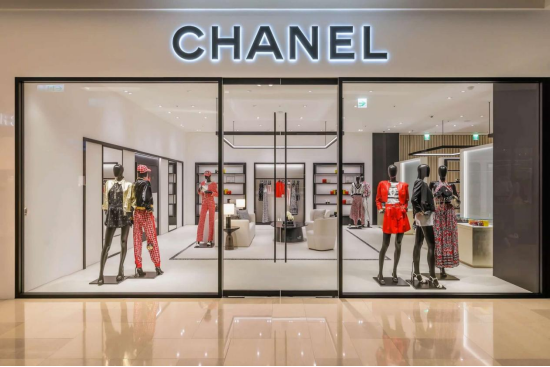
谁将继承Chanel的900亿美元财富?
Hu Xiu· 2025-09-02 13:46
Core Insights - Arthur Heilbronn, aged 38, has been appointed as a key figure in managing the Chanel family's $90 billion empire through his role at Mousse Partners, following the death of long-time executive Michael Rena [1][4][10] - The Chanel family, particularly through the Wertheimer brothers, has maintained a stable wealth despite challenges in the luxury goods sector, with each brother holding approximately $45 billion [4][21] - The luxury brand Chanel is currently facing significant challenges, including a 5.3% decline in revenue to $18.7 billion and a 28.2% drop in net profit to $3.4 billion, marking its first major revenue drop since the pandemic [21][22] Company Structure and Leadership - Arthur Heilbronn is the son of Charles Heilbronn, who is a half-brother to current Chanel shareholders Alain and Gérard Wertheimer [2][3] - Mousse Partners, which Arthur Heilbronn joined in 2019, is one of the largest and most secretive family offices globally, managing investments across various sectors including equity, real estate, and credit [8][9] - The family office has a team of over 30 professionals, with investments in diverse fields such as mental health, biotechnology, and fashion [9] Market Position and Strategy - Chanel's revenue decline contrasts sharply with competitors like Hermès and LVMH, which reported revenue growth during the same period [21] - The company is planning to open 48 new stores this year, including 22 in the U.S. and China, despite the current market challenges [22][23] - Chanel is investing $1.8 billion in capital expenditures and $600 million for supply chain integration to support its new creative director, Matthieu Blazy [23][24] Succession and Future Outlook - The fourth-generation heirs, Arthur Heilbronn and David Wertheimer, are currently focused on investment rather than direct involvement in Chanel's operations, which is different from the approaches taken by other luxury brands [17][19] - The current leadership transition coincides with a challenging period for the luxury goods industry, raising questions about the future direction of the Chanel empire [26]
X @Bloomberg
Bloomberg· 2025-09-02 12:25
European luxury stocks got a boost on Tuesday after HSBC Holdings upgraded sector heavyweights LVMH and Kering SA on the expectation of a Chinese consumer comeback https://t.co/EphKcsuw13 ...
全球股票持仓_基金买入半导体股
2025-08-31 16:21
Summary of Key Points from the Conference Call Industry Overview - The analysis focuses on the global equity market, particularly the performance and positioning of long-only funds across various sectors, including Semiconductors, Industrials, and Health Care [1][2][24]. Core Insights - **Equity Flow Trends**: Long-only funds globally purchased $27.2 billion in the Semiconductors sector, driven by positive sentiment towards AI, while they sold $42.3 billion in Industrials and $27.1 billion in Health Care [1]. - **Regional Activity**: Funds bought $21.0 billion in Asia Pacific excluding Japan, while selling $56.5 billion in the US [1]. - **Top Stock Movements**: In the US, NVIDIA saw a significant inflow of $16.9 billion, while Apple experienced an outflow of $11.2 billion. In Emerging Markets, TSMC gained $5.9 billion, and MercadoLibre lost $1.4 billion [2]. Crowded Stocks Analysis - **Crowded Positives**: Stocks with high ownership and positive momentum include Meta, Broadcom, Netflix, Visa, Mastercard, and Wells Fargo [3][4]. - **Crowded Negatives**: Stocks with high ownership but negative momentum include Meituan, LVMH, and Pilbara Minerals [3]. - **Under-owned Negatives**: Stocks like BHP, Targa Resources, and Lockheed Martin are under-owned but have potential upside [4]. Fund Ownership and Active Exposure - **Fund Ownership Metrics**: The report indicates that 73% of relevant funds own Stock B, highlighting the importance of fund ownership in investment decisions [28]. - **Active Exposure Analysis**: The analysis includes over 5,647 active long-only funds managing more than $29 trillion in equities, with a focus on their relative weight against benchmarks [18][19]. Performance Metrics - **Back-tested Performance**: Crowded Positive stocks have outperformed the global combined universe by 4.4% since January 2015, while Under-owned Negatives have consistently underperformed [73]. - **Equity Flow Calculation**: The report emphasizes the importance of equity flow in understanding fund behavior, with cumulative long-only equity flow for China stocks reaching $193.0 billion [27]. Methodology and Limitations - **Methodology**: The analysis combines fund ownership, active exposure, and Triple Momentum to identify investment opportunities and risks [36][63]. - **Limitations**: The report notes that the analysis does not include funds that do not declare holdings regularly or those with less than $500 million in AUM, which may skew results [72]. Conclusion - The report provides a comprehensive overview of fund flows, stock positioning, and performance metrics, highlighting significant trends in the equity market and identifying potential investment opportunities and risks across various sectors and regions.


要收购加拿大鹅?安踏回应了
第一财经· 2025-08-28 14:04
Core Viewpoint - Anta Sports is not a potential acquirer of Canada Goose, despite market rumors suggesting otherwise. The company is currently evaluating the sale of its shares by Bain Capital, the controlling shareholder of Canada Goose, which has been considering selling part or all of its stake [3][4]. Group 1: Company Overview - Canada Goose was founded in 1957 and has been under Bain Capital's ownership since 2013 when it was acquired for $250 million. Bain Capital has held the brand for over 12 years and led its dual listing on the New York Stock Exchange and the Toronto Stock Exchange in 2017 [3][4]. - As of March 30, 2025, Canada Goose reported annual revenue of CAD 1.3484 billion, reflecting a year-on-year growth of 1.1%. However, this growth rate has significantly declined compared to previous years, where sales growth was 21.54%, 10.84%, and 9.6% from fiscal years 2022 to 2024 [3][4]. Group 2: Market Reactions and Potential Buyers - Following the news of a potential sale, Canada Goose's stock price increased by 16.19%, closing at $14.14 [6]. - Various luxury brand giants such as LVMH, Kering Group, and VF Corporation are speculated to be potential acquirers, seeking synergies from the acquisition [4]. - Bain Capital has reportedly received multiple acquisition offers, valuing Canada Goose at approximately $1.4 billion, with interested parties including private equity firms Boyu Capital and Advent, as well as a consortium involving Anta Sports and Boyu Capital [4][5]. Group 3: Strategic Intentions of Anta Sports - Anta Group's Chairman, Ding Shizhong, stated during a mid-year performance meeting that the company will continue to pursue strategic acquisitions, focusing on brands with strong value and potential for strategic transformation, as well as investing in high-potential emerging brands [6].



安踏回应要收购加拿大鹅
Xin Lang Cai Jing· 2025-08-28 12:19
Group 1 - Anta Sports has clarified that it is not a potential acquirer of Canada Goose, despite media reports suggesting otherwise [1] - Bain Capital, the controlling shareholder of Canada Goose, is considering selling its stake, with discussions still in early stages [1] - Canada Goose's revenue for the fiscal year ending March 30, 2025, is projected to be CAD 1.3484 billion, reflecting a year-on-year growth of 1.1%, but showing a declining growth trend compared to previous years [1] Group 2 - Analysts suggest that Bain Capital's potential exit indicates that the luxury branding narrative of Canada Goose may be reaching its conclusion [2] - Multiple potential acquirers have been speculated, including luxury giants LVMH and Kering, as well as outdoor-focused VF Corporation [2] - Bain Capital has reportedly received several acquisition offers, valuing Canada Goose at approximately USD 1.4 billion, with interest from private equity firms and a consortium involving Anta Sports [2]
要收购加拿大鹅?安踏回应了
Di Yi Cai Jing· 2025-08-28 11:47
Group 1 - The core narrative suggests that Bain Capital's potential exit from Canada Goose indicates the end of the brand's luxury transformation story [2] - Bain Capital is reportedly considering selling its stake in Canada Goose, with discussions ongoing with financial advisors about potential buyers [1][2] - Canada Goose's revenue for the fiscal year ending March 30, 2025, is projected to reach CAD 1.3484 billion, reflecting a growth rate of only 1.1%, which is a significant decline compared to previous years [1] Group 2 - Various luxury brands and private equity firms, including LVMH, Kering, and VF Corporation, are speculated to be potential acquirers of Canada Goose [2] - Bain Capital has received multiple acquisition offers, with a valuation of approximately USD 1.4 billion for Canada Goose, including interest from private equity firms Hillhouse Capital and Advent [2] - The stock price of Canada Goose has recently increased by 16.19%, closing at USD 14.14, following the news of the potential sale [4]
发展考验未止 | 2025年8月商业地产零售业态发展报告
Sou Hu Cai Jing· 2025-08-27 12:25
Group 1 - The government is actively creating diverse consumption scenarios to stimulate spending, while short-term rental demand in the commercial market is under pressure in some core cities [5][7] - High-end commercial performance continues to be tested, with many companies reporting a year-on-year decline in retail property income for the first half of 2025 [11][18] - Shopping centers are adapting to popular consumption demands, with a high proportion of new stores being flagship locations and diverse types, including international and niche brands [19][21] Group 2 - The retail market shows uneven performance, with dining brands benefiting from delivery and store expansion, while high-end retail brands face significant challenges [23][24] - E-commerce platforms like JD and Taobao are intensifying competition in instant retail, enhancing their logistics capabilities to create a comprehensive retail ecosystem [31][32] - REITs performance continues to diverge, with Tianhong planning to apply for a REIT based on its Suzhou project, reflecting ongoing trends in the commercial real estate sector [34][40] Group 3 - The commercial market in core cities is experiencing differentiated supply rhythms, with cities like Beijing and Shenzhen seeing significant new supply, while others like Hangzhou show no new supply [8][9] - Vacancy rates vary significantly between cities, with Shenzhen having the lowest at 4.1%, while Shanghai and Chengdu are higher at 8.6% and 9% respectively [9] - In terms of rental levels, Shanghai has the highest average rent at 31.9 yuan/day/sqm, while Shenzhen has the lowest at 18.1 yuan/day/sqm [9] Group 4 - In the context of declining overall consumption growth, Ingka is planning to sell ten shopping centers in China, with the first three projects involving 16 billion yuan [10] - The privatization of Joy City is aimed at addressing market challenges and improving governance, with a buyback plan of 2.932 billion Hong Kong dollars [18] - The performance of high-end retail brands is mixed, with Hermes showing growth while Kering and LVMH face significant declines [27]
大动作!美银拆解全球资金流向,机构配置逻辑已清晰
贝塔投资智库· 2025-08-27 04:00
Group 1 - The core logic of the report revolves around "fund holding behavior + active exposure + triple momentum," revealing global institutional capital's allocation preferences under the long-term theme of AI [3] - The semiconductor sector has seen significant increases in investment due to the recovery of the AI long-term investment theme, with a net purchase of $27.2 billion, making it the largest industry for net buying [4] - The industrial and healthcare sectors faced significant sell-offs, with net outflows of $42.3 billion and $27.1 billion respectively, driven by a decline in global manufacturing PMI and rising uncertainty in healthcare policies [4][7] Group 2 - From a regional perspective, the Asia-Pacific region (excluding Japan) has become a major beneficiary, attracting a net inflow of $21 billion, primarily due to valuation recovery in technology sectors like semiconductors and the growth expectations in Southeast Asia's manufacturing [8] - In contrast, the US market experienced a net outflow of $6.5 billion, reflecting institutional concerns over the high interest rate environment and slowing economic growth [12] - Other regions, including Europe and Japan, also saw slight outflows, but the Asia-Pacific region remains one of the top areas for capital inflow in 2025 [13] Group 3 - On an individual stock level, Nvidia and TSMC emerged as the top beneficiaries, with Nvidia receiving a net purchase of $16.9 billion, while TSMC gained $5.9 billion due to its advanced process technology [17][21] - Conversely, Apple faced a net reduction of $11.2 billion due to weak consumer electronics demand, while Honda was also reduced by $1.1 billion due to slow progress in electric vehicle transformation [17][21] Group 4 - The report identifies four major stock screening criteria: crowded positives, crowded negatives, under-owned positives, and under-owned negatives, which help in identifying potential investment opportunities and risks [22] - Crowded positives include stocks with high ownership and positive momentum, such as Meta, Broadcom, and Netflix, which benefit from long-term themes [23] - Crowded negatives are stocks with high ownership but low active exposure and negative momentum, such as Meituan and LVMH, indicating potential reversal risks [25] Group 5 - The backtesting results from 2015 to 2025 show that crowded positive stocks have an annualized return of 9.4%, significantly outperforming the global composite index, while crowded negative stocks have an annualized return of only 0.0% [31] - The report concludes that AI and the Asia-Pacific region will be the core themes for the second half of 2025, with semiconductor stocks and internet leaders being key areas of focus for investors [34]