
白云山

Search documents
广药王老吉兰州生产基地投产
Bei Jing Shang Bao· 2025-11-30 12:05
Core Viewpoint - The completion and operation of the Wanglaoji production base in Lanzhou marks a significant enhancement of the company's domestic and international supply chain system [1] Group 1: Company Development - The Lanzhou production base is the fourth self-owned production facility for Wanglaoji, following those in Ya'an, Meizhou, and Guangzhou [1] - The total investment for the Lanzhou project is 350 million yuan, covering an area of approximately 100 acres [1] - The facility is equipped with a highly automated filling production line, with an annual production capacity of about 6.5 million standard boxes [1] Group 2: Economic Impact - The launch of the Lanzhou base is expected to inject new momentum into the economic and social development of Gansu province [1] - A second production line is planned for future implementation, indicating potential growth and expansion for the company [1]
2025年1-9月中国化学药品原药产量为272.1万吨 累计增长1.2%
Chan Ye Xin Xi Wang· 2025-11-30 02:09
Core Viewpoint - The report highlights the trends and statistics in the Chinese chemical pharmaceutical industry, indicating a slight decline in production while maintaining overall growth in the first nine months of 2025 [1]. Industry Summary - In September 2025, the production of chemical pharmaceutical raw materials in China was 295,000 tons, representing a year-on-year decrease of 3.6% [1]. - Cumulatively, from January to September 2025, the total production of chemical pharmaceutical raw materials reached 2.721 million tons, showing a cumulative growth of 1.2% [1]. - The report is based on data from the National Bureau of Statistics and is compiled by Zhiyan Consulting, a leading industry consulting firm in China [1]. Company Summary - Listed companies in the chemical pharmaceutical sector include Heng Rui Medicine (600276), East China Pharmaceutical (000963), Lizhu Group (000513), Baiyunshan (600332), North China Pharmaceutical (600812), Haizheng Pharmaceutical (600267), Fosun Pharmaceutical (600196), Kelun Pharmaceutical (002422), Enhua Pharmaceutical (002262), and Xianju Pharmaceutical (002332) [1].





2025生成式营销产业研究报告:从营销供给到营销决策(从AIGC到AIGD)
Sou Hu Cai Jing· 2025-11-29 18:51
Core Insights - The report titled "2025 Generative Marketing Industry Research: From AIGC to AIGD" highlights the evolution of generative AI in marketing, transitioning from AIGC (AI-Generated Content) focused on content creation to AIGD (AI-Generated Decision) centered on decision support, indicating a shift from AI as an "efficiency tool" to a "strategic partner" in marketing [2][4]. AIGC: Marketing Supply Explosion - By 2025, generative AI has matured in creating marketing content, including copy, images, videos, and digital personas, significantly enhancing content supply [3]. - The emergence of new models and products like DeepSeek and Manus has lowered technical barriers, evolving AI from a "creative assistant" to an "execution agent" [3]. - However, the explosion of content supply raises challenges for businesses in selecting optimal solutions and ensuring the authenticity and reliability of AI-generated content, as AIGC addresses production issues but not effectiveness [3]. AIGD: Systematic Upgrade in Marketing Decisions - AIGD aims to resolve decision-making challenges from the AIGC era by integrating classic marketing theories with AI tools, creating a complete loop from "insight—generation—validation—decision" [4]. - On the consumer side, over 68% of consumers are influenced by AI recommendations in their purchasing decisions, indicating a shift in decision-making power towards AI [4]. - On the enterprise side, AI is utilized for core marketing tasks such as environmental analysis, brand positioning, and demand exploration, enhancing the scientific and efficient nature of marketing decisions [4]. AI Practices: Deepening Industry Applications - Generative AI has been implemented across various industries: - **Food and Beverage**: Companies like Mengniu and Yili use AI for health models and ad testing [5]. - **Beauty and Personal Care**: L'Oréal optimizes formula development with AI, while Proya builds ROI-driven decision systems [5]. - **Automotive**: AI enhances lead management and user profiling [5]. - **Alcohol Industry**: AI integrates into brewing processes and enhances cultural experiences through digital personas and the metaverse [5]. - **Dining and Retail**: Smart ordering and AI-driven site selection are core to digital transformation [5]. - **Apparel, Home Appliances, and Digital Products**: AI assists in design, sales forecasting, virtual fitting, and customer service [5]. Future Outlook: Human-AI Collaboration with Decision Priority - The future of generative marketing emphasizes human-AI collaboration rather than AI replacing humans, necessitating organizations to build "AI-ready" structures that deeply integrate AI into strategy, operations, and innovation processes [6]. - The transition from AIGC to AIGD represents a shift from "content-driven" to "decision-driven" approaches, where effective use of AI for decision-making will determine market success [6].
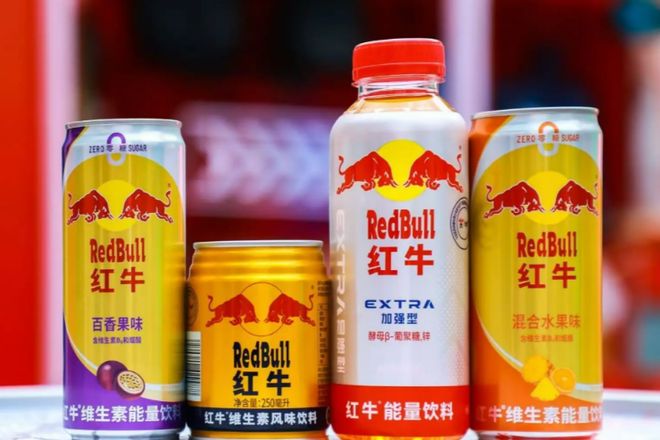
王老吉确认与天丝红牛合作 称已成立专门的事业部开展业务
Nan Fang Du Shi Bao· 2025-11-28 11:36
Group 1 - The core point of the article is that Guangzhou Pharmaceutical's Wanglaoji has obtained distribution rights for Thai Tsingtao's taurine Red Bull in five provinces in China, indicating a strategic move to expand its market presence in the competitive functional beverage sector [1][2]. - Wanglaoji has confirmed the partnership with Thai Tsingtao but denied any specific sales targets, which were reported to be 80,000 boxes per month by late 2025 and over 500 million by 2026 [2][3]. - The collaboration is seen as a potential boost for Thai Tsingtao's Red Bull, suggesting a shift in the competitive landscape against Huabin's Red Bull, which has dominated the market for years [4]. Group 2 - The ongoing trademark dispute between Thai Tsingtao and Huabin has been a significant issue since 1998, with legal battles over trademark rights and competition intensifying in recent years [4][5]. - Thai Tsingtao has invested approximately 4.36 billion yuan in expanding its production capacity in China over the past five years, indicating a strong commitment to increasing its market share [6]. - The competitive dynamics are shifting, with Wanglaoji's entry into the market potentially increasing pressure on Huabin, which has been diversifying its brand portfolio to maintain growth [6].
王老吉确认与天丝红牛合作,称已成立专门的事业部开展业务
Nan Fang Du Shi Bao· 2025-11-28 11:25
Core Viewpoint - The collaboration between Guangyao Wanglaoji and Thai Tianshi Red Bull marks a significant development in the competitive landscape of the functional beverage market in China, potentially altering the dynamics of market competition with Huabin Red Bull [2][4][6]. Group 1: Partnership Details - Guangyao Wanglaoji has secured distribution rights for Thai Tianshi's taurine Red Bull in five provinces in China: Hunan, Hainan, Jiangxi, Guangdong, and Guangxi [2]. - Wanglaoji has established a dedicated division to manage the new business venture with Tianshi Red Bull [2]. - Wanglaoji's public relations department denied reports of specific sales targets, including a claimed goal of 5 billion yuan by 2026 [3]. Group 2: Market Context - The functional beverage market in China is highly competitive, with Wanglaoji's entry expected to provide support to Tianshi Red Bull against Huabin Red Bull [4]. - The ongoing trademark dispute between Tianshi Group and Huabin Group has been a long-standing issue, dating back to their joint venture in 1998 [5]. - Tianshi Group has been actively seeking new partnerships to enhance its market presence, having previously engaged with Yangyuan Beverage for operations in northern China [6]. Group 3: Financial Performance - Yangyuan Beverage reported a revenue of 649 million yuan from functional beverages in 2024, reflecting a year-on-year growth of 45.02% [6]. - Tianshi Group has invested approximately 4.36 billion yuan in China over the past five years to expand its production capacity [6].
监管新规引航:近200家医药上市公司取消监事会,上海医药等龙头药企加快管理创新转型
Quan Jing Wang· 2025-11-28 11:20
Core Viewpoint - The governance structure of listed companies is undergoing a significant transformation driven by the new Company Law and accompanying regulations from the China Securities Regulatory Commission (CSRC) [1][2] Regulatory Policy Support - The transformation is initiated by the revised Company Law, effective from July 1, 2024, allowing companies to establish an audit committee under the board of directors to assume the functions of the supervisory board, eliminating the need for a supervisory board [2] - The CSRC has issued several supporting policies to align with the new Company Law, including guidelines for company charters and shareholder meetings, with a final adjustment deadline set for January 1, 2026 [2] - Major pharmaceutical companies such as Shanghai Pharmaceuticals, Baiyunshan, and Sinopharm have announced amendments to their company charters to abolish the supervisory board [2] Streamlined Governance Structure - The cancellation of the supervisory board aims to optimize the governance structure through the professional advantages of the audit committee, enhancing operational efficiency [3] - The overlap in functions between the supervisory board and the audit committee has led to resource waste and increased communication costs; consolidating these functions is expected to speed up decision-making and align supervision with actual operations [3] - The audit committee's professional adaptability is particularly crucial in the fast-evolving and highly regulated pharmaceutical industry, allowing for better management of financial conditions, compliance, production quality, and sales risks [3] Enhanced Substantive Supervision - The governance structure change aims to shift corporate supervision from "formal compliance" to "substantive effectiveness," with the audit committee playing a key role in ensuring financial integrity and risk management [4] - A well-staffed audit committee can rigorously oversee financial conditions and internal controls, providing reliable information for investors and promoting sustainable corporate development [4] - The audit committee is expected to proactively identify and address potential risks, particularly in areas like technological innovation and market expansion within the pharmaceutical sector [4] Future Goals - The abolition of the supervisory board is just the starting point; the core goal is to establish a high-level, risk-matched supervisory system [5] - As the audit committee continues to improve in terms of talent composition and operational mechanisms, pharmaceutical companies are expected to enhance compliance and unleash innovation potential, contributing to high-quality industry development and public health initiatives [5]
白云山(600332) - H股公告(出售应收账款)
2025-11-28 09:00
香港交易及結算所有限公司及香港聯合交易所有限公司對本公告的內容概不負責,對其準確性或完 整性亦不發表任何聲明,並明確表示,概不對因本公告全部或任何部份內容而產生或因倚賴該等內 容而引致的任何損失承擔任何責任。 須予披露的交易:出售應收賬款 本次交易 於2025年11月28日,廣州醫藥與興證資管根據基礎資產買賣協議(第四期)簽訂《新增基礎資產交 割確認函》,確認向興證資管出售第五次新增基礎資產,並收到購買價款人民幣440,280,622.20 元。 本公司根據上市規則第14.07條單獨計算有關本次交易的所有適用百分比率低於5%,故本次交易 單獨並不構成本公司的須予公佈的交易,無須根據上市規則第十四章遵守任何披露規定。 然而,根據上市規則第14.22條,如一連串交易全部均於12個月內完成或屬彼此相關者,則該等交 易應合併計算,並視作一項交易處理。鑒於本次交易及過往交易均由廣州醫藥與興證資管於12個 月內訂立,並且交易性質相似,就計算相關百分比率而言,該等交易應根據上市規則第14.22條進 行合併。 由於根據上市規則第14.07條就本次交易及過往交易按合併基準計算的最高適用百分比率高於5% 但低於25%,因此,本次 ...
白云山(00874)向兴证资管出售第五次新增基础资产
智通财经网· 2025-11-28 08:57
智通财经APP讯,白云山(00874)发布公告,于2025年11月28日,广州医药与兴证资管根据基础资产买卖 协议(第四期)签订《新增基础资产交割确认函》,确认向兴证资管出售第五次新增基础资产(其为账面值 人民币4.42亿元的应收账款),并收到购买价款人民币4.4亿元。 广州医药通过该等交易项下的交易利用应收账款进行资产证券化,可以将应收账款转变为流动性较高的 现金资产,达到盘活资产存量的目的。鉴于上述原因及本公告所披露的该等交易的条款,董事会认为该 等交易的条款属公平合理,符合本集团及本公司股东的整体权益。 ...
白云山向兴证资管出售第五次新增基础资产
Zhi Tong Cai Jing· 2025-11-28 08:55
Core Viewpoint - The announcement highlights the sale of receivables by Guangzhou Pharmaceutical to Xingzheng Asset Management, which is part of an asset securitization strategy aimed at enhancing liquidity and optimizing asset utilization [1] Group 1: Transaction Details - Guangzhou Pharmaceutical confirmed the sale of receivables with a book value of RMB 442 million to Xingzheng Asset Management, receiving a purchase price of RMB 440 million [1] - This transaction is part of the fourth phase of a foundational asset sale agreement, indicating a structured approach to asset management [1] Group 2: Strategic Implications - The transaction allows Guangzhou Pharmaceutical to convert receivables into cash, thereby improving liquidity and enabling better asset management [1] - The board of directors considers the terms of the transaction to be fair and reasonable, aligning with the overall interests of the company and its shareholders [1]
广东各界捐款捐物驰援香港火灾救援
Zhong Guo Xin Wen Wang· 2025-11-28 08:54
Group 1 - Guangdong Red Cross Society and nine other Red Cross organizations in the Greater Bay Area donated 1.68 million RMB to the Hong Kong Red Cross for emergency rescue and humanitarian assistance following the fire in Tai Po, Hong Kong [1] - Several companies and individuals from Guangdong have contributed to the fire rescue efforts, including Guangzhou Pharmaceutical's Baiyunshan, which donated 5 million HKD in cash and materials for post-disaster assistance [1] - Heytea announced a donation of 5 million HKD to support disaster relief, resettlement, and reconstruction efforts for affected residents [1] - XPeng Motors also pledged 5 million HKD to aid families impacted by the fire [1] - Chimelong Group donated 10 million RMB for emergency rescue and transitional housing for affected individuals, as well as community recovery efforts [1] - Shizhuang Co. contributed 2 million RMB for emergency rescue and transitional housing, supporting community recovery [1] Group 2 - Liang Guanjun, Vice President of the Chinese Overseas Friendship Association and Chairman of Guangzhou Software College, donated 1 million RMB for emergency rescue, living assistance, and post-disaster reconstruction for the affected residents [2] - Liang expressed hope that this donation would inspire more overseas Chinese to contribute, creating a strong positive energy to provide substantial help and warmth to the affected Hong Kong residents [2]