
SpaceX

Search documents
Morgan Stanley's E*Trade in talks to lead SpaceX IPO for small investors - report (SPACE:Private)
Seeking Alpha· 2026-03-30 17:08
Core Viewpoint - Morgan Stanley's E*Trade is positioning itself to take a leading role for smaller U.S. investors in SpaceX's IPO, indicating a competitive landscape among retail trading platforms for this significant investment opportunity [2] Company Summaries - Morgan Stanley's E*Trade is actively engaged in discussions to secure a primary role in facilitating access to SpaceX's IPO for smaller investors [2] - Robinhood and SoFi Technologies are also competing for the role of serving small retail investors in the SpaceX IPO, highlighting the competitive nature of the retail trading market [2]


Exclusive: E*Trade in talks to lead SpaceX IPO share sale to small investors in US, sources say
Reuters· 2026-03-30 16:24
Group 1 - E*Trade, a subsidiary of Morgan Stanley, is in discussions to lead the sale of SpaceX shares to retail investors in its upcoming IPO, potentially sidelining competitors Robinhood and SoFi [1][2][4] - The SpaceX IPO is anticipated to be the largest in history, with significant retail demand expected, as the company may allocate up to 30% of its shares for retail investors [2][9] - Morgan Stanley's strategy involves routing a substantial portion of retail shares through E*Trade, reflecting its past approach in similar deals [4][9] Group 2 - Fidelity is also competing for a role in distributing shares for the SpaceX IPO, while Robinhood and SoFi are still negotiating for retail allocation roles [5][8] - The retail investor segment typically accounts for a small percentage of overall orders, often around 5% to 10%, with a focus on larger institutional investors for capital raising [10][11] - E*Trade's potential leadership in the SpaceX IPO would represent a significant win in its competition for market share against other brokerages [6]



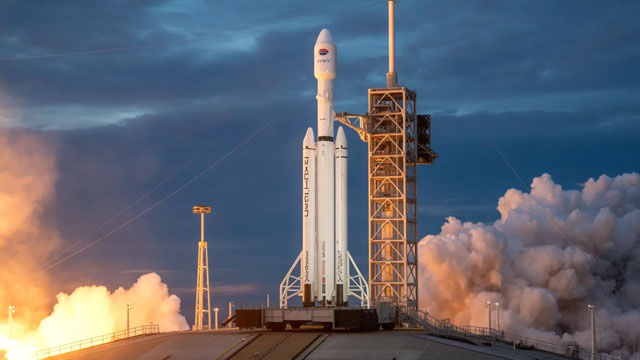
Nasdaq paves the way for SpaceX and OpenAI to quickly join a premier index after IPOs
MarketWatch· 2026-03-30 16:12
Core Viewpoint - A new "fast entry" rule will facilitate the inclusion of new megacap stocks into the Nasdaq-100 shortly after their public offering, potentially altering the dynamics of the index and attracting more investment interest [1] Group 1 - The Nasdaq-100 index will allow new megacap stocks to join more quickly, enhancing market accessibility for these companies [1] - This rule change is expected to increase the number of eligible stocks in the index, thereby diversifying the index composition [1] - The fast entry rule aims to keep pace with the rapid growth of new public companies, reflecting the evolving landscape of the stock market [1]


收藏!2026商业航天最全产业链全景图(附118页PPT报告)
材料汇· 2026-03-30 15:41
Core Viewpoint - The article discusses the emergence of a new "Age of Exploration" in commercial aerospace, highlighting the potential for a trillion-yuan market driven by policy, industry, and capital resonance, with 2026 expected to be a pivotal year for the sector [1][24]. Policy-Industry-Capital Resonance - The national policy framework includes multiple plans and the establishment of a dedicated Commercial Aerospace Bureau, aiming for high-quality development by 2027 [24][25]. - The capital influx into the commercial aerospace sector has been significant, with 181 billion yuan disclosed in financing for 2024, primarily directed towards satellite internet and rocket launch sectors [28][34]. - The industry is transitioning from state-led initiatives to a more commercialized model, with private enterprises rapidly catching up [29][34]. Satellite: Core of Value Creation - The construction of low Earth orbit (LEO) satellite constellations is entering a phase of intensive launches, with approximately 16,000 satellites planned for deployment in China from 2025 to 2030, resulting in a CAGR of 74% [1][2]. - The satellite manufacturing supply chain is evolving, with a focus on domestic production of key components such as FPGA chips and solar cells, accelerating the pace of localization [1]. - The cost structure of satellites indicates that payloads account for 70% of the cost in mass production, while satellite platforms contribute 30% [1]. Rocket: Foundation of Transport Capacity - The demand for rocket launches is driven by the scale deployment of satellite constellations, with an expected 860 launches annually by 2030, also reflecting a CAGR of 74% [2]. - The rocket manufacturing supply chain includes critical components such as engines and structural materials, with engines representing 35% of the total manufacturing cost [2]. - The first-stage engine costs account for 54% of the rocket hardware costs, highlighting its significance in the overall value chain [2]. Investment Recommendations - The article suggests focusing on leading companies in the rocket and satellite sectors, including Hangyang Co., SRE New Materials, and China Satellite, among others [3].
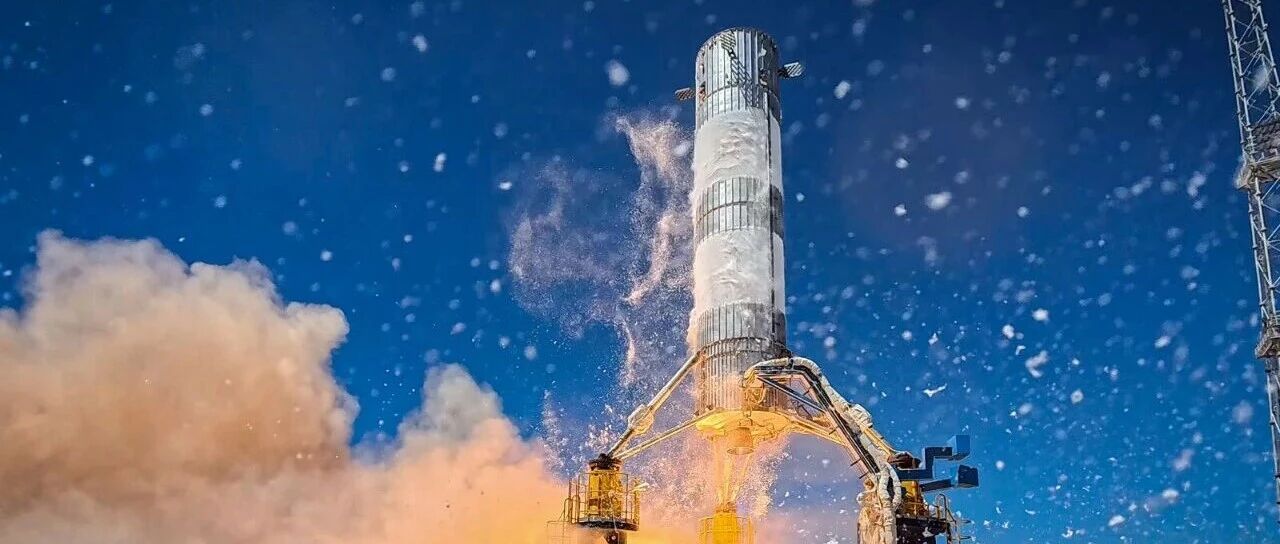
Good News for Space Stocks: NASA Wants 30 Moon Landings
Yahoo Finance· 2026-03-30 15:35
Core Insights - Intuitive Machines successfully landed an uncrewed spacecraft on the Moon on February 22, 2024, marking the first lunar landing in 50 years, although the lander toppled over after landing [1] - Following this achievement, other companies, including Firefly Aerospace and Intuitive Machines, have made subsequent lunar landings, indicating a growing interest in lunar exploration [1] Group 1: NASA's Lunar Missions - NASA plans to conduct 30 lunar lander missions starting in 2027, aiming to support a future space base and conduct scientific experiments approximately once per month [2] - These missions will be part of NASA's Commercial Lunar Payload Services (CPLS) program, which involves hiring independent contractors for lunar services [3] Group 2: Key Companies Involved - Intuitive Machines, Firefly Aerospace, and Astrobotic are among the initial companies allowed to bid on contracts under the CPLS program, with Lockheed Martin and The Charles Stark Draper Laboratory also being prominent players [4] - Smaller space start-ups have also participated in the CPLS program, but the aforementioned companies are expected to be the primary beneficiaries of NASA's lunar landing initiatives [5] Group 3: Future Developments - SpaceX and Blue Origin are developing their own lunar landers, with SpaceX's "Cargo Human Landing System" and Blue Origin's "Blue Moon" expected to contribute to future lunar missions [6] - Upcoming launches include Astrobotic's Griffin 1, Firefly's Blue Ghost 2, and Intuitive's IM-3, all scheduled for 2026 if successful [6]


X @SpaceX
SpaceX· 2026-03-30 15:13
RT Starlink (@Starlink)On Sunday, March 29, Starlink satellite 34343 experienced an anomaly on-orbit, resulting in loss of communications with the satellite at ~560 km above Earth.Latest analysis shows the event poses no new risk to the @Space_Station, its crew, or to the upcoming launch of NASA’s Artemis II mission. We will continue to monitor the satellite along with any trackable debris and coordinate with @NASA and the @USSpaceForce.The event also posed no new risk to this morning’s Transporter-16 missi ...
X @Starlink
Starlink· 2026-03-30 15:11
On Sunday, March 29, Starlink satellite 34343 experienced an anomaly on-orbit, resulting in loss of communications with the satellite at ~560 km above Earth.Latest analysis shows the event poses no new risk to the @Space_Station, its crew, or to the upcoming launch of NASA’s Artemis II mission. We will continue to monitor the satellite along with any trackable debris and coordinate with @NASA and the @USSpaceForce.The event also posed no new risk to this morning’s Transporter-16 mission, which was designed ...
Tesla Appears to Have a New Master Plan... and SpaceX Is a Huge Part of It
Yahoo Finance· 2026-03-30 15:06
Core Viewpoint - Tesla is evolving beyond an electric vehicle company, with potential plans for a merger with SpaceX by 2027, as suggested by Wedbush analyst Dan Ives [1]. Group 1: Tesla and SpaceX Integration - The groundwork for a merger between Tesla and SpaceX is being established, with financial and operational ties strengthening [1]. - A joint Terafab facility in Austin, Texas, is being developed, which includes two advanced chip factories for Tesla's AI needs and SpaceX's space-based data centers [6]. - The Terafab is seen as the initial step towards full operational integration between Tesla and SpaceX [6]. Group 2: Semiconductor Production - Elon Musk highlighted that chip production is the biggest constraint on Tesla's growth over the next three to four years, indicating a potential need for a new semiconductor fabrication plant [4]. - Existing suppliers like TSMC, Samsung, and Micron may not meet Tesla's growing demands for chips [4]. Group 3: Investment in AI - Tesla invested $2 billion in xAI, which was later acquired by SpaceX, resulting in a small equity stake for Tesla in SpaceX [7]. - The investment in xAI is part of Tesla's Master Plan IV, with the AI model Grok already being utilized in Tesla vehicles to manage a large autonomous fleet [8].

太空行业深度报告:SpaceX:构建全球太空基建与算力生态的“超级巨头”
Guolian Minsheng Securities· 2026-03-30 15:02
Investment Rating - The report maintains a "Buy" rating for the space industry, specifically for SpaceX [1]. Core Insights - SpaceX is transitioning from a launch service provider to a space infrastructure operator, driven by advancements in Starship and the emergence of space computing [8]. - The valuation of SpaceX has evolved to reflect a three-layer asset model: cash flow assets from launch services, global network assets from Starlink, and optionality from future space computing capabilities [20][22]. - The report highlights the industrialization of rocket capabilities, emphasizing the cost reduction and scalability achieved through innovations like 3D printing [7][43]. Summary by Sections 1. SpaceX: Valuation and Vision - SpaceX's valuation history shows significant growth through three phases: commercial launches, satellite services, and now space infrastructure [17][19]. - The current valuation of $1.5 trillion is attributed to the combination of cash flow from launch services, network assets from Starlink, and future growth potential from Starship [22]. 2. Rocket Technology and Advanced Manufacturing - SpaceX's rocket technology has evolved from Falcon to Starship, with a focus on reusability and cost efficiency [29][31]. - The integration of 3D printing technology has significantly reduced manufacturing costs and production times, enabling a shift from low-frequency custom production to industrial-scale manufacturing [43][46]. 3. Starlink: From Global Connectivity to Space Computing - Starlink is evolving from a broadband service to a space computing platform, with plans to deploy a million satellites to support AI computing needs [58][62]. - The report outlines three key challenges for Starlink's transition to a space computing center: building a scalable satellite platform, creating a low-latency network, and ensuring reliable operation in extreme space environments [61][69]. 4. Investment Recommendations - The report suggests focusing on high-performance satellite energy systems and advanced communication hardware suppliers as potential investment opportunities [11]. - It also recommends monitoring developments in next-generation aerospace manufacturing technologies and satellite applications that benefit from the diversification of satellite internet services [11].
Mark Cuban Fires Back At Musk's 'Work Optional' Vision With Mock IPO Risk Filing As SpaceX IPO Looms
Yahoo Finance· 2026-03-30 15:01
Group 1 - Mark Cuban highlighted the risks associated with AI automation, including potential new taxes and market-structure issues as companies replace human workers with AI and humanoids [1][2][3] - The mock prospectus warns that if work becomes optional, governments may introduce unpredictable taxes such as a robot utilization tax and a token utilization tax, which could significantly alter industry economics and shareholder returns [2][3] - Cuban's filing raises concerns about Nasdaq Inc.'s ability to effectively implement AI infrastructure, which could affect stock trading capabilities for companies [3][4] Group 2 - The mock prospectus indicates that 87% of its content was generated by Grok, suggesting a shift in how future SEC disclosures and legal protections may be structured, with Cuban describing the current legal system as outdated [5] - Tim Draper mentioned the potential for capital raising, employee payments, and tax settlements to occur via Bitcoin blockchain smart contracts, indicating that the risks Cuban outlined are already being discussed at high levels in finance [6]