工商银行

Search documents
1月金融数据点评:存款开门更红,债券融资靠前
KAIYUAN SECURITIES· 2026-02-14 08:15
Investment Rating - The industry investment rating is "Overweight" (maintained) [1] Core Insights - The report highlights a significant rebound in M1 and M2 growth rates due to the Spring Festival effect and proactive marketing by banks, with January M1 growth at 4.9% and M2 at 9.0% [3] - January saw a notable increase in new RMB deposits, totaling 8.09 trillion yuan, significantly higher than the previous year's 4.32 trillion yuan, driven by corporate, fiscal, and non-bank deposits [3] - The report indicates a shift towards short-term loans, with January's new RMB loans at 4.71 trillion yuan, reflecting a decrease in medium to long-term loans [4][5] - The investment suggestion emphasizes the need to monitor credit and deposit maturity windows in March, with large banks and quality regional banks expected to benefit from expansion and performance certainty [5] Summary by Sections Deposit and Loan Trends - January's new RMB deposits were 8.09 trillion yuan, with corporate deposits increasing by 2.82 trillion yuan, fiscal deposits by 1.22 trillion yuan, and non-bank deposits by 2.56 trillion yuan [3] - The structure of loans shows a significant increase in short-term loans, with corporate short-term loans up by 3.1 trillion yuan, while medium to long-term loans decreased by 2.8 trillion yuan [5] Social Financing - The total social financing in January was 7.22 trillion yuan, with a stock growth rate of 8.2%, reflecting a slight decrease from the previous month [4] - Direct financing, including corporate and government bonds, saw a year-on-year increase, indicating a shift in financing methods [4] Investment Recommendations - The report recommends focusing on banks with strong balance sheet expansion capabilities, specifically mentioning Citic Bank and Suzhou Bank, while also highlighting beneficiaries like Agricultural Bank, Industrial and Commercial Bank, Jiangsu Bank, and Chongqing Bank [5]

我国系统重要性银行名单发布,共计21家
Xin Lang Cai Jing· 2026-02-14 07:12
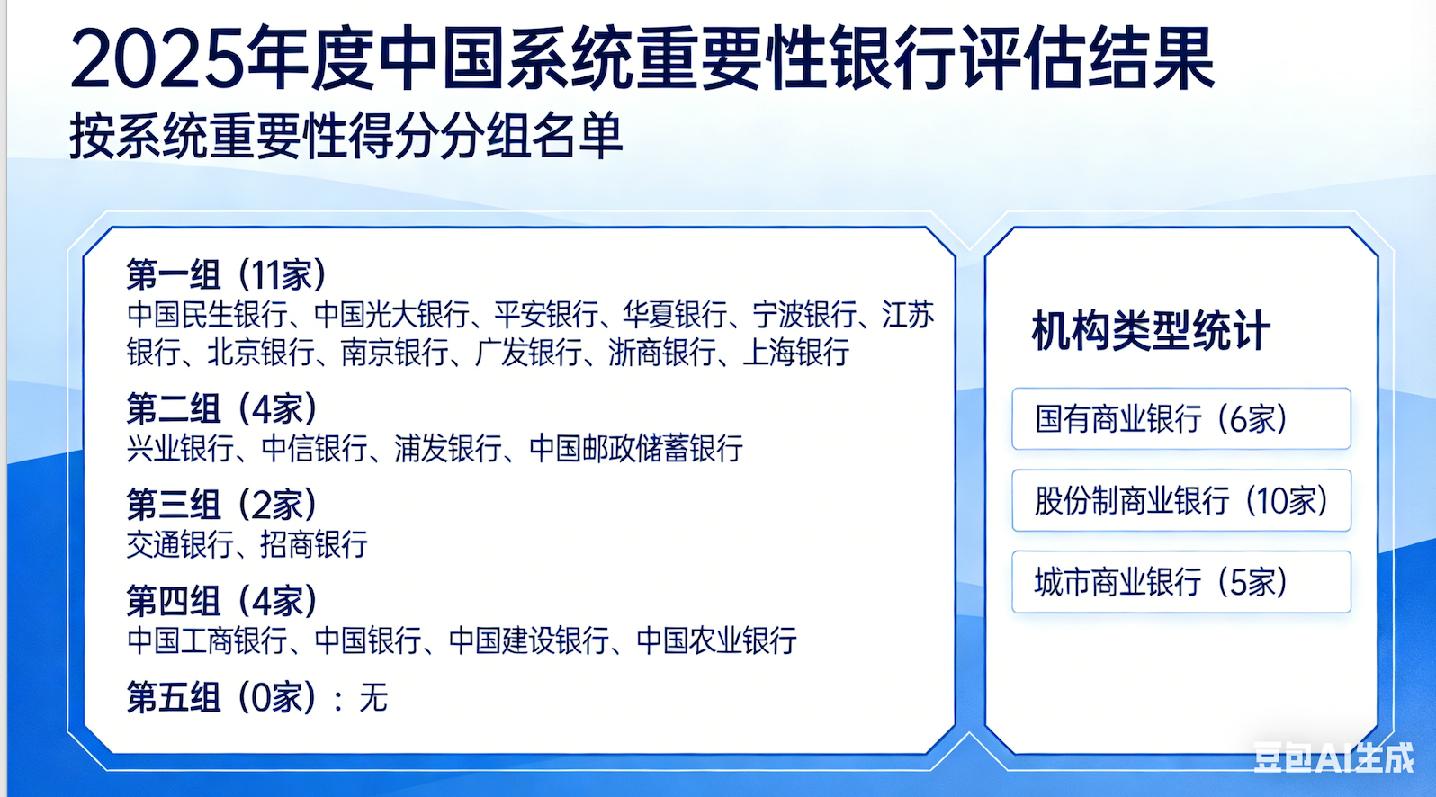
第五组,暂无银行进入。 记者2月13日从中国人民银行了解到,近期中国人民银行、国家金融监督管理总局开展了2025年度我国 系统重要性银行评估,认定21家国内系统重要性银行,其中国有商业银行6家、股份制商业银行10家、 城市商业银行5家。 中国人民银行表示,下一步将持续夯实系统重要性银行附加监管,促进系统重要性银行安全稳健经营和 健康发展,更好服务实体经济高质量发展。 按系统重要性得分从低到高分为五组: 第三组2家,包括:交通银行、招商银行; 第四组4家,包括:中国工商银行、中国银行、中国建设银行、中国农业银行; 第一组11家,包括:中国民生银行、中国光大银行、平安银行、华夏银行、宁波银行、江苏银行、北京 银行、南京银行、广发银行、浙商银行、上海银行; 第二组4家,包括:兴业银行、中信银行、浦发银行、中国邮政储蓄银行; 来源:央视新闻 ...
怎么花钱最划算?看这份银行卡攻略就够了
Xin Jing Bao· 2026-02-14 06:57
Core Viewpoint - The upcoming 2026 Spring Festival is prompting banks to launch various promotional activities aimed at boosting consumer spending, with a focus on enhancing participation among middle and low-frequency users, particularly in lower-tier cities [3][10]. Group 1: Bank Promotions - China Construction Bank (CCB) is offering a "Payment Achievement Win Gifts" campaign from January 1 to March 31, where users can win up to 1998 yuan in WeChat discounts by meeting monthly spending thresholds [4][6]. - Industrial and Commercial Bank of China (ICBC) has multiple promotions, including discounts on movie tickets and food delivery, with specific offers like 5 yuan off for spending over 30 yuan on the Maoyan platform [6][8]. - Other banks, including Bank of China and Postal Savings Bank, are also rolling out New Year promotions, such as discount vouchers and cash rebates for various spending categories [8][10]. Group 2: Government and Financial Support - The Ministry of Commerce and other agencies have issued a plan to enhance financial support for consumer activities during the Spring Festival, encouraging banks to collaborate with key merchants [3][10]. - The "2026 'Happy Shopping Spring Festival' Special Activity Plan" emphasizes the importance of integrating local promotional activities with financial incentives like cash rebates and digital currency red envelopes [10]. Group 3: Economic Impact - The promotional activities are expected to stimulate short-term consumer spending and enhance market confidence, contributing to economic circulation [10]. - Data from January 2026 shows a 0.2% year-on-year increase in consumer prices, indicating a gradual recovery in consumer demand, particularly in the automotive and home appliance sectors [11].


固收点评 20260214:二级资本债周度数据跟踪(20260209-20260213)-20260214
Soochow Securities· 2026-02-14 06:39
Report Industry Investment Rating - Not provided in the content Core Viewpoints - This week (from February 9th to February 13th, 2026), there were no new secondary capital bonds issued in the inter - bank and exchange markets [1] - The weekly trading volume of secondary capital bonds this week was approximately 204.5 billion yuan, a decrease of 70.6 billion yuan compared to last week. The top three bonds in terms of trading volume were 25 Bank of China Secondary Capital Bond 02BC, 25 Bank of China Secondary Capital Bond 03A(BC), and 25 Agricultural Bank of China Secondary Capital Bond 04A(BC) [2] Summary by Relevant Catalogs Primary Market Issuance - No new secondary capital bonds were issued in the inter - bank and exchange markets from February 9th to February 13th, 2026 [1] Secondary Market Transactions - **Trading Volume**: The total weekly trading volume of secondary capital bonds was about 204.5 billion yuan, down 70.6 billion yuan from last week. The top three bonds in trading volume were 25 Bank of China Secondary Capital Bond 02BC (13.209 billion yuan), 25 Bank of China Secondary Capital Bond 03A(BC) (8.914 billion yuan), and 25 Agricultural Bank of China Secondary Capital Bond 04A(BC) (8.217 billion yuan) [2] - **Regional Trading Volume**: The top three regions in terms of trading volume were Guangdong Province (about 155.3 billion yuan), Shandong Province (about 16.5 billion yuan), and Shanxi Province (about 8.5 billion yuan) [2] - **Yield to Maturity**: As of February 13th, for 5Y secondary capital bonds, the yield to maturity of AAA -, AA +, and AA - rated bonds changed by - 6.56BP, - 6.91BP, and - 6.91BP respectively compared to last week; for 7Y bonds, the changes were - 8.84BP, - 5.66BP, and - 5.66BP; for 10Y bonds, the changes were - 6.53BP, - 4.86BP, and - 4.86BP [2] Top 30 Bonds with Valuation Deviation - **Overall Situation**: This week, the overall valuation deviation of the weekly trading average price of secondary capital bonds was not large. The proportion of discount transactions was greater than that of premium transactions, and the discount amplitude was larger than the premium amplitude [3] - **Discount Bonds**: The top three bonds with the highest discount rates were 17 Binhai Rural Commercial Secondary 01 (- 0.5685%), 23 Huaxing Bank Secondary Capital Bond 01 (- 0.4765%), and 22 Industrial and Commercial Bank of China Secondary Capital Bond 04B (- 0.4336%). The implicit ratings of China Central Depository & Clearing Co., Ltd. were mainly AAA -, AA, and AA +, and the bonds were mostly from Beijing, Shanghai, and Tianjin [3] - **Premium Bonds**: The top three bonds with the highest premium rates were 21 Huishang Bank Secondary 01 (0.5063%), 23 Hankou Bank Secondary Capital Bond 02 (0.4304%), and 23 Tianjin Bank Secondary Capital Bond 01 (0.3847%). The implicit ratings of China Central Depository & Clearing Co., Ltd. were mainly AA +, AAA -, and AA, and the bonds were mostly from Beijing, Zhejiang, and Fujian [3]
跌入熊市!超10万亿“大溃败”!两大巨头,疯狂减持
Sou Hu Cai Jing· 2026-02-14 06:32
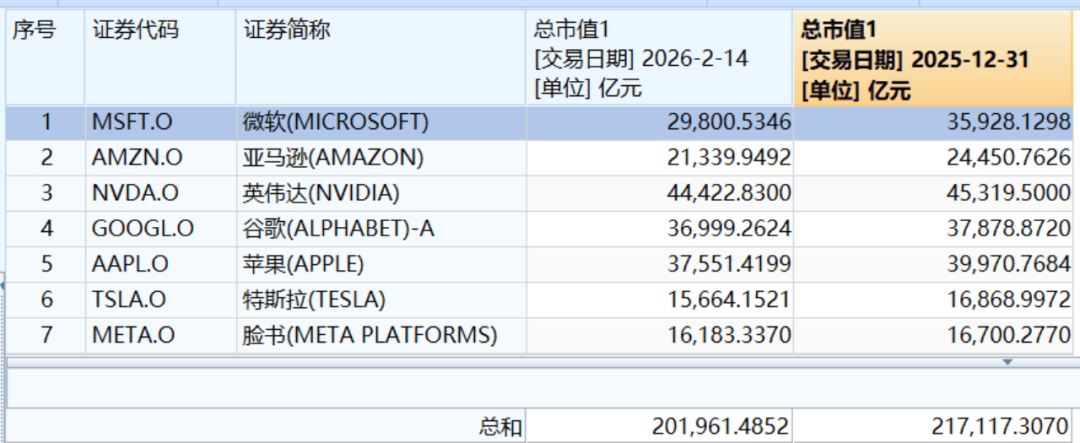
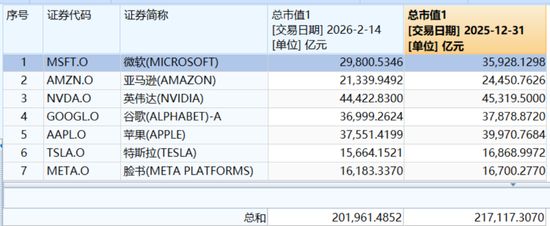
Core Viewpoint - Amazon's stock price has experienced a nine-day decline, entering a technical bear market, making it the second member of the "Mag7" (the seven largest U.S. tech companies) to do so, following Microsoft. The total market value of the Mag7 has decreased by approximately $1.51 trillion this year [1][2]. Group 1: Stock Performance - Amazon's stock closed at $198.79 per share, down over 23% from its recent peak [2]. - Microsoft was the first Mag7 member to enter a bear market, with its stock down 27.8% from its recent high as of Friday's close [2]. - Meta is on the verge of entering a bear market, having declined 19.6% from its peak, just 0.4% away from the 20% threshold [2]. Group 2: Institutional Selling - UBS and Goldman Sachs have significantly reduced their holdings in several major U.S. tech stocks, as indicated in their recent 13F filings with the SEC [2][4]. - UBS reduced its stake in Nvidia by 10.57 million shares, representing an 11.47% decrease, and also reduced its positions in Microsoft, Apple, Amazon, and Google by varying percentages [4]. - Goldman Sachs also reduced its holdings in Microsoft, Tesla, Broadcom, and Meta, with reductions ranging from 5.86% to 13.51% [4]. Group 3: Market Trends and Influences - The decline in the Mag7 stocks coincides with similar trends in the A-share market, indicating a potential shift in global investment styles [5]. - Factors contributing to this trend include investor skepticism regarding the return on investment from AI expenditures by tech giants and a potential negative shift in free cash flow due to increased capital expenditures [5]. - The U.S. short-term liquidity market is showing signs of strain, with overnight reverse repos dropping to a low of $3.77 billion, indicating a tightening liquidity environment [5].
系统重要性银行分层洗牌:谁在晋级,谁在降组?
Jing Ji Guan Cha Wang· 2026-02-14 06:32
Core Insights - The People's Bank of China and the National Financial Regulatory Administration released the list of systemically important banks (D-SIBs) for 2025, expanding the number of institutions from 20 to 21, with Zheshang Bank being the new addition [1][3] - The list reflects a significant internal reshuffling, with Industrial Bank being downgraded from the third group to the second group, indicating a re-evaluation of systemic risk profiles by regulators [3][8] Group Summaries - **First Group (10 Banks)**: Includes China Everbright Bank, China Minsheng Bank, Ping An Bank, Huaxia Bank, Ningbo Bank, Jiangsu Bank, Guangfa Bank, Shanghai Bank, Nanjing Bank, and Beijing Bank [5] - **Second Group (4 Banks)**: Comprises CITIC Bank, Shanghai Pudong Development Bank, China Postal Savings Bank, and now includes Industrial Bank [5][8] - **Third Group (3 Banks)**: Contains Bank of Communications, China Merchants Bank, and Industrial Bank [5][6] - **Fourth Group (4 Banks)**: Dominated by the four major state-owned banks: Industrial and Commercial Bank of China, Bank of China, China Construction Bank, and Agricultural Bank of China [5][6] - **Fifth Group (0 Banks)**: No banks are currently classified in this group, which has the highest additional capital requirements [10] Zheshang Bank's Inclusion - Zheshang Bank's inclusion in the first group is attributed to its performance across four dimensions: scale, interconnectedness, substitutability, and complexity, achieving a weighted score that meets the threshold [6][11] - As of Q3 2025, Zheshang Bank's asset size reached 3.39 trillion yuan, with a core Tier 1 capital adequacy ratio rising by 0.02 percentage points to 8.40% [6][11] Industrial Bank's Downgrade - Industrial Bank's downgrade to the second group signifies a reduction in regulatory costs, as the additional capital requirement drops from 0.75% to 0.5%, potentially freeing up hundreds of billions in capital [8][10] - The downgrade reflects a shift in the competitive landscape, where Industrial Bank's relative advantages in market operations may have diminished due to the performance of peer banks [8][11] Regulatory Dynamics - The release of the new list comes after a gap of nearly 18 months, indicating a shift in regulatory oversight and a more cautious approach to data evaluation by the authorities [9][10] - The regulatory framework emphasizes both macro-prudential and micro-prudential management, requiring banks to meet various additional capital and leverage ratio requirements based on their group classification [10][11]


系统重要性银行扩围至21家:浙商银行突围,兴业银行跌落第三组
Jing Ji Guan Cha Wang· 2026-02-14 06:32
Core Viewpoint - The People's Bank of China and the National Financial Regulatory Administration have updated the list of Domestic Systemically Important Banks (D-SIBs), increasing the total from 20 to 21, with Zhejiang Commercial Bank being newly included [2][3]. Group Summaries Group 1 - The first group now includes 10 banks, such as China Everbright Bank, Minsheng Bank, and Ping An Bank, reflecting a strong position in the financial system [6]. - Zhejiang Commercial Bank's inclusion in this group indicates its significant role and improved risk profile within the banking sector [4][8]. Group 2 - The second group consists of four banks, including Citic Bank, Shanghai Pudong Development Bank, and Postal Savings Bank, with the addition of Industrial Bank [3][6]. - The adjustment of Industrial Bank to this group signifies a shift in its risk assessment and regulatory requirements [4]. Group 3 - The third group includes three banks: Bank of Communications, China Merchants Bank, and Industrial Bank, which maintain advantages in cross-regional operations and market coverage [3][6]. - The downgrade of Industrial Bank from the third to the second group reflects a relative loss of competitive edge in the financial market [6]. Group 4 - The fourth group remains unchanged with the four major state-owned banks: ICBC, ABC, BOC, and CCB, which continue to be the backbone of the national financial system [3][6]. - These banks are subject to the highest regulatory scrutiny due to their systemic importance [3]. Regulatory Insights - The update of the D-SIB list demonstrates a dynamic adjustment in the assessment of systemic risk, emphasizing the importance of both macro and micro-prudential regulations [3][7]. - The additional capital requirements for each group range from 0.25% to 1.5%, with the first group facing the lowest and the fifth group (currently empty) facing the highest [7][8]. - The regulatory framework aims to ensure that banks not only meet micro-level indicators but also adhere to macro-level capital and leverage requirements [7].
“换卡忘带旧卡白跑一趟”怎么解决? 镇江这家工行创新推出暖心“小提示”
Xin Lang Cai Jing· 2026-02-14 06:11
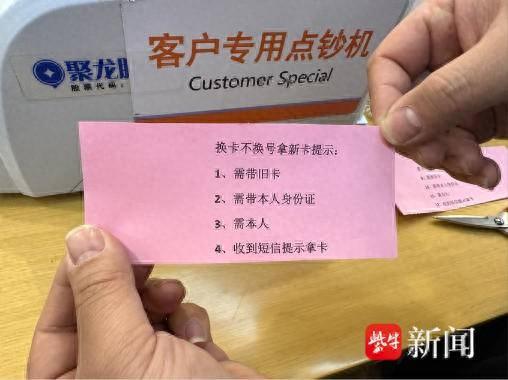
换卡不换号作为银行高频个人业务,身份证原件核验、旧卡回收是法定必经流程。该行通过后台数据统 计与一线服务调研发现,近半年内约15%的客户因未携带身份证或旧卡,导致业务无法当场办理,不仅 耽误个人时间,也占用网点服务资源。部分老年客户因记忆衰退,多次往返仍遗漏要件;年轻客户则因 工作繁忙、行程仓促,常出现"临门一脚"忘带关键物品的情况。至此,如何用简单直接的方式帮客 户"记牢"必备物品,成为该行创新并优化服务的重点方向。 针对客户办理换卡不换号业务时频繁遗漏身份证、旧卡的高频问题,该行近日推出"换卡不换号拿新卡 提示",以具象化提醒打通服务"最后一公里",让便民服务更接地气、更贴民心。 工行暖心"小提示" 转自:扬子晚报 为让提示更具针对性,提示卡醒目标注"换卡不换号 两证缺一不可"核心提示,下方用加粗字体明确列 出"1.本人身份证原件 2.原银行卡"两大必备物品。"该行在客户通过线上渠道预约业务时,会同步推送 提示信息;线下取号时,大堂经理会主动发放提示卡,引导客户当场核对携带物品。" 扬子晚报网2月14日讯(通讯员 许婧洁 记者 万凌云) "之前办换卡忘带旧卡白跑一趟,现在银行直接给 了提示卡,出门前对照着 ...

跌入熊市!超10万亿“大溃败”!两大巨头,疯狂减持!
Xin Lang Cai Jing· 2026-02-14 06:04
Group 1 - Amazon's stock price has fallen for nine consecutive days, entering a technical bear market, becoming the second member of the "Magnificent Seven" (Mag7) to do so, following Microsoft [1][2] - The total market capitalization of the Mag7 has decreased by approximately $1.51 trillion (about 10.4 trillion yuan) this year [3] - Microsoft was the first Mag7 member to enter a bear market, with its stock price down 27.8% from recent highs as of Friday's close [2][3] Group 2 - UBS and Goldman Sachs have significantly reduced their holdings in several major U.S. tech stocks, as indicated in their recent 13F filings with the SEC [1][5] - UBS reduced its stake in Nvidia by 10.57%, Microsoft by 7.64%, Apple by 10.57%, Amazon by 4.57%, and Google by 9.05% [5] - Goldman Sachs also reduced its holdings in Microsoft by 5.86%, Tesla by 8.27%, Broadcom by 9.33%, and Meta by 13.51% [5] Group 3 - The decline in the Mag7 stocks coincides with similar trends in the A-share market, indicating a potential shift in global investment styles [6] - Factors contributing to these changes include investor skepticism regarding the return on investment from AI spending by tech giants and a potential shift in global liquidity and macroeconomic conditions [7] - The U.S. short-term liquidity market is reportedly experiencing a significant contraction, with overnight reverse repos dropping to a very low level, indicating a tightening of liquidity [7]
跌入熊市!超10万亿“大溃败”!两大巨头,疯狂减持!
券商中国· 2026-02-14 06:02
美股风格大变局! 今年以来,Mag7杀跌惨重。微软是首家进入熊市的Mag7成员,股价于1月29日跌入熊市。截至周五收盘,微软股价较近期高点下跌27.8%。Meta可能成为下一个跌 入熊市的Mag7成员,截至周五收盘,较去年高点累跌19.6%,距离熊市的20%跌幅门槛仅差0.4%。 据券商中国记者统计,今年以来,Mag7市值皆出现了显著收缩,总市值蒸发约1.51万亿美元。 | 序号 | 证券代码 | 证券简称 | 总市值1 | 总市值1 | | | --- | --- | --- | --- | --- | --- | | | | | [交易日期] 2026-2-14 [单位] 亿元 | [交易日期] 2025-12-31 [单位] 亿元 | | | 1 | MSFT.O | 微软(MICROSOFT) | 29,800.5346 | | 35,928.1298 | | 2 | AMZN.O | 亚马逊(AMAZON) | 21.339.9492 | | 24.450.7626 | | 3 | NVDA.O | 英伟达(NVIDIA) | 44,422.8300 | | 45,319.5000 | | ব | ...