DeepSeek

Search documents
大厂抢郭达雅进行时!DeepSeek核心成员还是个“综艺巨佬”
量子位· 2026-03-22 06:28
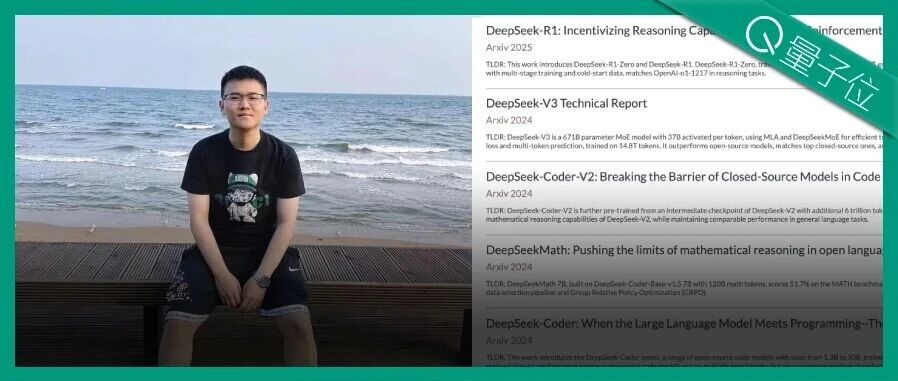
Core Viewpoint - The article discusses the departure of Guo Dayan, a key engineer at DeepSeek, who has significantly contributed to various models including V2, V3, and R1, raising concerns about the potential impact on DeepSeek's future developments [1][6][7]. Group 1: Guo Dayan's Background and Achievements - Guo Dayan is recognized as a technical prodigy with a remarkable academic and competitive history, often referred to as the "Lei Jun of Sun Yat-sen University" [2][42]. - He completed his doctoral thesis requirements just three days after starting his postdoctoral studies, showcasing exceptional research efficiency [3][35]. - Guo has won multiple championships in competitions such as the Tencent Advertising Algorithm Competition and the ATEC Technology Elite Competition, earning substantial monetary rewards [4][44][46]. Group 2: Contributions to DeepSeek - Guo Dayan joined DeepSeek after completing his PhD in 2023, focusing on code intelligence and large language model inference [8][10]. - He was a core contributor to several models, including DeepSeek-Coder, DeepSeek-Math, and DeepSeek-Prover, which have shown significant advancements in mathematical reasoning and formal proof generation [13][18][21]. - The training cost for the DeepSeek-R1 model was approximately $294,000, indicating a relatively low investment for the capabilities achieved [25]. Group 3: Future Implications - Guo's departure raises questions about the continuity of DeepSeek's innovative projects, particularly the development of the upcoming DeepSeek-V4 model [6][10]. - His contributions have been pivotal in demonstrating that large models can achieve reasoning capabilities without relying on human annotations, which could influence future AI model development strategies [24].

35岁魔咒失效,中年人逆袭掌权AI革命?
创业邦· 2026-03-21 01:11
Core Insights - The article discusses the phenomenon of middle-aged entrepreneurs leading the current AI revolution, contrasting it with the earlier internet revolution dominated by younger individuals. It emphasizes that the AI revolution is characterized by a preference for experienced individuals who possess emotional intelligence and a deep understanding of the industry [5][6][22]. Group 1: Characteristics of AI Entrepreneurship - AI entrepreneurship is likened to heavy industry, requiring significant capital investment and engineering expertise, unlike the low-cost, fast-paced internet startups of the past [7][8][10]. - The capital requirements for AI projects are substantial, with training advanced models costing millions of dollars, making it difficult for younger entrepreneurs to enter the field [11][12][14]. - The engineering experience required for AI projects is high, as developing large models involves complex systems and algorithms that necessitate years of expertise [14][15][17]. Group 2: Advantages of Middle-Aged Entrepreneurs - Middle-aged entrepreneurs have advantages in organizational skills and networking, which are crucial for managing the complexities of AI projects [18][20]. - The shift in venture capital investment strategies favors experienced entrepreneurs, as investors seek certainty and proven track records rather than speculative ideas [24][25][27]. - Regulatory scrutiny and media narratives have evolved, favoring seasoned leaders who can navigate ethical and compliance challenges in AI development [30][32][33]. Group 3: Opportunities for Middle-Aged Entrepreneurs - Middle-aged individuals are encouraged to leverage their accumulated knowledge and networks to define industry problems and create unique competitive advantages [46][47]. - They should focus on agile leadership, managing human-AI collaboration effectively, and ensuring ethical standards in AI development [48][49]. - The article suggests that the AI revolution presents a unique opportunity for those with experience to integrate their insights with AI technology, creating sustainable business models [52].

从阿里云涨价看算力通胀演绎的节奏和阶段
2026-03-20 02:27
Summary of Conference Call Records Industry Overview - The records focus on the cloud computing industry, specifically the dynamics of token inflation and its impact on major cloud service providers such as Alibaba Cloud, Baidu Cloud, and Tencent Cloud [1][2]. Key Points and Arguments Token Inflation and Pricing Trends - Token inflation has been clearly transmitted to major domestic cloud service providers, with price increases marking a definitive trend [1]. - Token demand is experiencing exponential growth, while supply is increasing linearly, leading to a significant supply-demand gap [3][4]. - The price transmission path starts from wafer foundry/chips to IDC/power leasing, and finally to cloud and model vendors, with upstream entities having the strongest bargaining power [1][5]. Cost Dynamics in Video Generation - The cost of video generation has significantly decreased, with generating 1 second of video consuming approximately 20,000 tokens, costing about 1 yuan [1]. Investment Strategy - The investment strategy emphasizes prioritizing upstream sectors, particularly in GPU and core hardware segments, which have a favorable competitive landscape and high price increase certainty [1]. Market Evolution and Price Transmission - Since January 2026, the inflation transmission chain has shown a gradual spillover from upstream to downstream, with initial price increases observed in GPU and storage sectors [2]. - Major cloud providers like Amazon and Google have initiated price hikes, leading to expectations of similar actions from domestic providers [2]. Commercialization Strategies of Model Vendors - In 2026, model vendors are focusing on revenue growth, shifting from expansion to profitability and lightweight models due to changing capital market dynamics [8]. - Successful segments include AI Coding and Agent applications, which have shown strong revenue potential [9]. AI Coding Market Potential - The AI Coding market is currently the most penetrated AI application area, with potential market sizes estimated between $55 billion to $100 billion in China and $50 billion to $100 billion overseas [11]. Agent Applications and Token Consumption - Agent applications, such as Devin, have seen a significant increase in token consumption, driven by factors like persistent memory and multi-turn interactions [12][14]. - The demand for computing infrastructure is expected to rise due to the structural impacts of Agent applications, including increased needs for local, cloud, and edge computing resources [15]. CPU Demand and Market Perception - The rise of Agent applications is expected to increase demand for data center server CPUs, although current market perceptions may not reflect this due to the gradual adoption of these applications [16]. Supply-Side Constraints - Key factors affecting the supply of inference computing power include capital expenditure, physical performance of single cards, and algorithm optimization [18]. - Despite increased capital expenditure, physical constraints may hinder the realization of these investments [18]. Token Supply and Demand Dynamics - The demand for tokens is expected to grow exponentially due to applications in Coding, Agent, and multi-modal areas, while supply growth remains linear, leading to a persistent supply-demand tension [20]. Investment Strategy Recommendations - The investment strategy should focus on both ends of the AI industry chain: computing power and model vendors, with a preference for upstream investments in core hardware [23][24]. Additional Important Insights - The evolution of large model technology is centered around programming, agents, and multi-modal applications [7]. - The competitive landscape in the upstream segments is more concentrated, allowing for better price increase capabilities compared to the more competitive downstream segments [6]. - The recent price increases across the industry reflect a direct response to the supply-demand imbalance in the token market [20].
U.S. tech execs smuggled Nvidia chips to China, prosecutors say
CNBC· 2026-03-19 22:22
Core Viewpoint - The U.S. Attorney's Office has charged individuals associated with a U.S. server manufacturer for illegally diverting billions of dollars in AI servers to China, highlighting concerns over unauthorized access to high-powered chips by Chinese companies [1]. Group 1: Legal Actions and Allegations - The U.S. government has filed an indictment against Yih-Shyan "Wally" Liaw, Ruei-Tsan "Steven" Chang, and Ting-Wei "Willy" Sun for violating the Export Control Reform Act [2]. - The indictment states that products containing Nvidia chips are subject to strict U.S. export controls, which prohibit their sale to China without a license, aimed at protecting U.S. national security [3]. Group 2: Industry Context and Responses - Nvidia's graphics processing units are in high demand globally for training generative AI models, indicating the competitive landscape between U.S. and Chinese companies [2]. - U.S. President Trump previously sought to prevent China from obtaining processors, but later indicated that Nvidia could ship H200 GPUs to China under specific conditions to maintain national security [3]. - Nvidia had received licenses to export the H20 chip to China last summer, with an agreement to provide the U.S. with 15% of its sales in China [4].

35岁魔咒失效,中年人逆袭掌权AI革命?
虎嗅APP· 2026-03-19 00:21
Core Insights - The article discusses the phenomenon of middle-aged entrepreneurs leading the current AI revolution, contrasting it with the younger leaders of the internet revolution [2][3] - It emphasizes that the AI revolution favors individuals with accumulated experience, emotional intelligence, and a sense of responsibility, which are often found in middle-aged professionals [3] Funding and Investment Landscape - AI entrepreneurship requires significant capital investment, likened to heavy industry, whereas internet startups were more akin to light industry with lower entry costs [5][6] - Training advanced AI models demands substantial resources, with costs reaching millions of dollars, making it challenging for younger entrepreneurs without access to large funding pools [6][7] - The shift in venture capital strategies has moved from broad investment in young entrepreneurs to a focus on experienced middle-aged leaders who can provide certainty and stability [14][16] Technical and Engineering Expertise - AI projects necessitate deep engineering knowledge and experience, which often excludes younger individuals who may lack the requisite background [8][9] - The complexity of AI model training requires extensive time and effort for system adjustments, contrasting sharply with the rapid iteration seen in internet startups [9] Organizational and Networking Advantages - Middle-aged entrepreneurs possess superior organizational skills and networks, which are crucial for managing the multifaceted demands of AI projects [10] - Established connections and industry knowledge enable these leaders to attract talent and resources that younger entrepreneurs may struggle to secure [10] Shifts in Capital and Regulatory Environment - The capital landscape has evolved to prioritize experienced entrepreneurs, with a focus on those who can navigate regulatory challenges and ethical considerations in AI development [13][18] - Regulatory scrutiny has increased, necessitating a deeper understanding of compliance and ethical implications, which middle-aged leaders are better equipped to handle [19][20] Opportunities for Younger Entrepreneurs - Despite the dominance of middle-aged leaders, there remains space for young entrepreneurs to innovate and contribute significantly to the AI landscape [22][24] - Young professionals often excel in technical execution and can drive rapid product development, complementing the strategic oversight of their older counterparts [24] Strategic Directions for Middle-aged Entrepreneurs - Middle-aged leaders are encouraged to define industry problems accurately, leverage their accumulated knowledge to create competitive advantages, and manage AI-human collaboration effectively [28][31] - Establishing ethical frameworks and regulatory compliance will be essential for long-term success in the AI sector, where trust is a critical asset [33]

DeepSeek又出手了?一个神秘的AI模型引起全球开发者热议
凤凰网财经· 2026-03-18 13:21
Core Viewpoint - The article discusses the emergence of a new AI model named "Hunter Alpha," which has sparked speculation about its connection to the upcoming DeepSeek V4 model due to its impressive performance metrics and anonymous release [3][4][6]. Group 1: Performance Metrics - Hunter Alpha boasts a parameter scale of 1 trillion, placing it among the leading models in the industry [4]. - The model claims to have a context window of up to 1 million tokens, significantly surpassing most commercial models, allowing it to handle longer texts and more complex tasks [4]. - As of the latest statistics, Hunter Alpha has processed over 160 billion tokens, indicating rapid adoption among developers [5]. Group 2: Connection to DeepSeek - The model's self-identification as a "Chinese AI model trained primarily in Chinese" and its knowledge cutoff date of May 2025 align with the specifications of DeepSeek's existing models [6]. - Some developers suggest that the reasoning style of Hunter Alpha may reveal its "heritage," with its scale and memory capacity matching expectations for DeepSeek V4 [7]. - Despite the similarities, some analysts remain cautious about definitively linking Hunter Alpha to DeepSeek V4, noting differences in token behavior and architectural patterns [9][10]. Group 3: Industry Practices - The anonymous release of AI models for real feedback has become a standard practice in the industry, with platforms like OpenRouter facilitating testing across multiple AI systems [8]. - Notifications on Hunter Alpha's profile indicate that all prompts and completions are recorded for model improvement, a common practice in the field [9].

Nvidia will resume H200 AI chip sales in China, Jensen Huang says
Yahoo Finance· 2026-03-18 12:39
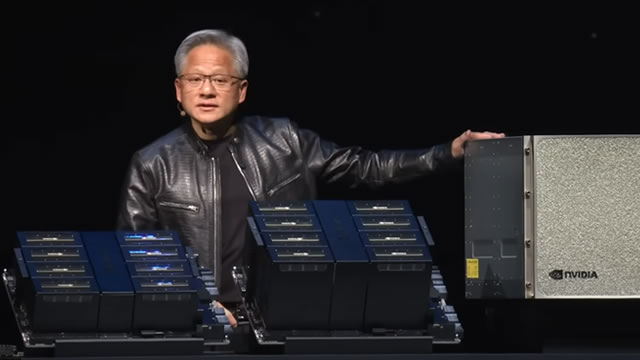
Core Insights - Nvidia has received purchase orders for its H200 processors from Chinese customers and is restarting production, indicating a significant step towards resuming chip sales to China after regulatory challenges [1][2] - The company has obtained regulatory clearance from both the U.S. and China, allowing it to restart manufacturing and supply chain operations [2] - The approval process had previously been stalled on the Chinese side, despite U.S. export licenses being in place [3] Regulatory Context - U.S. export licenses were issued in February for limited H200 shipments to specific Chinese buyers, and China has now granted licenses for many customers [3] - The H200 chip is Nvidia's second-most powerful AI chip, with the current-generation Blackwell line still restricted from export to China [3] - Export licenses come with conditions, including a 25% revenue share for the U.S., shipment caps, and third-party verification requirements [3] Financial Implications - Prior to export controls, China accounted for approximately 13% of Nvidia's total revenue and at least 20% of its data center business [4] - Nvidia's recent earnings guidance assumed zero data center revenue from China, meaning any resumed sales would provide additional revenue upside [4] Historical Context - Nvidia's CEO had previously stated the company was "100% out of China" and had been advocating for a path to re-enter the market [5] - The H200 export framework was developed as a compromise between a full ban and unrestricted access to Nvidia's advanced hardware [5] - A previous attempt to revive Nvidia's China business with a lower-capability H20 chip was unsuccessful due to Beijing's preference for domestic alternatives [6]
Wall Street Breakfast Podcast: The AI No One Claims
Seeking Alpha· 2026-03-18 10:55
Group 1: AI Developments - An AI model named Hunter Alpha has emerged on the OpenRouter platform, speculated to be linked to DeepSeek's next-generation system [4][5][6] - Hunter Alpha is described as a 1-trillion-parameter model, indicating a significant scale in its training data and processing capabilities [6] Group 2: Lululemon Athletica (LULU) - Lululemon reported better-than-expected fourth-quarter results, surpassing both top- and bottom-line estimates, but its stock fell 2% in premarket trading due to disappointing guidance [7][8] - The company anticipates a net revenue increase of 1% to 3% for the first quarter, projecting revenue between $2.4 billion and $2.43 billion, which is below market expectations [8] - For 2026, Lululemon expects sales of $11.35 billion to $11.5 billion, also falling short of the $11.52 billion estimate, with anticipated earnings between $12.10 and $12.30, below the $12.54 estimate [9] Group 3: Amazon and USPS - Amazon plans to significantly reduce the number of packages sent through the U.S. Postal Service, aiming to cut shipments by at least two-thirds by September [10] - USPS is facing financial challenges, with the Postmaster General indicating that the service may run out of funds within a year, suggesting potential delivery cuts or price increases as solutions [11]



新共识!特斯拉Optimus V3发布时间
Robot猎场备忘录· 2026-03-18 07:54
Core Viewpoint - The article emphasizes the significance of the upcoming release of Optimus V3 by Tesla, suggesting that March is a critical period for T-chain companies, with expectations for the V3 performance to exceed market predictions [2][5]. Summary by Sections Optimus V3 Release - The anticipated release of Optimus V3 is expected to occur at the end of March or early April, with Elon Musk indicating that production will begin in summer and large-scale manufacturing is projected for next year [2][5]. Market Sentiment and T-chain Performance - T-chain companies have experienced a downward trend, with only a brief rally on March 10. The overall sentiment in the sector remains low, attributed to external uncertainties and the need for a washout before the V3 announcement [6][10]. - The article notes that the T-chain companies are currently facing "left-side" opportunities, indicating potential for investment before the expected positive developments [10]. T-chain Companies' Developments - Recent developments among T-chain companies include significant progress in securing PPA agreements and entering Tesla's supply chain, with specific companies like H and Z making notable advancements [7][8]. - The article highlights a shift in investor focus towards new and emerging T-chain companies, as older suppliers face pressure from new entrants in the market [8]. Future Outlook - The article suggests that until the release of Optimus V3, T-chain companies will continue to struggle, and investors should focus on core, high-certainty companies while waiting for the right opportunities to emerge [10].


DeepSeek又出手了?一个神秘的AI模型引起全球开发者热议
华尔街见闻· 2026-03-18 04:22
Core Viewpoint - The article discusses the emergence of an AI model named "Hunter Alpha" on the OpenRouter platform, speculated to be a secret test of DeepSeek's next-generation system before its official release [1][2]. Group 1: Model Specifications - Hunter Alpha was released on March 11 as a "stealth model" and is currently available for free access to developers [2]. - The model boasts a scale of 1 trillion parameters and a context window of up to 1 million tokens, significantly surpassing most commercial models, allowing it to handle longer texts and more complex tasks [4]. - The model claims to be primarily trained in Chinese, with a knowledge cutoff date of May 2025, aligning with DeepSeek's existing models [2][6]. Group 2: Market Impact and Usage - The combination of Hunter Alpha's high performance and zero cost has led to rapid adoption among developers, with over 160 billion tokens processed by the model as of the last report [5]. - The model's performance metrics have triggered significant discussion in the market, highlighting its potential impact [3]. Group 3: Connection to DeepSeek - Clues linking Hunter Alpha to DeepSeek include its underlying data characteristics and operational logic, particularly its training data cutoff date and reasoning style [6][7]. - Some developers believe that the model's reasoning style may reveal its "heritage," suggesting a connection to DeepSeek's anticipated V4 model, which is expected to be released soon [7]. Group 4: Industry Practices - The anonymous release of models for real feedback has become a standard practice in the AI industry, with platforms like OpenRouter facilitating this process [9]. - Notifications on Hunter Alpha's profile indicate that all prompts and completions are recorded for model improvement, further supporting the notion of a "gray testing" mechanism [10].