
Agent应用

Search documents
GenAI系列报告之73:从MiniMax看国产大模型出海投资机遇
Shenwan Hongyuan Securities· 2026-03-24 08:13
Investment Rating - The report maintains a positive outlook on the investment opportunities in the domestic large model sector, particularly focusing on MiniMax as a key player [5][6]. Core Insights - The large model technology path is converging, with domestic models emphasizing cost-effectiveness while accelerating commercialization overseas. The leading global models have established successful business models through enterprise-level APIs and subscription tools [4][5]. - MiniMax is positioned as a pioneer in self-developed multimodal large models, with a global expansion strategy driving significant revenue growth. The company achieved total revenue of $79.04 million in 2025, a year-on-year increase of 159%, and its ARR surpassed $150 million by February 2026 [4][6]. - The demand for agent applications is surging, leading to a substantial increase in token consumption, particularly in high-frequency scenarios such as programming and office automation, where MiniMax's cost advantages make it a preferred choice [4][5]. Industry Overview - The competition in large models has shifted from finding the right path to optimizing efficiency on mainstream paths. The pre-training paradigm has converged to a Decoder-Only + MoE architecture, with core efforts focusing on mid-training and post-training optimizations [15][17]. - Domestic models have certain performance gaps compared to overseas counterparts in text and programming capabilities, but they are closing the gap rapidly, especially post-2026, with a competitive edge in cost-effectiveness [17][24]. MiniMax Overview - MiniMax is a leading global company in multimodal models, established in 2021, focusing on text, speech, and video capabilities. The company has a high proportion of R&D personnel, with over 70% of its workforce dedicated to research [39][44]. - The company has successfully built a diverse revenue structure, with AI-native applications accounting for 67.2% of its revenue and a rapid growth in enterprise services [46]. - MiniMax's M2.5 model, which utilizes a sparse MoE architecture, offers a significant cost advantage, with API output prices being 1/10 to 1/20 of those of leading overseas models, making it suitable for high-frequency token-consuming scenarios [4][6]. Investment Analysis - The report suggests focusing on domestic large models, particularly MiniMax, due to their multimodal capabilities and extreme cost-effectiveness, which are expected to drive widespread application in high-frequency demand scenarios [5][6].
GTC-OFC小结-光的新起点
2026-03-24 01:27
Summary of Key Points from the Conference Call Industry Overview - The conference discussed the optical interconnect industry, highlighting the significant growth expected in the coming years, particularly with the introduction of the RubyUltra solution and the 1.6T optical module in 2026, which is anticipated to lead to a substantial increase in demand by 2027, maintaining a high industry boom for 3-5 years [1][2]. Core Insights and Arguments - **Supply Chain Challenges**: The industry is currently facing severe shortages of materials, particularly optical chips and isolators, with some orders locked in as far out as 2030. This has led to a situation where companies may pay premiums for expedited orders due to urgent delivery needs [3][4]. - **Market Growth Projections**: The market for 800G and 1.6T optical modules is expected to grow more than threefold year-over-year in 2026, with potential market size reaching $90 billion by 2028. The industry is projected to grow nearly tenfold from 2023 to 2026, with sustained high growth expected for the next 3-5 years [1][5]. - **Technological Collaboration**: There is a shift from divergent technological routes to collaborative efforts among major players like NVIDIA, Google, and Arista, focusing on enhancing bandwidth density and optimizing costs through coexistence of CPO, NPO, and LPO solutions [1][6]. - **Role of Chinese Companies**: Leading Chinese firms such as Zhongji Xuchuang, Xinyisheng, and Tianfu Communication are transitioning from product supply to standard-setting roles, actively participating in the development of new technologies and standards, indicating their leadership in the optical communication technology revolution [5][6]. Additional Important Insights - **Capital Market Sentiment**: There has been a positive shift in capital market attitudes towards optical communication technologies, with stocks associated with CPO and leading optical module companies showing synchronized performance post-OFC conference, indicating a recognition of their potential to participate in core areas of the market [9]. - **Emerging Technologies**: New materials and technologies, such as silicon photonics and thin-film lithium niobate, are being widely adopted to address supply chain challenges and enhance performance. These innovations are expected to mitigate risks associated with material shortages [10]. - **AI Computing Market Dynamics**: The domestic AI computing market is experiencing a supply-demand imbalance, primarily due to tight core chip supplies. A significant recovery in production is anticipated by Q2 2026, which is expected to alleviate current pressures on supply [11]. This summary encapsulates the critical developments and insights from the conference, reflecting the current state and future outlook of the optical interconnect industry.
从阿里云涨价看算力通胀演绎的节奏和阶段
2026-03-20 02:27
Summary of Conference Call Records Industry Overview - The records focus on the cloud computing industry, specifically the dynamics of token inflation and its impact on major cloud service providers such as Alibaba Cloud, Baidu Cloud, and Tencent Cloud [1][2]. Key Points and Arguments Token Inflation and Pricing Trends - Token inflation has been clearly transmitted to major domestic cloud service providers, with price increases marking a definitive trend [1]. - Token demand is experiencing exponential growth, while supply is increasing linearly, leading to a significant supply-demand gap [3][4]. - The price transmission path starts from wafer foundry/chips to IDC/power leasing, and finally to cloud and model vendors, with upstream entities having the strongest bargaining power [1][5]. Cost Dynamics in Video Generation - The cost of video generation has significantly decreased, with generating 1 second of video consuming approximately 20,000 tokens, costing about 1 yuan [1]. Investment Strategy - The investment strategy emphasizes prioritizing upstream sectors, particularly in GPU and core hardware segments, which have a favorable competitive landscape and high price increase certainty [1]. Market Evolution and Price Transmission - Since January 2026, the inflation transmission chain has shown a gradual spillover from upstream to downstream, with initial price increases observed in GPU and storage sectors [2]. - Major cloud providers like Amazon and Google have initiated price hikes, leading to expectations of similar actions from domestic providers [2]. Commercialization Strategies of Model Vendors - In 2026, model vendors are focusing on revenue growth, shifting from expansion to profitability and lightweight models due to changing capital market dynamics [8]. - Successful segments include AI Coding and Agent applications, which have shown strong revenue potential [9]. AI Coding Market Potential - The AI Coding market is currently the most penetrated AI application area, with potential market sizes estimated between $55 billion to $100 billion in China and $50 billion to $100 billion overseas [11]. Agent Applications and Token Consumption - Agent applications, such as Devin, have seen a significant increase in token consumption, driven by factors like persistent memory and multi-turn interactions [12][14]. - The demand for computing infrastructure is expected to rise due to the structural impacts of Agent applications, including increased needs for local, cloud, and edge computing resources [15]. CPU Demand and Market Perception - The rise of Agent applications is expected to increase demand for data center server CPUs, although current market perceptions may not reflect this due to the gradual adoption of these applications [16]. Supply-Side Constraints - Key factors affecting the supply of inference computing power include capital expenditure, physical performance of single cards, and algorithm optimization [18]. - Despite increased capital expenditure, physical constraints may hinder the realization of these investments [18]. Token Supply and Demand Dynamics - The demand for tokens is expected to grow exponentially due to applications in Coding, Agent, and multi-modal areas, while supply growth remains linear, leading to a persistent supply-demand tension [20]. Investment Strategy Recommendations - The investment strategy should focus on both ends of the AI industry chain: computing power and model vendors, with a preference for upstream investments in core hardware [23][24]. Additional Important Insights - The evolution of large model technology is centered around programming, agents, and multi-modal applications [7]. - The competitive landscape in the upstream segments is more concentrated, allowing for better price increase capabilities compared to the more competitive downstream segments [6]. - The recent price increases across the industry reflect a direct response to the supply-demand imbalance in the token market [20].
计算机行业AI2026算力系列(四):GTC英伟达升级Agent算力产品,国内AI产业迎来新契机
GF SECURITIES· 2026-03-17 08:33
Investment Rating - The industry investment rating is "Buy" [2] Core Insights - NVIDIA showcased multiple AI computing products at the GTC conference, focusing on enhancing the performance of inference capabilities for Agent applications [10][30] - The Vera Rubin NVL72 super node product demonstrates significant performance improvements, achieving 3.6 EFLOPs for inference and 2.5 EFLOPs for training, marking a 5x and 3.5x increase compared to previous architectures [13][11] - The introduction of the Groq 3 LPU chip aims to address the long context and low latency requirements typical in Agent inference scenarios, indicating a trend towards the integration of chip and algorithm development [16][30] - The sixth-generation NVLink technology doubles the data transfer rate to 3600 GB/s, enhancing the scalability and performance of AI computing clusters [22][23] - The Dynamo software stack enhances AI chip inference capabilities through dynamic resource allocation and intelligent memory management, reflecting a growing emphasis on optimizing inference performance [24][30] Summary by Sections AI Hardware - Key companies to watch include Cambricon, Inspur Information, and Unisoc [31] Model Providers - Notable model providers include Zhiyuan, MiniMax, Alibaba, Tencent, with a recommendation to also monitor SenseTime and iFlytek [31] AI Software - Companies in the AI software sector to consider are StarRing Technology, ZTE Information, and Paradigm Intelligence [31] Data Center Operations - Recommended companies for data center operations and scheduling services include Wangsu Science and Technology, Baoxin Software, and YunSai Zhilian, with a suggestion to pay attention to Capital Online [31]

科技行业周报:重视国产算力产业链,AI应用强化算力CAPEX趋势-20260302
First Shanghai Securities· 2026-03-02 12:49
Investment Rating - The report emphasizes a positive outlook on the domestic computing power industry, predicting that 2026 will be a year of significant growth for domestic computing power products [2]. Core Insights - The report highlights the strong demand for AI applications, which is driving the need for increased computing power and capital expenditures (CAPEX) in the industry. The bottleneck in computing power is becoming evident as AI applications proliferate [2][4][6]. - Key companies to watch include Cambricon (寒武纪, 688256) as a representative of domestic computing power card suppliers, and SMIC (中芯国际, 981.HK) as a leading wafer foundry [2]. - The report also suggests focusing on the IC substrate industry due to supply constraints from upstream materials, particularly glass fiber cloth, which is expected to persist until 2027 [3]. - The AI narrative is strengthening, with traditional SaaS software facing challenges as AI tools gain traction in various business applications [4]. - The emergence of personal agents powered by large models is noted, with significant implications for computing power consumption, which is expected to increase dramatically [5]. - The report identifies opportunities in the optical module industry, particularly with companies like Zhongji Xuchuang (中际旭创, 300308) and Applied Optoelectronics (AAOI), which are well-positioned to benefit from supply chain challenges and increased demand [7]. - The report indicates that the electronic industry is experiencing price increases across various segments due to AI-driven demand and rising raw material costs [8]. - The advanced packaging industry is also highlighted, with domestic companies expected to benefit from increased demand driven by AI investments [9]. Summary by Sections Domestic Computing Power - The report anticipates a significant release of domestic computing power products in 2026, with positive feedback from internet companies regarding the new generation of computing chips [2]. IC Substrate Industry - The report suggests monitoring domestic IC substrate companies that are likely to benefit from price increases due to supply shortages [3]. AI Applications - The report discusses the growing impact of AI applications on traditional software industries and highlights the rapid development of AI tools for various business functions [4]. Personal Agents - The report notes the rise of personal agents and their implications for computing power consumption, predicting a substantial increase in demand for processing capabilities [5]. Optical Module Industry - The report emphasizes the potential for growth in the optical module sector, particularly for companies that are strategically positioned to navigate supply chain challenges [7]. Electronic Industry Pricing - The report highlights the trend of price increases in the electronic industry, driven by AI demand and rising material costs [8]. Advanced Packaging - The report indicates a positive outlook for domestic advanced packaging companies, driven by increased demand from AI investments [9].
英伟达(NVDA):FY26Q4 业绩点评:指引超预期,Token经济学的最佳增长引擎
GUOTAI HAITONG SECURITIES· 2026-02-27 08:17
Investment Rating - The report assigns an "Accumulate" rating to Nvidia (NVDA.O) [7] Core Insights - Nvidia's long-term revenue guidance has been raised, and its gross margin remains robust. The company is expected to lead AI infrastructure with optimal token costs as the agent application inflection point has been reached [3][4] - The financial summary indicates significant revenue growth, with projected revenues of $380.1 billion in FY2027, $523.8 billion in FY2028, and $637.4 billion in FY2029, reflecting year-on-year growth rates of 76.0%, 37.8%, and 21.7% respectively [5][11] - Nvidia's data center revenue exceeded expectations, with a 75% year-on-year increase in Q4 FY26, driven by diverse customer growth and significant contributions from cloud service providers (CSPs) [11] Financial Summary - Revenue projections for FY2027E, FY2028E, and FY2029E are adjusted to $380.1 billion, $523.8 billion, and $637.4 billion respectively, with corresponding Non-GAAP net profits of $223.6 billion, $306.4 billion, and $371.0 billion [11][12] - The Non-GAAP gross margin for Q4 FY26 reached 75.2%, with guidance for Q1 FY27 around 75% (±50 basis points), indicating strong performance [11][12] - The report highlights a significant improvement in token economics, with the cost per million tokens reduced to one-thirty-fifth compared to previous architectures, enhancing revenue potential [11] Market Data - The current stock price is $184.89, with a market capitalization of approximately $4.49 trillion [7][8] - The stock has traded within a 52-week range of $94.31 to $207.04 [8]
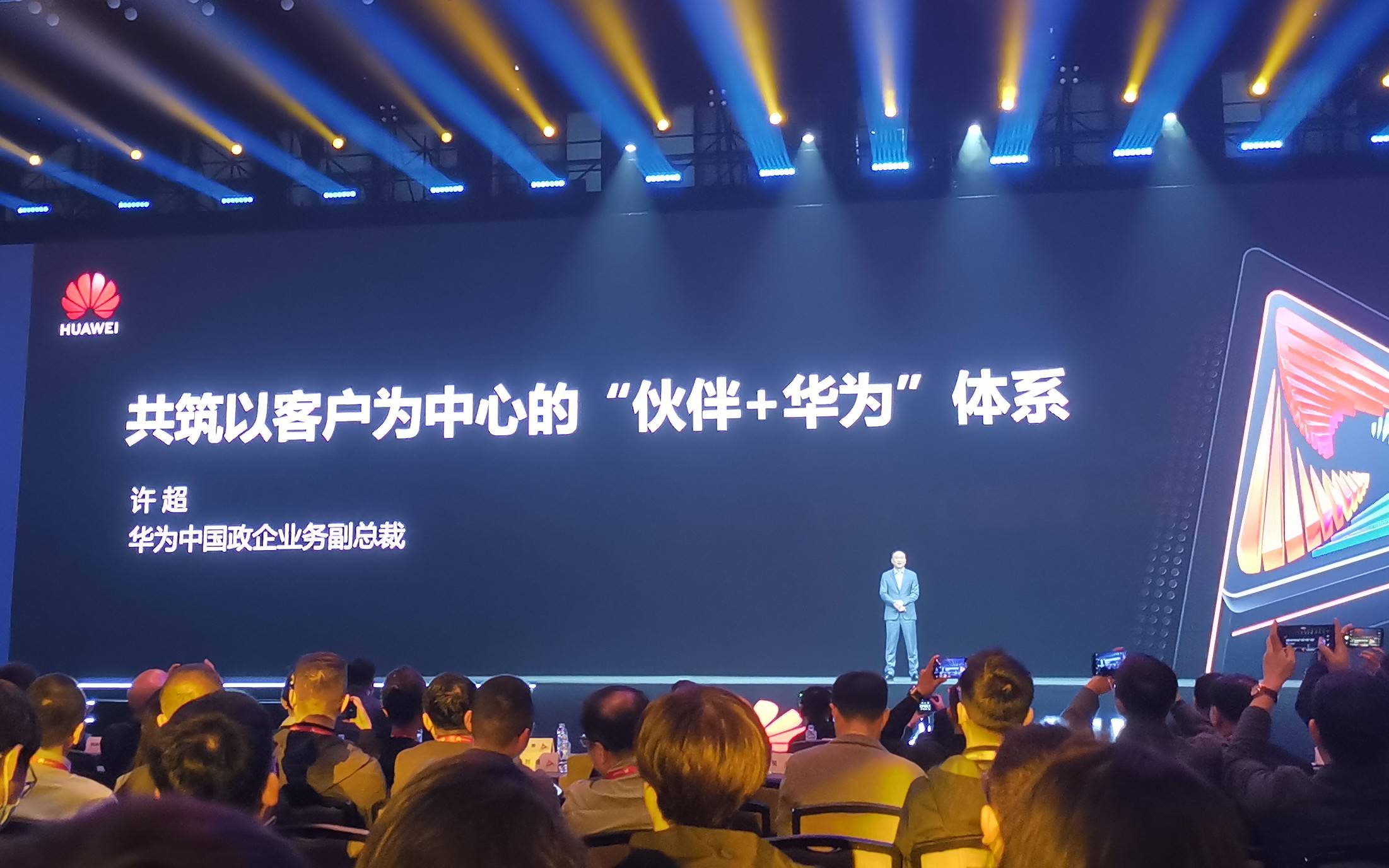
透过三大市场赛道,看华为2026年伙伴政策释放的关键信号
Sou Hu Cai Jing· 2026-01-15 07:46
Core Insights - Huawei has released its 2026 partner policy, emphasizing a shift towards capability, structure, and long-term growth rather than just scale [1][2] - The introduction of the Partner Growth Index (PGI) aims to provide clearer guidelines for partners' future development [1][2] NA Market Strategy - In the NA market, partner value is determined not only by customer coverage but also by the ability to provide in-depth industry solutions [6] - Huawei has categorized NA customers into four types: Excellent, Strategic, Core, and Value, and will prioritize collaboration with high-tier partners [7] - The PGI places equal importance on capability and performance, with evaluation criteria including product specialization, industry solution capability, and service ability [7] Commercial Market Strategy - Huawei is returning project leadership and transaction rights to partners, focusing on providing easy-to-integrate products while partners expand customer bases [9] - The target for performance growth in the commercial market is set at 15%, with an emphasis on the structure and growth of partner performance [9][10] - Huawei has supported the development of over 7,000 evangelists and 20,000 service engineers in the past two years to enhance partner capabilities [9][10] Distribution Market Strategy - The strategy in the distribution market is shifting from selling individual products to selling solutions, with a focus on scenario-based offerings [11] - Huawei has updated its distribution partner structure, introducing a new category of Diamond Partners and simplifying the hierarchy to enhance efficiency [11] - The "Hundred & Thousand Plan" aims to develop a network of 100 Diamond Partners and 10,000 elite engineering partners by 2026 [11] Industry Context - The acceleration of AI applications and the rise of domestic computing power are reshaping the value distribution in the ICT industry [12] - Partners must enhance their industry influence and build differentiated capabilities to remain competitive in the evolving landscape [12]

AI 超级公司进化论:从技术突破到商业落地
Tai Mei Ti A P P· 2025-12-02 11:16
Core Insights - The article discusses the transformative impact of AI super companies on the business landscape, emphasizing their role in integrating AI technologies to enhance efficiency, innovation, and competitiveness [2][18]. Group 1: AI Super Products/Services - AI super companies are evolving hardware products from passive devices to intelligent systems capable of understanding context and intent, shifting the value focus from physical form to the intelligence they provide [3]. - Software is undergoing a fundamental restructuring, with the emergence of Agentic AI that allows for proactive task management and collaboration among specialized agents, moving beyond simple assistance to complex task execution [3][5]. Group 2: Service Models - AI services are transitioning from reactive to proactive, utilizing multi-dimensional data to anticipate user needs and provide continuous support throughout the product lifecycle, enhancing user experience [5][6]. Group 3: AI Super Infrastructure/Capabilities - The application of agents will be a key indicator of the depth of transformation within AI super companies, balancing between standard commercial applications and customized development to address specific business challenges [6][10]. - AI infrastructure is essential for supporting large model training and deployment, requiring high-performance computing resources and efficient data management systems to meet the demands of AI applications [10][11]. Group 4: Organizational Evolution - The integration of AI into organizations typically begins with the automation of standardized processes in departments like marketing and customer service, providing measurable returns on investment [13][15]. - As AI adoption deepens, organizations evolve from AI-enhanced to human-AI collaborative structures, ultimately leading to fluid, agile organizations where AI agents dynamically form teams based on project needs [15][20]. Group 5: Stages of AI Super Company Evolution - The evolution of AI super companies can be categorized into three stages: 1. AI Collaboration: AI becomes a standard capability for efficiency [18]. 2. AI Coordination: AI deeply integrates into business processes, acting as a collaborative partner [19]. 3. AI-Driven: AI becomes the central nervous system of the organization, facilitating a highly intelligent ecosystem [20]. Group 6: Evaluation Framework - An evaluation framework for AI super companies includes four dimensions and twelve key indicators, assessing aspects such as technological infrastructure, organizational collaboration, product service capabilities, and value creation [21].

倒计时1天 | 来服贸会参加一场贯穿AI与算力全景生态的活动
Huan Qiu Wang· 2025-09-12 07:57
Core Insights - The rapid evolution of AI technology is accelerating exponentially, with current AI applications representing only a fraction of the vast technological ecosystem [1] - The upcoming event "Digital Opening · Singularity π Dialogue" aims to explore key technological breakthroughs and international development in AI and computing infrastructure [1] - The event will feature discussions on the entire industry chain from application innovation to computing power support, highlighting the importance of understanding this chain to seize opportunities [1] Group 1: Event Overview - The event will take place on September 13, 2025, at the Beijing Shougang Park, focusing on the theme "元生有AI 万物盛开" [1] - It is part of the ICT exhibition at the China International Fair for Trade in Services, featuring representatives from AI and computing power industries [1] - The goal is to identify outstanding companies in China's AI and computing power sectors and provide solutions to challenges and opportunities in the industry [1] Group 2: Key Speakers and Topics - Cao Feng, Director of the AI Research Institute at China Academy of Information and Communications Technology, will deliver a keynote on the current status and trends of large model technology and applications [2] - Bai Yu, Partner at Beijing Laihua Technology, will discuss customized AI products and their applications in various scenarios [3] - Zhao Liang, Chief Growth Officer at Guangdong Haoyun Changsheng Network, will analyze the evolution and trends of intelligent computing centers [4] Group 3: Roundtable Discussion Highlights - The roundtable will feature discussions on the symbiosis and competition between AI, computing power, and green energy [6] - Topics will include the global service of AI applications and the empowerment of infrastructure on a global scale [6] - The discussion will also address overlooked aspects of China's computing power behind large models and potential future business scenario changes [6]

绿盟科技(300369):亏损同比大幅收窄 看好未来需求回暖带来业绩增长
Xin Lang Cai Jing· 2025-05-01 00:49
Core Viewpoint - The company reported stable revenue growth in Q1 2025, with a narrowing of losses compared to the previous year [1][4]. Financial Performance - Q1 2025 revenue reached 364 million yuan, a year-on-year increase of 1.84% [1]. - The net profit attributable to shareholders was -102 million yuan, a 32.14% reduction in losses compared to Q1 2024 [1]. - The non-recurring net profit was -108 million yuan, with a 30.41% reduction in losses year-on-year [1]. - Gross margin stood at 55.73%, a decrease of 4.76 percentage points compared to the previous year [1]. Cost Management - The company has implemented cost control measures starting in 2024, leading to a reduction in total operating expenses to 357 million yuan, down 4.8% year-on-year [2]. - Selling expenses were 173 million yuan, a decrease of 4.27% [2]. - R&D expenses were 133 million yuan, down 5.39% [2]. - Management expenses were 51 million yuan, a reduction of 5.95% [2]. Strategic Initiatives - The company is focusing on the "AI + Security" sector, launching the Fengyunwei AI security capability platform, which integrates various models and knowledge bases to enhance security operations and responses [2]. - The AI-Scan product was introduced for assessing risks associated with large models, covering key technologies for security throughout the AI lifecycle [2]. Market Outlook - The company is expected to benefit from the acceleration of Agent deployment driven by open-source models like DeepSeek and Qwen3 [3]. - Revenue forecasts for 2025-2027 have been adjusted to 2.583 billion, 2.792 billion, and 3.148 billion yuan respectively, with net profit forecasts revised to 7 million, 64 million, and 116 million yuan [4].
