
Kimi智能助手

Search documents
35岁魔咒失效,中年人逆袭掌权AI革命?
创业邦· 2026-03-21 01:11
Core Insights - The article discusses the phenomenon of middle-aged entrepreneurs leading the current AI revolution, contrasting it with the earlier internet revolution dominated by younger individuals. It emphasizes that the AI revolution is characterized by a preference for experienced individuals who possess emotional intelligence and a deep understanding of the industry [5][6][22]. Group 1: Characteristics of AI Entrepreneurship - AI entrepreneurship is likened to heavy industry, requiring significant capital investment and engineering expertise, unlike the low-cost, fast-paced internet startups of the past [7][8][10]. - The capital requirements for AI projects are substantial, with training advanced models costing millions of dollars, making it difficult for younger entrepreneurs to enter the field [11][12][14]. - The engineering experience required for AI projects is high, as developing large models involves complex systems and algorithms that necessitate years of expertise [14][15][17]. Group 2: Advantages of Middle-Aged Entrepreneurs - Middle-aged entrepreneurs have advantages in organizational skills and networking, which are crucial for managing the complexities of AI projects [18][20]. - The shift in venture capital investment strategies favors experienced entrepreneurs, as investors seek certainty and proven track records rather than speculative ideas [24][25][27]. - Regulatory scrutiny and media narratives have evolved, favoring seasoned leaders who can navigate ethical and compliance challenges in AI development [30][32][33]. Group 3: Opportunities for Middle-Aged Entrepreneurs - Middle-aged individuals are encouraged to leverage their accumulated knowledge and networks to define industry problems and create unique competitive advantages [46][47]. - They should focus on agile leadership, managing human-AI collaboration effectively, and ensuring ethical standards in AI development [48][49]. - The article suggests that the AI revolution presents a unique opportunity for those with experience to integrate their insights with AI technology, creating sustainable business models [52].


35岁魔咒失效,中年人逆袭掌权AI革命?
虎嗅APP· 2026-03-19 00:21
Core Insights - The article discusses the phenomenon of middle-aged entrepreneurs leading the current AI revolution, contrasting it with the younger leaders of the internet revolution [2][3] - It emphasizes that the AI revolution favors individuals with accumulated experience, emotional intelligence, and a sense of responsibility, which are often found in middle-aged professionals [3] Funding and Investment Landscape - AI entrepreneurship requires significant capital investment, likened to heavy industry, whereas internet startups were more akin to light industry with lower entry costs [5][6] - Training advanced AI models demands substantial resources, with costs reaching millions of dollars, making it challenging for younger entrepreneurs without access to large funding pools [6][7] - The shift in venture capital strategies has moved from broad investment in young entrepreneurs to a focus on experienced middle-aged leaders who can provide certainty and stability [14][16] Technical and Engineering Expertise - AI projects necessitate deep engineering knowledge and experience, which often excludes younger individuals who may lack the requisite background [8][9] - The complexity of AI model training requires extensive time and effort for system adjustments, contrasting sharply with the rapid iteration seen in internet startups [9] Organizational and Networking Advantages - Middle-aged entrepreneurs possess superior organizational skills and networks, which are crucial for managing the multifaceted demands of AI projects [10] - Established connections and industry knowledge enable these leaders to attract talent and resources that younger entrepreneurs may struggle to secure [10] Shifts in Capital and Regulatory Environment - The capital landscape has evolved to prioritize experienced entrepreneurs, with a focus on those who can navigate regulatory challenges and ethical considerations in AI development [13][18] - Regulatory scrutiny has increased, necessitating a deeper understanding of compliance and ethical implications, which middle-aged leaders are better equipped to handle [19][20] Opportunities for Younger Entrepreneurs - Despite the dominance of middle-aged leaders, there remains space for young entrepreneurs to innovate and contribute significantly to the AI landscape [22][24] - Young professionals often excel in technical execution and can drive rapid product development, complementing the strategic oversight of their older counterparts [24] Strategic Directions for Middle-aged Entrepreneurs - Middle-aged leaders are encouraged to define industry problems accurately, leverage their accumulated knowledge to create competitive advantages, and manage AI-human collaboration effectively [28][31] - Establishing ethical frameworks and regulatory compliance will be essential for long-term success in the AI sector, where trust is a critical asset [33]

腾讯最近一年投资了什么?
YOUNG财经 漾财经· 2026-02-06 14:41
Core Viewpoint - Tencent has shifted its investment strategy from a broad approach focused on "traffic + capital" to a more concentrated focus on high-tech sectors such as AI, healthcare, and smart hardware, reflecting changes in the regulatory environment and market dynamics [4][5]. Investment Trends - Over the past five years, Tencent's investment pace has significantly decreased, with the number of external investments dropping from 296 in 2021 to an estimated 25 in 2024, before a slight recovery to 37 in 2025 [4][6]. - The company has invested in over 800 enterprises, with more than 70 successfully listed and over 160 becoming unicorns valued at over $1 billion [4]. AI Investment Focus - Tencent has designated 2025 as the "AI Year," with projected capital expenditures in AI reaching hundreds of billions [6]. - The investment strategy includes a systematic approach to AI, focusing on foundational computing, basic models, and application-level AI tools [6][8]. - Significant investments include a $15 billion round for optical hybrid computing provider Xizhi Technology and a $5 billion investment in Moonlight Dark, a model layer investment [6][8][9]. Healthcare Investments - Tencent's healthcare investments have shifted towards innovative drugs, biotechnology, and high-end medical devices, moving away from earlier focuses on online consultations and pharmaceutical e-commerce [11][12]. - Notable investments include a stake in Libang Pharmaceutical, focusing on chronic kidney disease treatments, and participation in various funding rounds for companies targeting major diseases like cancer and metabolic disorders [12][13]. Gaming Sector Strategy - Tencent continues to invest in its core gaming business, acquiring companies like Mengyou Technology to enhance its casual gaming offerings and expanding its global presence through acquisitions like Ubisoft's Vantage Studios [16][17]. - The company is also exploring next-generation interactive forms, such as AI-driven social gaming platforms [18][19]. Hard Technology and Manufacturing - Tencent is expanding its investments into advanced manufacturing, focusing on robotics and autonomous delivery systems, with significant funding in companies like Zhiyuan Robotics and Neolix [20][21]. - The company is also investing in green technology, including carbon capture and electric vehicle charging solutions [21]. Consumer and Retail Investments - Tencent is actively investing in consumer brands and retail sectors, with notable investments in tea brands and outdoor products, as well as exploring opportunities in overseas markets [22][23]. - The company is also focusing on consumer technology, investing in brands like xTool, which specializes in laser creative tools [23].

钱烧了,人跑了……曾经风光的Kimi,一年后沦为了二线?
Xin Lang Ke Ji· 2025-12-30 02:06
Core Viewpoint - The AI industry is experiencing a stark contrast, with companies like Zhipu and MiniMax making strides towards becoming the "first AI model stock," while others like Moonlight's Kimi are facing significant declines in user engagement and market position [2][4]. User Engagement and Market Position - Kimi's weekly active users have dropped to 4.5 million, falling from second to seventh place in the AI app rankings, overtaken by competitors such as Doubao and DeepSeek [2][4]. - Kimi's monthly active users decreased from 14.07 million in Q2 2025 to 9.93 million in Q3 2025, representing a 30% quarter-over-quarter decline [6]. Marketing and Growth Strategy - Kimi initially gained traction due to its long-text processing capabilities, attracting over $1 billion in investment from Alibaba and achieving a peak of 36 million monthly active users through aggressive marketing strategies [3][4]. - The marketing approach involved significant spending, with monthly advertising costs reaching nearly 200 million yuan, but this strategy has proven unsustainable as user engagement has declined [3][10]. Competitive Landscape - The competitive environment has intensified, with major players like Doubao and DeepSeek rapidly improving their offerings, diminishing Kimi's technological edge [9][12]. - Kimi's reliance on a "burn money for growth" strategy has become ineffective, as evidenced by DeepSeek's explosive growth, which highlights the inefficiency of this approach [10][12]. Technological Challenges - Kimi's initial technological advantage in long-text processing has been eroded as competitors have quickly matched or surpassed its capabilities [9][12]. - The cost of acquiring new users has risen significantly, with estimates suggesting that Kimi spends around 12-13 yuan per user, leading to unsustainable financial losses if these users do not convert to paying customers [10]. Business Model and Revenue Generation - Kimi's business model relies on both consumer and enterprise segments, but its consumer offerings face stiff competition from free alternatives provided by larger companies [12][13]. - The company struggles to differentiate its products from those of major competitors, limiting its ability to retain paying users in a market with low payment willingness [12][13]. Strategic Recommendations - Industry experts suggest that Kimi should consider focusing on niche markets and developing unique features to avoid direct competition with larger players [15][16]. - There is a call for Kimi to explore global markets and vertical applications to enhance its product offerings and market presence [16].

钱烧了,人跑了……曾经风光的Kimi,一年后沦为了二线?丨BUG
Xin Lang Cai Jing· 2025-12-30 00:44
Core Viewpoint - The AI industry is experiencing a stark contrast, with companies like Zhipu and MiniMax advancing towards becoming the "first AI model stock," while Moonlight, part of the "AI Six Little Tigers," is facing a decline in user engagement and industry ranking, leading to public relations challenges [2][14]. User Engagement and Downloads - Moonlight's Kimi product has seen its weekly active users drop to 4.5 million, falling from second to seventh place in rankings, overtaken by competitors like Doubao and DeepSeek [2][3][14]. - Kimi's monthly active users decreased from 14.07 million in Q2 2025 to 9.93 million in Q3 2025, reflecting a 30% quarter-over-quarter decline [5][17]. - Since April 2025, Kimi's overall download numbers have significantly decreased and have remained low [5][17]. Business Model and Marketing Strategy - Following a significant investment of over $1 billion from Alibaba, Moonlight's marketing efforts became aggressive, with monthly advertising spending reaching nearly 200 million yuan, which temporarily boosted Kimi's monthly active users to over 36 million [3][15]. - The current business model for Moonlight relies on C-end revenue from Kimi's tipping and subscription fees, and B-end revenue from API calls. However, many features offered by Kimi are available for free through competitors, making user retention challenging [9][21]. Technical Challenges and Competition - Kimi initially gained a competitive edge with its long-text processing capabilities, but this advantage has been eroded as major players like ByteDance and Alibaba have quickly matched or surpassed this technology [7][19]. - The "burn money for growth" strategy has proven ineffective, as the cost to acquire each user is approximately 12-13 yuan, leading to unsustainable losses if these users do not convert to paying customers [8][20]. Strategic Positioning - Moonlight is currently in a precarious position, facing intense competition from established players and struggling to differentiate its offerings in a crowded market [8][23]. - Industry experts suggest that Moonlight should consider focusing on niche markets or unique functionalities to avoid direct competition with larger firms [11][23].
被朱啸虎 “手撕” 后,清华才女升任Kimi总裁,240亿月之暗面拟IPO
Sou Hu Cai Jing· 2025-12-10 14:05
Core Viewpoint - The appointment of Zhang Yutong as president of Moonlight Dark Side marks a significant shift in the company's leadership and suggests a resolution to the ongoing disputes surrounding her previous role and alleged conflicts of interest [2][3][5]. Group 1: Leadership Changes - Zhang Yutong has officially taken on the role of president at Moonlight Dark Side, overseeing strategic planning, commercialization, and subsequent financing efforts [2][3]. - This appointment follows a year-long legal dispute involving accusations of conflict of interest related to her previous role at a venture capital firm [5][9]. Group 2: Legal Disputes - The legal conflict began when former colleague Zhu Xiaohu accused Zhang of concealing her personal stake during a significant investment deal with Alibaba, which involved over $1 billion [2][11]. - The arbitration process initiated by Zhu against Moonlight Dark Side and its founders has seemingly stalled, with no recent updates or resolutions reported [12][11]. Group 3: Company Financing and Valuation - Moonlight Dark Side is reportedly seeking a new round of financing amounting to several hundred million dollars, aiming for a valuation of $4 billion (approximately 28.3 billion RMB) and plans to initiate an IPO in the second half of 2026 [2][29]. - The company has completed five rounds of financing since June 2023, raising over 3 billion RMB, with significant investments from major players like Alibaba and Tencent [29][33]. Group 4: Product Development and Market Position - The Kimi intelligent assistant, launched in October 2023, has gained attention for its ability to process extensive text, positioning it as a strong competitor in the AI market [5][9]. - Despite initial success, Kimi's user engagement has declined, with monthly active users dropping to 9.67 million by September 2025, indicating challenges in sustaining growth [33][35].
AI界有自己的「砍一刀」
36氪· 2025-11-14 00:11
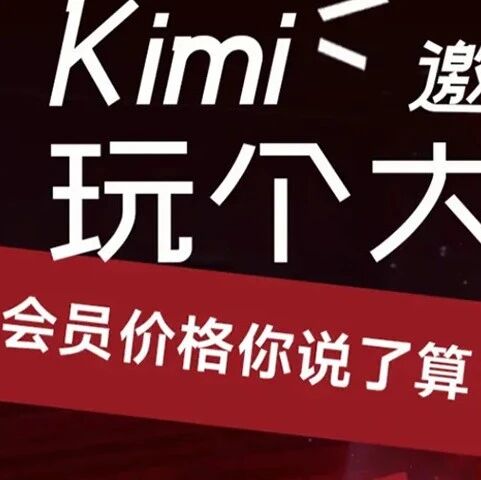
Core Viewpoint - The article discusses Kimi's innovative marketing strategy during the Double Eleven shopping festival, which utilizes a unique "bargain challenge" to engage users and promote its AI assistant, contrasting with traditional discount methods [6][9]. Group 1: Marketing Strategy - Kimi's "bargain challenge" is designed to mimic the viral marketing tactics of platforms like Pinduoduo, requiring users to interact with an AI "gatekeeper" to earn discounts rather than simply sharing links [9][10]. - The challenge requires users to accumulate a "favorability score" of 60 points through conversations, with each interaction potentially yielding 1-5 points, making it a time-consuming process [10][12]. Group 2: User Engagement - Users have adopted various strategies to engage with Kimi, ranging from sincere conversations to creative role-playing scenarios, demonstrating the AI's capabilities in maintaining multi-turn dialogues and emotional recognition [12][14]. - As the challenge progressed, users began to develop more advanced tactics, including pretending to be in need of special discounts for educational purposes, showcasing the creativity and adaptability of the user base [14][17]. Group 3: Technical Insights - Some users attempted to exploit the system by using technical prompts to gain discounts, revealing potential vulnerabilities in Kimi's AI design and prompting discussions about the robustness of its algorithms [17][22]. - The article notes that Kimi's approach is reminiscent of a foreign chatbot called Poke, which allows users to negotiate prices, indicating a trend towards more interactive and user-driven pricing models in AI services [27][31].
AI界有自己的「砍一刀」
3 6 Ke· 2025-11-12 10:48
Core Insights - The article discusses the innovative marketing strategy employed by Kimi, an AI assistant under Moonshot, during the Double Eleven shopping festival, which mimics the viral marketing tactics of Pinduoduo through a "bargain challenge" [1][4]. Group 1: Marketing Strategy - Kimi's "bargain challenge" requires users to engage in conversations with an AI "gatekeeper" to increase its favorability score, which is necessary to unlock a discounted membership price [4][6]. - The challenge is designed to create friction costs, contrasting with the typical one-click solutions in AI products, thereby filtering for users with genuine interest in AI [6][7]. Group 2: User Engagement - Users initially approached the challenge with sincere interactions, discussing various topics to build a connection with Kimi, demonstrating the AI's memory and emotional recognition capabilities [7][8]. - As users recognized the inefficiency of this method, more creative strategies emerged, including role-playing and technical prompts to expedite the process of gaining favor with the AI [9][10]. Group 3: Technical Aspects - Some users employed technical jargon and coding prompts to manipulate the AI into providing discounts, revealing vulnerabilities in Kimi's system [15][16]. - The challenge's design was inspired by a foreign chatbot model, indicating a rapid adaptation of successful concepts in the AI market [17]. Group 4: System Performance - Following the overwhelming participation, Kimi's system experienced performance issues, prompting the company to announce that the "gatekeeper" was struggling to keep up with user interactions [22].
“清华系”VS“阿里系”:中国大模型创业的“隐形门派”之争
3 6 Ke· 2025-09-04 10:47
Core Insights - The article discusses the evolution of the AI landscape in China, highlighting the shift from a competitive "hundred models war" to a focus on application ecosystems, characterized by the emergence of "invisible sects" linked by technology, talent networks, and capital [1] - It contrasts two main factions: the "Tsinghua system," represented by companies like Zhipu and Moonlight, and the "Alibaba system," represented by entrepreneurs from Alibaba, both of which are shaping the future of the domestic AI industry [1] Origin: Academic Roots and Industrial Foundations - The "Tsinghua system" traces its origins to the Knowledge Engineering Group (KEG) at Tsinghua University, led by Professor Tang Jie, focusing on knowledge graphs, graph neural networks, and pre-trained models, embodying a traditional academic research approach [1][3] - Zhipu, as a direct descendant of KEG, aims to commercialize decades of research, led by CEO Zhang Peng, who emphasizes a theoretical-driven path distinct from mainstream models like GPT and BERT [3] - Moonlight, founded by Yang Zhilin, combines theoretical depth with engineering execution, leveraging international experience to create innovative products like the Kimi intelligent assistant, which supports extensive context input [5] Divergence: Technical Lineage and Entrepreneurial Orientation - The "Tsinghua system" is characterized by a "theory-driven innovation" approach, focusing on fundamental model architecture challenges, as seen in Zhipu's GLM series and Moonlight's emphasis on long-text processing capabilities [10][12] - In contrast, the "Alibaba system" adopts a "scene-driven engineering" approach, optimizing model deployment around specific business needs, emphasizing product efficiency and industry adaptability [12] - The founders of the "Tsinghua system" often come from academic backgrounds, while the "Alibaba system" features battle-hardened entrepreneurs with a pragmatic, market-sensitive approach [12][13] Competition and Cooperation: Complex Relationships - The competition between the "Tsinghua system" and "Alibaba system" revolves around attracting top AI talent, GPU resources, and defining the next generation of AI applications, with both sides vying for market leadership [14] - Despite their rivalry, there are cooperative elements, as Alibaba strategically invests in promising startups from the "Tsinghua system," creating a complex "co-opetition" dynamic [14][16] - This relationship allows Alibaba to maintain its technological edge while also integrating cutting-edge innovations from external startups into its ecosystem [16] Future Directions: Defining New Paradigms - The rise of both systems reflects the diversity of AI development paths in China, emphasizing the need for integration between theoretical depth and commercial acumen [17] - Future competition will hinge on the ability of both factions to adapt, with "Tsinghua system" researchers needing to transition into product-oriented roles, while "Alibaba system" entrepreneurs must deepen their technical foundations [17] - The ultimate outcome may not be a single dominant faction but the emergence of new AI enterprises that blend the strengths of both systems, fostering a more mature and competitive landscape [17]


用时间积累换突破——月之暗面专注通用人工智能领域
Jing Ji Ri Bao· 2025-08-11 22:12
Core Insights - Moonshot AI, based in Beijing, is gaining attention for its open-source model Kimi K2, which ranked fifth globally upon its launch in July 2023 [1] - The company's mission is to explore the limits of intelligence and make AI universally accessible [1] Company Overview - Founded in April 2023 by a team with extensive experience in natural language processing (NLP), Moonshot AI aims to discover transformative possibilities in artificial intelligence [1] - The company has approximately 300 employees, with a significant portion being young talent from the '90s generation [2] Product Development - Kimi K2, a trillion-parameter model, has a unique capability to handle long texts, supporting up to 200,000 Chinese characters [2][5] - The Kimi intelligent assistant was launched in October 2023, followed by several product releases, including Kimi browser assistant and Kimi-Researcher [2] Technical Innovations - Kimi K2's architecture allows for complex tasks at a lower cost, with only 32 billion active parameters [3] - The model has excelled in various benchmarks, particularly in programming, tool usage, and mathematical reasoning [6] User Engagement - Kimi K2's long-text capability has led to a significant increase in user adoption, with user numbers growing from hundreds of thousands to tens of millions in 2024 [5] - The model is designed to be user-friendly, allowing non-programmers to utilize its capabilities effectively [7] Future Aspirations - Moonshot AI aims to create a general-purpose AI that surpasses human intelligence, focusing on developing versatile skills that can enhance each other [8] - The company emphasizes the importance of building a strong foundational model before releasing products, ensuring robust performance and capabilities [8]